What will you have for lunch?

In the New York Times recently, Bettina Elias Siegel reports on the state of school lunches in France as shown in Michael Moore’s new documentary film Where to Invade Next. To many of us who have watched children’s reactions to food over the years, it is surprising to learn that in a village in Normandy, French school children Juliet Corsonare served “scallops, lamb skewers and a cheese course” for lunch. That sounds like a gourmet’s dream, but of course if this meal were served in an American school there would have to be many other options—what about the vegetarian children? or the ones who are allergic to fish? Or cheese? Most American children have learned to be picky and opinionated about food before they even start school. Siegel (and the film) contrast the French school with a typical American high school where the students choose pizza, French fries, and other unhealthy meals for lunch, washed down with sugary soft drinks.

Siegel makes many good points in her article pointing out that Americans are unwilling to support the infrastructure that would allow children to be given healthy, locally-sourced food for their school lunches. Americans have opted out of paying any but the lowest taxes possible to support children’s needs, in the expectation that competition among corporations will somehow provide the best options for school meals. Are we really surprised that this hasn’t worked? Instead of an array of healthy foods, most school districts yield to the economic necessity of presenting children with the cheap, highly-processed foods they have learned to enjoy. Perhaps the time has come when we should teach our children to prepare their own school lunches. They might surprise us.

Over the years, a number of reformers have tried to help Americans learn how to cook healthier, inexpensive food to feed their families. Back in 1883, when America was suffering through one of its worst depressions and many people were unemployed, a woman named Juliet Corson decided she could help people cope with poor wages by teaching them to cook. Born in 1841, Juliet leaned to cope with poverty when her stepmother kicked her out of the house and told her to earn her own living. Juliet became a librarian at the Working Woman’s Library and found out how difficult it was to feed a family on small wages. She started giving cooking lessons to women and then to children in New York City and soon began writing books about cooking and household management.

Her most successful book was called, believe it or not—Fifteen-Cent Dinners for Workingmen’s Families—and she gave away an edition of 50,000 copies; it was even reprinted in a daily newspaper. The menus suggested were wholesome with easily available ingredients. The book suggested meals such as rice and milk for breakfast and corned beef and cabbage for dinner. It included tips for choosing meat and vegetables at the market. Many Juliet_15 cent dinnersreaders were delighted with the worked and thanked Corson profusely, but, as always, not everyone was pleased. Some union leaders objected to its distribution on the grounds that if the bosses thought workers could feed their families so cheaply, there was no need to raise wages. It seems as though you can’t win when you give advice about what people should eat.

Juliet Corson had a successful career as a writer and lecturer and she started the New York Cooking School, one of the first successful cooking schools in the country. Although she charged her middle-class students for their lessons, she always provided free lessons to those who could not afford to pay. She was a pioneer introducing the teaching of cooking into the public schools in America and Canada. Nonetheless, she died in poverty at the age of 57 in 1897, and the teaching of choosing food and cooking has almost disappeared from American schools. Perhaps it is time to revive the idea.


 

Five things to hope for in 2016

New-year

The year ahead does not look as though it is going to be a wonderful one, but every day we are moving toward spring. The days are getting longer (at least in the Northern Hemisphere) and we may find 2016 will turn out better than we had hoped. Here are five things, big and small, I like to think will happen:

  1. El Nino rains will end the drought in California so that people will be able to irrigate their crops, even the smallest rural community will have water to drink, and our reservoirs will be full again.
  2. Whatever is ailing the honeybees that fertilize our crops will recede and the bees will return to do their vital task for all the almonds and fruits and garden plants.
  3. The campaign for the 2016 election will become more sensible. Candidates will talk to voters as if they are intelligent human beings. And if we all work on it—we may get the largest turnout in years for a presidential election.
  4. The San Francisco Giants will wake up, look around them and realize this is an even-numbered year, so they will go ahead and win the World Series.
  5. Despite our changing climate, the planet Earth will hold up for at least another year so that many of us will be able to welcome in 2017 in twelve months time.

Blessed are the peacemakers

Perhaps the week that the Republican candidates held their final debate of the year was not the best week to reread Kurt Vonnegut’s Slaughterhouse Five, but quite by accident that is what I did for my reading group. Vonnegut’s book was beloved by young people during the 1960s when the

dresden-bombing
Dresden view from City Hall after bombing in 1945

Vietnam War made pacifists of so many of us. In 1945, during World War II, Vonnegut, a young American soldier, was a prisoner of war in Dresden and was a witness to the destruction of the city by British and American bombers. The carpet bombing of Dresden killed about 25,000 people and destroyed one of the most beautiful cities in Europe. As Vonnegut’s protagonist Billy Pilgrim would say in the most famous phrase of the book “So it goes!”

Seventy years have passed since then, but the destruction of cities and the indiscriminate killing of people continues. As the Republican candidates made clear on Tuesday night, they believe the answer to the unease felt by many Americans now is to send bombers over to the Middle East to bomb and bomb and bomb until the unease passes—if it ever does. Ted Cruz even talked about “carpet bombing” although he didn’t make clear just which cities would be carpet bombed or how many thousands of people would be slaughtered before he and his supporters would feel safe.

The fear and hatred exhibited in the debate were in sharp contrast to the calm patience with which President Obama is going about the job of

Obama_Kerry
President Obama and John Kerry

defeating extremists and establishing peace in the Middle East. That, of course, is the real solution to most of the terrorist threats in this country. It takes a strong leader to ignore the chattering of politicians and to stay focused on the important work of government in preserving peace and freedom. As Rudyard Kipling wrote in this poem (more familiar to our grandparents than to most of us) being a leader calls for good sense, patience, and courage:

If you can keep your head when all about you
Are losing theirs and blaming it on you,
If you can trust yourself when all men doubt you,
But make allowance for their doubting too;
If you can wait and not be tired by waiting,
Or being lied about, don’t deal in lies,
Or being hated, don’t give way to hating,
And yet don’t look too good, nor talk too wise…

So during this holiday season let’s wish good cheer to President Obama for all of his patient, well-considered work on defeating terror and maintaining peace, and to Secretary of State John Kerry whose diplomacy will keep America strong and safe without shedding the blood of innocent civilians.

Blessed are the peacemakers: for they shall be called the children of God.

Women in War–triumph and tragedy

jeannette_rankin1916
Jeannette Rankin

This week Secretary of Defense Ashton Carter announced that women member of the U.S. military will be allowed to serve in any position, including those in combat areas. That’s one more step toward equal rights for women in all areas of life, but it is far from the vision of the early leaders of the Suffrage movement. Jeannette Rankin, the first woman elected to Congress in the United States, a feat she accomplished in 1916, felt strongly that allowing women to vote and to participate in national decision would build a more peaceful world. “The peace problem is a woman’s problem….peace is a woman’s job.” How many individuals hold that view today?

Born in 1880 in Montana, Jeannette Rankin believed in equality for women and peace for the world. During her lifetime, women gradually got the right to vote, first in a few of the western states of the U.S. and gradually in all of the states. Montana gave women the right to vote in 1914, and Jeannette Rankin seized the opportunity to run for an at-large seat in Congress. She depended on her wealthy brother, a leading member of the Republican party, to finance and support her candidacy and she campaigned vigorously. Her commitment to peace was just as strong as her commitment to enfranchising women, so when in 1917, President Wilson asked Congress to vote to declare war on Germany, she refused to join the majority. She was one of fifty members, most of them Democratic, who voted against World War I. Being in the minority did not deter Rankin from supporting both of her causes—Universal Suffrage and Peace. When Montana changed its voting pattern from an at-large system to a district system, Rankin lost her Congressional seat, but she continued to be active in public life.

In 1940, Rankin was again elected to Congress and once again America was close to war. When the Japanese attacked Pearl Harbor, President Roosevelt asked Congress to vote for a declaration of war on Japan. Once again Rankin voted against war; this time she was the only member to do so and she was attacked by the public and by fellow members. Soon after she retired from Congress, although, when asked, she said that she never regretted her vote against war. “If you’re against war, you’re against war regardless of what happens. It’s a wrong method of trying to settle a dispute.”

When the Vietnam War came along, Jeannette Rankin was against that too. She led a coalition of women’s peace groups to present a peace petition to the speaker of the House of Representatives. Even though she was in her late 80’s. Rankin considered running for office again so that she could oppose the Vietnam War, although in the end her poor health prevented that. She died at the age of 92, still believing strongly in both peace and suffrage, although she probably no longer believed that women’s votes would end war.

Now, as we lurch toward yet another war, women will at least be participating equally with men in planning and fighting. That is perhaps some sort of victory, but an equal right to suffer and die on battlefields was never the dream of our foremothers who fought for women’s equal rights. It’s a victory, I guess, but the cheers stick in my throat. Why didn’t we listen more seriously to Jeannette Rankin when she wrote: “You can no more win a war than you can win an earthquake”? 

jeannette-rankin-quotes-2


“We’ll always have Paris.”

One of the most famous movie lines of the 20th century was Humphrey Bogart’s farewell to Ingrid Bergman in Casablanca “We’ll always have Paris.”

Paris
Paris at night

This week millions of people around the world were jolted into thinking about Paris because of the terrorist attacks that were carried out there. Parisians and tourists sitting in a restaurant or listening to a concert were killed or wounded and thousands others terrified by the sights and sounds of that night.

Although the Paris attacks dominated the news in Europe and America, there were other terrorist attacks this month—in Beirut and Mali as well as other countries. So much death and pain spread across so many nations leaves us with very little to feel thankful about as the holiday dedicated to giving thanks draws closer. For many people this will be a drab and fearful Thanksgiving Day.

But it is good to remember that we will always have Paris—the city has endured centuries of troubles and will not surrender to fear and despair. And we will always have Mali—a country that has been a crossroads of

Mali_2003_0002
Timeless, eternal Mali

Africa for many centuries, as well as Beirut, which has been a city since the 15th century BC and is mentioned in in ancient Egyptian scrolls. No uprising of terrorist activity, not outbursts of anger by young men with grievances will keep people from enduring and surviving into the future. So I guess that’s what we have to be thankful for this year—for the endurance of the human spirit. We will always have Paris, and Beirut and Bamako and we will always have people striving to make their way in our harsh but beautiful world.

Perhaps after all a good way to end this would be to consider the familiar Victorian poem by William Ernest Henley, “Invictus”. Although often ridiculed as an overly heroic statement by a minor poet, it may have something to say to us today.

Out of the night that covers me,

Black as the pit from pole to pole,

I thank whatever gods may be

For my unconquerable soul.


In the fell clutch of circumstance

I have not winced nor cried aloud.

Under the bludgeonings of chance

My head is bloody, but unbowed.


Beyond this place of wrath and tears

Looms but the Horror of the shade,

And yet the menace of the years

Finds and shall find me unafraid.


It matters not how strait the gate,

How charged with punishments the scroll,

I am the master of my fate,

I am the captain of my soul.


Will Hillary turn the tide?

When I was ten years old, I decided I wanted to grow up and be the first woman president of the United States. My teachers encouraged girls with all the stories about how women, having finally achieved the vote, and having served in so

Hillary Clinton
Hillary Clinton

many capacities in World War II, were destined to be leaders just as men were. And we had great role models in Rosalind Russell and Katherine Hepburn who portrayed strong, capable women in the movies. Somehow my life didn’t turn out that way and neither did the life of any other woman of my generation. Now, more than half a century later, we are still waiting to see the first female president.

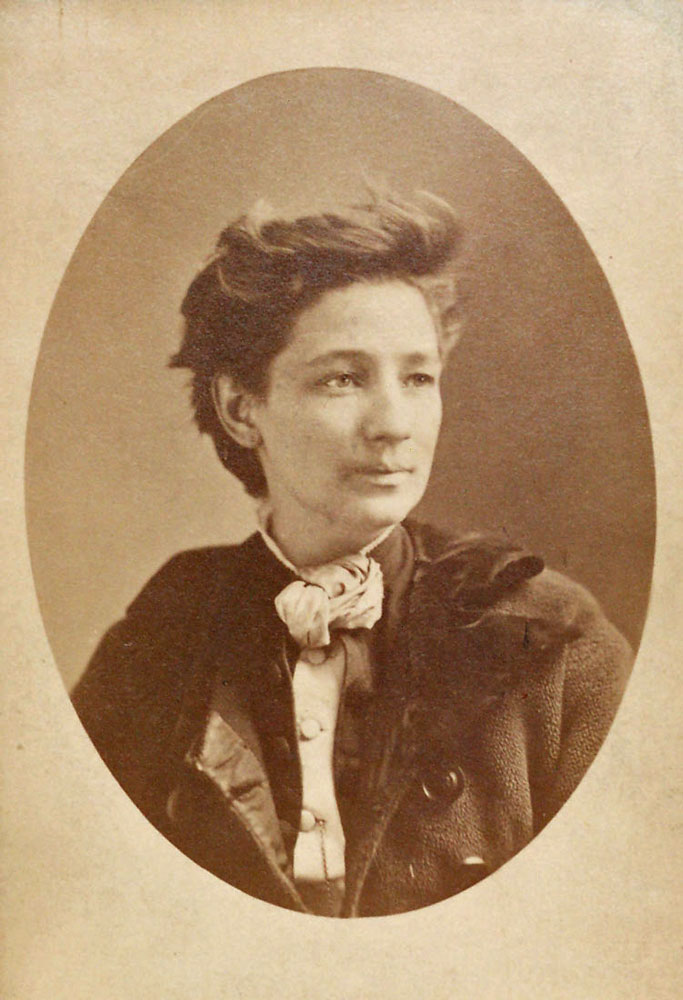
I remembered those optimistic feelings when I read Gail Collins’s thought-provoking column in today’s New York Times about “Hillary in History”. Collins goes through the list of women who have come close to the presidency or attempted to reach it, starting with Victoria Woodhull in 1872. who I have written about in this blog. There have been other contenders over the years, including Shirley Chisholm and

Portrait of Victoria Wookhull
Victoria Woodhull

Margaret Chase Smith, but none was ever taken as seriously as Hillary Clinton. Millions of women will be cheered by her victory if she wins—cheered perhaps even if they don’t agree with all of her positions and policies. It’s wonderful to think that at last a woman is being taken very seriously as a potential threat to the old-boy network that has run the country, and the world, for so long.

An yet, nothing is perfect. When President Obama was elected in 2008, the media and many of us ordinary citizens engaged in an orgy of celebration. With an African American in the White House, we must surely have seen the end of racism in the country. It hasn’t quite worked out that way, has it? We still have to struggle with the everyday racism that affects so many Americans despite the great achievements of individuals members of minority groups.

No doubt it will be the same with women. If Hillary takes over the White House, we can expect she will have the successes and failures that all presidents have encountered. There will not be a sudden rise of women to executive positions in the top corporations; Silicon Valley firms will still hire more men than women; and media commentators will still believe it’s appropriate to critique a woman’s fashion choices instead of her policy statements when she gives a speech.

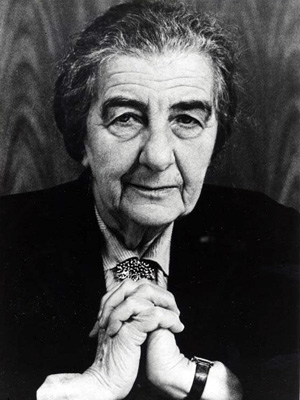
Golder Meir
Golda Meir

Golda Meir was one of the most powerful leaders of Israel and Margaret Thatcher one of the notable British leaders of recent years, but as we look at the pictures of powerful leaders in Israel and England today, the women are notably absent (except for Scotland, of course, which carries on its independent ways).  The election of Hillary Clinton will not change the entire fabric of women’s position in society, but if it happens, it will be an important step toward the eventual goal of having every individual given a fair and equal place in the world.

Meanwhile be sure to read Gail Collins’s column!

Who owns art?

Who Owns Art? Blog

One piece of good news in San Francisco this week was the announcement of the reopening of the San Francisco Museum

Atrium of S.F. Museum of Modern Art

of Modern Art scheduled for May 14, 2016. According to an article in the San Francisco Chronicle, the new museum, which has been under renovation for three years, will be the country’s largest museum of modern art.

While art lovers are waiting expectantly to see the new building and new collections, they may ponder whether any of the art displayed will cause a controversy like those that have caused problems for so many museum. For the most part, modern art pieces have not been around long enough to inspire questions about who made them. And in future there may be even fewer fears about forgeries and mis-attributions if a new scientific technique for giving art pieces permanent DNA markers comes into common use. Martin Tenniswood, a lead scientist on the project, spoke on NPR (National Public Radio) about the technique which will be able to put a tag on individual art works that clearly identify it. Just as the DNA of a person cannot be faked, so too this marker should end the fears of collectors and museums that they might purchase a forgery.

Historically, of  course, it is not only forgeries that have caused trouble. There is also the ongoing arguments about whether Western museums have the right to collect and display the art of indigenous people, and whether the urge to protect art in

Elgin Marbles in the British Museum

war-torn countries is justified. One of the first acts that started these arguments was the removal of the Elgin marbles from Greece to England. Next year will mark the 200th anniversary of the sale of the Elgin marbles to the British government. They are one of the major attractions of the British Museum and are seen every year by more than five million people.

If you want to read a fascinating account of the background of how the Elgin marbles were purchased by Lord Elgin, using the money of his extremely wealthy Scottish wife, and shipped to England at least in part because Lady Elgin was able to use her charms to persuade the Sultan of Turkey as well as the British Navy to help her, I strongly recommend the book Mistress of the Elgin Marbles by Susan Nagel. A series of events, helped along by a clash of personalities, led Lord Elgin to appreciate the value of the marbles, but eventually also to the breakup of his marriage. Would Britain ever have owned the marbles if Lady Elgin hadn’t rebelled after bearing five children and declaring that she refused to suffer through another childbirth? Would Lord Elgin have agreed with his wife’s wishes if he hadn’t been driven by the desire to have enough sons to ensure his name was carried on? Today as we look at the marbles, unchanging and austere in their dedicated gallery, we can think about the human passions that led to their being available for our viewing. But the arguments about whether or not they should be returned to Greece continue to rumble on.

Perhaps we will never settle the question of who has the right to own and display art. Is it better to have art preserved, even

Destruction of ancient Art

far from the place of its origin, or to let it remain unmoved no matter how challenging the circumstances of its homeland? Does art belong to all people in the world who take care to preserve and maintain it, or should it remain with the group who created it no matter whether it is destroyed or not? That is a very difficult question to answer. Who has the right to judge?

First Ladies and how they’ve changed

Playbill_edited-1Seeing a new play while it is still in preview, before any reviews have appeared, is always fun for me. Without having anyone else’s judgment to guide me, I can pretend to be a Broadway critic on opening night. A few days ago I had a chance to do that while I was in New York for the weekend—not on Broadway but at the Public Theater downtown where so many legendary plays have opened.

This time my chance came with a new musical, First Daughter Suite, by Michael John LaChiusa, which is based on the lives of the wives and daughters of recent U.S. presidents. The four scenes feature Pat Nixon and her daughters Julie and Tricia; Betty Ford and Rosalynn Carter with daughters Susan Ford and Amy Carter; Nancy Reagan with daughter Patti Davis; and finally Barbara Bush and Laura Bush with the ghost of Barbara’s daughter Robin, who died as a child. The production is superb, the music charming and appropriate, and the acting spectacular. Almost all of the actors play two roles and playing two such different women as Nancy Reagan and Betty Ford during one performance, as Alison Fraser does, is an amazing feat. Each of the  performers inhabits her role with remarkable grace and complete conviction.

What lingers with me still, several days after I saw the show, are questions about how much reality the show reflects. The six president’s wives portrayed are familiar to most of us through the immense publicity they received during their husband’s campaigns and time in office. Each of them took on the difficult job of serving as first lady and met the requirements of not causing a public crisis or major embarrassment despite the glare of publicity goes along with the presidency these days. They must be both tough and capable; yet somehow in this play they come across as victims. The White House is regarded almost as a prison that both mothers and daughters would like to escape.

None of the women portrayed in this play show much interest in any of the policies their husbands were pursuing, yet earlier first ladies frequently influenced, and by some account dominated, their husband’s choices of positions and personnel. If we look back at history, even the quietest first ladies were active participants in the business of government.

  • Abigail Adams
    Abigail Adams

    Abigail Adams was called “Mrs. President” by some of John Adams’s staff because she was so active in politics and so influence with her husband.

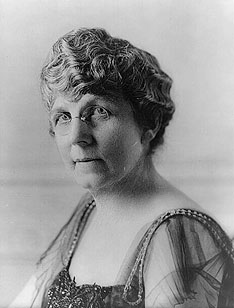
  • Florence Harding, the long-forgotten wife of Warren Harding, was reported to have written her husband’s inauguration speech and to have dictated his selection of cabinet members

    florence-harding
    Florence Haarding
  • Eleanor Roosevelt, of course, was a leading adviser to her husband and strongly influenced his ideas and his policies.

I am pretty sure that the first ladies portrayed in First Daughter Suite were not only observers, much less victims, of their husband’s actions. Although First Daughter Suite gives us a fascinating glimpse of life in the White House, I’m still waiting for a play that will show us a more rounded portrait of the women

Is this the face for the new $20 bill?
Eleanor Roosevelt

who have lived there.

Shady Ladies through the Years

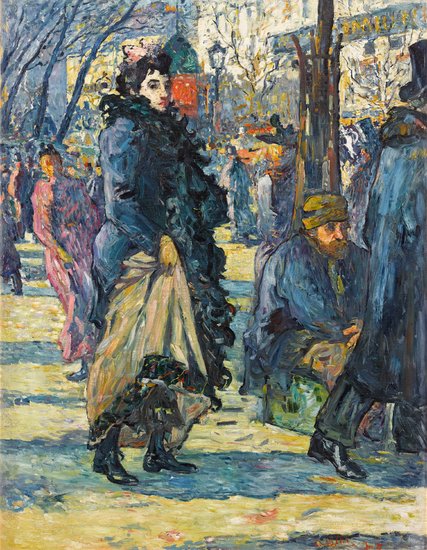
In Paris this autumn, one of the major art exhibits is “Splendor and Misery: Images of Prostitution 1850-1910,” at the Musee d’Orsay. At this exhibit people lucky enough to get to Paris can see how artists viewed some of the women who worked in the sex trade during the 19th century. There is no lack of pictures because almost all of the great artists of the period

“Sur le Boulevard” Louis Valtat

painted prostitutes. A New York Times article quotes Richard Thomson, a curator of the exhibition:

 “Why was prostitution such a big theme for artists? There was the sexual aspect, of course. But there was another reason. The city was slippery. Everything was speeding up, becoming more commercial, more ambiguous, more of a spectacle.

The same questions were coming up in American cities during the 1800s. Although many Americans thought of their new country as pure and free of the moral decay of Europe, prostitution has been a part of the country since its beginnings. During the gold rush days in California, fancy ladies were just as prominent as the hopeful miners.  Witness this popular 19th century San Francisco song:

The miners came in forty-nine,

The whores in fifty-one;

And when they got together

They produced the native son

Even though prostitution has been around throughout recorded history, societies still have a difficult time coming to grips with it. Why do women become prostitutes? Is it because they are poor and can’t find any other job? Or because they are
too lazy to take an honest job? Or are they victims of cruel abusers or criminals who force them into prostitution? No one knows all the answers, but one fact is clear—neither America nor any other country has ever completely eliminated prostitution. During the 1840s, when society was changing quickly and thousands of young people moved from farms to cities, many women found prostitution their only way to forge a life for themselves.

That’s why when I started writing my second Charlotte Edgerton mystery, I decided to focus on life in “Sin Death Visits a Bawdy House (Small) (1)City”, otherwise known as New York. When Charlotte moves there to take up a teaching job in a school for the children of freed slaves, she discovers that life in the city is filled with excitement and dangers she had never faced in rural Massachusetts. And as she gets to know some of the young women who live in the brothels that line the streets near Broadway, she gains a new respect for their struggles and their strengths. She and her fiancé, Daniel,  pursue the evildoer who stalks these ladies of the night and come to understand some of the complexities of crime and survival in a fast-changing society.

Watching Serena Williams–A Real Champion

This summer has been filled with bad news stories as wildfires devastate the Western states, Congress and the President tangle over the Iran nuclear proposal, and thousands of migrants flee war torn Syria trying to get into a reluctant Europe. It’s no wonder that so many of us turn to sports as a way to forget what’s going on. Tennis always reaches a crescendo this

Serena Williams
Serena Williams

time of year and it has been a delight to watch Serena Williams march through victory after victory. Who wouldn’t wish her luck in achieving a grand slam of titles in women’s tennis this year? Unfortunately, she didn’t quite make it. As sometimes happens in real life as well as in fairytales, a newcomer appeared who managed to defeat Serena and end her hopes for a grand slam. But Serena Williams is still a champion, probably the greatest female athlete we have ever seen.

Tennis has been a field of glory for women ever since it was introduced to America by a woman almost 150 years ago. According to the New York Times (Aug. 27, 2006) Mary Ewing Outerbridge, of Staten Island, was visiting relatives in Bermuda when she encountered some British Army officers playing tennis. at a garden party in Wales in December 1873 and had just arrived in Bermuda, where British Army officers were playing it. Being an enterprising young woman, Miss Outerbridge brought back from Bermuda a net, balls and rackets, and

Tennis match in 1874

specifications for the size of the courts. The strange gear was confiscated by customs agents but Mary’s brother was able to use his influence to get customs to release it. Tennis was a hit in New York and it soon spread across the country.

Tennis has always been one of the few sports that has been open to women as well as men, although the championship games have been single-sex events. Women’s championships were not considered as important as the men’s events. In 1973, Billie Jean King accepted a challenge from a former tennis champion, Bobby Riggs, who had boasted that a weak male player could easily beat a woman. Dubbed “the Battle of the Sexes”, the Riggs-King match Billie-Jean-Kingtook place at the Houston Astrodome in Texas on September 20, 1973. The game got a lot of publicity and when Billie Jean King won, she felt that she had struck a blow for women everywhere. The women’s game began to be taken more seriously.

Serena Williams and her sister Venus have brought more attention and respect to the women’s tennis tournaments than they ever had before. This year, Serena got more publicity than any of the male players and tickets for her matches were the most highly prized ever. It’s about time a woman was the biggest attraction!  Like so many of her other fans, I am sad that Serena Williams did not make her grand slam, but she can be content that she has set a great example for girls and women around the world. We are all wishing her good luck. After all—there’s always next year!