Here in San Francisco the pianos are back in the gardens again—the Botanical Gardens. The idea of placing pianos in public areas and inviting passers-by to play them is now more than a decade old and it is still charming people around the world. Even though piano lessons are not as common as they were a generation or two ago, many amateur musicians still enjoy playing when they have a chance.
Today I want to talk about a woman who helped to make the piano the major instrument that it continues to be—Clara Wieck Schumann. When she gave her first concerts in Vienna in 1838, one critic described her “not a wonderchild—and yet still a child and already a wonder.” Clara was 18 at the time, so not exactly a child, but an accomplished young musician who had studied under her father’s guidance all of her life. From those early concerts, she moved on to a career in music that lasted for sixty years.
On the day before her 21st birthday Clara married Robert Schumann, the composer whose work she helped to make famous. She continued to perform and to compose music after she was married. She had little choice because she was the family
Clara Wiech Schumann
breadwinner. She also raised seven children (an eighth died in infancy). We often hear about the discrimination that women suffered during the 19th century, discrimination that kept many of them from fulfilling their early promise. But sometimes we need to think about the remarkable women who overcame the prejudices and oppression of the times and managed to have successful careers despite all the barriers.
If you ever feel discouraged about the difficulty of combining a career with marriage and motherhood, you can find inspiration by reading more about Clara Schumann. An excellent biography is Clara Schumann: The Artist and the Woman by Nancy B. Reich. The author gives a great deal of scholarly musical background, but even if you are not knowledgeable about music, the story of Clara Schumann’s life will hold your attention and strengthen your resolve to persist in your own ambitions.
And if you have a chance—try to find one of those pianos in a public place and give it a try!
Readers often have a great curiosity about the authors who write the books they love, especially the novelists. And in fact sometimes the life of the author lives on long after
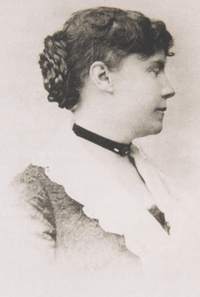
Constance Fenimore Woolson
the novels cease to be read except by scholars. That’s what seems to have happened to Constance Fenimore Woolson, one of the most successful American authors of the 19th century.
Back in the days when I studied American literature, Woolson was considered a female regional writer—not at all important when compared with the great writers like Twain,
Melville, Howells, and James. One professor of mine commented that she was “the spinster woman who killed herself because she was in love with Henry James”. Years before that she had been ignored when Howells and James set up their canon of important American writers. They included only male writers because they didn’t think women were capable of great writing, or even rational thought.
In recent years, of course, attention has shifted to women writers and several are now studied in college literature classes. Constance Woolson is seldom included, but her books are available in libraries and bookstores and there have been new biographies and a novel written about her life. A lot of the interest in her has developed because of her relationship with Henry James, which is a shame because her life and work are worth reading on their own.
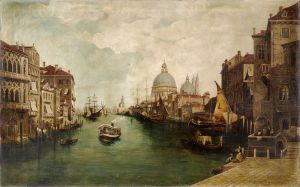
Perhaps the most important thing to remember about Woolson’s life is how seriously she took her writing despite the lack of encouragement from “serious” critics. She devoted time and attention to her novels. When she was living in Venice in 1893, she wrote of her daily schedule: “I am now called at 4:30 every morning, and then, after a cup of tea, I sit (in a dressing gown) and write until 9:30, when I have breakfast. This is to get the cool hours for work. Then I dress and go on writing until 4 p.m., when I go to the Lido and take a sea-bath.” This is not a woman who rushed out her books in order to maximize sales.
19th century Venice
Woolson started publishing in 1870, first magazine stories and then novels. She was a success from the beginning and was able to support her mother as well as help her brother and sister. After her mother died in 1879, Woolson traveled to Europe in order to meet Henry James, a writer whose work she admired. She did meet him, in part because he was impressed that she was a relative of James Fenimore Cooper, and their relationship continued for the rest of her life. It is this relationship that has fascinated both critics and general readers through the years.
During the past year I have read two books about Woolson and enjoyed both of them thoroughly. One is a biography by Anne Boyd Rioux, Constance Fenimore Woolson; Portrait of a Lady Novelist, which gives a full account of her life and travels. She did not have an easy life because her hearing began to fade while she was still a young woman. Her deafness was a barrier that kept her from enjoying the music she loved and from easy exchanges with friends and colleagues. She sometimes said that she valued Henry James because she would never run out of things to talk about with him. Conversation was important to her, although not as important as her writing. James envied her success in writing and continued to patronize her because he recognized—they both recognized—that he was a greater artist.
The second book I read about Woolson this year is Elizabeth Maguire’s novel, Open Door, based on Woolson’s years in Europe and her relationship with Henry James. The author invents many details of Woolson’s life, some more convincing than others, and readers
Henry James
may quarrel about whether she successfully portrayed the connection with Henry James and whether Woolson did indeed know about his carefully closeted homosexual life.
Woolson’s death, after a jump or fall into a canal in Venice, is still a subject of speculation. Could it have been just a fall? Was it suicide? Was it caused by chronic depression or perhaps by the intense pain caused by her deafness and brain cancer? There will probably never be a definitive answer.
So where is truth? Is it in a fully-documented biography or in an imaginative novel? My answer would be that it is in both. We need a solid biography like the one Rioux has given us so we can understand Woolson’s background and life and better appreciate her work. But there is also truth in trying to imagine what Woolson’s life must have felt like from the inside. I think we all try to do that instinctively when we read biographies. Maguire gave us intriguing speculation about what it might have felt like being Constance Woolson. Both books deserve to be read.
Summer is coming up and for many people that is the prime season for binge watching TV series they missed during the year. But television isn’t the only media that is ripe for binging. Binge reading is a perennial favorite especially during rainy summer weekends when the beach is sodden and hiking trails are muddy.
Some people define binge reading as reading a book obsessively and not putting it down until you’ve finished it, whether that is 2 a.m. or sunrise. But equally satisfying is the binge reading done in bits and pieces but covering a whole series of books, usually genre books like mysteries, romances or science fiction. I remember one stressful holiday season when I gulped down one Ruth Galloway mystery after another, relishing the excuse to leave my crowded household for the north shore of England filled with mysteries about archeology and with patient sleuths. (In case you’ve never read them, the Ruth Galloway mysteries are by Elly Griffiths).
Binge reading can be by subject too. I remember spending a snowy Christmas week, stuck in the house with small children, reading one book after another about Renaissance Italy. It was almost like having a vacation.
Binge reading could be difficult in the old days when ending one book and feeling the urgent need for another meant a trip to the library or possibly even a bookstore if one was available. Now with ebooks, it takes only a few clicks to have the next book in the series delivered electronically from your public library or ebook supplier.
Most readers don’t think about the people who supply the books for us to read, but the enthusiasm for series books to read has put a lot of strain on writers. In the days before the indie publishing revolution—five years ago or more—there was usually a wait of two or three years between books. Traditional publishing is a time-consuming business. Now, if you look at writing blogs, you will see writers complaining that their publishers want at least two books a year from their series of mysteries or romances. It’s not easy for a writer to come up with several new ideas for books every year. As a result, a sparkling series may dwindle away as old plot twists are reused and irrelevant padding dragged into the story. It can be as sad to see a good, lively book series die away as it is to watch a TV series wither in its final season. It is much better for writers and publishers to aim for “limited series” as the TV shows are now doing. A quartet of lively books using the same characters and setting is better than a dozen books of repetitious stories.
On the other hand, some writers could be called binge writers. They keep turning out books and finding an audience year after year after year. One of these was Barbara
Barbara Cartland
Cartland, who wrote more than 700 books in her 80-year-long career before her death in 2000. And her fans kept on loving them. Another was Isaac Asimov, who wrote more than 500 books both science fiction and non-fiction. He contributed so much to our culture that he deserves a separate post.
There should be a special award for binge writers whose energy and ideas feed our need for more stories to feed our passion.
It has taken me two days to absorb the information that President Trump has decided the United States will drop out of the Paris Climate Accord, which was signed with such cheering only last year. I have to wonder how much the President looks around the world that both he and I live in.
The first time I really noticed how a changing climate can affect people’s lives is when I visited Mali in 2003. We flew to the small airport in Timbuktu passing over miles of empty sandscapes. Timbuktu looked like no place else I had ever seen–the buildings are
Timbuktu 2003
made of mud or stucco, and the roads and open spaces are covered with sand. It’s impossible to tell whether the roads are paved or not. They curve around the city and our drivers zoomed around buildings, donkeys, children, men in long robes and women in subdued colors walking along the streets. Everything tastes slightly of sand; even the bread had a grittiness from the fine sand that blew into the dough as it was being prepared. Our guide told us that people who live in the city often lost their teeth early because the sand in their food slowly grinds down the enamel.
The following year, I went to Argentina and saw the glaciers of Patagonia. Many of them are now sliding inexorably into the sea. The loud crack of huge chunks of ice breaking off and being swallowed up by the ocean punctuated our trip. Now, more than ten years
later, the ice is breaking off even faster. Huge cracks are appearing in the glaciers of Antarctica. How can anyone believe that climate is not changing?
It’s not as though the idea of climate change hasn’t been discussed for many years. The medieval idea that the world is unchanging and that human beings have no influence on it was challenged more than 200 years ago by Alexander von Humboldt, one of the greatest scientists the world has ever known.
Humboldt traveled to South America in 1800 to explore nature and culture in the Spanish colonies there. When he saw the changes that Europeans has brought to the country by cutting down forests and cultivating lands, he developed his theories of how men affect climate. “When forests are destroyed, as they are everywhere in America by the European planters, …the springs are dried up or become less abundant.” He noted how this allowed the soil to be washed away during heavy rains, causing erosion and a loss of fertile soil. He did not know that in the years that followed his visit, mankind would change the landscape and the climate even more by all the carbon emissions from the cars, airplanes, and factories that people have introduced all over the world.
Knowledge is a slow-growing plant, but Humboldt planted new ideas that have blossomed during the centuries since he started his explorations. In a recent book, Andrea Wulf, has explored Humboldt’s life and ideas in The Invention of Nature: Alexander von Humboldt’s New World. I highly recommend it to anyone interested in seeing how scientific ideas have developed over the years and how long it takes to persuade people to accept new knowledge and to change their ideas.
The recent five-year drought in California has brought home to me the conviction that we should all think about what we can do to prevent climate change from destroying our fragile planet. Droughts cause deserts to be formed and to expand. A warming ocean creeps up our shores and makes larger and larger areas unlivable. Violent storms eat away at cliffs destroying homes and exposing communities to danger. The cliffs in the picture below are in Pacifica, California.
No matter what our leaders may tell us, all of us as citizens must look for ourselves and decide what we can do as individuals and communities to keep our planet safe for the future.
May is Asian Pacific Legacy month, so it was an especially good time to visit the Asian Art
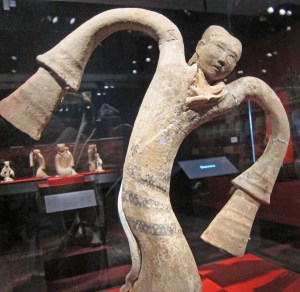
Jade tomb–Asian Art Museum
Museum in San Francisco. I saw their Tomb Treasures exhibit and was stunned by the remarkable beauty of objects created two thousand years ago. The graceful lines of a
dancer’s movements are immortalized in stone for us to marvel at. The beauty of a solid jade tomb and a set of jade armor is a legacy for all of us. Centuries come and go, but there is something heartening in knowing that across the centuries humans have created art that will enrich their descendants.
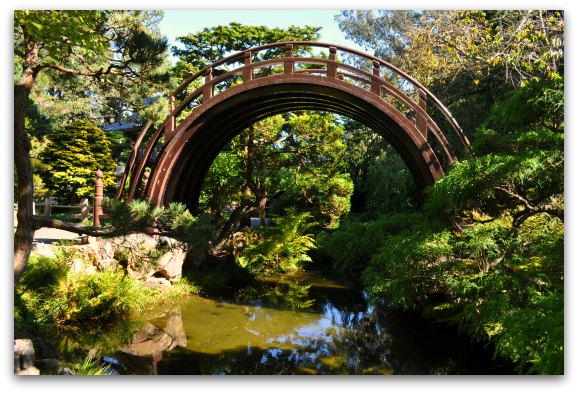
San Franciscans are lucky to have the magnificent Asian Art Museum in our city as well as so many other reminders of the Asian legacy like the famous Japanese Tea Garden in Golden Gate Park. All of these are an integral part of this country’s treasures that have been brought from so many parts of the world.
Americans haven’t always appreciated the value that Asians have brought us. One of the tragic heritages that lingers on in the memory of many people still alive is the
internment of people of Japanese descent during World War II.
Julie Otsuka’s book When the Emperor Was Divine gives an unforgettable picture of what happened during the early 1940s. Otsuka tells a touching story about a Japanese-American family living in Berkeley, California, in 1942 who are sent to an internment camp in Utah. Although the family had been living peacefully in their community for years, the father was suddenly arrested in the middle of the night and taken away. Then the mother and her two children are ordered, along with other Japanese-Americans on the West Coast, to leave their home for a detention camp.
The book is beautifully written and painfully sad to read. When the family is allowed to return home, they find their lives drastically changed. The reader is left wondering how or whether they will ever be able to return to normality.
Otsuka’s book is a reminder of how many mistakes Americans have made in treating people as part of a group rather than as the individuals they are. Our Asian legacy is filled with light and darkness. We must not let the dark parts of its history be repeated.
Japanese Tea Garden–Golden Gate Park, San Francisco
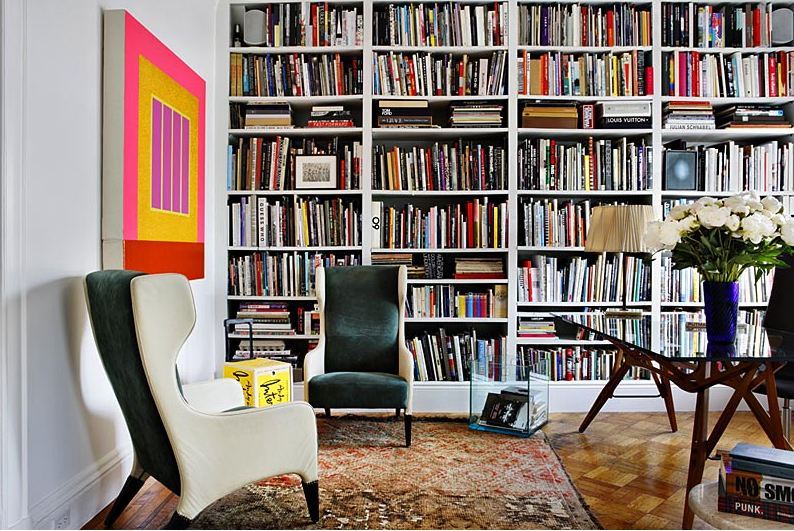
Recently I came across a small relic of my teenage years–a reading log that was given to me the Christmas before I turned fifteen. I kept it faithfully all year long, recording the books I was reading outside of school—all 46 of them. I wonder how it would compare to a teen’s reading today.
My usual opening of the evaluation section was pretty undiscriminating: “This is a swell book…” which was used for a book about the St. Louis Cardinals as well as for Sinclair Lewis’s Arrowsmith. I managed to change that a little when I described David Copperfield as “A fascinating book—long but not boring”, which is probably the way many kids today would describe the Harry Potter books. It’s a good thing no teacher was grading the comments.
Another interesting item in my log was the entry for who recommended the book. In my case that was sometimes my father, who kept mentioning books he was reading, or Seventeen magazine, but most of the books were recommended by May Lamberton
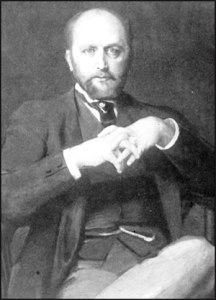
May Lamberton Becker
Becker. That’s a name that is not heard very much anymore, but she was an influential critic of young people’s books back in the day. My mother picked up a copy of Becker’s Adventures in Reading at a secondhand bookstore and I used it as a source of inspiration for years. I am forever grateful for her introduction to some of the books I still love.
Like most teens, I read books of all kinds—bestsellers, classics, mysteries, humor—that’s the way people become readers. You have to sample everything before you know what you like. And the source for all these books? The public library, of course. There were no bookstores in our neighborhood, and we wouldn’t have been able to buy all these books anyway. The only way kids can become avid readers is to be exposed to lots of books from which they can pick and choose. Later on perhaps people can buy the books they love, but for young people school and public libraries are the way to go. Long live libraries!
The March for Science held yesterday in cities around the world demonstrated how many people support science, research, and the fact-based decisions. Many rallies and marches are emotional outbursts against injustice, but this one had a slightly different tone. People who marched care passionately about basing public policy on facts, not profits, not quick-fixes, but long-term solutions for our world. And judging by the enthusiastic support they received from the public and media, it seems that many Americans agree with them.
In honor of some of the pioneers who helped develop the science and technology, I am repeating a tribute to Ada Lovelace published in this blog a few years ago.
Who was Ada Lovelace and why is she celebrated? You can still get a few arguments about whether she deserves the distinction, but she certainly had an unusual life. She was born in England in 1815 and was the legitimate daughter of Lord Byron, quite a feat in itself because the famous poet fathered all of his other children with women who were not his wife. Still, being born legitimate is not an achievement for the baby, who has no choice in the matter. Ada Lovelace (born Augusta Ada Byron) had to be an unusual woman to earn a reputation of her own and gain lasting fame. And she was.
Despite having an irregular upbringing with a mother so focused on hatred for her husband, Byron, that she had little time for her daughter, Ada Lovelace had a good
Ada Lovelace, computer programmer
education. Her mother encouraged tutors to teach Ada mathematics as a way to ward off the tendency toward madness that she believed affected Lord Byron and his family. Ada took to numbers and became a competent mathematician as well as mastering several languages.
Ada Lovelace moved in high social circles. She became Baroness King when she married William King. The couple had three children, but Ada still had time to continue her friendships with both men and women. She became an avid gambler and tried to find mathematical models to help her and her friends find formula which would increase their winning. That, unfortunately, didn’t work and she went deeply into debt. Her love of mathematics, however, continued.
It was her friendship with Charles Babbage, the inventor of the Analytical Engine, a first attempt at a computer, which led to her developing an algorithm to allow the analytical engine to compute Bernoulli numbers. It was this which led to her being considered the first computer programmer.
Scholars have debated how much of the programming work was done by Ada and how much by Babbage, but perhaps it doesn’t matter. Whether or not she actually was the world’s first programmer, she certainly achieved far more than anyone would have expected of a 19th century woman. And all that she achieved was done before she died of cancer at the age of 36.
It is fitting that we now have an Ada Lovelace Day celebrated every year in mid-October. The day is dedicated to honoring the past achievements of women in science, engineering, technology and mathematics and to encouraging women to enter these fields. You can find a number of biographies of Ada Lovelace, many of them aimed at children and teens. It is too bad there aren’t more biographies of other women scientists. One outstanding memoir, a recent best seller, is Lab Girl by Hope Jahren. Anyone interested in knowing what it means to be a scientist will find it well worth reading.
Every White House watcher has noticed by now the close relationship between President Trump and his older daughter, Ivanka. Now that Ivanka Trump has an official position in the administration and an office in the West Wing, she is expected to become even more visible to the public. What will her role be? How will she and her father work together?
History buffs scurried around to find examples of other presidential daughters who played important roles in their father’s lives. The only daughter who took over the First Lady role was Martha Jefferson, who acted as hostess for her widower father. Ivanka Trump’s role in her father’s administration is going to be far different from that of the First Lady, Melania Trump. It looks as though this administration will be setting quite a few “firsts” for presidential families.
The story that got me started on this train of thought is the story of Galileo and his older daughter as told in Dava Sobel’s book Galileo’s Daughter. It gives an eye-opening glimpse into family life in the 17th century. Despite spending most of her life in a cloistered
Sister Maria Celeste
convent, Maria Celeste kept up with her father’s scientific discoveries and with his life in the turbulent political currents of the day. Her letters deal primarily with the mundane details of clothing and food. Maria Celeste mended collars for her father, asked him to send her fabric to make a wedding present for her brother’s wife, and prepared potions to ease his chronic aches and pains. But she also consoled him when he was persistently questioned by the Inquisition and even managed his household, from behind her convent walls, when he was imprisoned for publishing his heretical ideas.
Galileo, for his part, patiently hunted down the fabrics and other household items Maria Celeste requested and generously supported her and her convent for many years. I had never known that the families of nuns were expected to give so generously to pay for the necessities of life in the convent—food, medical care,
Galileo
and even building repairs. Without a husband and without any means of earning a living, women were dependent on the generosity of their fathers, brothers and other male relatives. This must have led to anger and bitterness in some families, but in the case of the Galileo family, father and daughter forged a relationship that was filled with love and that must have consoled each of them for the trials and difficulties of their lives during the upheavals of their time.
Galileo’s Daughter is a book well worth reading, especially if you are a parent. You’ll learn a lot about science and perhaps even more about political and family relationships. Now that our society has moved far beyond the financial dependency of women, the dynamics of father-daughter relationships have changed, but these relationships are often stressful and difficult to maneuver. As the roles of both men and women continue to evolve, it is worth looking back sometimes on the ways families handled these challenges in the past.
Perhaps it is the tax season that started a rush among my friends to get rid of clutter, especially old tax forms. But getting rid of paper forms and receipts is only the start of a decluttering ritual that has been sweeping through the country. Marie Kondo’s 2014 book on decluttering started a trend.
Thoreau’s cabin at Walden Pond
Perhaps it is the echo of spring cleaning from long-forgotten great-grandmothers that makes simplifying seem attractive. Or maybe it is memories of a high school reading of Thoreau, who urged us to “Simplify; simplify” our lives. He told us to have one meal a day instead of three; to have one suit of clothes instead of many. Few of us have gone so far. Even Thoreau didn’t go that far. While he was living in his small bare cabin in the woods, he walked home from Walden Pond many evenings to have a meal in his family home. A meal probably cooked in his mother’s cluttered kitchen.
Throughout history most people have spent their time elaborating rather than simplifying. The simple objects that we need to make life livable have become canvases for art. Just take a look at a patchwork quilt made about the time that Thoreau was preaching simplicity. Instead of a bare necessity to keep a sleeper warm, some woman made this quilt into a feast for the eyes as well as a comfort for the body. That’s quite an achievement.
Recently I have been reading a lot about Florence, Italy, the setting for my next book in the Charlotte Edgerton mystery series. The Renaissance furniture of Italy with its unnecessarily elaborate decorations might have disappointed Thoreau, but I am glad that so many people from quilters to furniture makers over the centuries have chosen to embellish rather than strip down the household items they have made. And I certainly intend to enjoy the lovely objects that have grown out of people’s desire to make even humble objects beautiful.
Yesterday I joined a crowd of other people headed to the Berkeley Rep theater to see the play Roe, an account of the forty-year-old Supreme Court case Roe v Wade, which made abortion legal in the United States. Written by Lisa Loomer and performed by a group of
gifted actors, the play makes the twists and turns of an old legal drama completely absorbing.
The drama focuses on the effects of the trial and its aftermath on the two central figures—Norma McCorvey the plaintiff, and Sarah Weddington, the lawyer who took her case to court. Most of us in the audience already knew the story—how Norma wanted an abortion to end her third pregnancy, and how Sarah wanted a case that would force changes in the restrictive Texas abortion law. Perhaps we didn’t all remember that Norma never did get that abortion because the case dragged on so long. The baby was born and given up for adoption before the court reached a decision. Sarah, however, did set in motion the legal changes that would change the landscape of women’s rights in America.
Over the centuries from the ancient civilizations of Greece, Rome and India up until the present, women have tried to control their own fertility. Without effective contraception,
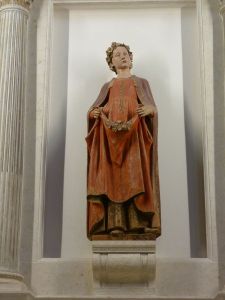
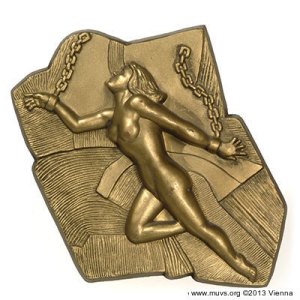
Aphrodite freed from her chains
abortion often offered the only release from an endless series of pregnancies and births for married women, many of them from families that were ill-equipped to support another child. And most women who sought abortions were married. Even today, when contraception is much more available, cheap and foolproof, the majority of women who seek abortions, according to figures from the Guttmacher Institute, are married women who already have at least one child.
Those of us who lived through the 1970s and were aware of the Roe v Wade case assumed that it would put an end to all the arguments and restrictions on abortion. Most countries in the developed world have accepted the fact that many women will want to abort a pregnancy that occurs at a time when they cannot bear and take care of another child. People who are strongly opposed to abortion usually claim that a “soul” enters a fetus’s cells sometime soon after conception. They therefore claim that the fetus is a person whose life must be preserved. Many other people dispute this claim. For centuries people believed that a human being becomes human when it is born and most people believe that now.
The dispute about when human life begins cannot be solved by science because it is a religious argument. Why is it that the United States is one of the very few countries where large numbers of people insist that their religious views become the law of the land? Perhaps if more people could see the play Roe they might develop a greater understanding of the arguments on both sides of the question. And perhaps more people would be content to let women control their own bodies. Medical science has given women the means to have safe and effective abortions; the decision about whether or not to have one should be left in the hands of the individual, not determined by the votes of outsiders.
 piano lessons are not as common as they were a generation or two ago, many amateur musicians still enjoy playing when they have a chance.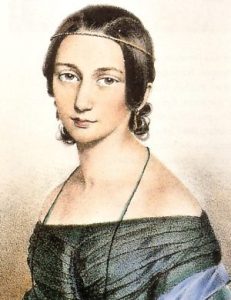
 TV series they missed during the year. But television isn’t the only media that is ripe for binging. Binge reading is a perennial favorite especially during rainy summer weekends when the beach is sodden and hiking trails are muddy.
 another about Renaissance Italy. It was almost like having a vacation.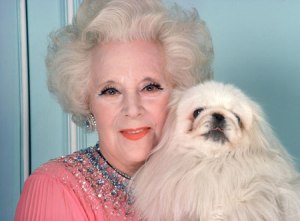




 me the Christmas before I turned fifteen. I kept it faithfully all year long, recording the books I was reading outside of school—all 46 of them. I wonder how it would compare to a teen’s reading today.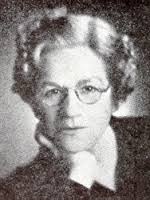
 The March for Science held yesterday in cities around the world demonstrated how many people support science, research, and the fact-based decisions. Many rallies and marches are emotional outbursts against injustice, but this one had a slightly different tone. People who marched care passionately about basing public policy on facts, not profits, not quick-fixes, but long-term solutions for our world. And judging by the enthusiastic support they received from the public and media, it seems that many Americans agree with them.




 if you are a parent. You’ll learn a lot about science and perhaps even more about political and family relationships. Now that our society has moved far beyond the financial dependency of women, the dynamics of father-daughter relationships have changed, but these relationships are often stressful and difficult to maneuver. As the roles of both men and women continue to evolve, it is worth looking back sometimes on the ways families handled these challenges in the past.
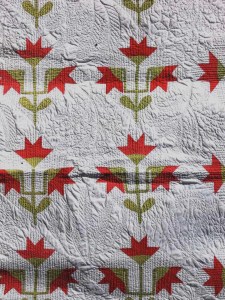 simplicity. Instead of a bare necessity to keep a sleeper warm, some woman made this quilt into a feast for the eyes as well as a comfort for the body. That’s quite an achievement.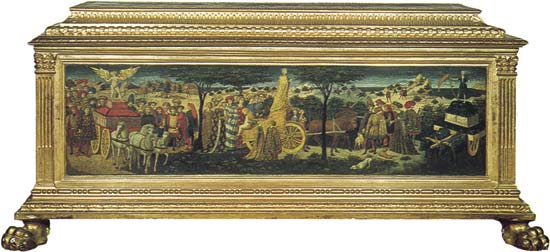
 Teacups and Tyrants-Adele Fasick looks at people, books, and history