Constance Markievicz–an Elegant Revolutionary

2016 is the 100th anniversary of Ireland’s Easter Rebellion, which erupted in Dublin early in World War I and was quickly put down by the British. Nonetheless, it was the rebellion that finally set Ireland on the path toward independence. The leaders of the rebellion were an unusual group of revolutionaries—most were not soldiers or politicians, but artists,
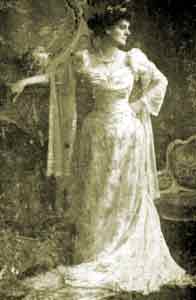
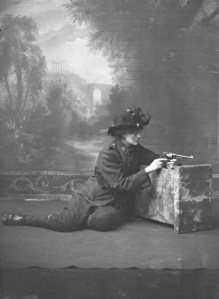
Countess_markievicz2
Countess Markievicz


playwrights and poets. And one of them was a woman, Constance Markievicz, who grew up in the Downton Abbey atmosphere of her family’s estate, Lissadell, but spent most of her adult life as a freedom fighter. Her journey was the opposite of Tom Branson’s in Downton Abbey. He made his first appearance as a fighter for Irish freedom, but ended the series as an automobile salesman—I can’t help but wonder what Lady Sybil would have thought of that. Tom Branson, however, is fictional.  Constance Markievicz was a real woman and her life was far more exciting than the life of any character in Downton Abbey.

Born to an aristocratic life at her family’s estate, Constance Gore-Booth and her sister Eva grew up as admired society leaders. They were both considered great beauties and William Butler Yeats later described them in a poem as “Two girls in silk kimonos, both/Beautiful, one a gazelle…” They went to parties and balls, but instead marrying into the aristocracy, they followed very different paths. Eva became a champion of women’s rights and a suffragette, while Constance determined to be an artist and studied art in Paris, but later turned to politics and the struggle for Irish freedom.
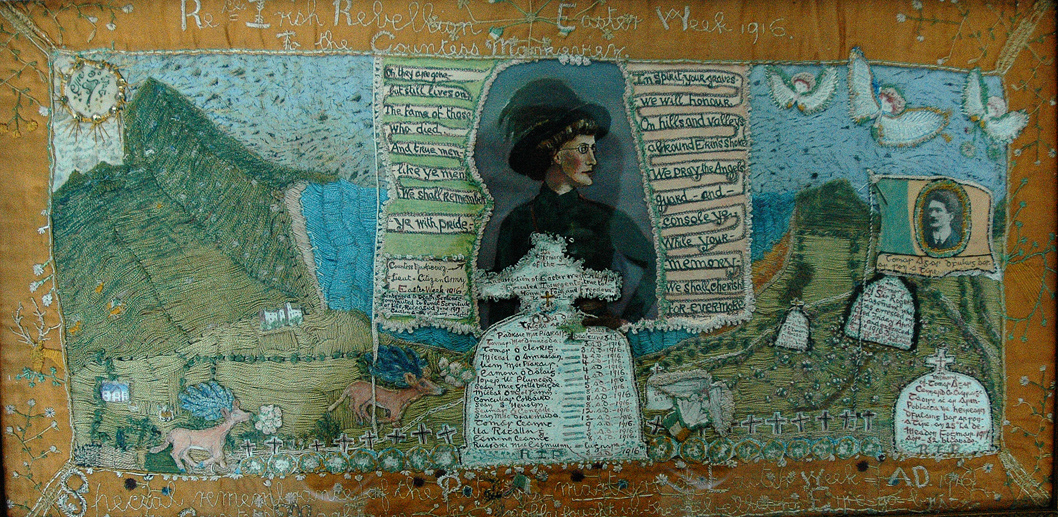
Easter-Rising-embroidery-cloth
Embroidery piece at Lissadell

Constance married Count Casimir Dunin-Markievicz, which is why she had a Polish name despite being associated far more with Ireland than with Poland. In fact, she only visited Poland once for a few months shortly after her marriage. Casimir Markievicz was also an artist who became a well-known portrait painter, but never shared her passion for politics or Irish rebellion. For most of their marriage they lived quite separate lives, although they remained friendly.

How then did a woman with this kind of background become a fighter in the middle of the EasCountess_Markieviczter uprising?  A woman condemned to execution by the British army who said at her trial that “I did what I thought was right and I stand by it.” ? And finally the first woman elected to the British House of Commons?
This is a story too long to tell in one post, so I will continue it in my next post.


Women in War–triumph and tragedy

jeannette_rankin1916
Jeannette Rankin

This week Secretary of Defense Ashton Carter announced that women member of the U.S. military will be allowed to serve in any position, including those in combat areas. That’s one more step toward equal rights for women in all areas of life, but it is far from the vision of the early leaders of the Suffrage movement. Jeannette Rankin, the first woman elected to Congress in the United States, a feat she accomplished in 1916, felt strongly that allowing women to vote and to participate in national decision would build a more peaceful world. “The peace problem is a woman’s problem….peace is a woman’s job.” How many individuals hold that view today?

Born in 1880 in Montana, Jeannette Rankin believed in equality for women and peace for the world. During her lifetime, women gradually got the right to vote, first in a few of the western states of the U.S. and gradually in all of the states. Montana gave women the right to vote in 1914, and Jeannette Rankin seized the opportunity to run for an at-large seat in Congress. She depended on her wealthy brother, a leading member of the Republican party, to finance and support her candidacy and she campaigned vigorously. Her commitment to peace was just as strong as her commitment to enfranchising women, so when in 1917, President Wilson asked Congress to vote to declare war on Germany, she refused to join the majority. She was one of fifty members, most of them Democratic, who voted against World War I. Being in the minority did not deter Rankin from supporting both of her causes—Universal Suffrage and Peace. When Montana changed its voting pattern from an at-large system to a district system, Rankin lost her Congressional seat, but she continued to be active in public life.

In 1940, Rankin was again elected to Congress and once again America was close to war. When the Japanese attacked Pearl Harbor, President Roosevelt asked Congress to vote for a declaration of war on Japan. Once again Rankin voted against war; this time she was the only member to do so and she was attacked by the public and by fellow members. Soon after she retired from Congress, although, when asked, she said that she never regretted her vote against war. “If you’re against war, you’re against war regardless of what happens. It’s a wrong method of trying to settle a dispute.”

When the Vietnam War came along, Jeannette Rankin was against that too. She led a coalition of women’s peace groups to present a peace petition to the speaker of the House of Representatives. Even though she was in her late 80’s. Rankin considered running for office again so that she could oppose the Vietnam War, although in the end her poor health prevented that. She died at the age of 92, still believing strongly in both peace and suffrage, although she probably no longer believed that women’s votes would end war.

Now, as we lurch toward yet another war, women will at least be participating equally with men in planning and fighting. That is perhaps some sort of victory, but an equal right to suffer and die on battlefields was never the dream of our foremothers who fought for women’s equal rights. It’s a victory, I guess, but the cheers stick in my throat. Why didn’t we listen more seriously to Jeannette Rankin when she wrote: “You can no more win a war than you can win an earthquake”? 

jeannette-rankin-quotes-2


First Ladies and how they’ve changed

Playbill_edited-1Seeing a new play while it is still in preview, before any reviews have appeared, is always fun for me. Without having anyone else’s judgment to guide me, I can pretend to be a Broadway critic on opening night. A few days ago I had a chance to do that while I was in New York for the weekend—not on Broadway but at the Public Theater downtown where so many legendary plays have opened.

This time my chance came with a new musical, First Daughter Suite, by Michael John LaChiusa, which is based on the lives of the wives and daughters of recent U.S. presidents. The four scenes feature Pat Nixon and her daughters Julie and Tricia; Betty Ford and Rosalynn Carter with daughters Susan Ford and Amy Carter; Nancy Reagan with daughter Patti Davis; and finally Barbara Bush and Laura Bush with the ghost of Barbara’s daughter Robin, who died as a child. The production is superb, the music charming and appropriate, and the acting spectacular. Almost all of the actors play two roles and playing two such different women as Nancy Reagan and Betty Ford during one performance, as Alison Fraser does, is an amazing feat. Each of the  performers inhabits her role with remarkable grace and complete conviction.

What lingers with me still, several days after I saw the show, are questions about how much reality the show reflects. The six president’s wives portrayed are familiar to most of us through the immense publicity they received during their husband’s campaigns and time in office. Each of them took on the difficult job of serving as first lady and met the requirements of not causing a public crisis or major embarrassment despite the glare of publicity goes along with the presidency these days. They must be both tough and capable; yet somehow in this play they come across as victims. The White House is regarded almost as a prison that both mothers and daughters would like to escape.

None of the women portrayed in this play show much interest in any of the policies their husbands were pursuing, yet earlier first ladies frequently influenced, and by some account dominated, their husband’s choices of positions and personnel. If we look back at history, even the quietest first ladies were active participants in the business of government.

  • Abigail Adams
    Abigail Adams

    Abigail Adams was called “Mrs. President” by some of John Adams’s staff because she was so active in politics and so influence with her husband.

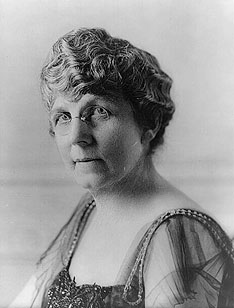
  • Florence Harding, the long-forgotten wife of Warren Harding, was reported to have written her husband’s inauguration speech and to have dictated his selection of cabinet members

    florence-harding
    Florence Haarding
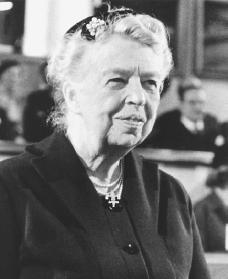
  • Eleanor Roosevelt, of course, was a leading adviser to her husband and strongly influenced his ideas and his policies.

I am pretty sure that the first ladies portrayed in First Daughter Suite were not only observers, much less victims, of their husband’s actions. Although First Daughter Suite gives us a fascinating glimpse of life in the White House, I’m still waiting for a play that will show us a more rounded portrait of the women

Is this the face for the new $20 bill?
Eleanor Roosevelt

who have lived there.

Watching Serena Williams–A Real Champion

This summer has been filled with bad news stories as wildfires devastate the Western states, Congress and the President tangle over the Iran nuclear proposal, and thousands of migrants flee war torn Syria trying to get into a reluctant Europe. It’s no wonder that so many of us turn to sports as a way to forget what’s going on. Tennis always reaches a crescendo this

Serena Williams
Serena Williams

time of year and it has been a delight to watch Serena Williams march through victory after victory. Who wouldn’t wish her luck in achieving a grand slam of titles in women’s tennis this year? Unfortunately, she didn’t quite make it. As sometimes happens in real life as well as in fairytales, a newcomer appeared who managed to defeat Serena and end her hopes for a grand slam. But Serena Williams is still a champion, probably the greatest female athlete we have ever seen.

Tennis has been a field of glory for women ever since it was introduced to America by a woman almost 150 years ago. According to the New York Times (Aug. 27, 2006) Mary Ewing Outerbridge, of Staten Island, was visiting relatives in Bermuda when she encountered some British Army officers playing tennis. at a garden party in Wales in December 1873 and had just arrived in Bermuda, where British Army officers were playing it. Being an enterprising young woman, Miss Outerbridge brought back from Bermuda a net, balls and rackets, and

Tennis match in 1874

specifications for the size of the courts. The strange gear was confiscated by customs agents but Mary’s brother was able to use his influence to get customs to release it. Tennis was a hit in New York and it soon spread across the country.

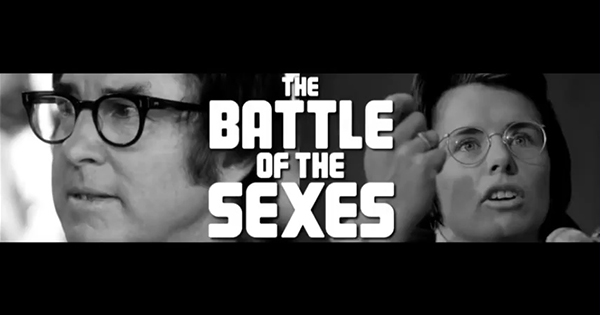
Tennis has always been one of the few sports that has been open to women as well as men, although the championship games have been single-sex events. Women’s championships were not considered as important as the men’s events. In 1973, Billie Jean King accepted a challenge from a former tennis champion, Bobby Riggs, who had boasted that a weak male player could easily beat a woman. Dubbed “the Battle of the Sexes”, the Riggs-King match Billie-Jean-Kingtook place at the Houston Astrodome in Texas on September 20, 1973. The game got a lot of publicity and when Billie Jean King won, she felt that she had struck a blow for women everywhere. The women’s game began to be taken more seriously.

Serena Williams and her sister Venus have brought more attention and respect to the women’s tennis tournaments than they ever had before. This year, Serena got more publicity than any of the male players and tickets for her matches were the most highly prized ever. It’s about time a woman was the biggest attraction!  Like so many of her other fans, I am sad that Serena Williams did not make her grand slam, but she can be content that she has set a great example for girls and women around the world. We are all wishing her good luck. After all—there’s always next year!

Independence Day–Don’t Forget the Women

Everywhere throughout America today people are celebrating the Fourth of July-the anniversary of the signing of the Declaration of Independence. We may not spend much time thinking about the reason for the holiday, but there are many reminders on TV, social media and newspapers. And when we think about it, what usually comes to mind is a picture of

Signing the Declaration of Independence

enlightened gentlemen in elegant clothes sitting decorously at a table and writing a document that would stand for centuries as the cornerstone of a stable democracy. The pictures don’t show the quarrels and struggle that went on when people decided to pursue independence and later to write a constitution that would make the new country possible. And the pictures show only half of the story—there are no pictures and seldom any mention of the women who inspired those men and sometimes goaded them into action.

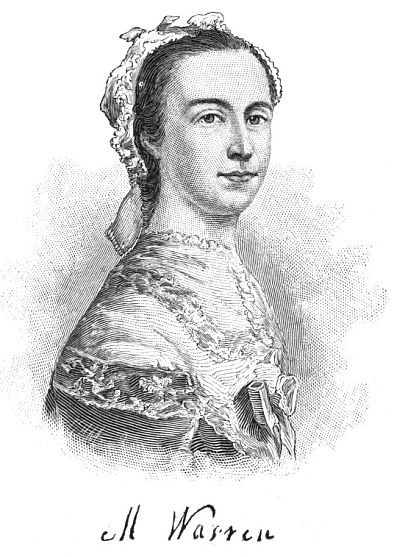
Pictures can’t show the whole story. You have to read the words behind the pictures to get a closer look at our revolutionary leaders. Last year I read a biography of Mercy Otis Warren, who, like her good friend Abigail Adams, influenced many of the men who fought in the Revolution and went on to start a country. Mercy and John Warren’s home became a meeting place for leaders who organized the Boston Tea Party and fought for the rights of the colonies to organize their own governments. Even though women were not encouraged to participate in public life, Mercy Warren began writing pamphlets and satirical verses and dramas that supported the Revolutionary cause.

Mercy Warren
Mercy Warren

At leisure then may G[eor]ge his reign review,
And bid to empire and to crown adieu.

For lordly mandates and despotic kings
Are obsolete like other quondam things.  (1775)

The years following the Revolution brought little peace to Mercy Warren and her husband as they disagreed with many of the decisions of the Federalists who controlled the government. James Warren, who had been a leading figure in the war for independence, was shut out of government service and his sons struggled to find posts.

When a new constitution was drafted and presented to the states, Mercy Warren opposed its ratification. She wrote a pamphlet “Observations on the New Constitution…” in which she urged the states to reject the draft. One of her major objections was the lack of a bill of rights “There is no provision by a bill of rights to guard against the dangerous encroachments of power” she wrote. She was also concerned about the six-year terms given to senators. “A Senate chosen for six years will, in most instances, be an appointment for life…” (Well, she was right about that, wasn’t she? Many Senate terms have lasted for a generation or more.) She worried that there were no defined limits to judiciary powers and that the executive and legislative branches were dangerously blended together. The Constitution certainly did not seem a sacred document to her.

As we all know, the Constitution was ratified and has become the basis of American law. Some of Mercy Warren’s concerns were addressed very early. The passage of the Bill of Rights can be attributed in part to her demands. Other aspects of government continue to be addressed such as the power struggle between the Legislative and Executive branches. But the Constitution survives and so does the country.

Reading about the early struggles for democracy in America can give us some hope that our leaders in Washington will eventually find a way to work together and solve some of the problems confronting our world today. The past may look peaceful as we gaze back at the solemn pictures of Founding Fathers, but revolution is never easy, and it never solves all of a society’s problems. America was designed by a quarreling group of imperfect men and women. And every Fourth of July has been celebrated amidst continuing arguments and struggles to make the country more democratic for all its citizens. Don’t let those elegant suits and quill pens fool you—life in a democracy is never peaceful and free of strife.

If you want to read more about Mercy Otis Warren, there is information about her in Cokie Roberts’s book Founding Mothers. For a complete biography, I highly recommend Muse of the Revolution: the Secret Pen of Mercy Otis Warren by Nancy Rubin Stuart.

June and the Reluctant Brides

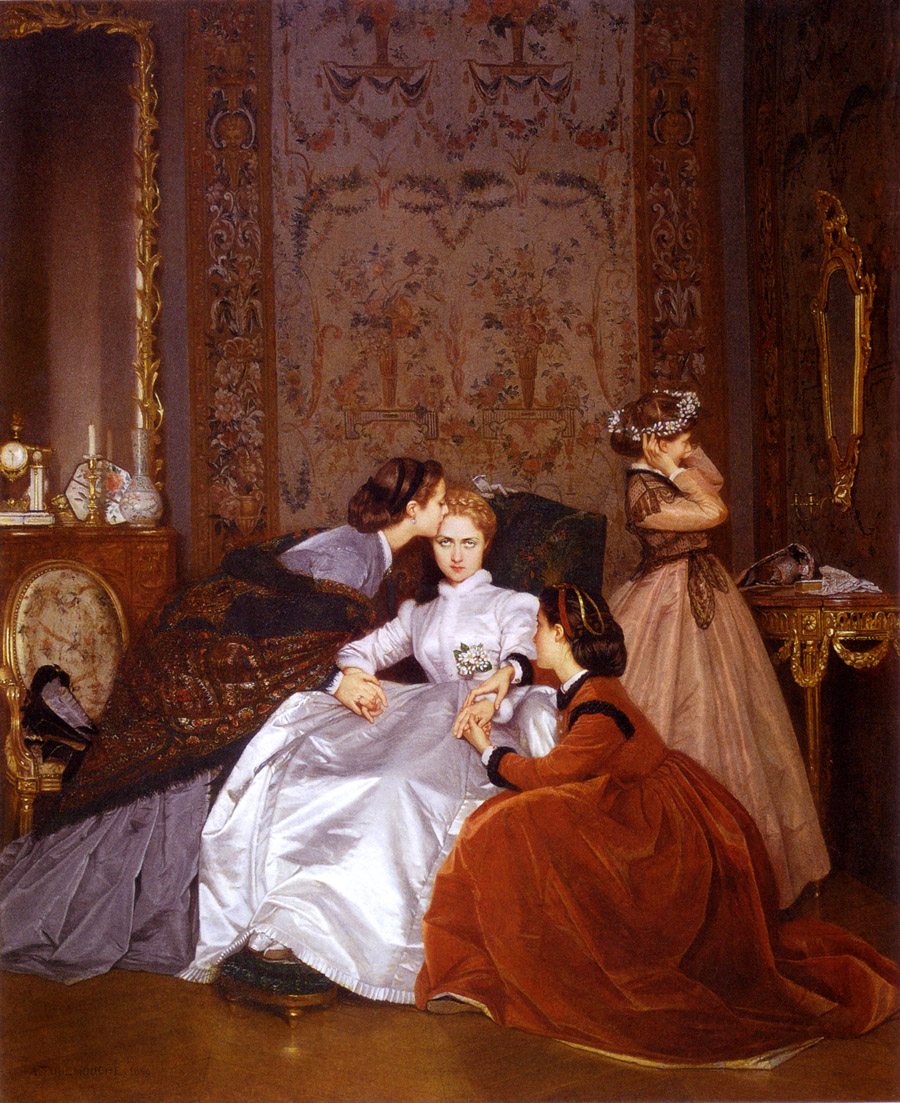
June has arrived and with it the promise of more weddings as today’s couples decide to commit themselves to the semi-permanence of marriage. Not as many Americans are getting married as they did fifty years ago. In 1950, only 22% of

The Reluctant Bride by August Toulmouche
The Reluctant Bride
by Auguste Toulmouche

Americans had never been married now the percentage has just past the halfway mark—50.3%. The reason for this change has often been discussed by social scientists and the media. Women now are better educated than ever before and more of them can earn a living without a husband, but this doesn’t seem to be the reason for the decline. College educated people are more likely than high school graduates, or high school dropouts, to get married. Marriages aren’t only about economics.

Does anyone remember the idea that people ought to be married before they become sexually active? Very few young people adhere to that idea now. The idea of being a virgin upon marriage has died away. According to an article in Atlantic Magazine, cohabitation has increased 900% during the last fifty years. It is now the norm for most couples to live together for a period of time before they marry. Perhaps that’s the reason why weddings have become increasingly elaborate and expensive in recent years. If a wedding does not signal a change in lifestyle, it has to become an event in itself to mark a legal change of status.

One curious thing is that even back in the days when marriage was almost the only source of economic security as well as sexual and romantic love available, some women rejected the very idea of marriage. It’s easy to forget how one-sided the rights of marriage used to be. The Founding Fathers who wrote the United States Constitution wanted to give freedom and power to citizens, but only to male citizens. Women who married in the early 19th century gave up rights to their property, their earnings, their inheritances, and their children. A husband became the head of the family and he was legally entitled to make all the decisions about where the family should live, how they spent their money, and what should happen to their children. Of course, many women were able to actually make the decisions, but they could do that only as long as they could persuade their husbands to do as they wished. It didn’t take long for women to decide they wanted some legal rights to back up their powers of persuasion. One of the foremost fighters for this freedom was Lucy Stone, although today she is almost forgotten.

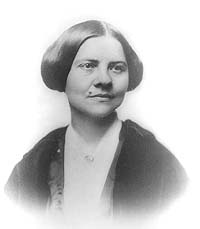
Born in 1818 in Massachusetts, Lucy Stone spent most of her life as a crusader for freedom. Her life was a series of firsts. She became the first woman from Massachusetts to earn a college degree and she did it at Oberlin, the first college to

Lucy Stone
Lucy Stone

admit both women and men. She fought for the abolition of slavery and became a public speaker at a time when women were seldom allowed to speak in public. She also crusaded for the rights of women, especially their freedom to vote.

Because of the inequalities of the rights of husbands and wives, Stone was opposed to marriage, but when she met Henry Blackwell, he persuaded her that the two of them could devise and live as equals. When they were married in 1855, they read a protest against marriage during the ceremony—a protest that was later published in newspapers across the country.

We protest especially against the laws which give the husband:

  1. The custody of the wife’s person.
  2. The exclusive control and guardianship of their children.
  3. The sole ownership of her personal and use of her real estate, unless previously settled upon her or placed in the hands of trustees, as in the case of minors, idiots, and lunatics.
  4. The absolute right to the product of her industry.
  5. Also against laws which give to the widower so much larger and more permanent interest in the property of the deceased wife than they give to the widow in that of the deceased husband.
  6. Finally, against the whole system by which the legal existence of the wife is suspended during marriage, so that, in most States, she neither has a legal part in the choice of her residence, nor can she make a will, nor sue or be sued in her own name, nor inherit property.

The most startling decision of their marriage was for Lucy Stone to keep her own name rather than becoming Mrs. Henry Blackwell. She was praised by a few, but denounced by many for this decision In the years since, her choice has become far more acceptable to many women. Despite the unconventionality of their marriage, the two of them succeeded in building a life together. Their daughter, Alice Stone Blackwell, worked with them for many years and wrote the first biography of her mother.

Now that brides and grooms have so many more choices in in how their married life will function, it is a shame that Lucy Votes_for_womenStone has been forgotten. Without the work that she and other leaders of the suffrage movement did, women planning their weddings this year might be giving up far more than they are. If you want to learn more about Stone and her work, I recommend a thoughtful new biography, Lucy Stone: A Life by Sally G. McMillen. Perhaps that’s a book you should think of when you are choosing a wedding present for young couples.

Memorial Day and Memories

War is no longer declared

Just continued. The unheard-of

Has become the quotidian.

Those words were written more than fifty years ago in postwar Germany by Ingeborg Bachmann and eloquently translated by Eavan Boland in her anthology After Every War. On this Memorial Day the truth of those lines is more evident than ever before. War, endless war, continues year after year, erupting in one country after another like a malignant plague.

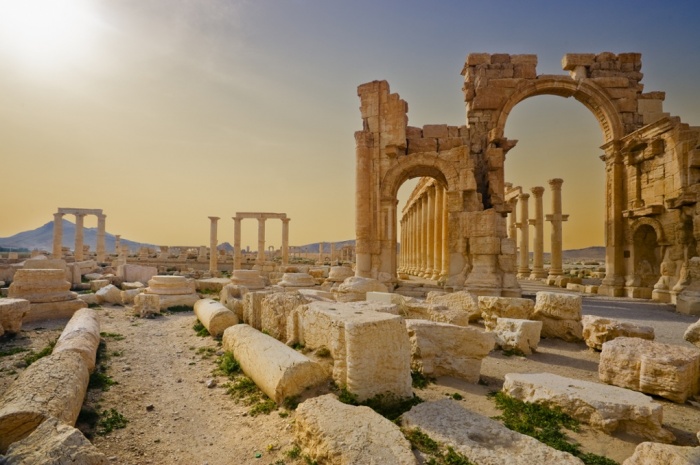
Within the last few days Palmyra, an ancient trading city in Syria, was captured by ISIS forces. The magnificent centuries-old monuments are expected to be destroyed by troops who consider the preservation of them a form of idolatry.  Perhaps religious feelings are at the heart of the destruction, but watching videos of teenage soldiers swinging hammers ruthlessly

Palmyra, ancient Syrian ruins

at stone carvings makes me wonder whether some of the destruction isn’t fueled as much by youthful exuberance as by heartfelt belief. I can’t help wondering whether some of these men may not regret the destruction as they grow older and slowly learn to appreciate the value of the past as well as the fever of the present.

But the real tragedy of war isn’t the destruction of monuments or art or even homes and hospitals but of people. There are no victimless wars. Every drone that explodes in the Middle East kills someone; every bomb dropped during World War II destroyed life as well as buildings; every shot fired from the trenches in World War I and every volley of rifle fire during the Civil War were intended to kill and maim soldiers and to leave children fatherless and families bereft.

Every war that has ever been fought has been a failure—a failure of people to use their human ability to speak and communicate to resolve differences. It is only when people give up the very traits that make them human that they need to turn to war.

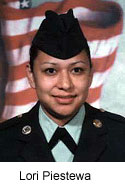
But Memorial Day is a time to remember those who have died as victims of people’s inability to act as humans. For most of our history the fighting forces that were remembered on Memorial Day were all men—the soldiers, sailors, and marines who fought in America’s early wars. Now, of course, women as well as men serve in all branches of the Armed Forces, so today we should remember the first American woman killed in combat—Lori Piestewa, who was killed in combat.Lori-Piestewa-1343 Lori Piestewa was a member of the Hopi tribe and lived on a Hopi reservation in Arizona with her family before she left to serve in the military. Her father had served in Vietnam and her grandfather in World War II, as so many men of the Hopi tribe have served over the years. She left two young children, who by now are probably well aware that the war in which their mother served and died has not yet ended. Perhaps when they are grown they too will serve in one of our endless wars. It certainly seems as though there will be opportunities for that.

Peace is as far from us as it has ever been. So on this Memorial Day, all we can do is remember those who have died and will never again see the world that we, the living, are still enjoying. Lori Piestewa will never again feel the harsh Arizona sun or the see a sandy Arizona landscape.

The sadness in the loss of life, the end of an opportunity to see the world, was expressed almost 100 years ago by a young poet, Francis Ledwidge, who died in World War I. He was writing about Thomas McDonagh, a man executed during the Easter Rebellion in Ireland. This lament serves well as a Memorial Day tribute to all those who died in all of our wars and will never again see our beautiful earth.

He shall not hear the bittern cry

In the wild sky where he is lain

Nor voices of the sweeter birds

Above the wailing of the rain.

Nor shall he know when loud March blows

Thro’ slanting snows her fanfare shrill

Blowing to flame the golden cup

Of many an upset daffodil.

What’s in a Name? Princess Who?

Church bells rang loudly in London last week when a baby girl was born to Kate Middleton and her husband Prince William.The world was told about the birth of the princess and soon the announcement came that the baby would be named

Princess Charlotte May 2015

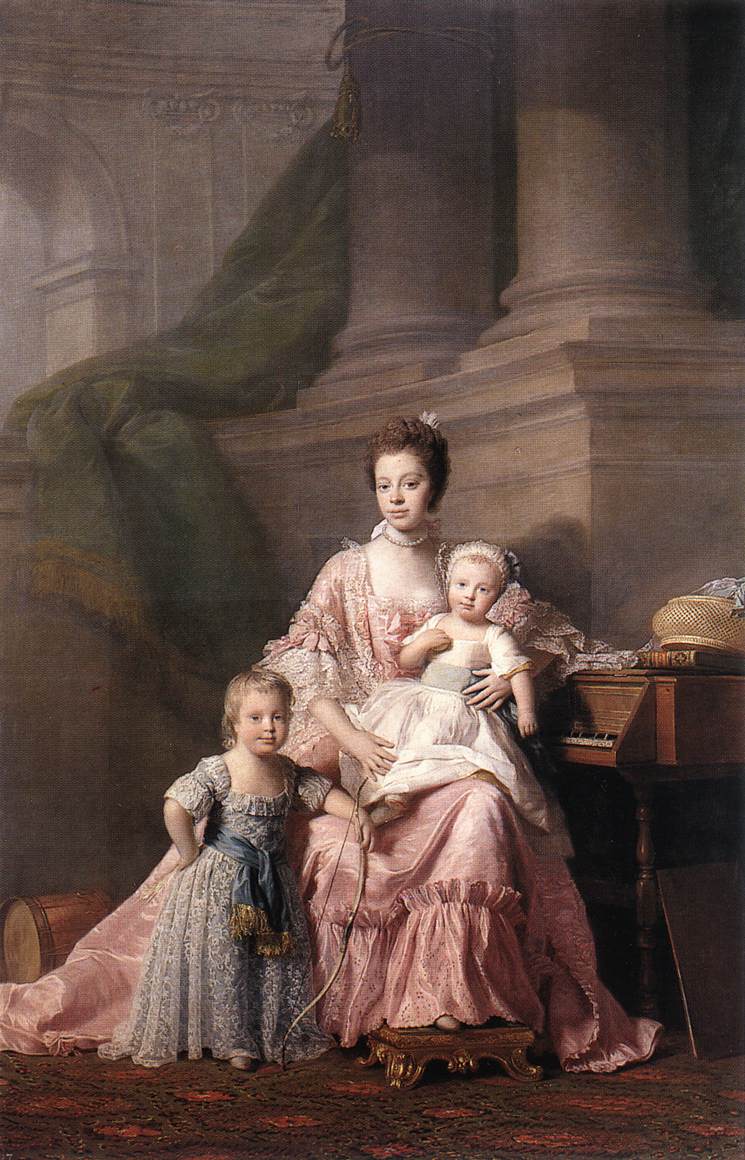
Charlotte Elizabeth Diana, three names that pay tribute to her grandfather, great-grandmother, and grandmother. The names are traditional, but the baby has been born into a new world, one in which females can inherit the throne of Britain even if they have a younger brother. Charlotte and her family are bringing several innovations to the royal family. Her mother is a commoner, but one who has adapted to her royal role with apparently effortless grace. When you look at history, you see that Charlotte is an appropriate name for a woman who will face a changing world and will be expected to adapt to it gracefully.

Queen Charlotte, wife of George III who ruled England from 1760-1820, was born in Germany and had never been out of her native country until she married George III. And talk about a short courtship—the wedding was performed the day after Charlotte arrived in England and met her future husband for the first time. As a young immigrant girl, as well as a queen, she spoke no English when they married but soon began to serve the crown by producing children. She learned English quickly and became a popular queen as well as a helpmate to her husband who was ill for many years. The Queen bore fifteen children, thirteen of whom survived to adulthood. Family life was difficult as the king had periods of apparent

Queen Charlotte
Queen Charlotte

madness during which he became over-excited and acted erratically. His sons and many members of his court were frantic to control his bouts of irrationality; Queen Charlotte coped with the situation better than most of them. In recent years, doctors have realized that the king’s illness was physical, but during his lifetime he was considered just a madman. Queen Charlotte did not have an easy life, but she adjusted to her new country and her stressful family situation and carried on.

When I decided on a name for the heroine of my series of mystery stories set in the 1840s, I chose the name Charlotte Edgerton because it reflects her life story as an English girl on the edge of the new world of America. The 1840s were one of the most tumultuous decades of the nineteenth century. America endured a great depression in 1837 and people throughout the country decided that the old colonial lifestyle centered on traditional farming could not last. Various experimental social groups sprang up—communal farms such as Brook Farm where Charlotte lived in Massachusetts—were popular and widely copied. Charlotte tried life there but discovered that the idealism of the Brook Farmers was not strong enough to keep out the forces of greed and discord that led eventually to murder. That story is told in the first volume of the series A Death in Utopia.

A Death in Utopia
A Death in Utopia

After leaving Brook Farm, Charlotte moves to New York City, sometimes known as Sin City because of the widespread prostitution and political corruption in the fast-growing metropolis. As young men and women swarm into the city to find jobs and prosperity they can no longer find on rural farms, they encounter temptations and a fast-moving world of entertainment and luxury. When a frightening series of murders occurs, Charlotte and her fiancé Daniel Gallagher become involved in trying to find the killer and stop the terror that hovers over the sporting houses of the city. This story appears in Charlotte’s forthcoming adventure Death Visits a Bawdy House, which will be published in July.

In future books in the series, Charlotte returns to England, but to a far different city of London where poverty stalks the grimy streets and revolution is in the air. Yes, Charlotte is a good name for my heroine who is observant and resourceful and manages somehow to survive and adjust to the complex ever-changing world in which she lives.     

Celebrating Pi Day and Women Mathematicians

By this time almost everyone who follows the news, whether in print, on a website, or Facebook or Twitter must have heard Happy_Pi_Daythe news that Saturday, March 14 is Pi Day. Scientific American explains the concept and gives us the history of it. As they write:

If there was ever a year to commemorate Pi Day in a big way, this is it. The date of this Saturday—3/14/15—gives us not just the first three digits (as in most years) but the first five digits of pi, the famous irrational number 3.14159265359… that expresses the ratio of a circle’s circumference to its diameter.

Unfortunately this only works in the U.S. because, Europe, Canada and most other countries write the date putting the day before the month—14/3/15. If only April had 31 days, they could wait for 31/4/15 but alas that will never come.

Aside from eating pie to commemorate the date and taking our children to the local science museum, what else what else can we do to celebrate the importance of math in our lives? Well, we might think about how few girls study math and how few of the world’s famous mathematicians were women. Considering how difficult it has been until very recently for girls to be encouraged to study math, we shouldn’t be too surprised. Women have always had to fight for their education and in many parts of the world they still do.

Take for example, Mary Somerville, born Mary Fairfax in 1780 to a wealthy and prominent family in Scotland. Like most girls, she was given little education at home, although one of her uncles recognized her abilities while she was young. It was only when Mary surprised her brother’s tutor by answering his question when her brother was stumped, that she was allowed to receive some limited tutoring herself. With the help of the tutor she was able to teach herself mathematics. Unfortunately, at the age of 24 she married a distant cousin who was convinced that women had no talent for intellectual work. It wasn’t until after his early death that she was free to pursue her own interests. Fortunately, for her second husband she chose a man, William Somerville, also a cousin of hers, who encouraged her interests and introduced her to intellectual circles in Edinburgh and later in London.

Finally Mary was able to study, learn about several branches of science, as well as raising a family. Her husband, a physician, was elected a Fellow of the Royal Society. Of course in those days women were ineligible for membership, but

Mary Somerville
Mary Somerville

she was able to use her husband’s access to learn about the society’s scientific activities. She gained fame through writing popular books about science including The Connexion of the Physical Sciences and Physical Geography, both of which were went through numerous editions.

Throughout her long life—she published her last book at the age of 88 and died in 1872 at the age of 91—Mary Somerville kept up her interest in science and writing. She never, however, did original research nor was she encouraged to do so. It was not expected of women. In an obituary for the Royal Astronomical Society, R.A. Proctor wrote “We shall never know certainly…what science lost through the all but utter neglect of the unusual powers of Mary Fairfax’s mind.”    

Pie to celebrate Pi Day
On this Pi Day when we celebrate the importance of mathematics, and by extension all of science, it is important to remember that girls are still not studying math and science as often as boys are. It’s time for all of us, parents, teachers, society in general, to recognize that it’s not acceptable to expect women to merely bake the celebratory pies, we need to encourage them to study the importance of pi too.

The Fall and Rise of a Poet–Elizabeth Barrett Browning

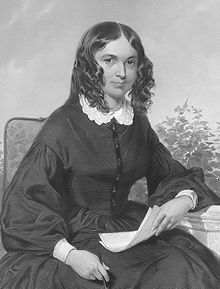
portrait of Elizabeth Barrett Browning
Elizabeth Barrett Browning

Perhaps it is the long curls falling over her cheeks that makes Elizabeth Barrett Browning look like a stereotypical wan, Victorian poet. Although her love sonnets, especially “How do I love thee…” still live on in many readers’ imaginations and are sometimes quoted in wedding toasts, they have become too saccharine for many of us. Poets’ reputations veer up and down almost as quickly as those of basketball coaches or rap artists.

When she died in 1861, Elizabeth Barrett Browning was so popular and admired that when William Wordsworth died, she had been considered as a logical successor as England’s poet laureate. Her book-length poem Aurora Leigh went through twenty editions between its publication in 1857 and 1900. With the new century the wind shifted and there were no more editions of the poem until 1978. Virginia Woolf, who never forgot Barrett Browning, wrote in 1932 that “Nobody reads her, nobody discusses her, nobody troubles to put her in her place.”

Now we are in another century and Elizabeth Barrett Browning is being looked at in a new light—not as a poet of love and harmony, but as a disruptive radical. She spoke out on many social issues including child labor.

The Cry of the Children

Do ye hear the children weeping, O my brothers,

      Ere the sorrow comes with years ?

They are leaning their young heads against their mothers, —

      And that cannot stop their tears.

The young lambs are bleating in the meadows ;

   The young birds are chirping in the nest ;

The young fawns are playing with the shadows ;

   The young flowers are blowing toward the west—

But the young, young children, O my brothers,

      They are weeping bitterly !

They are weeping in the playtime of the others,

      In the country of the free.


Slavery was another favorite subject of Barrett Browning and her feelings about this were no doubt influenced by her family’s history as slave-owners in Jamaica. Elizabeth was aware, as was the rest of the family, that they had cousins and other relatives who were of mixed African and English blood. Some of the mixed-race children born to slaves on the Jamaican plantation that was home to Elizabeth’s grandfather, were acknowledged, others were not.  Elizabeth and her siblings, who were dark skinned, probably had some African blood. Some critics speculate that a desire not to have more mixed-race grandchildren was the reason for Elizabeth’s father’s refusal to let his children marry. Although it’s hard to figure out why a man who did not want grandchildren would produce twelve children of his own.

The fluttering Victorian poet that many of us picture when we see some versions of the poetry of Elizabeth Barrett Browning is not the real EBB. She was a woman immersed in the social issues and politics of her own age. After she married Robert

Cover of "Sonnets from the Portugese"
Cover of recent paperback edition

Browning and moved to Italy, she became a staunch defendant of the Italian war for independence from Austria, just as her friend Margaret Fuller was. When she wrote her longest poem Aurora Leigh, she wrote about a woman’s struggle to maintain her independence from the man she loved and the marriage he proposed:

If I married him

I should not dare to call my soul my own

Which so he had bought and paid for: every thought

And every heart-beat down there in the bill.


Her concerns were the same ones that women struggle with today. It’s time to free her from the tyranny of being seen just as a poet of love. A good place to start is with the book Dared and Done: the Marriage of Elizabeth Barrett and Robert Browning by Julia Markus. It’s not a complete biography of her life, but a very readable account of her surprisingly happy marriage with another great poet. Together they faced many of the same issues that dual-career families face in the 21st century. It gives us a new picture of what those Victorians were really like.