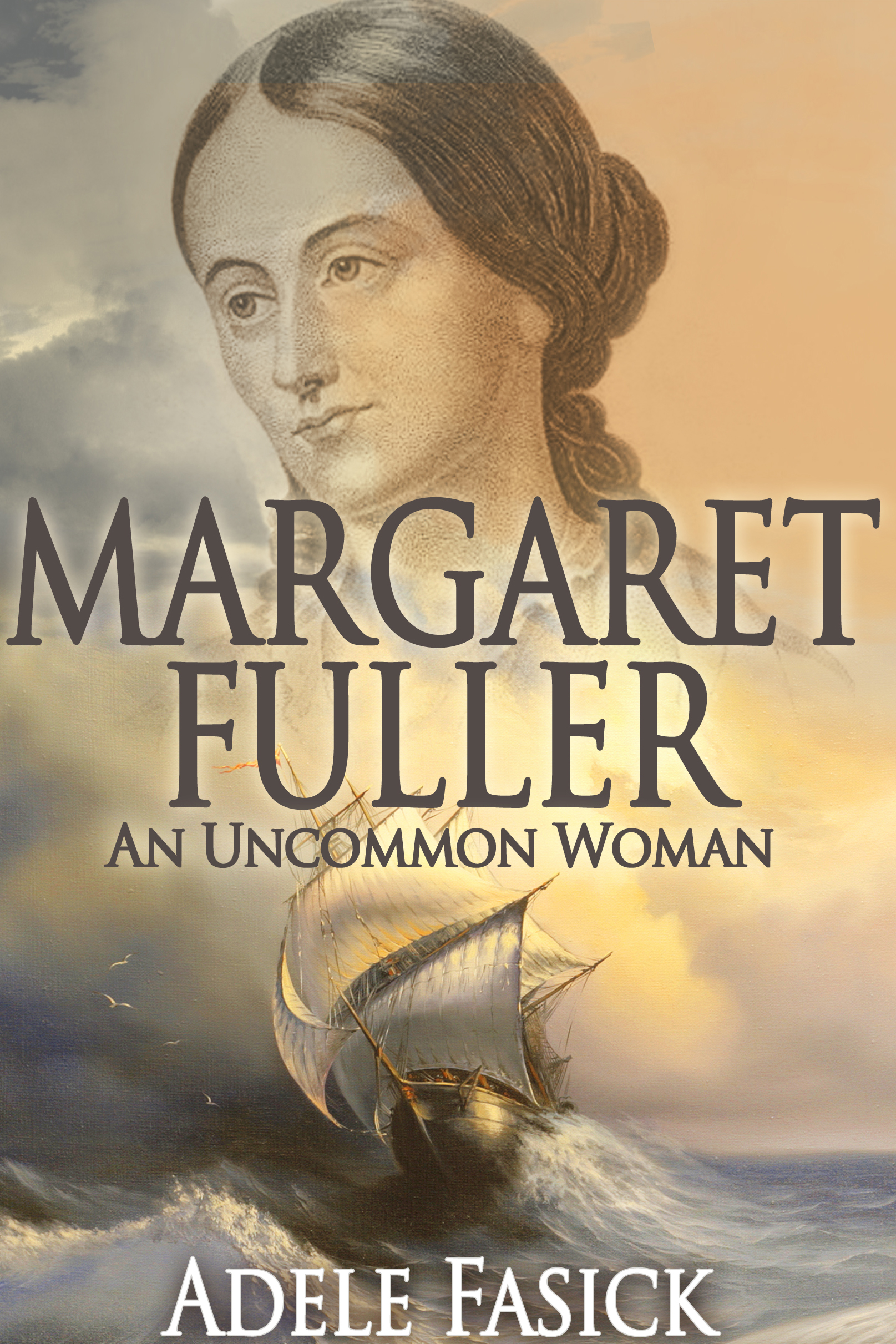
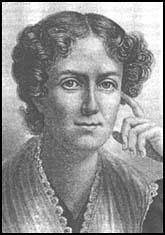
The Smashwords publishing website is having a special year-end sale that includes my biography of one of America’s most famous women—Margaret Fuller. Fuller is the nineteenth century woman who inspired women throughout the country with her book Women in the Nineteenth Century. She was a writer, an editor and a pioneering foreign journalist who covered the 1848 revolution in Italy.
Smashwords offers the ebook version of my book Margaret Fuller—An Uncommon Woman for the bargain price of FREE. This sale lasts until January 1, 2022. Click on this Smashwords link to find the page and enter the sale code listed there to order your digital copy.
If you prefer to read a print version, you can find one at Amazon.com, but this special sale price does not apply to books purchased through Amazon.
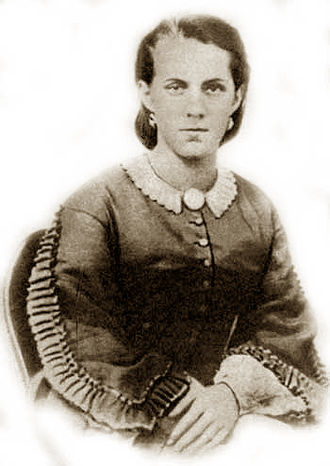
During the mid-nineteenth century, Russia was a part of Europe but felt very separate from it. During that time, Russian middle and upper classes, women were proud of having more rights than they would have in other European countries. The right to an education was particularly important and a strong feminist movement grew up. Women were encouraged to educate themselves and become self-supporting. Surprisingly enough, one of the most liberating career paths for women was learning stenography. This was the path chosen by Anna Grigoryeva Dostoevskaya, a woman who was destined to play an important role in Russian literature.
Anna was born in 1848 in St. Petersburg. Her family encouraged her to be independent and read widely. She graduated with high honors from high school and decided to become a stenographer, one of the few careers in which a woman could earn a living. It was a stroke of luck when one of her teachers recommended her for a job with Fyodor Dostoyevsky, who was already one of her favorite authors. He had published several articles and two novels during the 1840s, but his career had been interrupted when he was sentenced to five years of exile in Siberia.
At the time Dostoyevsky met Anna, he was struggling to rebuild his career. His first wife had died, leaving him with a stepson to raise, his reputation as a writer had faded, and he was struggling to fulfill his contract to complete a novel called The Gambler. He called upon a friend to help him find a stenographer and luckily the friend recommended Anna, who had been one of his students.
Eventually, with Anna’s patient help, Dostoyevsky completed his novel and was able to fulfill his contract. During the weeks they worked together, he also fell in love with his faithful helper and proposed to her despite the twenty-year difference in their ages. During the years before meeting Anna, Dostoyevsky had drifted into a life of gambling, which led to debts that interfered with his writing career. No one could have predicted that a 19-year-old stenographer would save him from his gambling addiction and his precarious life, but that is what happened.
With the help of Anna’s mother, who agreed to pawn the girl’s dowry and give the money to the newly- weds, Fyodor and Anna were able to leave Russia and spend four years in other European countries. Anna’s example of hard work and willing sacrifice inspired Dostoyevsky to continue writing despite the pull of the ever-tempting gambling casinos. Anna tried hard to understand his addiction and even spent a secret day at the casino alone so that she could better understand how the insidious promise of quick riches could tempt almost anyone to continue playing.
Throughout the early years of their marriage, Anna helped her husband continue his writing. She understood his need to gamble and helped him through the difficult years until they were able to move back to St. Petersburg and pay off their debts. During the rest of Dostoyevsky’s life, Anna managed his writing career, even starting a publishing company to sell his books. When he died in 1881, Anna was only 35 years old, but she dedicated the rest of her life to preserving his books and his memory.
For many years, Anna’s role in Dostoyevsky’s life has been downplayed in accounts of his life, but a recent biography has now presented a more balanced view of her importance. The Gambler Wife: A True Story of Love, Risk, and the Woman Who Saved Dostoyevsky by Andrew Kaufman (Riverhead Books 2021) offers a fresh view of the creative partnership between these two remarkable people.
A lot of attention has been paid in recent weeks to the anti-abortion law passed in Texas. This is the law that enables an individual to profit by denouncing anyone they believe is helping someone to obtain an abortion. Legislators claim this will cut down on the number of abortions performed in Texas, yet research and experience have shown that the best way to reduce the number of abortions is to provide information about contraception. But Texas, according to a National Institutes of Health report, is not one of the 20 states that the requires schools to offer information about contraception. You have to wonder whether the Texas legislators are seriously interested in reducing abortions at all.
As we hear about the ways in which some conservatives are trying to do away with the knowledge and services that help people control their fertility, we should remember how difficult it was to start making that information available to anyone. The use of contraception makes it possible for women to play a variety of roles in the world. Yet, over the years, many people in public positions tried to withhold information instead of sharing it with those who need it. It’s about time to start honoring the women (and some men) who finally started to tell people how they could manage their sexuality and live more fulfilling lives.
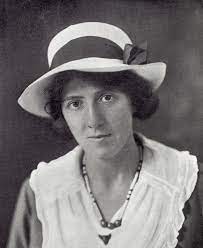
Marie Stopes was an unlikely figure to play a role in this field, but in fact she played an important role. Born in Scotland in 1880, and educated in England, she was a paleobotanist. What is a paleobotanist? Someone who studies the way plants have evolved and developed through the centuries. She became the youngest person in Britain to receive a Doctor of Science degree in 1904 and became one of the first women to be elected a fellow of the Linnean Society of London.
Marie Stopes
During the first years of her career, Stopes devoted herself to science, but her interests expanded a she grew older. In 1918, she published a book called Married Love, which was one of the first books to give men and women frank and explicit details about sex. The book was a great success and sold widely throughout Britain and all of Europe.
Marie Stopes opposed abortion and strongly advocated that an expanded knowledge about contraception would eliminate the need for abortions. She founded the first birth control clinic in Britain and edited the newsletter Birth Control News. Few people have done so much to benefit women’s health and progress.
Despite all the good work she did for many people, Marie Stopes is often left unmentioned in histories of birth control. She was not a perfect person. At times, she advocated eugenics, a belief that society would be improved if people of low physical and mental health did not have children. Although she herself was not a racist, many people who advocated eugenics did believe that the white race was somehow better than other races. Today these beliefs have been rejected by scientists and social leaders, but Marie Stopes’ reputation has been permanently damaged.
Even though Stopes was not always right, I still believe we can honor the good work she did at a time when very few other people were willing to educate the public about birth control. We ought to acknowledge the good that she did and try to forgive her mistakes.
During these waning weeks of summer, thousands of children are returning to school. Many parents struggle with questions about how the distance learning experience of last year has affected them. Will the re-entry into school go well? This is a good time to remember the words of Maria Montessori who wrote: One test of the correctness of educational procedure is the happiness of the child.
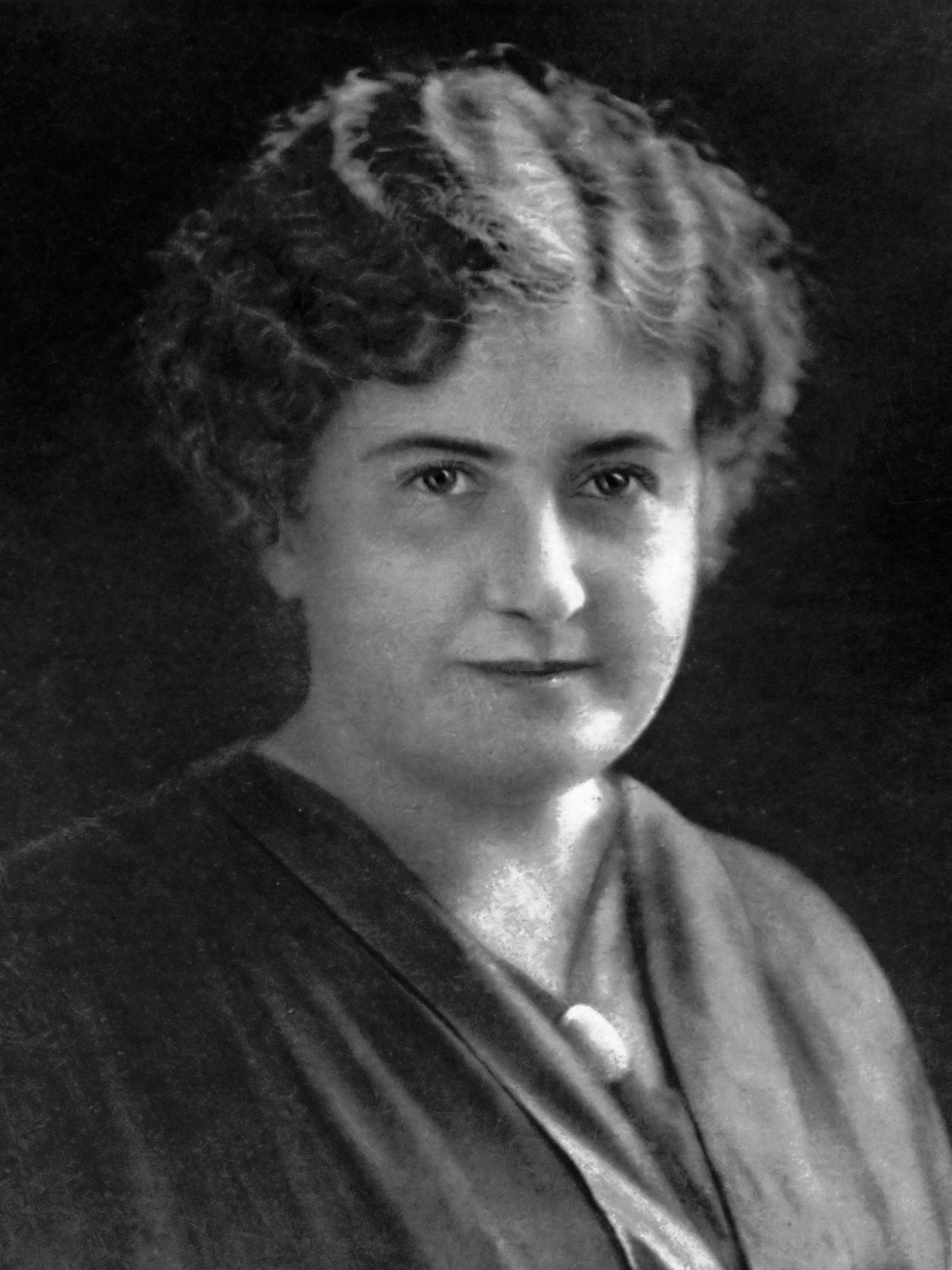
Who was Maria Montessori? She was a woman who influenced early education throughout the world. But her path to education and to becoming the founder of a worldwide network of schools was an unexpected one.
Doctor Maria Montessori
Born in 1870 in Chiaravalle, Italy, Montessori entered a technical school as a teenager, intending to become an engineer. After graduating from that program, she decided that she would prefer to be a physician and entered medical school in Rome. Both of these careers were unlikely choices for a woman in Italy at that time, but Montessori never seemed to consider the more usual female path of giving up her career to become a wife and mother.
Medical school was difficult for her because she was a woman and was therefore not allowed to view a naked body in the same room as male students. She had to do her studies in the laboratory by herself after other students had left. During medical school, Montessori specialized in the treatment of children with physical and mental disabilities that made it difficult for them to benefit from conventional education. After she completed her degree, she continued to work with these children and to study treatments available.
Maria Montessori’s only child, a son, was born two years after she graduated from medical school. If she and her partner had married, she would have had to resign from her professional work, so the two of them agreed to remain unmarried but to be faithful to each other. Unfortunately, her partner was pressured into marriage by his family, so Montessori was left with the full responsibility of raising their son. She was forced to allow the child to be raised by other people and was not in contact with him until he became an adolescent. In later life he worked with her in setting up her schools and promoting her educational ideas.
As Montessori studied children and how they learned, she came to realize that methods devised to teach children with mental disabilities would be beneficial to all children. She devised teaching materials and set up learning environments so that children could work on their own and learn from one another. Montessori also continued lecturing and writing and her work became well-known in Europe and beyond. Many of her suggestions are couched as “rules” for adults working with children:
Never help a child with a task at which he feels he can succeed.
The greatest sign of success for a teacher… is to be able to say, ‘The children are now working as if I did not exist.
Although not many children across the world attend Montessori schools, the ideas and practices that Maria Montessori pioneered have affected education for many of us.
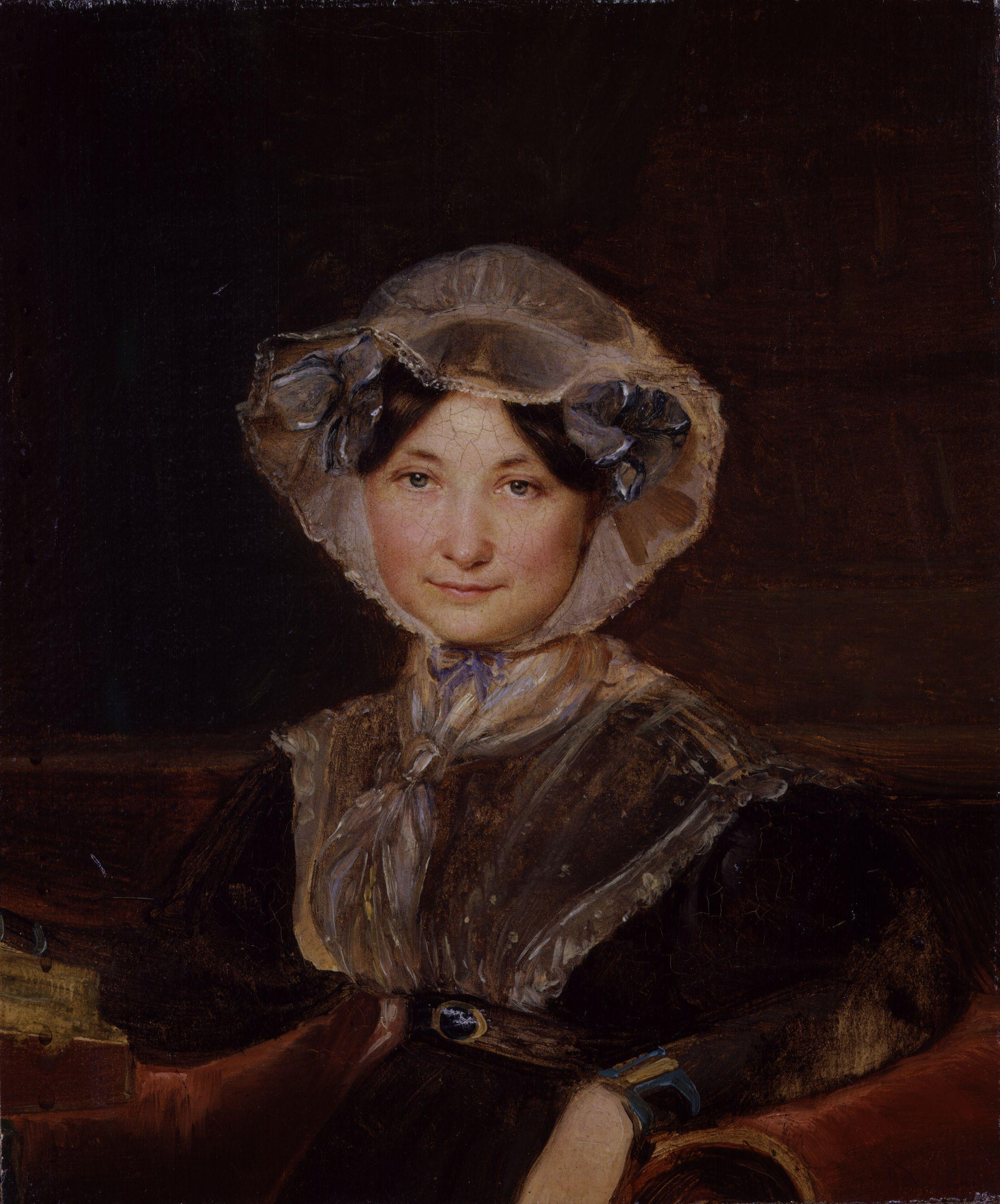
We often hear stories of immigrants who came to America hoping to find a country superior to the one they left. Many settled in the new land and became enthusiastic American patriots. Some histories, however, tell the stories of immigrants who came for practical reasons and some who discovered that America did not live up to their expectations. Frances Trollope was one of these disillusioned immigrants. She came, observed, and then went back home. Worse than that, she wrote about her experiences in a book that outraged many Americans.
Frances Trollope, born Frances Milton in 1779, was a well-educated Englishwoman, daughter of a minister, wife of a barrister, and the mother of five young children. Her husband was not a wealthy man, and when Frances heard about a new idealistic community being set up in America, she decided that she could educate her sons inexpensively there and live a comfortable life. In 1827, she packed up several of her children and headed off for the new country. The plan was for her husband to follow later with their younger children.
Frances Trollope
Trollope’s idea had grown out of her friendship with Fanny Wright, a radical reformer who planned to build a new settlement in Tennessee where enslaved Americans could earn money to buy their freedom. The hope was that slavery would disappear and that slaveowners would not suffer any great loss of income.
When Frances Trollope arrived in America, she had learned enough about slavery to be a strong abolitionist. What she did not know, however, was that she would be surprised and shocked by the everyday habits of many Americans. She observed, took notes, and later wrote about what she had seen. Several years later, she published her first book: Domestic Manners of the Americans, which became both a best seller and one of the most hated books of the time. Her comments on the dining habits of the men she met on a river boat journey were often quoted by both friends and critics:
…the voracious rapidity with which the viands were seized and devoured …the loathsome spitting, from the contamination of which it was absolutely impossible to protect our dresses; the frightful manner of feeding with their knives, till the whole blade seemed to enter into the mouth; and the still more frightful manner of cleaning the teeth afterwards with a pocket knife…
None of Trollope’s plans for life in America worked out as she had hoped. Fanny Wright’s community in Nashoba, Tennessee, was a failure and Trollope was not able to settle there with her family. She took her sons to Cincinnati, Ohio and tried to earn a living by writing and lecturing but was not successful. She was not sympathetic to the American culture and offended many people by noting the discrepancies between American ideals and the behavior she observed.
In 1831, Trollope moved back to England and lived the rest of her life in Europe. She traveled around the continent and wrote travel books about Belgium, France, and Germany. She also began writing novels and by the time she died in 1863, had published 100 books. Her books were very popular, and during her lifetime she was considered one of the outstanding novelists of the 19th century. Modern critics, however, have been critical of her work, and most of her books have become unavailable except in specialized collections.
Two of Frances Trollope’s sons became writers. Thomas Adolphus Trollope was a well-known historian and respected in his time, but Anthony Trollope, the younger son, outshone him. He was the author of several series of books that have been turned into BBC drama series. His Barchester Chronicles and The Pallisers have made him the most famous Trollope of them all.
When Europeans arrived in North America during the 1600s, many of them were surprised to find that people were already living in this “new land”. Nonetheless, the Europeans believed they had the right to take over the continent. Several centuries later, Americans are still struggling to undo long established injustices. After President Biden was elected in 2000, he appointed the first person of Native American ancestry to his Cabinet as Secretary of the Interior—Deb Haaland. The rights of Indian tribes have been recognized as an important value. But it took many arguments over hundreds of years to start ensuring justice for Native Americans.
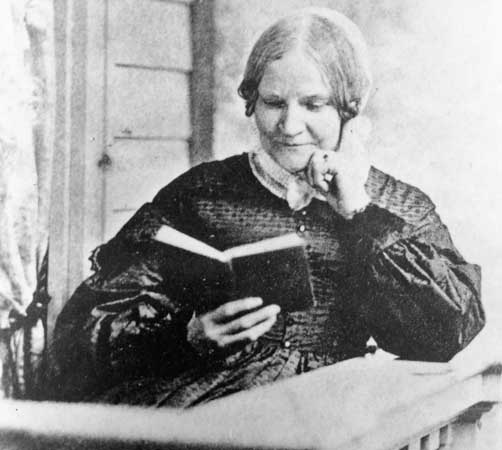
One of the earliest and most persistent fighters for fair treatment of Native Americans was the novelist and activist Lydia Maria Child. During her long life she fought for social equality for all races and sexes while at the same time carrying on her career as one of the most popular writers of the 19th century. Unlike many of the more famous suffragists, she was not willing to place the importance of women’s rights above the importance of justice for enslaved people and Native Americans.
Lydia Maria Child
Child was born in Massachusetts in 1802 into a family of strict Calvinists. As a girl, she did not receive much formal education, but her brother, Convers Francis, shared his books with her and encouraged her studies. After her mother’s death, Child lived for a time with her brother’s family and was introduced to many of his friends from Harvard. With his encouragement she wrote her first novel, Hobomok: a tale of Early Times, in 1824 and its success started her on a lifelong career as a writer.
Hobomok was widely acclaimed and brought a level of fame to the young author. She was even given a free ticket to use the Boston Atheneum, a valuable library from which women were usually barred. But Child was not content to support only popular causes. Ten years later, when she published an abolitionist pamphlet, “Appeal in Favor of that Class of Americans called Africans” the ticket to the Atheneum was snatched away from her and her books were removed from the library. Despite this rejection, Child continued to support the three causes that were most important to her—Indian rights, Abolition, and Women’s Suffrage. Throughout her life, she never wavered in her loyalty to her causes.
After her marriage in 1828, Child continued to write, and her works were popular. Her practical domestic guide, The American Frugal Housewife, was one of the most successful books of the 19th century. Her husband, David Child, was an activist and public speaker, but he was never able to support himself and his wife. He developed many commercial ideas and borrowed money to carry out projects that rarely succeeded. His wife was responsible for earning enough money to support the couple, but she was not allowed to make decisions about spending it. Her husband could invest her money in any way he wished. Even when she wrote her will, she found that she was forbidden to distribute her money or the property her father had left her unless her husband signed the will. This must have made her more aware than many other women of the need for women’s rights to include the right to own property as well as to vote. Nonetheless, despite some short-lived separations, the couple continued to maintain their marriage.
Lydia Maria Child lived until 1880 and during all those years of life she continued her tireless support of the important social reforms of the time. It seems ironic that such a tough, committed fighter should be remembered, if she remembered at all, by a sentimental children’s poem she wrote. It is the traditional Thanksgiving poem “Over the river and through the trees, to Grandmother’s House we go…”
To learn more about this tireless fighter for human rights, you can read the excellent biography The First Woman in the Republic by Caroline Karcher (1994).
Last weekend’s Fourth of July celebrations included many musical tributes to the United States and its history. One of the most familiar of these is the “Battle Hymn of the Republic”, a popular and honored patriotic song, but one that has had a long and contentious history. Most Americans will recognize these lyrics:
Mine eyes have seen the glory of the coming of the Lord He is trampling out the vintage where the grapes of wrath are stored He has loosed the fateful lightening of his terrible swift sword His truth is marching on
Glory, Glory halleluhja Glory, Glory halleluhja Glory, Glory halleluhja His truth is marching on
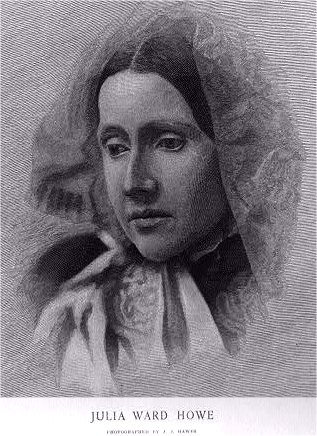
The author of these lyrics, the version that we usually hear at concerts, in schools and other public occasions, was Julia Ward Howe, one of the most notable poets of the 19th century. She was also an activist for the abolition of slavery and for women’s rights. Her inspiration to write these verses came during a visit to Washington DC in 1861, at the beginning of the Civil War. From her hotel window she heard Union soldiers singing a popular wartime song:
John Brown’s body lies a-moldering in the grave John Brown’s body lies a-moldering in the grave John Brown’s body lies a-moldering in the grave But his soul goes marching on.
John Brown, of course, was the insurrectionist who had attacked federal property at Harper’s Ferry in 1859 hoping to lead a revolution that would end slavery. He failed in his mission and was executed, but he remained a hero to abolitionists and to Union soldiers during the Civil War. Julia Ward Howe wrote her new lyrics to make the song a more unifying and uplifting tribute to justice and freedom for the entire country to sing. Her version appeared in the Atlantic magazine and made her famous.
Howe’s lyrics for the song are the ones are still the most famous ones, but her version is only one of many variations. In 1915, half a century after the Civil War had ended, and five years after Julia Ward Howe’s death, a different set of lyrics were written for the familiar tune by Ralph Chaplin, a labor activist. His song was composed for the Industrial Workers of the World (IWW), also known as the Wobblies. It soon became an anthem for a number of labor unions under the title “Solidarity Forever”.
It is we who plowed the prairies; built the cities where they trade; Dug the mines and built the workshops, endless miles of railroad laid; Now we stand outcast and starving midst the wonders we have made; But the union makes us strong.
Solidarity forever, Solidarity forever, Solidarity forever, For the union makes us strong.
We don’t know what Julia Howe thought of radical labor unions like the IWW, but she probably would have enjoyed knowing that the tune she made famous has indeed gone marching on.
AN UNUSUAL OPPORTUNITY FOR YOU THIS MONTH:
One of the women who inspired Julia Ward Howe in her career was Margaret Fuller, the most famous female journalist and author in early 19th century America. The ebook version of my biography Margaret Fuller an Uncommon Woman is now on a special summer sale at Smashwords.com. The price is right—it is free! Just click on the website and order your copy. The sale ends on July 31. (If you prefer a print version of the book, you can find it at Amazon.com)
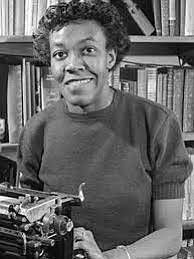
African American women have been writing and publishing poetry since colonial times but have not always been known and acknowledged. One of our earliest poets published in the United States was Phillis Wheatley. One of the best known, and most often studied African American women poets of the 20th century has been Gwendolyn Brooks whose birthday is celebrated this month.
Gwendolyn Brooks
Born in Topeka, Kansas, in 1917, Gwendolyn moved with her family to Chicago before she was a year old, and her work and success are closely identified with that Midwestern city. From early childhood, Brooks had few doubts about her career. Her first poem was published in a children’s magazine, American Childhood, when she was thirteen years old. She continued to write and publish poems until she died at the age of 83 in 2000.
After graduating from a community college in Chicago, she worked for the NAACP (National Association for the Advancement of Colored People) and continued to publish poems eventually appearing in the prestigious Poetry magazine. She was invited to join a poetry workshop where she met several other important African American poets including Langston Hughes who became a lifelong friend. She married Henry Lowington Blakely, Jr. in 1931 and the couple had two children. And year after year she continued to write poetry, which met with continuing success.
Her first book of poetry, A Street in Bronzeville was published in 1945. Her poems were admired by critics, and they were also read and cherished by a large popular audience. Brooks was able to write about the people of Bronzeville with warmth and an acknowledgement of the struggles of their lives. In her poem “Kitchenette Building”, for example, she wrote of the difficulty of dreaming big dreams in a stunted environment:
But could a dream send up through onion fumes
Its white and violet, fight with fried potatoes
And yesterday’s garbage ripening in the hall,
Flutter, or sing an aria down these rooms.
The list of Gwendolyn Brookes achievements is a long one: She won the Pulitzer Prize in 1950, the first African American to be so honored. She added many other prizes too. In 1986 she became the Poet Laureate of Illinois. She also served as a consultant to poetry in the Library of Congress and was the first African American woman inducted into the American Academy of Arts and Letters.
Now, almost 25 years after her death, she is still honored and, more important, still read. You can read many of her poems on the Poetry Foundation website.https://www.poetryfoundation.org/poets/gwendolyn-brooks, and her books are available in almost all public libraries.
2021 has been one of the most divisive years Americans have endured. But if we look back at history, this is by no means the worst we’ve seen. The early years of the 19th century found Americans bitterly divided over the institution of slavery, the power of the federal government, and the importance of religion. Some people wanted nothing to change, but many others were determined to change society in a way that would eliminate slavery and ensure justice for everyone. The question was—how could that be done?
One of the most ambitions dreamers of a new, more just America was a young immigrant named Fanny Wright. Born into a wealthy family in Dundee, Scotland, in 1795, Fanny Wright was orphaned as a young child. She was raised mostly by an aunt of her mother’s and an uncle who was a professor of philosophy in Scotland. In the university library, she read every book she could find and soon began writing poetry and plays. When she read about America and how it was dedicated to a just and fair society for all, she determined to visit the country.
Fannny Wright
At the age of 23, she was able to fulfill her plan and sailed to America with her sister. She was delighted by the freedom of American society, but shocked when she discovered the realities of slavery. In the book she wrote about her travels she said, “The sight of slavery is revolting every where, but to inhale the impure breath of its pestilence in the free winds of America is odious beyond all that the imagination can conceive.”
After her book was published in Great Britain, many important people admired it and wanted to meet the young author. One of her most congenial new friends was the Marquis de Lafayette. In fact, they became such close friends that she moved into Lafayette’s house for a while and was rumored to be his lover. Whether that was true or not, when Lafayette was invited to return to the United States in 1826 to celebrate the 25th anniversary of the founding of the United States, Fanny and her sister followed in his footsteps.
On her second visit to the country, Fanny was even more troubled by the continued existence of slavery and the failure of Americans to confront the issue and find a way to end it. One popular idea in the 1820s and 1830s was that slaves should be freed and then transported out of the country. Very few people liked the idea of having free Blacks live in the same areas in which they had been enslaved. Two popular destinations for these people were Liberia, in Africa, and Haiti, the Caribbean Island that had won independence from France in 1804 and had abolished slavery.
Fanny Wright conceived an ambitious plan to demonstrate how slavery could be abolished in the United States without slaveowners losing the money they had invested. She proposed starting a farming colony where slaves could buy their freedom through the products they raised and sold. Unfortunately, the location she found was Nashoba, Tennessee, a swampy, isolated area that did not offer good soil for farming. It was also far from the markets where produce could be sold and there were no roads. Fanny Wright had never farmed, and she apparently did not consult anyone who could give her practical guidance.
The bad start soon grew worse. Fanny had hoped to form a utopian community, but the Black residents were still slaves and were not given any responsibility for running the organization. Instead, Fanny recruited white men and women who wanted to form an ideal society, although they did not know much about how to farm or to run a business. Nonetheless, the trustees made all the decisions, while the slaves that Fanny had purchased, did the practical farm work.
When Fanny got sick, probably with malaria, and she left the colony under the supervision of the white trustees while she traveled to Europe to find treatment. When she returned to the farm a year later, she found that nothing had gone well. The farm was failing, most of the trustees had left, and the man who was left in charge treated the slaves just about as badly as they had been treated by their old masters.
When Fanny published a paper to justify her plans, she got herself into more trouble. For one thing, she suggested that the free Blacks could intermarry with white citizen and the differences between the races would disappear. She also revealed that she was an atheist and did not believe religious services would help the community. Both of those beliefs caused Wright to lose the support she had enjoyed earlier. Many people could hardly decide which was worse—believing in inter-racial marriage or being an atheist.
That was the end of the Nashoba colony. Fanny was able to purchase freedom for the eight slaves she had brought there and eventually to send them to Haiti, but the community never recovered. And the failure of Nashoba led to the end of Fanny’s dream of freeing all the slaves in America.
Fanny Wright spent the rest of her life traveling between Europe and America, lecturing on rights for women and sometimes on the abolition of slavery, but her reputation was damaged beyond repair. She died in 1852, years before the Civil War had finally led to the abolition of slavery in the United States.
Send these, the homeless, tempest-tost to me, …I lift my lamp beside the golden door!
Those welcoming words are enshrined on the Statue of Liberty that towers over New York harbor. But despite that generous offer, America has made it very difficult for many people to enter the country. And few groups have been as badly treated as Chinese Americans.
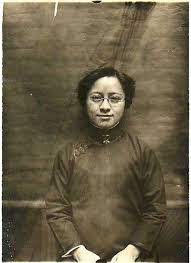
From 1882 until its repeal in 1943, the Chinese Exclusion Act banned all immigration from China. It was the only United States law ever to specifically ban one ethnic group. While new immigrants were banned, Chinese Americans who were born and raised in the United States were subject to hostility and prejudice. Among those who suffered was a tiny Chinese American woman named Tye Leung Schulze who spent most of her life trying to help Chinese Americans to become valuable members of the community.
Tye Leung Schulze
Born in San Francisco in 1887, Tye Leung was unable to attend public school because California’s segregated school system did not provide schools for Chinese students. Fortunately, she discovered a Presbyterian Mission School where she found education and encouragement.
In 1910, Leung took the civil service exam and became the first Chinese American woman employed by the federal government. Assigned to the Angel Island Immigration Station in San Francisco Bay, she became a translator. Two years later she made history by voting in the 1912 presidential election. (California women had gained the right to vote in 1911). She was the first Chinese woman in vote in a United States election, and perhaps the first to vote anywhere in the world.
Leung valued the importance of voting and she expressed her faith in the importance of women’s suffrage in an interview shortly after she had voted: I think…that we women are more careful than the men. We want to do our whole duty more. I do not think it is just the newness that makes use like that. It is conscience”
While she was working at Angel Island, Leung met her future husband, Charles Schulze, an Immigration Inspector. But once again the government opposed her because of her Asian roots. At that time, California banned intermarriage between whites and Asians. To escape this law, Leung and Schulze had to travel to Washington State to celebrate their marriage. And to add further injury, both Leung and Schulze lost their jobs with the Immigration Service when they returned to Angel Island.
Eventually, Tye found work with the Pacific telephone exchange. She and her husband lived in San Francisco’s Chinatown and raised four children. Although her husband died in 1935, Tye continued to work with the Chinese American community as a bookkeeper for the Chinese Hospital and an operator for Pacific Telephone’s Chinatown exchange. During World War II, she helped Chinese brides to enter the country and become citizens. She remained an active force in the community until she died at the age of 86.
Tye Leung Schulze’s life story has been told in a documentary film available on YouTube .
You can also read more about her life in Julia Flynn Siler’s book The White Devil’s Daughters: The Women Who Fought Slavery in San Francisco’s Chinatown (2019).
In 1987, Leung Schulze was designated a Women’s History Month Honoree by the National Women’s History Project. She is a woman well worth remembering and honoring.

 Teacups and Tyrants-Adele Fasick looks at people, books, and history