Margaret Sanger: A Flawed Heroine for Family Planning

The Supreme Court’s decision in the Hobby Lobby case has started a lot of people thinking about how access to contraception Margaret Sanger has changed women’s lives. The Hobby Lobby decision allows some companies to refuse to pay for all forms of contraceptive care for their employees. If all of the owners of a “closely held corporation” declare that they do not approve of some forms of contraception on religious grounds, then they don’t have to pay for insurance coverage for contraception. The talk about this decision and how it may affect healthcare for all Americans has started a lot of people thinking about the struggle to get any form of contraception approved.
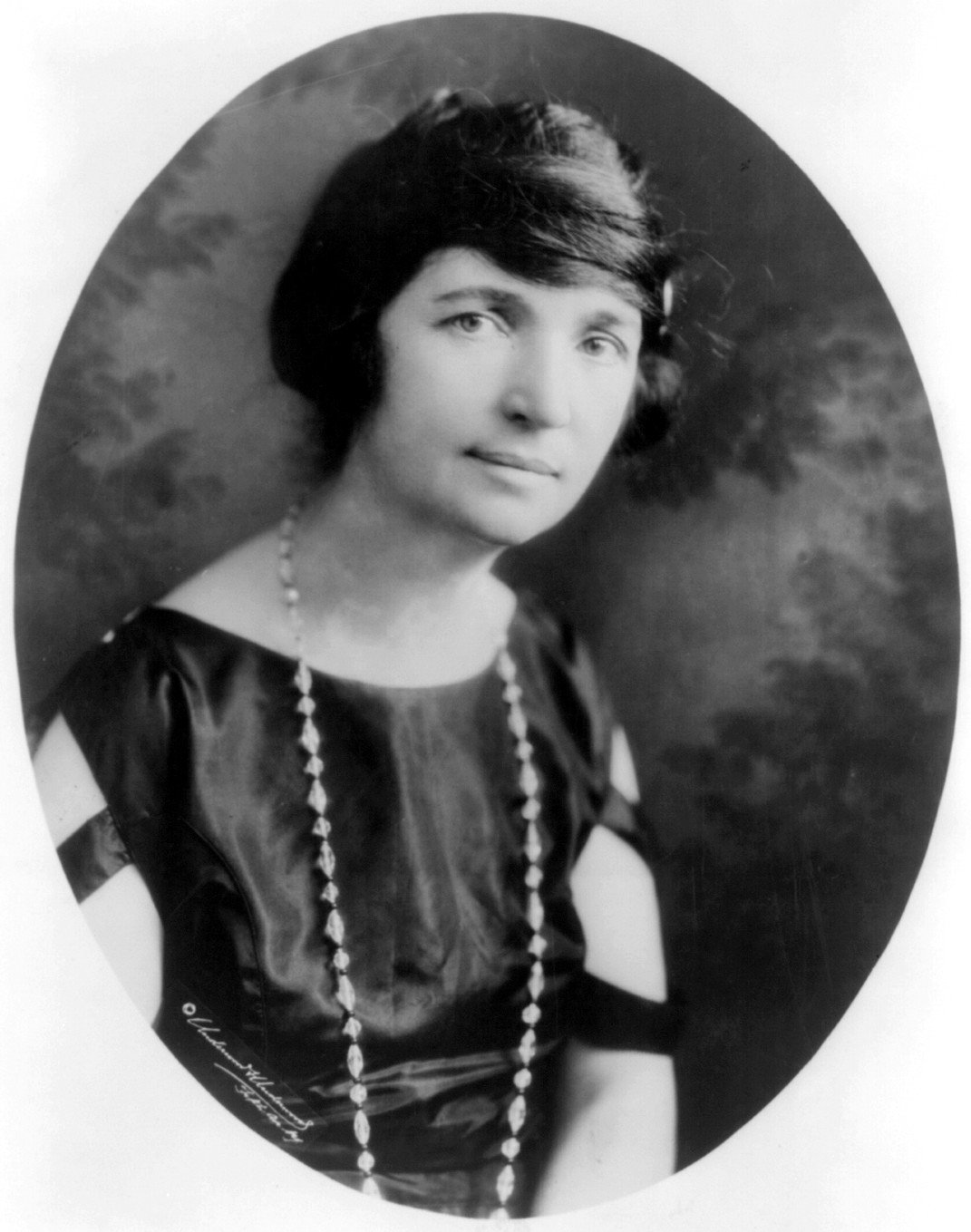
When Margaret Sanger (1879-1966) started working as a nurse in New York City, she saw a number of women who were suffering from their inability to keep from becoming pregnant over and over again. Doctors were not allowed to tell women how to avoid unwanted pregnancies; so many families were doomed to poverty and poor health because they could not afford large families. With contraceptives declared illegal and therefore unavailable to any except the wealthy, many poorer women resorted to abortionists or tried to abort a fetus themselves. When Margaret Sanger, who had seen her own mother die at 48 worn out by twelve pregnancies and weakened by tuberculosis, realized how many women were sacrificed because of their inability to control births, she determined to devote her life to changing the law.

By starting a newsletter, lecturing, and then opening the first birth control clinic in America, Sanger tried to introduce contraception to women. Both she and her sister were arrested at their Brooklyn clinic and charged with distributing obscene literature—information about birth control. Margaret Sanger served a short jail term for the crime, but she received a great deal of publicity and the issue was brought before the public.

It is hard today to remember how the lack of birth control affected women’s lives during the years when it was forbidden. Employers discriminated against married women, refusing to hire them because they might become pregnant at any time. Graduate schools refused to admit married women students with the excuse that their education was wasted because an unplanned pregnancy could derail a degree at any time.

Margaret Sanger fought for many years to make contraception available in the United States. It was a long struggle. By 1965 when the Supreme Court finally decided in the case of Griswold v. Connecticut that contraception should be available, Sanger was 85 years old. A year later she died.

Some of Margaret Sanger’s legacy was unfortunate. She believed in eugenics and favored larger families for well-educated, middle class families. The poor and especially nonwhite people, she believed, should strictly limit their family size. Many of the statements she made during her later years were repugnant, and they have been seized upon by conservative politicians to blacken her reputation. But the major battle she fought—to enable women to have some control over their bodies and the size of their families—was an important one. Much of the freedom enjoyed by women today has come about because of the struggle of Margaret Sanger and her associates.

Today, on the Fourth of July, when we celebrate the legacy of our Founding Fathers—a legacy deeply tarnished by the racism and prejudices of their ideas—is surely a good time to assert again that we can celebrate the achievements of many individuals despite their flaws and mistakes. None of our heroes or heroines were perfect, but we can accept the good that they did at the same time that we cast aside the bad.

The Supreme Court is much like our individual heroes. Some of their decisions have contributed decisively to Americans’ welfare and freedom; others have needed to be modified as time revealed their flaws. As for the Hobby Lobby decision, it seems quite likely that the best that can come from it may be the movement toward having single payer healthcare in the United States so that the health and happiness of Americans depend on themselves, through their elected government, and they are freed from the idiosyncratic and sometimes irrational beliefs of their employers.
Elizabeth Peabody–inspiring woman publisher

We have become so used to seeing local bookstores disappear from our neighborhoods that is is difficult to remember how important these stores used to be. From the early days shortly after the American Revolution up until the end of the twentieth century many

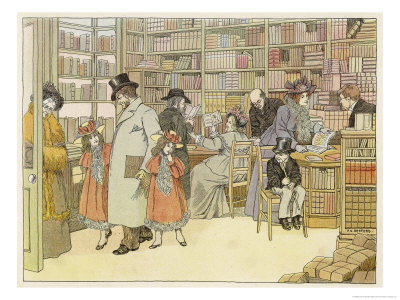
19th century bookstore. Picture by Francis Bedford
bookstores were meeting places and informal universities where people discussed politics and social issues as well as literature. And some of the most important bookstores have been run by women including Elizabeth Peabody.

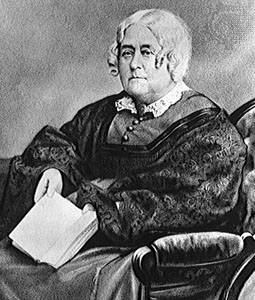
We have no picture of Elizabeth Peabody as a young woman, although she was well-known in Boston. As her biographer, Megan Marshall, explains, Elizabeth’s portrait was painted in 1828 by Chester Harding, a well-known portrait artist in Boston. Elizabeth was 24 years old at the time and teaching at a school she had started for girls. Instead of being pleased by the portrait, her parents were scandalized. Women of that time did not have pictures of themselves hung on walls and displayed to others.portrait of Elizabeth Peabody Unlike men, women were supposed to live lives that were private and hidden from everyone except their families. Despite the prevailing customs, however, Elizabeth was destined to become a well-known and beloved figure in Boston and elsewhere during her long life. The portrait, incidentally, was destroyed years later in a warehouse fire so the only existing pictures show Elizabeth as an elderly woman.

Elizabeth was one of three Peabody sisters—the other two were Mary, who married Horace Mann, and Sophia, who became the wife of Nathanial Hawthorne. All three were born in the early 1800s and lived through most of that eventful century, but Elizabeth had the most lasting influence and left a legacy that is still with us.

But to return to the bookstore…in 1839 Elizabeth opened a small circulating library and bookstore in the family home. She knew Ralph Waldo Emerson and many of his friends who were interested in expanding the intellectual horizons for Americans. They were eager to learn about the new ideas being talked about in Europe and Elizabeth’s bookstore offered them a chance to read and discuss European journals and new books. Not only that, Elizabeth also opened a small publishing operation and published several articles and books written by members of the group including several of Nathanial Hawthorne’s early stories. She was probably the first woman publisher in the United States.

Elizabeth Peabody’s small bookstore in West Street was the place where the new Transcendental Club held meetings. Margaret Fuller offered her “Conversations” in the bookstore for the wives and friends of the Emerson circle. Elizabeth’s bookstore appears in my mystery story A Death in Utopia as a place where the Charlotte Edgerton and her friend Daniel Gallagher can follow up ideas for solving a mysterious death.

Running a bookstore and being a publisher were not Elizabeth Peabody’s only occupations. Later in life she opened the first kindergarten in America and her most lasting legacy remains the revolution in teaching young children which grew out of the kindergarten movement. Megan Marshall’s biography The Peabody Sisters; Three Women Who Ignited American Romanticism gives a good start on learning about Elizabeth and her accomplished sisters.

Honoring Karen DeCrow and NOW

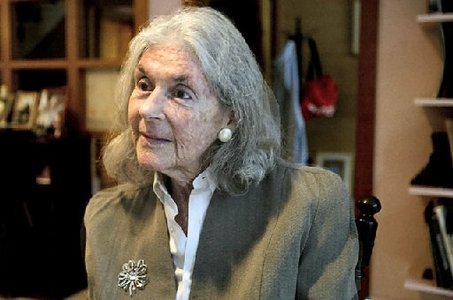
photo of Karen DeCrow
Karen DeCrow
Reading the obituary of Karen de Crow in the New York Times today brought back memories of the optimism many of us felt about feminism during the 1970s. The National Organization for Women (NOW), which De Crow led from 1974-1977, fought for equality for women in jobs, social life and sports.

Some of those battles have long since been won. We no longer think it bizarre that girls as well as boys should be able to play sports in schools and in Little League teams. When De Crow was representing a young girl who wanted to play baseball, one coach said to her “Over my dead body will girls ever play Little League baseball. “If one of them ever struck out a boy, he would

Girls playing baseball
Little League Girls
be psychologically scarred for life.” I don’t think anyone now thinks that a boy’s life would be ruined if a girl could strike him out in a baseball game, but far too many men and boys still find it impossible to accept women as equals.

Why is it that so many men still find it impossible to allow women to make their own decisions about their bodies, their ambitions, and their choices? Rape on college campuses is still a threat to women students. Is it so hard to understand that every human being has a right to decide when and how they will have sexual relations? And why is it that campus rape is so often associated with athletes? Why are women’s bodies still viewed as trophies that should be the reward for winning at sports?

Women have moved far ahead in business and the professions, but even the most eminent women in the country are still questioned far more about their personal lives than men are. All we have to do is to read or view the news stories that have appeared recently about Hillary Clinton. Why does she have to answer questions about her marriage and her life choices far more often than male candidates?

More than a century and a half ago, Margaret Fuller wrote: “If you ask me what offices they [women] may fill, I reply—any. I do not care what case you put; let them be sea-captains, if you will”. She was ridiculed for demanding the impossible, but many women took up the challenge. They have become doctors, lawyers, mayors, senators and governors. But the struggle is not over. Not until women can walk on college campuses in safety and equality, apply for any job, and run for office without harassment will women be truly equal.

It is important to remember Karen De Crow and NOW, as well as all the other women who have fought over the years so that girls and women can make their own choices and live the lives they truly want. The struggle continues.

Creating the New Woman–Margaret Fuller

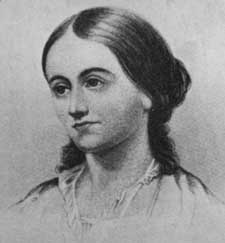
Margaret Fuller
Margaret Fuller
Brook Farm, the first secular Utopian community to be established in New England, attracted the attention of most of the intellectuals in the area when it opened in 1840. Margaret Fuller, already a well-known writer and lecturer was one of them. As a friend of Ralph Waldo Emerson, Bronson Alcott and others who supported the establishment of the community, she participated in discussions about whether a communal lifestyle would encourage people to write great books, paint beautiful pictures and develop an American culture. Many Americans wanted to develop a culture quite different from the European model. They did not believe that all art and culture should be created by aristocrats who did not need to work or earn money. The early 19th century was a time when many people were trying to discover how society could be structured to allow everyone to have a chance to become educated and creative even though they had to make a living.

Margaret Fuller toyed with the idea of joining Brook Farm as a member. Living in a community like that would free her from the necessity of supervising a household for herself and her mother. The reaction of Brook Farmers to Miss Fuller was mixed. Many of the young women considered her a model for what a brilliant woman could make of her life, but others (especially, perhaps, the young men) thought she was arrogant and talked too much. Some of them even called the most obstreperous cow in their barn the Margaret Fuller heifer.

In the end, Fuller decided she needed solitude to pursue her own work, but continued to visit often. She was determined to make her mark in the world, and she succeeded. She became one of the most influential literary figures in New England. Then she moved to New York to write for the New York Tribune. Later she traveled to Europe as a reporter and became a friend of men who were plotting revolutions in several countries.

Fuller’s book Women in the Nineteenth Century was considered revolutionary. She urged women to find their voices and express their own ideas. The book influenced women around the country and even though Margaret Fuller herself died at the age of 40, her work bore fruit in the early feminist movement. Elizabeth Cady Stanton and Susan B. Anthony were among the women who read her works and tried to follow her path.

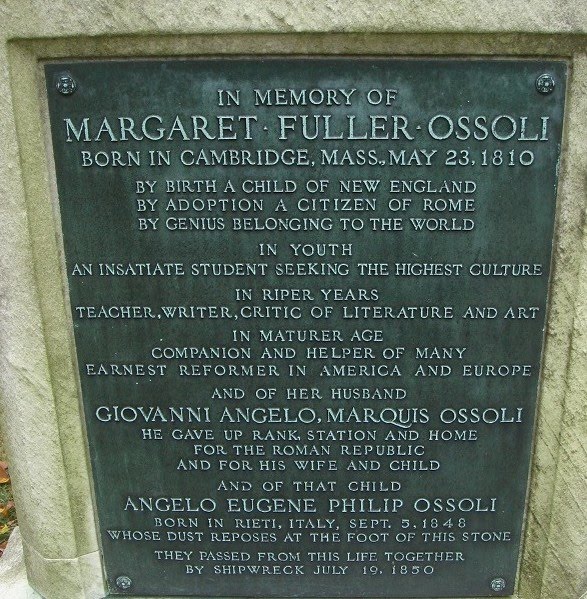
Memorial plaque for Margaret Fuller

There are several good biographies of Margaret Fuller. The short, general biography that I wrote called Margaret Fuller: an Uncommon Woman is available at amazon.com.

Bronson Alcott–a Sixties Radical One Hundred Years Early

This week we celebrated the 60th anniversary of the Supreme Court decision outlawing racially segregated school in the United States. That ruling followed a long history of white Americans choosing to keep African Americans out of the schools attended by white children. It’s a shameful history and not one we want to remember, but fortunately at least we can be proud of the people who over the years took chances and tried to build an integrated education system.

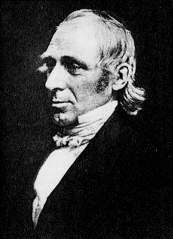
One of these risk takers was Bronson Alcott, eccentric friend of Ralph Waldo Emerson, believer in communal living, non-stop talker at public meetings, extreme vegetarian (vegan long before that word was invented) and inspired educator. More than 175

picture of Bronson Alcott
Bronson Alcott
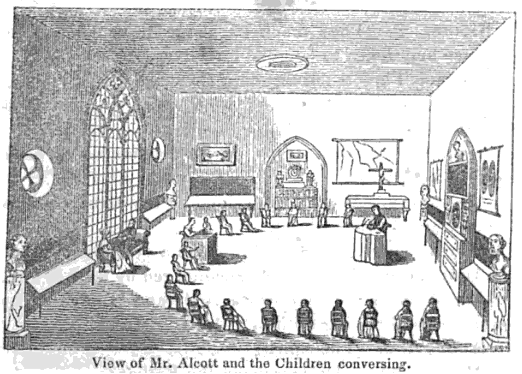
years ago, Alcott opened the Temple School in Boston. From the beginning the school caused scandal. Not only were the children encouraged to express their opinions without being punished, but Alcott answered their questions no matter how frank. Alcott’s assistants kept a record of the lessons and these reports were published so parents learned what was going on in the school. Many were shocked to discover that children were encouraged to talk about the Bible as though it were just a collection of stories. They even asked embarrassing questions about the birth of Jesus. Most parents and teachers expected children to accept Biblical stories with respect and without question. Alcott always questioned.

Despite the unconventionality of the Temple School, some parents in Boston continued to send their children to it until Alcott 1837_TempleSchool_Boston1went a step too far—he admitted a young African American girl, the daughter of freed slaves, into the school. That was so unconventional that soon Alcott was teaching only that girl and his own children. He was forced to close the school. It would be more than a century before the country was ready to admit that integrated schools should be the norm rather than an exception.

Alcott lived at a time when people were questioning many of the accepted practices of American life. The 1840s were to the nineteenth century what the 1960s were to the twentieth century. The country was just emerging from the great depression of 1837, and many people wanted to try new ways of living and working. Forming communes where people could share their living and working skills? That was a popular notion and Alcott was friendly with George and Sophia Ripley, who started Brook Farm in Massachusetts. The idea was that everyone would share the work of the farm and the household so that each person would have time to pursue intellectual interests. Brook Farmers dreamed of milking cows in the morning, plowing fields and preparing meals in the afternoon, and then having time to write poetry and argue about philosophy in the evening.

Brook Farm wasn’t quite radical enough for Bronson Alcott. He and his wife, along with his friend William Lane, took their daughters (including Louisa May Alcott, author of Little Women) and founded a commune called Fruitlands. There the family and the few members who joined them struggled to keep the farm without imposing on farm animals to labor at pulling plows—the men pulled the plows themselves. The group was strictly vegetarian and Abigail Alcott, Bronson’s wife, was forbidden to give their daughters milk from their only cow. Abigail resented that restriction, but she put up with it at least for a while. But farming without farm animals was extremely difficult and Bronson and Charles Lane spent much of their time traveling and giving lectures to raise money. The commune soon collapsed and Bronson and Abigail took their girls to Concord where they lived near Ralph Waldo Emerson.

Bronson Alcott spent most of the rest of his life as a writer and lecturer, although he never was able to earn much money from these activities. His friend Emerson helped him financially and after his daughter Louisa May Alcott became a successful writer, she was the major support of the whole family. It is easy to laugh now at his eccentricities. Many of his ideas have been discarded, but his principles of education are now widely accepted. As Emerson and others realized, he was an influential figure whose conversations and friendships left a lasting mark on American life.

Bronson Alcott is one of several historical figures who make a

A Death in Utopia
A Death in Utopia
cameo appearance in my mystery story A Death in Utopia, which gives a fictional account of events that might have happened during the turbulent 1840s in Massachusetts.

My Mystery Story Published at Last

The merry month of May has been a bright one for me because my mystery story A Death in Utopia is finally published and available Cover of A Death in Utopiaon Amazon.com Two years ago when I started working on the story of Charlotte Edgerton and her life at the Brook Farm Community in 19th century Massachusetts, I wasn’t at all sure that the book would ever see the light of day. Now at last is has!

The impetus that kickstarted my story was the wonderful NaNoWriMo month of November 2012. Those of you who have never heard of National Novel Writing Month may not know of this online meeting place for writers. For those of us who sign up for NaNoWriMo the month of November becomes one long writing workshop. The goal is to write 50,000 words in a month and to help the effort there are group forums, pep talks from successful writers, and general camaraderie along the way. If you’ve ever wanted to write a novel, it’s a great place to make your dreams come true.

Of course one month of heavy-duty writing does not produce a novel. After November ended there was rewriting, editing, sharing drafts with friends and family, finding a book cover artist, and all those other chores that take so much time. I enjoyed every minute of it—well almost every minute. As the story of Charlotte Edgerton and her adventures as an immigrant from England in 1842 built in my mind, it became more vivid and real. I have long admired the real life people who built Utopian communities like Brook Farm in the hopes of finding a truly fulfilling and democratic life for Americans. Imagining the story of what might have happened in that struggling community with so many idealistic, but sometimes impractical, dreamers has been a joy. Now the story is ready for others to read. You will find a few more details on my Death in Utopia page on this blog and the book itself is available on Amazon.com. I hope you take a look.

For the next several weeks I will be posting blogs about some of the historical figures who appear in A Death in Utopia. It’s a gallery of men and women you might want to meet.

Saints and their mysteries

This week Pope Francis announced today the canonization of two recent popes, John XXIII and John Paul II. Each of the men appeals to a different group of people—John Paul II is a favorite of political conservatives and John XXIII of liberals. I guess we shouldn’t be surprised to see the arrival of saints with very different groups of fans. It has always been that way.

portrait of Pope John 23
Pope John XXIII

The roster of acknowledged saints increases steadily year by year. According to the sources I found, there are at least 10,000 saints already, some of them pretty much forgotten, but others actively celebrated every year. It’s easy for nonreligious people to wonder at some of the choices of saints. Does living in a hut in the wilderness really make you a force for good? And why did some women choose to live in a secluded convent where they would never again see their friends and family? Is this what religion is supposed to be? But when you read about saints, you realize that many of them led active lives in the world and their lives can offer inspiration and even hope in our modern secular world.

The earliest individuals to be honored as saints were the martyrs who suffered persecution and death for their allegiance to Christianity, but for most people it is not the martyrs who offer patterns for everyday life. More inspiring are the people who practiced generosity and love for the people around them, sometimes in difficult situations. Of course even charity can be taken too far. Phyllis McGinley, the twentieth-century poet who genially commemorated many types of saints, wrote a tongue-in-cheek tribute to the generosity of St. Bridget:

• Saint Bridget was
• A problem child.
• Although a lass
• Demure and mild,
• And one who strove
• To please her dad,
• Saint Bridget drove
• The family mad.
• For here’s the fault in Bridget lay:
• She would give everything away.

(If you have never read McGinley’s poetry, you’ll find a treat in collections like Times Three, available in many libraries.)

But not all saints went to extremes. Many of them had illustrious careers as teachers, doctors and social workers. In today’s world they would find fulfillment in secular life, but centuries ago there were few options for public life and almost none for women. Several of the saints remembered today chose the life of a single career woman to evade the prescribed and limited role of a wife and mother.

painting of St. Catherine of Siena
St. Catherine of Siena
St. Catherine of Siena, like many other female saints, found it difficult to persuade her family that she did not need to marry. She was born in 1347 in Siena, a city that had been hit hard by the bubonic plague, known as the black death, that had killed so many Europeans. When she was 16 years old, her older sister Bonaventura died in childbirth. Catherine’s parents wanted her to marry Bonaventura’s widower, but the girl protested by starting a long fast. She was so firm in refusing food that eventually her parents relented on the marriage. Catherine cut off her hair to discourage other suitors, but she insisted that she did not want to enter a convent; she wanted to stay at home and devote her life to prayer and good works. She once suggested to her confessor that he could “Build a cell inside your mind, from which you can never flee” and it seems that is what she did. Catherine’s interior cell was so strong that she eventually persuaded her father to let her life the life she had chosen.

Catherine worked in hospitals in Siena and gradually gathered a group of followers around her. This was a stressful time for Siena and for the papal state in general. Catherine felt called to move into the wider political sphere to try to encourage the reform of the clergy and the strengthening of the pope. She learned to write, something that women were seldom taught during those years, and sent letters to various authorities urging peace between the republics and the princely states in Italy and the return of the Pope to Rome. She negotiated for peace between Florence and Rome. In other words she became a politician and a public figure rather than the wife and mother her family had expected.

Her religious fervor was undimmed and she continued to fast so drastically that her own followers begged her to eat properly and take care of herself. Despite her extreme practices, she was able to found a monastery for women and to organize her group followers into a force for good. And she did all this before dying at the age of 33. Did she go too far with her own severe practices? Would she have been even more saintly if she had maintained her health and continued to work for her people and her Church? We will never know the answer.

Once again Phyllis McGinley can help us accept the lasting mysteries of saints. In a poem about Simeon Stylites, McGinley writes:

• And why did Simeon sit like that,
• Without a garment,
• Without a hat,
• In a holy rage
• For the world to see?
• It puzzles the age,
• It puzzles me.
• It puzzled many
• A Desert Father.
• And I think it puzzled the Good Lord, rather.

Christina Rossetti—the Consolations of Religion

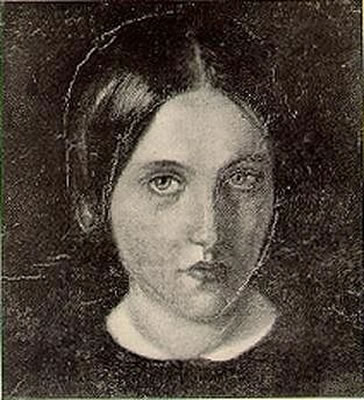
Christina Rossetti
Christina Rossetti
April is poetry month, so it is fitting to remember one of the most celebrated poets of the 19th century, Christina Rossetti. Poetry was her profession and she was a serious poet, but her life was also dedicated to her religion. Her religious convictions were strict and she gave up many of the normal joys of life to dedicate herself to them. In her poem “A Portrait” she might have been talking about herself:

She gave up beauty in her tender youth,
Gave all her hope and joy and pleasant ways;
She covered up her eyes lest they should gaze
On vanity, and chose the bitter truth.
Harsh towards herself, towards others full of ruth,
Servant of servants, little known to praise,
Long prayers and fasts trenched on her nights and days:
She schooled herself to sights and sounds uncouth,
That with the poor and stricken she might make
A home, until the least of all sufficed
Her wants; her own self learned she to forsake,
Counting all earthly gain but hurt and loss.
So with calm will she chose and bore the cross,
And hated all for love of Jesus Christ.

Neither her poetry nor her religious beliefs were the whole of her life, of course. Christina Rossetti was born in London in 1830 and grew up in a large artistic family. Her father was a poet and a political exile from Italy, and her brothers Dante and William were among the founders of the Pre-Raphaelite Brotherhood of artists who strongly influenced British painting and the artistic climate of England. Both her sister Maria and William also became writers.

The men in the family were not particularly religious, but Christina’s mother and sister became deeply devout members of the Church of England. When Christina was fourteen she suffered some kind of nervous breakdown, perhaps caused by the stress of having to transform herself from a lively child into a modest Victorian young lady. It was at this time that she turned to religion as a source of comfort and inspiration. As her brothers moved into manhood and went out into the world, Christina, like other women of her generation, led the limited life of middle-class English girls, socializing only with family and friends and seldom moving into a wider circle. All her life she suffered from recurring bouts of melancholy, although these episodes did not keep her from writing her poetry and publishing it.

As an attractive young woman, Christina was not without admirers. She became engaged to a friend of her brothers, James Collinson, but when he reverted to Catholicism, she decided their religious beliefs were too incompatible to allow her to marry him. Later she had a warm relationship with Charles Cayley, a friend of her brothers, who asked her to marry him. But he too was unacceptable because their religious beliefs were incompatible. Finally she appears to have rejected an offer of marriage from John Brett, another friend of her brothers, and a painter. Once again it appears that religion was the obstacle, although evidence is difficult to find. After that, Christina’s life was devoted to her poetry, her family and friends, and a few social causes including humane treatment for animals and the rescue of “fallen” women.

Even as her poetry became widely known, Christina led a quiet life. She continued to suffer from periods of melancholy and her health became poor as she grew older. When she was about 60, she was diagnosed with breast cancer. Even though the tumor was removed, the cancer recurred and she endured a long and painful illness. Her brother William and others tended her with loving care, but her last months were filled with depression and pain. A neighbor reported hearing her shrieking and crying hysterically, whether from pain or despair it is impossible to know.

Was she perhaps regretting how many chances for happiness she had given up in her pursuit of devotion? Did it sometimes seem that the God she had served for so many years had turned against her? We will never know what thoughts went through Christina Rossetti’s mind as she died in 1894, although you can learn more about her entire life by reading a biography such as Christina Rossetti: A Writer’s Life by Jan Marsh, which gives a thorough account of her achievements as well as her sorrows.

I like to remember Christina Rossetti as the author of one of the loveliest expressions of exuberant joy I have ever read. This poem tells me that she had some moments of happiness and knew the feeling of joy:

My heart is like a singing bird
Whose nest is in a water’d shoot;
My heart is like an apple-tree
Whose boughs are bent with thick-set fruit;
My heart is like a rainbow shell
That paddles in a halcyon sea;
My heart is gladder than all these,
Because my love is come to me.

Amelia Earhart—Inspiring Queen of Aviation

The search for Malaysia Airlines Flight 370, which has stretched out over the past three weeks, has reawakened memories of the famous

Amelia Earhart's airplane
Amelia Earhart’s airplane
lost flight of Amelia Earhart a pioneer of women in aviation. Although Earhart’s plane disappeared in 1937, people are still speculating about what happened, whether the plane really did crash into the ocean, and what became of Amelia.

It is easy to forget that when airplanes were first produced, people weren’t quite sure what to do with them. They were viewed by many as a sort of toy for adventurous young men—the type who nowadays go in for extreme sports like bungee jumping or whitewater kayaking. World War I proved the value of airplanes as weapons of war, but piloting remained a dangerous activity and one strongly dominated by men. Ten years after the war, in 1928, Amelia Earhart made headlines by being the first woman to fly across the Atlantic, even though she traveled as a passenger rather than a pilot. When she returned to New York with the pilot of the plane, they were given a ticker tape parade to celebrate the event. But women definitely needed to do more than just be passengers to prove they belonged in a cockpit and Amelia was determined to prove just that.

By that time she did have a pilot’s license. In 1923 she had become the 16th woman to be issued a pilot’s license by the international aviation federation. Still there were not many opportunities to fly except in exhibitions; Amelia earned money by being a sales representative for Kinner aircraft and by writing an aviation column for a local newspaper. Luckily, George Putnam a publisher and publicist had been one of the people who had made arrangements for Amelia’s transatlantic flight. The two of them soon teamed up to help promote aviation and especially women’s place in the world of flight. In 1931, they became more than business parties when they married. For the rest of her life Amelia and her husband worked together to promote aviation.

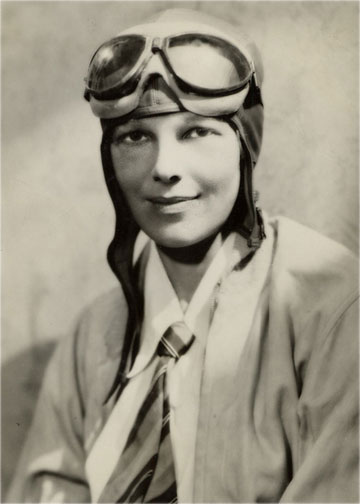
In 1932, Amelia became the first woman to fly solo across the Atlantic and that flight earned her a Congressional Distinguished Flying Cross. Between 1930 and 1935 Amelia set more records for altitude and length of flight. Just as she had hoped, she was demonstrating that a woman could be just as good a pilot as a man and more than that she was helping the public become accustomed to flying as a normal

Amelia Earhart in flying gear.
activity not just a daredevil sport.

The next challenge Amelia Earhart decided to take was to fly around the world; in 1937 she made plans for this flight. It would not be the first time pilots had flown around the world, but it would be the longest trip because it would circle the equator rather than take a polar route. The flight started in Miami and travelled west. Amelia and her navigator stopped numerous times along the way to refuel, but their final stop was in Lea, New Guinea. After the plane took off from there, it was never seen again. You can read accounts of the final radio transmissions from the plane and the long search by air and sea for the plane in numerous sources online and in print. The mystery of Earhart’s disappearance was a major drama of the 1930s and caught the attention of people around the world, attention that still continues.

Many theories and legends have grown up around Amelia Earhart’s disappearance. The most credible theories seem to be that the plane either crashed into the ocean and sank or that it landed on Gardner Island, a small atoll in the Pacific. With no means of surviving on the small island, the fliers would have died and the plane eventually disintegrated. Other legends are more colorful and are still considered possible by a few people. Earhart had many prominent friends, Eleanor Roosevelt among them, and one theory is Franklin Roosevelt asked her to spy on the Japanese. Some writers have even suggested that Earhart survived the flight and returned to the United States where she lived under a different name.

There is a wealth of books and other materials about Amelia Earhart’s life and flights. Many of the books about her have been written for young people, especially young girls. Perhaps Earhart’s most important legacy has been serving as an inspiration to generations of girls growing up in America and around the world. For almost 100 years her skill and daring have helped girls to decide they too can become pilots or doctors or astronauts. Despite the tragedy of her early death, her spirit lives on.

St. Patrick’s Day 2014

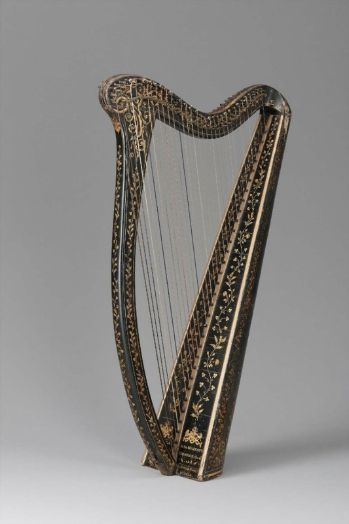
19th century Irish harp in the Boston Museum
St. Patrick’s Day is here again with parades and songs and shiny green hats and beads not only for the Irish but for anyone who enjoys a party. But while people are busy celebrating, the world seems to be trembling on the edge of more violence and possible wars. The Irish are famous for writing verses, so this year let’s not forget the Irish tradition of anti-war poetry and songs including the familiar “Johnny I hardly knew ye”.

While goin’ the road to sweet Athy, hurroo, hurroo
While goin’ the road to sweet Athy
A stick in me hand and a tear in me eye
A doleful damsel I heard cry,
Johnny I hardly knew ye.

Chorus:
With your drums and guns and guns and drums, hurroo, hurroo
With your drums and guns and guns and drums
The enemy nearly slew ye
Oh my darling dear, Ye look so queer
Johnny I hardly knew ye.

Where are the eyes that looked so mild, hurroo, hurroo
Where are the eyes that looked so mild
When my poor heart you first beguiled
Why did ye scadaddle from me and the child
Oh Johnny, I hardly knew ye.
(Chorus)

Where are your legs that used to run, hurroo, hurroo
Where are your legs that used to run
When you went to carry a gun
Indeed your dancing days are done
Oh Johnny, I hardly knew ye.
(Chorus)

I’m happy for to see ye home, hurroo, hurroo
I’m happy for to see ye home
All from the island of Ceylon
So low in the flesh, so high in the bone
Oh Johnny I hardly knew ye.
(Chorus)

Ye haven’t an arm, ye haven’t a leg, hurroo, hurroo
Ye haven’t an arm, ye haven’t a leg
Ye’re an armless, boneless, chickenless egg
Ye’ll have to be put with a bowl out to beg
Oh Johnny I hardly knew ye.
(Chorus)

They’re rolling out the guns again, hurroo, hurroo
They’re rolling out the guns again
But they never will take my sons again
No they’ll never take my sons again
Johnny I’m swearing to ye.