Rigged election? Ask the Chartists.

With a national election coming up soon, there has been much talk about whether or not the national election might be “rigged”. When Donald Trump said, during the third presidential debate, that he wasn’t sure he would accept the results of the election, chartist-electionreporters and the social media went wild. The idea that an election must be fair and accepted by the country is basic to maintaining a democracy. Trust in elections has worked well for American voters and there have not been serious challenges to a national election for many years. But if you look back in history, the struggle for free and fair elections has been long and hard.

The American way of voting was based largely on the British system, but that was badly flawed. Only men who owned property were allowed to vote at all. Men who were elected to Parliament were not paid for their service, so you had to be wealthy if you wanted to run for a position in Parliament. Actually, the British don’t say they “run” for office; they “stand” for election. I guess that sounds more genteel.

The elections, however, were not very genteel. Even though an important reform bill was passed in 1832 to do away with some of the most obvious unfairness in elections—like having a member of Parliament who represented no one but himself –the elections were still not honest. Candidates would bribe men to vote for them. Pubs were filled on election day with representatives of the candidates who would buy drinks for any voter who promised to cast his vote for their candidate.

chartist-newpaper-cuttingDuring the 1840s, a surge of protest against the way things were for the average working man began to grow. The Chartists was an organization formed to take power away from the aristocrats and make sure that average people would get fair treatment. They had six demands:

  • Manhood suffrage. Every man, regardless of class or property, should have the vote.
  • Annual elections.
  • An end to the regional differences in the electoral system.
  • Secret ballots (no one else would know for whom you voted).
  • The end to property qualifications for MPs. This would mean that a man wishing to be an MP would no longer have to own property or land worth a set amount of money.
  • Payment for MPs. This would enable men who were not already wealthy to stand for election to Parliament.

Both men and women joined the Chartist struggle and women were especially scorned by many anti-chartists in the media. Here is one view from the opposition:
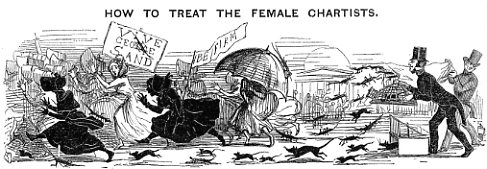
femalechartists001

The struggle was hard and long. I’ve been living with it for the past year and more as I’ve been writing my newest Charlotte Edgerton mystery Death Calls at the Palace. Finally my book is about to appear and you will be able to buy it on Amazon.com in plenty of time for holiday gifts. I’ll announce its appearance as soon as it becomes available.

Agatha and her many mysteries

Saturday was a magnificent October day in San Francisco—sun sparkling on the Bay, tourists filling the streets, and the Blue Angels zooming their planes across the sky. But I didn’t spend it outdoors watching all the fun; instead I was inside all day with a group of sf_bay_2016about forty other women and a handful of men struggling with the joys and mysteries of writing mysteries. This was a conference of the Sisters in Crime group which offers fellowship and encouragement for those of us who follow the footsteps of Agatha Christie, Dorothy Sayers and the other fearless women who invaded the publishing world during the last century.
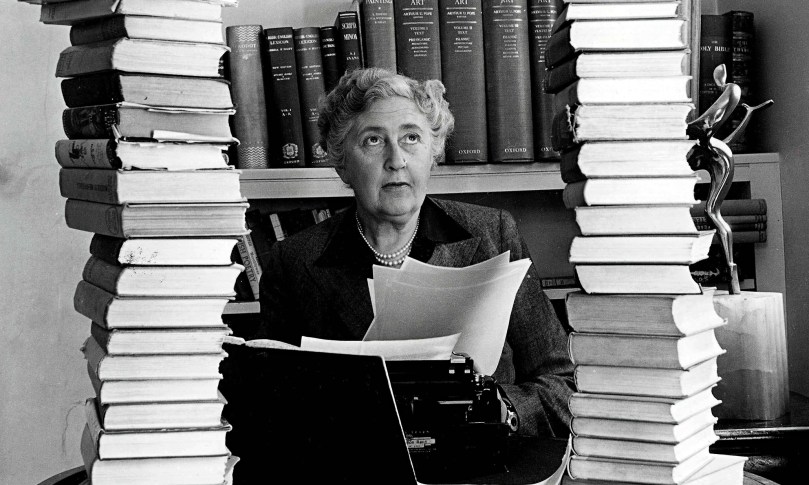

Mystery books and thrillers are the most popular genres of fiction and while both men and women read these books, statistics show that more women than men read books of all kinds. So it is not surprising that a group like Sisters in Crime was established to promote the advancement, recognition and professional development of women crime writers. As the publishing world changes year by year with more authors choosing to publish independently and social media becoming a major factor in book promotion, writers associations are more important than ever. Meeting aspiring writers as well as successful ones can lead to many fascinating conversations and introduce new worlds of experience and knowledge.

Agatha Christie probably could have used a support group of writers when she was building her writing career. The survivor of an unhappy marriage, Christie seems to have led a very lonely life during the years when she and her first husband were breaking up. She famously disappeared for eleven days, causing a police search and an enduring

Agatha Christie, surrounded by some of her 80-plus crime novels.
Agatha Christie and some of her books

mystery about whether she suffered from amnesia or had planned the disappearance to embarrass her unfaithful husband. After the couple divorced in 1928, Christie started on a long tour of the Middle East. She became fascinated by the area and by archaeology. Her new interest  led to a second, happy marriage which lasted for the rest of her life.

The story of Agatha Christie’s trip to the Middle East has also led to a recent book, The 8:55 to Baghdad, by Andrew Eames, a Christie fan who in 2002 decided to follow Christie’s trip from London to Iraq. You don’t have to be a fan of Agatha Christie to enjoy his story. When Christie made the trip by train in 1928, intercontinental train travel was far more elegant than it is now in the 21st century. The famous Orient Express is a pale shadow of what it used to be and most travelers would have given up on the trip while the trains inched across Europe toward Turkey, but Eames pushed on. He tried to stay as close to Christie’s route as he could and sought out the hotels she stayed in and locations she mentioned, but 75 years makes a big difference in countries and cities, especially after World War II and several smaller wars since.

The most fascinating part of the book, to me, is Eames’s account of travelling through Iraq in the uneasy months after 9/11. For this part of the journey he joined a group that had been given permission to look at archeological treasures, but officials were suspicious and kept a close eye on the travelers. The Iraqis themselves were friendly for the most part, but all of them lived in fear that a another war would start, as indeed it did. As the group visits Aleppo, Palmyra, and other cities that have been in the news recently, we can understand more clearly what has been lost by ten years of fighting in the region. Many of the archeological treasures that Christie and her husband explored appear in the TV news that we watch today as ruined cities fought over by clashing groups. The book left me feeling profoundly sad for all the destruction that has been visited upon the Middle East and the people who live there.

The mysteries of the real world and its struggles are far more serious than the mysteries that appear in fiction, but telling stories has always strengthened the spirits of both writers and readers. Reading about a world in which reason prevails comforts us when the real world appears ever more chaotic. Perhaps that is why Agatha Christie has become, according to the Guinness Book of World Records, the best-selling novelist of all time. And perhaps that is why so many of the authors of Sisters in Crime continue to write and readers continue to read their books.

Too much idealism for Angela Merkel?


These Strangers, in a foreign World,
Protection asked of me—
Befriend them, lest Yourself in Heaven
Be found a Refugee—. Emily Dickinson

Two or three years ago the German Chancellor Angela Merkel was one of the most popular European leaders of the 21st century. She appeared unbeatable as her party swept to an angela-merkeloverwhelming victory in 2013. Her success seemed an anomaly in the male-dominated German politics of recent years. Journalists wondered how a plain-spoken middle aged woman whose nickname was “Mutti” (Mommy) could wield such power amid the turbulent struggles of the European Union in difficult economic times.

Merkel grew up in East Germany when it was a Communist country. Although a bright student, she was not a natural leader. In university she studied science and became a physicist and did not engage in public life. It wasn’t until the fall of the Soviet Union and the reunification of Germany that she was drawn to political life, and few people would have predicted that she would become a leader. But, improbable or not, this quiet woman made her way past the bombastic male leaders of the party and eventually emerged as the leader.

But then came the refugee crisis. When thousands of Syrian refugees tried to make their way to safety in Europe, Merkel announced that Germany would accept them. She called on other European countries to do the same. Some were welcomed, and many Germans angela_germanymigrantappeared at first to be willing to make sacrifices to find housing and food for refugees. Then the inevitable bitter violence broke out. Demonstrators were soon calling for an end to refugees and a retreat to a “Germany for the Germans” mentality. Merkel’s CDU party suffered severe electoral losses. Undoubtedly the influx of refugees caused some voters to turn to severe anti-immigrant policies.


But the verdict is still out on what Angela Merkel will do—whether she will stand for Chancellor again or not. She seems to be sticking to her guns and insisting that the decision to accept refugees is the only morally defensible policy. Many idealists and religious people would agree with her. The refugees are still fleeing unbearable conditions in many countries. Despite a backlash; despite the fears; it was a proud day for Angela Merkel when she decided that Germany would be a moral leader in that path.  Let’s hope that by working with other countries, and international organizations, she will be able to make it work. The quiet woman from Germany has been a strong leader—a strong “Mutti” insisting that the world should honor its deepest ideals. Good luck to her!  refugees-are-human-beings-oki

Solving a mystery about my mystery story

The other day someone told me that the ebook version of my Charlotte Edgerton mystery Death Visits a Bawdy House looked very strange on her Kindle. The letters on the page came out in different sizes and were in a variety of fonts. When I clicked over to the Kindle shop, I saw what the reader meant—something was dreadfully wrong with the text.

Death Visits a Bawdy House takes place during a hard-fought election in New York City in 1844 and we all know that election seasons can bring out the worst in people, but this was no election skirmish. I clicked right over to the Kindle publishing page and started Death Visits a Bawdy House (Small) (1)investigating. Lucky for me a Kindle helper was quick to respond and explain what I could do to correct the problem that occurred with the uploading of the original file. She walked me through the process and a new, corrected version of the Kindle edition of the book is now online at the Amazon.com site
To celebrate having the book available now, I have made the Kindle version FREE to download from September 15 through September 19. If you had trouble downloading the book in the past, or even if you didn’t, you are welcome to get a copy free of charge during this free period. Tell your friends and family about the opportunity.

The story of Death Visits a Bawdy House takes place in New York City during the boisterous days of the 1840s when Charlotte Edgerton moves to the city from staid Boston.  She is overwhelmed by the crowds and the glamour of the women who stroll along Broadway.  But when first one and then another of the glamorous “sporting girls” who work in the city’s famous brothels is murdered, Charlotte becomes aware of the darkness that lurks behind the bright glow of Broadway.

In a city where abolitionists are not popular and suspicion of free blacks runs high, the arrest of a black man for the crimes enflames much of the city. Charlotte discovers that police can be bigots, politicians are not always honest, and kindness can lead to danger. When a ruthless murderer tricks her into becoming a prisoner in a deserted school, Charlotte must rely on her wits to save herself and a helpless child.

Be sure to download your FREE copy of the Kindle edition of Death Visits a Bawdy House between September 15- 19, 2016.

Can you follow your dream too far?

A new school year is beginning all across America and children are pouring into their classrooms to start, or continue, their journey toward knowledge and a good life. One of the standard pieces of advice given in schools is “You can be anything you want to be.”

Hillary Clinton has set a new goal now that she is running for president and has a good chance of winning. She posted on Twitter To every little girl who dreams big: Yes, you can be anything you want—even president.

The trouble with telling children they can do anything is that it’s just not true. Strangely enough, we have a popular movie out this month with an example of the limitation of

Florence-Foster-Jenkins
Florence Foster Jenkins

dreams. Florence Foster Jenkins chronicles the story of a woman whose dream was to be a concert singer. Because she was wealthy, she was able to achieve her desire to give concerts. But no one would say that she had achieved her dream of being a great singer. One of the attractions that brought audiences to hear her is that she simply could not sing and many people found pleasure in watching her fall short.

Jenkins was lucky to have been able to cushion the failure of her achievement because she had money, love, and friends. Many other people discover that they have to move on to new dreams. The boy who dreams of becoming a major league pitcher, discovers his throwing arm will never get him beyond the tryouts. That’s when the real test of the dream occurs. Some people sink into bitterness making their lives, and the lives of their families and friends, dismal. Others use their athletic prowess to become great gym teachers and coaches. And a dream of making your high school team the state champions is not a bad one to follow.

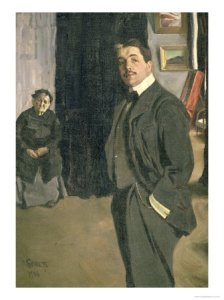
Most people’s lives take many twists and turns. You start out with one dream, switch to another, and move on sometimes to find far more success and happiness than you had expected. Sergei Diaghilev, the world famous producer and founder of the Ballets Russes, was a man with many dreams. Born in 1872, he grew up under the czarist regime in Russia. When he was a teenager, his father went bankrupt, so Sergei had to help support his family. His first love was music and he dreamed of being a composer. He studied composition, but was told by his teacher (the famous composer Rimsky-Korsakov) that he lacked the talent to compose music.

Unlike Florence Jenkins, Diaghilev decided to give up his first dream and to pursue his interest in the arts and dance. He started a magazine to publish Russian writers and later

Sergei Diaghilev
Sergei Diaghilev

founded the innovative dance company the Ballet Russes. With the ballet company, Diaghilev toured France and other European countries. He worked with famous artists, including Pablo Picasso, Erik Satie and Claude Debussy to produce unforgettable ballets, using modern music and modern artistic sets. His innovations revolutionized the dance world. He seemed to have a hand in all of the artistic ferment of 1920s Europe. If you want to read a good biography, you can’t do better than try Diaghilev: A Life by Sjeng Scheijen.

The trouble with telling children they can become “anything they want to be” is that, when they don’t reach that goal, it seems as though they fail. But no one is a failure because she, or he, doesn’t become President. In fact, it is a mathematical impossibility for every child to become President, or for every child to win a gold medal at the Olympics. So why do we tell them they can all reach these impossible dreams?

Perhaps we should be honest with children. Instead of telling them “you can achieve anything” we should tell them the truth: “you can dream and build a good life if you are willing to stay flexible and let your dreams change and grow.” Perhaps we ought to encourage them not to have one dream, but to have a bouquet of dreams. If one dream wilts and dies, another will take its place. Happiness is usually found not by holding onto one unchanging dream for a lifetime, but by being open to new dreams and new hopes and being willing to work to reach them.bouquet-of-flowers-drawing


.

Women want to compete

Much of my attention this week has been focused on the Olympics in Rio. They are quite a relief from the two political conventions we just watched because in the Olympics, people olympics-superJumbo-v3keep moving instead of talking and we can see for ourselves who is winning. There is no need for lengthy commentary about who said what and who scored points against an opponent. There is something very satisfying about a clear cut win like Katie Ledecky’s brilliant 800-meter swim that smashed the world record and won her another gold medal.
Women weren’t always so prominent in the Olympic Games. In the ancient games, of course, only men were allowed to compete and when the games were reinstated in 1896, the organizers thought it would be foolish to allow women to compete. Four years later, however, a few women managed to participate in the 1900 games in Paris—22 women out of a field of 997 athletes.

The first time the Olympic Games were held in the United States—in St. Louis in 1904—olympics 1904 posterthe only sport open for women was archery. Those games were among the most informal and disorganized of games because very few athletes were willing to make the long trek to St. Louis to participate. Almost everyone who took part was an American and a true amateur; many signed up at the last minute without training or knowledge about how to compete.
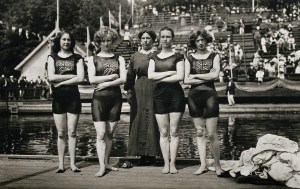


As the twentieth century went on, more and more women took up athletics and lobbied for a chance to compete in the Games. Some of the obstacles for women athletes were bizarre. In 1912 when the Games were held in Stockholm, women were allowed to participate in swimming, but America did not send any of its female swimmers. The reason? American organizers would not

olympics_1912
UK Women swimmers 1912 olympics

allow women to compete in any sport in which they could not wear long skirts. Although, as you can see from this picture, the swimsuits of 1912 were very modest by today’s standards. The UK women’s team won the medals that year.

What women athletes wear has always been an issue at the Olympics. This year, for the first time, all of the countries that have Olympic Committees have sent both men and women to the Games. For the first time, women from Saudi Arabia have been allowed to participate. This means that some of the Muslim women have competed while wearing outfits that look quite different from many of their European and American counterparts.

Athletics - Women's 100m Preliminary Round

It is a pleasure to see the freedom women have finally found, being able to wear gear that makes them comfortable while competing on even terms with all participants. Three cheers for freedom of choice!


Words for Men; Clothes for Women

Now that both the Republican and the Democratic Conventions are over, we can all relax and go back to wondering what we should watch this evening. But we are not going back to the same political world that existed a month ago. The Democratic party’s nomination of

hillary_clinton
Hillary Clinton 2016


Hillary Clinton for President was an historic moment that will change the dynamics of conventions for years to come. But of course the conduct of conventions has changed dramatically over the years.

Two of the most watched speeches of the conventions were those given by Michele Obama, our popular First Lady, and by Melania Trump, who aspires to be a first lady. Our Founding Fathers would be aghast if they knew that candidates wives were actually appearing in public and speaking on behalf of their parties and their husbands.

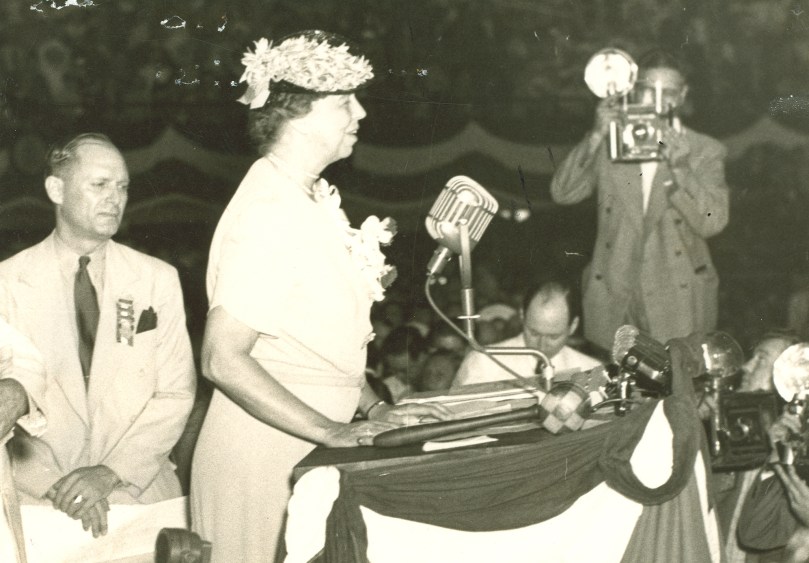
Like so many other revolutions in American politics, Eleanor Roosevelt was a pioneer in opening the way for wives to speak at nominating conventions. She surprised everyone by appearing on the podium at the 1940 Democratic Convention in Chicago to urge delegates to nominate her husband, Franklin. As the New York Times reported:

Eight years after her husband shattered the tradition of the non-appearance of Presidential candidates before the conventions which nominated them, Mrs. Franklin D. Roosevelt, in the same hall and on the same platform, established another tonight, the first wife of a President or nominee ever to address a major political party conclave.”

Eleanor Roosevelt1940
Eleanor Roosevelt at the 1940 Democratic Convention in Chicago

The Times went on to report that the First Lady spoke with unusual gravity, both at the press conference when she arrived in Chicago on a chartered plane, and in the convention hall. Franklin Roosevelt had announced earlier that he did not want to run again, and Eleanor Roosevelt said she was not surprised at this because “I cannot imagine in the present state of the world, why anyone would want to carry such a burden…” Her reaction when told that her own name had been placed in nomination for the Vice Presidency was to laugh and say. “I could imagine nothing more foolish or less wanted.” Her speech, when it came, was forceful and the delegates went on to nominate Franklin Roosevelt by acclamation for an historic third term as President.

Eleanor Roosevelt, like both Michele Obama and Melania Trump this year, could not escape press comments on her clothes. “Her traveling suit was a tailored ensemble of navy cloth coat with long lapels of Eleanor blue, with a soft crepe dress beneath in the same shade. Her hat was a small one of navy straw in a modified beret type…” At least the newspaper did not report on her hair style or the height of the heels of her shoes.

We’ve come a long way since 1940 in the matter of spouses at conventions. This year Bill Clinton spoke as the spouse of a candidate—a first for a man at a convention. I do not

bill-clinton
Bill Clinton 2016

recall any report on his clothes or any comments about who designed his suit. Perhaps the next milestone we should aim for is equal treatment for spouses of all genders at conventions to come. Now that the glass ceiling has been shattered, surely we can break the tradition of judging women by their clothes and men by their words. Let’s see what the 2020 conventions will bring.

Pianos among the flowers

Wouldn’t it be great if one day when you were wandering through a public garden you Piano player_edited-1came across a secluded piano where you could sit down and make beautiful music? Well, this week I had a chance to visit several pianos set in different locations around San Francisco’s Botanical Gardens.  I saw a quite a few people—from children to professional pianists- making music there.

Even though this is the first time I’ve seen any of the Pianos in Public Places, it is not a new ideas. According to a Wikipedia article, the idea of Pianos in Public Places originated by accident in Sheffield, England. The first piano was originally left on the sidewalk temporarily because the owner could not get it up the steps into his new house. As an experiment the owner and a friend then attached a sign inviting passersby to play the piano for free. So many people took advantage of the offer, that the piano became a community attraction. Piano_edited-1

In the last ten years, several cities around the world have placed pianos in public places and invited people to play or to listen. There are public pianos in Paris, London, New York, Toronto, and many other cities.

The pianos in the Botanical Gardens took various forms–some of them very strange and new, but all of them fun. Piano_jumble_edited-1

During a week when so much of the news is bad—I suggest that you try the music cure. If you live anywhere near a city with public pianos, visit them and join the fun! We all need beauty in our lives and music and flowers are among the best ways to find beauty.

Piano_flower_edited-1

Margaret Fuller and the Flag

As the Fourth of July approaches, United States embassies around the world are hosting American expats, tourists, and local citizens at parties celebrating American independence. These parties are often the highlight of the embassy season and, depending on how lavish they are and how large the american flagcountry, can be a major financial headache. American corporations with local outlets often contribute to the costs. These receptions usually feature large cakes baked in the shape of an American flag and flags decorate the walls of reception rooms and flutter from flagstaffs on the building.

Americans abroad were not always so assured in using the symbols of the country. Back in 1847, when Italians were struggling to forge a more democratic government, a group of Americans living in Rome wanted to honor the opening of a new more representative Council by flying an American flag. They soon discovered there was not an American flag to be found anywhere in the city. As Margaret Fuller, wrote, the Maargaret_fuller_lgexpats were undaunted and decided to make their own flag. She reported: “they hurried to buy their silk—red, white and blue, and inquired of recent arrivals how many States there are this Winter in the Union, in order to make the proper number of stars”  Unfortunately, just as the Americans had managed to produce a suitable flag, an ordinance was passed forbidding the display of any flag except the Roman ensign.

Today it is hard to imagine an American flag as a changeable symbol with a fluctuating number of stars. It has been more than half a century since a new state was admitted to the union. But during the early years of the Republic, America was just establishing its traditions and beginning to take its place in the world. Margaret Fuller, a journalist, writer, and feminist, was one of the people who helped to make the United States aware of its importance as a symbol of freedom and democracy. Two years after the incident of the flag-making, Margaret was in Rome and watched the invasion of the French army on July 4, 1849. On the very anniversary of the day America gained its freedom, the Romans lost theirs. It would be many years before Italy would become a free and united country.

Margaret Fullermargaret_book-cover04.jpg was a brilliant and influential woman. She changed the way Americans view the world. As a journalist and activist, she demanded both votes and jobs for women.
During this month when we celebrate America’s independence and the men and women who built the country, you can get a free ebook copy of my biography of this remarkable woman, Margaret Fuller: an Uncommon Woman. Just go to www.smashwords.com , search for the title and use the code SFREE to get your copy.


Boston Marriages to the Rainbow Flag

The events in Orlando this past week focused people’s minds and the media attention on the LGBT community as well as on terrorism. I am not going to write about that tragedy except to say that, like many others, my heart goes out to the friends and families of the victims. There is no excuse for the violence we have witnessed this week.

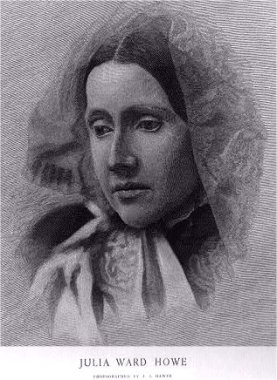
June is the month for LGBT celebrations across the country. In many cities and towns there have been and will be parades and demonstrations. Members of the LGBT community no longer have to hide their feelings or try to fit their relationships into an julia ward howeunyielding pattern of what used to be considered “normal” family life. And it has made me think of the ways in which women, who did not find happiness in the stereotypical marriages of the nineteenth and twentieth centuries, have tried to write and express their feelings.
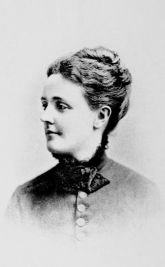
Julia Ward Howe is remembered now only as the author of the “Battle Hymn of the Republic”, which became the most popular song of the Union forces during the Civil War. She was also a writer of popular poetry and articles as well as an activist for the abolition of slavery and for women’s rights. In many ways she lived the life of a traditional nineteenth century wife and mother, but behind that façade she struggled with her ambition to be a writer and artist. I have been reading Elaine Showalter’s fascinating and eye-opening biography The  Civil Wars of Julia Ward Howe (2016) and learned of an unfinished manuscript that was found among Howe’s papers many years after her death.

Howe’s untitled manuscript tells the story of a Laurence, a character who has both male and female characteristics. The story is tragic as both men and women are attracted to Laurence, but none can accept the ambiguous nature of his sexuality. It is easy to see why the book was never completed. It seems as though Julia Ward Howe, although unambiguously a female, was unable to accept and understand her need for an active intellectual public life—a life that was considered suitable only for men. Howe lived a more or less conventional 19th century life, but her marriage was very unhappy. She could not accept the limitations placed upon women, and could not devise a life that would combine domestic life with her creative needs.

Some 19th century women managed to build what appear to be happy lives for themselves by avoiding marriage and finding emotional satisfaction with another woman. Sarah Orne Jewett, whose well-wrought stories of New England life were popular throughout the

Sarah_Orne_Jewett_7
Sarah Orne Jewett

country, lived for many years with the widowed Annie Fields. This was one of the famous “Boston marriages” (a term coined by Henry James) in which two women established a household of their own. We probably will never know whether or not most of these relationships had a sexual component. It doesn’t really matter. The revolutionary part of the Boston marriages was just the fact that women could live satisfying lives without depending on men for either financial, emotional, or legal support. Of course, the women who pioneered these lives had to independent means, whether inherited or earned, to enable them to live this way.

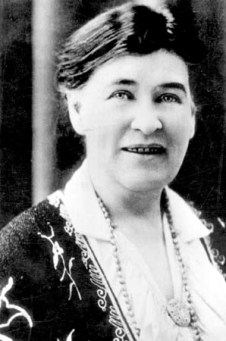
Well into the 20th century many women writers had difficulty reconciling their artistic

willa cather
Willa Cather

ambitions with the limitations imposed by their gender. Willa Cather, whose novels were both popular and won critical acclaim including a Pulitzer Prize was one of the writers who found it difficult to accept a conventional female role. As an undergraduate she had sometimes used the name ‘William’ and cut her hair so short she was mistaken for a man. She wrote several of her stories from a masculine point of view and at times seemed scornful of other women writers. Most of her closest friendships were with women, but she never described herself as a lesbian and she protected her privacy so fiercely that critics and biographers still quarrel over whether or not she had sexual relations with women.

Looking back it’s hard to understand why it took so long for society to recognize the wide range of people’s gender identification and emotional lives. It wasn’t until late in the 20th century that the gay liberation movement began to be noticed and to gradually become acceptable to most Americans. And as it has grown, it has become more inclusive so that now we have gay, lesbian, bisexual, transgender people joining together to remind everyone of the great variety of human lives and emotions. We can finally see that the rigid rules that required all women and men to act in certain prescribed ways are unnecessary and hurtful. Young people growing up today are not required to hide their gender preferences the way earlier generations did.

There is still a long way to go before equality is achieved, but at least we can celebrate the long road that has been traveled already.