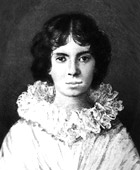
When literary people talk about women poets they often mention famous figures from the past. Emily Dickinson is the American poet who almost defined poetry for generations of schoolchildren as well as adults. Her name is familiar
Emily Dickinson
to most readers, and a movie about her life, A Quiet Passion, impressed critics and moviegoers as recently as last year. The pale, reclusive Emily in her white dresses, scribbling her poems on little pieces of paper in her room seems the ideal poet.
Other women poets of the past are also well known. Elizabeth Barrett Browning, confined to her sickbed for years until rescued by Robert Browning, who took her to Italy and helped her become famous. Female poets are often associated with illness, delicacy and fragility. They are viewed as weak creatures, prone to suicide and early deaths. But not all women poets fit this pattern. Today I want to look back and honor the tough woman who proved that a woman could be both a writer and an active participant in worldly life—Aphra Behn.
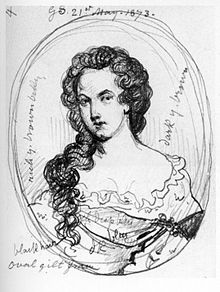
One of the reasons Aphra Behn is not remembered, perhaps, is that we know little about her life. She was born, probably in 1640, almost two hundred years before Emily Dickinson in England. Her parents might have been a barber and a wet nurse, or perhaps not. One indisputable fact is that she learned to read and write, a rare privilege among working class women of her time. The gift of literacy made it possible for her to meet and mingle with people of all classes. Her introduction to aristocrats may have come through one of the families her mother met while acting as a wet nurse.
Coming of age during the restoration, when Charles II returned to the throne, gave Aphra an opportunity to become active in the world of theater and publishing. As Oliver
Aphra Behn–sketch
Cromwell’s puritan restrictions were removed, there was an outpouring of publishing and theater. Starting out as a poet, Aphra turned to writing fiction and produced the story Oroonoko, set in Surinam, which became a long-lasting best seller. Later she turned to writing plays. She also, apparently, served as a spy for Charles II. Because she seldom discussed her background, very few facts are well established. One thing that we know for sure is that she was finally buried in Westminster Abbey—although not in the poets corner where many of her male friends and colleagues lie.
For those who would like more information about her life, I recommend a biography by Janet Todd, Aphra Behn: A Secret Life. It is long, but gives a continuously fascinating picture of a life shaped by history and secrets.
Perhaps the most important statement about Aphra Behn was made by Virginia Woolf in her essay “A Room of Her Own”. All women together, ought to let flowers fall upon the grave of Aphra Behn… for it was she who earned them the right to speak their minds… Behn proved that money could be made by writing at the sacrifice, perhaps, of certain agreeable qualities; and so by degrees writing became not merely a sign of folly and a distracted mind but was of practical importance.
So as we read the poetry of the delicate women poets of the 19th century during this Poetry Month, we also ought to pay tribute to a woman who came before them. She struggled with poverty and class prejudices to make her way in a man’s world and in doing so she ensured that women’s voices would eventually be heard.
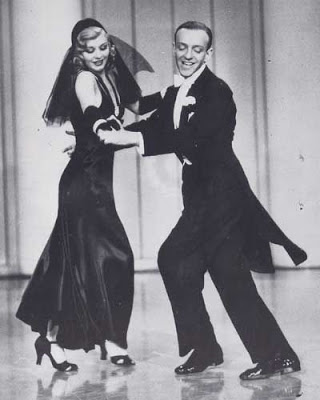
Almost everyone is familiar with the comment from a cartoon written by Bob Thaves about Ginger Rogers, “she did everything he [Fred Astaire] did, but she did it backwards and in high heels.” That about sums up the extra requirements put on women as they move ahead in a professional world dominated by men. Often this includes the expectation that women in any field will look like models and stay as fit as athletes whether this has anything to do with their work or not. Men are usually permitted to put on a little weight (as long as they wear a well-tailored jacket to disguise it) or to let their biceps sag a bit.
A recent New York Times story described the rigid standards set for cheerleaders who work for professional sports teams but it is not only women who perform before the public who must observe different rules depending on their gender. Female writers, artists and political figures are judged differently than the men they compete against.
Tracy K. Smith, the poet laureate of the United States, was featured in a recent Vogue magazine article looking like a model. Although the article itself was respectful and professional, it seemed odd to have the caption label all the items of Ms. Smith’s wardrobe. Can anyone imagine Virginia Woolf allowing a magazine to inquire into the brand names of all of the clothing she wore for an interview? Tracy Smith’s poetry stands on its own as one of the treasures of American literature. Surely her readers do not need to know the details of her consumer choices.
Women who run for political office are scrutinized not only for what they say and the causes they work for, but also for the clothes they wear and the way they style their hair. Hillary Clinton’s pants suits and shoes certainly became part of the stories written about her. No one bothered to report on these items for the men who were running for office.
Some of the most glaring examples of the different ways in which professional men and women are viewed can be seen in the various TV news channels. The women who report the news on CNN all seem to have carefully made-up faces and to wear sleek, tight-fitting dresses while they report their stories. I sometimes wonder how many more hours they must spend preparing for work than their male colleagues, who go on air sometimes rumpled and tieless, but with all their flaws hidden behind a generic jacket.
It is certainly great that women are reporting the news at all. I can remember the bad old days when it was said than the TV audience would not accept serious news presented by female reporters. Still, the playing field will not be level until women are allowed to be fully human in their professional lives. They may occasionally gain a few pounds, or their hair may turn gray or white, and wrinkles can be seen as an honorable sign of a thoughtful life and knowledge gained. Until they can appear honestly—aging and changing as the years go by—will women have achieved full equality?
I think I can hear the ghost of Ginger Rogers urging us on.
My interest in women who were notable in their time but did not earn the recognition of an obituary in a major newspaper led me to learn more about several fascinating
Americans. May Alcott Nieriker, sister of Louisa May Alcott, was a devoted artist, but was never became famous. At least her life was more exciting than her fictional counterpart, Amy, in Little Women.
May Alcott was born in Concord, Massachusetts on July 26, 1840 to Bronson and Abigail Alcott. As a young child she lived in the Utopian community, Fruitlands, which her father had started. The rules were strict—no animal food, not even milk for young children. When her mother tried to milk the cow for ailing two-year-old May, her father decreed, “We don’t allow milk on this farm. Pure water is the best drink for all God’s creatures.”
“Why can’t we live the way other people do?” his wife protested. That question was one young May Alcott would ask often as she grew older, and she never found an answer.
As May grew up she was independent and ambitious. She was determined to earn money herself and not depend on a husband’s support. It would not be easy to support herself as an artist. Many girls studied art but when they grew up, they were expected to get married and let their husbands support the family. Professional artists were almost always men. May studied art in Boston, and she gave art lessons, but made so little money that she had to turn to teaching.
May’s life was dramatically changed by the success of Louisa’s book, Little Women. Now there was money for new clothes and books and even travel. For years May had longed to study art in Europe. The great museums and picturesque castles, churches, and cities
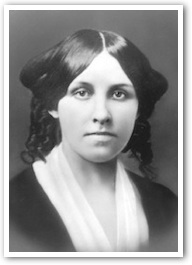
Louisa May Alcott
of Italy and France were unlike anything in America. May had never seen famous paintings or statues. She had learned about European paintings by looking at copies made by Americans who traveled abroad. Some of the copies were good, but they were only small imitations of what the artist had created. Now at last she would be able to see the glowing colors of the originals.
Two years after the publication of Little Women, Louisa finished writing An Old Fashioned Girl. Now the two sisters had their chance to travel. On April 2, 1870, May and Louisa and their friend Alice Bartlett sailed to France. Everything was different from what they had been accustomed to in New England. Instead of fresh white clapboard houses, they saw homes, some of them centuries old, built of stone. Instead of simple wooden churches, they saw shadowy cathedrals with statues, candles, and stained glass windows. May carried her sketchbook everywhere, always ready to capture the changing sights that surprised her so much.
The study years in Europe were May’s happiest times, but she and Louisa could not remain there long. Their mother was growing old and ill; their sister Anna’s husband died. Louisa went home first to help out and then May followed. For the next several years family responsibilities tied May down. It wasn’t until 1876 that she had a chance to return to France.
This time, May went directly to Paris where she joined two friends from home, Kate and Rose Peckham. The three of them settled into comfortable lodgings and arranged for art lessons. Suitable art classes for women were not easy to find because art students learned to draw people by having live models in class. For many people the idea of women looking at people who were nude or lightly clothed was shocking. Even worse was the idea of having men and women in the same class looking at these models. Because of this, many of the famous art schools in Paris did not accept women. May was disappointed, but she made the best of her situation. She found a teacher, Monsieur Krug, who solved the problem by accepting only women in his classes.
Not only was May a successful student, but one of her paintings was chosen from among the thousands submitted for the Paris Salon exhibit of 1877. May was eager to share her triumph with her family. No longer would Louisa be the only successful Alcott. May wrote to her mother:
Who would have imagined such good fortune, and so strong a proof that Lu does not monopolize all the Alcott talent. Ha! Ha! Sister, this is the first feather plucked from your cap, and I shall endeavor to fill mine with so many waving in the breeze that you will be quite ready to lay down your pen and rest on your laurels already won.
When the first viewing day of the Salon arrived, May went very early to see how her picture was hung. She found it was dwarfed by the huge canvases around it, but thought it held its own because the hanging committee had placed it at eye level where everyone could easily see it. Many of the artists and visitors complimented her on her painting. She felt very festive in her fashionable black silk dress and was surprised at how easily she mingled with the smart, artistic crowd. At last her patience and persistence were being rewarded. After years of being a student, she was finally being recognized as a real artist. She moved to London to pursue her career.
Meanwhile in Concord, the Alcott family was struggling with May’s mother’s failing health. Louisa wrote to urge May to come home and spend some time with her mother. May was torn between wanting to return to Concord and longing to stay abroad. She knew her mother missed her, and she wanted to be with her family at this difficult time. One day she walked to the steamship office to buy a ticket to sail to America, but when she got to the office, she turned back. She was afraid leaving Europe would mean giving up all her artistic hopes. Her dream was to return home with a strong record of artistic achievement to make her mother proud.
In November, that dream ended when May received word that her mother had died. She was overwhelmed with grief and felt guilty about her decision to remain in Europe. Although American friends were kind and helpful, May spent most of her time alone. She avoided people who came to express their sympathy, because she found it difficult to talk about her mother without crying. Instead, she took long walks through the dark, rainy London streets and spent hours in Westminster Abbey listening to organ music. She wrote to Louisa, “I try to do as she would have me and perhaps shall work the better for the real suffering I never knew till now.”
One of her boarding house friends was a young Swiss businessman named Ernest Nieriker. During the darkest days of her grief, she could hear him playing the violin in his room across the hall from hers. He knew the music cheered her, so he would leave his door open as he played. He also offered to read to her in the evenings when her eyes were tired, or to play chess with her. He and May soon became close friends and their friendship slowly turned into love. Although he earned his living in business, Ernest was deeply interested in both art and music. May found him very congenial, and he encouraged and appreciated her work.
By March, there was another artistic triumph to celebrate. May had two pictures accepted at the Ladies Exhibition in London. But soon she had an even greater event to write home about. Ernest asked her to marry him! He was several years younger than she was, but they shared a love of music and art. Best of all, Ernest encouraged May to continue her artistic career.
May’s father and sisters were astonished at this sudden engagement, but even more startling news was soon to come. Within a few days of their engagement, Ernest received unexpected news. He would have to leave London for at least a year to work for his business in either France or Russia. May and Ernest were unhappy at the thought of being separated for such a long time and Ernest made a bold suggestion:
Why should we not have this year together? Life seems too short to lose so much. If you will consent to forego a fine wedding and fine trousseau and begin with me now, we can enjoy so much together.
And so May’s life took another turn for the better. The young couple was very happy and soon May was pregnant. She looked forward to having a child and to continuing her artistic career with Ernest’s help. Once again things went wrong. May died a few weeks after the birth of her healthy daughter.
Despite her early death, which meant that she was never able to fully realize her talents and achieve her goals her life serves as a model for many women who came later. She faithfully pursued her goals and tried to achieve success without sacrificing her family or the people she loved. Surely she deserves to be remembered.
This past week the New York Times launched a series paying tribute to fifteen notable women who did not get obituaries in the newspaper when they died. Each week in this new section, called “Overlooked”, the Times will add the stories of women who deserved, but were not given, an obituary when they died.
What a great idea! I thought when I read the announcement. I decided I would go back and take a look at some of the women I’ve written about on my blog to see whether they fit into the “Overlooked” category. One of the first people I thought of was Elizabeth Peabody, a celebrity during much of the 19th century, who has long been forgotten
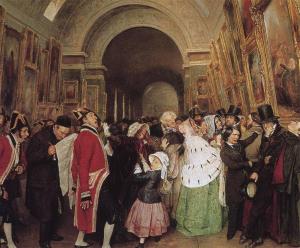
Bookstore discussions
despite her achievements in education and publishing. As it turns out, she did get an obit in the New York Times, when she died in 1894, although she was treated more as an eccentric old woman than as the respected educator that she was. I think she deserves a better send off than that.
We have no picture of Elizabeth Peabody as a young woman, although she was well-known in Boston. As her biographer, Megan Marshall, explains, Elizabeth’s portrait was painted in 1828 by Chester Harding, a well-known portrait artist in Boston. Elizabeth was 24 years old at the time and teaching at a school she had started for girls. Instead of being pleased by the portrait, her parents were scandalized. Women of that time did not have pictures of themselves mounted on walls and displayed to others. Unlike men, women were supposed to live lives that were private and hidden from everyone except their families. Despite the prevailing customs, however, Elizabeth was destined to become a well-known figure in Boston and elsewhere during her long life. The portrait, incidentally, was destroyed years later in a warehouse fire so the only existing pictures show Elizabeth as an elderly woman.
Elizabeth was one of three Peabody sisters—the other two were Mary, who married
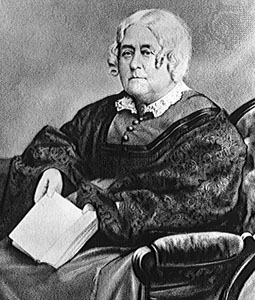
Elizabeth Peabody
Horace Mann, and Sophia, who became the wife of Nathaniel Hawthorne. All three were born in the early 1800s and lived through most of that eventful century, but Elizabeth had the most lasting influence and left a legacy that is still with us.
In 1838 Elizabeth opened a small circulating library and bookstore in the family home. She knew Ralph Waldo Emerson and many of his friends who were interested in expanding the intellectual horizons of Americans. They were eager to learn about the new ideas being talked about in Europe and Elizabeth’s bookstore offered them a chance to read and discuss European journals and new books. Not only that, Elizabeth also opened a small publishing operation and published several articles and books written by members of the group including several of Nathanial Hawthorne’s early stories.
Elizabeth Peabody’s small bookstore in West Street was the place where the new Transcendental Club held meetings. Margaret Fuller offered her “Conversations” in the bookstore for the wives and friends of the Emerson circle. Elizabeth’s bookstore appears in my mystery story A Death in Utopia as a place where the Charlotte Edgerton and her friend Daniel Gallagher can follow up ideas for solving a mysterious death.
Running a bookstore and being a publisher were not Elizabeth Peabody’s only occupations. She studied European educational theories and opened the first kindergarten in America. Her most lasting legacy remains the revolution in teaching young children which grew out of the kindergarten movement. She deserves more than the meager obituary written for her when she died in 1894. Megan Marshall’s biography The Peabody Sisters; Three Women Who Ignited American Romanticism gives a good start on learning about Elizabeth and her accomplished sisters.
We have heard far too much about guns this week and the discussions are likely to continue. The question of who should have guns and where and when they should be allowed will continue because it is of vital importance to all of us. But not everyone realizes how unusual the American attitude toward guns is compared with attitudes in most other countries.
Early guns were designed for armies fighting to support kings and nobles. Their use was limited to wars. As handguns became easier to use and more available, they were often purchased by wealthy men who used them for hunting, and for protecting themselves and their property against burglars and assassins.
America was different. During the 19th century as Americans pushed westward, guns became the property of many ordinary farmers and hunters. Guns no longer belonged to the aristocracy, but to everyman. Of course it was definitely man—not woman. Guns have always been associated with men, but in the late 19th century the image was shattered by a 15-year-old girl.
The woman we know as Annie Oakley was born Phoebe Ann Mosey on August 13, 1860. She grew up in poverty in Ohio and learned to shoot while she was very young. By the time she was nine or ten years old she was shooting game and selling it to hotels and restaurants in Cleveland and Cincinnati, Ohio. She made enough money with her sales that she was able to pay off her widowed mother’s mortgage.
As Annie’s shooting skills became more famous, a man who owned a Cincinnati hotel invited her to participate in a shooting contest with a local performer named Frank Butler. At the age of 15, and standing only five feet tall, Annie Oakley was able to win the contest with the well-known marksman. Butler was so impressed by her performance that he began courting her and the couple was married in 1876.
From then on, Annie’s life was in show business. She was a star of the Buffalo Bill’s Wild West Show and became the highest paid entertainer in the country. Butler was content to take second billing and to manage her career. The couple travelled throughout the country and to Europe where Annie performed for Queen Victoria.
One of Annie’s greatest interests was in persuading other women to learn to shoot. Almost alone at that time, she believed women should be able to serve in combat for the American army. She wrote a letter to President William McKinley on April 5, 1898, “offering the government the services of a company of 50 ‘lady sharpshooters’ who would provide their own arms and ammunition should the U.S. go to war with Spain”. Her offer was turned down and women did not serve in either the Spanish-American War or World War I.
Annie Oakley died in 1926, so she did not live to see women serving in combat. That was left for later generations. Today thousands of women learn to handle guns and to shoot, although even now guns are far more often associated with men than with women.
None of the shooting sprees that have led to mass killings in the United States were carried out by women. Why is that? Despite the importance of understanding why some people use guns in violent attacks, most researchers are forbidden to investigate the issue. In 1996, Congress passed an amendment to a spending bill that forbade the Centers for Disease Control and Prevention from using money to “advocate or promote gun control.” That action has meant that researchers find it almost impossible to get grants for research.
Annie Oakley believed in guns as a force for good in the country, not for evil. She would be ashamed to discover that we have become too timid to even try to find out how people use the weapon that she mastered so well.
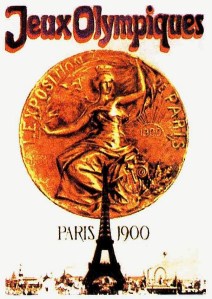
The dazzling display that marks the beginning of the Olympic games whenever they are played has become traditional. Thousands, perhaps millions, of people around the world watch on TV screens, tablets or phones to see the athletes march into a massive stadium carrying the flag of their country. It’s a once-in-a-lifetime-moment for the athletes. But the Olympics were not always such a high profile occasion. The first American woman to win an Olympic event won it in a contest that was so low key she wasn’t even sure that the golf game she won was part of the Olympics.
There was no ceremony to mark the opening of the Paris Olympics of 1900. There was no closing ceremony either and the winners did not receive medals—they received one of a variety of knick-knacks provided by the sponsors.
How is that possible? Well, the 1900 Olympics in Paris were only the second in the series of modern Olympics, which had started in Athens in 1896. When 1900 rolled around, Paris was holding a large World Exhibit and the Olympics became a kind of sideshow to that. Various events were run from May until October in different venues around Paris. Spectators and even participants were not always sure which events were part of the Olympics and which were unaffiliated athletic contests. The event was quite disorganized, but one innovation that was made has lasted—it was the first time that women were allowed to compete in the Olympics. Women have been a prominent part of the Olympic contests ever since.
America’s first female Olympic champion was Margaret Ives Abbott. She was a young society woman from Chicago who played golf for pleasure and was very good at it. In
Margaret Ives Abbott
1900, she was in Paris studying art and heard there was a golf contest, so she signed up. Her mother, also an excellent golfer, participated in the contest too. 1900 was the first year that golf had been part of the Olympic program and for many years it was the only time. Not until 2006 was golf reintroduced as an Olympic sport.
Margaret won first place in the golf tournament and was given a porcelain bowl in recognition of her achievement. But there was no huge newspaper coverage, probably no photos, and certainly none of the adulation that Olympic champions win today. Margaret Abbott, who was 22 years old at the time she won her award, continued to live the normal life of a prosperous young woman. She married the journalist and author, Finley Peter Dunne in 1902. He was creator of the well-known “Mr. Dooley” essays, humorous commentary on politics and life of the early 20th century.
It wasn’t until almost fifty years later when scholars put together a reliable history of the Olympics that the Paris 1900 games were fully recognized. And Margaret Ives Abbott finally received full recognition. Because she died in 1955, it seems unlikely she was even aware that she was America’s first woman Olympic winner. Such a mistake would never happen today when all the events are filmed and a full historical record kept of the games. Women who win medals get full recognition of their achievements. The Olympic games have come a long way—and so have women athletes. But let’s not forget to honor Margaret Ives Abbott, a leader in the recognition of women athletes.
This has not been the best of weeks for me, primarily because I had a fall early in the week, at home, of course, where so many falls take place. While I’ve been fretting over my aching muscles and experimenting with how to get my meals ready without putting too much strain on my sore leg, I haven’t had much time to think about a blog post.
Then I read an article about Melania Trump in the New York Times which set my mind to considering a subject I wrote about the changing roles of first ladies back in 2016.
Two of the most watched speeches of the conventions were those given by Michele Obama, our popular First Lady, and by Melania Trump, who aspires to be a first lady. Our Founding Fathers would be aghast if they knew that candidates wives were actually appearing in public and speaking on behalf of their parties and their husbands roles in politics.
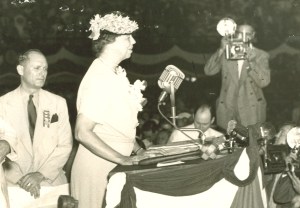
Like so many other revolutions in American politics, Eleanor Roosevelt was a pioneer in opening the way for wives to speak at nominating conventions. She surprised everyone by appearing on the podium at the 1940 Democratic Convention in Chicago to urge delegates to nominate her husband, Franklin. As the New York Times reported:
“Eight years after her husband shattered the tradition of the non-appearance of Presidential candidates before the conventions which nominated them, Mrs. Franklin D. Roosevelt, in the same hall and on the same platform, established another tonight, the first wife of a President or nominee ever to address a major political party conclave.”
The Times went on to report that the First Lady spoke with unusual gravity, both at the press conference when she arrived in Chicago on a chartered plane, and in the convention hall. Franklin Roosevelt had announced earlier that he did not want to run again, and Eleanor Roosevelt said she was not surprised at this because “I cannot imagine in the present state of the world, why anyone would want to carry such a burden…” Her reaction when told that her own name had been placed in nomination for the Vice Presidency was to laugh and say. “I could imagine nothing more foolish or less wanted.” Her speech, when it came, was forceful and the delegates went on to nominate Franklin Roosevelt by acclamation for an historic third term as President.
Eleanor Roosevelt, like both Michele Obama and Melania Trump…could not escape press comments on her clothes. “Her traveling suit was a tailored ensemble of navy cloth coat with long lapels of Eleanor blue, with a soft crepe dress beneath in the same shade. Her hat was a small one of navy straw in a modified beret type…” At least the newspaper did not report on her hair style or the height of the heels of her shoes.
Time has moved on since 2016, although Melania Trump, still gets many comments on her clothes and even on the height of her heels, other changes are being made. Our new first lady chooses not to be completely buried in the shadow of her husband any more than Eleanor Roosevelt or Michele Obama were. She has chosen a different route to independence. She did not move into the White House immediately after the inauguration, and she has chosen not to appear with her husband or travel with him as often as most other first ladies have done. Instead she pursues her own interests and has not been a fierce political supporter.
I urge you to read Kate Andersen Brower’s column “The Quiet Radicalism of Melania Trump” and think about the changes that are coming to the First Lady role in American politics. Sometimes long lasting changes occur without our even noticing. And sometimes they are made by the people we would least expect to make them.
The Golden Globe awards ceremony last weekend was raised far above its usual status as just another awards show by the dramatic way the women participants coordinated their costumes. All of the women wore black dresses, some starkly black from top to bottom, others relieved by a touch of gold or color. But the overwhelming effect was of a crowd of beautiful women wearing the most dramatic color possible for women’s clothing—black.
The Golden Globe display was, of course, in support of the #MeToo and #Time’sUp movements protesting sexual harassment and assault. Many of the women who spoke at the event mentioned the prevalence of sex discrimination in the entertainment industry and urged both men and women to protest against it.
As a follow-up to that successful display, several Democratic Congresswomen are planning to wear black to President Trump’s first State of the Union speech on January 30. Whether others will follow their lead remains to be seen.
Will any of this matter? Are we at a turning point for relations between women and men? It will be a long time before we know for sure. The history of women’s demands for fair treatment has not been a happy one. Generations of American women fought for women’s right to vote—from 1848 until 1920 the struggle continued. Hundreds of women and then their daughters and granddaughters argued, wrote pamphlets, and demonstrated in an effort to convince men they should have the right to vote. By the time the women won, most of the early supporters had died.
And the movement to add an Equal Rights Amendment to the U.S. Constitution prompted long and vigorous struggle that has not yet been successful. You can read the full story of how the amendment was proposed and how close it came to passing at the excellent website at http://www.equalrightsamendment.org/
When the ERA went to the states for ratification in 1972, it looked as though it would be speedily accepted. During the first year, 22 states ratified the bill, but then the backlash
Phyllis Schafley
gained strength. Phyllis Schlafly was one of the bill’s fiercest critics saying that it “would lead to women being drafted by the military and to public unisex bathrooms“. Well, now we have unisex bathrooms in many public buildings and neither men nor women face a military draft, but the amendment is no longer an active item on the agenda. Will it ever be revived?
Why do women’s campaigns so often seem to fail or to take an inordinately long time to be accepted? It reminds me of the line from the World War I poem by Shaemas O Sheel “They went forth to battle, but they always fell.” Will the movement to eliminate sexual harassment in the workplace also fail, or perhaps take a century to win? Women can’t change things by themselves; men have to understand the issues too. Social change is never easy, but at least there are some clues about how it happens.
It begins with education, early education before attitudes are congealed into rigid patterns. Perhaps we could start by not encouraging children to view life as a battle, or a football game, with winners and losers. Sports play a surprisingly large part in American education—more than in any other country. Children quickly learn about winning and losing, but not so often about working with one another and cooperating on projects.
By the time young people become sexually active, many of them have decided that sex is a competitive sport. A boy who “scores” thinks himself victorious and the girl is often shamed as a loser. Boys and men feed their power by forcing females to submit to their desires. Instead of being about intimacy, sex becomes a matter of exerting power and winning. It’s time for educators and parents to think more about what they are teaching boys and girls and how it will affect their futures.
As for grown men—better late than never. They can still learn to treat women with fairness and respect. It will be a long struggle, but at least the women in black have made a start.
This has been a grim year for many of us. For me and most of my friends, the year started with a presidential inauguration that we dreaded and feared. As the weeks and months passed, the politics didn’t get any better. Much of public life was tinged with disappointment and a level of discussion more suitable for a TV reality show than for normal social communication.
As if that weren’t enough, we were plagued by natural disasters—hurricanes hitting Florida, Texas, and Puerto Rico; wildfires in major portions of California—and unseasonable weather in much of the country. The bills for coping with these disasters are still coming in and the suffering of people who lost homes and property will continue well into 2018.
But no year is entirely bad. Each one gives us opportunities for new experiences, encounters with people and with arts that bring us new ideas and emotions. To celebrate 2017, I’ve chosen a few of these encounters that have pushed my ideas in new directions.
Early in the year, I saw the play Leni by Sarah Greenman at the Aurora Theatre in Berkeley. Based on the life of Leni Riefenstahl, the filmmaker who worked in Germany during the 1930s and produced pro-Hitler films such as Triumph of the Will, the play is an exploration of one person’s character. Obviously she is not a sympathetic character, but Greenman’s play shows her as a complicated woman who always insisted that her
Leni Riefenstahl and Adolf Hitler
interest was in producing art rather than supporting any political positions. The argument is not very convincing, but the play made me think about the tangled motives of real people caught up in world events they cannot comprehend. More than that, this production of Leni was an excellent example of how live theater can make characters come alive with a minimum of background, scenery or narrative. It was a great example of the power of live theater during this period when electronic presentations dominate most art forms.
I had another unexpected vision of an old art form when I went to the exhibit of Gods in Color at the Palace of the Legion of Honor in San Francisco. As I wrote here a few weeks ago when I blogged about the exhibit, it may seem trivial to see marble statues presented in a new way, but it made my imagination stretch. It is easy to think about familiar objects as set permanently in time, but it’s good to have our memories shaken occasionally.
One of the most recent books I read, and the one that left me with the most new ideas to ponder was Prairie Fires: A Biography of Laura Ingalls Wilder by Caroline Fraser. Fraser not only writes a biography of Laura Ingalls Wilder, but also gives a portrait of the lives of people who settled the plains states–Minnesota, North Dakota, Kansas, etc.–during the late 19th and early 20th centuries. I, for one, had no idea how extremely difficult it was to settle those plains and how the Homestead Act, pushed as a noble deed by the U.S. government, actually encouraged people to settle in areas unsuitable for agriculture. For many people, the move west was a disaster because the plains states were subject to plagues of locusts as well as tornadoes, and extreme weather all of which made it impossible to raise crops profitably. And the farmers did not know that by plowing the plains they were removing the topsoil and thus causing the dust storms that ravaged much of the west during the depression years of the 1930s.
Laura Ingalls Wilder lived through a series of tragedies during her childhood and her early married life–loss of houses to fires and storms, loss of crops, loss of a stillborn baby. Only one child survived to grow up, Rose Wilder Lane, who became a journalist and writer. It wasn’t until Laura Wilder was in her fifties that she started to write. When she did, she found that her daughter was her greatest help in shaping her memoirs for publication, but the relationship between mother and daughter was always contentious. The Little House books grew out of this tangle and eventually became amazingly popular. Their false, cheerful picture of the life of pioneers influenced (and continue to influence) generations of children growing up in the 20th century and are still going strong. The TV shows that were presented in the 1970s falsified the stories even more than the books did and were even more popular.
When Franklin Roosevelt became President, both Laura and Rose became extremely conservative politically. They were rabid opponents of Roosevelt and the New Deal. Looking back it is almost impossible to believe that innovations, such as Social Security, which have become an integral part of American life were so controversial. Prairie Fires opened my eyes to a new view of American history. I strongly recommend it.
Looking back over these experiences that have enriched my life during 2017 gives me hope for the coming year. There will be more performances to hear during 2018, more art to see and, more great books to read. And above all, more new ideas to welcome and ponder.
Travel is fatal to prejudice, bigotry, and narrow-mindedness, and many of our people need it sorely on these accounts. Broad, wholesome, charitable views of men and things cannot be acquired by vegetating in one little corner of the earth all one’s lifetime.—Mark Twain
Despite Mark Twain’s excellent advice, a lot of people back in his day—like many people today—did vegetate in one little corner of the earth for their entire life. Of course the majority of people have never had a choice. To travel comfortably is a luxury reserved for prosperous people, but even among them, many people don’t take advantage of the opportunity. Fewer than half of all Americans have a passport.
Traditionally men have traveled while women stayed at home, but there have always been women who insisted on travelling just as their brothers and husbands did. One of the most notable woman travelers of the 19th century was Gertrude Bell. She traveled and learned about other cultures, studied languages, and had a major influence on the course of history.
Gertrude Bell was born into a wealthy family in County Durham, England, in 1868. Her mother died when she was very young, but her father soon remarried and her stepmother, Florence Bell, was a strong influence on the girl. She even decided, eventually, that Gertrude was too restless and intelligent to be decorously educated at home as other girls were. She was sent to school and even attended a women’s college in Oxford where she was the first woman ever to receive a first in history. She was not, however, awarded a degree for that because women might study and excel in learning, but it was feared that an actual degree was a step too far.
Gertrude’s father supported her desire to travel and her interest in archeology and
Gertrude Bell
supplied a generous allowance that made it possible for her to travel the world. She fell in love with the Middle East and spent much of her life there, learning languages, studying ruins, and getting to know the rulers and their wives. Despite looking like a staid Victorian schoolteacher, Bell was a fearless traveler.
In 1911, when Winston Churchill was First Lord of the Admiralty, the British Navy replaced coal fired ships with oil powered ones. Suddenly England became dependent on oil from the Middle East and the exotic countries where it was produced. Access to the oil was controlled by the Ottoman Empire, which encompassed most of Mesopotamia, and the Turks were allies of the Germans.
British intelligence was very interested in what was going on in the Middle East and because Gertrude was recognized as an expert, she was summoned to Cairo to help map the area. Given the rank of Major—the first woman officer in the history of British intelligence—she caused consternation among other officers who couldn’t figure out how to treat her. But she managed build a comfortable relationship with the men, and she played a vital role in establishing the governments that ruled the Middle East for decades after the war.
Iraq was the country that was closest to her heart. While she was there she oversaw the establishment of the great National Museum to house antiquities of the country. She also started the library, which became the National Library of Iraq.
There have been many questions raised about the role Bell played in establishing borders for countries that no Westerner truly understood. She was not always right in her advice, but she respected the people and, unlike most of the English, she foresaw many of the difficulties that would arise. Perhaps before any of us make judgments about Bell’s work we should read the biography written by Georgina Howell, Gertrude Bell: Queen of the Desert, Shaper of Nations.
Now that we have so many ways of getting to know the world, maybe in 2018 more people can travel whether in person, by reading, or through the Internet. And remember the words of Confucius “Wherever you go, go with all your heart.”
 backwards and in high heels.” That about sums up the extra requirements put on women as they move ahead in a professional world dominated by men. Often this includes the expectation that women in any field will look like models and stay as fit as athletes whether this has anything to do with their work or not. Men are usually permitted to put on a little weight (as long as they wear a well-tailored jacket to disguise it) or to let their biceps sag a bit.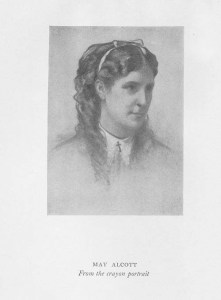
 limited to wars. As handguns became easier to use and more available, they were often purchased by wealthy men who used them for hunting, and for protecting themselves and their property against burglars and assassins.
 By the time she was nine or ten years old she was shooting game and selling it to hotels and restaurants in Cleveland and Cincinnati, Ohio. She made enough money with her sales that she was able to pay off her widowed mother’s mortgage.
 The dazzling display that marks the beginning of the Olympic games whenever they are played has become traditional. Thousands, perhaps millions, of people around the world watch on TV screens, tablets or phones to see the athletes march into a massive stadium carrying the flag of their country. It’s a once-in-a-lifetime-moment for the athletes. But the Olympics were not always such a high profile occasion. The first American woman to win an Olympic event won it in a contest that was so low key she wasn’t even sure that the golf game she won was part of the Olympics.

 considering a subject I wrote about the changing roles of first ladies back in 2016.
 to run again, and Eleanor Roosevelt said she was not surprised at this because “I cannot imagine in the present state of the world, why anyone would want to carry such a burden…” Her reaction when told that her own name had been placed in nomination for the Vice Presidency was to laugh and say. “I could imagine nothing more foolish or less wanted.” Her speech, when it came, was forceful and the delegates went on to nominate Franklin Roosevelt by acclamation for an historic third term as President.
 their costumes. All of the women wore black dresses, some starkly black from top to bottom, others relieved by a touch of gold or color. But the overwhelming effect was of a crowd of beautiful women wearing the most dramatic color possible for women’s clothing—black.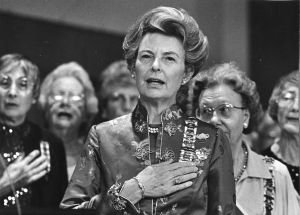
 fairness and respect. It will be a long struggle, but at least the women in black have made a start.
 started with a presidential inauguration that we dreaded and feared. As the weeks and months passed, the politics didn’t get any better. Much of public life was tinged with disappointment and a level of discussion more suitable for a TV reality show than for normal social communication.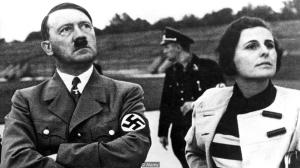
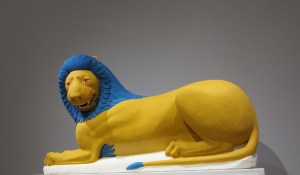 ago when I blogged about the exhibit, it may seem trivial to see marble statues presented in a new way, but it made my imagination stretch. It is easy to think about familiar objects as set permanently in time, but it’s good to have our memories shaken occasionally.
 conservative politically. They were rabid opponents of Roosevelt and the New Deal. Looking back it is almost impossible to believe that innovations, such as Social Security, which have become an integral part of American life were so controversial. Prairie Fires opened my eyes to a new view of American history. I strongly recommend it.
 be acquired by vegetating in one little corner of the earth all one’s lifetime.—Mark Twain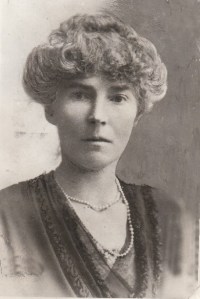
 the area. Given the rank of Major—the first woman officer in the history of British intelligence—she caused consternation among other officers who couldn’t figure out how to treat her. But she managed build a comfortable relationship with the men, and she played a vital role in establishing the governments that ruled the Middle East for decades after the war.
 Teacups and Tyrants-Adele Fasick looks at people, books, and history