When the Nobel Prize for medicine or physiology was awarded in December 1962, many observers were surprised to learn that the three men who shared the award—James Watson, Francis Crick, and Maurice Wilkins–were specialists in different scientific fields. The award was given for their breakthrough discovery, after years of work, about how DNA was structured so that various traits could be passed down from one generation of a plant or animal to another. News of this important discovery soon spread through the scientific world and aroused interest even among non-scientists. In the years since the award was given, the way in which the discovery was made, acknowledged, and honored has become one of the most controversial topics in the history of Nobel prizes.
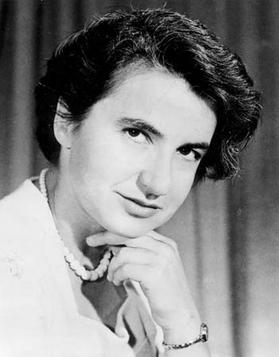
Six years after the award of the Nobel Prize, something happened which changed the discovery of DNA from a scientific event to a scandal of great interest in the popular news. James Watson, one of the recipients of the award, wrote a book called The Double Helix. Unlike many books about science, Watson’s book was written in a lively style and included gossipy comments about some of the scientists whose work had contributed to the long search for the secret of DNA, including the woman who played a leading role in the field, Rosalind Franklin. Watson’s book became a best seller and set off a controversy which continues to this day.
After reading Watson’s account, many scientists and general readers began arguing about whether Watson had given enough credit to other scientists who contributed to the study of DNA, especially Rosalind Franklin. Some of her illustrations of the structure of DNA had been used without her permission or knowledge. Was her role in the project unfairly ignored? The arguments have recently been summed up in Howard Markell’s book, The Secret of Life: Rosalind Franklin, James Watson, Francis Crick, and the Discovery of DNA’s Double Helix (Norton 2021).
By the time Watson’s book became popular, the feminist movement has started and many readers pointed out the ways in which women were pushed out of the scientific mainstream and not given credit for their work. Their prime example was the fact that Rosalind Franklin, whose illustrations of the structure of DNA were studied by Watson and Crick was not given an award. In fact, her contributions to the field were downplayed and Watson referred to her by the belittling name of “Rosy”—a nickname that Franklin hated.
Markel’s book, The Secret of Life, describes the everyday life of the scientists involved in the project. A reader learns about some of the subtle and not-so-subtle ways in which women were pushed out of the mainstream life of the scientists. Traditions have a strong hold in British universities, and some of these traditions make life difficult for women. One example is the separate dining rooms for women. The food may have been the same, but only the male students had a chance to mingle with famous visitors and guests who, at this time, were invariably men.
Small details make a difference. Many of the men frequently met after hours in local pubs, locations in which many women did not feel at home. Some of the male scientists had wives who cooked dinners for them and their colleagues, but few women would have been able to match this kind of hospitality.
In 1962, when the Nobel Prize was awarded, observers were surprised at the variety of different specialists who participated in the search for the secret of DNA. Now Markel’s book shows us that it was not only differences in scientific training that made a difference in how the secrets were uncovered. The life experiences of the scientists involved also affected their work. Science is not a world in itself, it is part of the ever-changing society in which we live and the case of the discovery of the secrets of DNA offers an excellent chance for us to see how attitudes and ideas affect change and develop over time.
Although it is now more than fifty years since Watson and Crick received the Nobel Prize, the story is not over. Only a few months ago, the Guardian published the story of a story that presented a different point of view toward the behavior of Franklin and the other participants in the story. We still have much to learn about the way science works and how it affects our world.
 Teacups and Tyrants-Adele Fasick looks at people, books, and history
Thanks, Laura, I’m glad you enjoyed it.
Wow! I had heard of Rosalind Franklin before but I certainly never understood all the ramifications of her role in the Nobel prize-winning discussion. Thanks for helping to illuminate just how MURKY the background of important scientific discoveries can be! You have written another wonderful and educational post.