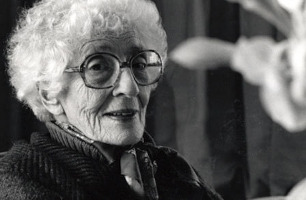
Putting the Zing into Romance—Elinor Glyn

The name Elinor Glyn still sounds familiar to many media fans, but most people have forgotten what she did. Her name has become a cliché in quotes such as the anonymous “Would you like to sin with Elinor Glyn on a tiger skin? Or would you prefer to err with her on some other fur?”

But who was the real Elinor Glyn and why are so many of her books still available on Amazon—although not in most public libraries? Who was this woman who invented the “It” girl and started the new genre of romance books as well as helping to make some of the most popular movies of the jazz age?
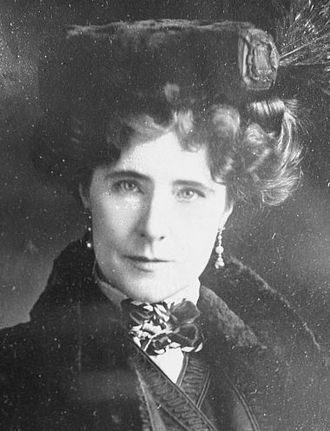
Elinor Glyn

Glyn was born in Jersey, one of the Channel Islands, in 1864 into an aristocratic family. Her father died while she was an infant, and Elinor’s mother moved back to her family home in Canada with the baby. After living for eight years in Canada, they returned to Jersey where Elinor spent most of her childhood. She had almost no formal schooling. Her education came mainly from her grandmother and governesses, although she spent one year at a boarding school in France. She spoke both English and French fluently and read avidly in both languages. Her family assumed that her role in life would be to marry an aristocrat and live a secure life flitting between England, France, and the rest of Europe. 

Luckily Elinor grew up into a strikingly beautiful young woman with pale skin and bright red hair. She also had a lively wit that made her popular with both men and women. Her early adult years were spent socializing, going to parties, and becoming familiar with many important people in European society. In 1892, when she was 27 years old, she married Clayton Louis Glyn and it seemed as though a prosperous future was assured.

Unfortunately, the marriage was not a happy one. Elinor longed for romance and intimacy, but Clayton’s interests were mainly in hunting, fishing, and traditional country life. She tried in vain to bring romance into their marriage, even buying a leopard skin rug, but he rejected her fantasies. Their relationship became worse when their money dwindled away. His wealth was constantly threatened by his spendthrift habits and his obsessive gambling. Instead of living a life of ease, Elinor found herself struggling to keep the household running and paying for nurses and servants to take care of the two daughters she and Clayton soon had. To raise money quickly, Elinor turned to writing. Unlike most aspiring writers, she found almost immediate success.

Glyn found an audience by putting into words the romantic dreams of girls and women in England and America. She wrote quickly and was soon turning out a new book every year. One of her first major successes was Three Weeks, a book that was published in 1907 and is still being read more than a hundred years later. Her writing supported the family while her husband’s drinking destroyed his health and led to his early death in 1915 soon after the beginning of World War I.

Elinor’s writing became an even more important to her and her family after the death of her husband. She became a war correspondent and wrote dispatches from France. Her social ties gave her entry into a wide circle of important men, including Lord Curzon, the former Viceroy of India, who was part of the Prime Minister’s War Cabinet. Glyn was one of only two women who attended the Paris Peace Treaty meeting after the war.

As her children grew up, and the war ended, Glyn turned all of her energy toward writing and socializing. She had a long and satisfying affair with Curzon, but that ended when he decided to find a young bride who could give him a son. He never had a son, but his relationship with Glyn ended.

After the war, England and the rest of Europe still suffered from economic depression and the loss of many of their fighting men. Cities needed to be rebuilt and farms cultivated. Meanwhile, America was thriving. In 1920, Glyn was invited to visit Hollywood with a view toward writing for the new movie industry then in its infancy.

Early films were considered to be entertainment for the masses and not a legitimate art form by most critics, but Elinor Glyn was the perfect link between upper class socialites and lower-class pleasure seekers. She found her place in Hollywood where she was able to teach young actors how to project an image of elegant romance, how to walk and dance like an aristocrat, and how to dress like a lady. Among her friends were Mary Pickford (the “It” girl), Gloria Swanson, and William Randolph Hearst. She entertained at her tea gatherings, which were welcomed by many people as a change from the usual highly alcoholic Hollywood parties.

In addition to her social skills, Glyn was a hard-working writer who was able to turn out scripts (called continuities) that shaped the actions of early silent movies. From 1920 until 1927, silent films reigned supreme in Hollywood and were popular across the country. Unfortunately for historians, copies of these early silent movies have disappeared, so it is impossible to evaluate their quality. With the advent of talkies at the end of the decade, Glyn’s popularity dwindled. With the help of her daughters and son-in-law, she tried to establish her own company to produce and distribute films  but was gradually pushed out of the business.   

In 1929, Glyn returned to England. As her dreams of producing movies failed, she gradually turned back to writing books and articles. She died in 1943, in the middle of World War II. The story of her eventful life has been told recently by Hilary A. Hallett in Inventing the It Girl: How Elinor Glyn Created the Modern Romance and Conquered Early Hollywood (2022). Hallett not only tells the story of Elinor Glyn’s life and achievements, she also paints a fascinating picture of the growth of the modern film industry, one of the remarkable success stories of the twentieth century.

Happy Books and a Sad Life—Lucy Maud Montgomery

Perhaps it is the gray skies of November that remind me of the dark lives that several of our most popular authors of cheerful books have led. Last year in November I wrote about Louisa May Alcott, born on November 29, 1832, whose Little Women books are still selling briskly, but whose own life was shadowed by family cares and disappointed dreams.

This year I want to remember the life of Lucy Maud Montgomery, born on November 30, 1874, whose book Anne of Green Gables has recently been revealed as the most frequently translated book in Canadian literature. Anne of Green Gables is the first of a series of books by Montgomery many of which are still in print and sell briskly around the globe. But the woman who wrote these cheerful stories led a life marred by deep depression, addiction to painkillers, and who died, quite possibly a suicide, at the age of 67.

Lucy Maud Montgomery

Besides being a popular author, Lucy Maud Montgomery can also be credited with being a driving force behind making Prince Edward Island, on the Eastern edge of Canada, a popular tourist spot. When Montgomery was born on the island, it was a quiet rural backwater populated mostly by descendants of Scottish immigrants. Montgomery’s parents both came from families that had lived on the island for generations and she had cousins and other relatives living close-by. Nonetheless, her childhood was a rather solitary one because her mother died when Maud was less than two years old and her father moved to Alberta and remarried when she was seven. Maud was raised mostly by her stern, elderly grandparents.

As soon as Maud started school, she was recognized as a bright and interested student. She loved reading began at a young age to tell stories and then to write them down. Her first story was published when she was a teenager. Despite her obvious intelligence and her success in school. Maud’s grandfather did not believe in educating women, so he would not pay for her to go to college. Despite, the lack of encouragement, Maud managed with the help of her grandmother,  to go to Prince of Wales College and then to Dalhousie University to get a teaching degree. She taught in several small, rural schools in Prince Edward’s Island, but she never lost her ambition to become a writer.

During the 1890s, when Maud was growing up, marriage was considered the only respectable career for a woman. Montgomery was attracted to several men and was engaged to at least one of them, but her ambition to be a writer never wavered. In 1908, she published her first book, Anne of Green Gables, which became an instant bestseller.

Maud’s troubles were not over, however, despite the popularity of her book. She had chosen to publish it with L.C. Page, an American publisher who took advantage of the young author by insisting on having her sign over rights to future books. These troubles continued for many years and Maud had to endure several lawsuits before she was finally able to win her cases against Page in 1928.

Meanwhile Maud struggled with her private life. She married a Presbyterian minister, Ewen MacDonald, and had three sons, one of whom died in infancy. MacDonald, like Maud herself was subject to periods of depression. During these times, his old-fashioned religious belief in predestination meant that he believed the entire family was doomed to go to hell. Both Maud and her sons must have found it difficult to live with such emotional pressures and as the boys grew up, they encountered both academic and personal problems in their careers and life plans.

For many years, Maud managed to conceal many of her problems. In public, she was able to function as a good speaker and appealing woman at social events. It was not until after her death that research by her biographer, Mary Rubio, revealed that both Maud and her husband suffered from drug addiction because of medications they took to control their depression. In 2020, Maclean’s Magazine published an article revealing the extent of their problems.  

During the 1920s and 1930s, Montgomery’s continued her successful career, but, like most women writers who attract a large audience, she was never accepted by the Canadian literary community as an important figure in the literary hierarchy.

Lucy Maud Montgomery’s life ended abruptly in 1942 when she died of an overdose of barbiturates. A note found by her bedside read: I have lost my mind by spells and I do not dare think what I may do in those spells. May God forgive me and I hope everyone else will forgive me even if they cannot understand. My position is too awful to endure and nobody realizes it. What an end to a life in which I tried always to do my best.

We cannot say for sure that  Maud Montgomery committed suicide, but her family believed that she had and Mary Rubio, the scholar who is the primary authority on her life, agrees with them. Perhaps we should honor Montgomery by reading not only  Anne of Green Gables, but also Mary Rubio’s biography Lucy Maud Montgomery: The Gift of Wings. Both books tell us a great deal about Canadian history and about a writer’s difficult life.

Canadian Provinces

Showing Us a Different World–Nadine Gordimer

Books can erase the barriers of both time and place and July’s People by Nadine Gordimer is a novel that speaks to us today just as clearly as it spoke to readers when it was first published in 1981. This story about clashing cultures in South Africa almost forty years ago seems highly relevant to life in America in 2020.  

Nadine Gordimer

July’s People is set in a future that never happened, at least never quite in the way Gordimer describes it. A sudden, violent uprising by black Africans against the colonial rulers who dominate their country has led to the flight of Bam and Maureen Smales, a white couple from the wealthy suburb of Johannesburg where they have always lived a comfortable life. When violence breaks out and there is shooting in the streets, they finally realize they must leave. At the invitation of their servant, July, Bam and Maureen flee to the small rural village where July’s family lives. When the couple with their three young children settle into the village, they find welcome and safety. They also find an almost unbridgeable gulf between themselves and the villagers whose language they don’t understand, and whose way of life they have never experienced.

Gordimer’s exquisite language makes an unfamiliar place and culture both believable and important. Her vivid descriptions of the minute details of life in a South African village lets us feel the oppressive heat and see the unfamiliar scenes. As Maureen walks through the village, she notices things she has never seen before. Now we see them through her eyes:

Ants had raised a crust of red earth on the dead branches that once had formed a cattle-pen. With a brittle black twig she broke off the crust, grains of earth crisply welded by ants’ spit, and exposed the wood beneath bark that had been destroyed; bone-white, the wood was being eaten away, too, was smoothly scored in shallow running grooves as if by a fine chisel. She scraped crust with the aimless satisfaction of childhood, when there is nothing to do but what presents itself…

Nadine Gordimer was born in 1923 in South Africa to immigrant parents. Like other white citizens of South Africa, she lived a privileged life in a colonial society. She attended a private school as a child but was often kept home because her mother worried about Nadine’s health. Growing up isolated from other children, she read avidly and decided to become a writer. Later she attended the University of Witwatersrand, where she met many activists determined to change the injustices and racial inequalities of South Africa. She started publishing stories in South African magazines, and when one of her stories was accepted by the New Yorker in 1951, she became an internationally admired writer.  

Gordimer’s life was devoted to both writing and social activism. She was a friend of Nelson Mandela and other African leaders and traveled the world giving speeches about her books and about life and injustice in South Africa. Although her books were sometimes banned in South Africa, she became world famous, winning the Orange Prize, the Booker Prize and many others. In 1991 she was awarded the Nobel Prize for Literature. Some of her best-known books are Burger’s Daughter, The Conservationist, and The Pickup. Each of her books gives insight into life in Africa during the turbulent years of the late twentieth century. July’s People is a good place to start the journey through her world. I don’t think you’ll ever forget the trip.

Nadine Gordimer died in 2014. 

Revisiting Favorite Books–May Sarton

Now that Christmas and the other gift-giving holidays are over, it is time to look back on the gifts we received and savor them. For me, this was a very book-heavy year. One of the books I received was a collection of essays and reviews by Ursula Le Guin called Words Are My Matter: Writings on Life and Books (2016). The essays cover a wide range and reintroduced me to several writers I had read in past years but had not revisited. To start the year off, I decided to go back to some writers I remember enjoying years ago. One was May Sarton, a favorite of earlier years, who has faded from public notice since her death in 1995. She is well worth revisiting.

May Sarton

Reading Faithful Are the Wounds (1955) now is like revisiting another world. I felt as though I was watching an old movie; cigarettes are lit every few pages, people drink cocktails before meals and wine at dinner while wives uncomplainingly cook and serve meals to preoccupied academic husbands. At Harvard, where this story takes place, students revere their professors, male students humbly call for the female students at their dormitory doors, and the suicide of a literary scholar is front-page news across the country.

But behind the propriety of this quiet life, political issues are as divisive as they are today. The time is the late 1940s and the scholars are deeply involved in the postwar struggles between Russia and the West. Sarton mentions the tremendous shock to American intellectuals caused by the suspicious death of Jan Masaryk, president of Czechoslovakia. His death—which could have been either suicide or murder—led to Czechoslovakia’s fall into Russian-style communism. The disillusionment of American liberals at the country’s fall from democracy is a potent force in this story.

Jan Masaryk

A dramatic clash at a quiet meeting of the local Civil Liberties Union signals the beginning of a painful confrontation between the close-knit group at Harvard. Edward Cavan, a professor of American literature, refuses to sign a letter certifying that all the leaders of the group are free of Communist taint. His refusal leads to arguments and threatens long-standing friendships. When Cavan commits suicide, his friends and students try to discover why they could not understand his pain and were unable to help him.

Most of the story is told through conversations between friends of Cavan and his sister who comes from California to arrange his funeral. The contrast between academia and the world of successful medical doctors appears very sharp. How much does family background and childhood experiences influence Cavan’s political ideas and personal decisions? Every reader will have to decide individually. Sarton includes a postscript chapter covering the day five years after the suicide when unforeseen political changes shed new light on the feelings of Cavan’s old friends and the direction of the country.

Faithful Are the Wounds is more relevant than ever in these times of clashing political loyalties. Reading about a different but equally bitter historical period in our country helps us to understand what is going on now. Sarton wrote a story that many readers will think about long after the reading is finished.