A Free Spirit in a Treacherous World—Caroline Lamb

The early 1800s in England was a time of prosperity for many of England’s aristocratic families, but it was also a time when fortunes could change quickly and harsh punishments were given to people who did not follow society’s rules. Men were expected to serve the king and to expand their family’s fortunes. Women were pawns, whose role was to make good marriages and maintain their family’s position, although they were offered remarkable freedom in their behavior after marriage. 

Caroline Lamb was born into this society in 1785. Her family was aristocratic. Her father was the future Earl of Bessborough and her mother’s family, the Spencers, were equally aristocratic and even wealthier. Caroline lived all her life in a society where men could find favor by flattering the King and his cronies, while the women were often judged on the number and status of the lovers they chose. In fact, one cynic, Lord Egremont, wrote, “There was hardly a young married lady of fashion who did not think it a stain upon her reputation, if she was not known as having cuckolded her husband.”
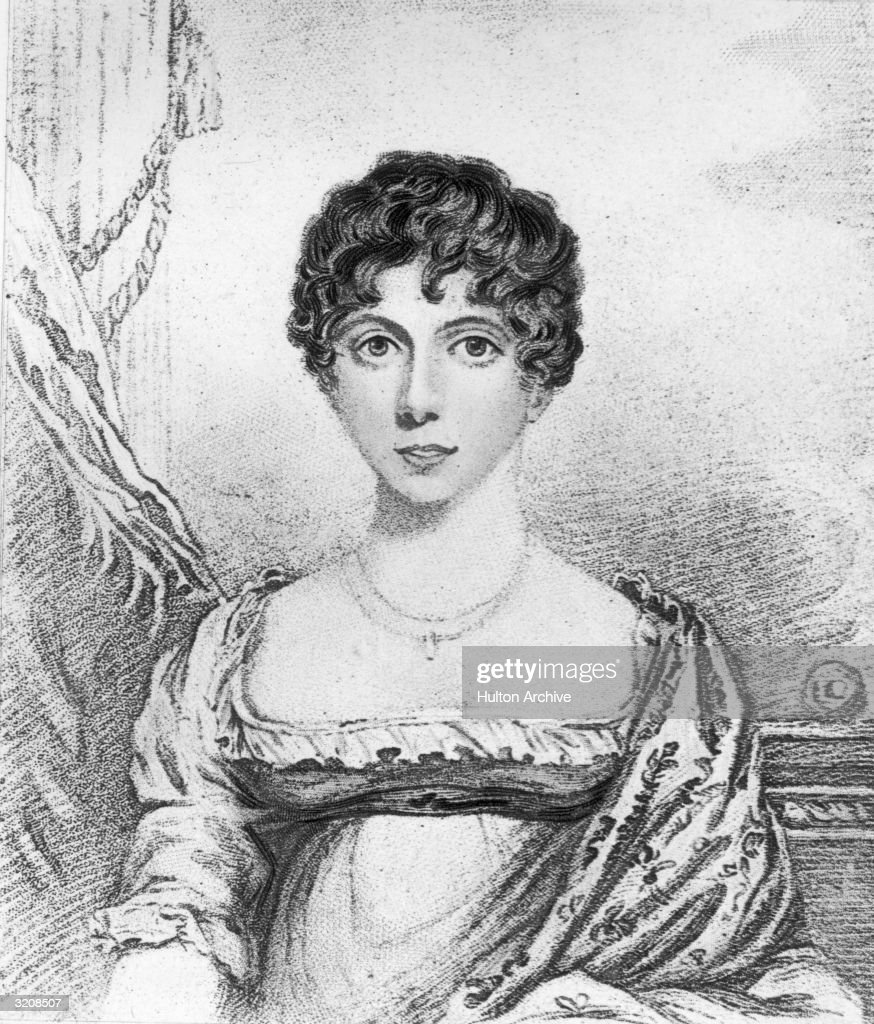
Lady Caroline Lamb

From early childhood, Carolyn was an attractive and lively child. She had very little formal schooling but gained a good education at home mainly from governesses and the attention of her grandmother, who provided encouragement and a large library. Caroline was a very bright girl who learned to read when she was four years old and honed her skills by writing letters to her cousins and friends.

Although she was almost ignored by her parents, Caroline enjoyed a busy social life at parties and dances. Her lively wit gained her wide attention and her slim, petite figure attracted suitors. At the age of 19, she married William Lamb, a man who moved in the same social circles as she did. The marriage seems to have been a real love match. It was discouraged by William’s parents, but the two young people were determined to marry.  Caroline never got along well with her mother-in-law, who believed that her son should have a more docile wife. Despite family pressure, the young couple seemed congenial and were happy for the first few years of their marriage. Caroline quickly became pregnant, although her first child was stillborn. Another pregnancy resulted in a baby, who died within a few weeks. It was not until her third baby was born that Carolyn had a healthy child who survived infancy.

The new baby, a large, healthy child, was named Agustus. Unfortunately, within a year or two it became apparent that he had serious developmental problems. Caroline spent much of her time taking care of Augustus, even breast feeding him, although most wealthy women hired wet nurses. Nonetheless, Augustus developed slowly in speech and was clumsy in physical actions.

Caroline spent much of her time with Augustus but did not neglect her social life. In 1812, she wrote a letter of appreciation to a young poet—Lord Byron—an act that determined much of the rest of her life. Byron called upon her and the two began a tumultuous affair that lasted for about six months. It has been said that she coined the well-known description of Byron as “mad, bad, and dangerous to know”. But the affair cooled after a few months and William Lamb decided to take Caroline abroad for a trip through Ireland in order to get away from the watchful eyes of society. Byron and Caroline continued to write to one another during the months-long trip, but by the time Lambs returned to London, Caroline learned that Byron was no longer interested in continuing the affair.

Caroline’s passionate nature and indiscreet behavior did not allow her to acknowledge the end of the affair with Byron. She continued to contact him and even call upon him, and she met him often at various social events. At one party, when Byron insulted her, she smashed a wine glass on the table and attempted to slash her wrists. Her actions made her notorious enough that she stood out even in the permissive social atmosphere of the time. Several friends broke with her and stopped inviting her to parties. Relations between Caroline and William Lamb became strained, although William continued to refuse to divorce her as his parents urged him to do.

During the years following the end of Caroline’s affair with Byron, her life became more erratic, but she never lost her vitality and intellectual interests. She continued to write both poetry and prose. Her most famous novel, Glenarvon, was widely popular and was praised by writers such as Goethe. William Lamb’s family continued to press him to divorce Caroline, but he refused to leave her. Finally the couple agreed to a formal separation, but they continued to be in touch with each other as Caroline’s health deteriorated. When William heard how sick she was, he travelled home from the continent to be with her when she died in 1828.

For many years Caroline Lamb has been remembered only for the scandalous tales of her relationship with Byron, but now at last she has received the biography she deserves. Antonia Fraser, who has chronicled the lives of so many historical figures, recently published Lady Caroline Lamb: A Free Spirit (Pegasus Books 2023). It is a pleasure to read more about Caroline Lamb and to recognize that she was an interesting person and not just a flighty fan of a famous poet. 
Flawed but not Forgotten–Maud Gonne

Why, what could she have done, being what she is?

Was there another Troy for her to burn?

William Butler Yeats

Maud Gonne was born in England into a wealthy family. Her mother died while she was a child. Maud and her sister were sent to a boarding school in France and grew up speaking both French and English fluently.  Her father, Thomas Gonne, who served as an officer in the British Army, spent time in many countries around the world. In 1882, when Maud was in her early teens, he was sent to serve in Dublin. At that time, he brought his two daughters to live with him. It was during those years that Maud got to know Dublin and observed the poverty of many of its people. These were difficult times in Ireland and Maud became a strong opponent of the British landlords who evicted tenants from their homes when crops failed and the farmers were unable to pay their rent. 

After the death of their father in 1886, Maud and her sister were sent to live with an uncle in London but were not happy there. Maud, who had grown into a beautiful young woman, decided to train to be an actress. Unfortunately, her career was cut short when she developed TB and was advised to move to a spa in France. In 1887, she came of age and inherited her share of her mother’s fortune. For the rest of her life, she was wealthy and had no need to earn money. She divided her time between France, England and Ireland and maintained a lively social life in each of those countries.

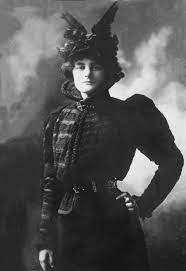
Maud Gonne

In Paris, Maud met Lucien Miklevoye and began her first serious love affair. Miklevoye was married, and a divorce was almost impossible to obtain in France, but the two of them remained devoted to each other for several years and eventually had two children, although the eldest died very young. As was usual in wealthy families, the children were raised mainly by a devoted governess. When Maud spent time in Ireland, she never acknowledged the children but referred to her daughter as her niece. Yeats, who was a close friend for many years, knew almost nothing of Maud’s Parisian life or about her children. He fell in love with Maud and repeatedly asked her to marry him, but she turned him down without apparently telling him about her relationship with Miklevoye or about her children. It was several years before he learned about Maud’s private life.

The 1890s were difficult years in Ireland, and Maud spent much of her time in Dublin working with other activists to oppose British rules. She supported the Boers during their war to drive the British out of South Africa and started a women’s association. She is credited with starting the Sinn Fein (“ourselves alone”) organization, which became a powerful anti-British association.

Gonne’s private life remained turbulent. She met John McBride, a hero of the Boer War, and married him. They had one son, but the marriage was not a happy one. In 1905, she sued for divorce in France (divorce was illegal in Ireland), but she lost her case and the divorce was denied. McBride later became a hero of the Irish republican movement and was executed by the British in 1916.

As the years went by, Maud became more and more anti-British and was accused of supporting the Germans. In 1918 she was jailed for six months after being accused of supporting a pro-German plot. During the years between the two World Wars, Gonne’s strongly anti-British feelings led her to support the anti-Semitic actions of German fascists. She never spoke out against the prison camps or the deaths of many Jews during Hitler’s rule. She did much good during her lifetime, but also sometimes supported cruelty and caused pain.   

A recent biography The Fascination of What’s Difficult: A Life of Maud Gonne by Kim Bendheim (OR 2021) tells the story of Maud Gonne’s life and achievements. The author gives a clear and detailed account of Gonne’s life, but mysteries remain. Maud’s own writings, including her letters and memoirs, are not always accurate and sometimes raise more questions than they answer. Perhaps we will never be able to understand all the complexities of Maude Gonne, but we can be grateful that her life inspired some of the best poetry written by one of the greatest poets of her time, William Butler Yeats. Perhaps he was thinking of her when he wrote these lines:

How many loved your moments of glad grace,

And loved your beauty with love false or true,

But one man loved the pilgrim soul in you,

And loved the sorrows of your changing face.

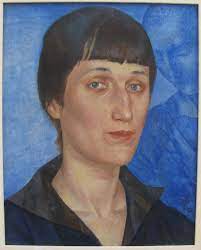
Writing Poetry during Difficult Times—Anna Akhmatova

Even though it is only the beginning of April, this year of 2022 has already brought us startling news from around the world. Western media is focused on the fighting in Ukraine as Russian troops continue to bombard cities and force thousands of people to leave their homes and seek safety elsewhere.

A hundred years ago, in 1922, things were much the same. Western newspapers were carrying stories of fighting, destruction, and hunger in Eastern Europe. The first World War had triggered a revolution in Russia. The Tzarist government fell and the Bolshevik party, under Vladimir Lenin, changed the face of Russia forever. During the early 1920s, as Lenin’s health declined, there was a struggle to take over leadership of the new government. The eventual winner of that struggle was Joseph Stalin whose power would determine the future of Russia and all of Eastern Europe for decades to come.

Russian writers and artists who had grown up during the Tsarist regime were deeply affected by this change in government; perhaps none more so than Anna Akhmatova. She had been hailed as one of Russia’s greatest poets but was to lead a very different and more difficult life under the new regime.

Anna was born near Odessa in 1889. Her father came from a Ukrainian Cossack family and was a stern, harsh man. He did not want poetry published under the family name, so at a very young age Anna chose the pen name Akhmatova, the name by which she was known for the rest of her life. Her father divorced his wife, Anna’s mother, and left the family while Anna was a child, so she grew up mostly in St. Petersburg. Her education was informal, but she soon joined a circle of young poets, artists and writers and began publishing poetry.     

When her second book of poetry,  Rosary, appeared in 1915, it became immensely popular. The poems she wrote were short lyric pieces filled with images of life and love:

Anna Akhmatova

The sun fills my room,

Yellow dust drifts aslant.

I wake up and remember:

This is your saint’s day.

(Translated by D.M. Thomas)

The poems were so popular that by 1916 many young people began playing a game called “Telling Rosary”. Someone would start reciting one of the poems and someone else would finish it. There was no shortage of fans who memorized her works.

Akhmatova flourished in the vibrant cultural world of St. Petersburg. She was young, beautiful, and fascinating to both men and women. In 1910 she married her first husband, Nikolay Gumilev, two years later their son Lev was born. During the first few years of their marriage Akhmatova continued to write and publish poetry, even after the Russian Revolution started in 1917 and brought new turmoil to the country. Although many young writers and intellectuals left Russia and moved abroad during the years of revolution, Akhmatova refused to leave. As usual, she expressed her feelings in poetry I am not one of those who left their country/ For wolves to tear it limb from limb. (Translated by D.M. Thomas)

When the revolution ended in 1921 and Lenin became the country’s leader, Akhmatova and her friends hoped that a new, more democratic society would develop. Unfortunately, when Lenin died, his leadership role was taken by Joseph Stalin, who quickly became a harsh, unforgiving dictator. Soon after he came to power, Akhmatova’s poetry was denounced as “no longer relevant.” Akhmatova began to have difficulty finding a publisher and she was unable to continue giving the public readings that had been popular and an important source of income. For more than ten years her voice was almost silenced in Russia.

During the 1920s and 1930s, Akhmatova’s personal life was difficult. She was virtually penniless for many years; her former husband, Nikolay Gumilev, was imprisoned. Their son, Lev, was denied entry into schools. Eventually he was sentenced to ten years imprisonment in Northern Siberia. Akhmatova depended on the generosity of friends and lovers for her survival. During World War II she survived the 800-day siege of Leningrad, although her health deteriorated badly. Records of these years are difficult to find because she destroyed letters and journals so the authorities could not seize them and use them to justify additional punishment for her son or their friends.

Akhmatova’s health never completely recovered after the deprivations she suffered during World War II, but after the war, her reputation and fame began to return. In 1963, her masterpiece, a series of poems called “Requiem” was published in Germany, although it was not available in Russia until after her death. In 1965, Akhmatova was nominated for the Nobel Prize in Literature and later that year she was allowed to travel to England to receive an honorary degree from Oxford University. These tributes must have been precious to her as she neared her end, but by the time they came, she was very ill. She died of a heart attack in 1966.

Since her death, Akhmatova has been recognized as one of Russia’s most important poets. She is also one of the most popular. Her poems have been published around the world in many different languages. The translations that I have included above are by D.M. Thomas and are available in the Everyman Pocket Poets series (Knopf). Various translations of her work can be found in libraries and bookstores everywhere.

Details of Akhmatova’s life are still difficult to find, but a fascinating biography Anna of All the Russians: A Life of Anna Akhmatova (Vintage 2007) is available in libraries and bookstores. Feinstein gives a good picture not only of the poet, but also of Russia and Eastern Europe during the difficult years of the early twentieth century.

Happy Birthday to a Real Pro—Elizabeth Barrett Browning

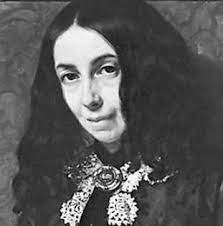
Many people have listened to one of Elizabeth Barrett Browning’s most familiar sonnets which begins: How do I love thee/ Let me count the ways… These words are often recited as a part of wedding celebrations. The sentiment expressed is just as relevant for couples today as it was when the sonnet was written more than a century ago. Barrett’s picture may look old-fashioned, but her ideas live on. All the little-girl curls and flowing skirts mask a very modern woman.

Today is Elizabeth Barrett Browning’s 216th birthday. She was born on March 6. 1806 in Durham, England. Her father, Edward Moulton-Barrett came from a family that had lived for several generations on the island of Jamaica, which was then a British colony. The family became wealthy by producing sugar on plantations that relied on the labor of enslaved people. Like many other families who lived in the West Indies, there was considerable mingling and sometimes marriage among the European settlers and their African workers. Elizabeth Barrett, like her siblings, had dark skin and eyes and she always considered herself to be of mixed-race. Although there is no evidence to prove this one way or the other, the fact that she believed it had an important influence on her life.

Elizabeth Barrett Browning

Many of Barrett Browning’s poems express feelings and ideas that speak to readers now as clearly as they did when they were first written. But the times during which Elizabeth Barrett lived, meant that she had to struggle to become a poet. She lived in a society where women were supposed to be readers, not writers. Fortunately, Elizabeth’s parents did not entirely agree with this idea and they provided her with a good education and encouraged her writing.

Elizabeth was the oldest of the twelve children and they formed a close-knit family group. Each child had a nickname—Elizabeth was known as “Ba”, a name she used all of her life. Like her siblings, Elizabeth never had to look far for companionship. The girls in the family were educated at home while the boys were sent to schools to be trained for business.  Living on a country estate, the children turned to books and writing for entertainment. Elizabeth started writing poetry at the age of four, and when she was 14, her father had some of her poems privately published for distribution within the family.

Life at the Barrett’s was not without hardship though, especially after Elizabeth fell ill with a spinal disorder during her early teens. From that time on, she was an invalid and led a very restricted life. She took opiates to ease the pain of her spinal injury, but this medication led to further deterioration of her ability to live normally. On the other hand, being an invalid meant she was relieved of the household duties that kept her sisters busy and allowed her to work diligently at becoming a poet.

Almost everyone who has read and studied English poetry knows the story of EBB’s adult life. After living in seclusion with her family until she was almost forty years old, she eloped with the poet Robert Browning. Her father disowned her when she married, and the two were never reconciled. For the rest of her life, EBB lived in Italy, although she often visited London and kept in touch with many old friends. Her life centered around her poetry and her family. She and Robert had one son, but family life never kept her from being a dedicated writer. She wrote about current social issues such as child labor, the abolition of slavery, and the right of every woman to have a life of her own. Her reputation as a poet grew steadily after her marriage, culminating with the publication of her novel in verse, Aurora Leigh,  which the critic John Ruskin called it “the greatest long poem of the nineteenth century”. This poem was an immediate best seller and is still read and studied.

In 1861, a year after the publication of Aurora Leigh, Elizabeth Barrett Browning died at the age of 55. 

During the late 19th century and down to the present day, EBB has been famous more for her life than for her work. Thousands of people have seen the play The Barretts of Wimpole Street either on stage or in one of several movie versions. But this presentation concentrates on the romantic elopement of Elizabeth and Robert and downplays her long career as a writer. For all of her crinolines and curls, EBB was a serious poet who worked steadily at becoming a great writer. Her husband and child were important in her life, but she never gave up her artistic ambitions.

There have been several biographies of EBB and last year the British scholar Fiona Sampson gave us a new one that sheds a great deal of light on Barrett’s life. Two Way Mirror: the Life of Elizabeth Barrett Browning (Norton 2021) shows us Barrett as a social activist and a thinker. I highly recommend the book and as an introduction you might watch the video webinar that Fiona Sampson made for the National Library of Scotland.  

You may not want to read Aurora Leigh. Few people today have the patience to read a novel in verse, but we all should remember the poet who was perhaps the first woman to be recognized as a professional poet. She was even nominated to be Poet Laureate when that post became empty, although that honor finally went to Tennyson. EBB is often pictured as a frail, semi-invalid, which she certainly was, but she was much more. Rather than being defeated by her physical weakness she used it as a springboard into a successful career as a professional artist.

A Writer from a Different World—Bing Xin

As we celebrate the lunar new year and embark on the Year of the Tiger, it seems an appropriate time to turn attention to China and one of the women who had a large influence on modern Chinese literature.

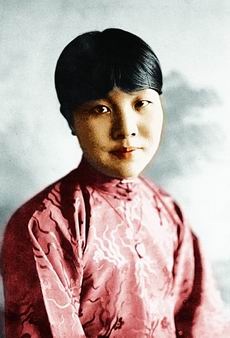
Bing Xin was born in 1900 and died in 1999. She lived for almost the entire twentieth century, a time when China changed dramatically from a traditional empire to a powerful modern state. During her long, prolific career, Bing Xin wrote poetry, children’s books, and commentary on the life around her. 

Bing Xin as a young woman

Born in Yuhan, China, Bing Xin began writing short stories and poetry as a child and her early work soon attracted attention. After her conversion to Christianity, she read widely and became familiar with many European and American authors. She continued writing as she earned a bachelor’s degree at Yanjing University and then attended Wellesley College in Massachusetts for her master’s degree

The 4th of May movement in 1919 awakened Bing Xin’s  interest in political events. Many young Chinese students and others objected to decisions made in the Treaty of Versailles and became convinced that China must move away from traditional Chinese government and welcome change. Bing Xin’s studies in the United States increased her interest in learning more about the Western world. As a member of the class of 1926 at Wellesley College in Massachusetts, she served as an informal cultural ambassador, moving easily between the literary worlds of China and the United States.

In 1929, she married Wu Wenzao, an anthropologist who also studied in the United States. The two of them visited countries around the world and met many leading intellectual and cultural leaders. Bing Xin wrote about her travels and published reports of her journeys in China, making many young Chinese students aware of what was going on in the rest of the world. Bing Xin became a national figure and was a prolific writer all during the war with Japan during the 1930s. Her works were very popular, but as a writer for children as well as for the general public, she was not always considered an important intellectual influence.

During the Cultural Revolution, both Bing Xin and her husband were sent to the countryside for re-education, even though both of them were in their 70s at the time. They were allowed to return to the city after one year.

Despite her importance as a writer, Bing Xin’s work is not widely available in English translation. Her poetry was much influenced by modernist poets of Europe and perhaps her most widely available English-language work is A Maze of Stars, a collection of her poetry.    

Why not love,

mankind?

We all are travellers on a far journey,

returning, to the same country.

(Xin, Bing. A Maze of Stars and Spring Water (pp. 15-16). Simon & Schuster. Kindle Edition.)

Readers who do not understand Chinese have missed learning about the work of Bing Xin and other  important cultural figures. The importance of translations is often underestimated, even by people who love books and reading. Perhaps this year would be a good one to seek out and honor some of the translators who help us to broaden our view of the world. After all, as Bing Xin writes: We are all travellers on a far journey.  

Adelaide Crapsey—Scholar and Poet

Some poems seem to be spontaneous outbursts of feeling—“My heart is like a singing bird…” (Christina Rossetti) or “Fear no more the heat o’ the sun/Nor the furious winter’s rages:” (Shakespeare). But poetry is not easy. Most of the poetry that we continue to read and to love is the result of many long hours of careful work.

One of the scholars who spent years studying metrics—the way words can be put together to achieve art—was a young American poet named Adelaide Crapsey. Although she died young and her work is often forgotten, she was an important writer of the early twentieth century. Her work continues to influence many poets today.

Adelaide Crapsey

Born in Brooklyn in 1878, Adelaide Crapsey and her family soon moved to Rochester, N.Y. where her father was pastor of an Episcopal Church. She was raised in a family that valued women’s education and Adelaide was encouraged to attend Vassar College. There she had a happy and successful educational life. She was president of the Poetry Club and graduated as valedictorian in 1897.

Two of Adelaide’s sisters died while she was in college, and Adelaide herself became sick with a severe illness that was later diagnosed as tuberculosis. After recovering and spending some time teaching, she went to Europe in 1904 to study at the American Academy in Rome. Although she was very happy in Rome, family problems prompted her return to the United States in 1905. Her father was accused of heresy by the leaders of the Episcopal Diocese, and he was brought to trial in 1906. He was found guilty of refusing to support the doctrine of virgin birth and lost his position with the Church after an unsuccessful appeal. He and his family had to leave the rectory.

Despite her desire to return to Europe, Adelaide chose to stay close to her family to offer support and encouragement. She taught at a private school and also continued to work on her scholarship and writing. Eventually she was able to return to Europe for a few months and while she was there she completed her book,  A Study in English Metrics, although it was not published until after her death. She returned to America when her tuberculosis became more severe and died in 1914 at the age of 36.

Adelaide’s study of metrics led her to investigate various poetic forms such as the Japanese haiku and tanka. She invented a new form of poetry called the cinquain and much of the poetry for which she is remembered uses this form. One example is this well-known piece:

November Night

Listen…
With faint dry sound,
Like steps of passing ghosts,
The leaves, frost-crisp’d, break from the trees
And fall.

Although Adelaide Crapsey’s poems are no longer included in many anthologies, you can find a good sample of her work at the website of the Poetry Foundation. https://www.poetryfoundation.org/poets/adelaide-crapsey

Another legacy of Adelaide Crapsey’s life is the effect her poetry has had on the teaching of poetry to school children. A simplified version of the cinquain has been introduced in many classrooms, for example:

Cinquain: (This is the format used in many schools—didactic cinquain)

  1. One word (subject)
  2. Two words
  3. Three words
  4. Four words
  5. One word (synonym for line 1 or five words to sum up the poem)

Many students, both children and adults, enjoy following this pattern and producing verses that can be satisfying both to write and to read.

Summer Beach

Ocean

Creeping waves

Tickling children’s toes,

Hurling broken shells against bare legs,

Triumph.

Adelaide Crapsey’s early death deprived the world of a notable poet, but it is some comfort to know that her work is still inspiring other writers.

America’s First Poet–Phillis Wheatley

What can we say about a woman who was welcomed as America’s first poet, published in both England and America, but who nonetheless died in poverty and obscurity before she reached the age of 40? Phillis Wheatley inspired some of America’s most honored leaders and demonstrated how much African Americans had to offer in the arts and culture. But despite her triumphs, she was finally defeated by the economic force of the slave trade.

Born in Africa about 1753, Phillis Wheatley was brought to Boston by slave ship at age 7 or 8. She was bought by the Wheatley family who recognized that she was too frail (not to mention too young) for hard labor, so she was kept as a house slave. Mrs. Wheatley taught her English and how to read and write. The girl’s talents soon became apparent and she was encouraged to read widely and to write poetry.

Phyillis Wheatley

As a woman of her time, she read and admired the poems of John Milton and Alexander Pope and wrote in the fashionable heroic couplet style. Some of her poems were published as broadsides and circulated widely, but she had to go to England to find a publisher for her first book, Poems on Various Subjects, Religious and Moral–the first book of poems published by an African American.

Some of Wheatley’s poems present a surprisingly benign view of the effects of slavery, which she appears to welcome as a way of discovering Christianity.

On Being Brought from Africa to America

‘Twas mercy brought me from my Pagan land,

That there’s a God, that there’s a Saviour too:

Taught my benighted soul to understand

Once I redemption neither sought nor knew.

Some view our sable race with scornful eye,

“Their colour is a diabolic die.”

Remember, ChristiansNegros, black as Cain,

May be refin’d, and join th’ angelic train.

As a devout Christian, Wheatley expressed her gratitude for having been introduced to the Christian religion in America. Some commentators have criticized her work because of this, but there is no reason to think that Wheatley approved of slavery or accepted her status. She was writing only about her own life in this poem. Because of her unusual experiences, she never observed the worst cruelty of the plantation culture nor suffered the hardships of most enslaved Africans, but she was aware of them.

Soon after her book was published, the Wheatley family emancipated Phillis. In 1778, or thereabouts, Phillis Wheatley married a free Black grocer and started a family. By this time, both Mr. and Mrs. Wheatley had died, so Phillis has no one left to help further her work. She and her husband struggled with poverty, while he tried to establish himself as a businessman. Although Wheatley did not give up writing poetry, she found it difficult to secure a publisher. She was never able to publish a second book of poems she had planned, and many of her later poems have been lost. She did, however, correspond with some well-known people, including George Washington, about ways of securing freedom for African Americans. Her death at the age of 31, ended her all-too-short career.   

Phillis Wheatley’s life leaves us with far more questions than answers. If she had lived into the nineteenth century and continued her work, would her early promise have been fulfilled? Perhaps her example would have convinced more people of the talents and possibilities of African Americans. Might Phillis Wheatley have become the poet laureate of the abolition movement?

We will never know the answers to those questions, but there is much to celebrate about the life and work of Phillis Wheatley. She was a pioneer whose work should not be forgotten. 

April and Poetry–Sara Teasdale

April is poetry month, a festival more honored by schools and publishers than by the general public. This year, our April is filled with fear of the coronavirus pandemic, and with questions about what the future holds. Poetry may seem like a frivolous escape, but if we ignore it, we may be missing one element of comfort that would help us get through these stressful days.

Poetry can help us see the world with fresh eyes and remember the sights that will be with us all our lives rather than the jangled thoughts of today. As we walk through today’s deserted streets, the words of Sara Teasdale, who wrote almost 100 years ago, can help us to see April with fresh eyes:

The roofs are shining from the rain,
     The sparrows twitter as they fly,
  And with a windy April grace
     The little clouds go by. (April)

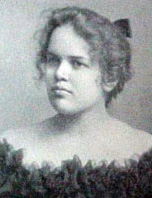
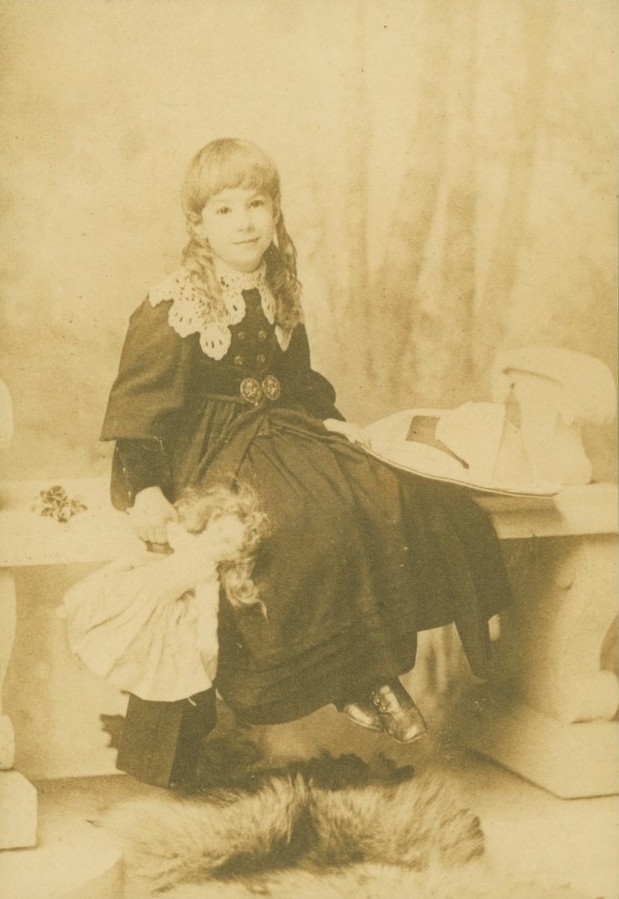
Sara Teasdale was an American poet who had a gift for seeing the world through fresh eyes. She was born in St. Louis, Missouri, in 1884 and was home schooled for much of her childhood. She devoted herself to reading and started writing poetry as a teenager. After she went to high school, she became one of a group of women who published The Potter’s Wheel, a literary journal in St. Louis and contributed poems and essays to the journal.

Sara Teasdale as a child

During that time, she traveled frequently to Chicago where she met many writers and artists including Vachel Lindsay, a young poet famous for his attempt to revive the tradition of oral poetry. Lindsay and Teasdale apparently fell in love, but Lindsay did not have enough money to support a wife. Teasdale eventually married another admirer, Ernst Filsinger, a prosperous businessman.  

After her marriage in 1914 Teasdale continued to write and her third collection of poetry River to the Sea, published in 1916 became a bestseller and earned her a Pulitzer Prize. She and her husband moved to New York City where they became part of a circle of writers and artists.

Teasdale’s poetry is lyrical and filled with images of the world around us. Many of her poems have been published in children’s anthologies, but they have an enduring appeal for adults too. They are the kind of poems that often pop into your mind during walks in the country.

I stood beside a hill
Smooth with new-laid snow
A single star looked out
From the cold evening glow.   (February Twilight)

Sara Teasdale’s life did not continue as happily as her poetry did. She divorced her husband in 1929, her health deteriorated, and she became an invalid. She restarted her friendship with Vachel Lindsay, but he too had fallen on hard times and eventually killed himself.

Sara Teasdale herself committed suicide in 1933 at the age of 48. Her poetry collections live on in most libraries and much of her work can be found on the Gutenberg Project site. It is well worth reading and rereading. It is impossible to know why her life came to such a tragic end, but her poetry still brings joy to the reader. Many of her poems will linger in your mind for years, perhaps especially this one, which seems a fitting elegy for her short life.

WHEN I am dead and over me bright April
     Shakes out her rain-drenched hair,
  Tho’ you should lean above me broken-hearted,
     I shall not care.

  I shall have peace, as leafy trees are peaceful
     When rain bends down the bough,
  And I shall be more silent and cold-hearted
     Than you are now.

(All of the poems quoted above are available in many digital formats on the
Gutenberg Project website. http://www.gutenberg.org

Tough Women Write Poetry–Aphra Behn

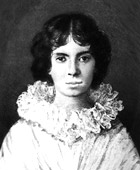
When literary people talk about women poets they often mention famous figures from the past. Emily Dickinson is the American poet who almost defined poetry for generations of schoolchildren as well as adults. Her name is familiar

emily_dickinson01
                      Emily Dickinson

to most readers, and a movie about her life, A Quiet Passion, impressed critics and moviegoers as recently as last year. The pale, reclusive Emily in her white dresses, scribbling her poems on little pieces of paper in her room seems the ideal poet.

Other women poets of the past are also well known. Elizabeth Barrett Browning, confined to her sickbed for years until rescued by Robert Browning, who took her to Italy and helped her become famous. Female poets are often associated with illness, delicacy and fragility. They are viewed as weak creatures, prone to suicide and early deaths. But not all women poets fit this pattern. Today I want to look back and honor the tough woman who proved that a woman could be both a writer and an active participant in worldly life—Aphra Behn.

One of the reasons Aphra Behn is not remembered, perhaps, is that we know little about her life. She was born, probably in 1640, almost two hundred years before Emily Dickinson in England. Her parents might have been a barber and a wet nurse, or perhaps not. One indisputable fact is that she learned to read and write, a rare privilege among working class women of her time. The gift of literacy made it possible for her to meet and mingle with people of all classes. Her introduction to aristocrats may have come through one of the families her mother met while acting as a wet nurse.

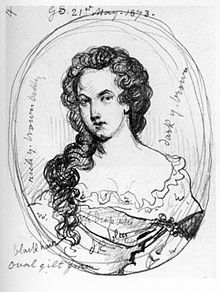
Coming of age during the restoration, when Charles II returned to the throne, gave Aphra an opportunity to become active in the world of theater and publishing. As Oliver

Aphra_Behn
Aphra Behn–sketch

Cromwell’s puritan restrictions were removed, there was an outpouring of publishing and theater. Starting out as a poet, Aphra turned to writing fiction and produced the story Oroonoko, set in Surinam, which became a long-lasting best seller. Later she turned to writing plays. She also, apparently, served as a spy for Charles II. Because she seldom discussed her background, very few facts are well established. One thing that we know for sure is that she was finally buried in Westminster Abbey—although not in the poets corner where many of her male friends and colleagues lie.

For those who would like more information about her life, I recommend a biography by Janet Todd, Aphra Behn: A Secret Life. It is long, but gives a continuously fascinating picture of a life shaped by history and secrets.

Perhaps the most important statement about Aphra Behn was made by Virginia Woolf in her essay “A Room of Her Own”.  All women together, ought to let flowers fall upon the grave of Aphra Behn… for it was she who earned them the right to speak their minds… Behn proved that money could be made by writing at the sacrifice, perhaps, of certain agreeable qualities; and so by degrees writing became not merely a sign of folly and a distracted mind but was of practical importance.

So as we read the poetry of the delicate women poets of the 19th century during this Poetry Month, we also ought to pay tribute to a woman who came before them. She struggled with poverty and class prejudices to make her way in a man’s world and in doing so she ensured that women’s voices would eventually be heard.

Another New Year 2017

This year has been a disappointment for so many people and a disaster for some. Almost all the notes written on holiday cards from friends include some reference to being shocked and depressed by the election results last month. We are all wondering what the spring and summer will bring.

At a time like this it is a relief to take refuge in some of the books I have loved since childhood. I remember a poem by Oliver Herford that I read many years ago:

I heard a bird sing

In the dark of December

A magical thing

And sweet to remember.

“We are nearer to Spring

Than we were in September,”

I heard a bird sing

In the dark of December.silverpennies_img_0583

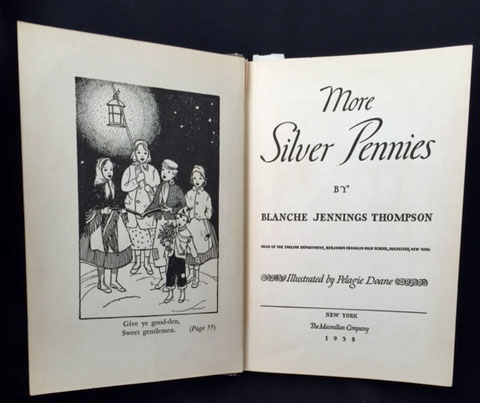
That poem was in a book called More Silver Pennies that my mother bought in a second-hand bookstore. It has echoed in my head every January for years.

When I was growing up, my friends and I had access to many poems that we read and reread. As a preteen I remember finding a book of Dorothy Parker’s poems at the home of one of my Girl Scout leaders. My best friend and I used to giggle over Parker’s verses when the scout meetings seemed long. We especially liked this one:

Razors pain you;

Rivers are damp;

Acids stain you;

And drugs cause cramp.

Guns aren’t lawful;

Nooses give;

Gas smells awful;

You might as well live.

That struck us as the most sophisticated and witty language we had ever heard. Parker gave us a glimpse of the glittering world of Manhattan just across the river from the quiet streets of Queens. We both decided that someday we would live in that world.

I know that school children today are encouraged to write their own poetry and express their feelings, but I hope they are also reading other people’s poetry.  Poems, especially the old-fashioned kind that have rhythm and rhyme, linger in the mind and can be a lifelong pleasure.

Another favorite poet of my childhood was, of course, Emily Dickinson. Her works were everywhere—in schools and libraries . Teachers read them to us and we recited them back in class during Friday afternoon poetry sessions.  Some of them are still with me.

“Hope” is the thing with feathers –

That perches in the soul –

And sings the tune without the words – Piano_flower_edited-1

And never stops – at all –

And sweetest – in the Gale – is heard –

And sore must be the storm –

That could abash the little Bird

That kept so many warm –

I’ve heard it in the chillest land –

And on the strangest Sea –

Yet – never – in Extremity,

It asked a crumb – of me.

At the end of this long and trying year, I am grateful I grew up with poetry. I hope children today are doing the same.  Hope remains. Let’s all keep it in our hearts during the year ahead.

happy-new-year-2017