The early 1800s in England was a time of prosperity for many of England’s aristocratic families, but it was also a time when fortunes could change quickly and harsh punishments were given to people who did not follow society’s rules. Men were expected to serve the king and to expand their family’s fortunes. Women were pawns, whose role was to make good marriages and maintain their family’s position, although they were offered remarkable freedom in their behavior after marriage.
Caroline Lamb was born into this society in 1785. Her family was aristocratic. Her father was the future Earl of Bessborough and her mother’s family, the Spencers, were equally aristocratic and even wealthier. Caroline lived all her life in a society where men could find favor by flattering the King and his cronies, while the women were often judged on the number and status of the lovers they chose. In fact, one cynic, Lord Egremont, wrote, “There was hardly a young married lady of fashion who did not think it a stain upon her reputation, if she was not known as having cuckolded her husband.”
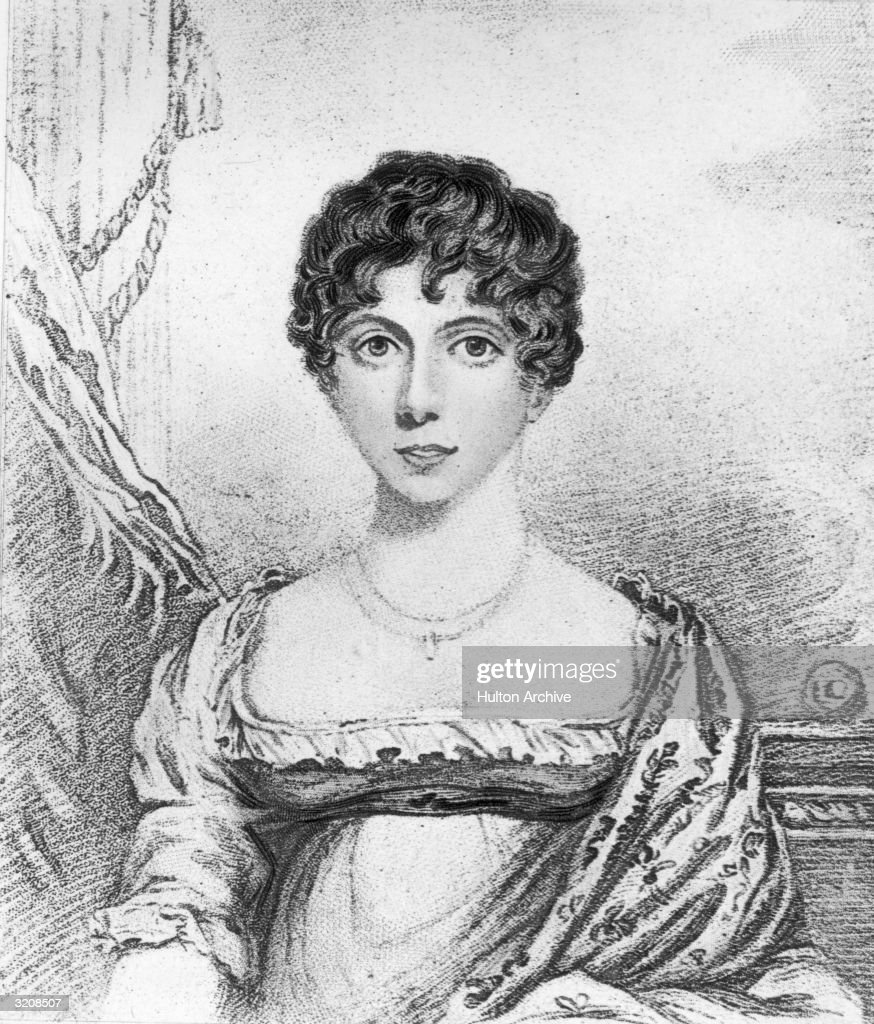
From early childhood, Carolyn was an attractive and lively child. She had very little formal schooling but gained a good education at home mainly from governesses and the attention of her grandmother, who provided encouragement and a large library. Caroline was a very bright girl who learned to read when she was four years old and honed her skills by writing letters to her cousins and friends.
Although she was almost ignored by her parents, Caroline enjoyed a busy social life at parties and dances. Her lively wit gained her wide attention and her slim, petite figure attracted suitors. At the age of 19, she married William Lamb, a man who moved in the same social circles as she did. The marriage seems to have been a real love match. It was discouraged by William’s parents, but the two young people were determined to marry. Caroline never got along well with her mother-in-law, who believed that her son should have a more docile wife. Despite family pressure, the young couple seemed congenial and were happy for the first few years of their marriage. Caroline quickly became pregnant, although her first child was stillborn. Another pregnancy resulted in a baby, who died within a few weeks. It was not until her third baby was born that Carolyn had a healthy child who survived infancy.
The new baby, a large, healthy child, was named Agustus. Unfortunately, within a year or two it became apparent that he had serious developmental problems. Caroline spent much of her time taking care of Augustus, even breast feeding him, although most wealthy women hired wet nurses. Nonetheless, Augustus developed slowly in speech and was clumsy in physical actions.
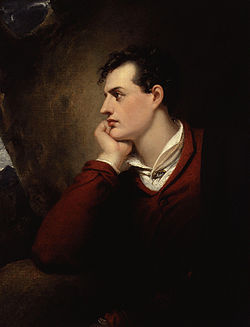
Caroline spent much of her time with Augustus but did not neglect her social life. In 1812, she wrote a letter of appreciation to a young poet—Lord Byron—an act that determined much of the rest of her life. Byron called upon her and the two began a tumultuous affair that lasted for about six months. It has been said that she coined the well-known description of Byron as “mad, bad, and dangerous to know”. But the affair cooled after a few months and William Lamb decided to take Caroline abroad for a trip through Ireland in order to get away from the watchful eyes of society. Byron and Caroline continued to write to one another during the months-long trip, but by the time Lambs returned to London, Caroline learned that Byron was no longer interested in continuing the affair.
Caroline’s passionate nature and indiscreet behavior did not allow her to acknowledge the end of the affair with Byron. She continued to contact him and even call upon him, and she met him often at various social events. At one party, when Byron insulted her, she smashed a wine glass on the table and attempted to slash her wrists. Her actions made her notorious enough that she stood out even in the permissive social atmosphere of the time. Several friends broke with her and stopped inviting her to parties. Relations between Caroline and William Lamb became strained, although William continued to refuse to divorce her as his parents urged him to do.
During the years following the end of Caroline’s affair with Byron, her life became more erratic, but she never lost her vitality and intellectual interests. She continued to write both poetry and prose. Her most famous novel, Glenarvon, was widely popular and was praised by writers such as Goethe. William Lamb’s family continued to press him to divorce Caroline, but he refused to leave her. Finally the couple agreed to a formal separation, but they continued to be in touch with each other as Caroline’s health deteriorated. When William heard how sick she was, he travelled home from the continent to be with her when she died in 1828.
For many years Caroline Lamb has been remembered only for the scandalous tales of her relationship with Byron, but now at last she has received the biography she deserves. Antonia Fraser, who has chronicled the lives of so many historical figures, recently published Lady Caroline Lamb: A Free Spirit (Pegasus Books 2023). It is a pleasure to read more about Caroline Lamb and to recognize that she was an interesting person and not just a flighty fan of a famous poet.
 Teacups and Tyrants-Adele Fasick looks at people, books, and history