When the American Library Association meets in San Diego this month, approximately 25,000 people are expected to attend. Libraries are quiet institutions, often taken for granted, but they have played a large role in public life over the years and have influenced many people including politicians and policemen. Two of these people were the anarchist speaker and activist Emma Goldman, and the founder of the F.B.I. (Federal Bureau of Investigation), J. Edgar Hoover.
Emma Goldman was born in Lithuania on June 27, 1869. When she became a teenager, she moved to Rochester, N.Y. A few years later, she moved to New York City and lived on the Lower East Side of Manhattan—an area largely populated by Jewish immigrants. There she met Alexander Berkman and other radicals.
Goodman and Berkman wanted to act rather than just talk about anarchism. They decided to kill Henry Clay Frick, an industrialist who opposed unions, fought against the Homestead strike, and was responsible for the Johnstown Flood. Their plot failed and Berkman was sent to prison for 22 years. Goldman was not indicted and she vowed to carry on his work.
Goodman continued to lecture and write about anarchism. In 1893 she was sent to Blackwell Island for two years because she gave a speech urging people to steal groceries. In prison she learned much about anarchism and history by reading books she found in the prison library.
Over the years, Goldman continued lecturing and writing. Her arch-enemy, J. Edgar Hoover, watched her progress carefully. He too gathered ideas from the library work he had done before he joined the Justice Department. When he set up the Federal Bureau of Investigation, he used the principles of indexing and cataloging developed by librarians to make the bureau the most effective crime-fighting unit that America–or any other country–had ever had.
During the Palmer Raids of 1917, both Goldman and Berkman were interviewed by J. Edgar Hoover for deportation. Because of the speeches she gave and the books she had written, there was plenty of documentation about Goldman’s support of the Soviet Union. Both she and Berkman were deported to Russia, along with 248 other Americans.
After a few years in the Soviet Union, both she and Berkman became disillusioned with the Soviet system. Eventually, they both left the country. Goldman returned to the United States where she continued her career of writing and speaking about anarchism and good government. And she wrote an important book about the Russian government “My Disillusionment with Russia”.
In 1940, Goldman suffered a stroke while giving a lecture in Toronto. She died there on May 14, 1940. Her family eventually brought her body to Chicago where she was buried. Alexander Berkman died in Paris in 1936. J. Edgar Hoover remained director of the FBI until his death in 1972.
A recent book, “The Infernal Machine: A True Story of Dynamite, Terror, and the Rise of the Modern Detective” by Steven Johnson (NY Crown 2024) tells the story of some of the radicals and detectives who changed American history during the early twentieth century. You can find the book at many public libraries.
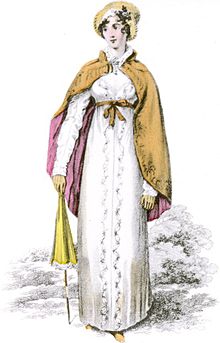 a foreign country” as L.P. Hartley wrote, but few people take the time to understand how different it was. We assume that the people who lived years ago and wore funny clothes were in fact thinking and feeling just as we do. But when we read the books and letters they wrote, we are constantly being reminded that the past is far different from what we consider normal today. Even the small things like being able to contact friends and family at a moment’s notice is something that seems natural today. How did people get along without it?
 readers as well as many TV viewers choose to go back to earlier times. Somehow it seems as though life must have been simpler then, although the truth is that it wasn’t. Finding enough food for the family and keeping young babies alive was a lot harder than coping with an overcrowded bus on the daily commute.
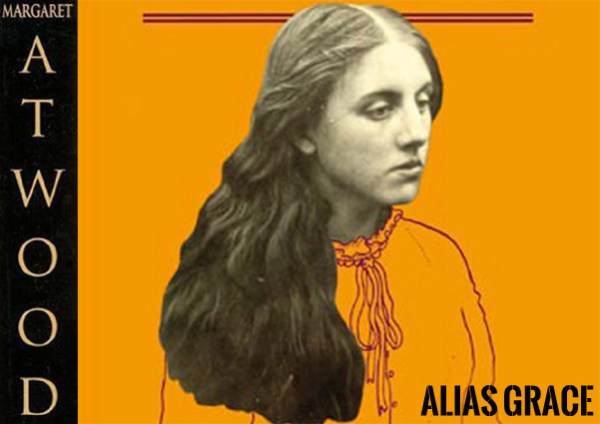 difficulty of judging guilt or innocence in a crime is a perennial problem. It will be interesting to see whether the TV version of Alias Grace treats the subject with as much depth as the book did.
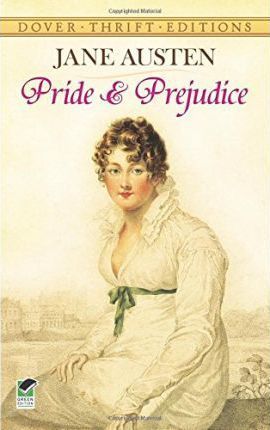 really want a glimpse of what it was like to be a servant in early 19th century England, you might want to read Jo Baker’s Longbourn, which gives a fascinating glimpse of the life of a servant in the service of Jane Austen’s fictional Bennet family from Pride and Prejudice. Admittedly Jane Austen wrote about an earlier historical period than Downton Abbey, but it is hard not to believe that Baker’s view of the world is far more realistic than the one offered by the familiar TV series.
 Teacups and Tyrants-Adele Fasick looks at people, books, and history