Libraries Make History—Emma Goldman and J. Edgar Hoover

When the American Library Association meets in San Diego this month, approximately 25,000 people are expected to attend. Libraries are quiet institutions, often taken for granted, but they have played a large role in public life over the years and have influenced many people including politicians and policemen. Two of these people were the anarchist speaker and activist Emma Goldman, and the founder of the F.B.I. (Federal Bureau of Investigation), J. Edgar Hoover.

Emma Goldman was born in Lithuania on June 27, 1869. When she became a teenager, she moved to Rochester, N.Y. A few years later, she moved to New York City and lived on the Lower East Side of Manhattan—an area largely populated by Jewish immigrants. There she met Alexander Berkman and other radicals.

Goodman and Berkman wanted to act rather than just talk about anarchism. They decided to kill Henry Clay Frick, an industrialist who opposed unions, fought against the Homestead strike, and was responsible for the Johnstown Flood. Their plot failed and Berkman was sent to prison for 22 years. Goldman was not indicted and she vowed to carry on his work.

Goodman continued to lecture and write about anarchism. In 1893 she was sent to Blackwell Island for two years because she gave a speech urging people to steal groceries. In prison she learned much about anarchism and history by reading books she found in the prison library.

Over the years, Goldman continued lecturing and writing. Her arch-enemy, J. Edgar Hoover, watched her progress carefully. He too gathered ideas from the library work he had done before he joined the Justice Department. When he set up the Federal Bureau of Investigation, he used the principles of indexing and cataloging developed by librarians to make the bureau the most effective crime-fighting unit that America–or any other country–had ever had.

During the Palmer Raids of 1917, both Goldman and Berkman were interviewed by J. Edgar Hoover for deportation. Because of the speeches she gave and the books she had written, there was plenty of documentation about Goldman’s support of the Soviet Union. Both she and Berkman were deported to Russia, along with 248 other Americans.

After a few years in the Soviet Union, both she and Berkman became disillusioned with the Soviet system. Eventually, they both left the country. Goldman returned to the United States where she continued her career of writing and speaking about anarchism and good government. And she wrote an important book about the Russian government “My Disillusionment with Russia”.

In 1940, Goldman suffered a stroke while giving a lecture in Toronto. She died there on May 14, 1940. Her family eventually brought her body to Chicago where she was buried. Alexander Berkman died in Paris in 1936. J. Edgar Hoover remained director of the FBI until his death in 1972.

A recent book, “The Infernal Machine: A True Story of Dynamite, Terror, and the Rise of the Modern Detective” by Steven Johnson (NY Crown 2024) tells the story of some of the radicals and detectives who changed American history during the early twentieth century. You can find the book at many public libraries.
Mother Knows Best—Jennie Churchill and Her Son 

Mother’s Day is a good day to celebrate a woman who lived a full, exciting life but always had time to care for and help her famous son—Winston Churchill.  

Jennie Churchill was born Jeanette Jerome in Brooklyn, New York on January 6, 1854 into a prosperous New York family.  Her father was not outstandingly wealthy, but he and his wife had deep roots in New York society.  

Jennie’s father, however, made a number of reckless investments during the prosperous years following the end of America’s Civil War. He was also a devotee of the opera and embarrassed his wife by having affairs with several entertainers. Finally, when Jennie was 13, her mother decided to take all of her daughters abroad and raise them in Europe where they would be able to get good educations and meet aristocratic men. Her plan worked out well. 

Jennie and her sisters became fluent in French and were well-trained and talented musicians. They lived in Paris for several years before the revolution of 1870 forced them to resettle in London. One of the first eligible men that Jennie met there was Sir Randolph Churchill, whose family was close to the top of the social ladder. His ancestors had been part of British nobility for hundreds of years.  

Jennie and Randolph married rather quickly—timing that raised questions for many years about whether or not Jennie was pregnant when she got married. The question never seemed to bother Jennie, however, and certainly caused no trouble for Winston who was born eight months after the wedding. 

As was traditional in aristocratic families at the time, Winston was raised mostly by servants and was sent to boarding school at a young age. Being away at school was difficult for Winston and he wrote frequently to his mother begging for a visit or a letter. She seldom replied. Nonetheless, the relationship between the two was strong and lasting.  In later years Winston wrote that he and his mother were “on even terms more like brother and sister than like mother and son”.

Although Jennie was not a wealthy woman, and she had a bad habit of reckless spending that led to debts, her many friends and relationships were helpful in furthering Winston’s political career. She was active in many good causes. During World War I, she was Chair of the hospital committee for American Women’s War Relief Find which set up two hospitals in France to serve men wounded in the war. 

Jennie Jerome was not the only devoted mother who strongly influenced herson’s political career. A fascinating book published last year tells the story ofJennie Jerome and another successful political mother. It is “Passionate Mothers,Powerful Sons: The Lives of Jennie Jerome Churchill and Sara Delano Roosevelt” byCharlotte Gray (NY S&S 2023). Anyone interested in how politics at the highest level can work will find much to think about in this book.

Knowing More Wins the War

World War II is usually remembered as a war of lethal weapons—great powers using bombs, artillery, and other weapons to win victory. But the war was also a struggle for information. Knowing what the enemy knew and what plans were being laid was crucial. Up until World War II, America had no organized structure for gathering information from foreign sources, but as the Nazis gained power in Europe, the need to know became imperative. Franklin Roosevelt recognized this need and appointed William “Wild Bill” Donovan to head up a new operation, which became known as the Office of Strategic Services (OSS). It was an office that became a crucial part of the war effort.  

Fortunately, the need for increased information occurred at a time when scholars were discovering how to preserve and share documentation in dramatic new ways. Microfilm was a new medium that could record information in a format that could be hidden in diplomatic pouches and shipped overseas cheaply without attracting much attention. Although we now remember microfilm as a dull and outdated medium, during World War II and the Cold War, it became a vital weapon against threats from foreign governments.  

In her recent book, Information Hunters: When Librarians, Soldiers, and Spies Banded together in World War II Europe, Kathy Peiss tells us about some of the people who participated in the hidden war for information. Donovan turned to Archibald MacLeish, the Librarian of Congress, who recruited librarians and scholars from across the country to hunt out and transport papers, journals, and books from Europe to the United States. Their efforts during the 1940s and early 1950s shifted the balance of information between Europe and America and shaped the postwar information revolution that has changed our world. 

Peiss’s book is crowded with stories about individuals who made a difference to the war and to the postwar society that developed out of it. We learn about their activities as they pursued leads to bookstores, publishers, and libraries seeking written records of the events and publications that led up to the war. Even Nazi propaganda and popular books designed to encourage loyalty to the Nazi regime were collected and shipped to the United States. The book tells a fascinating story of a band of brave and dedicated men and women who were willing to carry out this dangerous work.   

We can easily understand how all these sources of knowledge became important historical records, but for those of us who have no firsthand knowledge of how chaotic Europe was during those years—what the streets and shops these information hunters visited were like—it is hard to visualize what the information hunters were up against during their searches. There is something about a visual reconstruction of the scene that makes it come alive. And as I read Peiss’s book, I discovered that visual reinforcement in a movie—Orson Welles’s classic The Third Man.   

Although the plot of the movie had nothing to do with the librarians and scientists who inhabit the Information Hunters, the movie shows us the rubble-strewn streets of Vienna and the weary and frightened people who inhabit the city. Seeing those streets makes the adventures of the information hunters come to life. We can feel the chill of fear that visited each of them as they sought documents and books that had been hidden away in cellars, buried under the rubble of bombed out churches, and stored in warehouses through the war years.  

Sometimes it takes more than one medium to make history come alive. For anyone who is interested in understanding World War II and the impact it had on the world we live in today, I strongly recommend reading Peiss’s book and perhaps supplementing it with the movies, pictures and music that make history come alive. 

Finding the Past in the Land of the Future

What does Anne of Green Gables have in common with The Parable Series by Octavia Butler or The Hunger Games or my own Charlotte Edgerton mystery story A Death in Cover of A Death in UtopiaUtopia? Recently I discovered that they all have enough in common to share a space on the Internet in Utopian studies.

Five hundred years ago, Thomas More coined the term Utopia and used it to describe a fictional community that many readers saw as far better than the actual communities in which they lived. Ever since then, it seems, people have been searching for the ideal Utopia where healthy, happy people could live and flourish without the need for violence, war, and greed.

During the early 19th century, in both America and Europe, the search for the ideal community continued and led to the establishment of several Utopian societies including Brook Farm in Massachusetts and the Oneida colony in New York. At a time of crisis when the country was changing, many people were discontented with the ways things were going. Fulfilling lives seemed to be disappearing as the industrial society replaced the old rural, farming life Americans had been accustomed to. Isolated groups of people trying to forge a new society did not, however, find great success in changing the world. As years went by, the Utopian or “intentional” communities have mostly faded away, but perhaps technology has found a new way to bring together the dreamers, past and present, who hope for a better world.

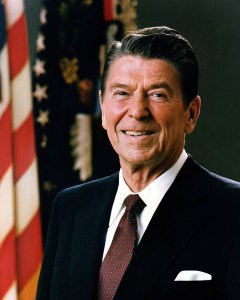
Even Ronald Reagan, the idol of conservatives across the country believed that

Ronald Reagan
Ronald Reagan


technology would solve the world’s problems.  As reported in The Guardian (June 14, 1989) he announced “The Goliath of totalitarianism will be brought down by the David of the microchip.” It never quite worked that way though; Goliath has not quite disappeared in the almost 30 years since Reagan predicted its demise, but our world has certainly been changed by technology.

The Internet has made it possible for writers, readers and dreamers across the world to share ideas about how people have tried to change society in the past and what could happen in the future. This summer a conference, Solidarity and Utopia 2017 in Gdansk, Poland, brought together scholars from many different countries and disciplines to discuss the ways Utopian ideas have affected the world. There was a great deal to be learned.

I had never known that Lucy Maud Montgomery’s famous Anne of Green Gables became an important document in Poland during World War II. Polish soldiers were issued copies of a Montgomery novel to take to the front; later, it became part of a thriving black market trade for the Polish resistance.

As for my own heroine, Charlotte Edgerton, here is what one scholar discussed about her appearance in A Death in Utopia.

Intentional Community under the Magnifying Glass: Brook Farm in A Death in Utopia by Adele Fasick Elżbieta Perkowska–Gawlik (Maria Curie-Skłodowska University, Lublin) A Death in Utopia of 2014 by Adele M. Fasick is the first book in the Charlotte Edgerton mystery series. The eponymous utopia stands for The Brook Farm Institute of Agriculture and Education, a famous intentional community set up by George and Sophia Ripley in West Roxbury, Massachusetts, in 1841. But for economic solidarity and the solidarity of ideas, Brook Farm would have never come into existence. However, “all the grand plans for reforming the world” (Fasick 3) were very soon confronted by the practicalities of farming, in which most of the members lacked experience. Since the novel covers the span of time from September to November 1842, i.e. the second year of Ripley’s experiment, the spirits of many members appear to be high yet the looming financial crisis casts a shadow over the future of the whole enterprise. To make matters worse a Unitarian minister visiting the community is found dead on the premises of Brook Farm. Charlotte, one of the Brook Farmers, resolves to protect the good name of the community and find the culprit. In my presentation I will argue that Fasick’s idea of inscribing the fictional investigation of an amateur detective into the life of Brook Farm has proved to be successful as far as “magnifying” the issue of solidarity is concerned. However, Charlotte’s amateurish attempts to solve the criminal conundrum reveal more of the ideals and daily routines of the intentional community than of the tragic circumstances concerning the crime, a facet most probably intended by the author who has already explored the history of Brook Farm on a scholarly basis.

We may not have reached a Utopian society, but the possibilities are still worth discussion. And being able to talk about them on a worldwide network is the kind of Utopian dream that Thomas More and the Brook Farmers would have loved to celebrate.

A binge is a binge is a binge–going overboard on reading

Summer is coming up and for many people that is the prime season for binge watching reading-bookTV series they missed during the year. But television isn’t the only media that is ripe for binging. Binge reading is a perennial favorite especially during rainy summer weekends when the beach is sodden and hiking trails are muddy.
Some people define binge reading as reading a book obsessively and not putting it down until you’ve finished it, whether that is 2 a.m. or sunrise. But equally satisfying is the binge reading done in bits and pieces but covering a whole series of books, usually genre books like mysteries, romances or science fiction. I remember one stressful holiday season when I gulped down one Ruth Galloway mystery after another, relishing the excuse to leave my crowded household for the north shore of England filled with mysteries about archeology and with patient sleuths. (In case you’ve never read them, the Ruth Galloway mysteries are by Elly Griffiths).

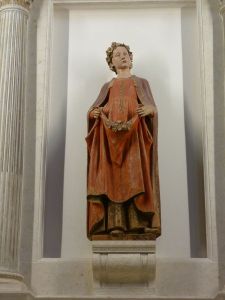
Binge reading can be by subject too. I remember spending a snowy Christmas week, stuck in the house with small children, reading one book after dellaRobbia_Dorothea_(2)another about Renaissance Italy. It was almost like having a vacation.
Binge reading could be difficult in the old days when ending one book and feeling the urgent need for another meant a trip to the library or possibly even a bookstore if one was available. Now with ebooks, it takes only a few clicks to have the next book in the series delivered electronically from your public library or ebook supplier.

Most readers don’t think about the people who supply the books for us to read, but the enthusiasm for series books to read has put a lot of strain on writers. In the days before the indie publishing revolution—five years ago or more—there was usually a wait of two or three years between books. Traditional publishing is a time-consuming business. Now, if you look at writing blogs, you will see writers complaining that their publishers want at least two books a year from their series of mysteries or romances. It’s not easy for a writer to come up with several new ideas for books every year. As a result, a sparkling series may dwindle away as old plot twists are reused and irrelevant padding dragged into the story. It can be as sad to see a good, lively book series die away as it is to watch a TV series wither in its final season. It is much better for writers and publishers to aim for “limited series” as the TV shows are now doing. A quartet of lively books using the same characters and setting is better than a dozen books of repetitious stories.

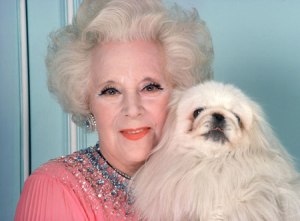
On the other hand, some writers could be called binge writers. They keep turning out books and finding an audience year after year after year. One of these was Barbara

Barbara-Cartland
Barbara Cartland


Cartland, who wrote more than 700 books in her 80-year-long career before her death in 2000. And her fans kept on loving them. Another was Isaac Asimov, who wrote more than 500 books both science fiction and non-fiction. He contributed so much to our culture that he deserves a separate post.

There should be a special award for binge writers whose energy and ideas feed our need for more stories to feed our passion.


Recapturing the past one book at a time

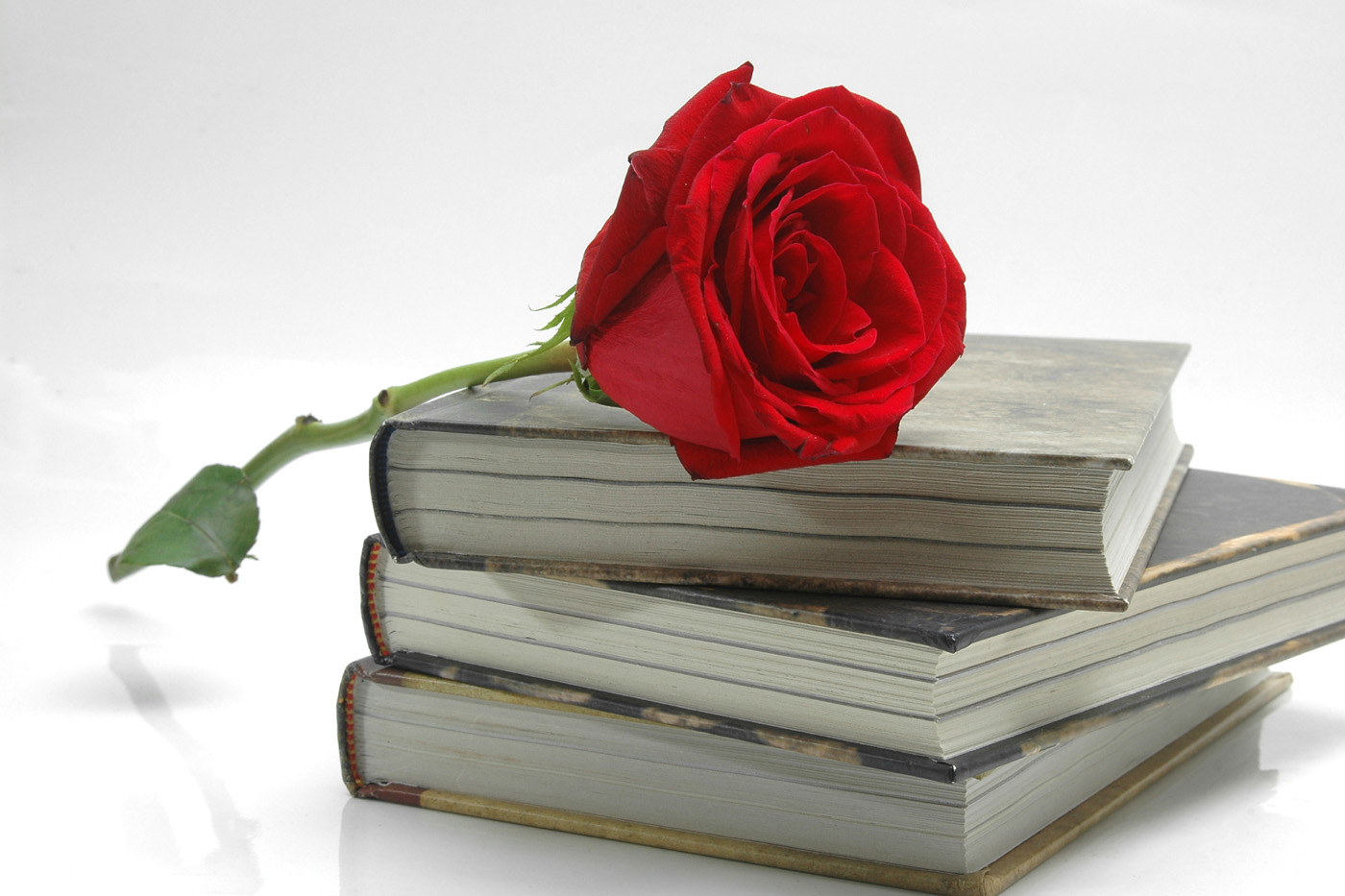
Books and roseI’ve spent a surprising amount of time this month looking at old books, first at the California Antiquarian Book Fair  where I saw an amazing number of valuable and beautiful old books. It’s fascinating to see early editions of books by the likes of Charles Dickens and Willa Cather, all of them far too expensive to buy of course. Old children’s books from 30, 40 or even 50 years ago were featured by some of the dealers. I guess a lot of book collectors enjoy rereading the books of their childhood. And as I discovered later in the week, I am one of them.

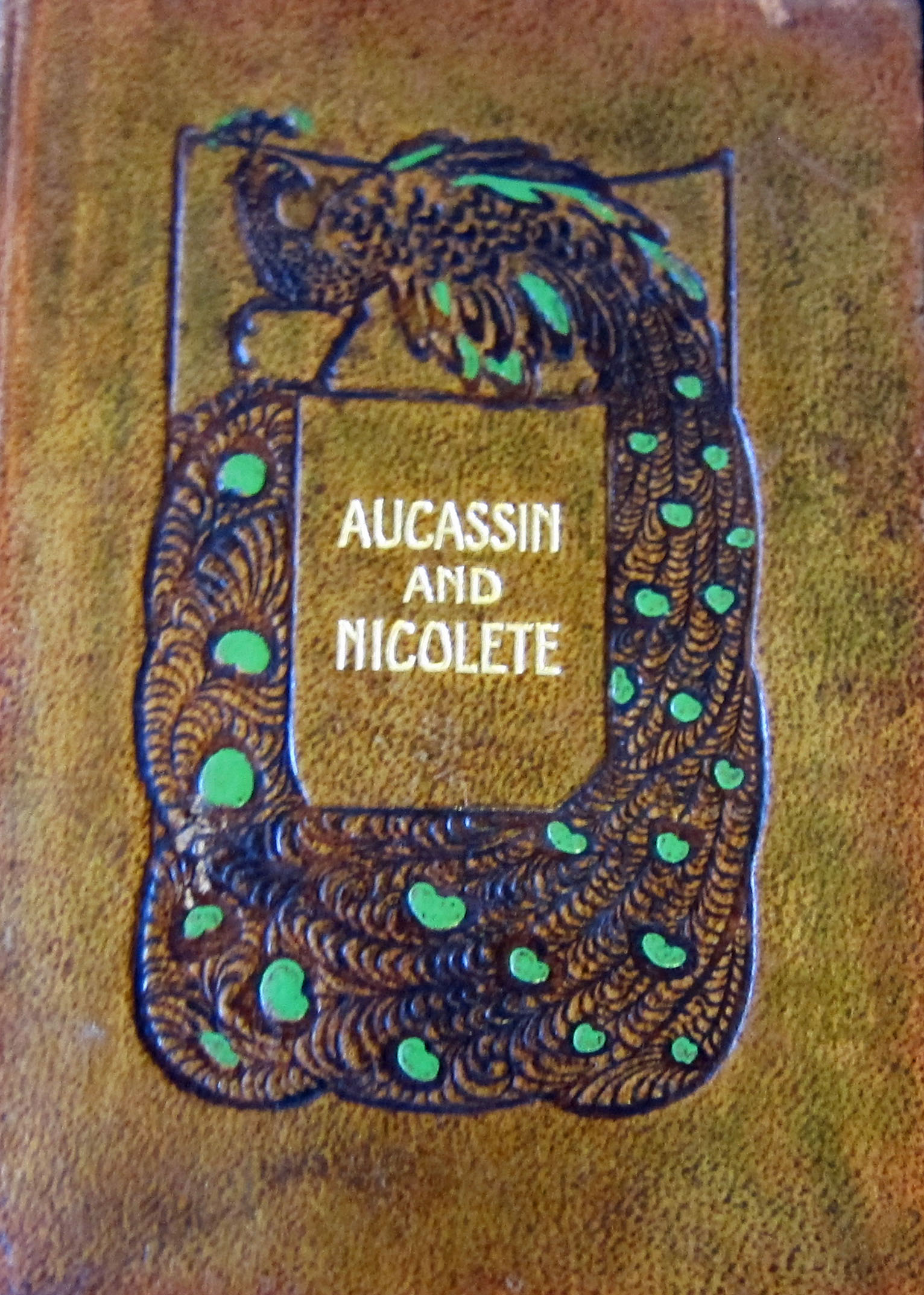
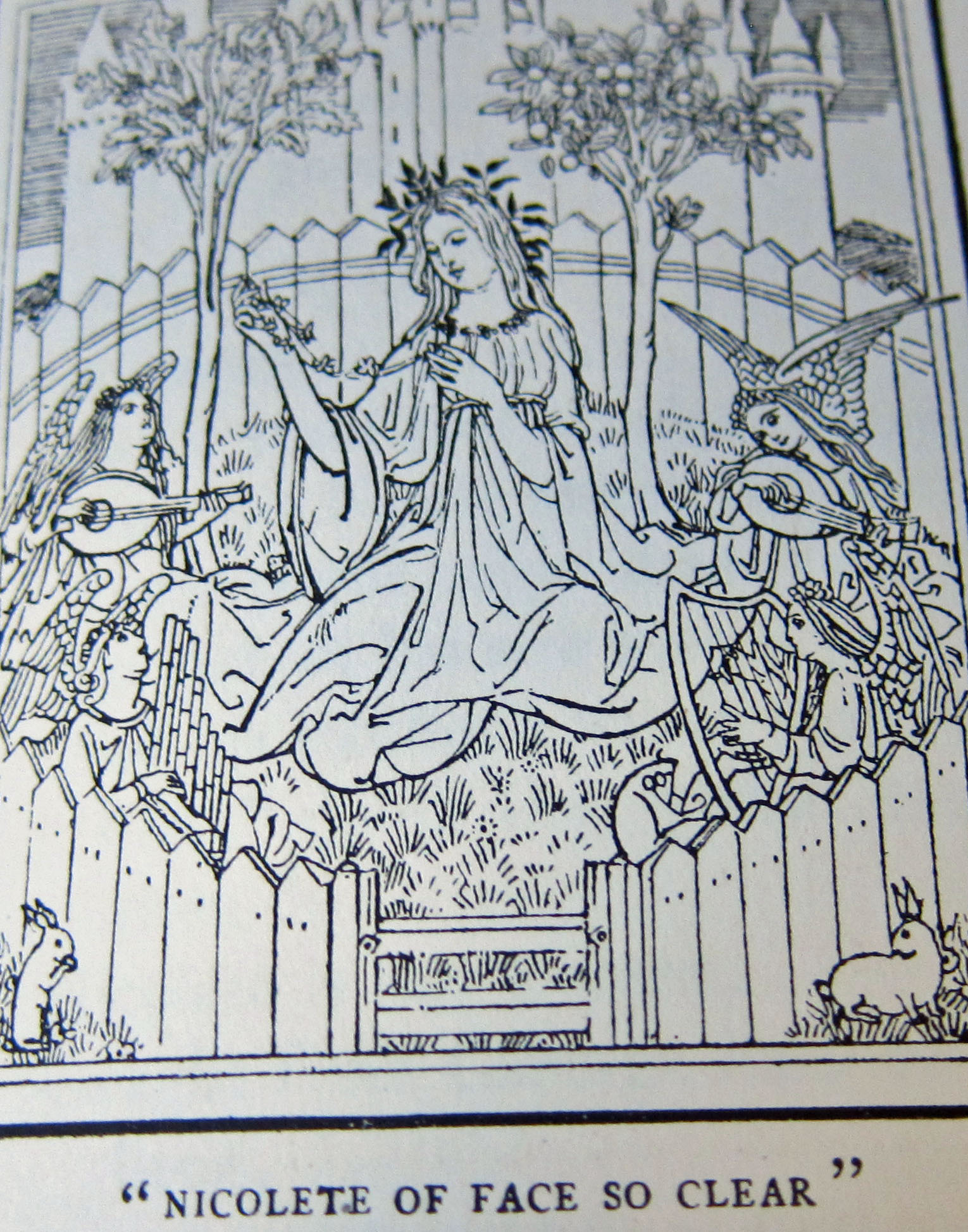
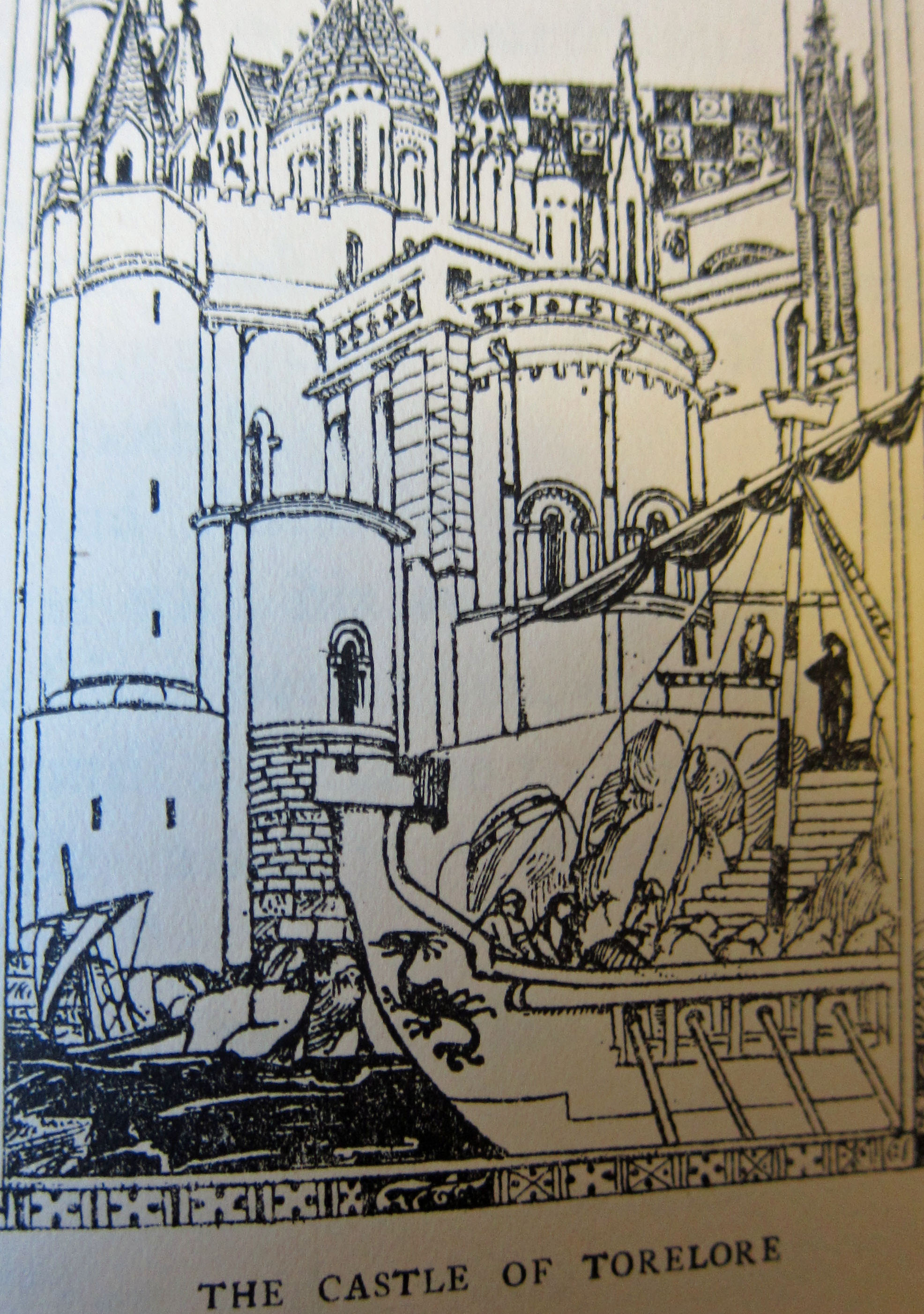
A few days after going to the Book Fair I went to an estate sale in a neighborhood not far from where I live. The owner had been an antiquarian book dealer and the house was jammed not only with the usual stuff of estate sales—costume jewelry, china dishes, and small pieces of furniture—but with shelf after shelf of old books. Many of them were leather bound, small Aucassin _edited-2books from the 19th century or cloth bound books from the early 20th century. Wandering along those shelves, pulling out the books was a great pleasure, but it took a while until I came to my greatest prize. I found a small book that I remembered from my childhood—the tale of Aucassin and Nicolete.

It was one of my favorite books from the branch of the public library in Queens that I visited so often. I remember exactly the place where it stood on the shelf, near the fireplace where the librarian used to conduct her story hours. I was surprised to find the romantic tale again and surprised to recognize the black-and-white line drawings in the book. Luckily for me, the book only cost seven dollars, so I was happy to bring it home where I could pore over those pictures the way I used to do when I was a twelve-year-old in love with romantic stories. The lines of poetry that close the story still sound charming:

Aucissn_Nicolete_edited-2Aucassin is blithe and gay,

Nicolete as glad as May.

And they lived for many a day,

And our story goes its way.

                        What more to say?

The books that twelve-year-olds—these days they are called tweens—read Aucassin-castletoday are far larger and more elaborate than the books I remember from the library.  I guess television and online entertainment have drenched our world in so much color and action that quiet black-and-white drawings and stately, old-fashioned stories no longer hold a reader’s attention. Graphic novels have won a place in children’s libraries; refugees and death have become a focus of attention and action often jumps far more quickly than it used to. The world is big and children should be introduced to many aspects of it. I just hope that they will spend enough time with their books that they will remember them and when they are older will be able to turn back to their favorites and enjoy them just as I do mine.