Celebrating the heroes of Labor Day

Anti-union sentiment is in the air these days as the media reports tales of high pensions for union workers and undue pressure by unions on the government. If you read the Republican Platform passed by the convention in Tampa a few days ago, you can read that “We call for repeal of the Davis-Bacon Act, which costs the taxpayers billions of dollars annually in artificially high wages on government projects. We support the right of States to enact Right-to-Work laws and encourage them to do so to promote greater economic liberty.” Few people know what is in the Davis-Bacon Act, which was passed in 1931. It provides that people working on government projects be paid no less than the locally prevailing wages and benefits paid on similar projects. That doesn’t sound too unreasonable—to ask that people building our courthouses, libraries and schools don’t have to put up with below-market wages, does it? It was signed into law by Republican President Herbert Hoover, but Republicans have been trying to repeal the act for more than fifty years and now they are trying again.

Why are so many Americans anti-labor these days? Probably because they forget what life was like in a pre-union world. At least one day a year, on Labor Day, we ought to try to remember those days and honor the people who changed the rules. Clothing workers are a good example of why unions were needed. It was an industry dominated by women, most of them immigrant women. Some of them worked in small factories, others took the work home. Jacob Riis had described the conditions during the 1890s. In How the Other Half Lives he wrote: “From every door multitudes of tired men and women pour forth for half-hour’s rest in the open air before sleep closes the eyes weary with incessant working.” Factories were not much better than working at home. There were no limitation on working hours, safety rules were nonexistent, workers were hired and laid off erratically as demand rose and fell. There was no health insurance and no unemployment benefits. If your family couldn’t help you out, you were just out of luck.

The Triangle Shirtwaist factory fire in 1911
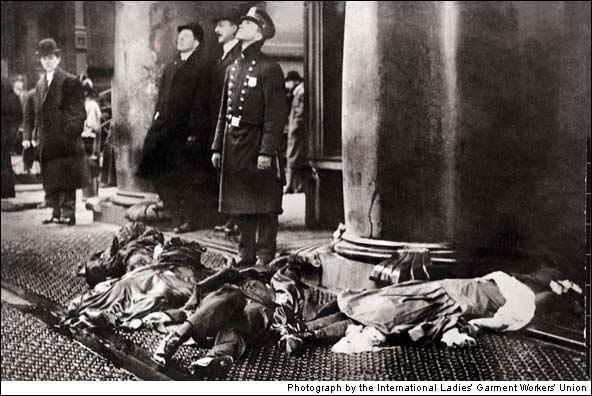
Picture of bodies from the Triangle factory fire.
Triangle Factory Fire 1911 (ILGWU photo)

finally awakened many people to the dangers of unregulated factory work. Pictures like this documented the horror of young women trapped into an unsafe factory. The doors to the fire escapes had been locked to keep workers from stealing fabric or sneaking outside for a break. Gradually most of the public woke up to the fact that regulations were needed to keep employers from exploiting workers. The International Ladies Garment Workers Union (ILGWU) grew and through negotiation and strikes finally forged agreements that made many people’s lives better.

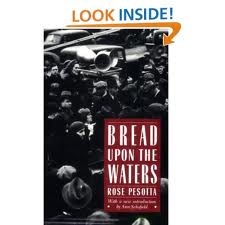
Women like Rose Pesotta traveled across the country to organize clothing workers. She went to Los Angeles where the clothing industry workers were mostly Mexican immigrants. Rose was told that Mexican women would never join a union, but she disagreed. She started broadcasting on the local Spanish-language radio station and found a willing audience. As she wrote in her memoir Bread upon the Waters, Cover of Rose Pesotta's "Bread upon the Waters" “Gradually the Mexicans in the dress factories came to our union headquarters, asking questions timidly but eagerly. Some employers, learning of signed membership cards, scoffed: “They won’t stick.” Others were plainly worried. Women not yet in our ranks came with the disquieting news that their boss had threatened to report them to the immigration authorities and have them “sent back” if they joined our union. We promised that our attorneys would fight any such underhanded move.” Gradually the workers were won over, they agreed to strike and eventually the ILGWU was able to ensure them better working conditions through the union.
The ILGWU revolutionized the lives of millions of women across the country, and even though it gradually lost members and strength as the century went on, it remains a shining example of what Americans can do when they work together. The same can be said of other unions which made America a country recognized across the world as a land of promise. The conditions brought about by union workers made the late twentieth century a prosperous time for almost all working families. Today on Labor Day let’s pay tribute to the people who fought to give us unions. They are not always perfect, and sometimes their demands can’t be met, but they have been a blessing for the country. Let’s work with them and not try to wipe them out.    
 

The woman who celebrated voting

Today we celebrate a holiday seldom marked these days. What with the Republican Convention poised to start whenever the threatening storm Isaac eases up, and Florida residents leaving their homes to escape the hurricane, there has been little notice of Women’s Equality Day. Why a holiday in August so close to Labor Day? Because it marks the anniversary of the day in 1920 when the 19th Amendment, giving women the vote, was signed into law. That date is important. It has revolutionized the way women live and operate in our society. And the date might not be remembered at all except for the work of a woman born in 1920 a month before the amendment was proclaimed. Her name was Bella Abzug.

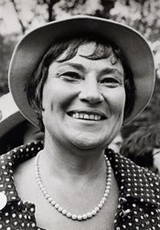
For women living in New York and much of the rest of the country, Bella Abzug became a familiar figure during the 1970s when she was a Congresswoman from New York City. One of her many achievements was being the first Jewish woman elected to Congress. Bella Abzug was a figure made for the age of television. She had a distinctive look—she wore a broad-brimmed hat whenever she appeared in public—and a distinctive voice that was hard to ignore. The hats were the result of her Photo of Bella Abzugbecoming a lawyer in the days when few women practiced law. She started wearing a hat in the office so people would not assume she was a secretary. It was a trademark and gave her more recognition than most other members of Congress.

Abzug was a labor lawyer who fought for the rights of unions, workers, and members of minority groups. In Congress she sponsored a bill for immediate withdrawal of troops from Vietnam War. It didn’t pass. She also called unsuccessfully for universal health care. Her crusades were often unsuccessful, but she cared deeply about politics and would not relinquish her insistence on fighting for what she thought was right even though she lost. She was a fighter and she raised issues that were unpopular in her day but have since been accepted.

In 1971 Bella Abzug achieved success with her bill to establish Women’s Equality Day on August 26. Congress passed the resolution she had introduced:

Joint Resolution of Congress, 1971[2] Designating August 26 of each year as Women’s Equality Day

WHEREAS, the women of the United States have been treated as second-class citizens and have not been entitled the full rights and privileges, public or private, legal or institutional, which are available to male citizens of the United States; and [2]

WHEREAS, the women of the United States have united to assure that these rights and privileges are available to all citizens equally regardless of sex; [2]

WHEREAS, the women of the United States have designated August 26, the anniversary date of the passage of the Nineteenth Amendment, as symbol of the continued fight for equal rights: and [2]

WHEREAS, the women of United States are to be commended and supported in their organizations and activities, [2]

NOW, THEREFORE, BE IT RESOLVED, the Senate and House of Representatives of the United States of America in Congress assembled, that August 26 of each year is designated as “Women’s Equality Day,” and the President is authorized and requested to issue a proclamation annually in commemoration of that day in 1920, on which the women of America were first given the right to vote, and that day in 1970, on which a nationwide demonstration for women’s rights took place


So now on this quiet weekend before Labor Day let’s remember Bella Abzug and the other courageous women who fought so hard to give women the freedom to vote and to influence political life. We have all benefitted from their work.

What a difference a century makes

The recent death of Helen Gurley Brown, the longtime editor of Cosmopolitan magazine calls to mind the scope and influence of earlier women editors in America. The appointment of Brown as editor of a traditional women’s magazine in 1962 shook the publishing world. Her emphasis on the acceptance of the right of single women to have sex was a bombshell in many conventional suburban communities. I remember as a young mother living in a sprawling housing development in New Jersey the startled reaction of some of my neighbors. One morning I saw a woman down my street sitting on her steps crying because she worried about her husband being seduced by secretaries made daring by Cosmopolitan. Within a few years the domestic life of many women was being reshaped by the bold ideas implanted by Helen Gurley Brown and her magazine.

Portrait of Sarah Hale

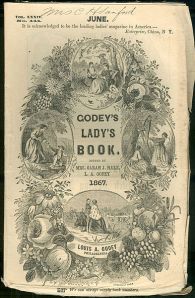
Long before Brown, however, women editors had shaped the lives and expectations of American women. Sarah J. Hale, who for forty years ruled over Godey’s Lady’s Book, one of the country’s most influential magazines, had a different agenda for her journal. Instead of seeing sexual freedom as the most important empowerment tool for women, Hale crusaded for education. Offering young women an education similar to their brothers was a radical idea. She strongly supported economic independence for woman and wanted them to become teachers and doctors to serve both the community and their families. Unlike Brown, Hale never saw the role of women as extending far beyond the family circle. She wanted women to use their new strength and independence to educate their children and serve their husbands. She never thought of herself as a feminist, but her influence on women’s lives went far beyond what she intended. By supporting and publicizing the founding of Vassar College, she opened the door for girls to leave home to study and work independently of their families.

Education for women wasn’t the only cause Hale worked on. She also created Thanksgiving as a national holiday rather than the quiet New England celebration it had been when she was young. After a long campaign, she persuaded Abraham Lincoln to proclaim the first national Thanksgiving holiday in 1863. Perhaps her work on this had a more lasting effect than any other single goal she pursued. Just think of the millions of dollars spent every year on advertising and merchandizing food and decorations for Thanksgiving celebrations.

Journalists who pull together the work of others to create a magazine, newspaper, or perhaps a television program are often underrated as thought leaders, but many of them have a greater effect on society than the “great books” that cause a stir. It’s the inexorable repetition of a periodical that gradually shapes our ideas far more than one book read during a few days. Perhaps we’ll never know how much Helen Gurley Brown of Sarah J. Hale changed women’s lives, but let’s take at least a few minutes to honor their memories.

Visiting the Past

What is it about being in a history-laden building or viewing ancient art in a museum that fills us with a sense of wonder? A few weeks ago I was in Paris and visited several of the great museums there. Walking through the 15th century mansion that houses the Musee Cluny, the museum of medieval art, it was impossible not to feel a sense of mystery and wonder. The serene faces of the many images of the Virgin Mary were more calming than a dozen tranquillizers. Yet the medieval period was not was serene. Life was harsh and brutal. Peasants suffered through their short lives, prey to hunger, poverty, and the cruelty of aristocrats. But somehow in their art, they showed a promise of what life, or perhaps heaven, could be like. And all these centuries later those faces still fascinate us with a vision of peace and serenity.

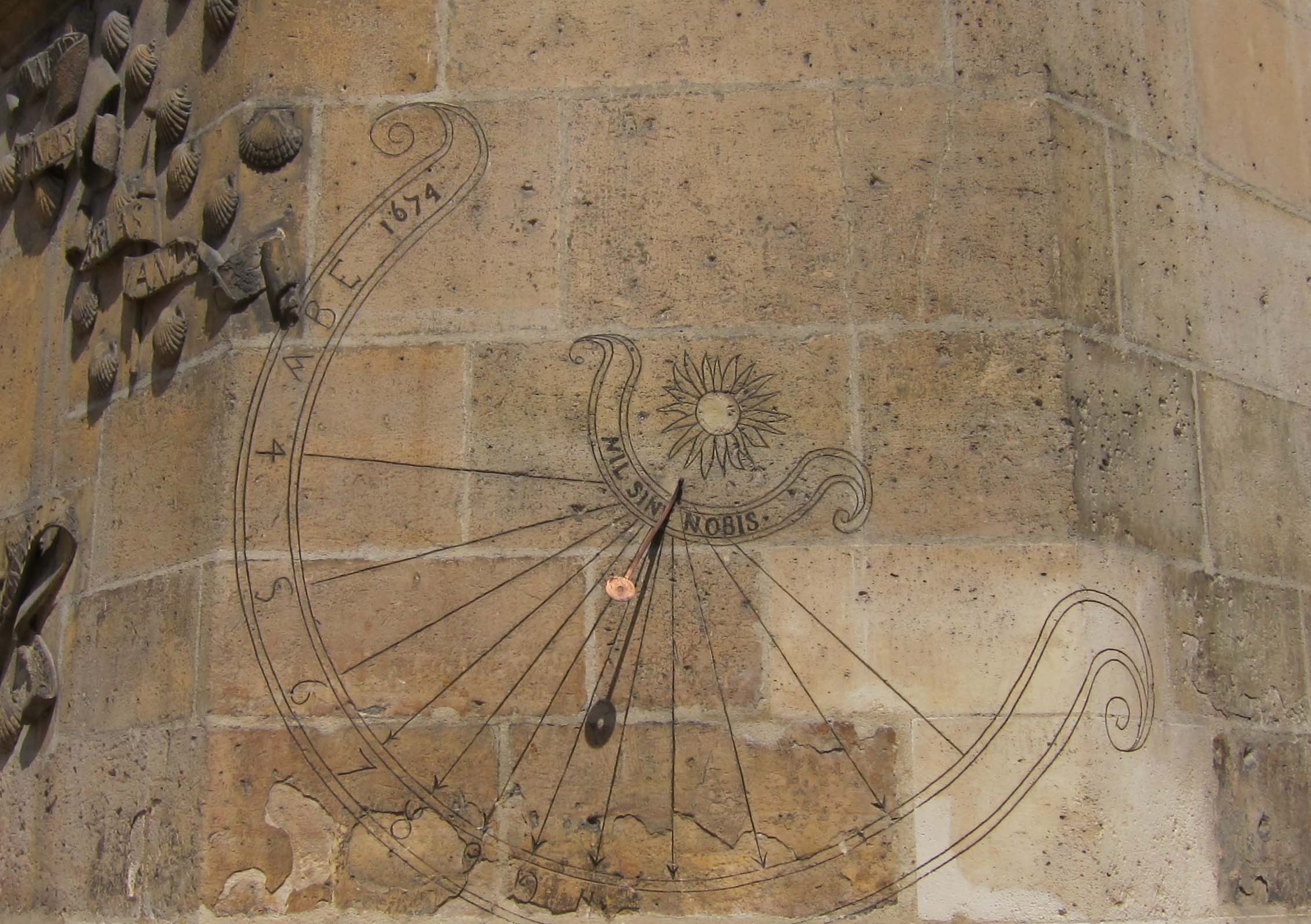
It is not only the religious figures in the Cluny that give us a sense of continuity and achievement. I found it touching to see this sun dial carved into the wall of the building. Somehow a dial that has tracked the movement of the shadows in this courtyard for more than 300 years speaks to me of how people’s greatest ideas can survive. We have no idea of who first set this dial on the wall, but his work (and it probably was a man who did it) has helped generations of people mark the time through their days.

Of course Cluny is not the only museum in Paris that gives us a restorative glimpse of the past. The lovely (and almost never crowded) Musee Guimet with its collection of Asian Art has the West’s largest collection of ancient Cambodian sculpture as well as pieces from Japan, China, Nepal and India.

This wooden Buddha  embodies the very idea of peace and disengagement from the trivial cares of the day.

Visiting a city with a long record of its historic past is quite a change for someone who lives in the today-focused culture of California. It is another reminder of how much we need to hold onto our collective past, to think about it, read about it and if possible visit it. We can find a perspective which is not so easy to find in the clutter of media that fills our lives.

Blooming Late and Long

Emily Carr was a precocious artist—when she was a child she surprised her parents by drawing the family dog, “I sat beside Carlow’s kennel” she writes in her autobiography, “and stared at him for a long time. Then I took a charred stick from the grate, split open a large brown-paper sack and drew a dog on the sack.” Emily was eight years old at the time.  Her talent was obvious to her parents from that picture and so she was allowed to study drawing, but both of her parents died while she was young and there was little encouragement for her to do anything except to follow her sisters’ examples and prepare for marriage and families. Her path to becoming a recognized artist was long and difficult. As a teenager she persuaded her guardian to let her go from the family home in Vancouver down to San Francisco to study art, but later she returned home and gave up painting.

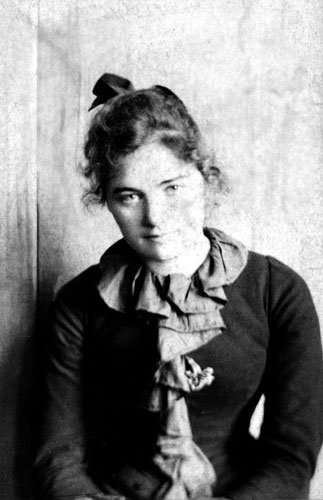
Emily CarrFor several years she pursued an eccentric life, keeping a boarding house to earn money and to pay for a menagerie of animals as pets. Her family, she believed, were stuffy and conventional and limited her artistic possibilities. She spent years, which grew into decades, in pursuit of skills that would allow her to become the artist she wanted to be She had a passion for the natural world around her in western Canada. As a child she rode a pony into the woods where she marveled at the sights and sounds around her. On a trip to Alaska in her twenties she discovered the arts of the Native peoples of the Northwest and the towering totem poles they carved. All of these sights would eventually fuel her art, but it was a long time before the transformation began.

Vancouver was on the outskirts of the art world of the time—the turn of the twentieth century—and Vancouver was so far outside the center that Carr was not aware even of the art being produced in Toronto and the rest of Ontario. She became discouraged about her painting and even after she had a chance to study for a while in Paris, she still did not feel that she was capable of being an important artist. She suffered from the familiar female feeling that artists were men, and many of the male artists she met were content to patronize the women who attempted to become part of the art world. Then at last she met the artists who would open the world for her.

The Group of Seven painters who worked mainly in Ontario were Canadian artists who had found a new way of presenting the beauty of the North to others. Lawren Harris, in particular, became a mentor to Emily Carr and helped her to see that the pictures she was struggling to make of Northwestern Canada and the Indian life there were worth doing. When A.Y. Jackson, another member of the group, told her that “Too bad, that West of yours is so overgrown, lush—unpaintable,” Harris told her to keep faith in what she was doing. When she went back to Vancouver, she was able to continue and in the last decades of her life produced works that have lasted. Even though they are not yet as well known outside of Canada as they deserve, those of us who see them believe that Emily Carr may have been a late bloomer, but her work will live long.Indian Church

Anyone who is interested in knowing more about Carr’s life should read her autobiography “Growing Pains”. She tells a good story and for a reader who wants more detail and more objectivity, there are several good biographies to choose from Best of all, however, try to see her paintings, either in person or in the reproductions available online and in print.

Tragedy in Timbuktu

For those of us who believe history gives us a way to understand the world we live in, the recent events in Northern Mali have been especially wrenching. Mali is a poor country, but it has a long tradition and a strong culture that gives its citizens shared valued and enables them to live in dignity and to cope with their hard existence. During the last few months, ever since the March coup against the government in Bamako, that culture has been under attack in Northern Mali and especially in the ancient city of Timbuktu.

If you have ever visited the remote city of Timbuktu, you have probably been impressed, as I was, by the exotic beauty of the city. It’s almost ten years since I traveled there with a group of American tourists. We flew on a chartered plane and landed at a modern looking airport after having flown over miles of a lovely sandscape contoured into pale colors and shapes. When we disembarked, we found ourselves almost alone at the airport. We were told that there was only one scheduled flight a week into and out of the city. Eventually we got our hand luggage and piled into all-terrain vehicles, which are the only vehicles that can travel on the unmarked, sand covered roads.

Timbuktu looked like nothing else I’ve ever seen–the buildings are made of mud or stucco, and the roads and open spaces are covered with sand. It’s impossible to tell whether the roads are paved or not. They curve around the city and our drivers zoomed around buildings, donkeys, children, men in long robes and women in subdued colors walking along the streets. Most of the women balanced tubs of water on their heads.

As soon as we dropped our things at the hotel, we were taken to see the mosque, the oldest mosque in Mali. Our guide, who worked for the Ministry of Culture, had a degree from Western Illinois University, and was in charge of preserving the culture of Timbuktu which had been named a UNESCO world heritage site. The mosque we visited was built in the fifteenth century and has been in use ever since. We took off our shoes outside, with the crowd of young boys offering to help, and then followed our white-robed guide into the mosque. He took us through the narrow halls to show us the elaborate carved wooden doors, the tombs of the saints, and a small courtyard. The floors and grounds were covered in sand; the courtyard had one small tree in which a few flame finches fluttered.

We also went to a private library to see a collection of manuscripts. Henry Louis Gates had given the money to build the library, but the collection belonged to a private family. All the manuscripts were in Arabic, the earliest dating from the 12th century, and among them were some of the most prized treasures of Islamic culture.

Our dinner that night was served on the terrace of the upper floor of the hotel. The air was cool by 7:30 when our meal began, the sun had gone down but it was still light. Waiters lit candles on our long table before serving us delicious vegetable soup. Then they brought in a whole roast lamb, which Ballo had arranged for us to have barbecued. The meat was tough and stringy, the result of eating free range lamb. We also had couscous, vegetables, and for dessert a creme caramel. It was delightful dining under the moon (few stars in sight) with a cool breeze blowing. The streets were almost completely quiet and the darkness beyond our hotel was overwhelming.

The next morning we had breakfast on the same terrace. We could look down and see men pulling loaves of bread out of the ovens on the street below. Everything tastes slightly of sand; even the bread had a grittiness from the fine sand that blew into the dough as it was being prepared. Our guide told us that people who live in the city often lost their teeth early because the sand in their food slowly grinds down the enamel.

That trip was in 2003, now all of Timbuktu has changed. A radical Islamist group have taken over most of Northern Mali and determined to destroy the tolerant Islamic culture that had developed there. According to the BBC News “The Ansar Dine group, which is said to have links to al-Qaeda, seized control of Timbuktu earlier this year and said it destroyed several of the city’s shrines as they contravened its strict interpretation of Islam. Ansar Dine spokesman Sanda Ould Bamana told the BBC that Islamic law did not allow the building of tombs taller than 15cm (6in).” The tombs that had stood for hundreds of years were destroyed and so was the magnificent wooden door of the mosque. People in Timbuktu are fleeing to Bamako or to other countries because armed men are roaming the streets enforcing strict sharia laws.

What is it that drives people to destroy the past? What is it that makes warriors think they can erase history and rewrite it as they think it should be? Perhaps we’ll never know the answers, but the least we can do is to try to preserve as much of the history of our world as we can. And we can encourage UNESCO, which has announced that it is concerned about Timbuktu, to act quickly to try to preserve these important cultural artifacts. They are important not only to Malians but to people everywhere who care about human culture.


Elizabeth Blackwell–Changing American healthcare

This week attention has been focused on the Supreme Court and its decision on the Affordable Care Act. People have strong opinions about health care and who ought to provide it. It made me think of the early days of America, before the Civil War, when one of the problems women had to face getting medical treatment was having to discuss their intimate concerns with male doctors. Elizabeth Blackwell an ambitious young immigrant from England became aware of this when a friend of hers died of a medical problem that she was too embarrassed to name.First day cover of Elizabeth Blackwell stamp.

“Would you like to have a woman doctor?” asked Elizabeth. Her friend thought this would be a blessing, but quite impossible to achieve because women could not become doctors. In fact, Elizabeth discovered that the term “lady doctor” at the time meant a female abortionist. Elizabeth, who was a devout Christian, shuddered at the thought of being compared to an abortionist, but she determined that she would become a doctor. It was not an easy task.

The first task was to find an individual or institution that would help her study medicine. When she wrote to one sympathetic doctor friend, he responded in a long letter saying that “it is appropriate that man be the physician and woman the nurse”. Others told her that women would never accept treatment from another woman. A Quaker friend wrote to her when she applied to medical schools, “Thee cannot gain admission to these schools. Thee must go to Paris and don masculine attire to gain the necessary knowledge.” Elizabeth rejected the idea of disguising herself in her pursuit of education and continued to look for smaller medical schools that needed more students.  She would not take no for an answer. Eventually she found a college in Geneva, New York, that accepted her on condition the students would vote to accept her. To her delight, the students proved more accepting than the faculty. They voted unanimously to accept her and pledged that “no conduct of ours shall cause her to regret her attendance at this institution.”

The students kept their word. They treated the 26-year-old Elizabeth with respect, almost like an older sister, she reported. She completed her studies, even being allowed to attend the anatomy classes and dissections that had been considered impossible for women to endure. In January 1849, Blackwell became the first woman in the United States to receive a medical degree.

Gaining a medical degree did not, of course, erase the prejudice that remained against women practicing medicine. Elizabeth and her sister Emily, who also became a doctor, struggled for years to gain acceptance in the medical profession. Eventually they opened an infirmary for women and children in New York City. They practiced during the Civil War and, being strong abolitionists, prepared nurses to work with the Union troops.

In later life Elizabeth Blackwell divided her time between England and the United States. She gradually turned to social reform and spent less time on medicine, but the breakthrough she had made by becoming a doctor changed medicine forever. Another legacy she has left for us today is her book Pioneer Work in Opening the Medical Profession to Women, which is now available free of charge on Amazon.com as an ebook. The book quotes many of her journals and gives us a lively down-to-earth sense of what life was like for one of the pioneers of healthcare in America.

Dorothy Day and the nuns of today

In recent weeks there have been several news stories about the ongoing tensions between the Vatican and American nuns. After the nuns had been criticized by the Vatican for paying too much attention to social issues and too little to doctrinal concerns, a group of nuns traveled to Rome to speak to leaders about what they felt were injustices in the report. According to the New York Times, “The group’s president, Sister Pat Farrell, said in a statement that during an “open meeting” the group’s representatives “were able to directly express” their concerns. The nuns said they would report back to the group’s board in the United States and determine a course of action to respond to the Vatican.” Americans of all religious persuasions, or none at all will be waiting to hear what the nuns’ course of action will be.

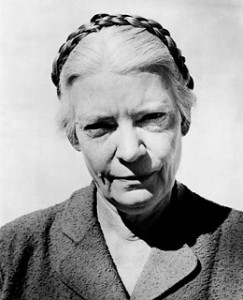
For many people the confrontation between the nuns and the bishops will recall memories of Dorothy Day, a social activist who had no difficulty speaking up to bishops. Dorothy Day was not a nun, but she was an ardent Catholic and a founder of the Catholic Worker movement. A convert to Catholicism, Day decided in the late 1920s to give up secular journalism and start a newspaper devoted to social issues. Working with Peter Maurin, she founded the Catholic Worker paper, which started appearing at about the same time that the United States entered the Great Depression. The newspaper soon attracted not only a core of readers, but also a community of people bound by the ideals of social justice and peace.

For several decades the Catholic Worker was a center of ideas and activism for many Catholics. The original house was in New York City and Dorothy’s work was always centered there. The workers were strongly pacifist all through the Second World War, which was an unpopular stance with many Catholics, both laypeople and clergy. After the war they demonstrated against the development of nuclear weapons and refused to participate in civil defense drills and other aspects of the 1950s.

Dorothy Day and the Workers also strongly supported unions, which led to perhaps her most visible struggle with the Catholic hierarchy. When the gravediggers went on strike for higher wages, Cardinal Spellman, representing the Catholic Church that owned the cemeteries strongly opposed them. Dorothy Day and many of her supporters picketed with the strikers, who eventually lost the strike. At one point in this period, Dorothy Day was asked to go to the chancery office where a Monsignor told her she must change the name of the newspaper The Catholic Worker because it was not an official publication of the church. Dorothy discussed the matter with her colleagues and they did not comply with the request. Nothing ever came of the refusal and the Workers and the Cardinal continued in wary co-existence with one another for many years.

Dorothy Day was always a faithful Catholic, but she did not find it necessary to bow to the will of every clergyman. She is quoted in Robert Coles’s excellent book Dorothy Day: A Radical Devotion as saying:

[Cardinal Spellman] is our chief priest and confessor; he is our spiritual leader—of all of us who live here in New York. But he is not our ruler. He is not someone whose very word all Catholics must heed, whose every deed we must copy.

As we watch watch the nuns today and their struggles with the way they practice their religious duties, we can hope that today’s Catholic women can also draw the line between following their faith and blindly obeying all the criticisms of the clergy.

What are the children learning?

An article in the NY Times today tells a worrying tale about how some high school students in high-achieving schools are using so-called “study pills” to increase their performance on exams. The drugs are legally prescribed to many teenagers who complain about an inability to concentrate or a tendency “to stare out the window” during classes. Well, most of us who have finished school can remember long periods of staring out of windows (if we were lucky enough to have classrooms with windows) during classes that seemed long and boring. I remember staring longingly out of an open window from which I could hear the thump of the school baseball team practicing every afternoon during my history class. History was one of my favorite subjects, but when spring came and the sun was shining on bright new grass outside, even stories of Henry VIII and his many wives couldn’t compete. When did staring out of a window become a symptom needing treatment instead of a natural response for young people? Being distracted by new sensations isn’t necessarily a bad thing and surely it would be better for parents and teachers to help kids learn how to cope instead of sending them to a doctor for medication. But trying to produce outstanding children motivates lots of parents.   

The urge to push children into ever-higher achievement isn’t new; the Victorians did the same.  John Stuart Mill is an example of a child whose parents wanted him to excel. His father, a famous philosopher, decided his son would follow in his footsteps, and he started early. According to a Wikipedia article, John Stuart was taught Greek when he was three years old. “By the age of eight he had read Aesop’s Fables, Xenophon’s Anabasis and the whole of Herodotus, and was acquainted with Lucian, Diogenes Laërtius, Isocrates and six dialogues of Plato. He had also read a great deal of history in English and had been taught arithmetic.” The lessons came thick and fast all through his teenage years and he studied dutifully until at the age of twenty he suffered a nervous breakdown, which he later thought was caused by the heavy emphasis on early intellectual achievement. Fortunately for Mill, he pulled out of his depression and went on to have a distinguished career.

Margaret Fuller is another example of an individual whose early life was dominated by a father’s insistence on intellectual distinction. Her position was unusual for a woman, because most fathers in the early 19th century would not have bothered educating a daughter. While I was writing my biography of Margaret Fuller, I found ample evidence that Margaret had very mixed feelings about her precocious education and how it affected her life. Before Margaret was four years old, her father started teaching her to read. She learned easily and within a few months she was reading stories and enjoying them. Almost as soon as she had mastered reading in English, she started on Latin. By the time she was six years old, Margaret was spending her days bent over a book instead of playing with other children. Although she too grew up to have a distinguished career, she sometimes wondered whether her father’s early pushing made her life less happy than it might have been.

It seems as though we haven’t learned much over the years about letting children find their own paths in life. I guess it’s just something every generation has to learn all over again. Meanwhile we can only hope that pharmaceuticals won’t become a regular part of high school life.

A Man Who Noticed Women

Women from history give us tantalizing glimpses of what life was like for women in the centuries before we were born, but sometimes it’s worth looking at women’s lives through the eyes of men. One of the unlikely observers of women’s lives was the African explorer Mungo Park.  Born in Scotland in 1771, Park was hungry for adventure and travel, and he certainly got his fill of those.

In 1795, he got funding from the African Association in London to explore Africa and if possible locate the sources of the rivers that enabled trade to the interior. The Association wanted someone who could provide an accurate map of Africa. Too impatient to wait for the Association to hire the fifty men originally planned to go with him, he left on May 22, 1795, on the brig Endeavor. After sailing for thirty days, the ship arrived at Jillifree, a town at the mouth of the Gambia River in West Africa.

During all of his travels Mungo Park distinguished himself by paying a lot of attention to African life and to learning how tribal societies worked. He admired the strength and courage of many Africans, but disapproved of the way they treated their women. In one village, Mungo saw a ceremony that shocked him. It started when darkness fell and he heard screams from the forest. Soon a masked man appeared and all of the villagers assembled in the central square. The ceremony began with singing and dancing, but even as they danced, the women were afraid. They knew the ceremony had been started by a husband who was angry with one of his wives, but no one knew whose husband it was. At last the masked man pointed to one woman, and men hurried to tie her to a tree. She was beaten as a punishment for not obeying her husband. The women who watched were expected to learn their lesson and be obedient to their husbands after seeing the harsh punishment.

Mungo Park was captured several times during his travels and held as a captive by tribal chiefs who were suspicious of his motives. He escaped successfully from one captivity by sneaking out of his tent in the middle of the night, but found that the harsh landscape was a greater threat than the chief. He walked for miles trying to find a water hole. As the sun rose, the hot sand reflected heat until the sand began to shimmer. Mungo grew dizzy watching it. He had to find a water hole. Climbing a tree gave him a wider view, but there was no sign of a water hole. The land was sandy and desolate as far as he could see. His horse was thirsty, and too tired to carry him. Hoping the horse would survive even if he himself died of thirst, Mungo removed his bridle. As he did that, his dizziness overwhelmed him and he fainted on the sand.

When he recovered consciousness, Mungo realized the horse had not run off but was munching dry grass nearby. The sun was sinking and the sand was a little cooler. Mungo resolved to make another effort to reach water. He led the horse onward in the direction of Bambara. It was now dark, but Mungo could read his compass by the lightning which continued to flash. Finally the rain came—a downpour. Hastily Mungo spread all of his clothes on the ground so the rain could soak them. He quenched his thirst by wringing and sucking the wet cloth. At last his parched throat had some relief. The horse opened his mouth to let the rain fall on his tongue, and Mungo helped by squeezing water into his mouth too. The water gave them strength to move on.

At last he found a Fulani village, but the people refused to give him food. He turned to leave, and noticed a few huts outside the main village. Hoping to find more sympathy there than from more prosperous citizens, he approached them. At the door of one hut, an elderly woman was spinning cotton. He gestured to indicate that he was hungry, and she immediately invited him inside. There she brought him a bowl of couscous left from the night before. In return for her generosity, he gave her a pocket handkerchief. The kindly woman even provided corn for his horse, so Mungo left her hut feeling more comfortable than he had for days.

When at last Park reached the city of Segu and located the Niger River, he felt triumphant, but he found no welcome among local people. The king of the area refused to see him and once again he had to rely on the kindness of women.  A woman passing by from her work in the fields she saw how tired and hungry Mungo looked.  She invited him into her hut, spread out a mat and told him he could remain for the night. She also prepared food for him and gave him grain for the horse. Then she called the rest of the women of the family together and they continued their work of spinning cotton while Mungo rested on the mat.

As the women spun the cotton they sang, and Mungo soon heard one woman singing a song about him:

“The winds roared, and the rains fell.

The poor white man, faint and weary,

Came and sat under our tree

He has no mother to bring him milk;

No wife to grind his corn.

And all of the women joined in the chorus: “Let us pity the white man; no mother has he

When Mungo Park finally returned to England, he wrote a bestselling book about his travels in Africa. It remained in print for generations and many people learned from it something about the lives of Africans. The history of the nineteenth century shows that Europeans did not learn enough, but Mungo Park made at least a first attempt in that direction.