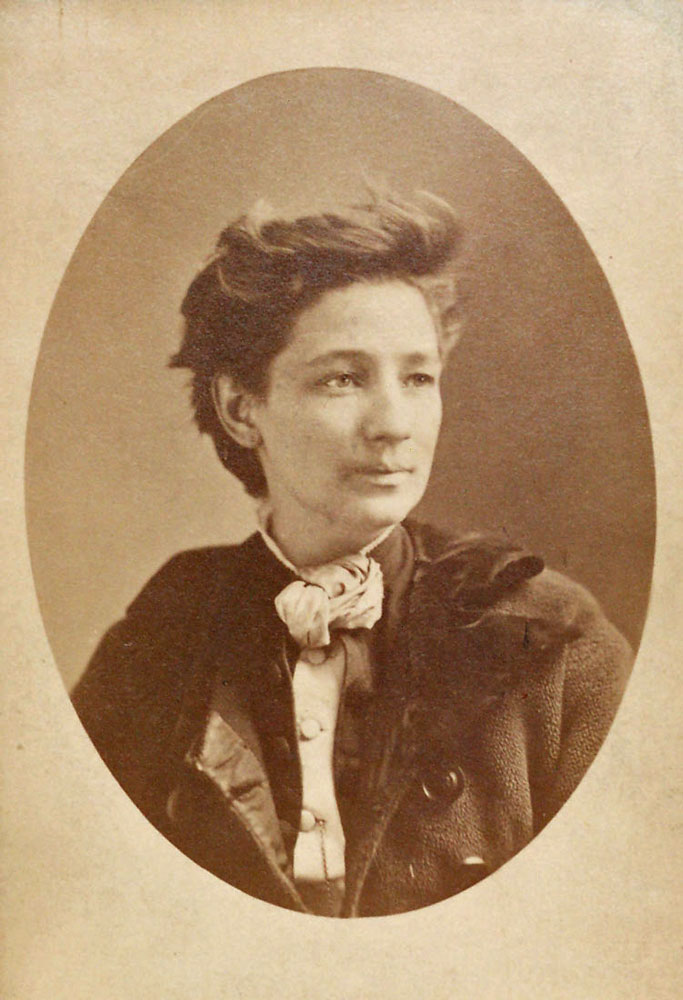
Mary Seacole–An unknown heroine

Who was the most famous nurse of the 1800s? Most Americans would probably answer “Florence Nightingale” although Clara Barton might get a few votes. Almost no one would remember Mary Seacole who served as a nurse and non-traditional doctor during the Crimean War at the same time that Florence Nightingale did. Unlike Nightingale and Barton she was not primarily an administrator, but rather a hands-on provider who forged strong ties with hundreds of the men serving on the bleak battlegrounds of the Crimean War.

Mary Seacole was born in Jamaica in 1805 in the prosperous and attractive city of Kingston, the base of British operations in the West Indies. cover of Mary Seacole's autobiographyWhite British upper-class people controlled the island, while most Jamaicans of African descent were slaves. Mary’s mother was apparently of mixed-blood and was free, as were many children whose fathers were white. Mary herself writes in her autobiography “I am a Creole, and have good Scotch blood coursing in my veins. My father was a soldier, of an old Scotch family;”

Mary’s mother was a boarding house keeper and a healer. That may seem an odd combination to us today, but it made sense because British officers and officials who often found it difficult to cope with Jamaica’s climate and tropical diseases, could use both services. Mary learned traditional healing methods, using plants and other common substances. While she was a teenager, Mary spent a year in London, which she apparently enjoyed despite the presence of “street-boys to poke fun at me and my companion’s complexion.” Travel was her favorite occupation and she managed to return to London as a merchant selling West Indian preserves and pickles. For most of the rest of her life, Mary Seacole combined business and healing as her twin sources of income.

After an adventurous few years in Jamaica and Panama and a short marriage to a rather frail man who died while still young, Mary was established as a prosperous “doctoress” and merchant. She visited the United States, but found the prejudice against people of color too extreme for her. She preferred England where she was accepted more neutrally, even if sometimes slighted and patronized, but for the most part she remained in the West Indies and Central America where her color was not an issue.

When the Crimean War started in 1854, Mary determined that she would go to help the troops. She heard of Florence Nightingale’s plan to take a group of nurses there and applied to be one of them, but was not accepted. Never one to give up a good idea, she raised enough money herself to pay for the expenses of the trip and set out. She found facilities in the camps and hospitals deplorable, just as Florence Nightingale did. Florence worked with the Army and the government using the rules and regulations to get her way. It was a long, difficult road, but one that Florence, well-disciplined and familiar with upper-class life, was prepared to take. Mary chose a different route. Scornful of protocol, she opened a facility called the British Hotel where she offered food as well as giving medical treatment to soldiers. Because she had no access to government money or very much in the way of charitable giving, she charged for services, but she devoted everything she could to serving the troops.

Florence Nightingale was rather scornful of Mary Seacole and probably distressed by her flamboyant dress and habits. Nonetheless Mary became a heroine to the troops and a friend of many people in high places, including relatives of Queen Victoria. When the war was over she returned to England to high praise and much publicity. She received a commendation from the queen and when she published her autobiography, Wonderful Adventures of Mrs. Seacole in Many Lands, it sold well. The book is still worth reading and is available in several editions, including a free ebook version, on Amazon.com. There is also a fascinating biography Mary Seacole: The Charismatic Black Nurse Who Became a Heroine of the Crimea by Jane Robinson, easily available in the UK, but hard to find in America. It is worth searching for. We need to remember these women who lived heroically and did so much to broaden our view of what women can accomplish.
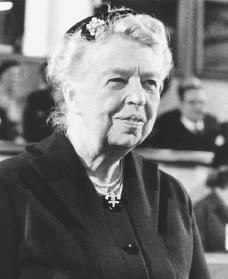
Remembering Eleanor Roosevelt–When America Led the World

You may have been as disgusted as I was this week when the U.S. Senate refused to ratify the United Nations treaty that would urge all countries to follow America’s lead in providing services to people with disabilities. To many of us who have been proud of our country’s role in ensuring equal treatment for all people, it was hard to believe that our current leaders are turning their backs on that tradition. It make me long for the days when American leaders were acknowledged around the world for being at the forefront of human rights, and one of the people I think of most often is Eleanor Roosevelt.

Like many women around the world today who grew up in the 20thth century but have nonetheless adapted to the changes of the 21stst, Eleanor Eleanor_RooseveltRoosevelt had a foot in each of two centuries. She was a daughter of genteel 19th century New York who was able to become a valued world citizen of the 20th century.

Like other wealthy young women of her time, Eleanor married young and accepted the domestic duties that went with the job of being a political wife. December was one of her favorite months because it gave her a chance to pick out gifts for family and friends.  Choosing gifts for her five children was the most fun of all, but her gifts were not just for her family; she never because an entirely home-centered wife and mother.  As first lady during the Depression, she recognized that a lot of Americans needed more than gifts; they needed education, jobs and the right to vote. She traveled around the country, acting often as the eyes and ears of her husband, Franklin Roosevelt. She told him in no uncertain terms what he should be doing for Americans who were reeling from the Great Depression. Sometimes her domestic chores took second or third place, but she tried to meet the standards she had learned from her family and to meet the needs of her husband as well as her own individuality. It wasn’t easy.

After Franklin Roosevelt died, Eleanor’s life changed dramatically. She wasn’t ready to move into quiet retirement, so she decided to expand her efforts to serve the world instead of limiting herself to national politics. President Harry Truman appointed her as the United States’ first delegate to the newly-formed United Nations. Eleanor was soon off and running with that job.

The United Nations was formed in 1945 to prevent another war. World War II had left Europe devastated and much of the rest of the world unsettled. People feared another war would destroy civilization and many of them believed that countries could work together to prevent that happening.  Many people, including Eleanor Roosevelt, also believed the UN should protect not only the freedom of countries but the freedom of individuals everywhere.

In 1946, she became a member of the UN’s Commission on Human Rights and was elected chair of the group. For two years, the Commission worked to decide which basic rights are important for everyone in the world. They argued over which rights should be included and how to express the rights in a way that every country and every religious group could accept. Finally they came up with a document that every country represented could sign. It’s not perfect and it leaves room for arguments and differences of interpretations, but at least it has given the world something to work with. The Universal Declaration of Human Rights was signed on December 11, 1948. Among other things it was Eleanor Roosevelt’s greatest gift to the people of the world.

What have been some of the effects of the Universal Declaration of Human Rights? It has

  • Led to a declaration of the rights of children around the world.
  • Led to an agreement on the rights of women in every country
  • Helped to persuade South Africa to end its system of apartheid
  • Led to world agreement in condemning the use of child soldiers.

The Declaration of Human Rights is the most translated document in the world. It is now available in more than 300 languages.

http://www.humanrights.com/what-are-human-rights/universal-declaration-of-human-rights/preamble.html

Recognizing the Worth of a Woman

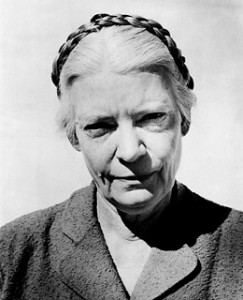
One small item in the New York Times this week that probably escaped many people’s notice concerned Dorothy Day, a woman I’ve written about in this blog before. She has been a hero to older liberal Catholics for many years, but her mission among the poor in America has faded from memory during the more than thirty years since her death in 1980. The article this week was about a move to canonize Dorothy Day and recognize her as a saint and it is being led by Cardinal Timothy Dolan, the rather conservative leader of the New York diocese.dorothy_day-243x300

For those of us who remember the 1950s and 1960s when Dorothy Day was leading a campaign for social justice and peace, her relations with Cardinal Spellman, a predecessor of Dolan’s, were frosty to say the least. Many of her followers, if not Day herself, considered Spellman a representative of everything that was wrong with American Catholicism at the time. I remember they delighted in calling him “strikebreaker Spellman” when the Cardinal appeared in a news photo digging a grave (or at least holding a shovel) in a cemetery to show his disapproval of a strike by the gravediggers. The Cardinal and Day disagreed on labor policy and on the measures needed to defend America, although they agreed on doctrinal issues. Dorothy Day led civil disobedience efforts to protest air raid drills in the city by refusing to take shelter when the sirens went off, a position that also put her at odds with Church leaders.

Now when so many people in this country have shifted to the right on issues of social justice, death sentences, and the value of voluntary poverty, many Catholic bishops appear to be closer to Dorothy Day than they have been in the past. Certainly she would approve their efforts to remind politicians that the drive for social justice for everyone, including the homeless, undocumented immigrants, and the working poor, is as much an American value as capitalism and entrepreneurial spirit. It is good to know that Cardinal Dolan is supporting a move to recognize the importance of the work Dorothy Day did to remind the world that the Catholic Church, like America itself, is a large institution that has room for many differing viewpoints and can support a variety of visions.

This Can’t Be What It Seems to Be

Finding the Rosetta Stone was the beginning of finding Hatshepsut, but it was going to take more than one magic stone to find out who she really was. A young French scholar named Jean-Francois Champollion struggled for years to untangle the riddle of hieroglyphic writing. By 1822, a breakthrough had been made in learning how to read hieroglyphs, scholars recognized the name of Hatshepsut, but still they had no idea of who she was or what she had done. Champollion and other scholars were terribly confused because pictures of a pharaoh were accompanied by language suited to a woman. For the men who studied Egyptian history, the idea of a female pharaoh was difficult to accept. Champollion and others theorized that she must have been the wife or sister of a pharaoh.

The beautiful temple Hatshepsut had built was also unknown to Europeans. By the middle of the 1800s, Hatshepsut’s temple, Djene Djeseru, was half buried in the sand. Arab families had set up tents on the ancient terraces. Men had taken chunks of stone from the temple to build their houses. Most of the other Egyptian temples were in the same condition.

Sometime during the 1870s, not far from Hatshepsut’s temple, an Egyptian family accidentally discovered a treasure. One of their goats wandered off and when Ahmed Abd el-Rassul chased it, he heard it bleating and realized it had fallen down a deep hole on a hillside. When Ahmed climbed down to retrieve the goat, he found himself in a narrow corridor filled with coffins. These were the coffins of ancient kings and queens who had been buried with their treasures. Ahmed and his brothers started taking the vases and jewelry out, a few at a time, and selling them to dealers in the city of Luxor.

For several years the brothers kept their secret, but as valuable pieces were bought and carried back to Europe and America, people realized someone must have found an unknown source of ancient treasures. In 1881, the search led to the Abd el-Rassul brothers who were arrested and harshly questioned until they revealed the hidden supply.

Haatshepsut’s temple

The colonial authorities quickly put together a team to investigate the cache. The find was larger and more valuable than anyone had dreamed—the remains of more than fifty kings, queens, and other royalty were found. The inscriptions on the coffins and statues allowed scholars to put together a history of Egyptian royalty.

Hatshepsut’s story was becoming a little clearer. Scholars figured out the names and dates of her father and her husbands. But Hatshepsut’s reign was confused because many of her statues were defaced and her name was erased from her memorials. The reasons for this disappearance led Egyptologists centuries later to worry about the “Hatshepsut Problem” –the question of when she reigned. During the late nineteenth century, it sometimes seemed that many of the Egyptologists, almost all of whom were male, were just as eager as the unknown defacer of her statues to eliminate her from Egyptian history.

Only in recent years has Hatsehpsut been restored to her place in history. Historians have gradually built up a firm chronology of Egyptian rulers, which includes several female pharaohs. Hatshepsut was probably the most important of them all, certainly more important than Cleopatra who was a member of a Greek dynasty that ruled Egypt centuries after Hatshepsut. Art exhibits have memorialized Hatshepsut and biographies and novels have been written about her. Among the best of them is Joyce Tyldesley’s Hatchepsut: the Female Pharaoh.


How to Lose a Woman for a Thousand Years

With pictures of the damage caused by Sandy, the storm of a century, facing us from every media outlet, I can’t help thinking of New York City and all the places I love there. Growing up, I learned much of my history from the statues and pictures in the museums and books from the public library. It was at the Metropolitan Museum of Art that I was introduced to ancient Egypt and became intrigued with its secrets—a fascination I have never lost.

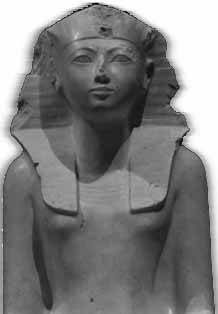
One of the most impressive statues at the museum is a massive granite statue of Hatshepsut, who was once the ruler of Egypt, the most important country in the ancient world. Somehow she disappeared from history and was forgotten for centuries. The statue we can now see shows a figure seated on a throne wearing the royal headdress and short pleated kilts usually worn by male

Statue of Hatshepsut

royalty in ancient Egypt, but the body is that of a woman, and the inscriptions running down the side of the throne use a female name and title. Hatshepsut’s story has puzzled historians for centuries. She built the largest temple on the banks of the Nile River with paintings on the walls and statues at the entrance. She must have been an important ruler, but her name is not found in the early official lists of Egyptian pharaohs. How can such a powerful woman disappear from history?

Well, as has happened with many women over the centuries, it seems to be the men in her life that originally caused her to disappear. She had been born the daughter of a powerful pharaoh, Tuthmosis I and, like many royal Egyptian women, she married her brother, Tuthmosis II, who inherited the throne. When he died after a short reign of six years, Hatshepsut became regent for their young son who was to become Tuthmosis III. After spending several years as a regent, she apparently decided to rule as a pharaoh in her own right; she was after all of royal blood and knew the job well. She had a long and successful reign during which Egypt was peaceful and became a wealthy country. After she died Thuthmosis III succeeded her.

At some point in the half century after her death, many statues of Hatshepsut were defaced so she was no longer recognizable. Her name was chiseled off many of the stone statues and when later rulers drew up the list of Egyptian monarchs, they simple left her name off. Perhaps it was too humiliating to admit that a woman had ruled the country so successfully. At any rate, Hatshepsut’s disappearance was effective.

The Egyptian empire lasted for thousands of years, but eventually it disappeared. Many Egyptians became less interested in the arts and religion of the pharaohs. They forgot the old traditions and the Egyptian gods. Egypt became part of the Roman Empire and was one of many Roman colonies. In the year 391, the Emperor Theodosius decided there should be no pagan temples in the empire. All the temples built by Egyptian pharaohs were closed. Inscriptions written in hieroglyphs were hidden. Much of the history of the country was lost.

Two centuries or so later, Arabs invaded Egypt bringing the Islamic religion and the Arabic language. As the years went by, Egyptians began speaking Arabic instead of Egyptian. And still the years rolled on. Villagers took stones from the pyramids to build their homes. Tomb robbers stole gold and jewels from burial places. In their eagerness to find treasure, robbers overturned coffins and dumped carefully wrapped mummies onto the earthen floor. The bones of pharaohs and commoners mingled together in heaps of rubbish.

Not all memories of Egypt were lost. Greek and Roman historians had written accounts of some of the pharaohs. The pyramids were still visible above the sand. Europeans gradually began traveling to Egypt to find trade routes to India so they could buy spices there. The Bible told stories about Egypt and started scholars wondering whether they could find traces of the ancient civilization there.

In 1735, Richard Pococke, an English clergyman, went to Egypt to study its monuments.  He made maps showing where the known monuments and pyramids were located. Perched on his donkey, or sitting under a spindly palm trees at an oasis, Pococke sketched the people and places he saw.  He stumbled upon Hatshepsut’s temple at Deir el Bahri but had no idea which pharaoh might have built it. No one could read the inscriptions on tombs and statues.

More than fifty years after Pockocke’s trip, in 1798, an invading army brought more scholars to Egypt. Napoleon Bonaparte decided to conquer Egypt and claim it and the trade routes it controlled for France. Unlike many generals, he wanted to study and preserve the history of the country not just conquer it. He brought with him scholars and artists as well as soldiers.

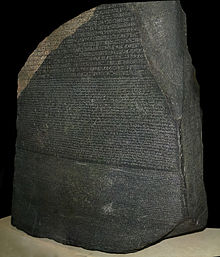
In the city of Rosetta, a French soldier discovered a stone inscribed with three different types of writing. This remarkable stone, known forever after as the Rosetta Stone, contains the same information written in three different languages. One section was written in ancient Egyptian hieroglyphic symbols, one in a more modern version of Egyptian writing, and one in Greek. Here at last was a key to unlock the secrets of Egyptian inscriptions. Translating the hieroglyphic writing would be difficult, but it was a first step toward unraveling the secrets of the pharaoh who had disappeared from history.

In my next post I’ll trace the next step in the mystery.


What do we know about Florence Nightingale?

Florence Nightingale’s struggle to build an independent life for herself took many years. Her mother and her sister couldn’t believe that she wanted to give up the social activities that went with upper class British life. Nonetheless, Florence managed to obtain training in nursing and when she was 32 years old she had the opportunity to become superintendent of the Institute for the Care of Sick Gentlewomen in London. For the first time she could move away from her family and start a life of her own, but the Institute did not give her scope for developing the talents that made her famous. The war in the Crimea which started in August 1854 was the catalyst that demonstrated Florence’s skills.

The British had not fought a war in decades and were confident they could defeat RussiaMap of Crimea and Scutari hospital which was threatening to block their access to India. It wasn’t until British troops reached the Crimea that their vulnerability to the climate and poor sanitary conditions was demonstrated. Before the battles had started 20 percent of the troops had come down with diarrhea, cholera, or dysentery. Hospital facilities were poor or non-existent. At last Florence Nightingale had an arena in which her talents shone, but it was a difficult struggle to convince the authorities that she could help. Finally she was able to gather together a group of women who had some experience as nurses. They included lay nurses and both Roman Catholic and Anglican nuns. Florence left for the Crimea in October 1854 and established her headquarters in the hospital at Scutari. It was there that she proved her abilities as an executive, managing the delicate relationships between the army and the nurses, establishing methods of providing food and supplies for the hospital, and introducing sanitary measures that saved lives.

The press in England spread the word about what Florence’s nurses were accomplishing, although there was controversy over their roles. Some readers complained about the inclusion of Roman Catholic nuns in the group because they feared proselytizing, although almost a quarter of the troops were Irish Catholics. While she was in the Crimea, Florence’s fame as the “lady with the lamp” grew even though she did less and less nursing. She was essentially a manager and purveyor of supplies, but the public insisted upon viewing her as a gentle nurse who soothed poor, sick soldiers. The army officers and politicians who interacted with her were more realistic in describing her as a tough executive who fought to build a viable organization of hospitals.

While Florence continued her struggle to improve the health care given to British soldiers and to overcome the reluctance of Army officers to make changes, her reputation in England continued to grow. She was a national heroine. Several songs were written about her including the popular “Nightingale of the East”:

Now God sent this woman to succour the brave,

Some thousands she saved, from an untimely grave;

Her eyes beam with pleasure, she’s bounteous and good

The wants of the wounded, are by her understood.

With fever some brought in, with life almost gone.

Some with dismantled limbs, some to fragments are torn.

But they keep up their spirits, their hearts never fail.

Now they’re cheer’d by the presence of a sweet Nightingale.

We don’t know what Florence thought of this tribute, but it certainly set her firmly in the tradition of the bountiful woman overflowing with kindness and charity. That was the way her public wanted to think of her and of the other nurses. Once they returned from the Crimea they were expected to step back into their lives of homemaking and serving the weak and wounded.

When Florence returned to England in the summer of 1856, she had no intention of stepping back. The more she learned about health conditions among the troops, the more determined she became to change the situation. She pushed hard to get an official commission appointed and although she couldn’t serve on the commission herself, it was her persistence that eventually brought it about. She labored relentlessly to write a report, which she eventually published as Notes on Matters Affecting the Health, Efficiency, and Hospital Administration of the British Army. Founded Chiefly on the Experience of the Late War.Example of chart invented by Florence Nightingale Here again her interest in statistics served her well. Realizing that people could visualize pictures better than rows of figures, she invented what she called her “coxcombs” to present the most important facts.

Florence Nightingale lived to be ninety years old and most of those years were devoted to improving public health. Like so many other women, her strengths have often been misunderstood. She is remembered as the sweet nurse tending soldiers, but her real achievement was far too “unwomanly” to be acknowledged while she was alive. It’s a shame that she is often misrepresented even now. There are several good biographies; one that I strongly recommend is Mark Bostridge’s recent Florence Nightingale: the Making of an Icon. After reading it you’ll never feel the same about Victorian women and their lives.

What Did Flo Know?

Those of us who watch Masterpiece Theatre on PBS have been treated this month to a new view of British life. Last year it was Downton Abbey that seized everyone’s imagination as we glimpsed the green lawns, spacious homes and lives of the wealthy, well-mannered women who lived there. Sure we saw the servants too, but even they spent their time in elegant surroundings. In the current series Call the Midwife we are introduced to the gray and grimy streets of East End London in the 1950s and to a group of women who spend their lives delivering babies in cluttered bedrooms. Women had to be tough to endure the endless hard work and discomfort of their lives, and that includes the midwives as well as the mothers. (Somehow the men in this series are all peripheral.) Even though the two dramas are separated by 40 years time, the class distinctions seem equally clear and jarring. It made me think of some of the heroines of England who have built bridges between classes, or at least made the attempt.

Florence Nightingale, the famous “Lady with the Lamp” who brought relief to suffering soldiers during the war in the Crimea and made nursing a respectable profession, is a familiar figure in Engraving of Florence Nightingale with a lamp in a hospital ward.history books. The image of Florence going through the hospital wards suggests a sweet, kindly woman with a yearning to take care of people, but Florence wasn’t like that. She had a burning need to do something with her life and yet her parents and relatives seemed determined to thwart her. It was Florence’s misfortune to have been born to prosperous but unimaginative parents who could not see that she was miserable with the role women were expected to play.

Instead of finding pleasure in decorative needlework, Florence loved statistics—of all things. The 1830s and 1840s, when Florence was a young woman, were the years during which England started collecting statistics about births, marriages and deaths. For the first time the government and leaders throughout the country were able to get a picture of what was going in the lives of the lower classes. The collection of numbers—statistics—was a contentious subject. Goethe had commented It has been said that figures rule the world. Maybe. But I am sure that figures show us whether it is being ruled well or badly.” Florence would agree with this, but other writers, like Charles Dickens, railed against the domination of facts and figures. In his book Hard Times, Dickens painted numbers and fact-based education for children as a false doctrine. His heroine Sissy, calls statistics “stutterings” and the author probably agreed with her. Dickens thought a worship of facts and numbers would stunt the imagination of children and spoil their lives.

Statistics did not spoil Florence’s life, although it would be many years before they became a powerful tool for her. I’ll continue the story of Florence Nightingale’s struggles in my next post.

Mrs. Satan will not be president

Victoria Woodhull’s declaration that she would be a candidate for President of the United States was a bold move that electrified voters in 1870.  Two years later, when the presidential election actually came around, everything had changed. Victoria believed she would win because of her strong faith in what her spirits told her, but she didn’t take account of what other people were thinking and doing.  During the years 1870-72, the Women’s movement became split into warring groups over policy. Leaders like Susan B. Anthony and Elizabeth Cady Stanton resented the fact that the government gave former slaves the right to vote but refused to do the same for women. Cartoon showing Victoria Woodhull as Mrs. SatanThey opposed the adoption of the Fifteenth Amendment which gave “all citizens” the right to vote “regardless of race, creed or previous condition of servitude” but did not include women.

In May 1872, the name of Victoria’s People’s Party was changed to the Equal Rights Party. The party officially nominated Victoria for president and she chose Frederick Douglass, the well-known ex-slave and public speaker, as her vice-presidential running mate. (He later said that he had never heard anything about it.) Both Elizabeth Cady Stanton and Isabella Beecher Hooker supported Victoria’s candidacy, but neither of them believed she had a chance to be president. Because Victoria’s spirit counselors had told her she was destined for high office, she herself firmly believed this would happen. This was the first presidential election in which women’s suffrage was an important issue, because it was the first held after the formation of the National Woman Suffrage Association and the American Woman Suffrage Association in 1869.

While the three different suffrage groups were arguing among themselves, the traditional political parties also struggled over their candidates. Ulysses S. Grant, a Republican, was seeking a second term, but the so-called Liberal Republicans split from the main party and nominated Horace Greeley, founder of the New York Tribune. Greeley also got the Democratic nomination. After the turmoil of nominations the campaign itself was one of the most bitterly-fought campaigns in American history.

Victoria’s unquestioning faith in her spirits led her astray when it came to politics. In the end it wasn’t the search for voting rights that brought her down, it was the familiar question about sexual purity and scandal. Victoria and her sisters had lurid pasts compared to those of the other women leading the suffrage movement, but these respectable women also had many secrets to hide. The intrigues and infidelities of leading male citizens touched the lives of their wives as well as their mistresses. Henry Ward Beecher, a distinguished minister and civic leader, was especially vulnerable. His sister Isabella Beecher Hooker was one of Victoria’s strongest supporters, but when rumors about her brother started circulating, she was torn. Unfortunately, Victoria, because of her friendships with brothel managers and prostitutes, knew many of the most scandalous stories in New York.

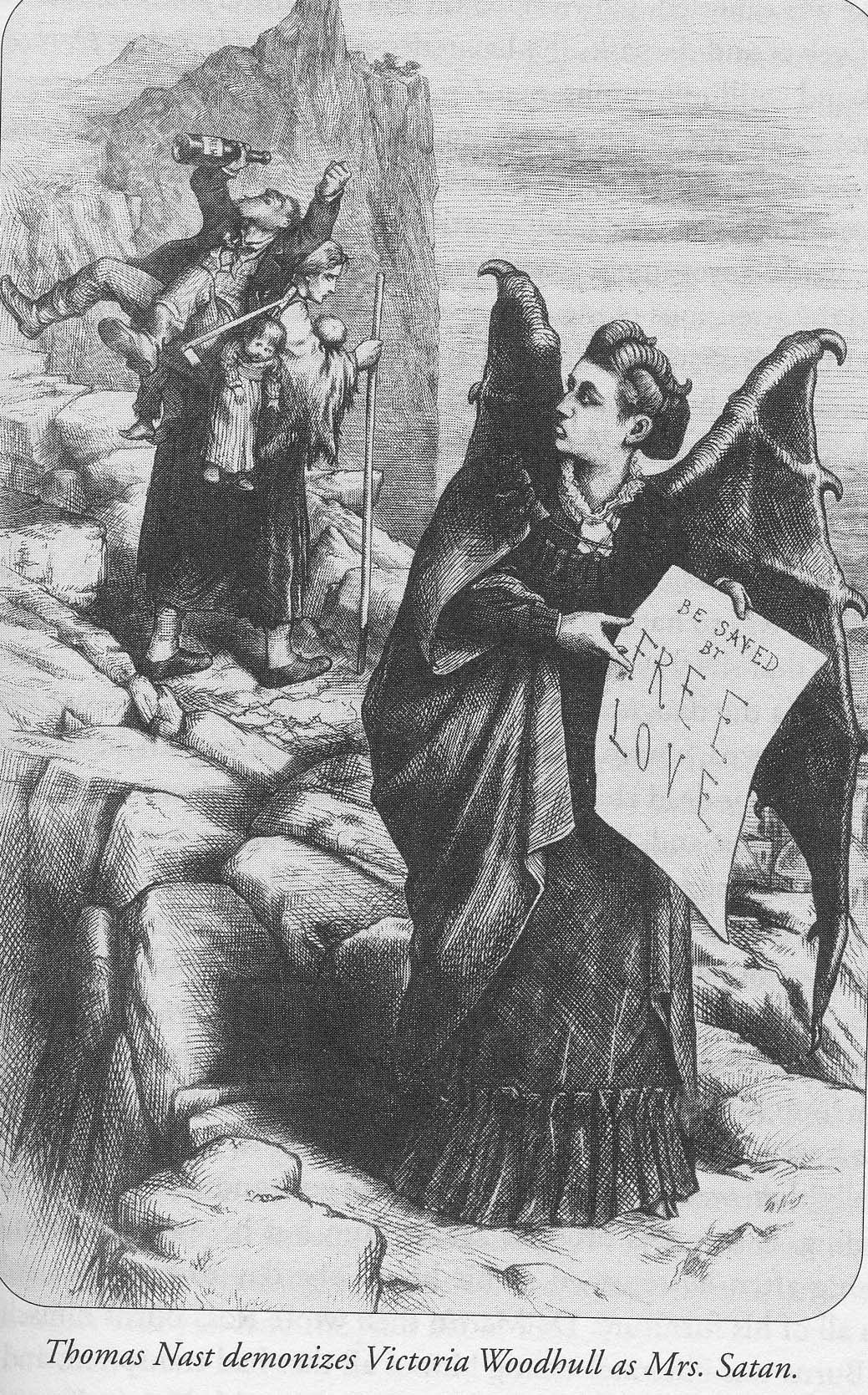
Victoria Woodhull believed in sexual freedom, as many of the suffragettes did, but she practiced it more than many others. This made her vulnerable to political opponents who spread stories about her and pilloried her in the press. Thomas Nast in his cartoons made her a special target as “Mrs. Satan”. After that cartoon appeared Victoria’s political life was dead. Her speaking engagements were cancelled and her supporters fled to other candidates. Embittered by the desertions, Victoria finally printed an article revealing the affairs of Henry Ward Beecher and other leading citizens. This is what led to her arrest and was the reason she spent Election Day in jail rather than at the polls. Some of the women’s suffrage leaders did attempt to vote; Susan B. Anthony cast a ballot, but her vote was not counted and she was given a $100 fine for the attempt. The election which seemed to promise vindication for women’s rights proved to be a miserable failure for them. The struggle continued for another fifty years.

Today, as we look back from the enormous new freedoms in sex and marriage that have been gained over the last hundred years and more, it’s hard to know what to think of Victoria Woodhull. She pioneered many of the ideas we now accept as desirable. Who would go back to the bad old days when women weren’t allowed to vote or manage their own money or divorce their husbands and keep custody of the children? At the same time, we have to admit that Victoria would have been a terrible president. Going into trances and listening to the voices of spirits got her a long way, but they probably wouldn’t have provided a clue about how how to reconcile the North and South after the long destruction of the Civil War. We can admire her spirit in making public some of the sins of hypocrites who were running the country, but we have to admit that her unsavory activities (and her disreputable family) set back the suffrage by decades. Women didn’t finally get the vote in the United States until the passage of the 19th amendment 1920.

If you have become as fascinated by this tumultuous period in American history as I have, you may want to read Barbara Goldsmith’s book Other Powers: The Age of Suffrage, Spiritualism, and the Scandalous Victoria Woodhull. It covers the period thoroughly and gives an amazing account of the character and lives of some of the men and women who made America the country that it is today.

Presidential candidate listens to the spirits

Following Victoria Woodhull’s trail offers some tantalizing clues about what 19th century America was like. The more I read the more fascinated I become. Who knew that these women in their long skirts and corsets were asking the same questions we are asking today? Certainly I had never known how much Victoria’s spiritualist beliefs had influenced the women’s rights movement. She was not the only member of the group who believed that spirits speaking to them from beyond the grave, gave them ideas to help in their campaign. Spiritualism, which had started about 1848, the same year of the first Women’s Rights Convention, attracted many American radicals. Campaigners for both abolition of slavery and for women’s rights tended to gravitate toward the group because it welcomed new ideas and encouraged individualistic thinking. Victoria Woodhull first gained fame, and made a living, by going into trances and predicting what would happen in the future. She believed firmly that spirits spoke directly to her and guided her in her life. Perhaps it was only natural that people who lived unconventional lives and supported unconventional ideas were attracted to the idea that they could find truth on their own with the help of spirits rather than through conventional religion with its strict and unbending rules.

Whether or not Victoria found the truth in spiritualism, she certainly found worldly success. At least she, her second husband, Captain Blood, and her sister Tennessee Claflin became rich through their association with Cornelius Vanderbilt. Victoria and her sister met Vanderbilt, whose wife had recently died, when they moved to New York. Victoria and Tennie (as she was called) charmed the elderly Vanderbilt, who had been famous for being attracted to beautiful women. When Victoria began to offer him advice about investments, he decided to set up the two sisters as brokers. Their unconventional business attracted many customers and they made a great deal of money for themselves. Perhaps it was Victoria’s business success that gave her the courage to enter political life.

Victoria Woodhull’s presidential campaign raised questions from the time it started. Whether it was legal or not is still an undecided question.

Victoria Woodhull’s newspaper

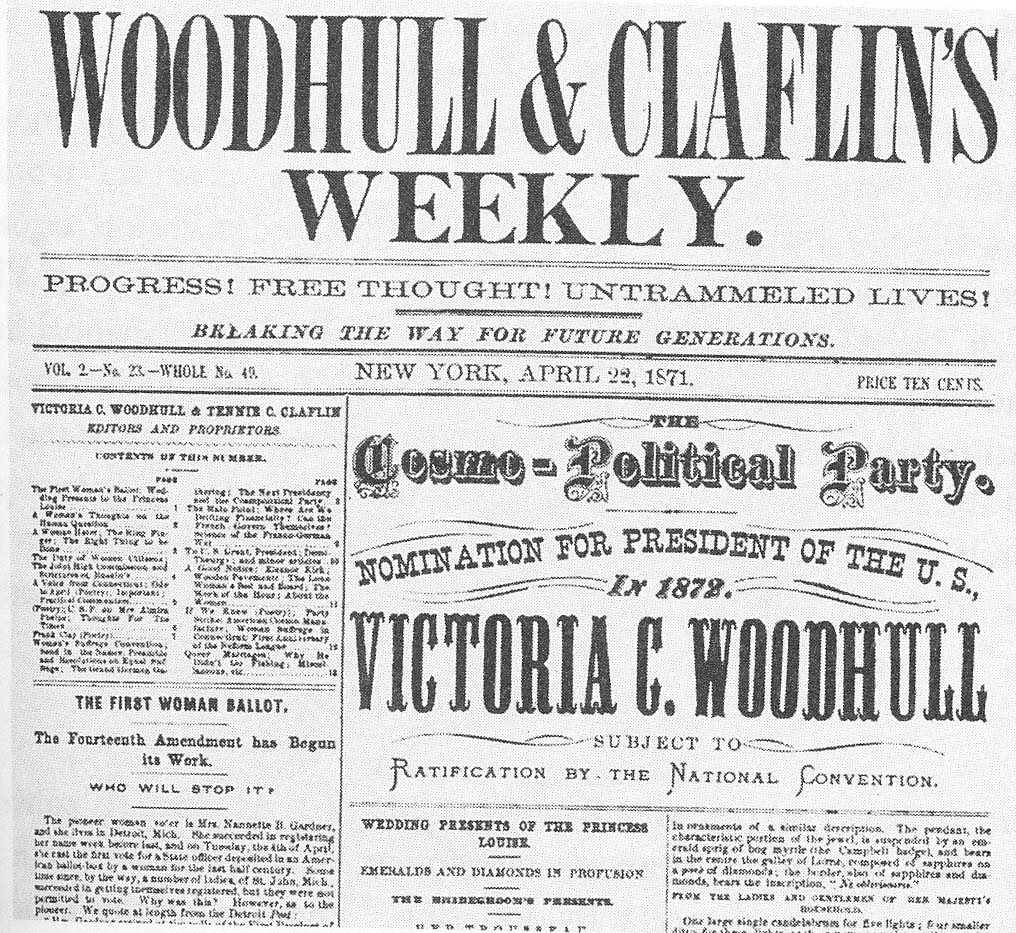
Victoria and other members of her Equal Rights party claimed that women were defined as citizens in the U.S. Constitution and there had the right to vote and run for office. She based her claim on the Fourteenth Amendment’s provision that “All persons born or naturalized in the United States, and subject to the jurisdiction thereof, are citizens of the United States and of the State wherein they reside.” Women are persons and are therefore entitled to vote. The argument persuaded some people, but it was especially strong among women, who had never been allowed to vote whether they were citizens or not. Isabella Beecher, sister of Henry Ward Beecher, became a devoted follower of Victoria Woodhull and introduced her to many influential people. With the help of these friends, and especially Cornelius Vanderbilt, Victoria and Tennie started the newspaper Woodhull & Claflin’s Weekly devoted mainly to supporting Victoria’s candidacy. The story of what happened during the 1872 campaign will be continued in my next post.

Running a presidential campaign from a jail cell

With a presidential election coming up soon, there’s been a lot of talk about past campaigns and past elections.  Were they more genteel and courteous than campaigns today? It doesn’t seem so.  You may think you know a lot about past presidential candidates, but have you heard about the candidate who spent Election Day in jail and who wasn’t allowed to vote?

The year was 1872, and the candidate was Victoria Woodhull, the first woman candidate for president in the United States.

Portrait of Victoria Wookhull
Victoria Woodhull

She announced her candidacy with an article in the New York Herald:

As I happen to be the most prominent representative of the only unrepresented class in the republic, and perhaps the most practical exponent of the principles of equality, I request the favor of being permitted to address the public through the medium of the Herald. While others of my sex devoted themselves to a crusade against the laws that shackle the women of the country, I asserted my individual independence; while others prayed for the good time coming, I worked for it; while others argued the equality of woman with man, I proved it by successfully engaging in business; while others sought to show that there was no valid reason why women should not be treated, socially and politically, as being inferior to man, I boldly entered the arena of politics and business and exercised the rights I already possessed.”

Victoria Woodhull had indeed demonstrated her ability to work in a man’s world. With her sister Tennessee Claflin, she had started the first brokerage firm in New York operated by women. The path to that financial success was long and hard, but Victoria was always a fighter.

Born in Ohio in 1838, she had grown up in an unstable and impoverished family. She declared she had been “a child without a childhood” because her father had put his daughters to work as soon as he realized they could tell fortunes and claim healing powers. Victoria escaped from him by running away at 15 to get married, but the husband she chose was as shiftless as her father. He quickly became an alcoholic and a philanderer. Fed up with his neglect and dependence, Victoria divorced him and decided to make life on her own terms with her two children.

Some women in those circumstances might have struggled to maintain respectability by turning to teaching, but respectability was not high on the list of Victoria’s priorities. She had discovered spirituality and believed in her power to foresee events to come. Her sister Tennessee was also a clairvoyant and both sisters were quite willing to use their talents as well as their sexual appeal to earn money. Both were at various times accused of being prostitutes, but both were clever enough to use their sexual availability to their advantage rather than being punished for it. During the late 19th century when a married woman could lose her husband, children, and livelihood by a single slip into adultery, married men were free to consort with prostitutes and enjoy their sexual adventures without losing anything. Tennessee and Victoria claimed the same privilege.

How did this background lead not only to wealth but to a presidential campaign? It’s a good story and I will continue it in my next blog post.