The queen who looked at a cat–Mary Queen of Scots

Cat embroidered by Mary Queen of Scots
picture of Mary Queen of ScotsWe’ve all heard the expression “A cat may look at a queen” but Mary Queens of Scots was one of the few queens who looked closely at a cat. You must remember Mary, the beautiful queen of Scotland whose implacable enemy Queen Elisabeth I put an end to the dream of her becoming Queen of England. Back in the 1500s, women had very little power, but queens were a special sort of women. Because of their bloodlines, men could not ignore them and if the queens were clever, they could sometimes manipulate the courtiers around them and build a satisfactory life for themselves, their families and their countries.

Elizabeth I was clever enough to maintain her throne for 44 years and to lead her country through a stable and prosperous period. She chose the unconventional path of remaining unmarried, leaving the possibility of a royal marriage open for as long as possible so as to keep her enemies guessing about where she would form alliances. Mary was not nearly so clever—or so lucky. She loved and married unwisely and was bullied by various factions in Scotland, England, and France including especially Elizabeth, who feared that Mary wanted to take over her throne.

For many years Mary was a prisoner of Elizabeth’s and some of those years were spent in an uncomfortable, cold, drafty medieval castle of Tutbury in Staffordshire. The castle had been built many years earlier and repaired infrequently so it had become extremely damp and had a marsh underneath it from which “malevolent fumes arose, unpleasant enough for anyone and especially so for a woman of Mary Stuart’s delicate health” according to Mary’s biographer Antonia Fraser. Nonetheless, Mary was stuck there and had to make the best of which. One of the ways she did that was by designing and executing lavish embroideries.

Embroidery is not considered a major art form, but for many years it was used to produce attractive pieces combining images with words and symbols that made them art works to read and understand as well as view. This picture of a cat is one of the most straightforward of her pieces. Look at how carefully she devised the cat, with its tale curling at the end as though she was about to twitch it at the mouse beside her. Did Mary think of herself as the mouse, quavering before Elizabeth the cat? I think perhaps Mary had a better sense of herself. She was the tall, impressive cat twitching her tail at the mousey attacks of her enemies despite the danger.

Somehow it is comforting to think that this woman, so harassed and troubled during her lifetime, left a legacy of beauty for generations who followed. And not only art, of course, she left a son who became King James I. Quite a legacy for a woman who lived in a time when all females were supposed to be submissive and quiet. By the way, if you want to read more about Mary Queen of Scots, you can follow her fascinating story in the biography of that name by Antonia Fraser available in almost every public library.

Charlotte Brooke–the woman who saved Irish poetry

Irish pattern in Connemara 1842
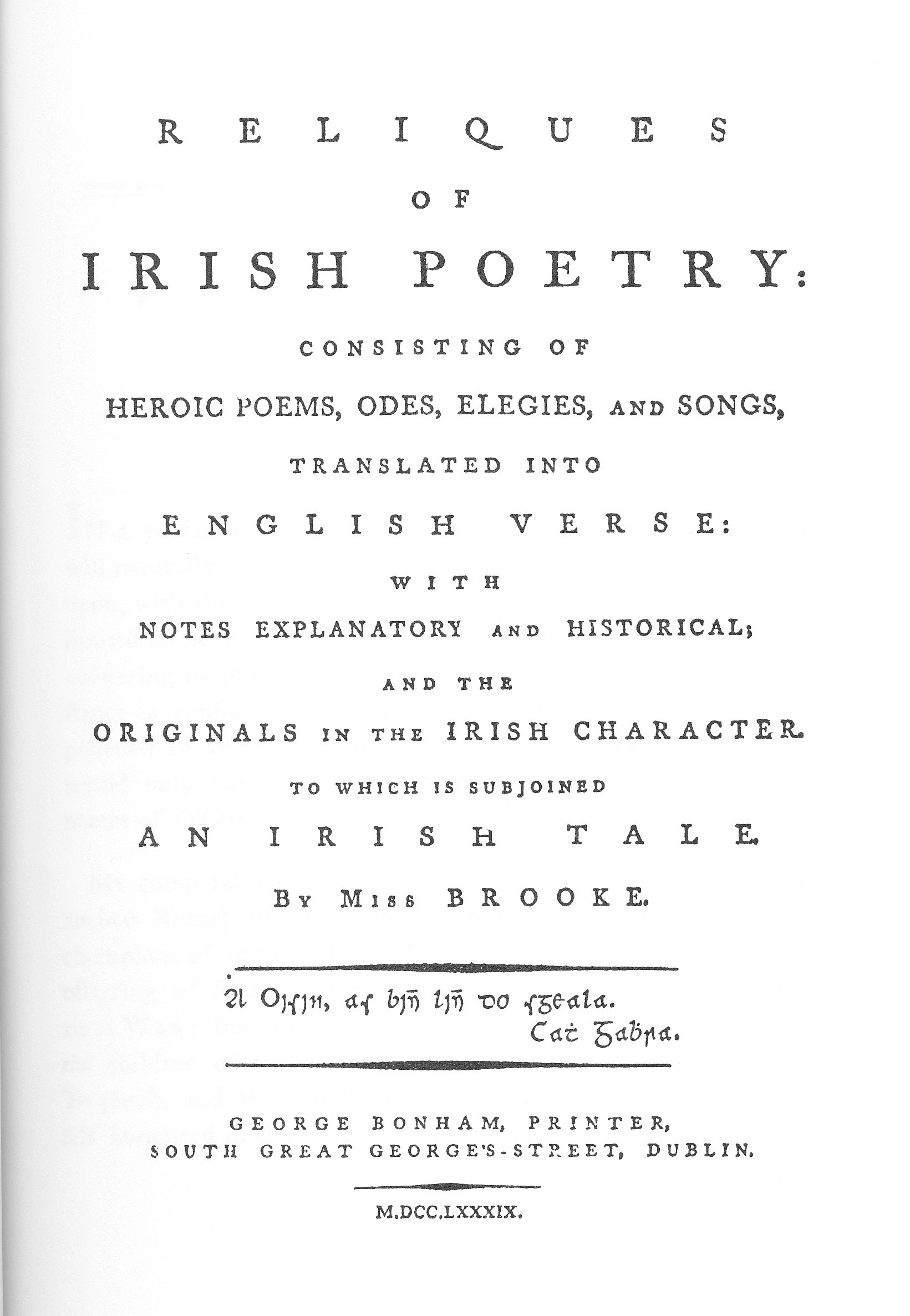
title page of Brooke book

When St. Patrick’s Day comes around, Americans burst out with a flood of t-shirts, shamrocks, and parades. This year we even have a story about snakes in Ireland as the NY Times writes about how prosperity made snakes a favorite pet for a few years. Snakes are not the most cuddly of pets, so many of them have been set free, bringing snakes to Ireland after all the centuries of being free of them, courtesy of the legendary saint himself.

Few of stories and celebrations of St. Patrick’s Day have anything to do with the culture or history of Ireland and many of the heroes of the country, as well as most of the heroines are unknown today. One of the most unlikely lovers of Irish culture was Charlotte Brooke, born in County Cavan in 1740 to an Anglo-Irish family. Her father, Henry Brooke was a well-known playwright of the time, so Charlotte was raised in a cultured, literary family. Many Anglo-Irish people were fond of Ireland and enjoyed living there, but they thought of themselves as quite separate from the Irish peasants who lived around them. Very few learned the Irish language or knew the native Irish people except as servants. In fact the English did their best to stamp out all traces of Irish Roman Catholicism, the Irish language, and all of Irish culture. Charlotte was an exception. She learned the Irish language and appreciated the beauty of Irish poetry and legends and she became determined to preserve the legacy from extinction.

While her father was alive, Charlotte, like a dutiful 18th century daughter, devoted herself to helping him in his writing of now long-forgotten plays. When he died, she took on the task of collecting his plays and poetry and preparing them for publication. It was only after she had accomplished all this that she felt justified in turning to translating some of the Irish poetry she had found. Like most writers of the time, she had to find sponsors to provide money for publication and find them she did. Finally her book Reliques of Irish Poetry was published in 1789. She published not only her translations but the original Irish texts that she had used. The importance of this work is confirmed by a listing on the Cavan County Libraries site which points out that this book “confirms her place in the history of Irish literature and acclaims her as a forerunner of the literary movement for the revival of Irish in the nineteenth century and the formation of the Gaelic League. This was the first time that a wide selection of Irish verse appeared in print.”

Despite the importance of her contribution to the study of Irish literature and the influence that she had on poets of the 19th and 20th centuries, Charlotte Brooke is almost forgotten today. Her translations sound old-fashioned, written as they are in the style of the 18th century, but some of them capture the vitality of the Irish originals and can be enjoyed by modern readers. My favorite is this touching elegy written by a young man for his wife:

Sad the bird that sings alone,
Flies to wilds, unseen to languish,
Pours, unheard, the ceaseless moan,
And wastes on desert air its anguish!

Mine, o hapless bird! Thy fate!
The plunder’d nest, the lonely sorrow!
The lost—lov’d—harmonious mate!
The wailing night, the cheerless morrow!

O thou dear hoard of treasur’d love!
Though these fond arms should ne’er possess thee,
Still—still my heart its faith shall prove,
And its last sighs shall breathe to bless thee!

Fanny Mendelssohn–a musical life to celebrate

Concert at home
Concert at home
Women composers are not prominent in the history of Western music; in fact, many students of music and lovers of classical concerts would be hard-pressed to mention any female composer. Now at last, it appears that we have a new name to list among the 19th century composers of note—Fanny Mendelssohn Hensel.

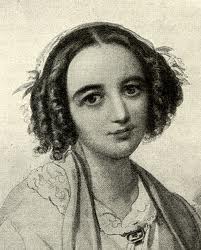
Fanny Hensel, by her husband Wilhelm

Her name, of course, is well known because of her famous brother, Felix, but until recently she had been considered a pianist and salon musician who played in private concerts at home, not as someone whose work was worthy to be considered part of the canon. Now at last, as her compositions have been discovered over the last twenty years and studied by serious musicians, she is being taken seriously as a musician. R. Larry Todd, author of Fanny Hensel; The Other Mendelssohn (Oxford, 2010) has studied her music and has named her as the greatest female composer of the 19th century.

Both Fanny and Felix Mendelssohn were musical prodigies when they were children. By the time Fanny was 12 and Felix 9 years old, they were able to perform in public. Then their paths diverged. Like most women of her time, Fanny’s musical ambitions were strictly curtailed. While her father encouraged Felix to become a professional musician, he told Fanny that she must restrict her music to entertaining the family—the husband and children she was destined to have. Her entire life was to be determined by her gender.

Fanny never gave up her musical ambitions, although she did not have as much time to pursue them as Felix did. She generously shared her music and her ideas with her brother and did not became bitter about always being in his shadow. Eventually she fell in love with Wilhelm Hensel, a painter, and the couple had a child, named Sebastian after J.S. Bach, one of Fanny’s favorite musicians. Remarkably enough Fanny was able to make this tangle of love relationships work. She was happy with her husband and doted on her son, but continued to maintain a very close and loving relationship with her brother Felix too.

During her lifetime, Fanny’s music was often presented at concerts held in the Mendelssohn home. Fanny carefully arranged the concerts, wrote pieces for them and planned the events. As her son grew up she had more time to devote to her music and as she neared the age of 40 was more and more inclined to think of herself as a professional musician. She was beginning to publish her works, but was suddenly struck down by a stroke and died at the age of 41. When he heard the news, Felix collapsed in a faint. He died within six months of his sister.

The rediscovery of Fanny Mendelssohn Hensel as an important musician is a joyful event. And while we celebrate being able to hear performances of some of her works, perhaps we should also celebrate her success in leading a rich, loving life despite the harsh limitations put on her because of her gender. She managed to make life happy for her brother, her husband and her son as well as maintaining her devotion to her own profession. That was a remarkable achievement in her time and an inspiration to us today.

March–a good month for changing the world

Slogan of Women's History month 2013How long does it take us to recognize a good idea? When Margaret Fuller, the well-known feminist and writer, visited Europe in 1845-46 she recognized the needs of working women. She endorsed the idea of the government providing crèches which could be supervised and where children would receive adequate food and care. More than 150 years later, American society has still not managed to accept that idea although almost every country in Europe provides public crèches or nurseries for preschool children.

The news during this Women’s History month has several stories that echo the concerns of nineteenth and twentieth century women that are still unfulfilled. Some women with children at home (as well as many men and women without children) have seized upon the idea of working at home, telecommuting to their offices. This month the CEO of Yahoo has decreed that employees will no longer be allowed to work from home, but must come into their workplaces every day. Mingling with other employees is thought by many people to stimulate innovation and creativity. Certainly being with other workers engaged in tasks similar to yours can be stimulating and inspiring, but why must it always be talked about in sweeping generalizations? Doesn’t it seem to you that there is a natural rhythm to work? Talking with other, exchanging ideas and listening to suggestions can get you started on a task, developing a project or writing a report, but once started it is often better to have a quiet location to work in isolation. Pulling ideas together and shaping them is a solitary occupation. Many kinds of work should offer some flexibility. Employees who have the freedom to choose the location in which they work often make stronger contributions to an organization than those who are rigidly forced to conform to the rules designed to suit the majority but not the individual.

This discussion about employee flexibility, of course, only applies to a subset of women who work outside the home. Teachers usually have to stay in the location where their students are (although that is changing in online teaching), clerks in stores have to be available at check-out stations, mechanics usually have to be where the cars are, and crossing guards had better be at their crossings. These women need flexibility not so much in where they are but in where their children are.

This leads to the second big news story for Women’s History month—the call for universal preschool education. President Obama talked about the need to start educating children while they are young. Once again America loiters behind the rest of the developed world in offering education to young children. What are we afraid of? Scientists and educators agree that children who start pre-reading activities while they are young and who learn the habits and social skills important in their future success, do far better than those who spend their preschool years in front of a TV. Let’s all push to finally achieve this goal. Women’s History month is a time not just for looking back but for looking ahead to new achievements. The theme of the 2013 celebration is Women Inspiring Innovation through Imagination. What better way is there to achieve this goal than by helping all children start young on the path toward learning and fulfillment?

Does history have to be true?

Millions of viewers saw the Academy Awards on Sunday evening as Argo won the award for best film. People who have seen the movie mostly agree that it’s a fine adventure film based on the story of the American hostages who escaped from captivity in Iran in 1979. Everyone seemed happy with the award except for the Canadians who were chiefly responsible for the escape. Somehow the adventure had turned into a CIA caper instead of an appreciation of the help of Canadians, and especially ambassador Ken Taylor, who had planned and carried out most of the successful escape.

Does it matter that a movie gives credit to the wrong people in a film based on real history? It certainly matters to Canadians, especially to those who know and respect Ken Taylor, the former ambassador who was central to the story. Former president Jimmy Carter, who was president at the time of the escape, was one of the few Americans who tried to set things straight. He credited Canadians with being responsible for 90% of the planning and execution of the escape.

In an unusual happy ending, producer and director Ben Affleck worked to set the matter straight by changing a final line in the film to credit the Canadian contribution as an “example of international cooperation” according to newspaper reports. Ambassador Taylor was flown to LA for the Academy Awards ceremony and the story ended with smiles all around.

But did it matter that history was distorted in the first version? It seems to me it does. As most of us are aware, we often get of information about history from movies, television, and fiction. If entertaining stories are based on history, the least their authors can try to do is get the facts straight. The Argo story was corrected because there are many people still around who remember the events. Many other historical events are distorted in films for the sake of building tension or glorifying a hero or some other motive, but those of us who care about understanding the world ought to protest. While we will never know all the facts of history, at least we can try to present honestly the ones that are verified.

Seeing Vermeer

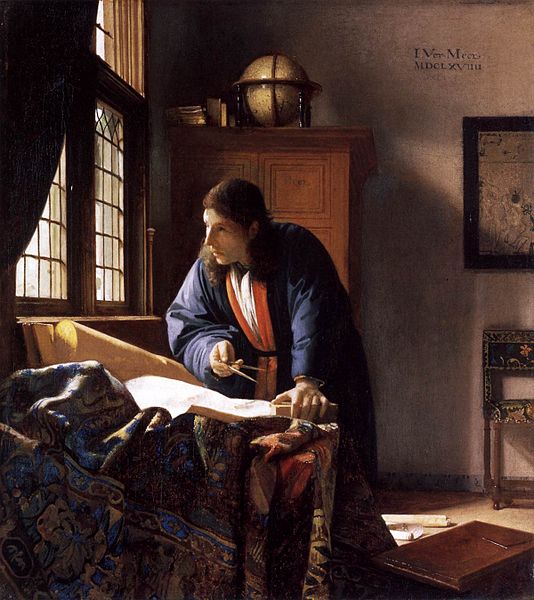
Vermeer's The Geographer
Vermeer’s The Geographer
San Francisco is full of talk about Vermeer these days because a new exhibit at the DeYoung Museum is attracting crowds of people to see the famous Girl with a Pearl Earring and other paintings of the Dutch Golden Age. The Vermeer show seems to be attracting almost as many people as the Impressionists did recently.

Why does Vermeer attract so many viewers? The sheer beauty of his work, the light and color that infuse his paintings are surely part of the attraction, but it seems to be more than that. Vermeer shows real people in an intimate world that we can recognize even though the details are far removed from the 21st century. Many of his paintings feature women, which surely is an attraction for the female majority among the museum-goers. Vermeer shows women in everyday scenes, playing a musical instrument, reading a book, chatting with an attentive gentleman,

Vermeer's Lacemaker
Vermeer’s Lacemaker
making lace. Well, all right, very few of us make lace these days, but most of us have handled a needle and thread if only to sew on a button.

There is a fascinating book called Vermeer’s Hat by Timothy Brook published a couple of years ago, which is not a study of Vermeer’s paintings, but an introduction to his world. Starting with the hat Vermeer features in several of his pictures, Brook expands on the number of items that Vermeer shows us which give us clues to his world. At first glance the pictures show us what seems a mundane world of domestic comforts, but knowing the background of some of the items lets us see them as keys to a new world. The hat brings up the subject of beaver fur and how important the fur trade was in opening North America to trade with Europe. Who knew?

The map on the wall in Vermeer’s rooms as well as his painting of The Geographer poring over a sheet on which he is presumably drawing a new map, shows us a world that was growing beyond the boundaries of Europe. During the 1650s and 1660s when Vermeer was painting, scientists and explorers as well as merchants were finding that the world was much bigger and laden with greater treasures than they had dreamed of. The history behind Vermeer’s paintings expands our understanding of why they appeal to us so much. The people seem alive because their world was opening up to them and the more we know about and enjoy their world, the more we can understand the possibilities in ours. It’s a perfect example of how looking at the past informs our feelings about today.

Cosima Wagner–ambitious wife

February is a chilly and unwelcoming month in most of the country, but still it’s the month we celebrate love with Valentine’s Day and all the frilly romance that goes with it. Many women over the centuries have defined themselves by the men who loved them, becoming the “wife of…”, “mistress of…” or perhaps even better, “beloved of…” was the height of their ambition. Very few of these women are remembered in history, but Cosima Wagner is an exception. Her fame rests not so much on having been the wife of the composer Richard Wagner, but on her relentless dedication to him while he was alive and to his memory after his death. She managed to become a celebrity during her lifetime, sustain a permanent memorial to her husband, and to merit a full biography in 2007, more than a century after he died.

Why would a woman (or a man for that matter) want to define herself entirely through another human being? We’ll never know for sure but some clues might be found in Cosima’s childhood. She was the illegitimate daughter of Franz Liszt, the famous 19th century composer and pianist, and his mistress, the Countess Marie d’Agoult, who had left her husband for Liszt. Both parents were preoccupied by their own lives and Cosima’s happiest years as a child were those she spent with her grandmother, Liszt’s mother. Cosima WagnerThese days we all know children who are virtually raised by a grandparent—usually a grandmother—and who carry with them for years the pain of being neglected by their parents. Cosima seems to have been an example of this. Her marriage to Wagner, who was 24 years older than she, seems to have given her the emotional security she had not found as a child. All her life she clung to that security and to her memory of Richard Wagner.

When Richard Wagner died in 1883, Cosima was dramatically grief stricken. She insisted on sleeping in the same bed with her husband’s dead body and clung to it until she was physically removed. After the funeral, her children, family friends, and colleagues expected that she would retire into seclusion for the rest of her life, but Cosima chose a different path. Suddenly released from being a wife in the shadow of a famous man, she became the head of the family, director of Wagner’s beloved Bayreuth festival, and keeper of the Wagnerian flame. Through the force of her will she shaped Wagner’s legacy and watched his cult become a lasting influence throughout most of the musical world.

Cosima Wagner was not an admirable woman. She accepted Richard Wagner’s anti-Semitism and eventually became a follower of Adolf Hitler and his Nazi party. She built the Bayreuth festival into an aristocratic gathering place for the wealthy and powerful as it still is today. But people do not have to be admirable to be fascinating. Despite having been born a woman in a strongly masculine world, she became a powerful figure who helped shape that world. And all the time she masked her ambition behind the womanly excuse of devotion to the man she loved.

Oh, and about that biography. It is now available in English and is well worth reading: Cosima Wagner: The Lady of Bayreuth by Oliver Hilmes.

The Sporting Life in old New York

Despite the attempts of reformers to keep Americans pure and more moral than their European ancestors, life during the 1830s and 1840s was leading many young men and women into temptation. The growth of cities and the lack of new land for farming, meant that many young men had to leave the villages where they had grown up so that they could make a living as clerks, storekeepers, lawyers or doctors. As the young men left the countryside, opportunities for girls to find husband who could support them grew fewer, so many of them left too. They moved into cities to work as servants, milliners or seamstresses. With so many unattached young people unsupervised by parents or employers, it was natural that many of them would fall into unapproved activities like gambling or prostitution. Cities, especially New York and New Orleans, soon became famous for the number and attractiveness of their prostitutes.

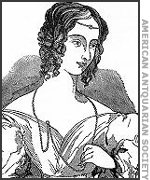
One of the most attractive and popular prostitutes in New York was Helen Jewett, who had changed her name from Dorcas Doyen, and moved Helen_Jewett,_sketchfrom Maine down to the city. She was a clever woman who formed strong attachments to her clients through her skill in writing letters and building up a feeling of intimacy. She attended the theater, an excellent place to meet men, and pursued those who attracted her. When you contrast her life with the lives of virtuous women of the time who were restricted to their own homes and their own husbands, you can’t help wondering whether Helen’s choice was a good one. While most women had many children to care for and were in charge of managing a house and servants and keeping their husband happy, Helen could afford to hire servants of her own and let them do the housekeeping. The woman who owned the brothel saw to meals and refreshments and Helen was able to socialize with the other prostitutes and with the men who visited them.

Helen might have lived her life successfully, probably becoming a brothel keeper after she grew tired of being a prostitute, except for the unfortunate accident of arousing the wrath of one of her clients. She was murdered one night and charges were brought against a young man, Richard Robinson, who was her friend and lover. The scandal of the trial made newspapermen happy and increased the sales and prestige of many of the local newspapers. Readers across the country were happy to read about poor Helen. Was she really a temptress who led young men astray? Or was Robinson a scoundrel who took advantage of a young woman who had been seduced into a life of sin? You can find the full account of the events in Patricia Cline Cohen’s book The Murder of Helen Jewett, or a brief outline of the plot in the ever-useful Wikipedia.

No matter what form you choose to read her story, it’s worth spending some time thinking about the life she led and the reasons for it. She had the usual unfortunate family background of an alcoholic father and a mother who died while Helen was young. You can explain her life on the basis of her unfortunate upbringing, but that is hardly the full story. Women who chose to make a living by selling sex are usually boxed into a closed category—a pitiful victim or a predatory stalker—but each one of them has her own story to tell. Reading about Helen Jewett is one of the few chances we get to read and ponder the life of one individual who chose an unconventional path. Perhaps we should do that more often.


Who was Helen Jewett and what was her profession?

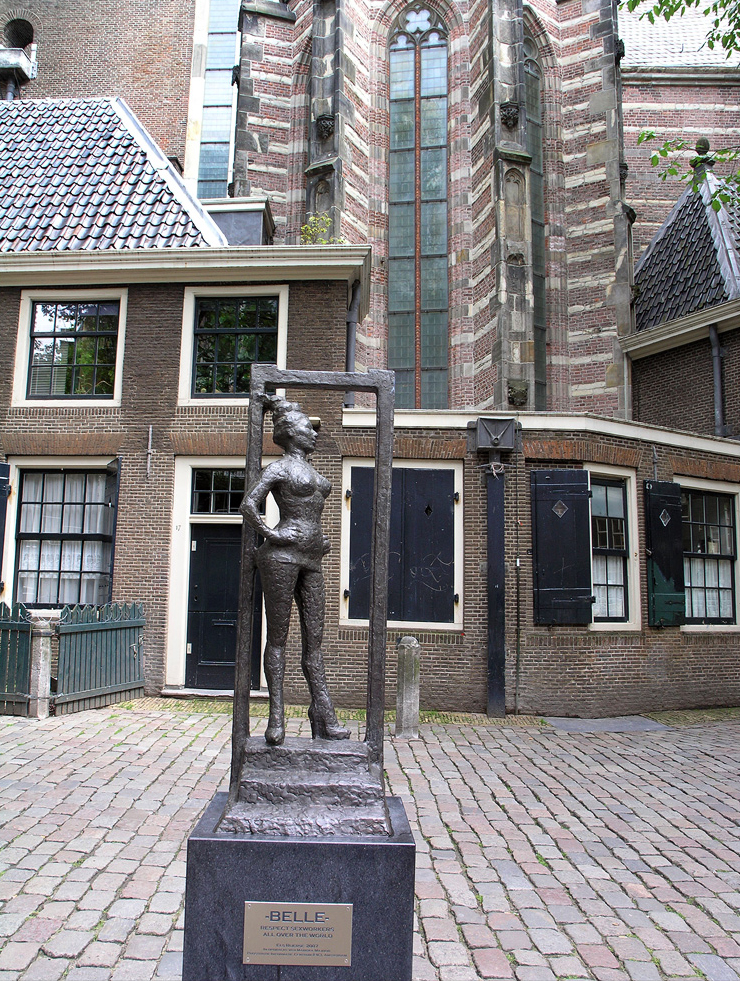
Prostitution is one of the oldest professions in the world but aside from stories about the horrors of human trafficking we seldom hear much about it. Prostitution has flourished throughout history, but the individuals who work in the sex trade mostly keep a low profile. Even today

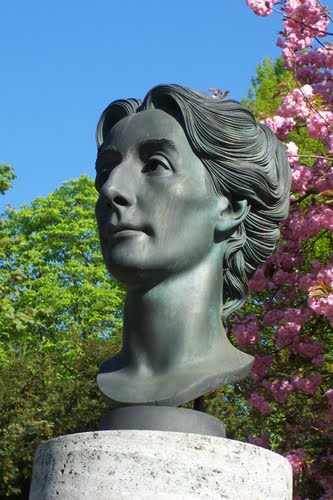
Sex worker statue in Amsterdam.

there are very few places except Amsterdam where sex workers are acknowledged and even honored by a public statue. In past centuries, prostitution was a topic often whispered about but seldom mentioned in public.

English majors may have read the Victorian novels that portray “fallen women” as outcasts aware of their pariah status. Remember Nancy in Dickens’ Oliver Twist who described herself as an “infamous creature” and is brought to tears of joy when a “respectable” woman says a kind word to her? Dickens was sympathetic to the problems of prostitutes, but he still portrayed them as beyond the reach of normal life and in need of rescue. Was 19th century prostitution really like that? Was it populated only by outcasts who had been seduced and betrayed by a man and by wantons who had an abnormal desire for sex? Or is it possible that it was a reasonable career choice for some women?

Recently I came across a book about Helen Jewett, a young prostitute who apparently lived a comfortable life in New York City during the 1830s. She was suddenly swept into prominence by a violent crime that made her famous throughout the East, but she has long since vanished from history. Her death, of course, was tragic, but it is only because she died violently that we have learned about how the sex trade in New York operated during the decades before the Civil War.

The first surprise for many of us is to learn that prostitution was not illegal in New York, as it was in most states, at the time. The police did not care much about people’s private sex lives, although they might arrest women for disorderly conduct or vagrancy. Keeping a brothel was illegal, but the crime was not often prosecuted. New York was growing very quickly during these years and many young men poured into the city seeking jobs. Most people accepted the idea that young men would seek out sex and that the women who provided it were a normal part of it city’s population. Prostitution was not defended by respectable men, and middle-class women were assumed not to even know about it, but it wasn’t until the early 20th century that it actually became illegal.

All of this was the background for the story of Helen Jewett, who moved from Maine to New York and joined the ranks of those women earning their living in the sex trade. I will write more about her in my next post, but if you want the full story, you might want to read Patricia Cline Cohen’s well-researched book The Murder of Helen Jewett.

History as Entertainment

As 2012 ends, many people are looking back toward history rather than ahead. After all, what is ahead for us except the dreaded “fiscal cliff” a phrase designed to frighten us all. One of the major entertainment successes of the fall, aside from the inevitable fantasies of hobbits and talking animals, has been the story of Abraham Lincoln and his successful handling of a government crisis. RunningtheMachine-LincAdminThe popularity of this movie has pushed the history book on which it was based Doris Kearns Goodwin’s Team of Rivals to the top of the bestseller list here in San Francisco. It isn’t often that the general public agrees that history can be fascinating and can perhaps even give us insight into what is going on in the world today. We’ll never know how Lincoln would have handled the current fiscal crisis, but seeing how the men in that rambunctious Congress is certainly a reminder of what is going on in Washington today.

This sudden surge of interest in historical figures has cheered me as I look over the year’s progress in this blog. History is filled with figures who can both entertain and enlighten us. It’s a pleasure to read more about them and get to know them. Understanding how they thought and acted sheds a new light on what’s going on in our own world. One of the people who has been introducing women’s history to audiences for years is Bonnie Hurd Smith whose website and blog describe her busy life helping businesses and nonprofits craft their histories into stories for the public. Her book “We Believe in You” tells the stories of twelve women who made their mark on American history. If you don’t know her work, 2013 is a good time to learn about it.