Madam President–Is the third time the charm?

I think I was in fourth grade the first time I heard a teacher say, “Women can do so many things now. Someday soon we’ll have a woman president.” Well, that was more than half a century ago and we are still waiting. During the heady years after World War II, many people assumed that women who had performed so well as workers and military during the war would move on to become more active in public life. Move stars like Katherine Hepburn and Rosaline Russell gave girls role models for energetic, capable women, but the country preferred to idealize women who played up to men and accepted their roles as subordinates in the hierarchy of home, family and work.
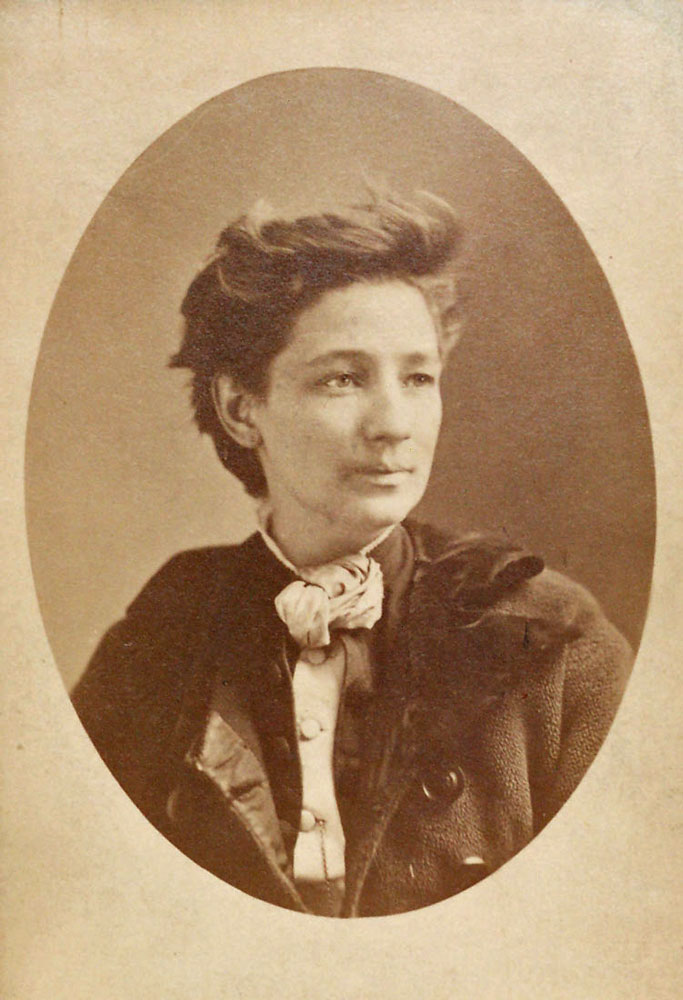
Portrait of Victoria Wookhull
Victoria Woodhull

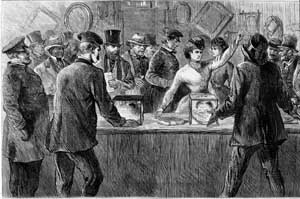
Only three women have come even close to being seen as serious contenders to become president of the United States. The first was Victoria Woodhull, who ran a spirited but spectacularly unsuccessful campaign in 1872. After all, women weren’t even allowed to vote at that time, much less run the country. I wrote a few posts about Woodhull on this blog during the 2012 presidential race.

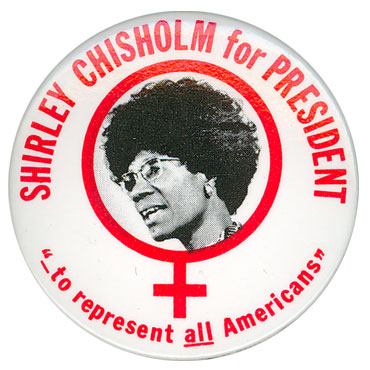
A hundred years after Victoria Woodhull’s attempt, Congresswoman Shirley Chisholm began her campaign to get the nomination of the Democratic Party. In 1972, she was well-known as the first Black woman to be elected to Congress. That had happened in 1968 and Chisholm had made her mark by refusing to be quiet and follow the dictates of politicians in her party. She fought to serve her constituents by supporting bills to provide federal funds for child care facilities, and she opposed the Vietnam War saying “Unless we start to fight and defeat the enemies in our own country, poverty and cacism, and make our talk of equality and opportunity ring true, we are exposed in the eyes of the world as hypocrites when we talk about making people free.”  (Unbossed and Unbought, p. 97)

Chisholm’s 1972 campaign for the presidency was never taken seriously by political leaders. She spent very little money on the campaign and was not able to hire strong staff for her efforts. The country was not ready for an African American president and especially not for one who was a woman. Throughout her career, Chisholm noted that being a woman had put more obstacles in her path than being black. Despite her failure to gain Shirley Chisholmsupport for her nomination, (Senator George McGovern became the Democratic candidate.) Chisholm continued to be an active member of Congress until 1982 when she retired. After her retirement from politics,  she taught for several years at Mount Holyoke College. Her experience continues to inspire liberal politicians and especially women and African Americans who are still struggling to be fully represented in government. And her book Unbossed and Unbought, which she published in 1970,  remains a valuable document about a politician who fought for her constituents and was never swayed by money or political power during those halcyon days before the invention of  PACS or the ravages of corporate funding for campaigns.
And now in 2015, we have the announcement that Hillary Clinton will make another attempt to win the Democratic nomination for president. The details of the campaign and the words of her opponents will be far

Hillary Clinton
Hillary Clinton

different than the ones that greeted her predecessors, but the theme remains the same for many of them: women are excellent accessories to a successful candidate, but not to be trusted with the tough job of running the country. Will 2016 be the year that proves those opponents wrong? Will Americans finally decide that a woman president is just what we need to deal with the multitude of problems in the country and the world? One thing that my fourth-grade teacher might say is that it will take a woman to clean up the mess that male leaders have given us.
Maybe our grandmothers were smarter than we are!

For the last two weeks most of us Americans have been deluged not only with images of food—turkeys, pies, sweet potatoes—but also with images of clothes. As Black Friday, which has stretched out into more than a week, merges into Cyber Monday, our local newspapers swell with advertising sections and our email becomes clogged with ads from national brands. Not only are we supposed to eat far more than our bodies want, but also to deck ourselves out in clothes that make our lives more difficult instead of more enjoyable.

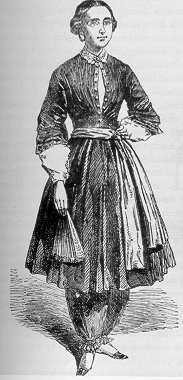
Amelia Bloomer
Amelia Bloomer

Perhaps we should make a national hero of Amelia Bloomer, the 19th century feminist who tried valiantly to make clothes serve women instead of making women slaves to clothes. Although clothing reform was not her major interest—she also campaigned for women’s right to vote and to petition the government, as well as for temperance—she recognized that the heavy, uncomfortable dresses women wore restricted their activities and the work they could do. When she saw a costume made up of loose trousers covered be a knee-length skirt, she adopted the idea and advocated it in her newspaper The Lily. It soon became known as the Bloomer costume. Women discovered that it freed them from the necessity of restricting their activities. With their new freedom they could walk along the filthy streets of big cities or the mud and dust of country roads without carrying along bugs and trash clinging to their skirts. They could even ride the new-fangled bicycles and moved faster and more easily than they ever had before.

Many women wore the style and enjoyed their new freedom. Getting rid of tightly-laced corsets and long, dragging skirts was a blessing, but men just didn’t understand. We have to suspect that men liked having women restricted in their movements and controlled in their activities. Newspapers continued to make fun of women in pants and some suggested that once a woman was allowed to wear pants she would soon rule her husband. It took many years and the Great War to bring real dress reform to European and American women.

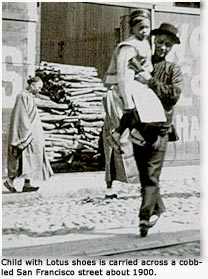
Chinese girl in San Francisco 1911

But have we really come so far? Surely when we see women striding confidently into public meetings and offices wearing pants suits and walking as comfortably as men do, the progress is obvious. But when you look at the ads for skin tight dresses that make every movement uncomfortable, and high-heeled shoes that have crippling effects on a woman’s ability to do anything active, we can only wonder.

Fashionable shoes 2014

The fashion industry appears intent on sending women back to the bad old days when they had to rely on men to transport them wherever they wanted to go. Some of the shoes on sale remind me of the shoes that Chinese women with bound feet used to wear. Does anyone want to go back to the lotus shoes that disfigured Chinese women’s feet for so many years? Chinese women have moved beyond that, why do fashion tyrants want to drag us back into that world?

Still struggling to encourage women’s voting

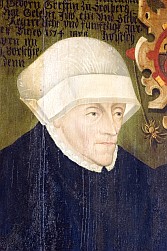
Although the Abbess of Quedinburg, shown in this picture lived in medieval times, she had the right to sit and vote at national assemblies in Medieval Germany. Centuries later most European women were still not allowed that basic right. Anna II, Abbess of QuedinburgMeanwhile, in North America, Marie Guyart, a French nun wrote in 1645 that women of the Iroquois tribe could serve as chieftains and vote in councils. Why was it that women in countries that today we would call “the developed countries” had to struggle so long to get the vote?

Many of the reasons for opposing suffrage for women were more about money and property than about individual rights. During much of the 19th century married women could not own property, so they would not be eligible to vote in many countries. There were some suggestions that spinsters and windows who did have property might vote, but that would anger all the men who were not allowed to cast a ballot. Even in 2014, male voters are considered more reliable defenders of property rights while women have a deplorable tendency to vote for social programs. Fox news commentators in recent weeks have been quoted as saying that women shouldn’t be allowed to vote—a feeling that is surely held by many enthusiastic Republicans. We usually talk about votes for women as a purely individual, social benefit, but feelings about it are just as often motivated by economic interests as social ones.

For almost 200 years American women, along with women from many other countries, have been fighting for the right to vote. Susan B. Anthony wanted to vote in 1872 and was tried and found guilty of breaking the law. Here are some of her responses to the judge at her trial;

Susan B. Anthony speaking about votes

As a matter of outward form the defendant was asked if she had anything to say why the sentence of the court should not be pronounced upon her.

“Yes, your honor,” replied Miss Anthony, “I have many things to say. My every right, constitutional, civil, political and judicial has been tramped upon. I have not only had no jury of my peers, but I have had no jury at all.”

Court—”Sit down Miss Anthony. I cannot allow you to argue the question.”

Miss Anthony—”I shall not sit down. I will not lose my only chance to speak.”

Court—”You have been tried, Miss Anthony, by the forms of law, and my decision has been rendered by law.”

 Miss Anthony—”Yes, but laws made by men, under a government of men, interpreted by men and for the benefit of men. The only chance women have for justice in this country is to violate the law, as I have done, and as I shall continue to do,” and she struck her hand heavily on the table in emphasis of what she said. “Does your honor suppose that we obeyed the infamous fugitive slave law which forbade to give a cup of cold water to a slave fleeing from his master? I tell you we did not obey it; we fed him and clothed him, and sent him on his way to Canada. So shall we trample all unjust laws under foot. I do not ask the clemency of the court. I came into it to get justice, having failed in this, I demand the full rigors of the law.”

Court—”The sentence of the court is $100 fine and the costs of the prosecution.”

Miss Anthony—”I have no money to pay with, but am $10,000 in debt.”

Court—”You are not ordered to stand committed till it is paid.”

Matilda Joslyn Gage to Editor, 20 June 1873, Kansas Leavenworth Times, 3 July 1873, SBA scrapbook 6, Rare Books, Library of Congress

Anthony’s arguments may impress us in 2014, but they did not help to change the law. It was more than forty years later that women in the United States were given the right to vote.

You might think that with all the effort that went into gaining the right to vote, women would flock to the polls but that hasn’t always happened. Voter turnout is still a major issue in the United States, where fewer citizens vote than in many other countries. According to the Center for American Women and Politics, in 2012, during an important presidential election, only 63.7% of eligible women and 59.8% of eligible men reported that they had voted. What can we expect in a non-presidential year like 2014?

The Abbess of Quedinburg and the Iroquois chieftains of earlier centuries would look on in wonder if they knew how carelessly we treat voting.

As for poor Susan B. Anthony, she must be weeping for the failures of her example to inspire us today.

Grace Hopper—the Woman Who Bugged the Tech World

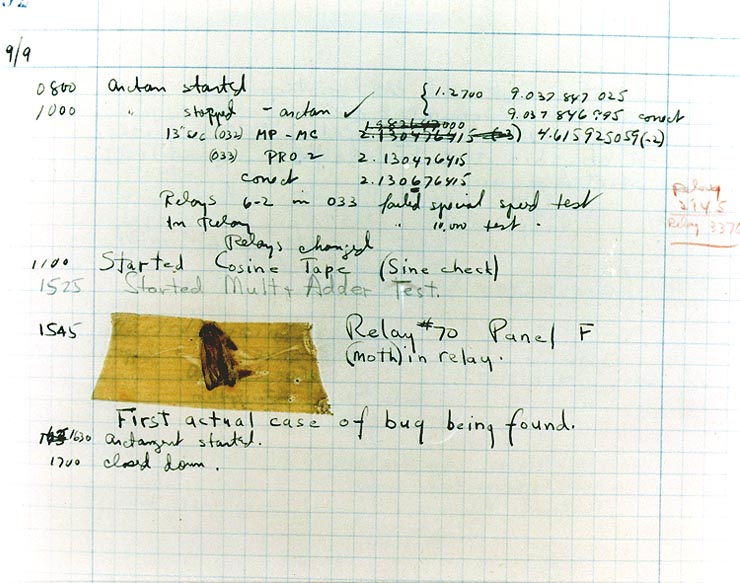
October is not only the month of Halloween and Oktoberfest it is also the month when the tech world holds its annual Grace Hopper Celebration, an event worth celebrating. You may not have heard of the Grace Hopper Celebration, you may not even have heard of Grace Hopper, but her legacy probably affects the way you work every day. Perhaps it should be called the Day of the Bug because one of Grace Hopper’s best known achievements was to introduce the word “bug” as the  name for a

The world's first computer bug
The world’s first computer bug

glitch in computer software. The picture at the right shows the original bug which was foolish enough to wander into one of the early massive computers developed during the 1940s. The bug died, the computer glitch was fixed, but the term lives on.

When Grace Hopper was born in 1906 in New York City, probably no one was thinking about computers. The word “computer”, if it was used at all, meant a person who did a lot of arithmetic. Grace Hopper, or Grace Murray as she was then, was a good student and she liked arithmetic. At Vassar she majored in Mathematics and graduated Phi Beta Kappa. She earned an MA and eventually a PhD in mathematics at Yale, even though math was considered a man’s field and she had very little encouragement. Eventually she became a professor at Vassar (significantly, a women’s college) and married a professor from New York University.

Everything changed for most Americans when the country entered World War II in 1941. Women, as well as men, were encouraged to join in the war effort and Grace Hopper joined the Naval Reserve. She worked on the development of early

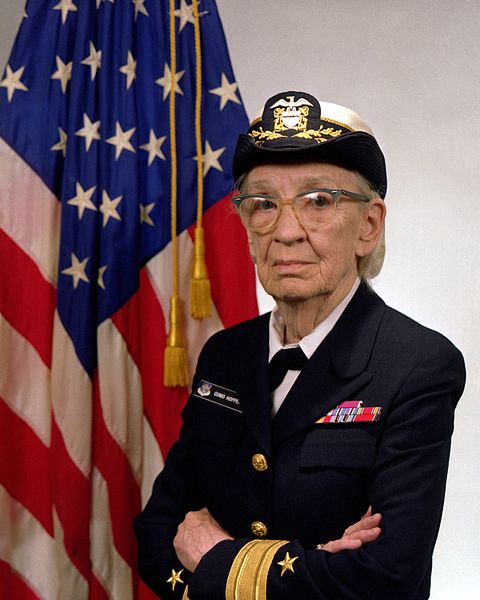
Rear Admiral Grace Hopper

computers at Harvard and later moved on to private companies which entered the field during the postwar years. But she always maintained her status with the Navy and eventually became a Rear Admiral. During the last decade of her life, before her death at the age of 83, she served as a public relations spokesperson for the Navy and the tech industry.

The early computer machines developed were meant to make arithmetic easier, faster, and more accurate. Most of the early computer scientists concentrated on the hardware to make computers work faster and to make them less cumbersome. In the early days a computer was about the size of a room, and the room had to be air conditioned to keep the machine from overheating.

Grace Hopper recognized that software was as important as hardware and that programmers were as essential as engineers in computer development. She realized that computers could be widely used in business if they were made more user-friendly and could be programmed in a language more understandable to human beings. She developed the first compiler program and worked on COBOL, which used language closer to English than to machine language. COBOL was hugely popular and was the basis for much of the growth of computer use in business as well as education and government institutions.

Despite Grace Hopper’s importance in early computer work, her legacy did not lead to an influx of women into the tech industry. During the Grace Hopper Celebration of 2014, many people commented on the shortage of women in the largest tech companies. Google, Apple, Facebook all of the best-known companies, suffer from a lack of women on their staff. This is odd when we consider that women are heavy users of computers especially for online shopping, gaming, and social media. Now that computers are fully integrated into all facets of our lives including art, music, and social life it’s hard to see why more women don’t enter the field.

Perhaps we could be more inspired to go into work with computers if we learned more about leaders like Grace Hopper. There is a good biography of her by Kurt W. Beyer called Grace Hopper and the Invention of the Information Age (2012) that you may be able to find in your local library. A new book by Walter Isaacson, The Innovators, covers many of the early leaders including Hopper. I haven’t seen that one yet, but it’s likely to become a best seller like his biography of Steve Jobs and may be a great introduction to Grace Hopper’s world.

You Can’t Fool Me—Celebrating Labor Day

President Obama is celebrating this Labor Day by making a speech calling for a higher federal minimum wage for workers. There are plenty of voices proclaiming that a higher minimum wage will kill jobs, although there is no evidence that these laws do. The

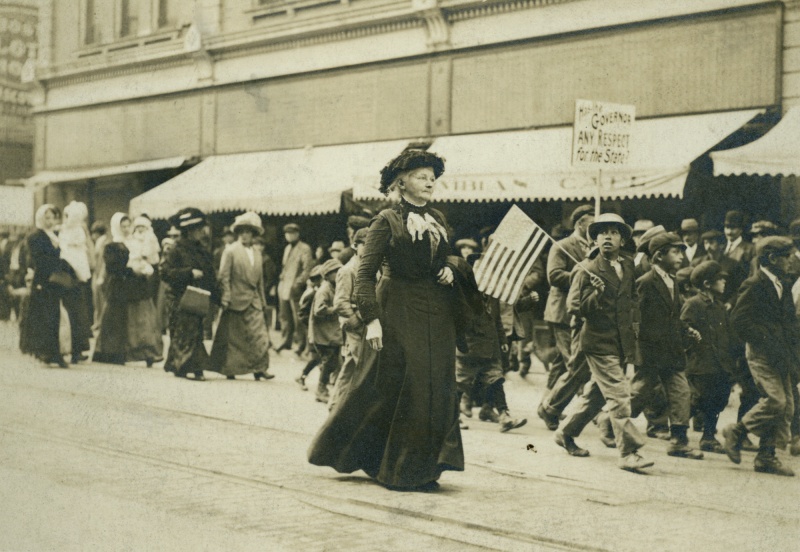
Mother Jones leading a union march  in Colorado
Mother Jones leading a union march in Colorado
history of minimum wage laws is a checkered one. In 1938 President Franklin Roosevelt said in one of his radio “Fireside chats” “Do not let any calamity-howling executive with an income of $1,000 a day, …tell you…that a wage of $11 a week is going to have a disastrous effect on all American industry”. A wage of $11 a week seems laughable now, but the same voices have expressed the same sentiment year after year whenever the minimum wage levels have been raised.

Today is Labor Day and it is a time to honor the unions that have helped bring better wages and better conditions to workers across America. Remember the old Woody Guthrie song:

Oh, you can’t scare me, I’m sticking to the union,
I’m sticking to the union, I’m sticking to the union.
Oh, you can’t scare me, I’m sticking to the union,
I’m sticking to the union ’til the day I die.

There are plenty of reasons today to stick to your union, that is, if you are lucky enough to have one. As we celebrate another Labor Day, I can’t resist reprinting a blog that I first wrote two years ago.

Why are so many Americans anti-labor these days? Probably because they forget what life was like in a pre-union world. At least one day a year, on Labor Day, we ought to try to remember those days and honor the people who changed the rules. Clothing workers are a good example of why unions were needed. It was an industry dominated by women, most of them immigrant women. Some of them worked in small factories, others took the work home. Jacob Riis had described the conditions during the 1890s. In How the Other Half Lives he wrote: “From every door multitudes of tired men and women pour forth for half-hour’s rest in the open air before sleep closes the eyes weary with incessant working.” Factories were not much better than working at home. There were no limitation on working hours, safety rules were nonexistent, workers were hired and laid off erratically as demand rose and fell. There was no health insurance and no unemployment benefits. If your family couldn’t help you out, you were just out of luck.

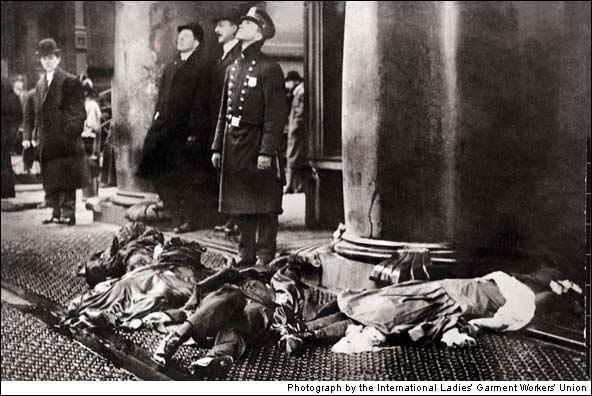
The Triangle Shirt Waist Factory fire in 1911 finally awakened many people to the dangers of unregulated factory work. Pictures like this documented the horror of young women trapped into an unsafe factory. The doors to the fire escapes had been locked to keep workers

Picture of bodies from the Triangle factory fire.
Triangle Factory Fire 1911 (ILGWU photo)
from stealing fabric or sneaking outside for a break. Gradually most of the public woke up to the fact that regulations were needed to keep employers from exploiting workers. The International Ladies Garment Workers Union (ILGWU) grew and through negotiation and strikes finally forged agreements that made many people’s lives better.

Women like Rose Pesotta traveled across the country to organize clothing workers. She went to Los Angeles where the clothing industry workers were mostly Mexican immigrants. Rose was told that Mexican women would never join a union, but she disagreed. She started broadcasting on the local Spanish-language radio station and found a willing audience. As she wrote in her memoir Bread upon the Waters, “Gradually the Mexicans in the dress factories came to our union headquarters, asking questions timidly but eagerly. Some employers, learning of signed membership cards, scoffed: “They won’t stick.” Others were plainly worried. Women not yet in our ranks came with the disquieting news that their boss had threatened to report them to the immigration authorities and have them “sent back” if they joined our union. We promised that our attorneys would fight any such underhanded move.” Gradually the workers were won over, they agreed to strike and eventually the ILGWU was able to ensure them better working conditions through the union.

The ILGWU revolutionized the lives of millions of women across the country, and even though it gradually lost members and strength as the century went on, it remains a shining example of what Americans can do when they work together. The same can be said of other unions which made America a country recognized across the world as a land of promise. The conditions brought about by union workers made the late twentieth century a prosperous time for almost all working families. Today on Labor Day let’s pay tribute to the people who fought to give us unions. They are not always perfect, and sometimes their demands can’t be met, but they have been a blessing for the country. Let’s work with them and not try to wipe them out.

Immigrants and their Gifts–Zoia Horn and Others

As a change from all the news stories we’ve been watching about the immigrant crisis on the border between Mexico and the U.S.,

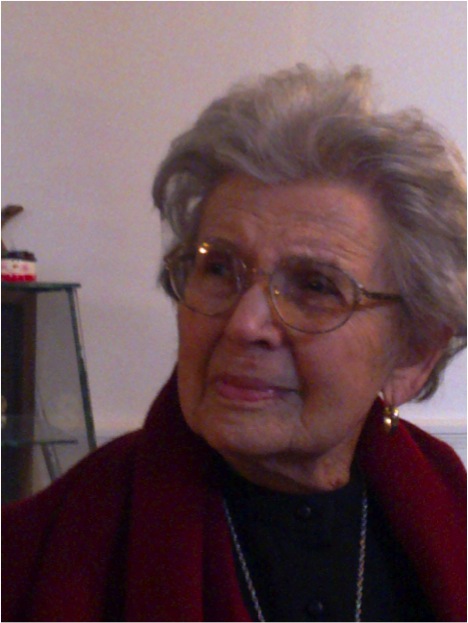
photo of Zoia Horn
Zoia Horn
perhaps it’s time to celebrate some of our immigrants. Not all of them entered the country willingly or even legally, but many of them have enriched our society.

This week some newspapers carried the story of the death of Zoia Horn who died at the age of 96 in Oakland, California. In the 1970s her actions started a movement that has revitalized the library profession. During the hectic anti-Vietnam War period, she refused to testify or give out information about the library borrowing records concerning an alleged plot by antiwar activists, including Daniel Berrigan. She was surprised and shocked to discover that the FBI had been tapping her phone to try to find out whether she knew about the plot. For her refusal to testify, Zoia Horn was imprisoned for a short time, but more importantly she made people aware of the danger of government intrusion into the privacy of communications between individuals.

Although the American Library Association did not support Zoia Horn’s refusal at first, the organization later honored her for her work in supporting intellectual freedom. Libraries have been in the forefront of institutions that defend the privacy of their clients and refuse to make borrowing records available to government agencies. Today we worry about large tech companies that are under pressure to share information with various governments. Libraries have shown the way in which institutions can protect citizens against unwarranted intrusion. They have led the way by erasing records of past library use as soon as they are no longer needed and by refusing to be bullied into removing useful materials that may be offensive to some members of the community. The stereotype of the mousey little librarian has been disproved over and over again by the steadfastness of library support of intellectual freedom over the years.

For the last thirty years Zoia Horn worked in the cause of intellectual freedom. She has been honored by the California Library Association which named its intellectual freedom medal after her. You can find the autobiography of Zoia Horn in the Open Library of the Internet Archive. It makes Autobiography of Zoia Hornlively reading for anyone interested in the history of the twentieth century. Horn tells the story of how she and her family left Russia and emigrated to Canada when she was eight years old. Their final destination was the United States and they found a friend willing to smuggle them across the border. Their entrance into the country was not quite according to immigration laws, but their lives enriched America. We should keep that in mind when we consider how immigrants at our borders should be treated as they try to find their path into this country. Many of them would surely become valuable citizens and make our lives better just as Zoia Horn did.

Ada Lovelace and the numbers she loved to crunch

Almost every day of the year has been declared a commemoration of one individual or another and most of us ignore them. This week brings a day that should be celebrated more than most—Ada Lovelace Day on Oct. 15, 2013. The celebration will take an unusual form in some places. At Brown University in Rhode Island, students will honor Ada Lovelace by writing articles for Wikipedia. To understand this Wikipedia party, you may need some background.

Who was Ada Lovelace and why is she celebrated? You can still get a few arguments about whether she deserves the distinction, but she certainly had an unusual

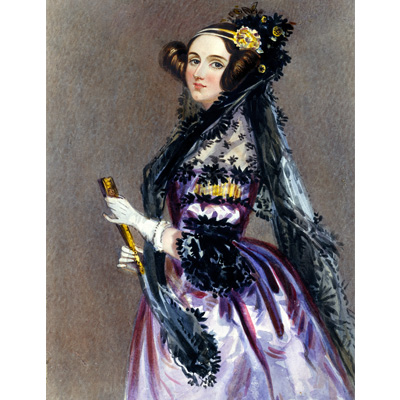
Ada Lovelace, computer programmer
life. She was born in England in 1815 and was the legitimate daughter of Lord Byron, quite a feat in itself because the famous poet fathered all of his other children with women who were not his wife. Still, being born legitimate is not an achievement for the baby, who has no choice in the matter. Ada Lovelace (born Augusta Ada Byron) had to be an unusual woman to earn a reputation of her own and gain lasting fame. And she was.

Despite having an irregular upbringing with a mother so focused on hatred for her husband, Byron, that she had little time for her daughter, Ada Lovelace had a good education. Her mother encouraged tutors to teach Ada mathematics as a way to ward off the tendency toward madness that she believed affected Lord Byron and his family. Ada took to numbers and became a competent mathematician as well as mastering several languages.

Ada Lovelace moved in high social circles. She became Baroness King when she married William King. The couple had three children, but Ada still had time to continue her friendships with both men and women. She became an avid gambler and tried to find mathematical models to help her and her friends find formulas which would increase their winnings. That, unfortunately, didn’t work and she went deeply into debt. However love of mathematics continued.

It was her friendship with Charles Babbage, the inventor of the Analytical Engine, a first attempt at a computer, which led to her developing an algorithm to allow the analytical engine to compute Bernoulli numbers. It was this which led to her being considered the first computer programmer.

Scholars have debated how much of the programming work was done by Ada and how much by Babbage, but perhaps it doesn’t matter. Whether or not she actually was the world’s first programmer, she certainly achieved far more than anyone would have expected of a 19th century woman. And all that she achieved was done before she died of cancer at the age of 36.

It is very fitting that we now have an Ada Lovelace Day celebrated every year in mid-October. The day is dedicated to honoring the past achievements of women in science, engineering, technology and mathematics and to encouraging young women to enter these fields.

You might wonder what Ada Lovelace has to do with Wikipedia, but the connection is the gender-bias that has resulted in having far more men than women represented in the encyclopedia. Not only are women under-represented in Wikipedia, they are also under-represented in technology and scientific studies. Girls today have very few role models who inspire them to enter the STEM fields of study. Let’s hope the students at Brown University will come up with some articles that may inspire young girls today and in the future to become the scientists, technologists, engineers and mathematicians that are needed to keep our future growing.

Taking to the open road–Saudi Arabian women

Sometimes all it takes is a movie to open our eyes to some basic injustices. Yesterday I saw the Saudi Arabian movie Wadjda about a determined young girl—ten or eleven years old—who wants to have a bicycle so she can race with a boy who is her friend and neighbor.

two Saudi girls in school
Saudi girls memorizing verses from the Koran.
The movie gives us an intimate glimpse into the life of a lively Saudi girl. She has a quiet family life as the only child of a warm, caring mother and father, although the father is only with the family on weekends.

Gradually we glimpse the stringent and seemingly meaningless restrictions on the lives of both Wadjda and her mother. In the girls’ school that Wadjda attends, the children are not allowed to play in the schoolyard when construction workers are working in the distance—the men might catch a glimpse of them. They cannot laugh or talk loudly because “a woman’s voice is her nakedness” and must never be heard by men outside of her family. Wadjda’s mother goes to work every day, but has to travel in a van with a male driver because women are not allowed to drive nor to walk on the streets. She and her daughter cannot even go shopping without asking the driver to take them to the store.

Although pre-pubescent Wadjda is allowed to walk through the sandy lots of the city and to have her face uncovered (although her hair must remain hidden), we leave the theater knowing that far more restrictions await her when she grows older.

Saudi woman at a mall
Surely every American woman who walks out of the movie must wonder why Saudi women continue to submit to the stringent rules that limit their lives so drastically.

There are a few far-off glimmers of hope for women’s freedom in Saudi Arabia. The king has proclaimed that starting in 2015 women will be allowed to vote and to run in local elections. That is a start. Most women, however, long for the freedom of driving more than they long for the vote. BBC World News reports that a new campaign asking for the right of women to drive has attracted more than 11,000 signatures. The day on which Saudi women are planning to take to the roads is October 26, 2013. To some activists, the right to drive seems trivial, but if you think about what it would mean to be unable to leave the house until some man can be found to drive you on any errand or visit, it’s easy to understand. Day after day women suffer the embarrassment, expense, and humiliation of being totally dependent on the wishes of a male who has the key to a car.

Even though the number of Saudi women who have learned to drive must be tiny—only the educated members of a wealthy family would ever be able to learn—it is at least a start. When women have the ability to travel locally and to visit one another without supervision, who knows what independent plans they may foster? Those of us who live in the West should all support the Saudi women in their efforts. Let’s join together to hope that someday Wadjda could have not only a bicycle, but the keys to a car so she can grow into the kind of strong, independent woman that is needed in Saudi Arabia and the world.

An anniversary to celebrate–Ruth Bader Ginsburg

Twenty years ago this month Ruth Bader Ginsburg became a Supreme Court justice and ever since then she has been making history. Her opinions, whether in agreement or dissent on a wide range of cases have kept the Court on an even balance over the years.

Justice Ruth Bader Ginsburg

Media pundits have been talking and writing about Ginsburg’s legacy and they often seem surprised that at the age of 80 she is still going strong in her demanding job. But there is one factor that no one has mentioned so far that might have improved her vitality and her long-lived success. She went to Cornell University, graduating in 1954, not too far off from the year I graduated from Cornell. In those days men far outnumbered women at the university, and one of the popular folk beliefs among the men was that coeds lost their good looks because they had to climb the hills of Ithaca to go to classes. It was said that our legs became too muscular and we looked more like athletes than “real women”. Well, Ruth Bader Ginsburg, and all of the women of our generation who are still alive and participating in the world, were probably strengthened by all that walking on those snowy hills. Justice Ginsburg regularly goes to the gym and is reputed to be strong and fit. Perhaps the world owes a vote of thanks to the good start she got on the hills of Ithaca.

Of course physical vitality is only a tiny part of Justice Ginsburg’s many extraordinary attributes. She proved herself a brilliant lawyer and a staunch advocate of the rights of women and of all citizens to equal treatment before the law. Unlike some justices, she does not believe that the Constitution is an unchanging text set in stone, but rather a document written by humane leaders setting forth the basic principles of democratic government. As the world and society changes, Justice Ginsburg’s view of the Constitution is not bound by the 18th century meaning of words but rather by the deepest values of our ever-changing population.

Let’s all wish Justice Ginsburg a happy anniversary of service and hope that she continues to add her valuable voice to the Supreme Court for many more years!

Remembering World War II and after with Christa Wolf

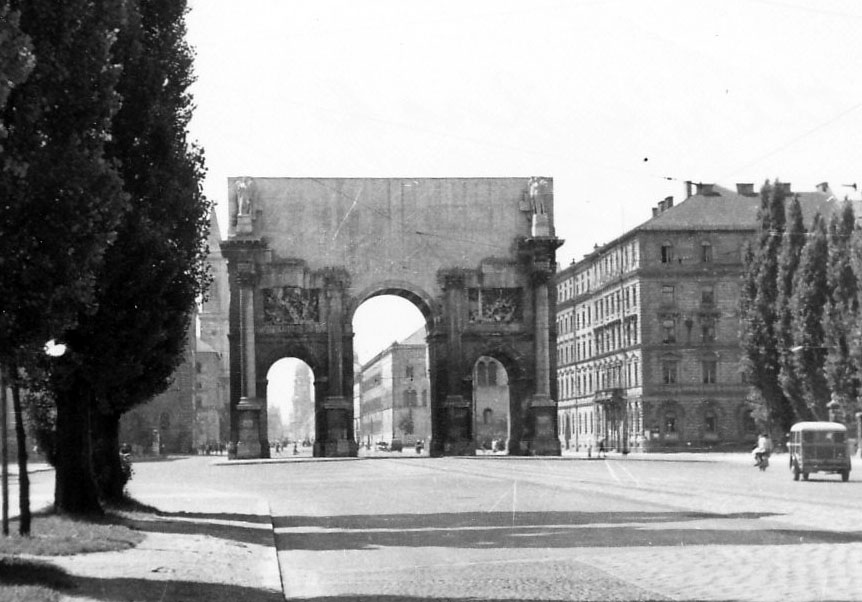
Hitler's Arch, Munich 1951
Hitler’s Arch, Munich 1951
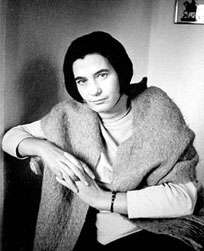
Christa Wolf
Christa Wolf
Memorial Day brings tangled memories of wars and their aftermaths. Wars have defined the last hundred years of America’s history—of the whole world’s history. Every generation has its defining war, and those of us who have lived through them never completely forget.

Christa Wolf, one of the best known novelists of postwar East Germany, died in 2011, but her voice is still alive. I have been reading her last book, City of Angels: Or, The Overcoat of Dr. Freud, a novel, more of a memoir really, of a year spent in Los Angeles in 1993 as a Getty fellow. Wolf was struggling to come to terms with the fall of the Berlin Wall in 1989 and the reunification of Germany. During that year the German authorities released a file documenting some interviews she had with the Stasi thirty years earlier. Her friends, her readers, and she herself were devastated by the revelation that she had been interviewed by the secret police and had apparently cooperated with them and talked to them about other writers.

My attitude toward Wolf was shaped by her earlier books documenting her childhood in Nazi Germany during the 1930s. She and I share a birthday, March 18, although not in the same year. She was born in 1929, close to me in age, and while she and her family lived through WWII in Germany, I was living through it in New York City. Her 1976 book Patterns of Childhood brought a jolt of recognition when I read it because for the first time I felt what a different person I could have become if I had grown up in Germany rather than America.

The first time I went to Europe, on a student trip in 1951, several countries, and especially Germany, still showed many traces of war. To our group of American students, the war seemed long in the past, but we saw some of its reality then in the broken buildings, the armed guards at the border of the Eastern Zone, and the rationing that still lingered in the UK. As I looked at the faces of people in the streets of Germany I wondered what they thought of us and whether they would ever forget the bitter hatred that divided us from them for so many years.

Now, reading City of Angels, I am more conscious than ever of how long wars linger in memories and attitudes. No one ever leaves a war behind even though we do not remember exactly how we felt or even what we did during different times. How did I feel about the internment of Japanese-Americans during the war? I am sure I never questioned it, neither did my parents. We believed our government was always right and Japan and Germany were always wrong. Yet people who lived through that internment will never forget. And most Americans agree now that it was unnecessary and cruel.

On this Memorial Day, the idea that stays in my mind and keeps me from enjoying a holiday is knowing that during the years since World War II, America has fought so many wars and created so many bitter memories for new generations. War has become our permanent state. Children who have grown up with drone attacks killing their families and friends and with sudden outbursts of gunfire on streets they walk down to school, will never forget. Seventy years from now the memories will still be there poisoning their lives and the lives of their children and grandchildren.

Sometimes it is good to go back and look at a war through the eyes of someone on the other side. Were they really so different? Were all the bombings and the imprisonments and the frenzy of anti-Communist rhetoric really necessary? The world goes on just about the same as ever—no better and probably no worse. There are evil deeds that must be punished, and individuals who should be kept out of society, but is mass killing ever the answer? We need to spend more time listening to the people who suffer and are displaced because of our endless, often pointless, quarrels. Those are the voices we need this Memorial Day, not the speeches of glib politicians.

Christa Wolf’s books, City of Angels, Patterns of Childhood, and several others are available in most libraries, a few bookstores, and of course on Amazon. Another book I highly recommend is a collection of poetry by German women called After Every War, translated by the Irish-born poet Eavan Boland, who teaches at Stanford University. You will find some unforgettable voices of people who lived through the turmoil of two world wars and commemorate the losses those brought. I can’t forget the words of Rose Auslander, “My key/has lost its house.” (I can’t quote the whole poem, because of Copyright rules, but it is worth searching out and reading.)

Today we remember the losses that all wars bring. Let’s try to put an end to the continuing losses we are causing year after year after year.