Showing Us How to Experience Museums—Isabella Stewart Gardner 

This summer has been a worrisome one for many people. The major events of the world have caused pain and worry to those of us who were paying attention to the news. Attacks and wars in Ukraine and Gaza continue despite the efforts of many world leaders to find peace. 

This blog has always looked back at events in the past rather than what is going on day-by-day. Things may seem to change, but thinking about the past helps us to put today’s changes into perspetive. I like to look back at the small events that have chaged our lives in ways we often don’t recognize.. Have you ever thought about how museums have changed over the years? We owe some of those changes to a woman you may never have heard of–Isabella Stewart Gardener.  

Isabella Stewart Gardiner was born in New York city in 1840. Her family was prosperous but did not belong to the social elite families who dominated social life in the city. Like many other wealthy Americans of her generation, her path to high society led through Europe. Her mother took Isabella and her sister to Paris for their education. In France the girls could learn French, study music, and meet a suitable husband.

And meeting a suitable man was just what Isabella did. His name was Jack Gardener ad he was a member of a wealthy Boston family. Their marriage was rather quickly arranged, but it was destined to be a long and happy one. Isabella’s son was born six months after her marriage, which set some of her family friends to gossiping, but his parents doted on him. Unfortunately, he did not live more than a few months. One of the great regrets of Isabella’s life was that she never had another child. 

Without children of her own, Isabella focused much of her attention on her nephews and helped raise them, but she still had energy (and money) left over. She and her husband became two of the most active art collectors of the late nineteenth century. They travelled often to Europe and bought works by many of the well-known artists of the past several centuries including Vermeer, Botticeili, Titian and Rembrant. Like other Americans, they brought the works home and exhibited them in their Boston home.

But Isabella’s losses were not over. Her husband died suddely in 1898. Isabella was overwhelmed. with grief after his death. She turned more and more to art as a comfort. She consulted with art collectors in Europe and America. Her fruends included the greatest critics of her time, especially Bernard Berenson who searched many of the great collections in Europe and urged Isabella to choose the best pieces available.

Isabella’s greatest innovation in her museum was to group together pictures, letters, clothing and other objects associated with the paintings. Sne planned the museum as an experience and not just a coillection of pictures. In later years, many other museums have followed the same plan.

The story of this fascinating museum is well told in the book “Chasing Beauty: the Life of Isabella Stanley Gardner” by Natalie Dykstra (2024). You might enjoy reading it before your next trip to an art museum. And you should say “thanks” to Isabella for helping you to enjoy the visit.

i

Happy Birthday to Ella Fitzgerald 

More than a hundred years ago—on April 25, 1917–one of America’s greatest jazz musicians was born in Newport News, Virginia. She didn’t linger long in the South, but moved with her mother to Yonkers, N.Y., a suburb of New York City. Although she travelled widely throughout her life, her home base was New York and especially Harlem. 

After her mother remarried and had more children, Ella lived a life of freedom on the streets, especially after her mother died as the result of an auto accident when Ella was fifteen. The famous Amateur Nights at the Appollo Theater in Harlem became a magnet for Ella and she developed an ambition to become a dancer.  

When Ella finally got a chance to compete in the Amateur nights, an accident of scheduling led to her appearance immediately following an excellent dance presentation. Thinking fast, Ella decided to sing instead of dance for her try-out. 

Her performance was a hit with the audience, so in 1934, at the age of 17, she found herself at the start of a long, successful career. 

Building a career as a jazz singer was not easy, especially during the difficult years of the great depression, but Ella was determined and she learned quickly. She was a very private person, but her talent was recognized by many of the greatest jazz performers of her time and she soon found mentors to help her develop her skills and to present herself to audiences. Her energy seemed endless and her life was devoted to music. She was willing to travel and to appear in many venues and she gradually became known not only in America but in Europe. 

Racial prejudice sometimes made life difficult for Ella, but she was able to overcome most of the slights that she encountered. One of her worst experiences occurred during a tour to Australia in 1954. Her baggage and that of her group were removed from their airplane in Hawaii where they were stranded for two days. Ella let none of this hardship deter her. She went on and completed the tour and was a hit.  

The most recent and detailed biography of Fitzgerald is Becoming Ella Fitzgerald: The Jazz Singer Who Transformed American Song by Judith Tick (Norton 2024). Tick tells the fascinating story of how Ella continued her career during the long, difficult postwar years as she developed diabetes and endured several amputations and years of illness. She never gave up singing and appeared as often as she could until she died in 1996. 

Perhaps the best way we could honor Ella today would be by listening to one of her performances. Many are available on disk and videos for today’s audiences.  

Lady Gregory–A Woman Who Loved Language

The season of book prizes has arrived again. Every spring there seem to be more announcements of prizes for novels and nonfiction books that have been published during the preceeding year. The process of choosing the winners has become familiar. First judges release a “longlist” of books deemed worthy of being candidates; then a few weeks or months later a “short list” is published; the final award is usually announced at a ceremony when the the author of the winning book is announced. The Booker Awards set this pattern and it has been followed by a series of other organizations dedicated to publicizing books deemed the best in some specific category—translated books, children’s books, or those from specific areas—each of them has its own contest.  

Not only do the prizes increase book sales, they can also affect the life and culture of a country and even encourage the use of a minority language that might otherwise fade away. Irish Gaelic is an example of a language which  seemed to be dying away, but has been revived in many parts of the country. And now Ireland has its own book prize that honors books written in either English or Gaelic. 

St. Patrick’s Day seems an appropriate time to honor a woman who played a large part in supporting the development o literature in both languages that have affected the history and culture of Ireland—Lady Augusta Gregory.    

Augusta Perasen, who later became Lady Gregory, wasn born into an Anglo Irish family on March 15, 1852. At that time, Ireland was slowly recovering from the Irish Potato Famine that had ravished the country starting in 1848. Thousands of peasants were thrown off the land they had cultivated, but never owned, when potatoes, their major source of food and income, was struck by a mysterious ailment. Many landlords evicted tenants from their homes when they  could no longer pay their rents, leaving them to seek new work in England, America, and Australia.  

Augusta’s family was prosperous and did not suffer from the famine but they were sympathetic toward the Irish tenants and were interested in their language and culture. They supported land reform and education. Augusta was especially influenced by an Irish nurse who told her many stories and instilled in the child a respect for Irish culture and language. 

At the age of 19, Augusta married a man thirty years her senior and became Lady Gregory. She lived the life of a prosperous aristocrat, travelled to many parts of the world with her husband, and began to write and publish poetry and travel journals. She and her husband had one son. As their son grew up, Augusta began writing stories and memoirs. The family maintained a home in London and met many writers and artists as they travelled back and forth between England and Ireland.  

After the death of her husband in 1892, Augusta moved back to the family estate in Galway, spending less and less time in London. She began to identify more with the Ireland and its culture than with England.  She travelled back and forth between Dublin and Galway and gradually became an important figure in Irish literary circles. William Butler Yeats became a good friend and encouraged her interest in Irish literature. 

In 1899, Lady Gregory helped found the Irish Literary Theater where some of the most important plays of the Irish Renaissance were produced. Her own plays were produced too, but they have faded with time and are no longer as popular as they once were. Lady Gregory is remembered mostly for the great influence she had in encouraging Irish poets, playwrights, and novelists. Her importance is demonstrated every year when the winners of the An Post Irish Book Awards and other book prizes are announced.  

Celebrate prize books by reading! Libraries and bookstores are ready and waiting. 

Wild, Wicked and Wonderful—Josephine Baker 

Josephine Baker’s name is known to many Americans and Europeans, but her life and achievements remain rather confusing. She was a woman who acted as she chose and seldom explained herself. Even. the location of her body is somewhat of a mystery. In November 2021, her coffin was reburied at the Panthéon in Paris, an honor that few women have ever received. Her body, however, remains buried in Monaco where her friend Princess Grace built a mausoleum for her. Much of Baker’s life remains a mystery even to her biographers 

Josephine Baker was born June 3, 1906 in St. Louis, Missouri. She was raised by her mother in a very poor, disorganized family. No one has been able to definitively establish who her father was.   

Josephine Baker

At that time, St. Louis was a very segregated city and many residents were descended from people who had been enslaved for several generations. Josephine’s mother was poor and Josephine began to work while she was still very young. While she was growing up, Josephine worked and lived with several white families for whom she did cleaning. She was often mistreated and sometimes abused. As a child, she saw evidence of the results of the race riots of 1917 during which the homes of many Black families were destroyed. Later she wrote that she had prayed, “Oh God, why couldn’t you have made us all one color?”  

Josephine’s schooling was erratic. For one thing, she frequently changed her residence as she moved from one employer to another, so she missed many classes. She became part of a street entertainment group which moved around the city giving performances wherever they could. When she was 13, she discovered she was pregnant and married her first husband; however, her pregnancy ended in a miscarriage and a hysterectomy. Her husband was chronically unemployed, and he soon disappeared from Josephine’s life.  

As Josephine’s skill as a performer grew, she had more opportunities to perform with vaudeville groups in Midwestern cities and eventually in New York City. The biggest change in her life came in 1925, when she went to Paris with a group of performers. Entertainment was not segregated in France, and the group soon became popular with audiences of both races. It was billed as “La Revue Negre” and Josephine became one of the stars of the show. When Josephine became a star, however, she broke her contract and joined a more prestigious group.   

Josephine quickly adapted to France. She learned to speak French fluently and could hold her own with French speakers, although she remained unable to read or write well in either English or French. Her lack of education never seemed to hold her back.  

The first time she returned to America after the trip to Paris was in 1927. There she discovered that the old rules of segregation were still observed. Even though she had been a star in Europe, she was refused accommodation at many hotels in New York City and had to find lodging in Harlem. She soon returned to France and spent most of the war years there. 

Back in France she married again and became a French citizen and a strong supporter of General de Gaulle. She lived in Morocco for a while and carried messages back and forth for the Free French who supported de Gaulle. No one thought to suspect an entertainer of being a spy.    

After the war, Josephine returned to the United States several times. A Josephine Baker Day was held for her in Harlem on May 20, 1950. She also visited South America and Japan but her life continued to be centered in Europe.  

No matter where Josephine Baker travelled or what she did, Josephine was busy and active. One of the major projects of her later life was to adopt orphans from many countries and raise them together. Her goal was to further the cause of international friendship. Many of the children thrived, but their lives were never calm while they lived with Josephine. She continued all her life to spend money recklessly and to evade paying her bills. Whenever she needed more money, she would arrange to go on a tour. 

Josephine Baker’s busy life finally ended on April 12, 1975 while she was just beginning another European tour. For those of us who never saw Josephine Baker perform, there are several videos about her available online as well as several biographies. One of the most detailed biographies was written by one of the children she had adopted toward the end of her life–Josephine Baker: the Hungry Heart by Jean-Claude Baker and Chris Chase (1993 Random House). It is an excellent introduction to a fascinating woman. 

A Woman Who Kept Dance Alive During Changing Times—Bronislava Nijinska

Dance performances happen in the present time and then fade away. Musical scores have been written and published for centuries, as have the texts of dramas, but dance has been an elusive art. Before the development of modern photography, there was no way to preserve what dance performances looked like. And some of the people who have contributed most to the art of dance have been almost forgotten, including the younger sister of the great Vaslav Nijinski, Bronislava Nijinska.

Bronislava Nijinska was born in Minsk, Belarus, on January 8, 1891. Raising a family while traveling to so many different locations was difficult and eventually Nijinska’s father left the family. Her mother struggled to raise Nijinska and her brothers, but the children gew up spending much of their time on their own.

Bronislava Nijinska

Eventually each of the children entered the Imperial Theatrical School in Moscow, where they excelled in dancing. Vaslav Nijinsky, quickly became a star and was recognized as a genius when he first started performing. His younger sister was also an excellent performer, but she is remembered more for her work as a choreographer than as a dancer.

Nijinska probably would have followed the pattern that her parents had set, becoming an itinerant dancer in Russia after she graduated from school, but the world changed dramatically after the Russian Revolution and World War I. Nijinska spent much of her life moving from one city to another not only in Europe, but later in South America and the United States. During her long life, Europe was transformed and the world suffered through two world wars, but her allegiance was to her art and not to an individual country.

At first, after graduation from school, Nijinska joined Diaghilev’s ballet troupe which became the Ballet Russes de Monte Carlo. During the 1920s, many Russians fled the Soviet Union and moved to Western Europe. Vaslav Nijinsky and Diaghilev were leading figures in the group, but Nijinsky became ill and was hospitalized with schizophrenia in 1929, the same year that Diaghilev died. This happened during the period that Western Europeans were becoming aware of the power of ballet and interest in the art was spreading especially to Paris and London. 

Nijinska struggled for the rest of her life to set up a dance troupe that would continue the work these men had pioneered. Her devotion to the art of dance was legendary, but her fame never reached that of her brother or the men who controlled the major dance groups of the period. Nonetheless she was able to articulate some of the major beliefs of modern ballet. “Movement is the principal element in dance” she wrote, explaining why she emphasized the way dancers used their bodies rather than the achievement of graceful tableaus.  

Nijinska has never achieved the fame she deserves, but her latest biography will enable readers to discover why she accomplished so much. Lynn Garafola’s. La Nijinska: Choreographer of the Modern. (Oxford 2022) gives a rich, full picture of the life and work of Bronislava Nijinska. It is available now in many libraries and bookstores

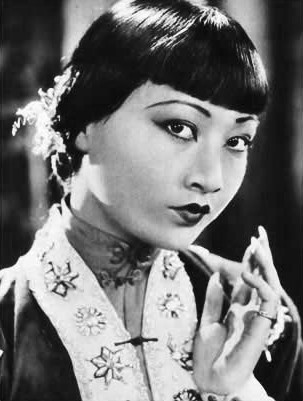
An International Star—Anna May Wong

During the early 1900s many Chinese Americans lived in California, but their existence was scarcely noticed or mentioned in the mainstream press. Because they were of a recognizably different race, many white Californians paid little attention to their Chinese American neighbors. When the movie industry started during these early years of the 20th century, the Chinese Americans became more visible, but they still seemed “foreign”. Few white people thought of them as “real Californians”.

Anna May Wong was born in 1905 in Los Angeles. Her father was a Chinese laundryman whose family had lived in America for three generations. Anna May went to an unsegregated school, but she did not like it. Boys pulled her pigtails and teased her for being “different”. She soon moved to a Christian religious school that enrolled only Chinese American students. While she was still in school, she became fascinated by movies and started hanging around studios where early films were made.

Anna May Wang

Despite being somewhat isolated in the dominant world of movies, Wong soon built a strong reputation for herself. She was a tall, slim woman who stood out among the shorter, less striking Asian actresses. She had a keen fashion sense and was photographed and admired as one of the leading stars of the Hollywood scene, especially after she appeared with Douglas Fairbanks in “The Thief of Bagdad” in 1924. When Grauman’s Chinese Theater opened in 1927, Anna May was featured as the leading lady among female Asian stars.  

As the 1920s continued, rules about miscegenation became more stringent in many states and it became difficult for Asian actors to get roles in Hollywood. Following the route of many other actors, Anna May went to Europe in 1927. There she proved again to be a versatile actor. She starred in a successful play in London and then moved to Germany where she learned the language and appeared in a film with Marlene Dietrich.

Despite her success, Wong continued to lose leading roles to non-Asian actors. Her biggest disappointment was to lose the starring role in “The Good Earth” to a white actress who was made up to look Asian.

During World War II, Wong worked for the Chinese cause and after the war she finally visited China for the first time and met several of her relatives. After she returned to the U.S., she hoped to produce movies herself, but she died unexpectedly of a heart attack in 1961 at the age of 56.

Wong’s life has been celebrated by featuring her picture on a new American coin. More importantly, we now have a recent biography of her life, by Yunte Huang. Daughter of the Dragon: Anna May Wong’s Rendezvous with American History (Liverwright 2023). The more you learn about Anna May Wong, the more fascinating she becomes.      

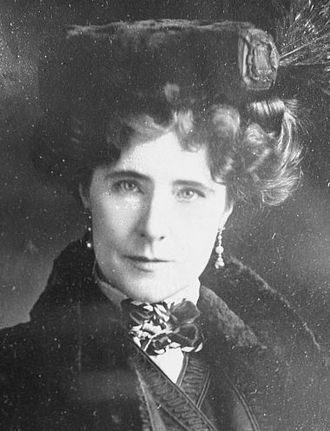
Putting the Zing into Romance—Elinor Glyn

The name Elinor Glyn still sounds familiar to many media fans, but most people have forgotten what she did. Her name has become a cliché in quotes such as the anonymous “Would you like to sin with Elinor Glyn on a tiger skin? Or would you prefer to err with her on some other fur?”

But who was the real Elinor Glyn and why are so many of her books still available on Amazon—although not in most public libraries? Who was this woman who invented the “It” girl and started the new genre of romance books as well as helping to make some of the most popular movies of the jazz age?

Elinor Glyn

Glyn was born in Jersey, one of the Channel Islands, in 1864 into an aristocratic family. Her father died while she was an infant, and Elinor’s mother moved back to her family home in Canada with the baby. After living for eight years in Canada, they returned to Jersey where Elinor spent most of her childhood. She had almost no formal schooling. Her education came mainly from her grandmother and governesses, although she spent one year at a boarding school in France. She spoke both English and French fluently and read avidly in both languages. Her family assumed that her role in life would be to marry an aristocrat and live a secure life flitting between England, France, and the rest of Europe. 

Luckily Elinor grew up into a strikingly beautiful young woman with pale skin and bright red hair. She also had a lively wit that made her popular with both men and women. Her early adult years were spent socializing, going to parties, and becoming familiar with many important people in European society. In 1892, when she was 27 years old, she married Clayton Louis Glyn and it seemed as though a prosperous future was assured.

Unfortunately, the marriage was not a happy one. Elinor longed for romance and intimacy, but Clayton’s interests were mainly in hunting, fishing, and traditional country life. She tried in vain to bring romance into their marriage, even buying a leopard skin rug, but he rejected her fantasies. Their relationship became worse when their money dwindled away. His wealth was constantly threatened by his spendthrift habits and his obsessive gambling. Instead of living a life of ease, Elinor found herself struggling to keep the household running and paying for nurses and servants to take care of the two daughters she and Clayton soon had. To raise money quickly, Elinor turned to writing. Unlike most aspiring writers, she found almost immediate success.

Glyn found an audience by putting into words the romantic dreams of girls and women in England and America. She wrote quickly and was soon turning out a new book every year. One of her first major successes was Three Weeks, a book that was published in 1907 and is still being read more than a hundred years later. Her writing supported the family while her husband’s drinking destroyed his health and led to his early death in 1915 soon after the beginning of World War I.

Elinor’s writing became an even more important to her and her family after the death of her husband. She became a war correspondent and wrote dispatches from France. Her social ties gave her entry into a wide circle of important men, including Lord Curzon, the former Viceroy of India, who was part of the Prime Minister’s War Cabinet. Glyn was one of only two women who attended the Paris Peace Treaty meeting after the war.

As her children grew up, and the war ended, Glyn turned all of her energy toward writing and socializing. She had a long and satisfying affair with Curzon, but that ended when he decided to find a young bride who could give him a son. He never had a son, but his relationship with Glyn ended.

After the war, England and the rest of Europe still suffered from economic depression and the loss of many of their fighting men. Cities needed to be rebuilt and farms cultivated. Meanwhile, America was thriving. In 1920, Glyn was invited to visit Hollywood with a view toward writing for the new movie industry then in its infancy.

Early films were considered to be entertainment for the masses and not a legitimate art form by most critics, but Elinor Glyn was the perfect link between upper class socialites and lower-class pleasure seekers. She found her place in Hollywood where she was able to teach young actors how to project an image of elegant romance, how to walk and dance like an aristocrat, and how to dress like a lady. Among her friends were Mary Pickford (the “It” girl), Gloria Swanson, and William Randolph Hearst. She entertained at her tea gatherings, which were welcomed by many people as a change from the usual highly alcoholic Hollywood parties.

In addition to her social skills, Glyn was a hard-working writer who was able to turn out scripts (called continuities) that shaped the actions of early silent movies. From 1920 until 1927, silent films reigned supreme in Hollywood and were popular across the country. Unfortunately for historians, copies of these early silent movies have disappeared, so it is impossible to evaluate their quality. With the advent of talkies at the end of the decade, Glyn’s popularity dwindled. With the help of her daughters and son-in-law, she tried to establish her own company to produce and distribute films  but was gradually pushed out of the business.   

In 1929, Glyn returned to England. As her dreams of producing movies failed, she gradually turned back to writing books and articles. She died in 1943, in the middle of World War II. The story of her eventful life has been told recently by Hilary A. Hallett in Inventing the It Girl: How Elinor Glyn Created the Modern Romance and Conquered Early Hollywood (2022). Hallett not only tells the story of Elinor Glyn’s life and achievements, she also paints a fascinating picture of the growth of the modern film industry, one of the remarkable success stories of the twentieth century.

Becoming a Pro—Berthe Morisot

In 1874, a group of French artists opened an exhibit of paintings that shocked Paris, attracted crowds, and created a sensation. The paintings they showed were different from the traditional, careful pictures that had been exhibited year after year at the official Salon show in Paris.

Most of the people who crowded the new exhibition were shocked by what they saw. Critics wrote that the new painters, who called themselves Impressionists, had “declared war on beauty” and very few of their works were sold. It took courage to turn against the critics and persist in painting in a new and different style. The men who exhibited paintings at that exhibit included several who are now considered major artists, including Monet, Pissarro, Degas and Renoir. And there was one woman who earned a place among them in that first show—Berthe Morisot. She may not have realized it, but she too was forging a new role for women in art.

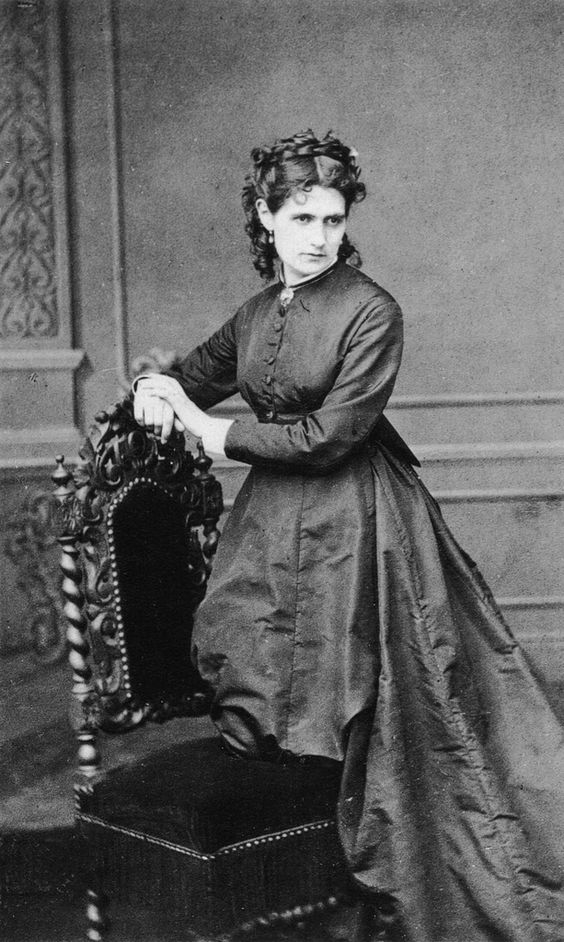
Berthe Morisot

Berthe Morisot was born in 1841 in Bourges, France. Like many daughters in prosperous middle-class families, she was given a good education and excellent artistic training. Even though women were not allowed to enroll in the professional art training available to men, there were artists willing to offer private tutoring for young women at home.

By the time of the first Impressionist show, Morisot was thirty years old. Some of her paintings had been accepted and shown at the official Paris Salon, but she was interested in exploring new ways of developing her art. Most women at that time gave up art when they got married, but Berthe Morisot was more interested in painting than in marriage. “Work is the sole purpose of my existence,” she declared. “Indefinitely prolonged idleness would be fatal to me from every point of view.”

Developing a career as a painter was difficult for a woman. Men were free to participate in the lively social gatherings in cafes and to attend private parties. It was there that painters met art dealers, arranged exhibits, and sold paintings. A respectable woman , like Berthe Morisot, could scarcely leave her home without a chaperon. She  had to rely on the men in the group to set up exhibitions and publicize the work of the Impressionists. Morisot was lucky because the Impressionist painters, especially her friend Edouard Manet, respected her work and opened opportunities for her to exhibit with the men. Eventually Morisot married Eugene Manet, brother of Edouard.

Morisot received her share of ridicule from critics who scoffed at Impressionist paintings because they considered them not as carefully finished as traditional paintings. One critic wrote: “If Mademoiselle Morisot wishes to paint a hand, ‘she gives as many brushstrokes, lengthwise as there are fingers, and the thing is done.”

Berthe Morisot stood firm in her decision to paint freely and offer a fresh, new view of the world. It took years of struggle by the Impressionists, but gradually an audience for their work grew. Despite finding it difficult to sell their paintings, many of them stayed together and continued offering group shows. It was not until 1879  that the group had a successful exhibit and started to make money.

Berthe Morisot was the first woman to become part of the Impressionist movement, but she was followed by others. Mary Cassatt, an American artist, joined the group in later exhibits as did another French painter, Marie Bracquemond. In 1894, the art critic Gustave Geffroy described the three women as “les trois grandes dames” (the three great ladies) of Impressionism.

As the twentieth century started, more and more women became professional artists, but it is enlightening to look back and learn about how they joined the art world as colleagues and equals.

Impressionist paintings, of course, can now be seen in major museums, there are also films and prints widely available. Several books have been written about the history of the Impressionists. One that I recommend highly is The Private Lives of the Impressionists (Harper Collins 2008) by Sue Roe, which is available in many libraries and bookstores.

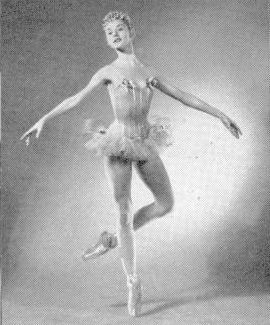
Dancing through the Pain—Tanaquil LeClercq

Spring has arrived, bringing a feeling of hope and rebirth as flowers bloom and trees put out new leaves. It is a good time to think about people who have also managed to find a rebirth and hope after serious illness or loss. One of the most inspiring stories I’ve heard recently is about a dancer who overcame the assault of an illness that would have destroyed the lives of many others—Tanaquil LeClercq.

Born in Paris in 1929, the daughter of an American mother and a French father who was a poet and writer, Tanaquil was named after an Etruscan queen. When she was three years old, the family moved to New York. As a child, Tanaquil attended the French Lycée and began to study ballet. She won a scholarship competition at the School of American Ballet where she attracted the attention of its founder, George Balanchine.

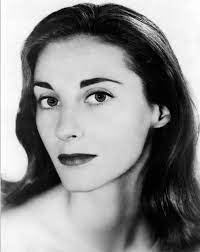
Tanaquil LeClercq

By the time she was fifteen years old, Tanaquil began to appear in early Balanchine pieces at the Ballet Society, which later became the City Ballet. It was the beginning of a spectacular career during a time when ballet was becoming an important part of the American cultural world.  Balanchine, who had been born in Russia, and had experience in both classical ballet and in theatrical revues in London, developed a new style of ballet combining elements of traditional and modern dancing. He created a number of ballets for Tanaquil whose skills exemplified those needed in his new ballets. In 1952, he and Tanaquil were married. Both of their careers flourished.

Tanaquil LeClercq

Besides dancing in many of Balanchine’s most famous works, including “Symphony in C”, “Western Symphony” and “La Valse”, LeClercq also danced in many of the ballets choreographed by Jerome Robbins who also became a close friend. One of his most spectacular pieces was “Afternoon of a Faun” in which LeClercq dominated the stage with her long, graceful body and startling dancing.

During the 1950s, LeClercq toured with the City Ballet in America and Europe. It was on a tour in 1956, that polio found her. Although the Salk polio vaccine had become available in 1955 and most of the ballet troupe received the vaccine before leaving the U.S. on their tour, LeClercq delayed her shot saying she would get it after the flight. It was in Denmark that polio struck and LeClercq suddenly found herself placed in an Iron Lung.

The first two years after catching polio are the crucial time for regaining strength and mobility. Balanchine and LeClercq worked tirelessly together to revive the muscles that had been affected by polio. Balanchine devised special movements and exercise to restore Tanequil’s legs. He encouraged her to place her feet on his as he walked or danced, hoping that would allow her muscles to regain their strength. Being a spiritual man, he also prayed. Nothing helped. LeClercq gradually regained strength in her arms and upper body, but she was never again able to use her legs.

Both Balanchine and Jerome Robbins, LeClercq’s closest colleagues, worked hard to keep up her spirits. Robbins wrote her a letter every day during the first year of her illness. But recovery from polio is painfully slow and incomplete and as time went on, LeClercq had to struggle on by herself. She and Balanchine divorced in 1969. And gradually she and Robbins drifted further apart.

The two men continued their careers and LeClercq worked hard to develop a new one for herself. She learned how to use her arms and upper body to demonstrate dance steps and she began to coach the dancers at the City Ballet. Her biggest opportunity came when Arthur Mitchell invited her to work with his newly established Dance Theater of Harlem. There she taught classes for more than a decade and during that time she also wrote and published two books.

Although her magnificent career as a dancer was cut cruelly short, Tanaquil LeClercq built a satisfying new life defying the tragedy of polio. In 1998, City Ballet opened its 50th anniversary season with a tribute to her. LeClercq attended in her wheelchair. She died two years later at the age of 71.

LeClerc’s life has been celebrated in a documentary film “Afternoon of a Faun: Tanaquil LeClercq” (2013) which includes archival footage of her dancing as well as interviews with several people who knew her. The film can be streamed on Kanopy and other streaming services. Watching this film will allow you to spend an evening with a woman who was an amazing dancer and a gallant spirit.