Sisters against Slavery

As I noted in my last blog post, when America’s Founding Fathers wrote the Constitution, they did not address the question of whether women should be allowed to vote. Although Abigail Adams urged them to consider the rights of women, they laughed that idea off. Instead, they turned their attention to a big question the new country had to face—whether or not its citizens should be allowed to own slaves. That issue continued to grow as the 19th century began. And it had an overwhelming impact on the question of women’s rights.

By 1804, the states were almost equally divided between those which allowed slavery and those that outlawed it. The movement to abolish all slavery in America began in the northern states and by the 1820s a number of people in Pennsylvania and New England were speaking out about the evils of slavery. Although almost all Southerners supported slavery, there were a few who opposed it. Among the anti-slavery Southerners, two women stand out—Angelina and Sarah Grimke. They became the only known Southern women to work actively for the abolitionist movement.
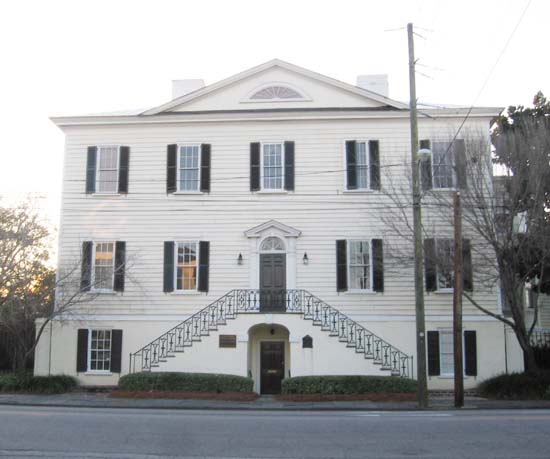
Blake-Grimke House, 321 E. Bay St. Charleston Historic District Charleston County Photo By: Kate Stojsavljevic, Clemson University Graduate Program in HP

The Grimke sisters were born in Charleston, South Carolina, into a wealthy slave-owning family. Sarah was the older, born in 1792, while Angelina, the youngest of the family’s 14 children, was born in 1805.  Although their brothers and sisters accepted the traditional slave-owning views of their family, Sarah and Angelina rebelled. They were both devoutly religious and decided that Christian beliefs were incompatible with owning slaves. Teaching slaves to read was forbidden in South Carolina, but nonetheless the two of them enraged their father by secretly teaching some of their household slaves to read.

Eventually both Sarah and Angelina Grimke decided that living in the South was incompatible with their moral beliefs, so they moved to Philadelphia where they joined the Quakers and became active in the anti-slavery movement. Angelina admired the anti-slavery writings of William Lloyd Garrison, but when she wrote him a letter of support, he published it in his magazine The Liberator. Even though her opinions were compatible with the views of most Quakers, she was disciplined for speaking out without permission.

The idea of women speaking in public, especially when there were men in the audience, remained controversial even in the abolitionist movement. As both Angelina and Sarah Grimke became well known speakers for the anti-slavery movement, they drew more and more criticism. Catherine Beecher, sister of Harriet Beecher Stowe the author of Uncle Tom’s Cabin, wrote that women should remain silent and let men speak for the cause. In response, Angelina wrote a series of letters to Beecher asking for an explanation of exactly what a woman’s role should be. In one of her letters she wrote:

No one has yet found out just where the line of separation between them [men and women] should be drawn, and for this simple reason, that no one knows just how far below man woman is, whether she be a head shorter in her moral responsibilities, or head and shoulders, or the full length of his noble stature, below him, i.e. under his feet.  

None of the traditionalists could answer Angelina’s question to her satisfaction, so the Grimke sisters continued to be active public speakers in the anti-slavery movement. Angelina met her future husband, Theodore Dwight Weld, at an anti-slavery convention in 1836. Although Weld supported the activism of both Grimke sisters, he discouraged them from continuing their public speaking. Nonetheless because the invitations continued to arrive, neither sister completely gave up speaking before both men and women.
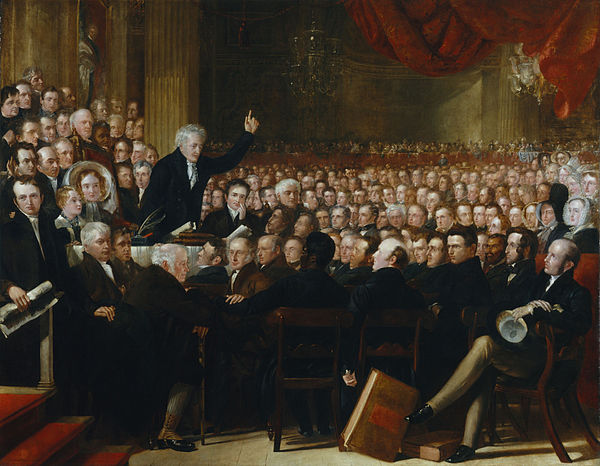
Abolitionist meeting

In 1838, Angelina spoke about the anti-slavery movement before the Massachusetts Legislature, thus becoming the first woman to address such a body. She also defended a woman’s right to petition as both a moral and political right. Because women could not vote, petitioning a governing body was the only means by which they could influence legislative policy and assert their status as citizens. Over time, Angelina’s speeches came to focus more on women’s rights than on abolition.

After Angelina and her husband had children, she stepped back from public speaking and devoted more of her time to correspondence and taking care of the household. Theodore Weld had serious economic problems, so he and his wife decided to open a school to support their growing family. Sarah moved in with them and both sisters taught at the school.

In1870, after the passage of the Fifteenth Amendment which stated that “The right of citizens of the United States to vote shall not be denied or abridged by the United States or by any State…”.  Angelina and Sarah Grimke took their last public action. Both of them had grown old by this time but nonetheless they made their way to the polls during a blinding snowstorm to cast their votes. Men and boys jeered at them for the attempt, but because they were elderly women, they were not arrested. Neither, of course, were they allowed to vote. Nonetheless at least they had tried.

When the Grimke sisters died, women were still not considered full citizens. That victory would have to wait for younger generations. But in their lifetimes, both Angelina and Sarah Grimke pushed the country a little closer to acknowledging that women should indeed be allowed to be active participants in the country.
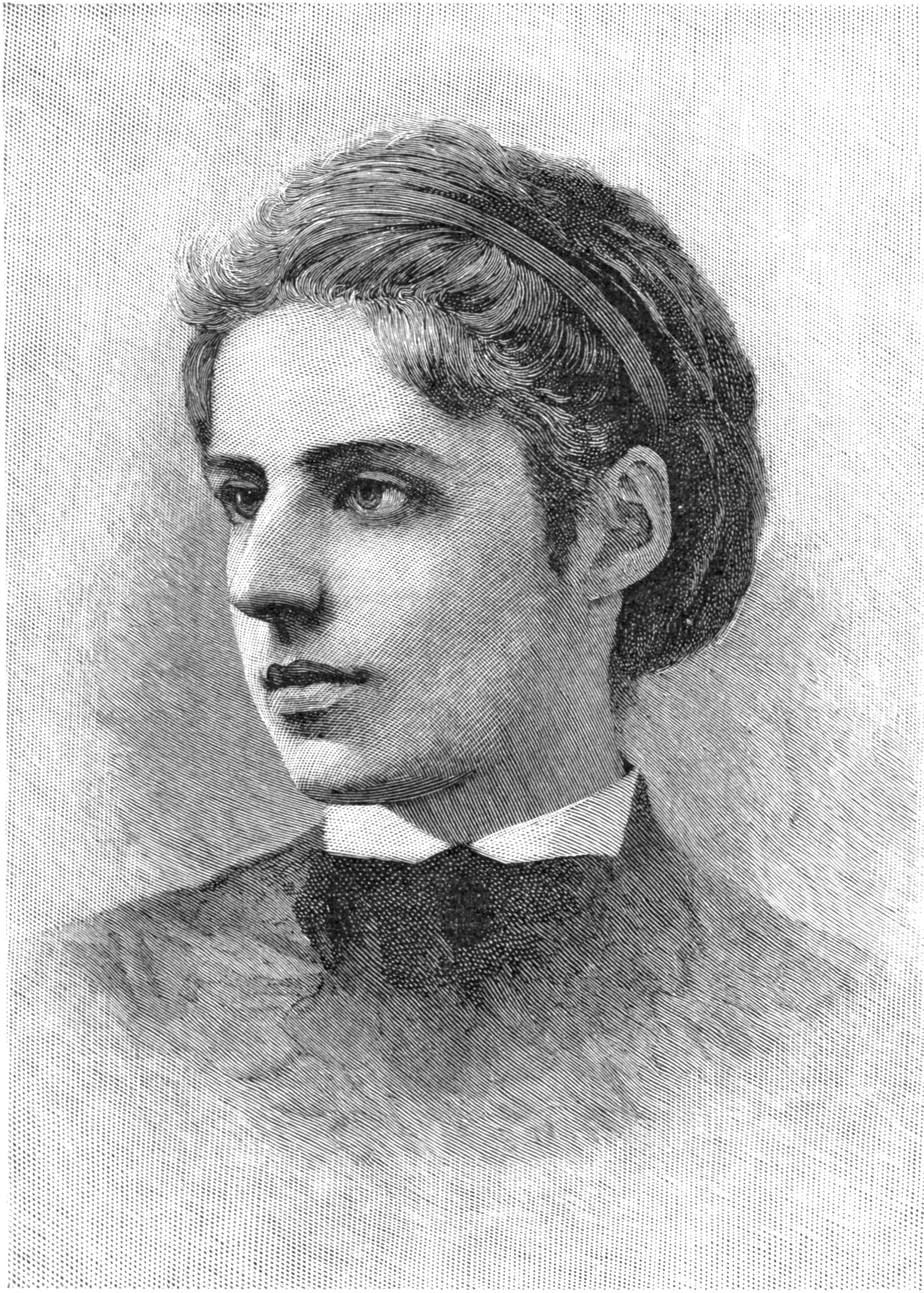
Carrying the Torch for Immigration

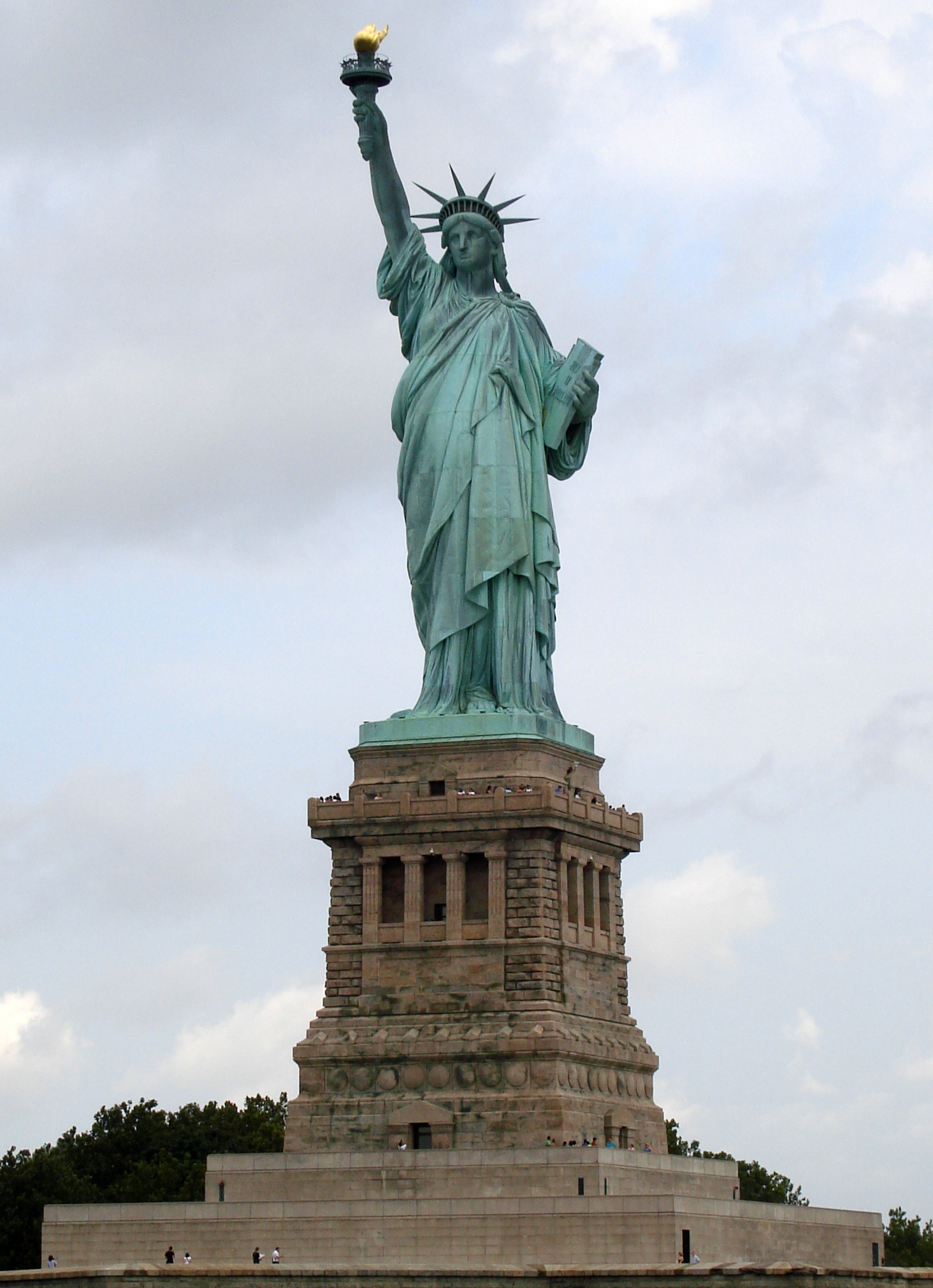
This week, as usual, has been filled with chatter about what people in Washington are saying about immigration. Several people commented on the familiar poem by Emma Lazarus especially the final words, which are framed as a quotation from the Statue of Liberty:

“Give me your tired, your poor,
Your huddled masses yearning to breathe free,
The wretched refuse of your teeming shore.
Send these, the homeless, tempest-tost to me,
I lift my lamp beside the golden door!”.  

Statue of Liberty

Who was Emma Lazarus and why did she write those words? Well, one thing is certain, she wasn’t thinking about the current immigration debate. Born in 1849 in New York City, Lazarus came from a wealthy Sephardic Jewish family which had been settled in America since before the American Revolution. Lazarus was educated at home by tutors. She studied German and French as well as American and British literature and started writing poetry while she was very young perhaps inspired by the fact that her great-great-grandmother had been a poet.

Lazarus published her first book of poems and translations when she was eighteen and became a successful writer while she was still in her twenties. She published translations from European literature including works by Friedrich Schiller, Heinrich Heine, and Victor Hugo. She also wrote novels and plays. Her work was admired by critics such as William Cullen Bryant and was  well-received by readers.

The Lazarus family, including Emma, was part of a cosmopolitan social world in New York and did not attend religious services or participate very much in Jewish events until the 1880s.  It was the pogroms in Russia, which followed the assassination of Tsar Alexander II in 1881, that awakened Lazarus to the danger facing many Ashkenazi Jews in Eastern Europe. Lazarus became an activist, working to help the thousands of Ashkenazi Jews who fled to the United States during the last decades of the nineteenth century. She volunteered to work with the Hebrew Emigrant Aid Society and also helped to found a technical high school for immigrants.

While Emma Lazarus was pursuing her writing career, other people were promoting the idea of building a Statue of Liberty. In 1865, Edouard de Laboulaye, a French philosopher and a strong abolitionist, had proposed that a monument be built as a gift from France to the United States. He wanted the statue to commemorate the perseverance of freedom and democracy in the United States and to honor the work of the late president Abraham Lincoln. Ten years later, in 1875, an agreement was reached by which France would pay for the statue while Americans would provide the pedestal on which it would be installed.

Fundraising is never easy and the Americans who supported the building of the statue tried a number of ways to finance it. President Grover Cleveland was asked to give $50,000 of public money to help pay for the pedestal, but he refused. Congress also refused to authorize any payment. The money would have to come from ordinary citizens. Fundraisers then got the idea of holding an auction of art and manuscripts to support the effort. It was at this point that Emma Lazarus was asked to write a poem to be donated to the auction. The sonnet she wrote was “The New Colossus“, a copy of which is now enshrined in the pedestal of the statue.

Although Emma Lazarus is now the poet most closely identified with the Statue of Liberty and with immigration, she did not live long enough to know about the honor given her work. She was not mentioned when the statue was installed in 1886, and her poem was not engraved and placed inside the pedestal until 1903. By then Emma Lazarus had died, probably of leukemia, in 1887 at the age of 38. Her poem about immigration and the role it has played in the development of America, however, remains very much alive and people still quarrel about its meaning.  

Cooperating across Borders to Save the World

The news has been so filled with disaster stories these past weeks that it’s hard to decide which of them to worry about first. But probably the one that tells us about the greatest threat to the world is the story of disastrous climate change. A report from the Intergovernmental Panel on Climate Change warns us about how changing weather conditions may affect the food supplies of millions of people. Scientists and governments will have to work together to help people make changes that may save many of us from starvation.

Sometimes we forget that science has always been international. The search for knowledge about the natural world and the forces that control it has ignored national boundaries and spread to governments and people worldwide. Some of the best examples of scientific cooperation came about a couple of centuries ago when America was seen, from the European viewpoint, as a new country. Botanists were among the early explorers who discovered and described the plants and animals that Native Americans had long known about but were unknown in other counties. Last year, I wrote a post about David Hosack, an early botanist who shared his knowledge and his plants with scientists across Europe.

Botany was recognized as an important science because at that time most medical treatments depended on using medicines derived from plants. Fortunately, it was also a science that did not require expensive equipment or training. One of the earliest American botanists was a woman who lived and died years before the United States was formed.

Jane Colden

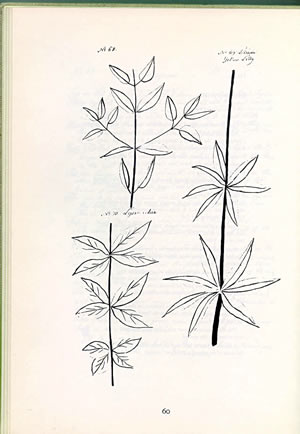
Jane Colden was born in Orange County, New York, in the Hudson River Valley in 1724. Her parents had emigrated from Scotland and the family lived on a large estate where they observed many plants and animals unfamiliar to them. Jane was an intelligent and curious child and even though women were not generally encouraged to embark on serious studies, her father helped her to study and draw the plants that surrounded them. He also taught her the system developed by the Swedish botanist, Carl Linnaeus, to classify plants.

Jane soon began corresponding with botanists in both Europe and America. She was a skilled illustrator and developed a technique for making ink impressions of leaves. Between 1753 and 1758, she catalogued more than 300 species of plants that she found in the area near her home. She also asked Native Americans and some of the Dutch settlers in the region about medicinal uses for these plants and was able to share that information with other scientists. Her scientific work was cut short when she married and a few years later died, apparently in childbirth, at the age of 42. Unfortunately, few of her letters have been preserved and we know about Jane Colden mainly through comments about her written by better-known botanists. Her only remaining manuscript is at the British Museum in London.

Jane Colden drawings

It is inspiring to read about the way Jane Colden and other 18th century scientists exchanged information and specimens across national boundaries. Without these exchanges, difficult though communication was in those days, science would not have enriched the lives of so many people. Have we lost the ability to do that just when global cooperation is most urgently needed?

Now that we have established lightning-fast communication that allows information to flow across the globe, it is time for many countries to work together even more than in the past. The threats brought by global warming require worldwide cooperation. Let’s hope the scientists and private citizens will be able to keep the work going without allowing political struggles to build walls between countries. Tariffs and secrecy may protect corporations but they often work against the welfare of ordinary people who depend on shared knowledge to maintain their wellbeing. We have to remember that we’re all in this together on one small, troubled planet.    

Are men mature enough to handle presidential debates?

Almost all of the news comments on the Democrats’ debates held this past week mentioned that for the first time women were a prominent part of the lineup. Ever since Samuel Johnson made his famous quip about women preaching in public, “Sir, a woman’s preaching is like a dog’s walking on his hind legs. It is not done well; but you are surprised to find it done at all” women have had to prove themselves worthy of speaking out in public settings.

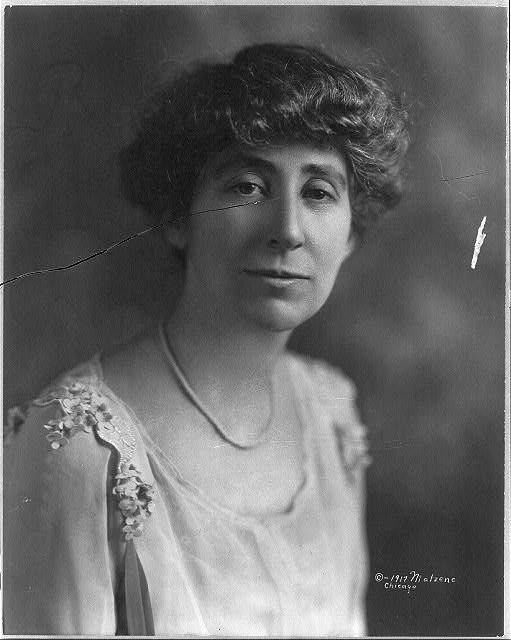
After all, it was more than a century after the establishment of the United States that a woman was first elected to Congress. That was Jeannette Rankin, who was elected from Montana in 1913. Rankin had become a public figure by her work in the women’s suffrage movement. Before running for Congress, she had been the first woman to speak before the Montana state legislature. There she urged that women should be allowed to vote. She succeeded in getting the vote for Montana women and moved on to fight for a national vote on suffrage.

Jeannette Rankin

Women had been fighting for the right to vote since 1848 and it was through the struggle to win that right that many women became accustomed to speaking in public and making their voices heard. They had many years of struggle, because it wasn’t until 1920 that the Women’s Suffrage amendment was finally ratified.

Women have served in Congress now for more than 100 years, but their move into power positions has been very slow. It’s hard to believe that in 1984, it was considered daring for the Democrats to nominate Geraldine Ferraro as their vice-presidential candidate. She was the first woman to appear in national debates before the election and her appearance was a welcome change for many voters, although of course, her team did not win the presidency.

Last week’s debates, however, showed a distinct change in the power structure of the debates. Many of the male candidates thought their best way to win attention (and potentially votes) was to interrupt as often as possible and take over the argument. But on Thursday night they were put in their place by Kamela Harris who had one of the most-quoted lines of the debate, “The American people don’t want to watch a food fight. They want us to put food on the table.” And a few minutes later she made a stinging attack on Joe Biden—no one interrupted her then.

And Harris wasn’t the only woman who raised the level of the debates. Elizabeth Warren, during the first debate, stuck to her points and talked substance instead of yelling and interrupting. And we can’t forget Amy Klobucher who quietly mentioned that the three women on the debate stage had far longer records than the men in fighting for reproductive rights for all women.

There is no question that women today are ready to speak out about national policies. Perhaps the more relevant question today is: are men ready to engage with them on a level that will benefit all of us?

Women on the Money-Harriet Tubman

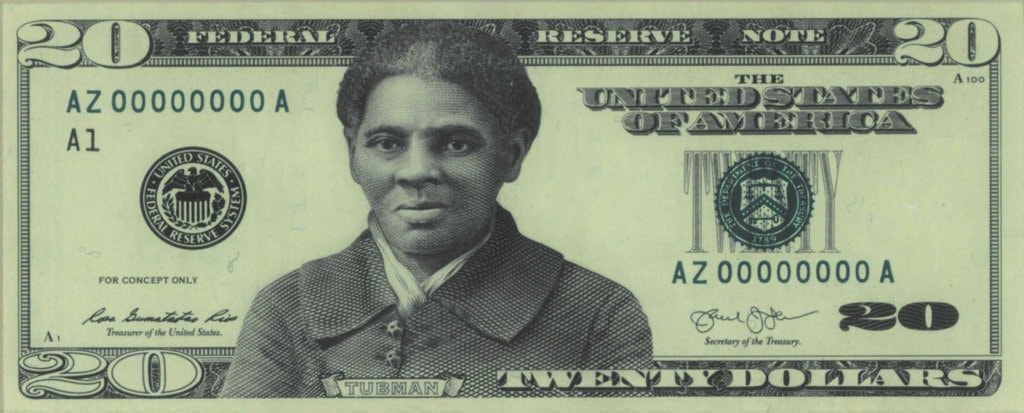
Four years ago I wrote a blog post about the initiative being undertaken by the Treasury Department to update the twenty dollar bill by replacing the picture of Andrew Jackson with a woman—the first woman to be honored on a major currency in America. The United States has lagged behind the rest of the world in having women pictured on currency. Dead white men have monopolized U.S. currency ever since the country began issuing money. But now we have a chance to move into the 21st century. Let’s not lose it.

After several years of work on the project, The Treasury Department came up with a plan to design a new twenty dollar bill the most commonly used paper currency—the one that comes out of the ATM each time we go to our bank to replenish our supply of cash.

The new design features Harriet Tubman, a 19th century activist who helped many Americans escape from slavery and begin their journey to freedom. The plan was to release the new bill in 2020, the one hundredth anniversary of the passing of the suffrage amendment that gave women the right to vote. 

Suddenly last month, the New York Times reported that Steven Mnuchin, Secretary of the Treasury, announced “the design of the note would be delayed for technical reasons by six years and might not include the former slave and abolitionist”. Further reporting, however, soon revealed that planning for release of the bill was well underway. No convincing reasons have been put forth for delaying the release for another seven years.

Reactions from Congress came quickly. Senator Jeanne Shaheen, Democrat from New Hampshire, introduced the Harriet Tubman Tribute Act of 2019, which would compel the Treasury Department to print $20 bills with Tubman’s likeness as soon as 2021.

Perhaps the only way to get Washington to move ahead with its project is for all of us to weigh in on the decision. Andrew Jackson has had his day. It is time for the country to recognize a woman who rescued scores of people from slavery, served as a spy for the Union during the Civil War, and devoted her life to making the lives of others better.

You can help by letting your Senators know you support Senator Shaheen’s bill. Perhaps it would also be a good idea to contact the Treasury Department and let Secretary Mnuchin know Americans are watching and hoping that the promise made to release the new bill in 2020 will be kept.

Women–Doing Not Saying

 In her speech to the Harvard University graduating class this week, Angela Merkel urged a cautious optimism: “I experienced firsthand how nothing has to stay the way it is,” she said. “This experience, dear graduates, is the first thought I wish to share with you: Anything that seems set in stone or inalterable can indeed change.”

She went on to list some of the problems the youthful graduates might want to change: “Protectionism and trade conflicts jeopardize free international trade and thus the very foundations of our prosperity,” she said. “Wars and terrorism lead to displacement and forced migration. Climate change poses a threat to our planet’s natural resources.”

Angela Markel’s common sense optimism, as well as her acknowledgement of the difficulties facing the world today grow out of her life experience. Born in 1954, she was raised in East Germany during the difficult years when the Soviets controlled that nation. In university she studied science and did not engage in public life. It wasn’t until the fall of the Soviet Union and the reunification of Germany that she was drawn to political life. Few people would have predicted she would become a leader. But, improbable or not, this quiet woman made her way past the bombastic male leaders of the party and eventually emerged as the leader.

Since becoming Chancellor of Germany in 2005, Merkel has been acknowledged as the leader of the European Union. She weathered the immigration crisis of 2015, encouraging Europeans to accept the humanitarian necessity of helping Syrian refugees to find a place in European society.

Now Europe is facing continuing turmoil as one country after another reveals a strain of populism that rejects immigrants and wants to turn the clock back. Merkel has said that she will leave politics in 2021 and allow someone else to negotiate the future. But her contribution to building a united Europe will not be forgotten. As historians look back on the first decades of the 21st century, I am certain she will be recognized as the outstanding political leader of our times.

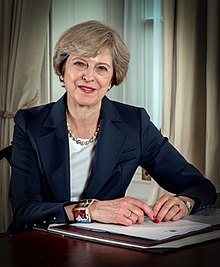
Angela Merkel is not the only woman leader who is leaving the limelight. Theresa May, Prime Minister of Great Britain, is also stepping down. May took on the onerous task of working out a Brexit plan to move Britain out of the European Union. After the referendum in which voters chose by a narrow margin to leave, several of the noisy male supporters of the move stepped back and chose not to handle the mess they had created.

Theresa May

Theresa May was the only political leader willing to take on the hard work of actually coming up with a plan. She came up with a number of plans, but, unsurprisingly, someone found fault with each one. The fact that she did not succeed in finding a magic formula that would suit everyone was almost inevitable.

When Theresa May stepped down, the media talked about her a failure. Perhaps they should wait to see whether any of her critics comes up with a foolproof plan that will be accepted by all sides. No one has shown any sign of doing that yet. I can’t wait to see whether any of the guys who have been jeering from the sidelines will step up and hit a home run now that they are on their own.

It is time for us to honor the courageous women who have not just talked but have taken on some of the world’s most serious problems. As Margaret Thatcher once said: If you want something said, ask a man; if you want something done, ask a woman.

The good that women do…

 The evil that men do lives after them;
The good is oft interred with their bones.

Shakespeare’s famous words about Julius Caesar are true for many people but it seems to me that it more often applies to women than to men. Or perhaps we should say that rather than evil, women are more often remembered for their romantic attachments than for their accomplishments. Shakespeare may have started the trend when he wrote Caesar and Cleopatra, which reduces a powerful ruler of Egypt into merely another lovesick woman. As Cleopatra’s biographer Stacy Schiff writes: “It has always been preferable to attribute a woman’s success to her beauty rather than to her brains, to reduce her to the sum of her sex life.”

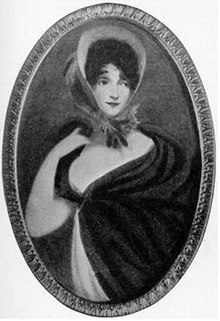
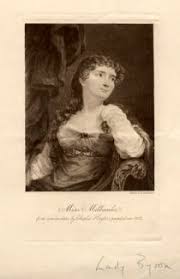
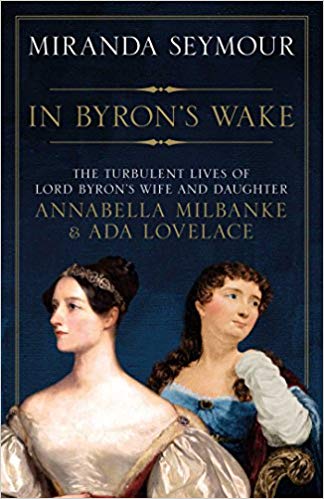
Another woman to whom this has happened is Lady Annabella Byron, wife of the wildly popular 19th century poet George Gordon (Lord) Byron and mother of Ada Lovelace who is often credited with writing the world’s first computer program. I have blogged about Ada Lovelace before, but only recently discovered what an interesting and productive life her mother, Lady Byron, led.

Born in 1792 to parents who had worried that they were too old to have a child, Annabella Byron was raised in luxury and provided with all the attention that could be given by doting parents, servants and tutors.(One thing that Annabella Byron had in abundance was names—she inherited several titles from various branches of the family—so for convenience I will just call her Lady Byron, the name by which she is best known and the one she preferred.) She grew into a beautiful and intelligent girl who was sought after by the sons of aristocratic families looking for a wealthy and pleasing wife. For several years she lingered in the marriage market turning down eligible suitors that she deemed dull.

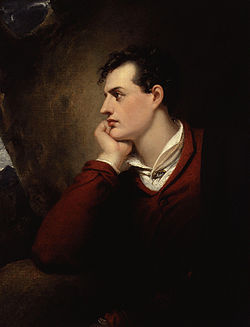
When she met Lord Byron, she did not find him dull. He was already a famous poet, and not only for his writing but also for his love affairs and his flamboyant lifestyle. Because of the limited contact that Annabella had with him, she probably did not know that among his friends he was also known for his hot temper, his heavy drinking, and his gambling. Like so many sheltered young women of the time, Annabella probably thought she could bring peace and serenity into his life.

Their marriage was brief. By the end of the first year, Byron’s erratic behavior, his continued infidelities, and his rudeness to Annabella and her parents, led the young bride to flee to her parents’ home. She gave birth to their only child, Ada, a daughter Byron never saw.

Their separation led to a scandal that dominated the rest of Lady Byron’s life and had serious repercussions on her daughter and the rest of the family. Lord Byron left England for the continent, but he lived only six more years, dying in Greece in 1824 at the age of 36. His poetry and his reputation, however, kept his fame alive for the rest of the century.

Lord Byron

The aristocrats of English society at this time seemed to be a small circle with many overlapping relationships. Lady Byron was able to raise her daughter in this circle where she was tutored by famous mathematicians and scientists. And Lady Byron herself decided to spend the rest of her life doing good for society. She became a fervent anti-slavery advocate and also expended much of her energy on establishing schools for children of the working class.

During the first half of the 19th century, more than half the women in England were not literate enough to sign their names to a wedding contract, and only about 70 percent of men could. As a committed Unitarian, Lady Byron supported an education based on science and rational thinking rather than on the dogma of the established church, so she set out to establish a network of schools. Her work was influential and caused more support for public education that would prepare working class children for jobs in factories and workshops.

Lady Byron’s social activism was recognized widely enough to earn her a place as one of the few women listed on the Reformers Memorial at Kensal Green. although she did not live long enough to know that. Her work to improve society continued until the end of her life, but she is still remembered by most people only for her short marriage to Lord Byron. For a more balanced picture of her life, I highly recommend Miranda Seymour’s new biography In Byron’s Wake, a double biography of Annabella and her daughter, Ada Lovelace. It is a fascinating book and gives us a new perspective on several well-known figures.