When the American Library Association meets in San Diego this month, approximately 25,000 people are expected to attend. Libraries are quiet institutions, often taken for granted, but they have played a large role in public life over the years and have influenced many people including politicians and policemen. Two of these people were the anarchist speaker and activist Emma Goldman, and the founder of the F.B.I. (Federal Bureau of Investigation), J. Edgar Hoover.
Emma Goldman was born in Lithuania on June 27, 1869. When she became a teenager, she moved to Rochester, N.Y. A few years later, she moved to New York City and lived on the Lower East Side of Manhattan—an area largely populated by Jewish immigrants. There she met Alexander Berkman and other radicals.
Goodman and Berkman wanted to act rather than just talk about anarchism. They decided to kill Henry Clay Frick, an industrialist who opposed unions, fought against the Homestead strike, and was responsible for the Johnstown Flood. Their plot failed and Berkman was sent to prison for 22 years. Goldman was not indicted and she vowed to carry on his work.
Goodman continued to lecture and write about anarchism. In 1893 she was sent to Blackwell Island for two years because she gave a speech urging people to steal groceries. In prison she learned much about anarchism and history by reading books she found in the prison library.
Over the years, Goldman continued lecturing and writing. Her arch-enemy, J. Edgar Hoover, watched her progress carefully. He too gathered ideas from the library work he had done before he joined the Justice Department. When he set up the Federal Bureau of Investigation, he used the principles of indexing and cataloging developed by librarians to make the bureau the most effective crime-fighting unit that America–or any other country–had ever had.
During the Palmer Raids of 1917, both Goldman and Berkman were interviewed by J. Edgar Hoover for deportation. Because of the speeches she gave and the books she had written, there was plenty of documentation about Goldman’s support of the Soviet Union. Both she and Berkman were deported to Russia, along with 248 other Americans.
After a few years in the Soviet Union, both she and Berkman became disillusioned with the Soviet system. Eventually, they both left the country. Goldman returned to the United States where she continued her career of writing and speaking about anarchism and good government. And she wrote an important book about the Russian government “My Disillusionment with Russia”.
In 1940, Goldman suffered a stroke while giving a lecture in Toronto. She died there on May 14, 1940. Her family eventually brought her body to Chicago where she was buried. Alexander Berkman died in Paris in 1936. J. Edgar Hoover remained director of the FBI until his death in 1972.
A recent book, “The Infernal Machine: A True Story of Dynamite, Terror, and the Rise of the Modern Detective” by Steven Johnson (NY Crown 2024) tells the story of some of the radicals and detectives who changed American history during the early twentieth century. You can find the book at many public libraries.
Mother’s Day is a good day to celebrate a woman who lived a full, exciting life but always had time to care for and help her famous son—Winston Churchill.
Jennie Churchill was born Jeanette Jerome in Brooklyn, New York on January 6, 1854 into a prosperous New York family. Her father was not outstandingly wealthy, but he and his wife had deep roots in New York society.
Jennie’s father, however, made a number of reckless investments during the prosperous years following the end of America’s Civil War. He was also a devotee of the opera and embarrassed his wife by having affairs with several entertainers. Finally, when Jennie was 13, her mother decided to take all of her daughters abroad and raise them in Europe where they would be able to get good educations and meet aristocratic men. Her plan worked out well.
Jennie and her sisters became fluent in French and were well-trained and talented musicians. They lived in Paris for several years before the revolution of 1870 forced them to resettle in London. One of the first eligible men that Jennie met there was Sir Randolph Churchill, whose family was close to the top of the social ladder. His ancestors had been part of British nobility for hundreds of years.
Jennie and Randolph married rather quickly—timing that raised questions for many years about whether or not Jennie was pregnant when she got married. The question never seemed to bother Jennie, however, and certainly caused no trouble for Winston who was born eight months after the wedding.
As was traditional in aristocratic families at the time, Winston was raised mostly by servants and was sent to boarding school at a young age. Being away at school was difficult for Winston and he wrote frequently to his mother begging for a visit or a letter. She seldom replied. Nonetheless, the relationship between the two was strong and lasting. In later years Winston wrote that he and his mother were “on even terms more like brother and sister than like mother and son”.
Although Jennie was not a wealthy woman, and she had a bad habit of reckless spending that led to debts, her many friends and relationships were helpful in furthering Winston’s political career. She was active in many good causes. During World War I, she was Chair of the hospital committee for American Women’s War Relief Find which set up two hospitals in France to serve men wounded in the war.
Jennie Jerome was not the only devoted mother who strongly influenced herson’s political career. A fascinating book published last year tells the story ofJennie Jerome and another successful political mother. It is “Passionate Mothers,Powerful Sons: The Lives of Jennie Jerome Churchill and Sara Delano Roosevelt” byCharlotte Gray (NY S&S 2023). Anyone interested in how politics at the highest level can work will find much to think about in this book.
February is the shortest month on our calendar and this year it somehow slipped away from me entirely. Computer problems caused me to lose several files and some pesky health problems slowed me down. But now March has come. The days are getting longer and I hope my blog will get back on schedule.
One of the best-kept secrets of most best seller lists is that sometimes the real bestsellers never appear on the lists. While critics choose the bestselling books of the week or the year, readers may be spending their time reading books written centuries ago. The New York Times has a careful set of criteria for its bestseller lists. The details of their criteria are not public, but the Times does not include all the books that appear in a given year. They do not include books published by religious publishers even though these attract large audiences. The Bible, for example, is a perennial best seller that never makes best seller lists.
Ann Radcliffe
Ann Radcliffe was born on July 9, 1764 in London. She moved to Bath with her family a few years later. She might have attended school in Bath, although there are no records of this. She certainly grew up to be a reader. In 1787, she married William Radcliffe. Her husband was a newspaperman who encouraged his wife to read and to write. The couple had no children and Ann devoted most of her time to those activities and to travelling. Her first book was a series of travel letters.
Radcliffe’s first novel, The Castles of Athlin and Dubnayne was published anonymously in 1789. The following year she wrote another book, A Sicilian Romance. Each book increased her audience and by the time she wrote her third, she began to publish under her own name.
For her most famous book, The Mysteries of Udolpho, Radcliffe received 500 pounds, while the average author in England at that time received only 10 pounds for a novel. She was soon earning far more than her husband did for his newspaper work, but the difference did not seem to interfere with their relationship. They remained a devoted couple.
Even though Radcliffe was a successful writer, she did not publish a great many books. While her books continued to be read and discussed by readers and other authors, she herself stopped writing quite early in her career. Her audience, however did not stop reading.
Radcliffe was the most popular writer in England during the early nineteenth century. She was admired by both Jane Austen and Sir Walter Scott. And her influence did not end at England’s shore. Even the great Russian novelist, Dostoyevsky, read and admired her books.
You might want to try reading a few of Ann Radcliffe’s books too. They are easily available online and in libraries and bookstores. Although they are not on our best seller lists these days, they are a refreshing reminder that we can still enjoy books written long before we became readers. Not all books lose their charm as time goes by. Why not try one of them and find out what Jane Austen read before she started writing books of her own?
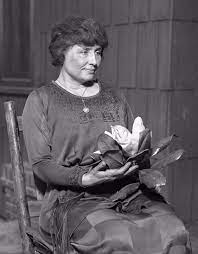
Many people throughout the world recognize the name of Helen Keller. Her story is an inspiring one. A movie about her life won two Academy Awards in 1962 and her biography has been a bestseller for several generations. Many people know that Helen Keller overcame the handicaps of being both blind and deaf, but few readers are aware of what a long and influential life she led.
Helen Keller was born in Tuscumbia, Alabama on June 27, 1880. When she was 19 months old, she lost both hearing and sight after falling ill with a disease that has never been identified. Her family was prosperous—her father was a newspaper editor who had served in the Confederate Army during the Civil War. Her mother came from an old slaveholding family and was eager to see Helen get an education. When she read in Charles Dickens’ book American Notes about the Perkins Institute for the Blind, she got in touch with them. It was through that school that Helen and her family met Anne Sullivan, a recent graduate of the Institute, who became Helen’s teacher and companion for the rest of her life.
Helen was a diligent and successful student. After learning how to communicate through sign language, she attended several private schools. Although her voice remained somewhat difficult to understand, Helen learned to spell out words by pressing her fingers on Anne’s hand. Anne would respond in the same way. Eventually Helen went to Radcliffe College and became the first deafblind person to earn a college degree. Her success was noted by a number of influential people including Mark Twain who became a friend and supporter.
Helen Keller
After graduating from college, Helen embarked on a lifelong career of giving lectures and writing. She and Anne would appear on stage together so that Helen could spell out her response to questions and Anne would relay them to the audience.
During the years leading up to World War I, Helen was active in opposing America’s entry into the war. She admired the Soviet Union because she believed that socialism could eliminate poverty. Her political commitment to socialism went up and down over the years, but she apparently never completely lost faith in that philosophy.
Helen joined the American Foundation for the Blind during the 1920s and worked to support the goals of that organization for decades. She tried to help the blind community and others whose abilities differed from the majority. She did not believe that blindness or deafness should force people into a life of retirement or solitude. And she was not shy about publicizing her ideas. Her engagement with socialism led to investigations by both the FBI and Senator McCarthy’s Internal Security Committee during the bitter anti-communist post World War II years.
Several biographies of Helen Keller have been written over the years, but a new one by Max Wallace called After the Miracle: The Political Crusades of Helen Keller (Grand Central 2003) offers many surprises even to those who have read some of the earlier books.
Today we are accustomed to wars that enter our living rooms and pervade our lives. We can turn on the TV or gaze at our phones to see scenes of destruction and fighting around the world. A century ago, the Crimean War of the 1850s was the first war that had a day-to-day impact not only on those who participated but also on the society that supported them. For the first time journalists could send rapid dispatches to the people back home who wondered what was going on. And for the first time, scientific advances that had been made in peacetime could be applied on the battlefields of war. It was also one of the first wars in which women leaders played an important role as nurses and organizers in the care of the men who did the fighting. One of those leaders was Mary Seacole.
Mary Seacole was born in Jamaica in 1805 in the prosperous and attractive city of Kingston, the base of British operations in the West Indies. British troops stationed in Jamaica controlled the island while most Jamaicans of African descent were slaves. But there was a great deal of mingling and intermarriage. Mary’s mother was apparently of mixed-blood and was free, as were many children whose fathers were white. Mary herself writes in her autobiography “I am a Creole and have good Scotch blood coursing in my veins. My father was a soldier, of an old Scotch family.”
Over the years, the Jamaicans had learned how to cope with some of the difficulties of living in a tropical climate. Many of the women became nurses or “doctoresses”. They had skills that the military doctors had never mastered in Europe and were able to offer remedies that were unknown and highly valued.
Mary Seacole was a healer and a traveler. She grew up in Jamaica where she was trained by her mother, and she also spent time in Panama where she learned how to treat people suffering from cholera as well as other dangerous diseases that became epidemics there. But Mary Seacole was a traveler as well as a healer. After learning and practicing her medical skills in Jamaica and Panama, she decided to go to England, the “mother country” of the Caribbean. She was not the only person from the British colonies to decide to do this and, so there was a large presence of people from the colonies in London. After working in with Army men for years, Mary knew many of the officers who were glad to welcome another person from the colonies.
When the Crimean War started in 1853, pitting Russia against most of the other European countries, Mary Seacole wanted to get involved. She heard that Florence Nightingale was trying to set up a corps of nurses, she thought she could help. She wanted to set up an inn where she could offer food and drinks to support herself and also offer healing for those who needed it.
Unfortunately, when Seacole tried to offer her help to Florence Nightingale, she was rebuffed. Nightingale, who came from an aristocratic family and had never needed money, was appalled by the idea of serving alcohol to soldiers and also the idea of making money. Nightingale never accepted Seacole as a healer worthy of working with her nurses.
We’ll never know how much of Nightingale’s attitude was due to a knowledge of Seacole’s history of medical care. Perhaps she was influenced by her feeling that a native Jamaican woman without any formal medical training could not possibly be as effective as her carefully trained white nurses. What we do know is that Nightingale won the battle and her name went down in history as the greatest nurse of the 19th century.
After being rejected by Nightingale, Mary Seacole still had to earn a living so that she could provide medical care. She continued to operate an inn where she offered drinks and food to officers as well as medical care to soldiers. Her medical facility soon became well known and popular with soldiers of all ranks.
After the Crimean War ended, Seacole returned to London, but she found it difficult to make a living there. Eventually she returned to Jamaica where she was treated as a hero by many of the soldiers she had known over the years. She wrote an autobiography, The Wonderful Adventures of Mrs. Seacole in Many Lands”. Unfortunately, she left out many facts about her life.
A new biography of Mary Seacole has now been published which offers more detailed information about her life. Helen Rappaport’s In Search of Mary Seacole: The Making of a Black Cultural Icon and Humanitarian. (Pegasus 2022) gives more details about Mary’s life and family. Finally this heroic woman seems to be getting the honors that she deserves.
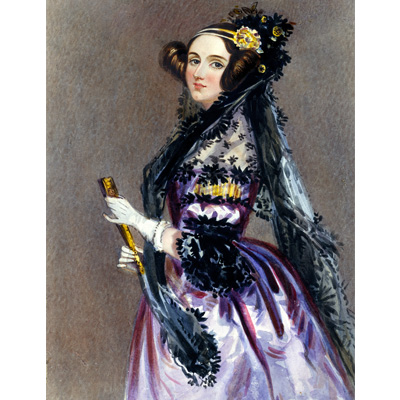
Few people seem to be aware that we celebrated Ada Lovelace Day on Tuesday October 10, 2023. This week was filled with news, most of it bad news, about war, invasions, and Congressional squabbling. Somehow Ada got lost, and yet many thoughtful people acknowledged that the major scientific development of 2023 has been the establishment of AI or Artificial Intelligence. And Ada Lovelace’s life and work did much to make AI possible. She deserves some attention, even during this busy month.
Ada Lovelace
Who was Ada Lovelace and why is she celebrated? You can still get a few arguments about whether she deserves the distinction, but she certainly had an unusual life. She was born in England in 1815 and was the legitimate daughter of the famous poet, Lord Byron, quite a feat in itself because Byron fathered all of his other children with women who were not his wife. Still, being born legitimate is not an achievement for the baby, who has no choice in the matter. Ada Lovelace (born Augusta Ada Byron) had to be an unusual woman to earn a reputation of her own and gain lasting fame. And she was.
Despite having an irregular upbringing with a mother so focused on hatred for her husband, Byron, that she had little time for her daughter, Ada Lovelace had a good education. Her mother encouraged tutors to teach Ada mathematics as a way to ward off the tendency toward madness that she believed affected Lord Byron and his family. Ada took to numbers and became a competent mathematician as well as mastering several languages.
Ada Lovelace moved in high social circles. She became Baroness King when she married William King. The couple had three children, but Ada still had time to continue her friendships with both men and women, including the mathematician Charles Babbage.
Charles Babbage was the inventor of the Analytical Engine, a first attempt at a computer, which enabled him and Ada to develop an algorithm that allowed the analytical engine to compute Bernoulli numbers. It was this which led to Ada being considered the first computer programmer.
Ada became an avid gambler and tried to find mathematical models to help herself and her friends find a formula to increase their winnings. That, unfortunately, did not work and Ada went deeply into debt. Despite her weaknesses and failures, Ada still deserves some attention as one of the early leaders in science, so let’s offer three cheers for Ada and celebrate her special day as we learn mor about how AI will affect our lives this year and in years to come.
America has often been called a melting pot and it is certainly true that American has brought together people from very different national and racial groups. Some Americans move easily between various cultures, understanding and appreciating the differences and similarities of several. Belle da Costa Greene was one of these people. Belle was born in 1879 into a prosperous mixed-race family in Washington, D.C. Her mother was a music teacher and her father was the first Black graduate of Harvard University. During the years after the passage of the Fourteenth Amendment, he worked for the government and for several groups devoted to insuring racial equality in the United States.
Belle received a good education and attended classes at Amherst College and Columbia University. She became very interested in history and loved the old manuscripts and books she discovered in the university libraries. Eventually she became a librarian, working first at Columbia University and later at Princeton where she met the nephew of J.P. Morgan, one of the richest men in America.
Belle impressed the people she met at Princeton, not only because she was devoted to her work with books and manuscripts, but also because she was a slim, attractive young woman who could hold her own in any conversation. She dressed well and had a lively wit. Once when someone complimented her on an outfit she was wearing, she remarked, “Just because I am a librarian doesn’t mean I have to dress like one.” With her looks and charm she soon found a congenial group of friends at Princeton and in the library community.
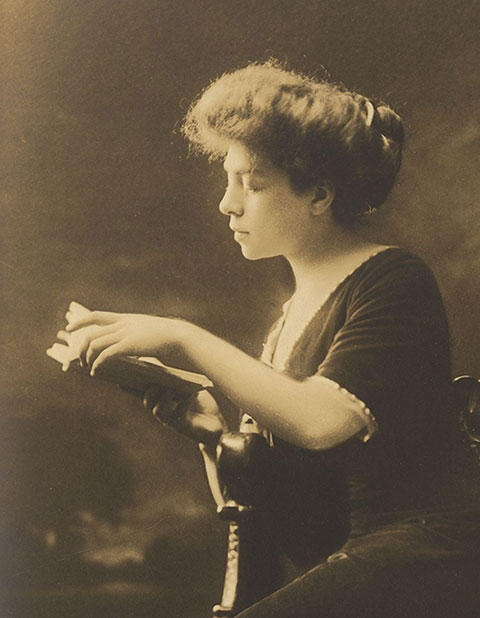
Belle da Costa Greene
When J.P. Morgan, the multimillionaire who owned one of the most impressive libraries in New York needed an assistant, his nephew, who had met Belle at Princeton, was glad to recommend her as the ideal person to work with him. Belle rented an apartment in New York where her mother and unmarried sisters could live close to her. The job at the Morgan Library turned out to be ideal for Belle and she remained at the library for 43 years—the rest of her working life.
During the years toward the end of the nineteenth century, when Belle was starting her professional career, segregation of the races increased dramatically especially in the Southern states. Belle and her family were very light-skinned and people who met them often did not know their racial background. Belle’s way of coping with this confusion was to be very quiet about her background. Sometimes she referred to a Portuguese ancestor, but the information she gave was vague. Even many of her closest associates and friends were uncertain about her family and background.
Working at the Morgan Library made it possible for Belle to meet and become friendly with many of the most important art historians and collectors of the times. She became especially close to Bernard Berenson, the most prominent art and literary historian at the time. Although she was discreet about their relationship, they carried on an affair and a friendship that lasted for most of their lives. Berenson was married, but his wife, for the most part, accepted Belle and was aware of how much she meant to Berenson.
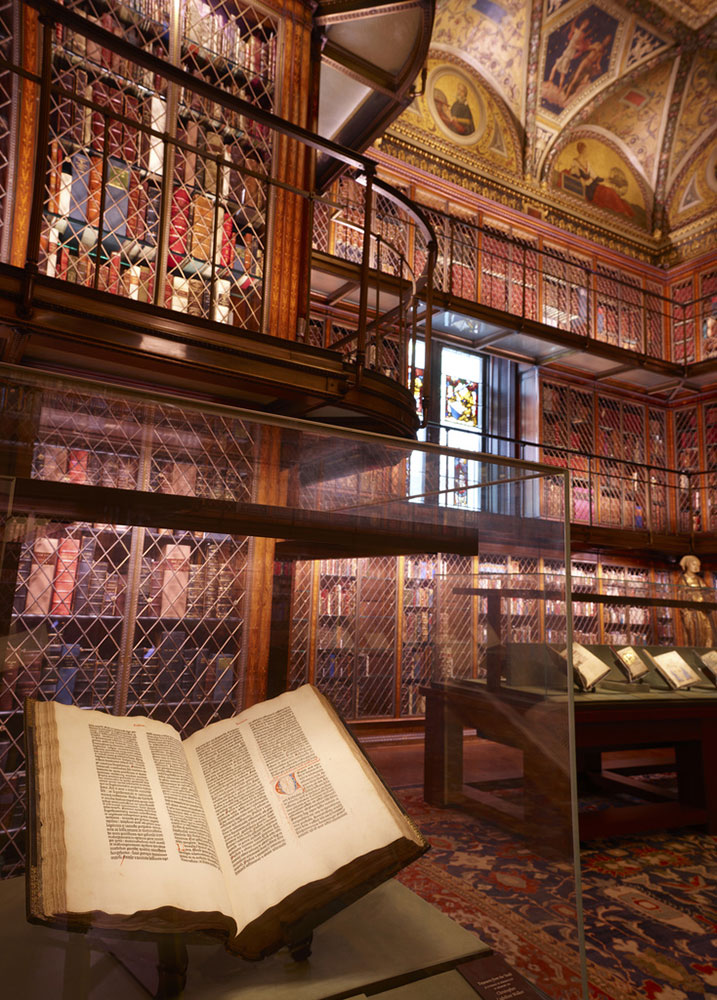
Gutenberg Bible on display in Mr. Morgan’s Library, The East Room of The Morgan Library & Museum, Photography by Graham S. Haber, 2017.
During the course of Belle’s tenure at the Morgan Library, she helped to transform the collection from a personal collection into a public institution. She became the first director of the museum in 1926 when it became a public institution. Today it is one of the most important museums in New York City and in the country. Its collections offer scholars and the public a chance to know some of the most important books and manuscripts that record the history of Western Civilization.
The importance of Belle da Casta Greene has not been widely known but a detailed biography by Heidi Ardizzone offers a chance for people to learn more about this fascinating, though still mysterious, woman. The biography, An Illuminated Life: Belle da Costa Green’s Journey from Prejudice to Privilege (Norton 2021), is available in many libraries.
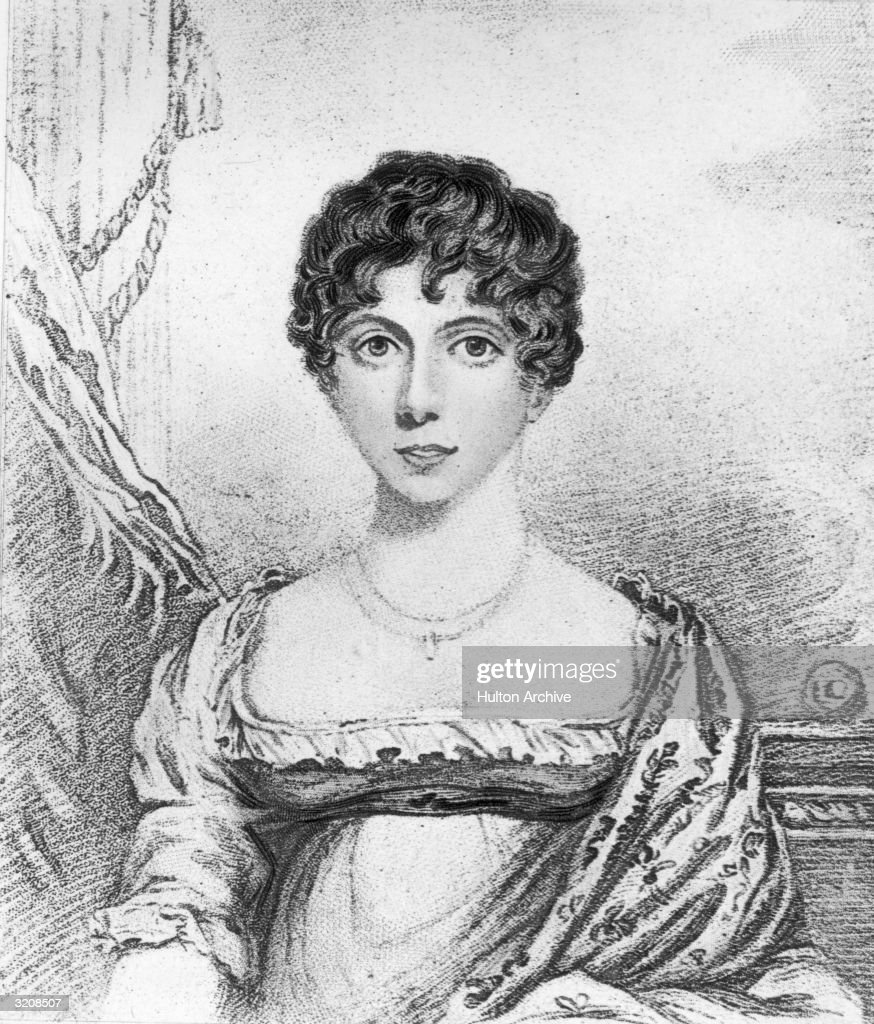
The early 1800s in England was a time of prosperity for many of England’s aristocratic families, but it was also a time when fortunes could change quickly and harsh punishments were given to people who did not follow society’s rules. Men were expected to serve the king and to expand their family’s fortunes. Women were pawns, whose role was to make good marriages and maintain their family’s position, although they were offered remarkable freedom in their behavior after marriage.
Caroline Lamb was born into this society in 1785. Her family was aristocratic. Her father was the future Earl of Bessborough and her mother’s family, the Spencers, were equally aristocratic and even wealthier. Caroline lived all her life in a society where men could find favor by flattering the King and his cronies, while the women were often judged on the number and status of the lovers they chose. In fact, one cynic, Lord Egremont, wrote, “There was hardly a young married lady of fashion who did not think it a stain upon her reputation, if she was not known as having cuckolded her husband.”
Lady Caroline Lamb
From early childhood, Carolyn was an attractive and lively child. She had very little formal schooling but gained a good education at home mainly from governesses and the attention of her grandmother, who provided encouragement and a large library. Caroline was a very bright girl who learned to read when she was four years old and honed her skills by writing letters to her cousins and friends.
Although she was almost ignored by her parents, Caroline enjoyed a busy social life at parties and dances. Her lively wit gained her wide attention and her slim, petite figure attracted suitors. At the age of 19, she married William Lamb, a man who moved in the same social circles as she did. The marriage seems to have been a real love match. It was discouraged by William’s parents, but the two young people were determined to marry. Caroline never got along well with her mother-in-law, who believed that her son should have a more docile wife. Despite family pressure, the young couple seemed congenial and were happy for the first few years of their marriage. Caroline quickly became pregnant, although her first child was stillborn. Another pregnancy resulted in a baby, who died within a few weeks. It was not until her third baby was born that Carolyn had a healthy child who survived infancy.
The new baby, a large, healthy child, was named Agustus. Unfortunately, within a year or two it became apparent that he had serious developmental problems. Caroline spent much of her time taking care of Augustus, even breast feeding him, although most wealthy women hired wet nurses. Nonetheless, Augustus developed slowly in speech and was clumsy in physical actions.
Caroline spent much of her time with Augustus but did not neglect her social life. In 1812, she wrote a letter of appreciation to a young poet—Lord Byron—an act that determined much of the rest of her life. Byron called upon her and the two began a tumultuous affair that lasted for about six months. It has been said that she coined the well-known description of Byron as “mad, bad, and dangerous to know”. But the affair cooled after a few months and William Lamb decided to take Caroline abroad for a trip through Ireland in order to get away from the watchful eyes of society. Byron and Caroline continued to write to one another during the months-long trip, but by the time Lambs returned to London, Caroline learned that Byron was no longer interested in continuing the affair.
Caroline’s passionate nature and indiscreet behavior did not allow her to acknowledge the end of the affair with Byron. She continued to contact him and even call upon him, and she met him often at various social events. At one party, when Byron insulted her, she smashed a wine glass on the table and attempted to slash her wrists. Her actions made her notorious enough that she stood out even in the permissive social atmosphere of the time. Several friends broke with her and stopped inviting her to parties. Relations between Caroline and William Lamb became strained, although William continued to refuse to divorce her as his parents urged him to do.
During the years following the end of Caroline’s affair with Byron, her life became more erratic, but she never lost her vitality and intellectual interests. She continued to write both poetry and prose. Her most famous novel, Glenarvon, was widely popular and was praised by writers such as Goethe. William Lamb’s family continued to press him to divorce Caroline, but he refused to leave her. Finally the couple agreed to a formal separation, but they continued to be in touch with each other as Caroline’s health deteriorated. When William heard how sick she was, he travelled home from the continent to be with her when she died in 1828.
For many years Caroline Lamb has been remembered only for the scandalous tales of her relationship with Byron, but now at last she has received the biography she deserves. Antonia Fraser, who has chronicled the lives of so many historical figures, recently published Lady Caroline Lamb: A Free Spirit (Pegasus Books 2023). It is a pleasure to read more about Caroline Lamb and to recognize that she was an interesting person and not just a flighty fan of a famous poet.
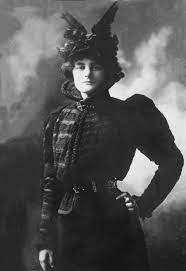
Maud Gonne was born in England into a wealthy family. Her mother died while she was a child. Maud and her sister were sent to a boarding school in France and grew up speaking both French and English fluently. Her father, Thomas Gonne, who served as an officer in the British Army, spent time in many countries around the world. In 1882, when Maud was in her early teens, he was sent to serve in Dublin. At that time, he brought his two daughters to live with him. It was during those years that Maud got to know Dublin and observed the poverty of many of its people. These were difficult times in Ireland and Maud became a strong opponent of the British landlords who evicted tenants from their homes when crops failed and the farmers were unable to pay their rent.
After the death of their father in 1886, Maud and her sister were sent to live with an uncle in London but were not happy there. Maud, who had grown into a beautiful young woman, decided to train to be an actress. Unfortunately, her career was cut short when she developed TB and was advised to move to a spa in France. In 1887, she came of age and inherited her share of her mother’s fortune. For the rest of her life, she was wealthy and had no need to earn money. She divided her time between France, England and Ireland and maintained a lively social life in each of those countries.
Maud Gonne
In Paris, Maud met Lucien Miklevoye and began her first serious love affair. Miklevoye was married, and a divorce was almost impossible to obtain in France, but the two of them remained devoted to each other for several years and eventually had two children, although the eldest died very young. As was usual in wealthy families, the children were raised mainly by a devoted governess. When Maud spent time in Ireland, she never acknowledged the children but referred to her daughter as her niece. Yeats, who was a close friend for many years, knew almost nothing of Maud’s Parisian life or about her children. He fell in love with Maud and repeatedly asked her to marry him, but she turned him down without apparently telling him about her relationship with Miklevoye or about her children. It was several years before he learned about Maud’s private life.
The 1890s were difficult years in Ireland, and Maud spent much of her time in Dublin working with other activists to oppose British rules. She supported the Boers during their war to drive the British out of South Africa and started a women’s association. She is credited with starting the Sinn Fein (“ourselves alone”) organization, which became a powerful anti-British association.
Gonne’s private life remained turbulent. She met John McBride, a hero of the Boer War, and married him. They had one son, but the marriage was not a happy one. In 1905, she sued for divorce in France (divorce was illegal in Ireland), but she lost her case and the divorce was denied. McBride later became a hero of the Irish republican movement and was executed by the British in 1916.
As the years went by, Maud became more and more anti-British and was accused of supporting the Germans. In 1918 she was jailed for six months after being accused of supporting a pro-German plot. During the years between the two World Wars, Gonne’s strongly anti-British feelings led her to support the anti-Semitic actions of German fascists. She never spoke out against the prison camps or the deaths of many Jews during Hitler’s rule. She did much good during her lifetime, but also sometimes supported cruelty and caused pain.
A recent biography The Fascination of What’s Difficult: A Life of Maud Gonne by Kim Bendheim (OR 2021) tells the story of Maud Gonne’s life and achievements. The author gives a clear and detailed account of Gonne’s life, but mysteries remain. Maud’s own writings, including her letters and memoirs, are not always accurate and sometimes raise more questions than they answer. Perhaps we will never be able to understand all the complexities of Maude Gonne, but we can be grateful that her life inspired some of the best poetry written by one of the greatest poets of her time, William Butler Yeats. Perhaps he was thinking of her when he wrote these lines:
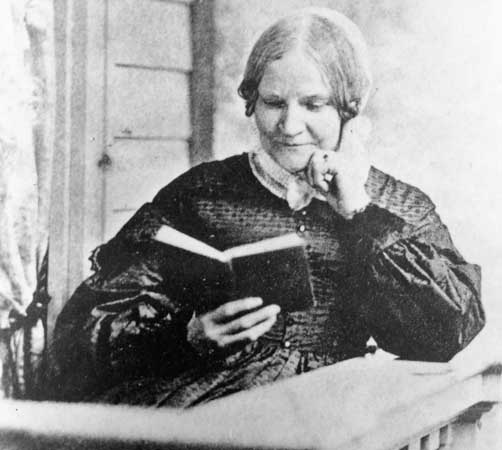
Lydia Maria Child once explained the secret that made her life productive. In a comment about housekeeping she wrote “The true economy of housekeeping is simply the art of gathering up all the fragments, so that nothing be lost. I mean fragments of time, as well as materials.” Child spent her life finding fragments of time and using them to make life better for herself, her family, and her country. For her entire long life, she turned those fragments into articles and stories that she hoped would eradicate the cruelty of slavery and the injustice of life in America during the 1800s. And yet now her name is almost forgotten. How did that happen?
Child was born Lydia Maria Francis in Medford, Massachusetts on February 11, 1802, to Susannah and Convers Francis. Like most girls at that time, she did not receive much formal education, but an older brother, Convers Francis, noticed that she was an avid reader and he enjoyed sharing his books with her. When he left home to attend Harvard, the two of them carried on a lively correspondence. After her mother died, Lydia moved to Maine to live with an older, married sister and train to be a teacher.
Lydia Maria Child
Eventually Child was able to move to Boston to live with her brother Convers who had become a Unitarian minister. There she met many of the intellectual and cultural leaders of the day. She discarded the name “Lydia” that she had always hated and from that time on chose to be known as L. Maria. Her urge to write led her to try her hand at an historical story and in 1824, she published her first book, Hobomok, an historical novel about a native American Indian in New England who married a white woman. Although some readers objected to the theme of interracial marriage, many others admired the book and she soon found a wide audience.
As her confidence grew, Child realized that she could use her practical knowledge to improve the lives of American women who were keeping house and raising children in a new country. She started a journal called The American Practical Housewife, which became one of the most popular publications of the 19th century. Her recipes and housekeeping tips were valued as was her advice on raising children. She soon added another journal, The Juvenile Miscellany, filled with stories and poems designed for children.
Among Convers Francis’s friends was a young lawyer, David Child, who admired L. Maria’s writing and soon began courting her. Like Maria and her brother, Child came from a middle-class family of limited means. He had attended Harvard but had no wealth or property to support himself while he struggled to make a living as a lawyer. David was definitely not a good marriage prospect for a young woman who had no family wealth of her own, but the two shared a deep commitment to making the world a better place. So, like so many young lovers, they decided their love would conquer all. They married in 1828, determined to build a better world.
Both of the Childs were ardent supporters of William Lloyd Garrison and read his newspaper The Liberator. Both of them followed Garrison’s lead in proposing that enslaved people should be freed immediately and given compensation from their owners for their years of labor. While more conservative Americans suggested that freed slaves should be sent to Africa to build new lives in the home of their ancestors, David and Maria Child wanted them to remain in America and gradually merge into a new life through education and intermarriage. Like most of the people who supported the abolition movement during the 1830s, neither David nor Maria could foresee what a long, slow, and bitter process it would be to end American slavery.
Although both of the Childs remained committed to the reforms they supported, their lives did not work out as they had planned. David’s career as a lawyer was never successful and he piled up debts as he continued to try to build a practice. He even spent a short time in jail because of his failure to pay off debts. Lydia Child wrote articles and books to support the two of them, but as a woman, all the money she earned from her writing belonged to her husband. The couple never had any children, and at times they lived apart, but they remained devoted to each other.
Maria Child’s practical articles about housekeeping were popular, but she was not content to write only about domestic issues like making soap and choosing fresh eggs. She was determined to help in the struggle to free slaves and women, two groups that she saw as being exploited by men who treated them as property. Some readers rejected her outlook. The book that lost her the most readers was her An Appeal in Favor of That Class of Americans Called Africans. In it she advocated the abolition of slavery but rejected the notion of sending freed slaves back to Africa. Instead, she wanted to integrate them into American society and make them the equal of white citizens. She accused Northerners of being just as racist as Southerners, which infuriated some old friends and other leading citizens of Massachusetts. She believed in education and in intermarriage. She wrote:
An unjust law exists in this Commonwealth, by which marriages between persons of different color is pronounced illegal. I am aware of the ridicule to which I may subject myself by alluding to this; but I have lived too long, and observed too much, to be disturbed by the world’s mockery. In the first place, the government ought not to be invested with power to control the affections, any more than the consciences of citizens. A man has at least as good a right to choose his wife, as he has to choose his religion.
The struggle to abolish slavery took far longer than most reformers had expected. It was not until a Civil War threatened the future of the country that the Emancipation Proclamation was finally passed and slavery ended. And even then, the struggle continued. Lydia Maria Child continued her writing and her work for justice until the end of her long life. She died on October 20, 1880.
A good place to learn more about Child and her fascinating life is the recent biography Lydia Maria Child: A Radical American Life by Lydia Moland (Univ. of Chicago Press 2022). It is available in most public libraries and in bookstores as well as online.

 Teacups and Tyrants-Adele Fasick looks at people, books, and history
