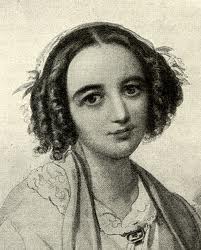
Fanny Mendelssohn–a musical life to celebrate

Concert at home
Concert at home
Women composers are not prominent in the history of Western music; in fact, many students of music and lovers of classical concerts would be hard-pressed to mention any female composer. Now at last, it appears that we have a new name to list among the 19th century composers of note—Fanny Mendelssohn Hensel.

Fanny Hensel, by her husband Wilhelm

Her name, of course, is well known because of her famous brother, Felix, but until recently she had been considered a pianist and salon musician who played in private concerts at home, not as someone whose work was worthy to be considered part of the canon. Now at last, as her compositions have been discovered over the last twenty years and studied by serious musicians, she is being taken seriously as a musician. R. Larry Todd, author of Fanny Hensel; The Other Mendelssohn (Oxford, 2010) has studied her music and has named her as the greatest female composer of the 19th century.

Both Fanny and Felix Mendelssohn were musical prodigies when they were children. By the time Fanny was 12 and Felix 9 years old, they were able to perform in public. Then their paths diverged. Like most women of her time, Fanny’s musical ambitions were strictly curtailed. While her father encouraged Felix to become a professional musician, he told Fanny that she must restrict her music to entertaining the family—the husband and children she was destined to have. Her entire life was to be determined by her gender.

Fanny never gave up her musical ambitions, although she did not have as much time to pursue them as Felix did. She generously shared her music and her ideas with her brother and did not became bitter about always being in his shadow. Eventually she fell in love with Wilhelm Hensel, a painter, and the couple had a child, named Sebastian after J.S. Bach, one of Fanny’s favorite musicians. Remarkably enough Fanny was able to make this tangle of love relationships work. She was happy with her husband and doted on her son, but continued to maintain a very close and loving relationship with her brother Felix too.

During her lifetime, Fanny’s music was often presented at concerts held in the Mendelssohn home. Fanny carefully arranged the concerts, wrote pieces for them and planned the events. As her son grew up she had more time to devote to her music and as she neared the age of 40 was more and more inclined to think of herself as a professional musician. She was beginning to publish her works, but was suddenly struck down by a stroke and died at the age of 41. When he heard the news, Felix collapsed in a faint. He died within six months of his sister.

The rediscovery of Fanny Mendelssohn Hensel as an important musician is a joyful event. And while we celebrate being able to hear performances of some of her works, perhaps we should also celebrate her success in leading a rich, loving life despite the harsh limitations put on her because of her gender. She managed to make life happy for her brother, her husband and her son as well as maintaining her devotion to her own profession. That was a remarkable achievement in her time and an inspiration to us today.
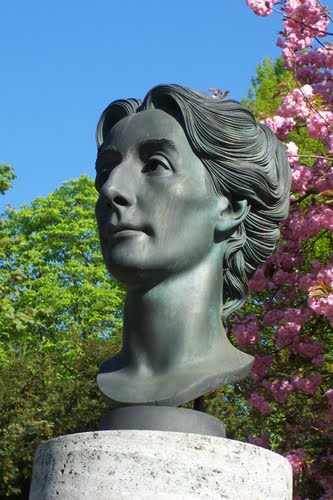
Cosima Wagner–ambitious wife

February is a chilly and unwelcoming month in most of the country, but still it’s the month we celebrate love with Valentine’s Day and all the frilly romance that goes with it. Many women over the centuries have defined themselves by the men who loved them, becoming the “wife of…”, “mistress of…” or perhaps even better, “beloved of…” was the height of their ambition. Very few of these women are remembered in history, but Cosima Wagner is an exception. Her fame rests not so much on having been the wife of the composer Richard Wagner, but on her relentless dedication to him while he was alive and to his memory after his death. She managed to become a celebrity during her lifetime, sustain a permanent memorial to her husband, and to merit a full biography in 2007, more than a century after he died.

Why would a woman (or a man for that matter) want to define herself entirely through another human being? We’ll never know for sure but some clues might be found in Cosima’s childhood. She was the illegitimate daughter of Franz Liszt, the famous 19th century composer and pianist, and his mistress, the Countess Marie d’Agoult, who had left her husband for Liszt. Both parents were preoccupied by their own lives and Cosima’s happiest years as a child were those she spent with her grandmother, Liszt’s mother. Cosima WagnerThese days we all know children who are virtually raised by a grandparent—usually a grandmother—and who carry with them for years the pain of being neglected by their parents. Cosima seems to have been an example of this. Her marriage to Wagner, who was 24 years older than she, seems to have given her the emotional security she had not found as a child. All her life she clung to that security and to her memory of Richard Wagner.

When Richard Wagner died in 1883, Cosima was dramatically grief stricken. She insisted on sleeping in the same bed with her husband’s dead body and clung to it until she was physically removed. After the funeral, her children, family friends, and colleagues expected that she would retire into seclusion for the rest of her life, but Cosima chose a different path. Suddenly released from being a wife in the shadow of a famous man, she became the head of the family, director of Wagner’s beloved Bayreuth festival, and keeper of the Wagnerian flame. Through the force of her will she shaped Wagner’s legacy and watched his cult become a lasting influence throughout most of the musical world.

Cosima Wagner was not an admirable woman. She accepted Richard Wagner’s anti-Semitism and eventually became a follower of Adolf Hitler and his Nazi party. She built the Bayreuth festival into an aristocratic gathering place for the wealthy and powerful as it still is today. But people do not have to be admirable to be fascinating. Despite having been born a woman in a strongly masculine world, she became a powerful figure who helped shape that world. And all the time she masked her ambition behind the womanly excuse of devotion to the man she loved.

Oh, and about that biography. It is now available in English and is well worth reading: Cosima Wagner: The Lady of Bayreuth by Oliver Hilmes.

The Sporting Life in old New York

Despite the attempts of reformers to keep Americans pure and more moral than their European ancestors, life during the 1830s and 1840s was leading many young men and women into temptation. The growth of cities and the lack of new land for farming, meant that many young men had to leave the villages where they had grown up so that they could make a living as clerks, storekeepers, lawyers or doctors. As the young men left the countryside, opportunities for girls to find husband who could support them grew fewer, so many of them left too. They moved into cities to work as servants, milliners or seamstresses. With so many unattached young people unsupervised by parents or employers, it was natural that many of them would fall into unapproved activities like gambling or prostitution. Cities, especially New York and New Orleans, soon became famous for the number and attractiveness of their prostitutes.

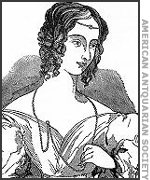
One of the most attractive and popular prostitutes in New York was Helen Jewett, who had changed her name from Dorcas Doyen, and moved Helen_Jewett,_sketchfrom Maine down to the city. She was a clever woman who formed strong attachments to her clients through her skill in writing letters and building up a feeling of intimacy. She attended the theater, an excellent place to meet men, and pursued those who attracted her. When you contrast her life with the lives of virtuous women of the time who were restricted to their own homes and their own husbands, you can’t help wondering whether Helen’s choice was a good one. While most women had many children to care for and were in charge of managing a house and servants and keeping their husband happy, Helen could afford to hire servants of her own and let them do the housekeeping. The woman who owned the brothel saw to meals and refreshments and Helen was able to socialize with the other prostitutes and with the men who visited them.

Helen might have lived her life successfully, probably becoming a brothel keeper after she grew tired of being a prostitute, except for the unfortunate accident of arousing the wrath of one of her clients. She was murdered one night and charges were brought against a young man, Richard Robinson, who was her friend and lover. The scandal of the trial made newspapermen happy and increased the sales and prestige of many of the local newspapers. Readers across the country were happy to read about poor Helen. Was she really a temptress who led young men astray? Or was Robinson a scoundrel who took advantage of a young woman who had been seduced into a life of sin? You can find the full account of the events in Patricia Cline Cohen’s book The Murder of Helen Jewett, or a brief outline of the plot in the ever-useful Wikipedia.

No matter what form you choose to read her story, it’s worth spending some time thinking about the life she led and the reasons for it. She had the usual unfortunate family background of an alcoholic father and a mother who died while Helen was young. You can explain her life on the basis of her unfortunate upbringing, but that is hardly the full story. Women who chose to make a living by selling sex are usually boxed into a closed category—a pitiful victim or a predatory stalker—but each one of them has her own story to tell. Reading about Helen Jewett is one of the few chances we get to read and ponder the life of one individual who chose an unconventional path. Perhaps we should do that more often.


Who was Helen Jewett and what was her profession?

Prostitution is one of the oldest professions in the world but aside from stories about the horrors of human trafficking we seldom hear much about it. Prostitution has flourished throughout history, but the individuals who work in the sex trade mostly keep a low profile. Even today

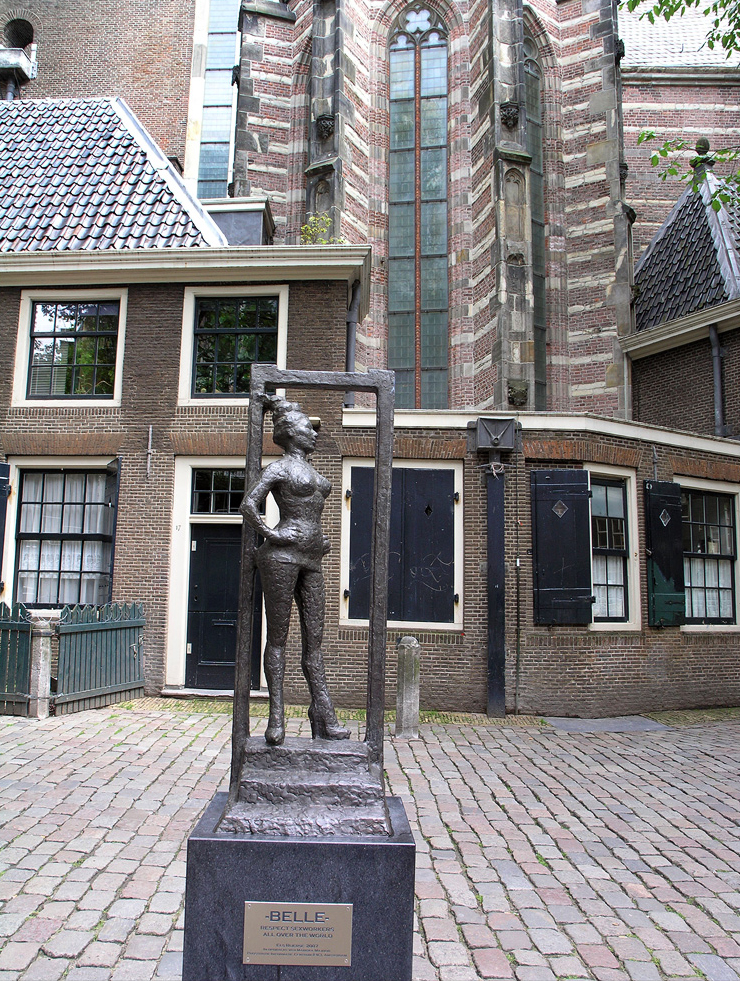
Sex worker statue in Amsterdam.

there are very few places except Amsterdam where sex workers are acknowledged and even honored by a public statue. In past centuries, prostitution was a topic often whispered about but seldom mentioned in public.

English majors may have read the Victorian novels that portray “fallen women” as outcasts aware of their pariah status. Remember Nancy in Dickens’ Oliver Twist who described herself as an “infamous creature” and is brought to tears of joy when a “respectable” woman says a kind word to her? Dickens was sympathetic to the problems of prostitutes, but he still portrayed them as beyond the reach of normal life and in need of rescue. Was 19th century prostitution really like that? Was it populated only by outcasts who had been seduced and betrayed by a man and by wantons who had an abnormal desire for sex? Or is it possible that it was a reasonable career choice for some women?

Recently I came across a book about Helen Jewett, a young prostitute who apparently lived a comfortable life in New York City during the 1830s. She was suddenly swept into prominence by a violent crime that made her famous throughout the East, but she has long since vanished from history. Her death, of course, was tragic, but it is only because she died violently that we have learned about how the sex trade in New York operated during the decades before the Civil War.

The first surprise for many of us is to learn that prostitution was not illegal in New York, as it was in most states, at the time. The police did not care much about people’s private sex lives, although they might arrest women for disorderly conduct or vagrancy. Keeping a brothel was illegal, but the crime was not often prosecuted. New York was growing very quickly during these years and many young men poured into the city seeking jobs. Most people accepted the idea that young men would seek out sex and that the women who provided it were a normal part of it city’s population. Prostitution was not defended by respectable men, and middle-class women were assumed not to even know about it, but it wasn’t until the early 20th century that it actually became illegal.

All of this was the background for the story of Helen Jewett, who moved from Maine to New York and joined the ranks of those women earning their living in the sex trade. I will write more about her in my next post, but if you want the full story, you might want to read Patricia Cline Cohen’s well-researched book The Murder of Helen Jewett.

Mary Seacole–An unknown heroine

Who was the most famous nurse of the 1800s? Most Americans would probably answer “Florence Nightingale” although Clara Barton might get a few votes. Almost no one would remember Mary Seacole who served as a nurse and non-traditional doctor during the Crimean War at the same time that Florence Nightingale did. Unlike Nightingale and Barton she was not primarily an administrator, but rather a hands-on provider who forged strong ties with hundreds of the men serving on the bleak battlegrounds of the Crimean War.

Mary Seacole was born in Jamaica in 1805 in the prosperous and attractive city of Kingston, the base of British operations in the West Indies. cover of Mary Seacole's autobiographyWhite British upper-class people controlled the island, while most Jamaicans of African descent were slaves. Mary’s mother was apparently of mixed-blood and was free, as were many children whose fathers were white. Mary herself writes in her autobiography “I am a Creole, and have good Scotch blood coursing in my veins. My father was a soldier, of an old Scotch family;”

Mary’s mother was a boarding house keeper and a healer. That may seem an odd combination to us today, but it made sense because British officers and officials who often found it difficult to cope with Jamaica’s climate and tropical diseases, could use both services. Mary learned traditional healing methods, using plants and other common substances. While she was a teenager, Mary spent a year in London, which she apparently enjoyed despite the presence of “street-boys to poke fun at me and my companion’s complexion.” Travel was her favorite occupation and she managed to return to London as a merchant selling West Indian preserves and pickles. For most of the rest of her life, Mary Seacole combined business and healing as her twin sources of income.

After an adventurous few years in Jamaica and Panama and a short marriage to a rather frail man who died while still young, Mary was established as a prosperous “doctoress” and merchant. She visited the United States, but found the prejudice against people of color too extreme for her. She preferred England where she was accepted more neutrally, even if sometimes slighted and patronized, but for the most part she remained in the West Indies and Central America where her color was not an issue.

When the Crimean War started in 1854, Mary determined that she would go to help the troops. She heard of Florence Nightingale’s plan to take a group of nurses there and applied to be one of them, but was not accepted. Never one to give up a good idea, she raised enough money herself to pay for the expenses of the trip and set out. She found facilities in the camps and hospitals deplorable, just as Florence Nightingale did. Florence worked with the Army and the government using the rules and regulations to get her way. It was a long, difficult road, but one that Florence, well-disciplined and familiar with upper-class life, was prepared to take. Mary chose a different route. Scornful of protocol, she opened a facility called the British Hotel where she offered food as well as giving medical treatment to soldiers. Because she had no access to government money or very much in the way of charitable giving, she charged for services, but she devoted everything she could to serving the troops.

Florence Nightingale was rather scornful of Mary Seacole and probably distressed by her flamboyant dress and habits. Nonetheless Mary became a heroine to the troops and a friend of many people in high places, including relatives of Queen Victoria. When the war was over she returned to England to high praise and much publicity. She received a commendation from the queen and when she published her autobiography, Wonderful Adventures of Mrs. Seacole in Many Lands, it sold well. The book is still worth reading and is available in several editions, including a free ebook version, on Amazon.com. There is also a fascinating biography Mary Seacole: The Charismatic Black Nurse Who Became a Heroine of the Crimea by Jane Robinson, easily available in the UK, but hard to find in America. It is worth searching for. We need to remember these women who lived heroically and did so much to broaden our view of what women can accomplish.

Remembering Eleanor Roosevelt–When America Led the World

You may have been as disgusted as I was this week when the U.S. Senate refused to ratify the United Nations treaty that would urge all countries to follow America’s lead in providing services to people with disabilities. To many of us who have been proud of our country’s role in ensuring equal treatment for all people, it was hard to believe that our current leaders are turning their backs on that tradition. It make me long for the days when American leaders were acknowledged around the world for being at the forefront of human rights, and one of the people I think of most often is Eleanor Roosevelt.

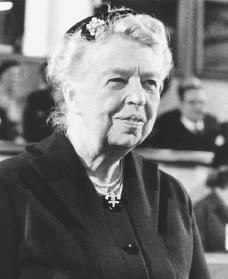
Like many women around the world today who grew up in the 20thth century but have nonetheless adapted to the changes of the 21stst, Eleanor Eleanor_RooseveltRoosevelt had a foot in each of two centuries. She was a daughter of genteel 19th century New York who was able to become a valued world citizen of the 20th century.

Like other wealthy young women of her time, Eleanor married young and accepted the domestic duties that went with the job of being a political wife. December was one of her favorite months because it gave her a chance to pick out gifts for family and friends.  Choosing gifts for her five children was the most fun of all, but her gifts were not just for her family; she never because an entirely home-centered wife and mother.  As first lady during the Depression, she recognized that a lot of Americans needed more than gifts; they needed education, jobs and the right to vote. She traveled around the country, acting often as the eyes and ears of her husband, Franklin Roosevelt. She told him in no uncertain terms what he should be doing for Americans who were reeling from the Great Depression. Sometimes her domestic chores took second or third place, but she tried to meet the standards she had learned from her family and to meet the needs of her husband as well as her own individuality. It wasn’t easy.

After Franklin Roosevelt died, Eleanor’s life changed dramatically. She wasn’t ready to move into quiet retirement, so she decided to expand her efforts to serve the world instead of limiting herself to national politics. President Harry Truman appointed her as the United States’ first delegate to the newly-formed United Nations. Eleanor was soon off and running with that job.

The United Nations was formed in 1945 to prevent another war. World War II had left Europe devastated and much of the rest of the world unsettled. People feared another war would destroy civilization and many of them believed that countries could work together to prevent that happening.  Many people, including Eleanor Roosevelt, also believed the UN should protect not only the freedom of countries but the freedom of individuals everywhere.

In 1946, she became a member of the UN’s Commission on Human Rights and was elected chair of the group. For two years, the Commission worked to decide which basic rights are important for everyone in the world. They argued over which rights should be included and how to express the rights in a way that every country and every religious group could accept. Finally they came up with a document that every country represented could sign. It’s not perfect and it leaves room for arguments and differences of interpretations, but at least it has given the world something to work with. The Universal Declaration of Human Rights was signed on December 11, 1948. Among other things it was Eleanor Roosevelt’s greatest gift to the people of the world.

What have been some of the effects of the Universal Declaration of Human Rights? It has

  • Led to a declaration of the rights of children around the world.
  • Led to an agreement on the rights of women in every country
  • Helped to persuade South Africa to end its system of apartheid
  • Led to world agreement in condemning the use of child soldiers.

The Declaration of Human Rights is the most translated document in the world. It is now available in more than 300 languages.

http://www.humanrights.com/what-are-human-rights/universal-declaration-of-human-rights/preamble.html

This Can’t Be What It Seems to Be

Finding the Rosetta Stone was the beginning of finding Hatshepsut, but it was going to take more than one magic stone to find out who she really was. A young French scholar named Jean-Francois Champollion struggled for years to untangle the riddle of hieroglyphic writing. By 1822, a breakthrough had been made in learning how to read hieroglyphs, scholars recognized the name of Hatshepsut, but still they had no idea of who she was or what she had done. Champollion and other scholars were terribly confused because pictures of a pharaoh were accompanied by language suited to a woman. For the men who studied Egyptian history, the idea of a female pharaoh was difficult to accept. Champollion and others theorized that she must have been the wife or sister of a pharaoh.

The beautiful temple Hatshepsut had built was also unknown to Europeans. By the middle of the 1800s, Hatshepsut’s temple, Djene Djeseru, was half buried in the sand. Arab families had set up tents on the ancient terraces. Men had taken chunks of stone from the temple to build their houses. Most of the other Egyptian temples were in the same condition.

Sometime during the 1870s, not far from Hatshepsut’s temple, an Egyptian family accidentally discovered a treasure. One of their goats wandered off and when Ahmed Abd el-Rassul chased it, he heard it bleating and realized it had fallen down a deep hole on a hillside. When Ahmed climbed down to retrieve the goat, he found himself in a narrow corridor filled with coffins. These were the coffins of ancient kings and queens who had been buried with their treasures. Ahmed and his brothers started taking the vases and jewelry out, a few at a time, and selling them to dealers in the city of Luxor.

For several years the brothers kept their secret, but as valuable pieces were bought and carried back to Europe and America, people realized someone must have found an unknown source of ancient treasures. In 1881, the search led to the Abd el-Rassul brothers who were arrested and harshly questioned until they revealed the hidden supply.

Haatshepsut’s temple

The colonial authorities quickly put together a team to investigate the cache. The find was larger and more valuable than anyone had dreamed—the remains of more than fifty kings, queens, and other royalty were found. The inscriptions on the coffins and statues allowed scholars to put together a history of Egyptian royalty.

Hatshepsut’s story was becoming a little clearer. Scholars figured out the names and dates of her father and her husbands. But Hatshepsut’s reign was confused because many of her statues were defaced and her name was erased from her memorials. The reasons for this disappearance led Egyptologists centuries later to worry about the “Hatshepsut Problem” –the question of when she reigned. During the late nineteenth century, it sometimes seemed that many of the Egyptologists, almost all of whom were male, were just as eager as the unknown defacer of her statues to eliminate her from Egyptian history.

Only in recent years has Hatsehpsut been restored to her place in history. Historians have gradually built up a firm chronology of Egyptian rulers, which includes several female pharaohs. Hatshepsut was probably the most important of them all, certainly more important than Cleopatra who was a member of a Greek dynasty that ruled Egypt centuries after Hatshepsut. Art exhibits have memorialized Hatshepsut and biographies and novels have been written about her. Among the best of them is Joyce Tyldesley’s Hatchepsut: the Female Pharaoh.


How to Lose a Woman for a Thousand Years

With pictures of the damage caused by Sandy, the storm of a century, facing us from every media outlet, I can’t help thinking of New York City and all the places I love there. Growing up, I learned much of my history from the statues and pictures in the museums and books from the public library. It was at the Metropolitan Museum of Art that I was introduced to ancient Egypt and became intrigued with its secrets—a fascination I have never lost.

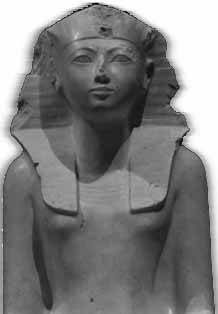
One of the most impressive statues at the museum is a massive granite statue of Hatshepsut, who was once the ruler of Egypt, the most important country in the ancient world. Somehow she disappeared from history and was forgotten for centuries. The statue we can now see shows a figure seated on a throne wearing the royal headdress and short pleated kilts usually worn by male

Statue of Hatshepsut

royalty in ancient Egypt, but the body is that of a woman, and the inscriptions running down the side of the throne use a female name and title. Hatshepsut’s story has puzzled historians for centuries. She built the largest temple on the banks of the Nile River with paintings on the walls and statues at the entrance. She must have been an important ruler, but her name is not found in the early official lists of Egyptian pharaohs. How can such a powerful woman disappear from history?

Well, as has happened with many women over the centuries, it seems to be the men in her life that originally caused her to disappear. She had been born the daughter of a powerful pharaoh, Tuthmosis I and, like many royal Egyptian women, she married her brother, Tuthmosis II, who inherited the throne. When he died after a short reign of six years, Hatshepsut became regent for their young son who was to become Tuthmosis III. After spending several years as a regent, she apparently decided to rule as a pharaoh in her own right; she was after all of royal blood and knew the job well. She had a long and successful reign during which Egypt was peaceful and became a wealthy country. After she died Thuthmosis III succeeded her.

At some point in the half century after her death, many statues of Hatshepsut were defaced so she was no longer recognizable. Her name was chiseled off many of the stone statues and when later rulers drew up the list of Egyptian monarchs, they simple left her name off. Perhaps it was too humiliating to admit that a woman had ruled the country so successfully. At any rate, Hatshepsut’s disappearance was effective.

The Egyptian empire lasted for thousands of years, but eventually it disappeared. Many Egyptians became less interested in the arts and religion of the pharaohs. They forgot the old traditions and the Egyptian gods. Egypt became part of the Roman Empire and was one of many Roman colonies. In the year 391, the Emperor Theodosius decided there should be no pagan temples in the empire. All the temples built by Egyptian pharaohs were closed. Inscriptions written in hieroglyphs were hidden. Much of the history of the country was lost.

Two centuries or so later, Arabs invaded Egypt bringing the Islamic religion and the Arabic language. As the years went by, Egyptians began speaking Arabic instead of Egyptian. And still the years rolled on. Villagers took stones from the pyramids to build their homes. Tomb robbers stole gold and jewels from burial places. In their eagerness to find treasure, robbers overturned coffins and dumped carefully wrapped mummies onto the earthen floor. The bones of pharaohs and commoners mingled together in heaps of rubbish.

Not all memories of Egypt were lost. Greek and Roman historians had written accounts of some of the pharaohs. The pyramids were still visible above the sand. Europeans gradually began traveling to Egypt to find trade routes to India so they could buy spices there. The Bible told stories about Egypt and started scholars wondering whether they could find traces of the ancient civilization there.

In 1735, Richard Pococke, an English clergyman, went to Egypt to study its monuments.  He made maps showing where the known monuments and pyramids were located. Perched on his donkey, or sitting under a spindly palm trees at an oasis, Pococke sketched the people and places he saw.  He stumbled upon Hatshepsut’s temple at Deir el Bahri but had no idea which pharaoh might have built it. No one could read the inscriptions on tombs and statues.

More than fifty years after Pockocke’s trip, in 1798, an invading army brought more scholars to Egypt. Napoleon Bonaparte decided to conquer Egypt and claim it and the trade routes it controlled for France. Unlike many generals, he wanted to study and preserve the history of the country not just conquer it. He brought with him scholars and artists as well as soldiers.

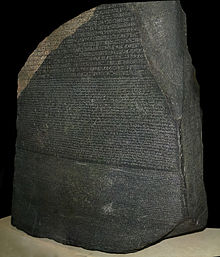
In the city of Rosetta, a French soldier discovered a stone inscribed with three different types of writing. This remarkable stone, known forever after as the Rosetta Stone, contains the same information written in three different languages. One section was written in ancient Egyptian hieroglyphic symbols, one in a more modern version of Egyptian writing, and one in Greek. Here at last was a key to unlock the secrets of Egyptian inscriptions. Translating the hieroglyphic writing would be difficult, but it was a first step toward unraveling the secrets of the pharaoh who had disappeared from history.

In my next post I’ll trace the next step in the mystery.


What do we know about Florence Nightingale?

Florence Nightingale’s struggle to build an independent life for herself took many years. Her mother and her sister couldn’t believe that she wanted to give up the social activities that went with upper class British life. Nonetheless, Florence managed to obtain training in nursing and when she was 32 years old she had the opportunity to become superintendent of the Institute for the Care of Sick Gentlewomen in London. For the first time she could move away from her family and start a life of her own, but the Institute did not give her scope for developing the talents that made her famous. The war in the Crimea which started in August 1854 was the catalyst that demonstrated Florence’s skills.

The British had not fought a war in decades and were confident they could defeat RussiaMap of Crimea and Scutari hospital which was threatening to block their access to India. It wasn’t until British troops reached the Crimea that their vulnerability to the climate and poor sanitary conditions was demonstrated. Before the battles had started 20 percent of the troops had come down with diarrhea, cholera, or dysentery. Hospital facilities were poor or non-existent. At last Florence Nightingale had an arena in which her talents shone, but it was a difficult struggle to convince the authorities that she could help. Finally she was able to gather together a group of women who had some experience as nurses. They included lay nurses and both Roman Catholic and Anglican nuns. Florence left for the Crimea in October 1854 and established her headquarters in the hospital at Scutari. It was there that she proved her abilities as an executive, managing the delicate relationships between the army and the nurses, establishing methods of providing food and supplies for the hospital, and introducing sanitary measures that saved lives.

The press in England spread the word about what Florence’s nurses were accomplishing, although there was controversy over their roles. Some readers complained about the inclusion of Roman Catholic nuns in the group because they feared proselytizing, although almost a quarter of the troops were Irish Catholics. While she was in the Crimea, Florence’s fame as the “lady with the lamp” grew even though she did less and less nursing. She was essentially a manager and purveyor of supplies, but the public insisted upon viewing her as a gentle nurse who soothed poor, sick soldiers. The army officers and politicians who interacted with her were more realistic in describing her as a tough executive who fought to build a viable organization of hospitals.

While Florence continued her struggle to improve the health care given to British soldiers and to overcome the reluctance of Army officers to make changes, her reputation in England continued to grow. She was a national heroine. Several songs were written about her including the popular “Nightingale of the East”:

Now God sent this woman to succour the brave,

Some thousands she saved, from an untimely grave;

Her eyes beam with pleasure, she’s bounteous and good

The wants of the wounded, are by her understood.

With fever some brought in, with life almost gone.

Some with dismantled limbs, some to fragments are torn.

But they keep up their spirits, their hearts never fail.

Now they’re cheer’d by the presence of a sweet Nightingale.

We don’t know what Florence thought of this tribute, but it certainly set her firmly in the tradition of the bountiful woman overflowing with kindness and charity. That was the way her public wanted to think of her and of the other nurses. Once they returned from the Crimea they were expected to step back into their lives of homemaking and serving the weak and wounded.

When Florence returned to England in the summer of 1856, she had no intention of stepping back. The more she learned about health conditions among the troops, the more determined she became to change the situation. She pushed hard to get an official commission appointed and although she couldn’t serve on the commission herself, it was her persistence that eventually brought it about. She labored relentlessly to write a report, which she eventually published as Notes on Matters Affecting the Health, Efficiency, and Hospital Administration of the British Army. Founded Chiefly on the Experience of the Late War.Example of chart invented by Florence Nightingale Here again her interest in statistics served her well. Realizing that people could visualize pictures better than rows of figures, she invented what she called her “coxcombs” to present the most important facts.

Florence Nightingale lived to be ninety years old and most of those years were devoted to improving public health. Like so many other women, her strengths have often been misunderstood. She is remembered as the sweet nurse tending soldiers, but her real achievement was far too “unwomanly” to be acknowledged while she was alive. It’s a shame that she is often misrepresented even now. There are several good biographies; one that I strongly recommend is Mark Bostridge’s recent Florence Nightingale: the Making of an Icon. After reading it you’ll never feel the same about Victorian women and their lives.

What Did Flo Know?

Those of us who watch Masterpiece Theatre on PBS have been treated this month to a new view of British life. Last year it was Downton Abbey that seized everyone’s imagination as we glimpsed the green lawns, spacious homes and lives of the wealthy, well-mannered women who lived there. Sure we saw the servants too, but even they spent their time in elegant surroundings. In the current series Call the Midwife we are introduced to the gray and grimy streets of East End London in the 1950s and to a group of women who spend their lives delivering babies in cluttered bedrooms. Women had to be tough to endure the endless hard work and discomfort of their lives, and that includes the midwives as well as the mothers. (Somehow the men in this series are all peripheral.) Even though the two dramas are separated by 40 years time, the class distinctions seem equally clear and jarring. It made me think of some of the heroines of England who have built bridges between classes, or at least made the attempt.

Florence Nightingale, the famous “Lady with the Lamp” who brought relief to suffering soldiers during the war in the Crimea and made nursing a respectable profession, is a familiar figure in Engraving of Florence Nightingale with a lamp in a hospital ward.history books. The image of Florence going through the hospital wards suggests a sweet, kindly woman with a yearning to take care of people, but Florence wasn’t like that. She had a burning need to do something with her life and yet her parents and relatives seemed determined to thwart her. It was Florence’s misfortune to have been born to prosperous but unimaginative parents who could not see that she was miserable with the role women were expected to play.

Instead of finding pleasure in decorative needlework, Florence loved statistics—of all things. The 1830s and 1840s, when Florence was a young woman, were the years during which England started collecting statistics about births, marriages and deaths. For the first time the government and leaders throughout the country were able to get a picture of what was going in the lives of the lower classes. The collection of numbers—statistics—was a contentious subject. Goethe had commented It has been said that figures rule the world. Maybe. But I am sure that figures show us whether it is being ruled well or badly.” Florence would agree with this, but other writers, like Charles Dickens, railed against the domination of facts and figures. In his book Hard Times, Dickens painted numbers and fact-based education for children as a false doctrine. His heroine Sissy, calls statistics “stutterings” and the author probably agreed with her. Dickens thought a worship of facts and numbers would stunt the imagination of children and spoil their lives.

Statistics did not spoil Florence’s life, although it would be many years before they became a powerful tool for her. I’ll continue the story of Florence Nightingale’s struggles in my next post.