Dowager Empress Cixi–the woman who modernized China

This weekend the aisles of my neighborhood grocery store are crowded with colorful packages of candy and it’s flying off the shelves. The doors are hung with scarlet and gold banners bearing large Chinese characters offering good wishes for the New Year. For a week San Francisco will be celebrating the arrival of the Year of the Horse, and crowds of people will watch the big parade downtown. But while big cities along the coasts are well aware of the holiday smaller American communities may not even know it is going on.

Painting of the Dowager Empress CixiChina sometimes seems the most foreign of foreign countries to those of us who live in the West. The language is difficult to learn, and the customs sometimes strike us as odd. That’s why there is a special thrill in discovering an individual who helps us cross the bridge and see what life looks like from a Chinese viewpoint.

This week I have been reading Jung Chang’s Empress Dowager Cixi, which has given me a glimpse of what it was like to grow up in 19th century China. Cixi was born in 1835 while China was still isolated from most other countries. A few Europeans and Americans had visited China, but there was little trade between China and the West and even less understanding. Chinese leaders considered the Westerners to be barbarians and most Westerners scorned the Chinese as ignorant and backward. Cixi was destined to revolutionize the relations between China and the rest of the world.

Girls and women at that time were not expected to play any role in public life. They existed to provide sons and heirs to their husbands. Cixi went to the royal court as one of many concubines for the emperor, but she had the great good luck to bear a healthy son. This changed her life. The emperor was sickly and because Cixi could read and write, she could help him handle his government duties. Doing this taught her a lot about government and how it worked. When the emperor died young, Cixi’s five-year-old son became emperor.

Cixi was intelligent and politically astute. Her husband had appointed eight regents to govern the country while his son was a child, but Cixi knew she could do the job better. She allied herself with her husband’s childless wife and the two of them became guardians of the child emperor and effectively ruled the country. Because women could not be acknowledged as rulers, Cixi sat behind the royal throne, concealed by a screen, to listen to official reports and make decisions about what should be done.

During the late 1800s, Europe and America because more aware of the valuable resources China had to offer to the world. Europeans and Americans, as well as the Japanese, competed to get access to natural resources and to the China trade. The struggle led to the Opium Wars and to many other battles. Cixi and some of her supporters recognized that in order to keep the country independent they had to accept some Western ways. Education was reformed so that young students learned more than just the classics of Chinese literature; representatives were sent to Europe and America and foreign diplomats were finally welcomed into the Chinese court.

Cixi was by no means a perfect person; she could be cruel and impose harsh punishments and death upon her enemies, but she set the course of China toward modernization. By the time she died in 1908, China was ready to enter the twentieth century and take its place on the world stage. Now, more than a hundred years later, reading about the Dowager Empress Cixi gives us an idea of what a strong and powerful woman she was. Her determination and strength can help us to understand where China is today—a world leader. I strongly recommend reading Jung Chang’s book about the Dowager Empress.


Dorothea Dix: A 19th century lobbyist

Those of us who live in large cities, as I do, are accustomed to seeing people acting strangely on the sidewalks or in buses. The mumbling woman in the shabby coat clutching two or three tattered shopping bags is given a wide berth. People avoid sitting next to her on the bus or passing too closely on the sidewalk for fear of being subjected to snarling abuse or a rambling, disjointed monologue.

Sometimes we recognize mental illness when we see it, but that doesn’t mean that we as a society do much to help those who suffer from it. Recent news stories have reported that roughly half the prisoners held in federal and state prisons have mental health issues and hospital emergency rooms are facing soaring costs for the treatment of psychiatric disorders. The statistics provide a gloomy picture of the state of mental health care in America, but the country has a long history of ignoring or mistreating people with mental disorders. It takes a lot of courage to try to help people who refuse to ask for help and may even turn it down when it is offered. Dorothea Dix is one of the few people who made mental health care her mission.

picture of reformer Dorothea Dix
Dorothea Dix
Born in 1802 in Massachusetts, Dorothea Dix had the misfortune to be born to parents who struggled with alcoholism and were often unable to care for their children. Luckily, Dorothea was able to get help from her grandmother, with whom she lived for many years. She grew up to be a thoughtful, responsible young woman and decided to earn a living by teaching school. But school teaching was difficult work and Dorothea’s health was not good. She had to give up teaching and look for other ways of being useful.

Like many other 19th century reformers, Dorothea was neither beautiful nor charming. She did not attract suitors and soon realized she would have to make her way on her own. Her poor health limited her choices, but she had enough money to travel to England where she stayed for a year with the Rathbones, a Quaker family involved in the European movement to improve the treatment of insane people. Here was a field in which she could do some good.

When she returned to Massachusetts, Dorothea Dix discovered that care of the insane was even worse in America than in many European countries. No one at the time understood the causes of mental illness. People who became violent and delusional were often treated as criminals. Drugs were often used in the hopes of alleviating symptoms, but the drugs were ineffective. Only wealthy people could take care of mentally ill patients in their own home, most working class people and the poor could do nothing for them. Usually, they were placed in jails or boarded with families who were paid to take care of them but usually kept them imprisoned in barns or outbuilding, sometimes tied to the walls or wearing shackles.

Dorothea’s hope was to persuade the states to build institutions devoted to the care of the insane so that they would not be placed in prisons. The weapon she used to bring about change was to report on the conditions that she found in every city and town that she visited. There was no supervision of the care of mentally ill patients. Often the people responsible for their care gave them minimal food, never treated their physical illnesses, and let them live in filth without even proper clothing or heat. A quick death was often the only release they had from these intolerable conditions.

Dorothea Dix’s report to the state of Massachusetts in 1843, made clear the conditions she had found: “I proceed, Gentlemen, briefly to call your attention to the present state of Insane Persons confined within this Commonwealth, in cages, stalls, pens! Chained, naked, beaten with rods, and lashed into obedience.” Citizens of Massachusetts were shocked to discover how dire conditions were in their state. They authorized the building of an institution where people suffering from mental illness could be cared for humanely.

Dix spent the rest of her life trying to bring better health care to other states; she wrote reports; she appeared at legislative hearings; and she drafted legislation. She was one of the early lobbyists fighting for a cause she believed in. Gradually institutions were built in many states to house people who could not take care of themselves. For the 19th century that was a great step forward. If you want to read more about Dorothea Dix, her biography by Helen E. Marshall, Dorothea Dix: Forgotten Samaritan (1937) is still available in many libraries.

During the 1950s, psychiatric drugs were discovered and gradually made available. The institutions so carefully designed by Dix and others are not considered the most appropriate way to treat mental illness. The horrific conditions that Dix discovered no longer exist, but our prisons and many of our neighborhoods are still housing people whose lives are made miserable by untreated mental illness. We need a crusader like Dorothea Dix to awaken the conscience of Americans and to ensure that our health plans cover mental as well as physical illnesses. We are a rich country and we can do better than allow so many people to suffer in pain and isolation.

On being an outsider—Helen Suzman in South Africa

South Africa flag
Flag of South Africa
The death of Nelson Mandela has turned the attention of the world to South Africa and its long struggle to build a nation where all of its people will be free and safe. Mandela’s towering figure overshadows all of the other people who contributed in one way or another to developing a free, democratic South Africa. The major glory of the transition of power certainly belongs to him and to the ANC, but let’s take some time to honor the often-ignored and forgotten voices of others who fought for a better South Africa.

In August, 1986, the respected New York Times columnist William Safire wrote about Helen Suzman and her lonely fight for equality in South Africa. At that time the argument in the United States and Europe was mainly about whether other countries should impose sanctions on South Africa. The quest for real political equality seemed unreachable. Safire wrote in his article, “No democrat can oppose the idea of majority rule, but no realist thinks the outside world can bring it about now or soon. Forget about the imposition of black rule in this decade; it will not happen.” And yet in that same year, 1986, Nelson Mandela was beginning his negotiations with all-white government for his release and a new model in the country. In 1990, Mandela was released from prison and in 1994, eight years after Safire’s article appeared, he was elected president of a multiracial South Africa. The prophecies of even the wisest pundits often turn out to be wrong.

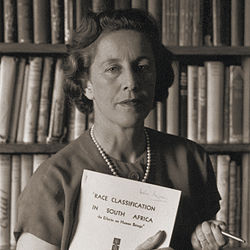
One of the people who had fought hardest and demonstrated the greatest patience was Helen Suzman, a white South African, whose lonely years as the sole representative of the anti-racist Progressive Federal party in Parliament lasted for

Helen Suzman in Parliament
Helen Suzman
thirteen years from 1961 to 1974.

Born in 1917 to parents who were Lithuanian immigrants, Helen Gavronsky grew up in a small town outside of Johannesburg, attended Witwatersrand University, and married a doctor. During her university years, she studied South African racial laws and was angered by the pass laws which restricted where blacks could live and work. When she entered politics she objected to the United Party’s tolerance of racial segregation and founded the Progressive Party (later the Progressive Federal Party). For many years she was the only member of parliament who consistently raised questions about the government’s racial policies. When one government minister accused her of embarrassing South Africa with her parliamentary questions, she replied, “It is not my questions that embarrass South Africa; it is your answers.”

Eventually more Progressive members were elected to parliament and the apartheid government was put under greater pressure to change some of its rigid laws. Helen Suzman was a popular anti-apartheid voice around the world although her opposition to economic sanctions during the 1980s made her unpopular even with anti-apartheid opponents. On American college campuses she was sometimes booed instead of cheered because of her unwillingness to support sanctions.

Nelson Mandela, however, supported her efforts and appreciated her visits to the Robben Island prison where he was held for so long. She used her parliamentary visiting rights to visit the prison in 1967, and returned frequently. “It was an odd and wonderful sight to see this courageous woman peering into our cells and strolling around our courtyard,” Mr. Mandela recalled in an interview when he was released in 1990 after serving 27 years. “She was the first and only woman ever to grace our cells.”

It is not easy to fight for many years for a cause that separates you from the majority of the people you grew up with and who consider themselves your natural social group. Cast out by many white South Africans, Helen Suzman could not share completely in the life and experiences of Black South Africans either. Always an outsider, she nonetheless continued her struggle and finally saw South Africa take great strides toward becoming a truly multiracial and democratic society.

As she grew older and South Africa changed, Helen Suzman received many honorary degrees from universities around the world and was named a Dame of the British Empire. She died in 2009 at the age of 91. You can read her views about her life and work in her memoir. In No Uncertain Terms: A South African Memoir (1993).

A comet is a sometime thing. Caroline Hershel among the stars

Astronomers around the world were waiting this past week for a mighty comet to come swooping past the earth. The comet, called ISON, was first discovered more than a year ago and astronomers, both professional and amateur, have been following it ever since. Many sky watchers were excited about the prediction that it might provide an amazing display in the sky during the holiday season. But that just didn’t work out.

The comet seemed to flame out over the Thanksgiving weekend, then reappeared and then, unfortunately, disappeared again. This scenario is

Comet ison
Comet ison
apparently familiar to astronomers and accepted by them as all in a night’s work. Much information can be learned from the progress of comets and their disappearance so all is not lost if they fail to flame across the sky and make the TV news. I’m afraid I don’t know enough about astronomy to know what they will be learning, but I wish them well. You can learn more about ISON from the website Space.com .

News about the comet reminded me of Caroline Herschel, who worked with her brother William, and specialized in discovering comets. Caroline Herschel was born in Hamburg in 1750; William was twelve years older. The Herschel family was chiefly interested in music, not astronomy, but both William and Caroline wandered into the world of science. William was a successful organist and he sought escape from his strict German family life by moving to England. A few years later, in 1772, he sent for Caroline, his youngest and most congenial sister to join him. She was pockmarked from smallpox and her growth had been stunted by early illness, so her family considered her unmarriageable.

Caroline managed William’s household (which included another brother, Alexander), kept the accounts, and learned enough English to do the shopping and supervise the cook. William was then left free for his job as organist and choirmaster at the Octagon Chapel in Bath—and most importantly for his secret passion—observing the stars.

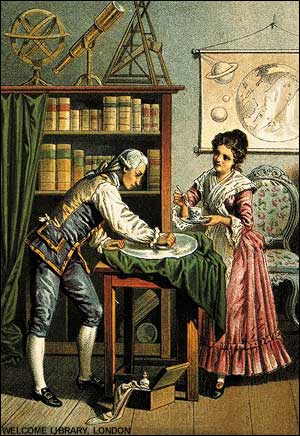
It wasn’t long until Caroline joined William in observing all of the heavenly bodies they could see through the elaborate new telescope

Caroline and William Herschel at work.
William built, with Caroline’s help for some of the polishing. It was far more powerful than the telescopes most other astronomers were using at the time. Night after night the two of them would stand on the lawn with their telescopes watching the planets and stars and keeping track of everything they saw. To keep warm on cold English nights, Caroline would wear layers of petticoats under her skirts.
Caroline’s task was to write down the information that William called out to her as he methodically swept the telescope across the sky. This saved him from having to take his eyes off the stars and adjust his night vision. In between her duties, Caroline was observing the sky herself and learning more and more about how the stars and planets moved.

Ten years after Caroline moved to England, William was offered a position as the King’s Astronomer to King George III. He and Caroline moved to Dachet and later to Slough where they could concentrate just on astronomy. They worked as a pair and Caroline specialized in discovering comets. She discovered eight comets during the 1780s and was recognized as William’s assistant given a small pension by the king.

Caroline’s life became more complicated after William married in 1788 and Caroline no longer ran the household. However, they still worked together as astronomers. After William died, Caroline moved back to Hanover in 1822. Then at last she began to get some recognition. She was awarded a gold medal from the Royal Astronomical Society in 1828. At the age of 96, in 1846, she received another gold medal from the King of Prussia.

Despite the late and scanty recognition compared to her brother, Caroline Herschel at least had the satisfaction of spending a lifetime doing the work she loved. You can read more about her life as well as the lives of many of the scientists and intellectuals of the period in Richard Holmes’s fascinating and readable book The Age of Wonder: How the Romantic Generation Discovered the Beauty and Terror of Science

More Thanks for Lydia Maria Child

Over the river, and through the wood,
To Grandfather’s house we go;
the horse knows the way to carry the sleigh
through the white and drifted snow
.

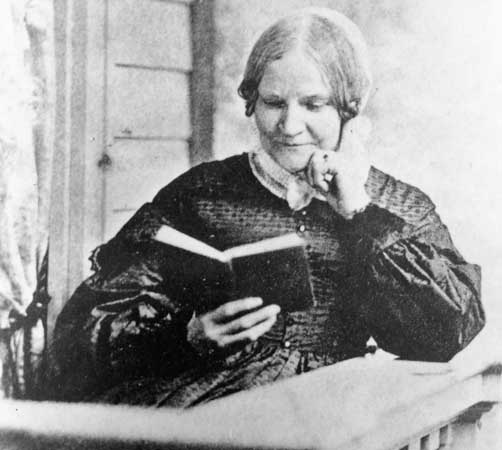
Lydia Maria Child
Lydia Maria Child

Over the river, and through the wood,
to Grandfather’s house away!
We would not stop for doll or top,
for ’tis Thanksgiving Day.

Fifty or a hundred years ago almost every child in America would know that song because it was sung in classrooms all over the country. No matter that many American children lived in cities and had no experience of sleighs or woods or even Grandfather’s house, which might have been across the ocean instead of through the woods. Today the song would mean even less to children who may never have seen a real horse much less a spinning top—dolls we have with us still, although not like the ones our grandmothers had.

And so the song drifts off into history, but it is the only legacy left by a remarkable woman who would probably spin in her grave if she thought that of all the books she wrote, lectures she gave, and magazines she published, only this trifling set of verses is left. What has happened, she might wonder, to the explosive stories she wrote about intermarriage, abolition, and the rights of American Indians. Those were the works that led the Boston Athenaeum to revoke her free borrowing privileges. Lydia Maria Child was a firebrand despite the decorous cap and long, sedate dresses she wears in her portraits.

Born in 1802 in Massachusetts, she was a member of the first post-revolution generation. Her father Convers Francis was a prosperous baker and her older brother, also named Convers Francis, became a Unitarian minister and a professor at the Harvard Divinity School. It was her brother who encouraged her to try writing a novel and she completed Hobomok, with an American Indian as its hero. It was a popular success and started her on a lifetime writing career.

When she met the Harvard educated lawyer David Childs she was introduced to the abolitionist cause. They married and pursued lifelong careers as reformers and radicals. Unfortunately David was constantly in debt, made innumerable bad choices in business investments, and even spent time in prison for debt. Lydia (usually called Maria, which she preferred) had to be the stable breadwinner. She did this by starting a children’s magazine and by publishing books directed at housewives. Her hugely popular Frugal Housewife addressed the problems of middle-class women who struggled to maintain a house and feed a family.

But Maria Child was not content to linger over the problems of making soap and choosing fresh eggs, she was determined to help in the struggle to free slaves and women, two groups which she saw as being exploited by men who treated them as property. The book which angered many New Englanders was her An Appeal in Favor of That Class of Americans Called Africans. In it she advocated the abolition of slavery but rejected the notion of sending freed slaves back to Africa. Instead, she wanted to integrate them into American society and make them the equal of white citizens. She accused Northerners of being just as racist as Southerners, which infuriated many old friends and leading citizens of Massachusetts. She believed in education and in intermarriage. She wrote:

An unjust law exists in this Commonwealth, by which marriages between persons of different color is pronounced illegal. I am aware of the ridicule to which I may subject myself by alluding to this; but I have lived too long, and observed too much, to be disturbed by the world’s mockery. In the first place, the government ought not to be invested with power to control the affections, any more than the consciences of citizens. A man has at least as good a right to choose his wife, as he has to choose his religion.

Her sentiments shocked even many of the abolitionists who wanted to abolish slavery, but hesitated over the question of total equality. Maria Child spent most of her life facing controversy. She believed that men and women should work together in the Anti-Slavery Society and precipitated a long-lasting feud in that group. For all her long life she argued for freedom and equality. On this Thanksgiving Day we ought to give thanks to her, not for producing a sweet little verse, but for persisting in the endless struggle to make Americans live up to their highest aspirations.

As far as I know, there is no easily accessible biography of Lydia Maria Child. The one that I read is a detailed scholarly biography by Carolyn Karcher, The First Woman in the Republic: A Cultural Biography of Lydia Maria Child (Duke University Press 1994). I highly recommend it, but not too many people will commit to 800 pages. Perhaps someday Professor Karcher will produce a shorter, more popular introduction to a woman who deserves more attention than she has received in our history books.

Hedy Lamarr–an Inventive Movie Star

Beauty is a tricky gift for a woman. It can open doors to winning beauty contests, finding boyfriends, lovers, and powerful patrons, but it can also slam doors in your face if your ambitions rise above being someone’s trophy. As Rosalind Russell warbled years ago in the movie Wonderful Town “Just throw your knowledge in his face; He’ll never try for second base…” The amazing beauty of Hedy Lamarr brought her international fame as a movie star, but when she used her talents as a mathematician and inventor her contributions were

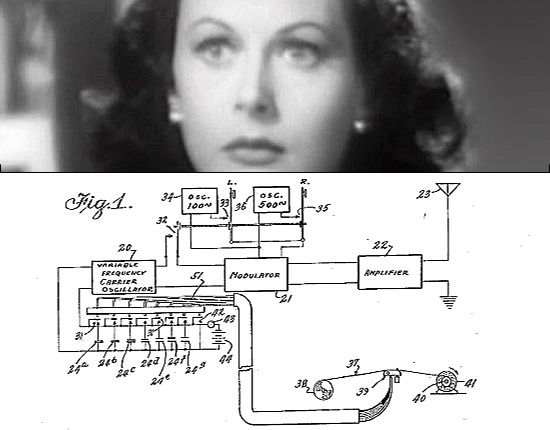
picture of Hedy Lamarr and her invention.
Hedy Lamarr (photo from Business Week)
pushed aside by military leaders who couldn’t believe a beautiful actress could possibly devise a useful system for thwarting attacks. And when she died in 2000, her obituary in the New York Times devoted only two short paragraphs to her scientific and mathematical interests. Far more space was given to a description of her legendary beauty, her modestly successful film career, and her six marriages.

The story of how Hedy Lamarr came to live in Hollywood was not an unusual one for the 1930s when the movie capital was a beacon to so many European artistic exiles. She had been born in Vienna as Hedwig Eva Marie Kiesler, the daughter of a prosperous banker and his concert pianist wife. As an only child she was encouraged by her devoted parents to develop her interests in art and science. She studied drama, decided she wanted to become a Hollywood actress, and while still a teenager talked herself into a small role in a film. At 16 she dropped out of school and determined to become a movie star. Her startling beauty eased her way into films and she made the movie Ecstasy, which made her famous, more because of the brief nude scenes than because of her acting.

Soon she was being courted by Friedrich Mandl, one of the richest men in Austria, and the owner of a munitions factory. By the time she was 19, Hedy was married and living a life of luxury, but the price she had to pay was Mandl’s insistence that she give up her career. She later described her life with him as being “like a doll in a beautiful, jeweled case”. She left the world of the theater and gave dinners for businessmen and their wives. She wasn’t interested in munitions or weapons, but she heard many discussions about these subjects which later provided the basis for her inventions.

By 1937, Hedy had suffered enough from the restrictiveness of her marriage with Mandl. She wanted to return to acting and finally worked up the courage to do that as well as to file for divorce and to escape to London. From there she booked passage for America on the same ship that Louis B. Mayer was traveling on. Her beauty and her popularity with the male passengers persuaded Mayer that she would be an asset to his movie studio, so he offered her a contract.

Life in Hollywood was not quite as easy or as much fun as she had expected. She had to learn English, lose some weight, and wait until Mayer found suitable roles for her. She was not very interested in the socializing that was a part of Hollywood life. She didn’t drink and she was concerned about the war looming over Europe. Instead of spending her time at parties, she set aside a corner of her living room as her “inventing” space. Her hobby was trying to come up with ideas for new gadgets that would make life easier. She also became absorbed in the idea of doing something to help the war effort and this was where those long dinners in Germany finally paid off.

After meeting the composer George Anthill, she joined with him in trying to devise a way to prevent the enemy from jamming the radio signals that American ships and planes used to communicate with one another. She and Anthill devised a way to use frequently changing or “hopping” frequencies that would make American messages sound like gibberish to the listening Germans.

The two inventors patented their device in 1942 and Hedy Lamarr offered it to the Navy Department, but it was turned down. We’ll never know why the Navy didn’t recognize the value of the invention, but perhaps it had something to do with the fact that one of the co-inventors was a woman, and a spectacularly beautiful woman at that. How could she possibly know anything about engineering or math?

Whatever the reason, it wasn’t until after the war that the device Lamarr and Anthill invented was used by the military in the Cuban missile crisis of October 1962. Since then it has been used to develop cell phone technology and other electronic devices. All of this happened after the patent had expired, so neither Hedy nor Anthill ever earned a penny from their invention.

In 1997, the Electronic Frontier Foundation presented Hedy Lamarr with a special Pioneer Award and she became the first woman to receive the BULBIE Gnass Spirit of Achievement Award.

To find out more about Hedy Lamarr and her extraordinary life, you really should read Hedy’s Folly: the Life and Breakthrough Inventions of Hedy Lamarr the Most Beautiful Woman in the World by Richard Rhodes. It will give you a whole new perspective on glamorous movie star life. The book is available on Amazon.com and no doubt at your local public library.

Ada Lovelace and the numbers she loved to crunch

Almost every day of the year has been declared a commemoration of one individual or another and most of us ignore them. This week brings a day that should be celebrated more than most—Ada Lovelace Day on Oct. 15, 2013. The celebration will take an unusual form in some places. At Brown University in Rhode Island, students will honor Ada Lovelace by writing articles for Wikipedia. To understand this Wikipedia party, you may need some background.

Who was Ada Lovelace and why is she celebrated? You can still get a few arguments about whether she deserves the distinction, but she certainly had an unusual

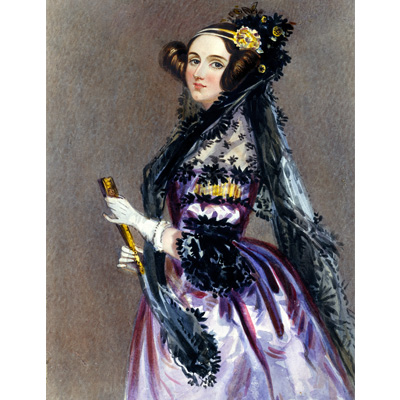
Ada Lovelace, computer programmer
life. She was born in England in 1815 and was the legitimate daughter of Lord Byron, quite a feat in itself because the famous poet fathered all of his other children with women who were not his wife. Still, being born legitimate is not an achievement for the baby, who has no choice in the matter. Ada Lovelace (born Augusta Ada Byron) had to be an unusual woman to earn a reputation of her own and gain lasting fame. And she was.

Despite having an irregular upbringing with a mother so focused on hatred for her husband, Byron, that she had little time for her daughter, Ada Lovelace had a good education. Her mother encouraged tutors to teach Ada mathematics as a way to ward off the tendency toward madness that she believed affected Lord Byron and his family. Ada took to numbers and became a competent mathematician as well as mastering several languages.

Ada Lovelace moved in high social circles. She became Baroness King when she married William King. The couple had three children, but Ada still had time to continue her friendships with both men and women. She became an avid gambler and tried to find mathematical models to help her and her friends find formulas which would increase their winnings. That, unfortunately, didn’t work and she went deeply into debt. However love of mathematics continued.

It was her friendship with Charles Babbage, the inventor of the Analytical Engine, a first attempt at a computer, which led to her developing an algorithm to allow the analytical engine to compute Bernoulli numbers. It was this which led to her being considered the first computer programmer.

Scholars have debated how much of the programming work was done by Ada and how much by Babbage, but perhaps it doesn’t matter. Whether or not she actually was the world’s first programmer, she certainly achieved far more than anyone would have expected of a 19th century woman. And all that she achieved was done before she died of cancer at the age of 36.

It is very fitting that we now have an Ada Lovelace Day celebrated every year in mid-October. The day is dedicated to honoring the past achievements of women in science, engineering, technology and mathematics and to encouraging young women to enter these fields.

You might wonder what Ada Lovelace has to do with Wikipedia, but the connection is the gender-bias that has resulted in having far more men than women represented in the encyclopedia. Not only are women under-represented in Wikipedia, they are also under-represented in technology and scientific studies. Girls today have very few role models who inspire them to enter the STEM fields of study. Let’s hope the students at Brown University will come up with some articles that may inspire young girls today and in the future to become the scientists, technologists, engineers and mathematicians that are needed to keep our future growing.

Blessed are the peacemakers—Jody Williams

This week when most Americans are breathing a sigh of relief because it looks as though the Syrian crisis may be ended without bombs, it’s a good time to think of some of the other peacemakers who have worked to remove some of the worst weapons from the world. Jody Williams and the people who worked with her to ban the use of landmines is one of the most prominent.

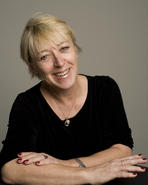
Jody Williams
Jody Williams

Just over twenty years ago, in 1992, Williams started the International Campaign to Ban Landmines (ICBL) which worked tirelessly to convince countries and international organizations to join together to outlaw the use of landmines. These mines have been used for several centuries in wars in Asia, Europe and the Americas, but their use increased toward the end of the twentieth century. Television brought sickening pictures of the victims, many of them children, into the world’s living rooms.

Victims of landmines
Landmines are shocking weapons when they are used to kill and maim soldiers, but their use goes far beyond that. Anti-personnel landmines stay buried in the earth for years—for generations—and the damage they do can be seen in the number of people with only one leg, or no hands, or other body parts missing. Small children hobble around on crutches because a seemingly harmless walk through a field led to a devastating explosion that brought pain and misery. No number of free crutches or doctor services can undo the lasting harm.

When Jody Williams decided to start the International Campaign to Ban Landmines, it must have looked like an overwhelming job. Slowly and painfully through collecting enough money to raise the issue publicly and finally shame most governments into signing the ban, the organization made headway. 161 states have signed the Ottawa Treaty banning the use of anti-personnel landmines although neither Russia nor the U.S. has done so. The U.S. has said that it needs to have the freedom to use landmines in the DMZ between North and South Korea. Americans still need to push our legislators into finding other ways to fight wars—methods that don’t involve the killing and maiming of innocent civilians.

But this week Russia and the U.S. are working together to find a way to stop the use of chemical weapons in Syria. It’s not a perfect solution to the violence in Syria; the civil war continues there, but it is an important effort. If Syria can be persuaded to give up chemical weapons and destroy them, the world will have moved one small step toward greater peace.Perhaps someday John Kerry and his Russian counterpart Sergei Lavrov will join the roll of peacekeepers. If Jody Williams and her colleagues can persuade countries to ban landmines, surely two powerful government officials can work together to eradicate another one of the world’s devastating war tools—chemical weapons. That would surely be a blessing for all of us.

Fighting for rights for labor

Labor DayJudging by the store ads in my Sunday paper, Labor Day means nothing more to most Americans than a day off for shopping and barbeques. A hundred years ago, having a special holiday to honor working people seemed much more important. People felt united as workers, as employees struggling to decent working conditions. One of the triumphs of the labor movement was the establishment of the Department of Labor in May 1913.

Why was it such a big deal? Well, despite the lack of enthusiasm in the Washington establishment, union leaders across the country hoped that having a voice for labor in the cabinet would make a difference. And believe it or not it has. For one thing it changed the composition of the cabinet to include the non-wealthy. Dwight D. Eisenhower’s cabinet in the 1950s was called “Nine millionaires and a plumber” Can you guess which department the plumber headed?
Take a look at the website for the Dept. of Labor and look at the timeline there. You’ll be surprised at the changes that started at the department.
• Supported the Workman’s Compensation Act to get benefits for injured workers
• Started the women’s bureau in 1920
• Started collecting unemployment statistics—previously had only collected employment statistics and not worried about the unemployed
• Limited working hours for children
• Pushed to get Social Security benefits for workers

Perhaps as we share a holiday with family and friends, we should spare a thought for the people who fought to bring us some measure of security in our jobs.

I find it interesting to think about the women who were leaders in the early labor movement. Frances Perkins, the longest serving Secretary of Labor is largely responsible for shepherding Social Security and other New Deal programs through Congress. Her method of being a leader in a man’s world of politics was to downplay her femininity and her sexuality. She was famous for wearing drab, old-fashioned clothes and at social gatherings was not seen as a threat to the wives of her colleagues. Perhaps at that time in Washington her nonthreatening appearance was an important part of her being able to outmaneuver those husbands in politics.

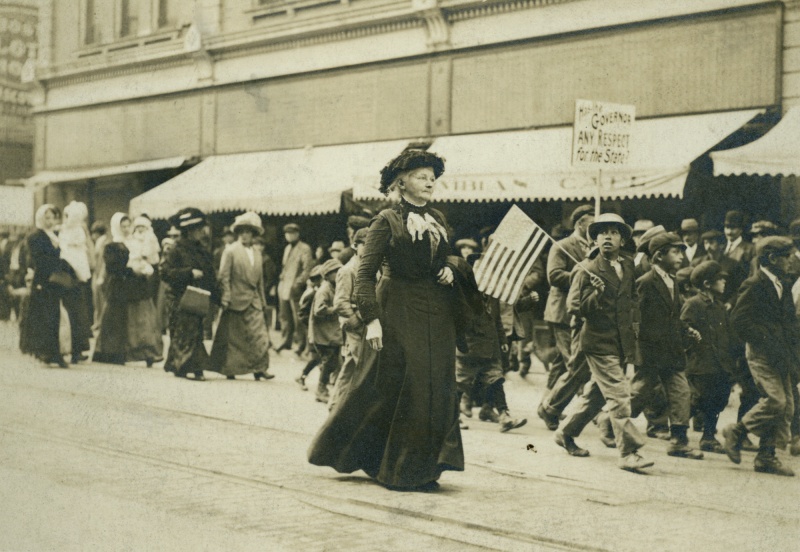
An even earlier labor leader, Mary Harris or “Mother Jones” took the same approach. She claimed to be older than she really was and she too wore old-fashioned black dresses. She gloried in being called “Mother”. Surely there was no better way for her to protect herself from unwanted sexual advances or harassment. She was able to win many labor

Mother Jones in Colorado
battles by enabling male workers to take the lead and fight the bosses to achieve some famous labor victories. There isn’t time here to go into the wonderful story of how Mother Jones won so many victories for “her boys”. They are well told in Elliott J. Gorn’s biography Mother Jones; the Most Dangerous Woman in America. But let’s raise a toast and remember an early verse written in her honor in the United Mine Workers Journal:

We love her for her constant voice.
Raised ever ‘gainst wrongs and ills,
For healing the bodies, bruised and torn,
In the factories, mines and mills…

Mercy Warren –The Costs of Revolution

We can’t read the newspaper or watch the news these days without hearing about the desperate struggle of Egyptian people to get a government that will rule democratically. Americans are inclined to be a little smug about the way we set about separating from England and establishing our own democracy. After all, we had those enlightened gentlemen in elegant clothes sitting decorously at a table and writing a document that would stand for centuries as the cornerstone of a stable democracy.

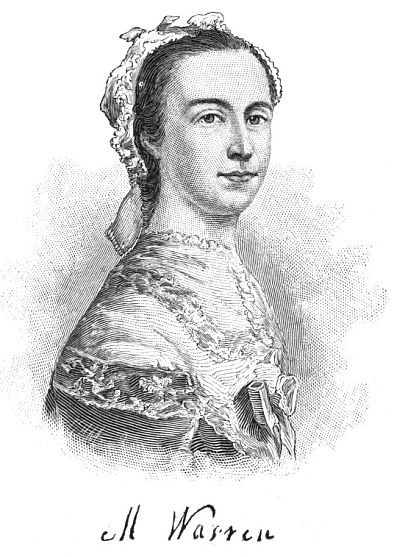
Mercy Warren
Mercy Warren
A closer look back at our revolutionary leaders gives us a better grasp of reality. I’ve been reading a biography of Mercy Otis Warren, who, like her good friend Abigail Adams, influenced many of the men who fought in the Revolution. Mercy and John Warren’s home became a meeting place for leaders who organized the Boston Tea Party and fought for the rights of the colonies to organize their own governments. Even though women were not encouraged to participate in public life, Mercy Warren began writing pamphlets and satirical verses and dramas that supported the Revolutionary cause.
At leisure then may G[eor]ge his reign review,
And bid to empire and to crown adieu.
For lordly mandates and despotic kings
Are obsolete like other quondam things. (1775)

The years following the Revolution brought little peace to Mercy Warren and her husband as they disagreed with many of the decisions of the Federalists who controlled the government. James Warren, who had been a leading figure in the war for independence, was shut out of government service and his sons struggled to find posts.

When a new constitution was drafted and presented to the states, Mercy Warren opposed its ratification. She wrote a pamphlet “Observations on the New Constitution…” in which she urged the states to reject the draft. One of her major objections was the lack of a bill of rights “There is no provision by a bill of rights to guard against the dangerous encroachments of power” she wrote. She was also concerned about the six-year terms given to senators. “A Senate chosen for six years will, in most instances, be an appointment for life…” (Well, she was right about that, wasn’t she? Many Senate terms have lasted for a generation or more.) She worried that there were no defined limits to judiciary powers and that the executive and legislative branches were dangerously blended together. The Constitution certainly did not seem a sacred document to her.

As we all know, the Constitution was ratified and has become the basis of American law. Some of Mercy Warren’s concerns were addressed very early. The passage of the Bill of Rights can be attributed in part to her demands. Other aspects of government continue to be addressed such as the power struggle between the Legislative and Executive branches. But the Constitution survives and so does the country.

Reading about the early struggles for democracy in America can give us some hope for the several countries around the world that today are moving down the same path. Perhaps they too will eventually find a way of building a democracy. Revolution is never easy, and it never solves all of a society’s problems, but we can’t give up hope that eventually most citizens will join together to build a livable country.

If you want to read more about Mercy Otis Warren, there is information about her in Cokie Roberts’s book Founding Mothers. For a complete biography, I highly recommend Muse of the Revolution: the Secret Pen of Mercy Otis Warren by Nancy Rubin Stuart.