Recapturing the past one book at a time

Books and roseI’ve spent a surprising amount of time this month looking at old books, first at the California Antiquarian Book Fair  where I saw an amazing number of valuable and beautiful old books. It’s fascinating to see early editions of books by the likes of Charles Dickens and Willa Cather, all of them far too expensive to buy of course. Old children’s books from 30, 40 or even 50 years ago were featured by some of the dealers. I guess a lot of book collectors enjoy rereading the books of their childhood. And as I discovered later in the week, I am one of them.

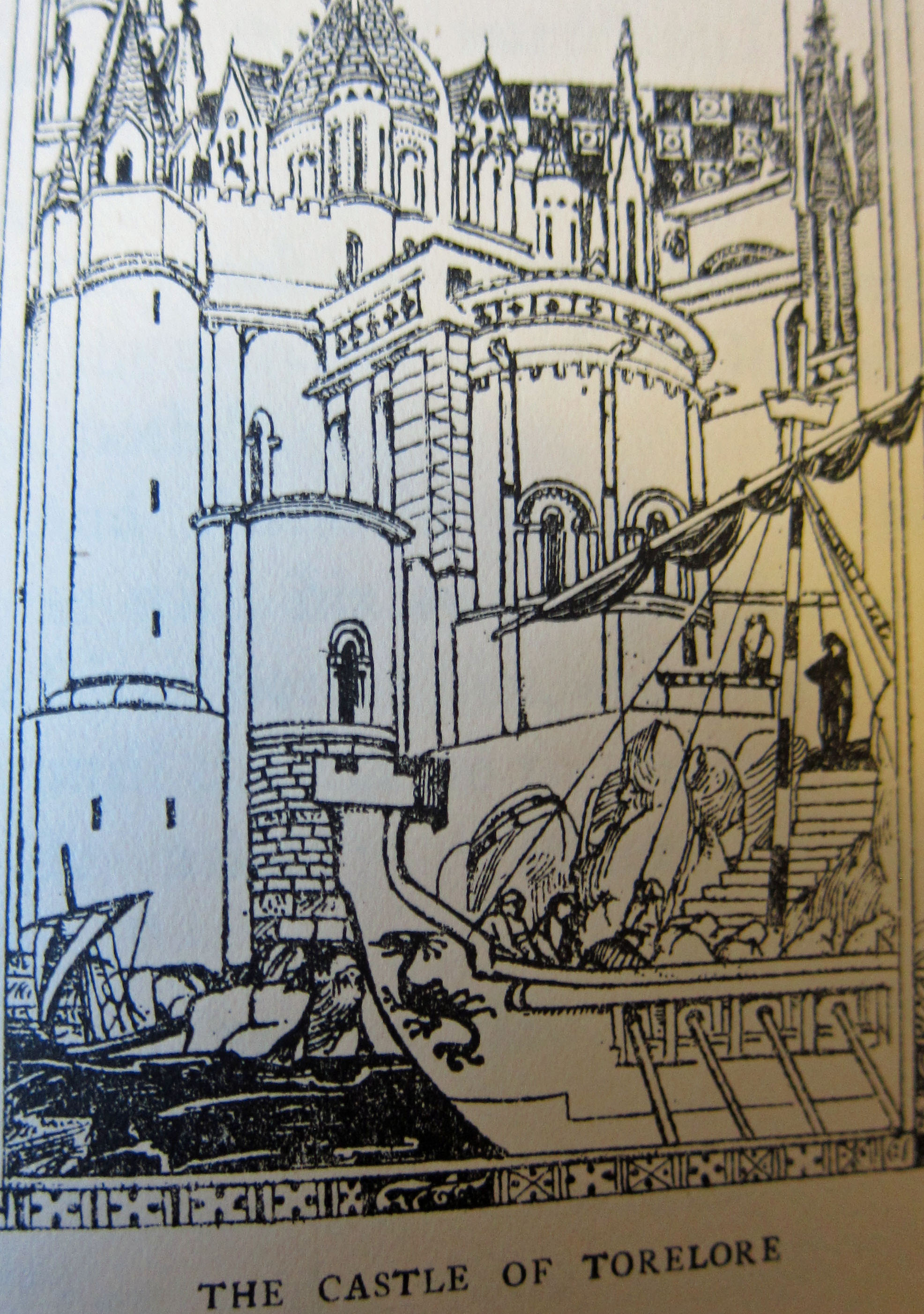
A few days after going to the Book Fair I went to an estate sale in a neighborhood not far from where I live. The owner had been an antiquarian book dealer and the house was jammed not only with the usual stuff of estate sales—costume jewelry, china dishes, and small pieces of furniture—but with shelf after shelf of old books. Many of them were leather bound, small Aucassin _edited-2books from the 19th century or cloth bound books from the early 20th century. Wandering along those shelves, pulling out the books was a great pleasure, but it took a while until I came to my greatest prize. I found a small book that I remembered from my childhood—the tale of Aucassin and Nicolete.
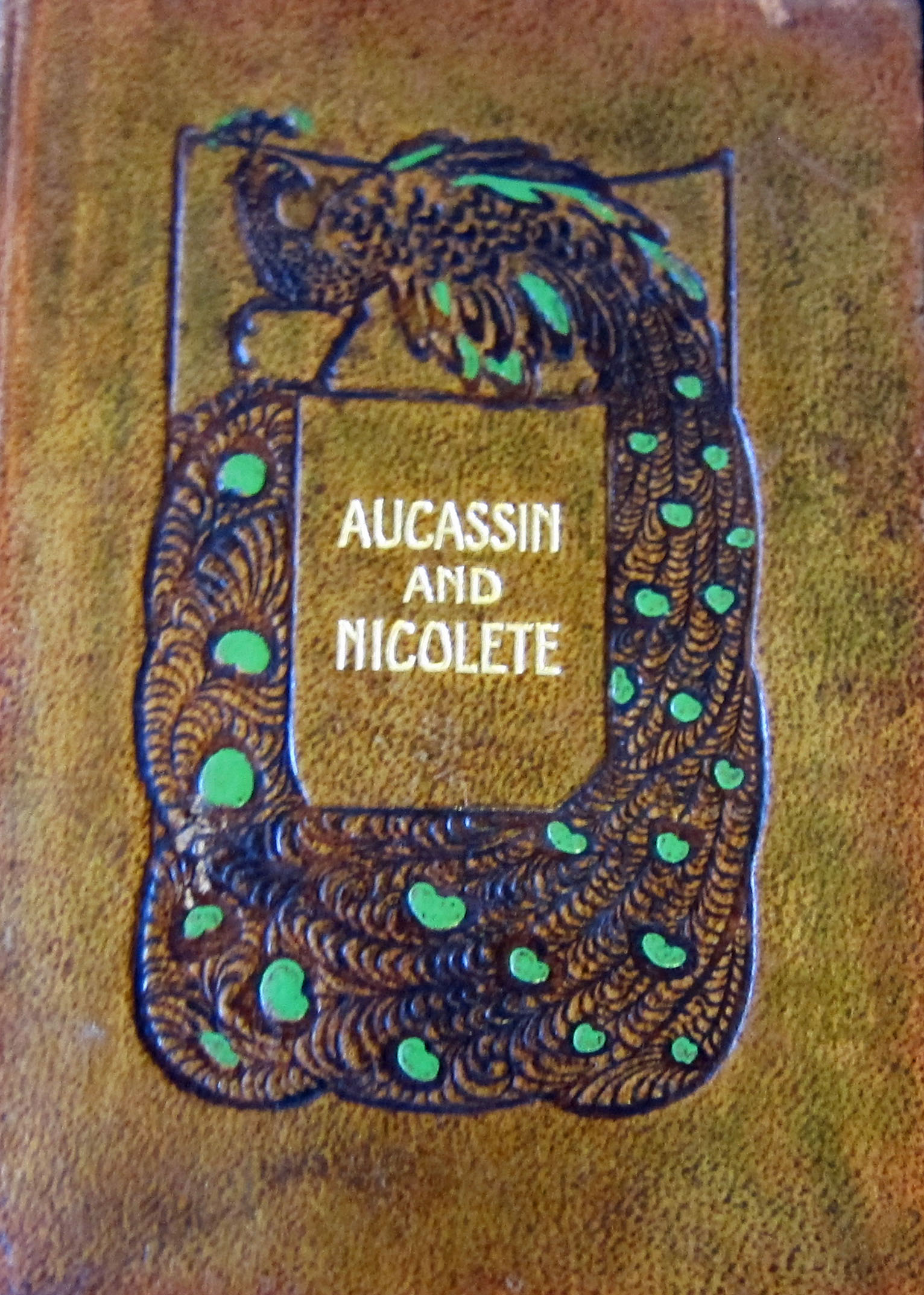
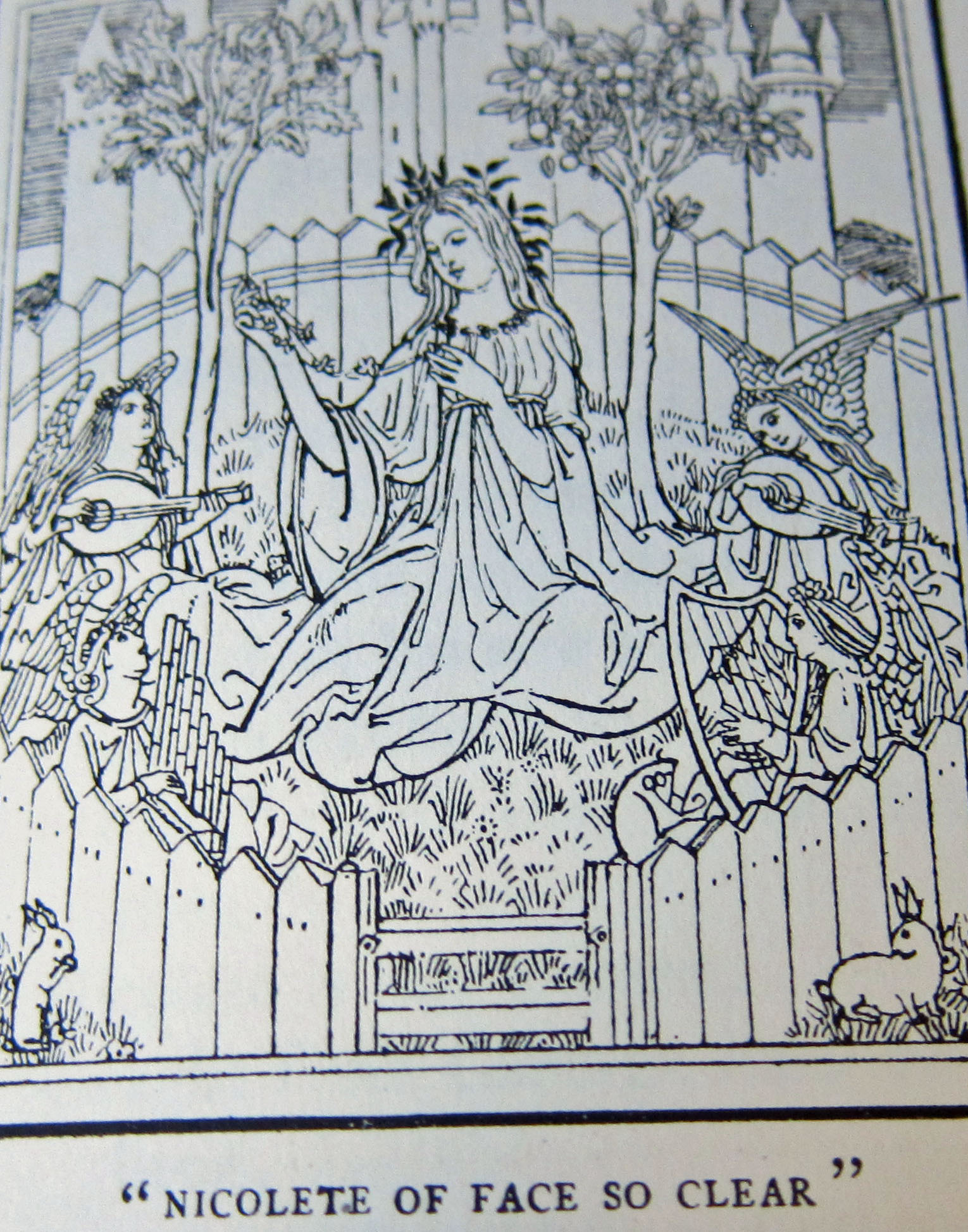
It was one of my favorite books from the branch of the public library in Queens that I visited so often. I remember exactly the place where it stood on the shelf, near the fireplace where the librarian used to conduct her story hours. I was surprised to find the romantic tale again and surprised to recognize the black-and-white line drawings in the book. Luckily for me, the book only cost seven dollars, so I was happy to bring it home where I could pore over those pictures the way I used to do when I was a twelve-year-old in love with romantic stories. The lines of poetry that close the story still sound charming:
Aucissn_Nicolete_edited-2Aucassin is blithe and gay,

Nicolete as glad as May.

And they lived for many a day,

And our story goes its way.

                        What more to say?

The books that twelve-year-olds—these days they are called tweens—read Aucassin-castletoday are far larger and more elaborate than the books I remember from the library.  I guess television and online entertainment have drenched our world in so much color and action that quiet black-and-white drawings and stately, old-fashioned stories no longer hold a reader’s attention. Graphic novels have won a place in children’s libraries; refugees and death have become a focus of attention and action often jumps far more quickly than it used to. The world is big and children should be introduced to many aspects of it. I just hope that they will spend enough time with their books that they will remember them and when they are older will be able to turn back to their favorites and enjoy them just as I do mine.
Artists and Sisters in a New World

It always surprises me to find how much novels change over the years—change, that is, in my reaction to them and my feelings about them. When I reread a book that I read in college, it often seems like an entirely new book. And the same is

Vanessa Bell
Vanessa Bell

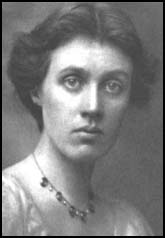
true of writers that I knew and loved when I was young. As you grow older you sometimes see them in a new light. Virginia Woolf was a writer much admired by the English majors that I knew in college, at least all the female ones. She wrote sensitively about the innermost feelings of women and their relationships with friends, families and lovers in a way that was different from the male novelists whose books we read in other courses. Virginia Woolf had a sister, a painter named Vanessa, but I never learned much about her. Now I am finding out about Vanessa.

This week I finished Priya Parmar’s fascinating historical novel Vanessa and Her Sister, based on the lives of Vanessa Bell, Virginia Woolf and their family and friends who formed the famous Bloomsbury group in early 20th century England. The two women at the center of the group were the daughters of Sir Leslie Stephen and his wife Julia. They grew up in comfortable circumstances and were close to their brothers Adrian and Thoby. After their parents died, it was the boys who brought university friends into the circle of young people who now formed the household. Neither Vanessa nor Virginia, of course, went to university as very few women did in those days. It was the men who went out into the world and learned about art, history, and the ideas circulating in the greater world outside of their sheltered London neighborhood. The Stephens girls were

Studio of Vanessa Bell

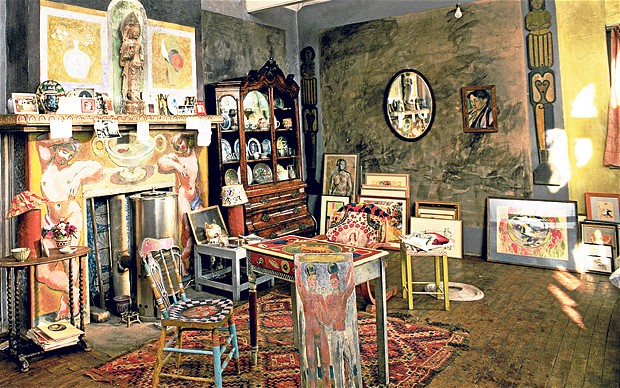
beautiful, charming, and witty and more than that they had a comfortable home and plenty of free time to entertain and discuss ideas about the changing times in which they all lived. In the early years before World War I, Vanessa painted, Virginia wrote and no one worried about having to get a job or do the housework.

Priya Parmar has captured the feeling of the time and has given a voice to Vanessa Bell so that both she and her sister become three-dimensional characters. We can see how the two women interacted with one another and the strains which both of them felt growing up as artists in a world dominated by men. Virginia’s emotional fragility took a toll on the whole family, especially Vanessa, but her books become even more impressive in view of the restricted world in which she lived. Vanessa’s strength in developing her painting and becoming an artist while at the same time managing most of the logistics of holding the family, and later her marriage, together is remarkable.

Reading Vanessa and Her Sister will broaden your world if you care about books and writing and you can have the extra treat of reading Prya Parmar’s blog post about the research that went into writing it. You won’t soon forget Parmar’s novel and you may go back to reading Virginia Woolf’s books too. It’s the kind of reading that should make for a good year ahead.

2015–Hopes and fears as another year arrives

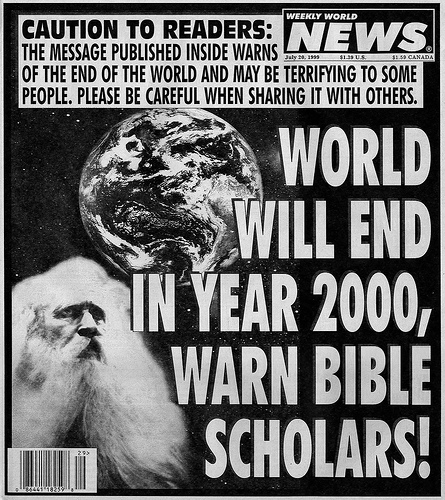
Does anyone still remember the Y2K bug that threatened to end the world as we knew it on New Year’s Day 2000? The problem was caused by the way early computer programs were written, allowing only two figures to indicate the year section of the date.  The first two numbers of the year were assumed to be ‘19’ so that 4/5/00 stood for April 5, 1900. When the year 2000 came around the date would be written 4/5/00 again, this time standing for April 5, 2000. This could be very confusing when comparing dates of events that happened over long stretches of time. A baby born in 2000 could have a her date of birth registered as 4/5/00 and thus appear to be 100 years old on the day she was born.

Prediction published in 1999

As the media coverage heightened, more and more bizarre suggestions were made about how bad the chaos would be. According to a New York Times report on the event (May 27, 2013),

Frightened citizens stocked up on bottled water and extra guns, according to news reports. The Rev. Jerry Falwell prophesied the electronic equivalent of fire and brimstone: “I believe that Y2K may be God’s instrument to shake this nation, humble this nation, awaken this nation and from this nation start revival that spreads the face of the earth before the Rapture of the Church.”

President Clinton appointed a Y2K czar to oversee activities designed to head off the problems. People with a tendency to worry, worried even more. A few people headed off on extravagant vacations on the assumption they would not need money after the world ended.

When January 1, 2000, actually rolled around however, nothing much happened. Corporations and public agencies had hired computer experts to reprogram computers; no major system failures occurred and the new century rolled on. The one tiny reminder of the great even that remains is that now when we enter dates into most computer-generated forms, we use four figures for the year—2014 or 2025—rather than the two figures we used back in the twentieth century.

The passing of what appeared to be major catastrophes is a good thing to look back on as another new year rolls around. For many of us the year ahead holds more fears than hopes—wars continue to bedevil us, climate change rolls relentlessly on, people have not yet shown the generosity necessary to overcome poverty in the world, but perhaps there is still hope for the new year and the years to come.

At the beginning of the twentieth century, when the year 1900 was on the horizon, Thomas Hardy wrote a poem of limited hope. It doesn’t suggest a divine intervention to bring happiness or wealth, but just acknowledges that hope exists and perhaps we can find it when we look at the world around us. Hardy found it in the song of a bird.

The Darkling Thrush

by Thomas Hardy         

I leant upon a coppice gate

When Frost was spectre-grey,

And Winter’s dregs made desolate

The weakening eye of day.

The tangled bine-stems scored the sky

Like strings of broken lyres,

And all mankind that haunted nigh

Had sought their household fires.


The land’s sharp features seemed to be

The Century’s corpse outleant,

His crypt the cloudy canopy,

The wind his death-lament.

The ancient pulse of germ and birth

Was shrunken hard and dry,

And every spirit upon earth

Seemed fervourless as I.


At once a voice arose among

The bleak twigs overhead

In a full-hearted evensong

Of joy illimited;

An aged thrush, frail, gaunt, and small,

In blast-beruffled plume,

Had chosen thus to fling his soul

Upon the growing gloom.


So little cause for carolings

Of such ecstatic sound

Was written on terrestrial things

Afar or nigh around,

That I could think there trembled through

His happy good-night air

Some blessed Hope, whereof he knew

And I was unaware.

What do you mean I can’t vote?

Everyone wants to have a voice.

Nelson Mandela, who brought democracy to South Africa 1994, thought everyone over the age of 14 should be allowed to vote. Young people had fought against apartheid with him and he believed they should be able to vote in their new country. He didn’t win that argument and the voting age was set at 18 as it is in the majority of democracies around the world.

But are young people in the United States losing that right? A group of students in North Carolina claim that young people are losing their right to vote because of new voter ID laws passed in several Republican-dominated state legislatures.

According to a New York Times report, under the North Carolina law passed last year, the period for early voting was shortened and same-day registration was eliminated. Beginning in 2016, voters will need to show photo identification, and student ID cards, including those issued by state universities, will not be acceptable. In most instances, neither will an out-of-state driver’s license. In Texas, voters must show a photo ID. A state handgun license qualifies, but a state university identification card does not. Other states have suggested even more restrictive laws.

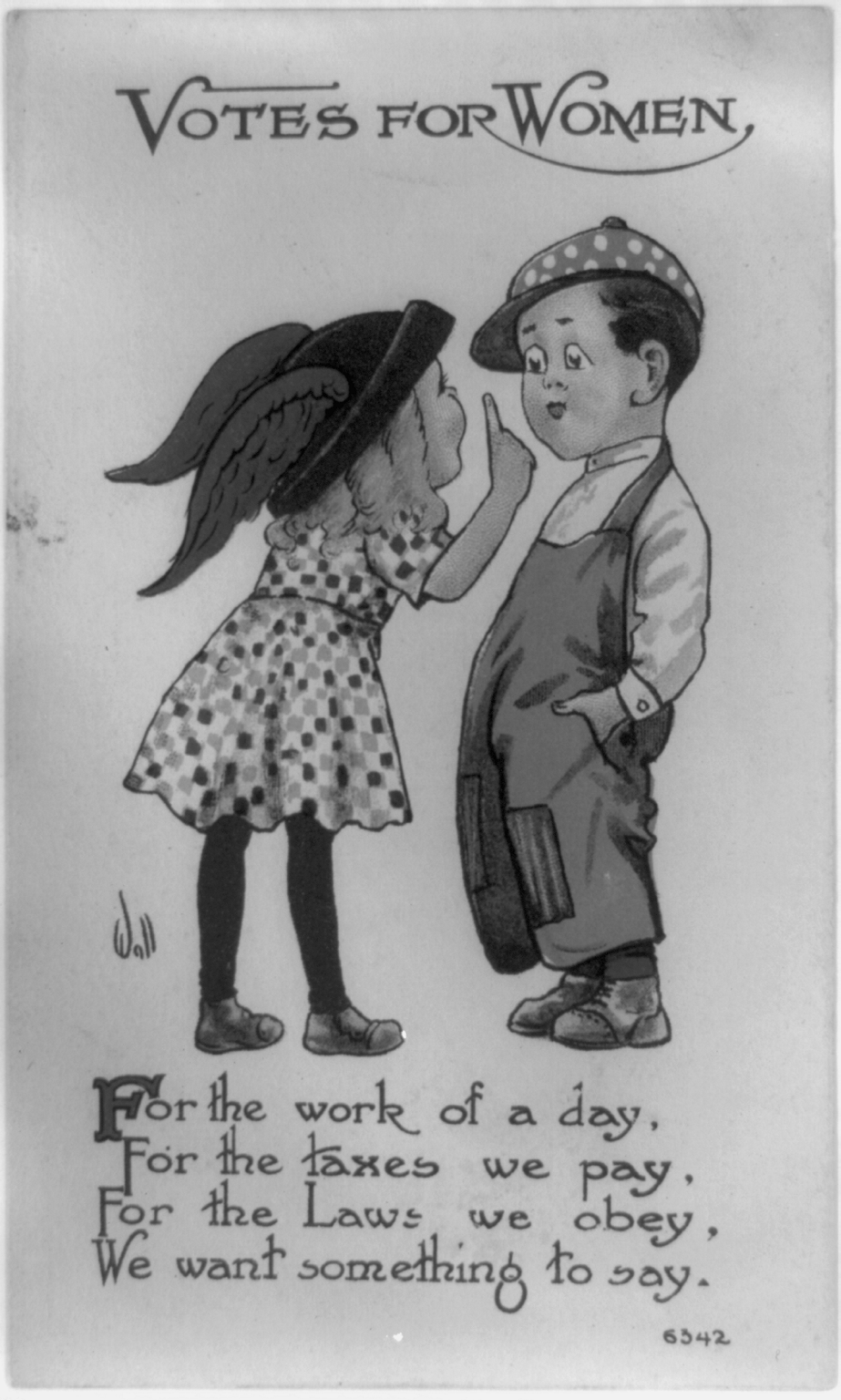
The history of voting in the United States has been a history of letting more and more citizens vote. The men who wrote the constitution thought voters should be successful men who had experience as farmers or businessmen. Voters should be at least 21 years old and own property. Servants and slaves could not vote and neither could women. During the first few years of the new country, only about half of all white men were allowed to vote in some states.

No one is sure why 21 was chosen as the time when a man became an adult. During the middle ages in England, a young man could become a knight at the age of 21, because he had gained his full strength and could wear heavy armor. Gradually that age was accepted as an appropriate time for taking on adult responsibilities, including voting.

Slowly and painfully the right to vote was extended to men who did not own property, to former slaves and even to women. Each extension was gained after a long, hard battle. For more than a hundred years it looked as though democracy was winning and more and more people were given voting rights. In 1971, the voting age was lowered to 18, allowing voting to young people across the country.

The history of the twentieth century was a history of broadening people’s rights to vote, but the twenty-first century has reversed the trend. Instead of taking advantage of an infrastructure that makes it easier for people to vote—voting machines that count votes automatically, mail delivery that is safe and secure, ballots that are accessible to people with disabilities—some jurisdictions are intent on decreasing voting rather than expanding it.

How much does this have to do with the increasing inequality in our society?  Making voting difficult is one way to stifle

Voters at the polls--Miami 2012
Voters at the polls–Miami 2012

democracy. Lines like the ones that have appeared in recent elections in states such as Florida and Ohio discourage voting, so do unreasonable voter ID laws. Voting is a right, not a privilege to be doled out only to people who can be counted on tovote to support the privileges of those who hold power. Every citizen who cares about the future of America should support the right of all citizens to vote no matter which candidates or parties they are supporting. That’s what democracy is all about.

Earthquakes and other disasters

The San Francisco Bay area was hit by a strong earthquake this morning, well, halfway through the night at 3:20 AM while most of us were in bed. I woke up wondering what was happening and found myself lying in a bed that seemed to glide gently back and forth as if a giant mother was trying to soothe a child by rocking its baby carriage. The movement seemed to last for several minutes, but it surely was less than one minute. Then everything stopped. There was no sound inside or out, no dishes falling off shelves, no books shaken out of bookcases, and no one in the street raising an alarm. I turned over and eventually drifted off to sleep.

We were lucky this time, but no one knows when the “big one” might hit the area and destroy lives as well as property.Later, of course, the news came about greater damage in the city of Napa as well as injuries, although most of them not very serious. It seems as though the only upside to a natural disaster is that it reminds us that the “disasters” we often spend our time complaining about are pretty trivial.

All week I’ve been feeling sorry for myself because

San Francisco City Hall after 1906 earthquake
my computer broke down. Not only did I have to wait to get repairs and new parts, I also had days of worry about whether I had lost any of my precious files. Yes, I make backups, but I always worry that I could have forgotten some, or that my backups would be corrupted.Yesterday I finally did get my computer back and all the files had been copied on a new hard drive. Life is back to normal and I can get back to work on my book—the second volume of the Charlotte Edgerton mystery series. If only all problems had such good resolutions.

The earthquake was a reminder of how many real disasters—ones affecting hundreds of other people and not just me—are lurking on the borders of our lives. Nature’s indifference to human beings, the constant stream of droughts, earthquakes, floods and tornadoes is a never ending source of disaster. Add to that the human disasters of wars and violence and it’s easy to see what a dangerous world we live in. The only hope is to try to keep our own troubles in perspective, focus on our work, and help other people when disasters hit them. We can all summon courage to face the future and its disasters if we keep in

Abraham Lincoln and his young son
mind what Abraham Lincoln said: The best thing about the future is that it comes one day at a time. And anyone can cope with just one day.

Honoring Karen DeCrow and NOW

photo of Karen DeCrow
Karen DeCrow
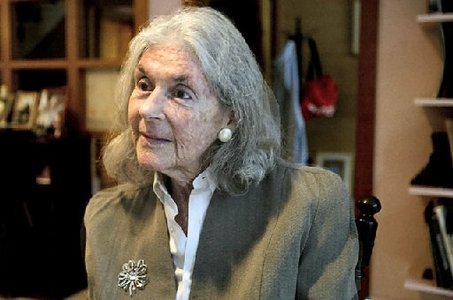
Reading the obituary of Karen de Crow in the New York Times today brought back memories of the optimism many of us felt about feminism during the 1970s. The National Organization for Women (NOW), which De Crow led from 1974-1977, fought for equality for women in jobs, social life and sports.

Some of those battles have long since been won. We no longer think it bizarre that girls as well as boys should be able to play sports in schools and in Little League teams. When De Crow was representing a young girl who wanted to play baseball, one coach said to her “Over my dead body will girls ever play Little League baseball. “If one of them ever struck out a boy, he would

Girls playing baseball
Little League Girls
be psychologically scarred for life.” I don’t think anyone now thinks that a boy’s life would be ruined if a girl could strike him out in a baseball game, but far too many men and boys still find it impossible to accept women as equals.

Why is it that so many men still find it impossible to allow women to make their own decisions about their bodies, their ambitions, and their choices? Rape on college campuses is still a threat to women students. Is it so hard to understand that every human being has a right to decide when and how they will have sexual relations? And why is it that campus rape is so often associated with athletes? Why are women’s bodies still viewed as trophies that should be the reward for winning at sports?

Women have moved far ahead in business and the professions, but even the most eminent women in the country are still questioned far more about their personal lives than men are. All we have to do is to read or view the news stories that have appeared recently about Hillary Clinton. Why does she have to answer questions about her marriage and her life choices far more often than male candidates?

More than a century and a half ago, Margaret Fuller wrote: “If you ask me what offices they [women] may fill, I reply—any. I do not care what case you put; let them be sea-captains, if you will”. She was ridiculed for demanding the impossible, but many women took up the challenge. They have become doctors, lawyers, mayors, senators and governors. But the struggle is not over. Not until women can walk on college campuses in safety and equality, apply for any job, and run for office without harassment will women be truly equal.

It is important to remember Karen De Crow and NOW, as well as all the other women who have fought over the years so that girls and women can make their own choices and live the lives they truly want. The struggle continues.

Saints and their mysteries

This week Pope Francis announced today the canonization of two recent popes, John XXIII and John Paul II. Each of the men appeals to a different group of people—John Paul II is a favorite of political conservatives and John XXIII of liberals. I guess we shouldn’t be surprised to see the arrival of saints with very different groups of fans. It has always been that way.

portrait of Pope John 23
Pope John XXIII

The roster of acknowledged saints increases steadily year by year. According to the sources I found, there are at least 10,000 saints already, some of them pretty much forgotten, but others actively celebrated every year. It’s easy for nonreligious people to wonder at some of the choices of saints. Does living in a hut in the wilderness really make you a force for good? And why did some women choose to live in a secluded convent where they would never again see their friends and family? Is this what religion is supposed to be? But when you read about saints, you realize that many of them led active lives in the world and their lives can offer inspiration and even hope in our modern secular world.

The earliest individuals to be honored as saints were the martyrs who suffered persecution and death for their allegiance to Christianity, but for most people it is not the martyrs who offer patterns for everyday life. More inspiring are the people who practiced generosity and love for the people around them, sometimes in difficult situations. Of course even charity can be taken too far. Phyllis McGinley, the twentieth-century poet who genially commemorated many types of saints, wrote a tongue-in-cheek tribute to the generosity of St. Bridget:

• Saint Bridget was
• A problem child.
• Although a lass
• Demure and mild,
• And one who strove
• To please her dad,
• Saint Bridget drove
• The family mad.
• For here’s the fault in Bridget lay:
• She would give everything away.

(If you have never read McGinley’s poetry, you’ll find a treat in collections like Times Three, available in many libraries.)

But not all saints went to extremes. Many of them had illustrious careers as teachers, doctors and social workers. In today’s world they would find fulfillment in secular life, but centuries ago there were few options for public life and almost none for women. Several of the saints remembered today chose the life of a single career woman to evade the prescribed and limited role of a wife and mother.

painting of St. Catherine of Siena
St. Catherine of Siena
St. Catherine of Siena, like many other female saints, found it difficult to persuade her family that she did not need to marry. She was born in 1347 in Siena, a city that had been hit hard by the bubonic plague, known as the black death, that had killed so many Europeans. When she was 16 years old, her older sister Bonaventura died in childbirth. Catherine’s parents wanted her to marry Bonaventura’s widower, but the girl protested by starting a long fast. She was so firm in refusing food that eventually her parents relented on the marriage. Catherine cut off her hair to discourage other suitors, but she insisted that she did not want to enter a convent; she wanted to stay at home and devote her life to prayer and good works. She once suggested to her confessor that he could “Build a cell inside your mind, from which you can never flee” and it seems that is what she did. Catherine’s interior cell was so strong that she eventually persuaded her father to let her life the life she had chosen.

Catherine worked in hospitals in Siena and gradually gathered a group of followers around her. This was a stressful time for Siena and for the papal state in general. Catherine felt called to move into the wider political sphere to try to encourage the reform of the clergy and the strengthening of the pope. She learned to write, something that women were seldom taught during those years, and sent letters to various authorities urging peace between the republics and the princely states in Italy and the return of the Pope to Rome. She negotiated for peace between Florence and Rome. In other words she became a politician and a public figure rather than the wife and mother her family had expected.

Her religious fervor was undimmed and she continued to fast so drastically that her own followers begged her to eat properly and take care of herself. Despite her extreme practices, she was able to found a monastery for women and to organize her group followers into a force for good. And she did all this before dying at the age of 33. Did she go too far with her own severe practices? Would she have been even more saintly if she had maintained her health and continued to work for her people and her Church? We will never know the answer.

Once again Phyllis McGinley can help us accept the lasting mysteries of saints. In a poem about Simeon Stylites, McGinley writes:

• And why did Simeon sit like that,
• Without a garment,
• Without a hat,
• In a holy rage
• For the world to see?
• It puzzles the age,
• It puzzles me.
• It puzzled many
• A Desert Father.
• And I think it puzzled the Good Lord, rather.

St. Patrick’s Day 2014

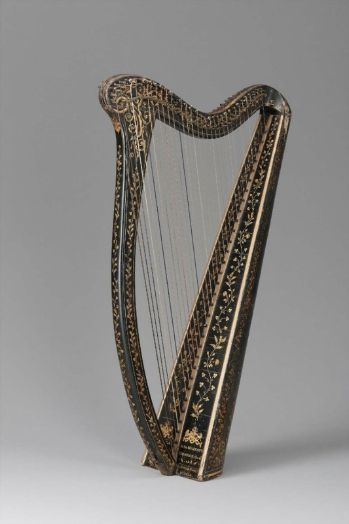
19th century Irish harp in the Boston Museum
St. Patrick’s Day is here again with parades and songs and shiny green hats and beads not only for the Irish but for anyone who enjoys a party. But while people are busy celebrating, the world seems to be trembling on the edge of more violence and possible wars. The Irish are famous for writing verses, so this year let’s not forget the Irish tradition of anti-war poetry and songs including the familiar “Johnny I hardly knew ye”.

While goin’ the road to sweet Athy, hurroo, hurroo
While goin’ the road to sweet Athy
A stick in me hand and a tear in me eye
A doleful damsel I heard cry,
Johnny I hardly knew ye.

Chorus:
With your drums and guns and guns and drums, hurroo, hurroo
With your drums and guns and guns and drums
The enemy nearly slew ye
Oh my darling dear, Ye look so queer
Johnny I hardly knew ye.

Where are the eyes that looked so mild, hurroo, hurroo
Where are the eyes that looked so mild
When my poor heart you first beguiled
Why did ye scadaddle from me and the child
Oh Johnny, I hardly knew ye.
(Chorus)

Where are your legs that used to run, hurroo, hurroo
Where are your legs that used to run
When you went to carry a gun
Indeed your dancing days are done
Oh Johnny, I hardly knew ye.
(Chorus)

I’m happy for to see ye home, hurroo, hurroo
I’m happy for to see ye home
All from the island of Ceylon
So low in the flesh, so high in the bone
Oh Johnny I hardly knew ye.
(Chorus)

Ye haven’t an arm, ye haven’t a leg, hurroo, hurroo
Ye haven’t an arm, ye haven’t a leg
Ye’re an armless, boneless, chickenless egg
Ye’ll have to be put with a bowl out to beg
Oh Johnny I hardly knew ye.
(Chorus)

They’re rolling out the guns again, hurroo, hurroo
They’re rolling out the guns again
But they never will take my sons again
No they’ll never take my sons again
Johnny I’m swearing to ye.

African Dorcas Society—an early PTA?

Trouble is brewing in California over the inequities inherent in having schools subsidized by Parent Teacher Associations which buy iPads, musical instruments and books for school libraries. Sometimes these parent groups pay for music and art teachers to supplement the regular classes. According to an NPR story I heard on the radio last week, some California schools receive an average parent donation of $1000 per pupil each year. Naturally school districts where families cannot contribute money for these extras cannot offer their students equal opportunities. Is it fair in a democracy for wealthier parents to be able to provide extra funding for their own children but not for others? That is a question taxpayers should be asking themselves, but it is certainly not a new one.

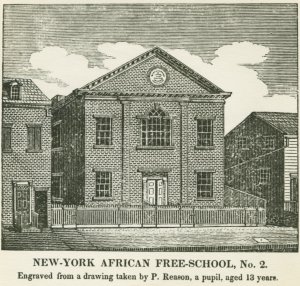
Back in the pre-Civil War days when education for Free Blacks was just starting in the Northern States, a group of women in New York City formed the African Dorcas Society. Slavery was abolished in New York in 1827, and the Black population in the city increased dramatically.engraving of African Free School Leaders of the Black community, and some white leaders, recognized that the children of these newcomers would need education. Several schools had been established for this purpose, but many families did not send their children to school. The reasons were easy to understand. Not only was children’s labor valuable to the parents, many of whom were struggling, but often the children did not have warm clothing and shoes that would make it possible for them to get to school in bad weather.

The African Dorcas Society was organized by Black women and was one of the first societies in which women met independently and planned their work without the supervision of men. The women divided themselves into sewing circles to make, mend and alter clothing for poor children. They also solicited contributions from well-wishers. For several years the group flourished and supplied clothing to enable children to attend schools. Unfortunately there were many New Yorkers who did not believe that former slaves could or should be educated and there was opposition to the Society’s work as well as the schools themselves.

We all know what happened in the decades that followed, leading up to full emancipation for all American slaves and to the slow establishment of education for all Americans. The struggle still continues to ensure that all children are given the resources necessary for them to attend schools and to take full advantages of education. But during this Black History Month, we should pay special tribute to the multitude of anonymous men and women who worked to make education available to all the children in their community. It’s been a long, hard struggle and it is not over yet. Equal education for all is one of the ideals we have to struggle for every month year after year.

You can read more about how the Black community fought for education and equality during the early 19th century in Leslie M. Alexander’s detailed history African or American? Black Identity and Political Activism in New York City, 1784-1861. It’s a fascinating account of forgotten history.

Honoring two Kings–MLK and Coretta Scott King

Today is Martin Luther King day and Americans have heard many tributes to King, a great leader who helped to bring about the dream of equality for all Americans. Every schoolchild learns about Martin Luther King and his inspiring work, but not everyone knows that his wife Coretta Scott King has also been a source of inspiration for many children.

Coretta Scott King Award seal
Coretta Scott King, who died seven years ago this month, left an ongoing gift to American children in the form of the Coretta Scott King award of the American Library Association. From its beginnings in 1969, the Coretta Scott King has honored the work of African American writers and illustrators of books for children.

The 2013 author award went to Andrea Davis Pinkney, author of Hand in Hand: Ten Black Men Who Changed America. The illustrator award went to Bryan Collier, illustrator of I, Too, Am America.

In the years since 1970, the award has gone so such remarkable writers as
• Eloise Greenfield
• Julius Lester
• Toni Morrison
• Virginia Hamilton
• William Dean Myers

As well as many others. All of the names can be found on the American Library Association Coretta Schott King award page website at http://www.ala.org/emiert/coretta-scott-king-book-awards-all-recipients-1970-present

What a wonderful gift to give to America’s children! Some of the best books of the last half century have been honored by this prize and have enriched the lives of many Americans. So when we pay tribute to Martin Luther King, let’s also give thanks to Coretta Scott King for her many contributions over the years and the legacy that continues to honor her name.