A new school year is beginning all across America and children are pouring into their classrooms to start, or continue, their journey toward knowledge and a good life. One of the standard pieces of advice given in schools is “You can be anything you want to be.”
Hillary Clinton has set a new goal now that she is running for president and has a good chance of winning. She posted on Twitter To every little girl who dreams big: Yes, you can be anything you want—even president.
The trouble with telling children they can do anything is that it’s just not true. Strangely enough, we have a popular movie out this month with an example of the limitation of

dreams. Florence Foster Jenkins chronicles the story of a woman whose dream was to be a concert singer. Because she was wealthy, she was able to achieve her desire to give concerts. But no one would say that she had achieved her dream of being a great singer. One of the attractions that brought audiences to hear her is that she simply could not sing and many people found pleasure in watching her fall short.
Jenkins was lucky to have been able to cushion the failure of her achievement because she had money, love, and friends. Many other people discover that they have to move on to new dreams. The boy who dreams of becoming a major league pitcher, discovers his throwing arm will never get him beyond the tryouts. That’s when the real test of the dream occurs. Some people sink into bitterness making their lives, and the lives of their families and friends, dismal. Others use their athletic prowess to become great gym teachers and coaches. And a dream of making your high school team the state champions is not a bad one to follow.
Most people’s lives take many twists and turns. You start out with one dream, switch to another, and move on sometimes to find far more success and happiness than you had expected. Sergei Diaghilev, the world famous producer and founder of the Ballets Russes, was a man with many dreams. Born in 1872, he grew up under the czarist regime in Russia. When he was a teenager, his father went bankrupt, so Sergei had to help support his family. His first love was music and he dreamed of being a composer. He studied composition, but was told by his teacher (the famous composer Rimsky-Korsakov) that he lacked the talent to compose music.
Unlike Florence Jenkins, Diaghilev decided to give up his first dream and to pursue his interest in the arts and dance. He started a magazine to publish Russian writers and later
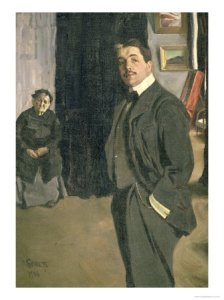
founded the innovative dance company the Ballet Russes. With the ballet company, Diaghilev toured France and other European countries. He worked with famous artists, including Pablo Picasso, Erik Satie and Claude Debussy to produce unforgettable ballets, using modern music and modern artistic sets. His innovations revolutionized the dance world. He seemed to have a hand in all of the artistic ferment of 1920s Europe. If you want to read a good biography, you can’t do better than try Diaghilev: A Life by Sjeng Scheijen.
The trouble with telling children they can become “anything they want to be” is that, when they don’t reach that goal, it seems as though they fail. But no one is a failure because she, or he, doesn’t become President. In fact, it is a mathematical impossibility for every child to become President, or for every child to win a gold medal at the Olympics. So why do we tell them they can all reach these impossible dreams?
Perhaps we should be honest with children. Instead of telling them “you can achieve anything” we should tell them the truth: “you can dream and build a good life if you are willing to stay flexible and let your dreams change and grow.” Perhaps we ought to encourage them not to have one dream, but to have a bouquet of dreams. If one dream wilts and dies, another will take its place. Happiness is usually found not by holding onto one unchanging dream for a lifetime, but by being open to new dreams and new hopes and being willing to work to reach them.
.
 keep moving instead of talking and we can see for ourselves who is winning. There is no need for lengthy commentary about who said what and who scored points against an opponent. There is something very satisfying about a clear cut win like Katie Ledecky’s brilliant 800-meter swim that smashed the world record and won her another gold medal.
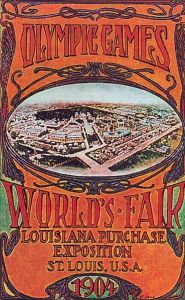 the only sport open for women was archery. Those games were among the most informal and disorganized of games because very few athletes were willing to make the long trek to St. Louis to participate. Almost everyone who took part was an American and a true amateur; many signed up at the last minute without training or knowledge about how to compete.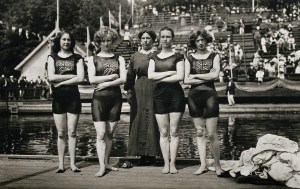

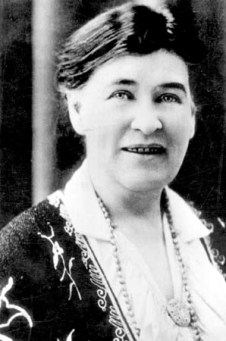
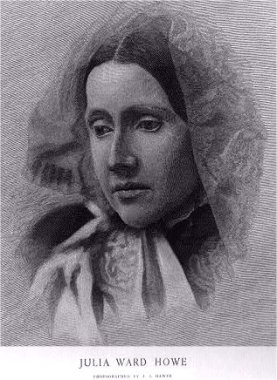 unyielding pattern of what used to be considered “normal” family life. And it has made me think of the ways in which women, who did not find happiness in the stereotypical marriages of the nineteenth and twentieth centuries, have tried to write and express their feelings.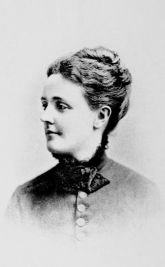
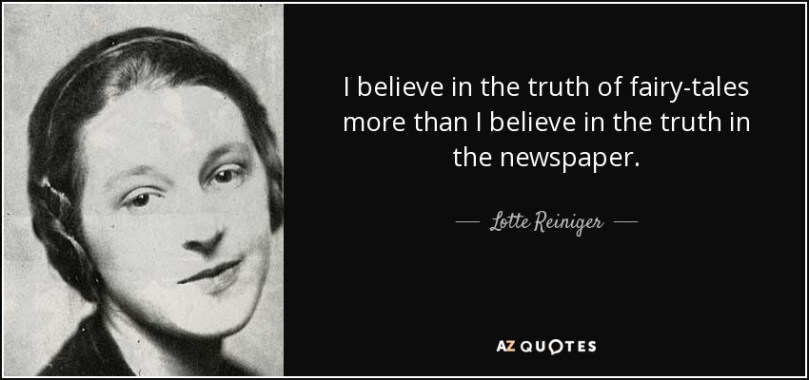
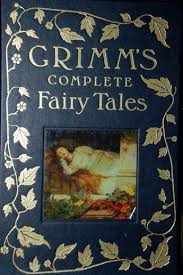 fairy tales. For most American children—at least the ones who are lucky enough to have a parent or caregiver who reads to them—their first experience of a fairy tale is an unamplified voice telling the tale while showing still pictures in a book. Often the story is read over and over again.

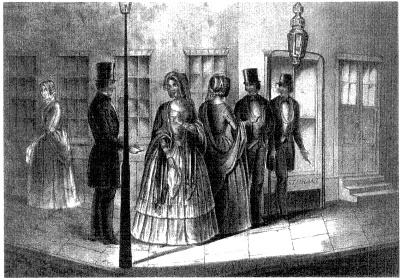

 City, I spent some time looking for a suitable place for the burial of a murder victim because the well-known cemetery at Trinity Church was already overcrowded. It’s doubtful that my readers would have known that, but I like to make the details in all of these stories as authentic as possible. It’s fun and I have learned so much about the 1840s, one of the most turbulent decades of the 19th century.
 been read by most readers and find almost nothing. The prize-winners often languish in libraries and are assigned in classrooms, but remain unread by the majority of American readers. Instead it is genre fiction that reaches the mass of readers and enriches the authors who are lucky enough to reach huge popularity.
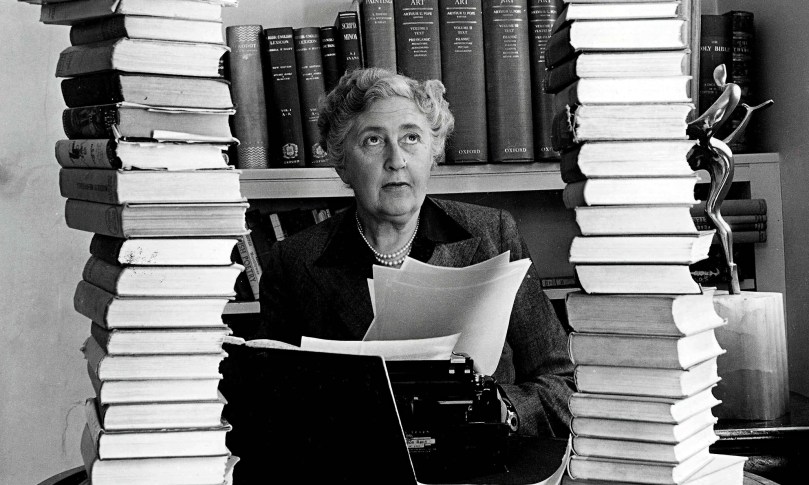 Christie, according to UNESCO, is the world’s most translated author? It is interesting to consider that while many prize-winning books remain unknown outside of the English-speaking world, Christie’s books have presented a version of English life to audiences around the globe.
 And I’d like to offer a cheer for the British Library which has begun publishing a series of historical mystery stories that add to our knowledge about the history and background of mystery stories. Perhaps eventually they will do the same for other genre fiction.
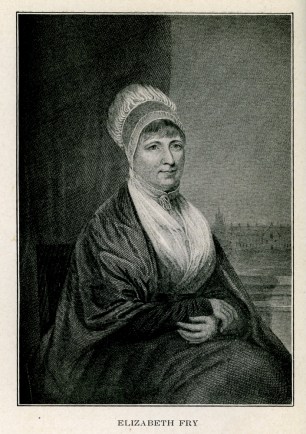 instead of spending much of his life in prison,. Not many prisoners are as lucky. We now know that spending time in solitary leads to mental and psychological consequences that often last for a lifetime. But deciding what kind of punishment is appropriate for men and women who have committed crimes is a problem that has not yet been solved.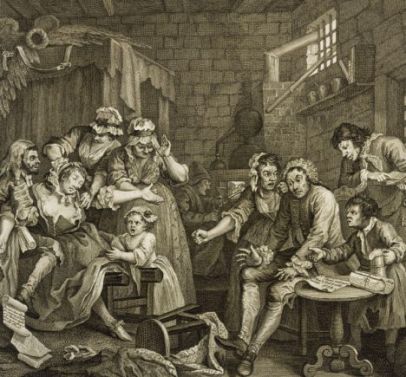

 Glasnevin Cemetery along with many other veterans of the 1916 Easter rebellion. This tribute was one of the first steps in the national celebration Ireland is holding to commemorate the Easter uprising that happened 100 years ago.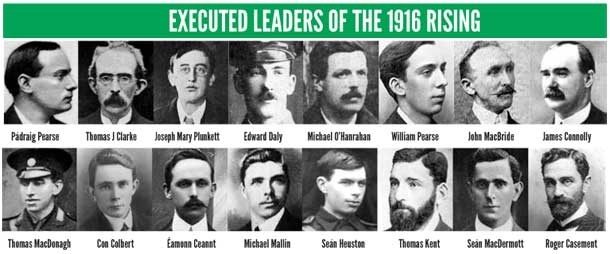
 There are few flowers that have the complicated appeal of tropical orchids. Some of us can remember the times, years ago, when girls going to their high school proms wore a wrist corsage of a purple orchid as the finishing touch to their dresses. But those days are gone and orchids today are of more interest to gardeners than to the average teenager.
 The theme of the 2016 Pacific Orchid show is “The Legacy of Orchids” celebrating the dramatic effect orchids have had on society. During the 1800s, dozens of daring orchid hunters scoured the jungles of South America and Southeast Asia to find exotic orchids for Europeans and Americans to grow at home. The orchids sold for hundreds or thousands of dollars and the hunts were cut-throat battles. Some orchid hunters destroyed or burned thousands of plants in the jungles so their rivals could not find the treasures they had discovered. Scarcity kept up the price for European orchid collectors.



 Teacups and Tyrants-Adele Fasick looks at people, books, and history