We Must Not Lose Our History

Like many other people around the world, I spent quite a bit of time this week watching news pictures of the fire that struck Notre Dame Cathedral. For almost everyone who has visited Paris, and millions who have never been there, Notre Dame is immediately recognizable.

Notre Dame Cathedral 2019

I’ve been lucky enough to visit Notre Dame several times. My first visit was during the 1950s when I went on a student trip to Europe. We Americans were overwhelmed by the beauty and history of Paris. Buildings, streets, the whole city seemed so old and yet still alive and important. It was a revelation. This was only a few years after the end of World War II, when Notre Dame became the centerpiece for the liberation of Paris and the end of the war. We could still remember the newsreel pictures of American troops being welcomed by tearfully joyous French civilians.

Notre Dame 1944

Every time I went back to Paris and visited Notre Dame, the church was more crowded with tourists than the time before. Memories of the war became one small part of the centuries of history enshrined in the church. Looking at the overwhelming light and beauty of the rose window, it was easy to understand how it must have brightened the lives of people, both Parisians and others throughout the centuries. The events that window cast light on—the marriage of Mary, Queen of Scots and the coronation of Napoleon—linger on in memories in the building alongside the memories of nameless soldiers coming back from wars, families bringing babies for Baptism, and refugees trying to build new lives in a strange city.

But more important, the cathedral has welcomed thousands of visitors over the years and given them a glimpse of a past that still lives and influences us. The sculptures, the stained glass, the votive candles flickering along the side altars. Every visit reminds us of the people who visited the cathedral and were awed by the experience just as we are. The past comes alive in places where so many people have experienced some of life’s major events. William Faulkner once wrote “The past is never dead. It’s not even past.” We recognize the reality of the past—our past and the past of humanity—when we visit places so rich in history. Notre Dame Cathedral is an important part of the heritage of all humankind and we cannot afford to lose it.

It is not only the heritage of our own societies that enrich us. Visiting heritage sites around the world binds us together in our common human history. When I visited Angkor Wat in 1999,  I was overwhelmed by the evidence of a past world I had never known about.  I recently reread the journal I kept during that visit.

Angkor Wat, Cambodia

Today we went to a temple complex that is being overgrown by the jungle. The banyan trees in particular send their roots into the crevices in the stones and force the stones apart. Many parts of the temple have fallen to the ground. The stone faces of the Buddha statues peer from the tops of devastated towers. A group of soldiers who were guarding the site were cooking a frog over a tiny fire. They had killed the frog that morning and it is considered wrong to kill a creature and not make use of it–lack of respect.

On our way back to the hotel we drove around the Angkor Wat complex and began to get a better sense of the whole place, although my knowledge is still sketchy. I have an impressionistic feeling about the glories of the crumbling ruins, the huge, smiling Buddha faces, the graceful figures of the dancing girls, and the parades of war elephants and troops. The surroundings haven’t changed much over the centuries, it seems, and that adds to the sense of their antiquity. It’s like walking into a preserved world of the past. We walked through what seemed like acres of temple property, along stone paths and up crooked stone steps around the walls of the complex, which are carved with scenes of Cambodian life from the thirteenth century. Banyan trees push up through the stones.

Both Notre Dame Cathedral and Angkor Wat are UNESCO World Heritage sites. They remind us all of a past that will never be completely recovered but will continue to resonate with generations of people to come. They commemorate the universal experiences of life and death, birth and burial. In recognizing them we acknowledge the common life of all humans and the events we all share. We must not lose these reminders of the past. They are worth rebuilding, no matter how long that takes,  because they enrich all of us.
Who’s Feeding the Immigrants?

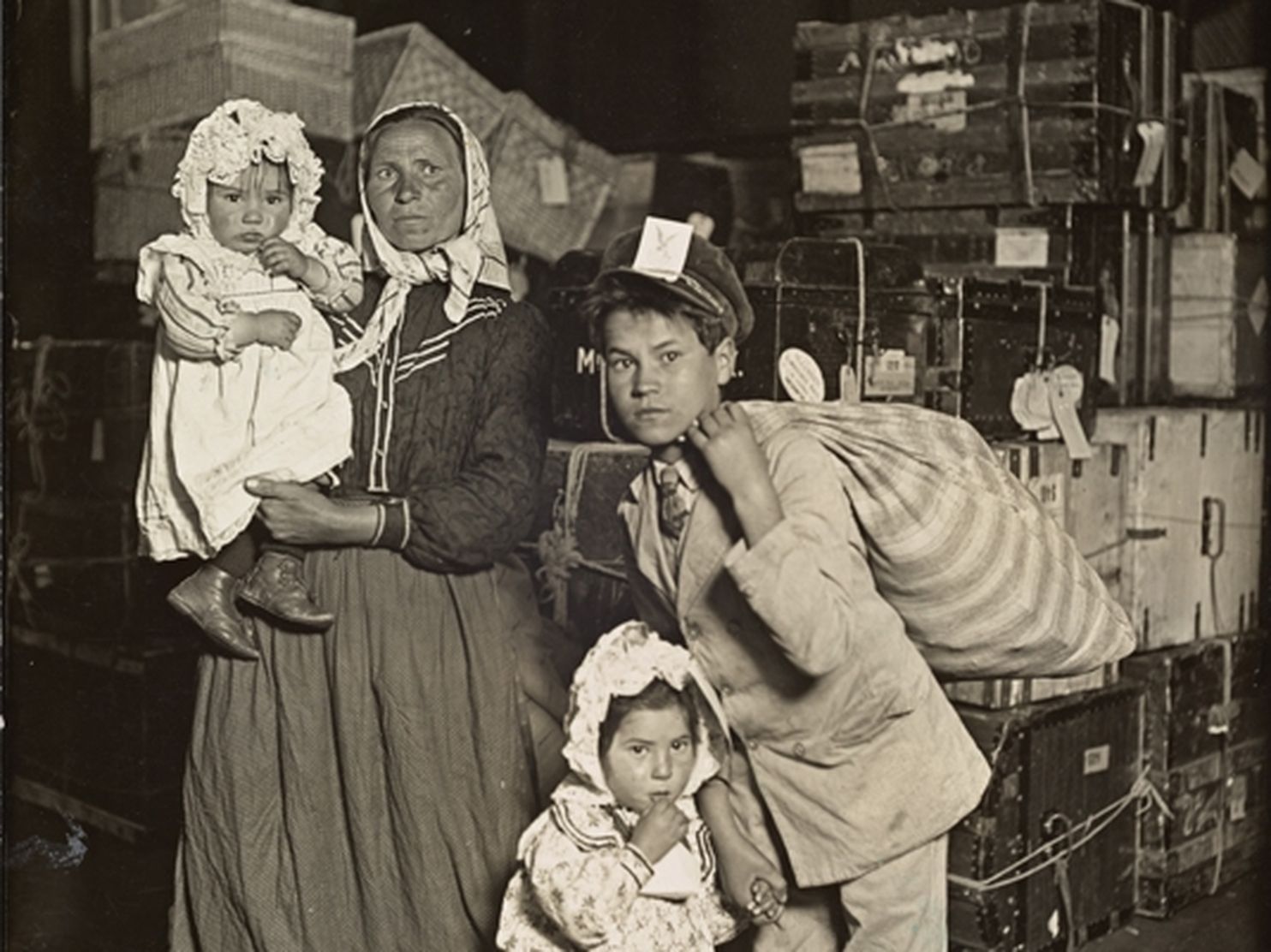
We have all become accustomed to seeing pictures on our screens of the crowds of asylum seekers on America’s Southern border. We tend to focus on the woebegone faces of women and children who stare at the cameras and into our hearts. It’s easy to forget that this isn’t the first time the country has been coping with crowds of people trying to find safety within our borders. A hundred years ago we were facing a rush of people entering at several ports, the largest one was New York where Ellis Island was the entry point for immigrants. And somehow all of them were processed, fed, and sent on their way. The government contracted out restaurant services to people who found profit in the lucrative business. Here is a 1913 report.

Immigrant family at Ellis Island

“The contractors who feed the immigrants on Ellis Island in New York harbor run the largest restaurant in the world. Eight cents a meal is the regular price there; 8 cents for breakfast, 8 for luncheon, and 8 for dinner. American plan. The detained immigrants are entitled to three meals a day, and 40 nationalities pass through the portals of the land over which Miss Liberty stands in her green gown smiling down on all alike. One week last summer brought 30,000 immigrants to the Island–Dutch, Slav, Croation [sic], Pole Magyar, Greek, Russian, Italian–all with a liking for different cooking. It was the biggest reception of newcomers Miss Liberty has had in any week since 1907. Each one is taken into account in the enormous kitchens where more meals are prepared in a day than anywhere else in the country. ..A thousand at one meal is not unusual; 5,000 meals a day are only an incident of the rush season. The contract calls for 1,000,000 meals a year, and the price for supplying them is $80,000. At 8 cents apiece the profit for the contractors is less than a cent each–a matter of mills. Just how many depends somewhat on the prices asked by farmers–on the general supply and demand.”
—“Serve 8-Cent Meals: Ellis Island Contractors Run Largest Restaurant in the World,” from Leslie’s Magazine, Washington Post, October 28, 1913 (p. 6)

During the 19th century, and especially in the years after the Civil War, thousands of immigrants poured into cities and towns. These newcomers joined the thousands of farmers and other rural people who moved into cities. All of them added to the changes in America’s food habits. Housewives had to make do with store bought food instead of family-grown animals and plants. And soon teachers, news reporters and middle-class people in general were deploring the bad habits of working people in the cities when it came to food.  

Over the years, a number of reformers have tried to help Americans learn how to cook healthier, inexpensive food to feed their families. Back in 1883, when America was suffering through one of its worst depressions and many people were unemployed, a woman named Juliet Corson decided she could help people eat right by teaching them how and what to cook. Born in 1841, Juliet leaned to cope with poverty when her stepmother kicked her out of the house and told her to earn her own living. Juliet became a librarian at the Working Woman’s Library and discovered how difficult it was to feed a family on small wages. She started giving cooking lessons to women and then to children in New York City and soon began writing books about cooking and household management.

Her most successful book was called, believe it or not—Fifteen-Cent Dinners for Workingmen’s Families—and she gave away an edition of 50,000 copies. It was even reprinted in a daily newspaper. The menus she included were wholesome with easily available ingredients. The book suggested meals such as rice and milk for breakfast and corned beef and cabbage for dinner. It included tips for choosing meat and vegetables at the market. Many readers were delighted with the ideas and thanked Corson profusely, but, as always, not everyone was pleased. Some union leaders objected to the book’s distribution on the grounds that if the bosses thought workers could feed their families so cheaply, there was no need to raise wages. It seems as though you can’t win when you give advice about what people should eat.

Food may seem a steady, solid part of our lives, but it has been constantly changing and is still changing as Americans come from more varied backgrounds and cultures. I found much of the information I include here on a fascinating website about food history called Food Timeline. It includes articles and references to the food used by native Americans,  how food has been served and eaten through the centuries, and how it was distributed in various specific places like Ellis Island and on military bases.

Dancing away from the daily news

In recent weeks I often feel as though I am drowning in news from all sources—breathless voices from radio, TV and newspapers both print and online insist on telling me the latest tweet or thoughtless comment about what is going on. In self-defense I’ve resolved not to pay attention to any news that pops up after the PBS Newshour ends in the evening . Everything else can wait for morning.

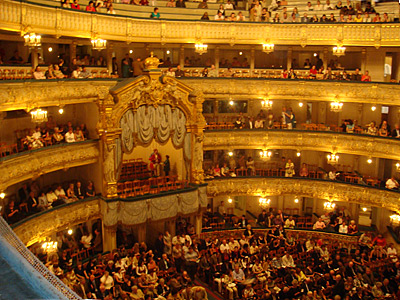
Mariinsky Theatre

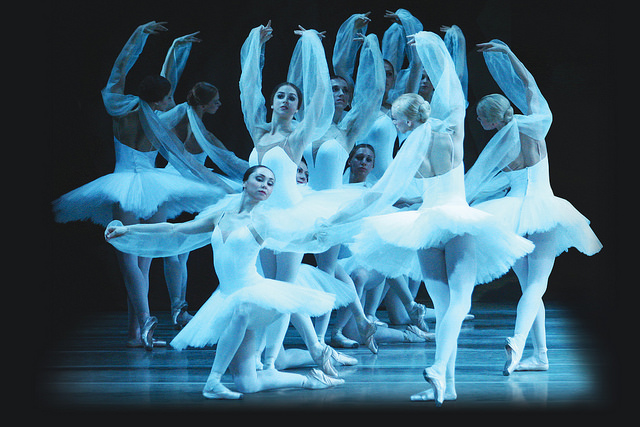
This resolution leaves me more time to watch some of the riches I can stream on my TV, watching performances that I never had a chance to see in person. My favorites are ballets, pure art without the intervention of words or arguments. It is a tremendous relief to switch on Amazon Prime and watch dances that were performed at the Mariinsky theater and other famous locations. It is another world right in my own living room.

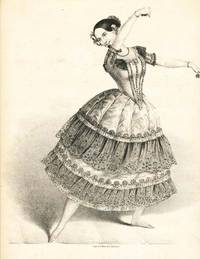
Fanny Elssler

All of this reminds me of how long it took for ballet to make its way to America and what it meant when it finally arrived. And one of my favorite American heroes, Margaret Fuller, played a part in welcoming the European art. There is a well-known story that when Margaret and her friend Ralph Waldo Emerson went to see Fanny Elssler, one of the first ballerinas to tour the country, Emerson turned to Margaret and said: “This is not dancing, it is poetry ; ” to which she replied, ” No, Waldo, it is religion!”

Those comments make a good story, but unfortunately they are most likely untrue. Charles Capper, Fuller’s most respected biographer, tell us that Fuller and Emerson did not attend a ballet performance together, so the story must be regarded as just casual gossip. What it does reveal, however, is that the leading American writers and intellectuals were fascinated when they had a chance to view ballet. And who was the woman who introduced this art? Fanny Elssler, an Austrian dancer who came to America in 1840 and traveled across the country giving performances for a year and a half.

Fanny had been born into a musical family in Austria. Her father was a copyist and valet to Hayden and two of her brothers were musicians. Her sister Therese was also trained as a dancer and the two young girls frequently performed together. Therese grew to a height considered to be abnormal in those days—5 feet, 6 inches—so she could dance male parts when accompanying Fanny.

As frequently happened, the attractive young dancers attracted powerful older men as supporters and lovers. Fanny eventually had two children, a boy and a girl, who were boarded with friendly families until they were old enough to join their mother. I have to wonder sometimes what staid Americans like Emerson and his circle would have thought if they had known one of their admired artists had unacknowledged children. And I sometimes wonder what female artists would have done in that long-ago time before the Me-too movement had started if they had had the freedom to reject the attentions of wealthy patrons who assumed all female dancers would welcome their attentions.

But that did not happen. The dancers kept on dancing until they retired, as Fanny Elssler did in 1845, leaving behind a number of American and European fans who continued to support ballet as well as the other arts. During the late 19th century Americans, who had learned of many of these arts through performers who visited from Europe, developed their own artists and the inspiration began to flow in a two-way direction between this country and the rest of the world. Now, thanks to technology, we can watch performances from all over the world whenever we need a break from the endless chatter of today’s life. I highly recommend it.

Mariinsky ballet

Congresswomen’s Profiles in Courage

As the new members of Congress were sworn into office this week, much attention was paid to the fact that more women than ever before are now serving in Congress. The youngest member, Alexandria Ocasio-Cortez, otherwise known as AOC, was probably the most talked about, especially after a video of her dancing while she was an undergraduate was posted online. Although the video was apparently posted to make her seem frivolous, most viewers seemed to find it charming.

Alexandria Ocasio-Cortez

When Ocasio-Cortez, or AOC, described herself as a socialist, conservatives again started attacking her. And when she suggested that a marginal tax rate of 70% might be appropriate for very high incomes, some commentators were outraged even though the rate she suggested is no higher than the one the U.S. tax code imposed during and after World War II.

The people who write political commentary seem to have very short memories. The fact is that American Congresswomen have often favored more radical solutions than their male colleagues supported. And they have stood by their positions even when put under severe pressure.  

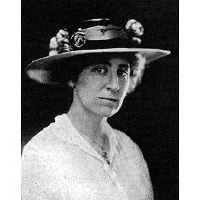
When Jeannette Rankin took her seat in 1917, she made almost as much of a splash as this year’s women did. As the first woman ever elected to Congress, she joined with more than 50 other members who voted against President Wilson’s request to enter World War I, even though the measure passed with an overwhelming majority.

Jeannette Rankin

After the war was over, President Wilson declared that it had been fought to make the world safe for democracy. But Rankin turned his words against him when she fought hard for a national measure to give women throughout the country the right to vote. “How shall we explain to them [American women] the meaning of democracy if the same Congress that voted to make the world safe for democracy refuses to give this small measure of democracy to the women of our country?” she asked. Women finally got the vote in 1920

Rankin left Congress but continued to be an activist for many years. In 1940 she was re-elected to a House seat and arrived there in time to be confronted with the Pearl Harbor attack. This time there were fewer members of Congress who opposed President Roosevelt’s request for a declaration of war against Japan. When she voted against the motion she was hissed and she was never again elected to public office.

Some Americans, however, recognized Rankin’s courage. Wikipedia describes the reaction of the noted editor William Allen White:

 Probably a hundred men in Congress would have liked to do what she did. Not one of them had the courage to do it. The Gazette entirely disagrees with the wisdom of her position. But Lord, it was a brave thing! And its bravery someway discounted its folly. When, in a hundred years from now, courage, sheer courage based upon moral indignation is celebrated in this country, the name of Jeannette Rankin, who stood firm in folly for her faith, will be written in monumental bronze, not for what she did, but for the way she did it.

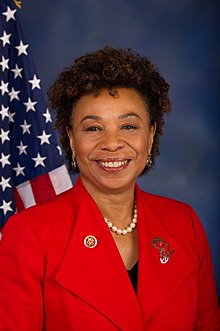
In recent years other Congresswomen have demonstrated rare courage in standing up for their beliefs. After the September 11, 2001 attacks in New York City and Washington D.C., Congresswoman Barbara Lee was the only representative to vote against the Authorization for Use of Military Force—the act that gives the president sweeping powers to attack any country at any time if he or she believes it threatens the safety of the United States or supports terrorism. That act passed 420-1 with Lee the only representative who voted against it. In the years since 2001, many people have come to believe that the wars in Iraq and Afghanistan and much of the Middle East that were justified under this act have done irreparable damage to America, but at the time, Barbara Lee was the only Congressperson who recognized the danger.

Barbara Lee

Anyone who has forgotten the tangled emotions and arguments that followed 9/11 (and that includes most of us) should read the article in the Atlantic that tells the story of both the attacks and support Barbara Lee received following her vote. But, through the years, Lee has held firmly to her beliefs and is still serving in Congress representing her district in Oakland, California.   

It is easy to see that the women now entering Congress are following the footsteps of some determined and courageous women. Let’s hope they can live up to the courage of their past leaders.  

Why Are Humans Such Slow Learners?

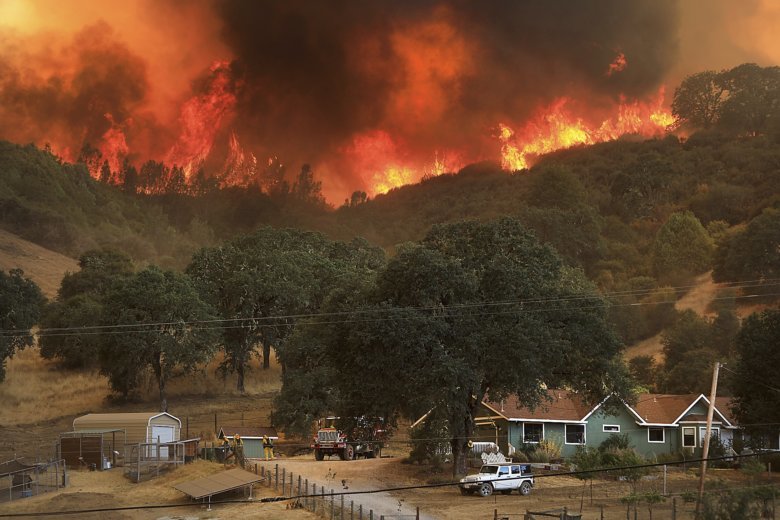
Here in California, the prospect of Thanksgiving has been tarnished by the series of disasters that have hit the state. Wildfires are raging in both Northern and Southern  parts of the state. And the effects of the fires are felt widely. Even in San Francisco, which is miles away from the nearest fire, the smell of smoke hovers over us and this week the sky has an ominous yellowy-greenish hue, schools are closed, people wear masks and still they cough.

The wildfires are only one example of the way the natural world has been changing our view of the power of nature. The long, hot summer and disastrous hurricanes have affected the lives of people throughout the country. All the measures that we have taken to tailor weather to our preferences are failing us. We can’t spend all of our time hunkering down in our air-conditioned houses and cars. Nature is taking its revenge and forcing us to consider how we live and work.

Climate change is an undeniable fact, yet we still elect politicians who refuse to recognize what’s going on. Why do some politicians find it so difficult to accept scientific facts?  And why do voters, even in a year of Democratic triumphs like these midterms, continue to vote against measures that might help? A recent article in the Atlantic Monthly tells us how difficult it has been to confront the realities of climate change.

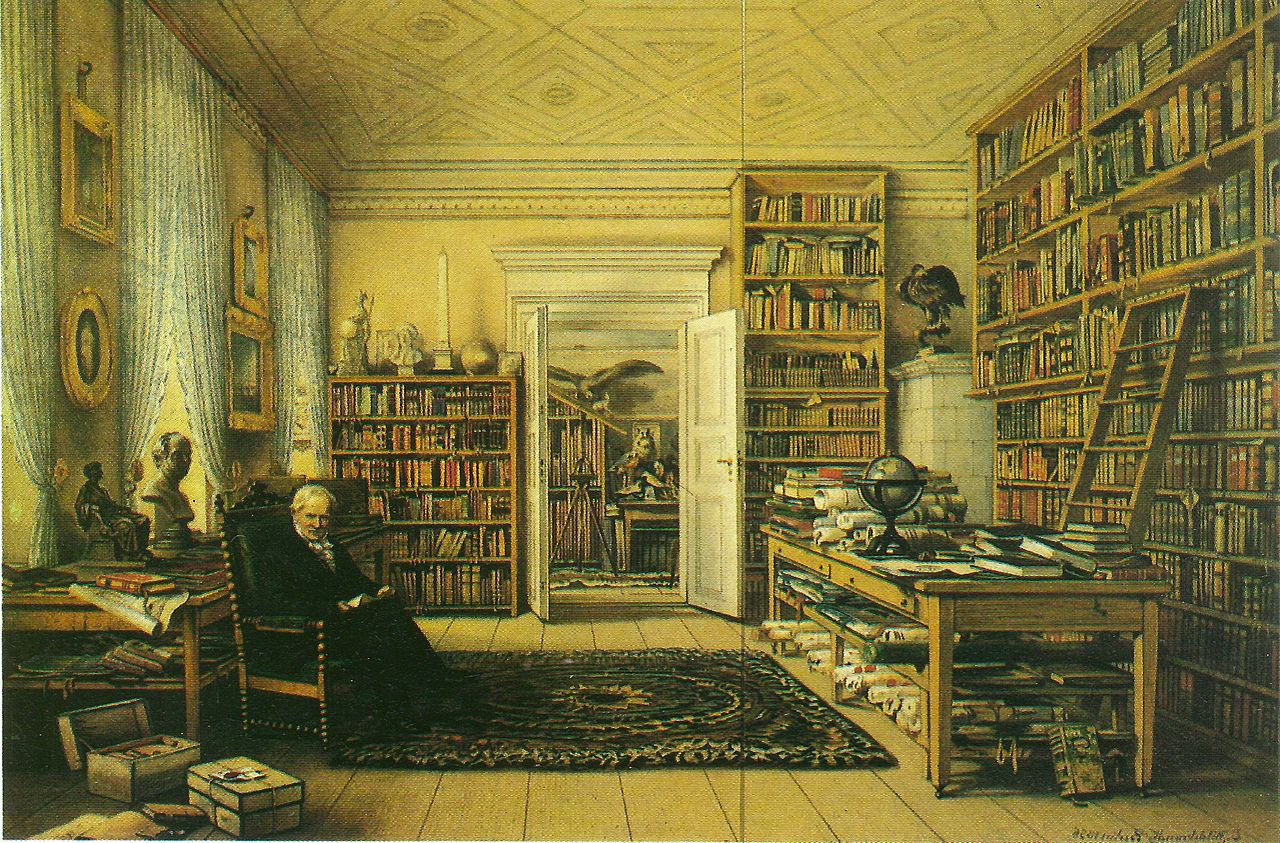
It’s not as though the idea of climate change hasn’t been discussed for years. The medieval idea that the world is unchanging and that human beings have no influence on it was challenged more than 200 years ago by Alexander von Humboldt, one of the greatest scientists the world has ever known, although much of his work has been forgotten.

Born in 1769, Humboldt traveled to South America in 1800 to explore nature and culture in the Spanish colonies there. When he saw the changes that Europeans has brought to the country by cutting down forests and cultivating lands, he developed his theories of how men affect climate. “When forests are destroyed, as they are everywhere in America by the European planters, …the springs are dried up or become less abundant.”  He noted how this allowed the soil to be washed away during heavy rains, causing erosion and a loss of fertile soil

Knowledge is a slow-growing plant, but Humboldt was one of those people who planted ideas that have blossomed during the centuries since he started his explorations. We are lucky this year to have a new biography of Alexander von Humboldt available. Andrea Wulf, has explored Humboldt’s life and ideas in The Invention of Nature: Alexander von Humboldt’s New World. I highly recommend it to anyone interested in seeing how scientific ideas have developed over the years and learning more about the people who have given us our modern view of the world. 

Scientists have known for many years that people are changing the world and that much of that change makes the world smaller and less livable. Our demand for fossil fuels have fostered changes in the climate that threaten us all. For a while there was hope that America would act to lower our carbon impact, but instead we are turning away from all the facts that scientists have been explaining to us for centuries. For a recent update on how the world is going, you can read Bill McKibbon’s article in the current New Yorker magazine.

Perhaps if enough people read that article, Americans will come together and push their politicians into action. Then by next Thanksgiving we might truly have something to be thankful for.

Creating Your Own Future

There are only a few more days until the elections, but some of us are wondering whether we will make it through the 2018 Midterms. And for those of us who have faithfully filled out our ballots and voted early, there is nothing to do now but chew our fingernails until the elections are over and the results are in.

How about taking a complete break? While the news media thunder their stories at us, election mailers clog our mailboxes, and our phones keep ringing with robocalls from woman writingcampaigns, now is the time to declare our independence and find a different path. And because this is the beginning of November, thousands of people across the country and around the world have decided to spend a month on creating something they have always dreamed about. NaNoWriMo is the name of a group dedicated to helping to encourage creativity through writing. The odd name stands for National Novel Writing Month.

NaNoWriMo, which will turn twenty years old next year, is a program to help writers and would-be writers sit down and produce a 50,000 word novel (or part of a novel) during the month of November. More than 400,000 people have tried the program either as adults or through the young writers program for students. Writing coaches help by posting pep talks and helpful suggestions for making the best use of writing time. And participants can join a group of other writers in a specific genre whether it is science fantasy, mystery, romance, or children’s books.

Setting goals to complete a specific project during a defined period of time is a wonderful way to make a start on some of your dreams. After trying NaNoWriMo for three years, I know how encouraging it is to feel the support of a group of people with goals similar to my own. You won’t finish a completed, ready-for-publication novel in a month, but lots of us have credible first drafts that we can build on over the year or more that writing a novel takes.

Perhaps other people who have creative dreams in different fields should come together to form similar groups. There are plenty of months that haven’t been taken yet. May might be a good month for making a movie, or September for writing a sonata. Too many people hope to start a great artistic project someday, but don’t actually do it. The first step is to start! And if the first time doesn’t work and your novel or movie or sonata dies away before completion, there is no need to despair. Failure once doesn’t mean failure always.

Millions of people over the years have been cheered by listening to the popular song written during the 1930s by Jerome Kern with lyrics by Dorothy Fields:

Nothing’s impossible, I have found
For when my chin is on the ground
I pick myself up, dust myself off
Start all over again

Come to think of it, that’s not a bad motto for an election either. Whatever happens next week, there will be another chance. Meanwhile

DON’T FORGET TO VOTE!voting


Fathers and Sons Rule

The United States was founded by a group of men who wanted to do away with hereditary rulers. Leaders were supposed to come from out of the group of men naturally qualified to lead—the well-established, well-educated elites. They were to be

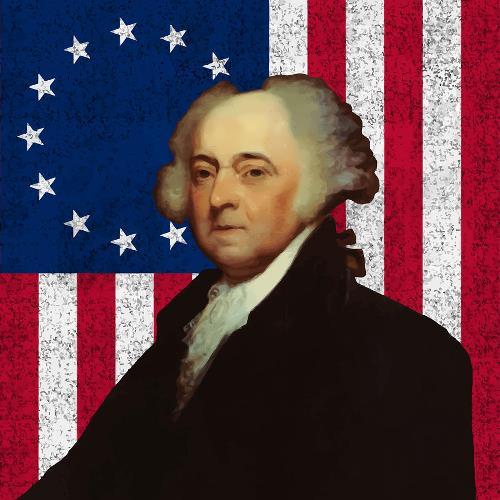
John-Adams
John Adams


the voters who chose the best among them to lead the country. The population of the country was small, just below 4,000,000 in 1790 when the first census was taken, so perhaps it was not strange that various members of the same family became leaders. John Adams, the second president, was eventually followed by his son, John Quincy Adams, who became the country’s sixth president.  It was a long time before the next father/son pair took the presidency—George H.W. Bush became the 41st president in 1988 and his son George W. Bush followed became the 43rd to hold the office in 2000.  By this time the population of the country had grown to 180,000,000. With so many people to choose from the chances of seeing many more such pairs seems slim.

Until recently, I had never seen a study of how fathers and sons who governed the same community have influenced one another, but now we have an account of how a father-son pair of governors in California did that. Miriam Pawel’s book The Browns of California tells the story of Pat Brown and his son Jerry Brown who were governors during half a century of California’s history.

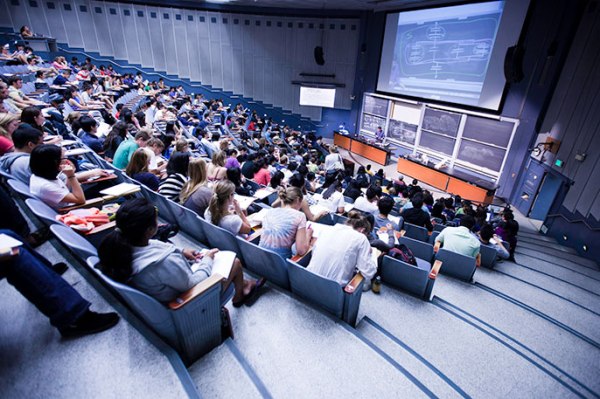
When Pat Brown became governor of California in 1959, the population of the state was ten and a half million—more than twice as large as the entire country was when John Adams served as president. California was a relatively young state, at least compared with states on the Eastern Seaboard. The infrastructure had to be developed and a young population was eager to have a strong educational system. Pat Brown united the state, or at least enough of the voters, to develop a viable water system for the parched state and a system of highways connecting the large and diverse population. Under his leadership California instituted the country’s largest university system berkeley_lecture_hall_sticky


and a strong pre-college school system to prepare students for higher education.

By the time Pat Brown left office in 1967, the mood of the country had changed. The Vietnam War highlighted cultural divisions and led to unexpected violence. The mood of the country was shifting from the euphoria of post-WWII to the resentment and fears of a growing and ever more diverse population. By the time Pat’s son, Jerry Brown first became governor in 1975, some of his father’s policies seemed to be outdated and doomed. The population of the state had doubled again to over 23 million and taxpayers were beginning to revolt against the high taxes needed to support the state’s services.

Jerry Brown’s second tenure as governor, which will end this year, brought even more dramatic changes. Governor Jerry Brown has been a strong voice in the country and the world to call attention to the dangers of climate change and the need for new and less destructive ways of life. It is fascinating to see in this book how some of his father’s positions continue to dominate the state and how the son has changed and modified others to meet the current situation. His experience in local politics, perhaps especially his experience as mayor of Oakland, led him to value local control of some policies, while others, such as climate change, need to be supported internationally.

For anyone concerned with government and policy, whether in California or elsewhere, I strongly recommend The Browns of California. It is easy to read and filled with valuable insights into the way our world works.


Don’t Just Watch the Vote

women-voting-WyoBlood pressure must have soared these past few weeks all across America as fury reigned in Washington over the nomination of Brett Kavanaugh to the Supreme Court. The struggle pitted not only Republicans against Democrats, but often men against women. People couldn’t even agree on what the argument was about. Was the basic question whether or not Kavanaugh had committed a sexual assault 36 years ago? Or was it about whether his overwrought, hysterical claim that “leftists” had conspired against him revealed a glaringly unjudicial temperament?
What we are left with now is a Supreme Court that reflects the views of only a minority of Americans. Many of the justices’ decisions will be questioned because by people who believe their views have not been heard and their wishes have not been respected. In part this is because in recent years gerrymandering and voter suppression in the states have kept many people’s votes from being heard. But far more tragically, many people did not vote because they just did not bother. Demonstrating against Congressional actions that seem unfair may make people feel good, but voting is far more effective for changing the country.

Women especially, whose voting rights were earned with so much pain and bitterness, should feel particularly guilty if they don’t vote regularly. It is hard to believe that only 43% of women who were eligible to vote in the 2014 Midterm elections cast a ballot. We can do better than that.

Now that the 2018 Midterms are only a few weeks away, how are women going to respond? There are more female candidates running for office than ever before, but they need the support of women who may never run for office, but who can surely vote and ensure they are represented by people who reflect their views.

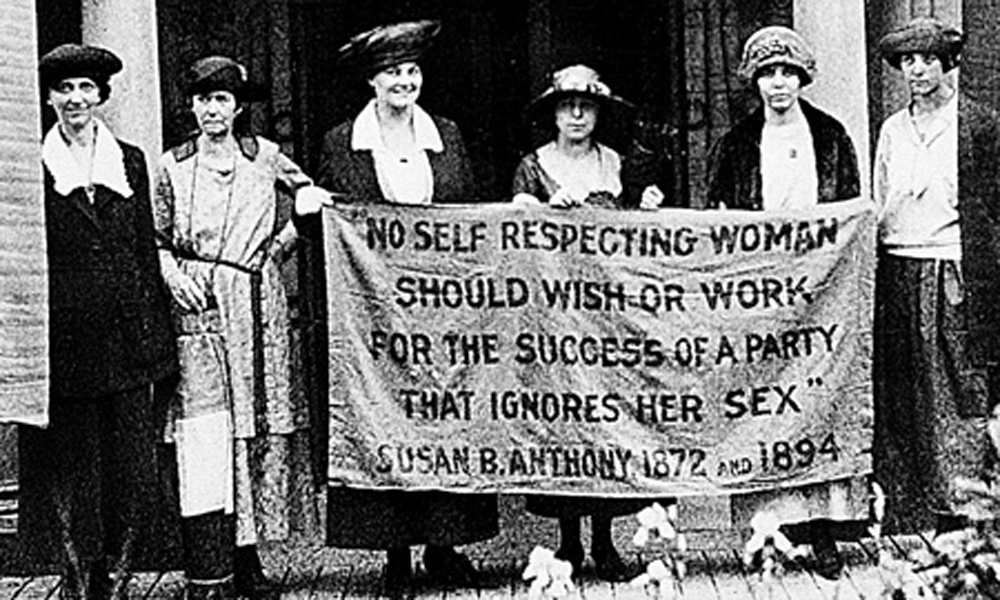
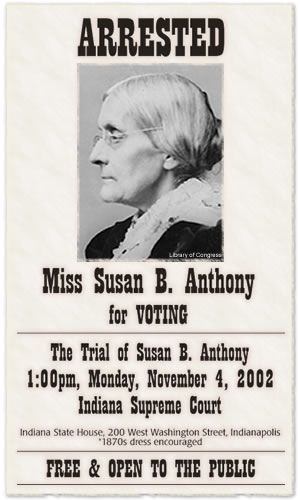
When we look back at the history of women’s voting, there is a lot to inspire us. Susan B. Anthony and a group of women went to the polls in Rochester, N.Y. in 1872 and voted,Susan Anthony voting claiming that they had the constitutional right to do so. Local authorities did not agree and arrested the women. The judge at Anthony’s trial did not allow the jurors to discuss the case, but directed them to find Anthony guilty. He fined her $100, which she refused to pay, hoping to move the case to the Supreme Court, but the judge successfully blocked that path by refusing to send her to jail. Nonetheless, the trial generated a lot of publicity and advanced the prospect of women’s suffrage.

We’ve come a long way since those days, but now that we have the vote, it is up to us to use it. Unless women are active participants in elections, they will not be treated as equal to the powerful men who run the country. Now is the time to register and vote!


The U.S. vs. Mother Nature

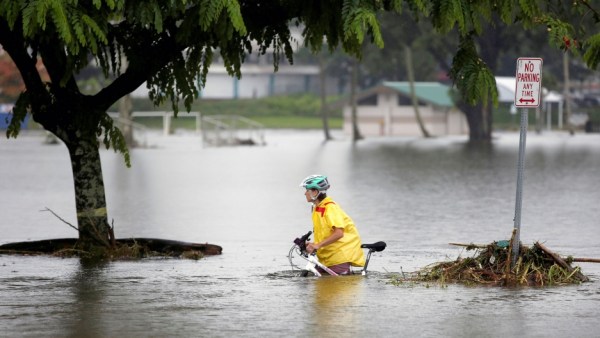
As yet another hurricane brings torrents of rain and flooding to another part of the

flood Hawaii
Flood in Hawaii 2018

United States—this time the Carolinas—I can’t help but think how the attitudes of many Americans toward nature have changed over the years. Many of our leaders now seem to see nature as a foe to be defeated and conquered instead of as a priceless resource to be studied and understood.

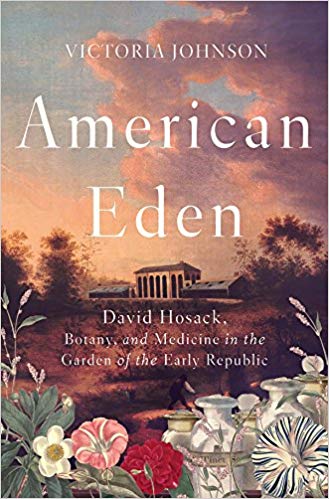
During the early post-Revolutionary years, most of the leaders who shaped the country were awestruck by the riches of their new land. I have been reading a book about one of these Americans, David Hosack. He is hardly a familiar name, although his achievements during the early post Revolutionary period are still important. The book is called American Eden: David Hosack, Botany and Medicine in the Gardens of the Early Republic by Victoria Johnson.

David Hosack was a doctor, who is perhaps most often remembered for the role he played in attending Alexander Hamilton after the fatal duel between Aaron Burr and Hamilton. He was unable to save Hamilton’s life after that duel, but he was responsible for saving many other lives both through his own treatments and through the medical American Eden01students he trained and the cures he discovered. Unlike many of our current leaders, Hosack had great respect for the value of science and of studying how medical treatment could be improved through learning more about the characteristics of plants.

One of Hosack’s most important legacies was the establishment of a famous botanical garden, called Elgin Garden located on the current site of Rockefeller Center. At the time the garden was established, it was far uptown from the small city of New York in lower Manhattan. For years Hosack taught at Columbia College and took his students through the gardens to learn about the medicinal qualities of plants. He established ties with fellow scientists in Europe, especially England and Scotland, and exchanged both information and plants with them. American leaders, including Thomas Jefferson, honored Hosack’s work and sometimes exchanged plants with him. Like most leaders of his generation, Hosack understood the value of working internationally to improve the lives of Americans and others.

Generation after generation as the United States grew and expanded from the Atlantic to the Pacific coasts of North America, much of its growth and prosperity was fueled by scientific advances. Land grant universities trained young people to understand science and improve agriculture. As the country grew more populated, farsighted leaders like Theodore Roosevelt understood the necessity of preserving the natural landscapes and resources of the continent and established National Parks.

Until recently government, scientists and community leaders worked together to preserve the natural riches and to enable people to lead better lives. Now suddenly, even as more and more scientists and ordinary citizens recognize the threat of climate change climate change smokestackbrought on by human activities, many of our leaders have lost their way. Instead of working to mitigate the dangers of greenhouse gases, we are encouraging corporations to spew more noxious fumes in the air and make the world less safe for children as well as the rest of us. Instead of working with other countries to improve the world, our leaders want to tear up treaties in the hope of immediate profits for a few wealthy corporations. Instead of encouraging scientists to study our changing world, many leaders are cutting funding for education and restricting scientific research. What has happened?

Do we really want our shorelines to erode? Do we want to increase the number of children and adults who suffer from asthma? Is it more important for a corporate executive to buy another jet plane than to preserve the fish, birds, and other disappearing wildlife? That is something that everyone who votes in November should consider. And everyone who could vote but doesn’t should feel a personal responsibility for failing to protect the country so many of us celebrate.


Speaking Truth to Power

Last Monday we celebrated Labor Day, but the day did not offer much reason for working people to celebrate. The president struck a blow at the spirit of the day by cancelling scheduled salary increases for federal workers, citing a need to save money. It seems that the tax breaks for executives and corporations have to be paid for by workers lower in the hierarchy.

Still, there are bright spots on the horizon. This week we have also had a chance to see a

Ruth_Bader_Ginsberg1
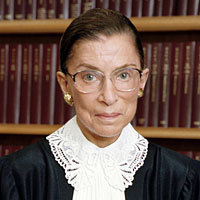
Justice Ruth Bader Ginsburg

number of women who are working hard to protect all Americans. Even though women were the last major group of citizens to be given the right to vote in the United States, they have finally come into their own as powerful voices for all of us.

The week started with the presentation of the documentary film, The Notorious RBG, a tribute to Supreme Court Justice Ruth Bader Ginsburg, who has devoted much of her career to persuading her fellow judges of the importance of women’s rights. When Justice Ginsburg completed law school and looked for positions, she found that women were consistently discriminated against in employment. She was turned down for a clerkship on the Supreme Court because, she was told, women just were not appointed to such positions. When she was hired to teach at Rutgers law school, she was frankly told that she would be paid less than a man would be because women  did not have families to support.

Over the years, Justice Ginsburg has worked patiently, supporting small changes such as using “gender” instead of “sex” when talking about discrimination. It’s a small change, but it has moved discussion away from the emotion-laden word “sex” to a more neutral term.

Gradually Justice Ginsburg and others have gained acceptance for the idea that women and men should be paid equally for equal work and hired for their skills rather than

Dianne Feinstein
Senator Dianne Feinstein

their gender. And women must be allowed to speak out on issues of importance.  Having a voice and speaking out is an important part of being a citizen.

If you ever want a quick refresher in the history of how women have been silenced over the years, you should read Mary Beard’s short book called Women; a Manifesto.  Beard, a well- known classical scholar, tells how women’s voices have been silenced over the centuries. Perhaps it started with Telemachus, the

Kamela Harris
Senator Kamela Harris

young son of Odysseus, when he rebukes his mother for expressing an opinion: “go back up into your quarters” he said. “Speech will be the business of men, all men, and of me most of all; for mine is the power in this household.”

But women are no longer willing to be silenced. It has taken hundreds of years to develop their voices, but at last we are seeing it happen. More women are running for elective positions in 2018 than have ever run before. And this week we were able to see some of the results.

At the Senate Judicial Committee hearings for Supreme Court nominee Brett Kavanaugh, some of the most memorable questions came from Senators Dianne Feinstein and Kamela Harris. Whatever the outcome of the appointment may be, thousands of people across the country have had the satisfaction of seeing troublesome questions raised—questions about a woman’s right to choose, about limitations on presidential powers, and about the future of health care in America. Women spoke and attention was paid.

Now it is up to all of us to keep on speaking up—with our votes, with our actions, and with our voices. Democracy is not a spectator sport.