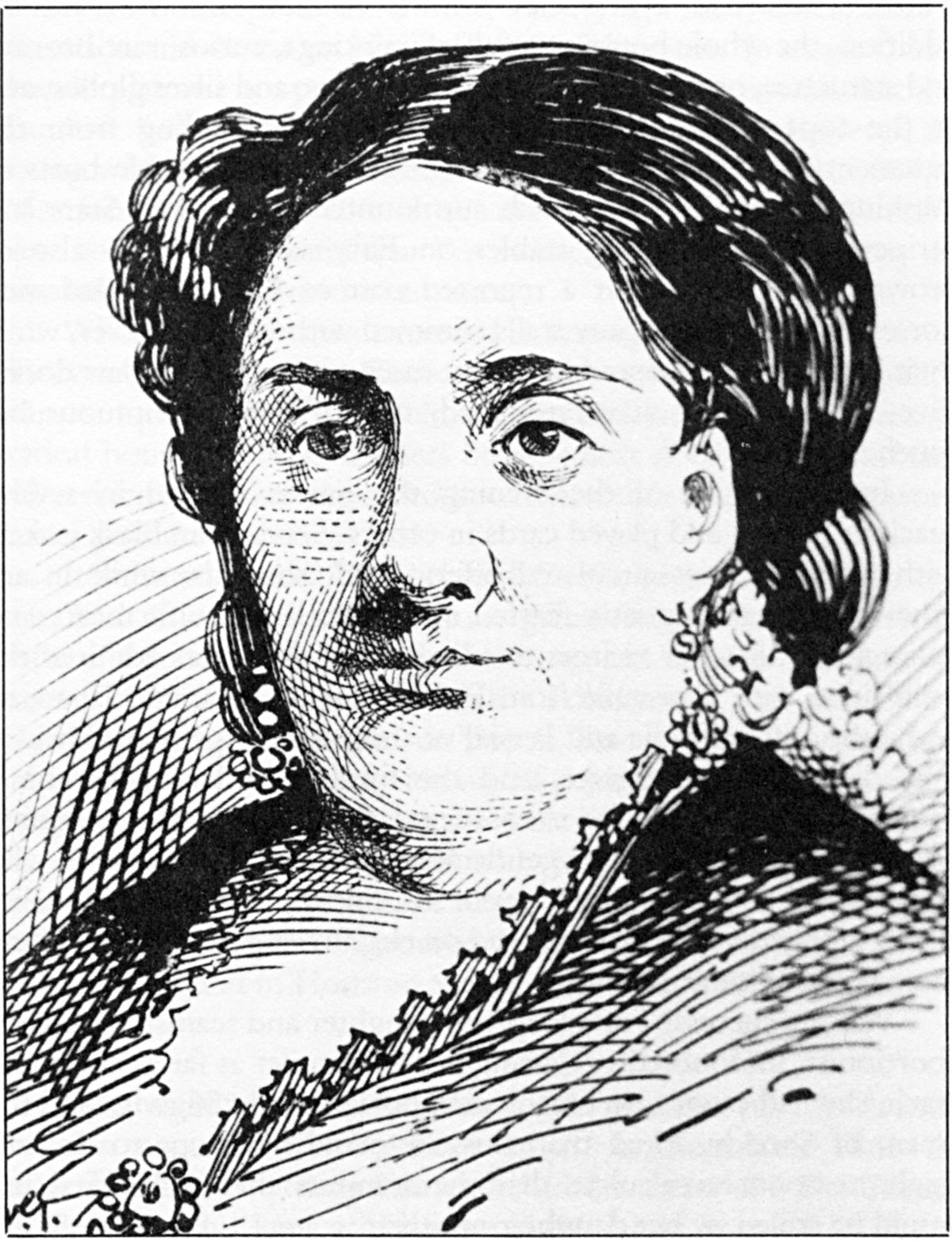
Gathering Fragments to Build a Life—Lydia Maria Child

Lydia Maria Child once explained the secret that made her life productive. In a comment about housekeeping she wrote “The true economy of housekeeping is simply the art of gathering up all the fragments, so that nothing be lost. I mean fragments of time, as well as materials.” Child spent her life finding fragments of time and using them to make life better for herself, her family, and her country. For her entire long life, she turned those fragments into articles and stories that she hoped would eradicate the cruelty of slavery and the injustice of life in America during the 1800s. And yet now her name is almost forgotten. How did that happen?

Child was born Lydia Maria Francis in Medford, Massachusetts on February 11, 1802, to Susannah and Convers Francis. Like most girls at that time, she did not receive much formal education, but an older brother, Convers Francis, noticed that she was an avid reader and he enjoyed sharing his books with her. When he left home to attend Harvard, the two of them carried on a lively correspondence.  After her mother died, Lydia moved to Maine to live with an older, married sister and train to be a teacher.
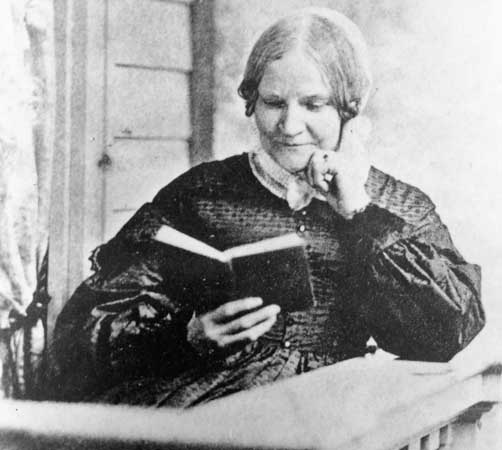
Lydia Maria Child

Eventually Child was able to move to Boston to live with her brother Convers who had become a Unitarian minister. There she met many of the intellectual and cultural leaders of the day. She discarded the name “Lydia” that she had always hated and from that time on chose to be known as L. Maria. Her urge to write led her to try her hand at an historical story and in 1824, she published her first book, Hobomok, an historical novel about a native American Indian in New England who married a white woman. Although some readers objected to the theme of interracial marriage, many others admired the book and she soon found a wide audience.

As her confidence grew, Child realized that she could use her practical knowledge to improve the lives of American women who were keeping house and raising children in a new country. She started a journal called The American Practical Housewife, which became one of the most popular publications of the 19th century. Her recipes and housekeeping tips were valued as was her advice on raising children. She soon added another journal, The Juvenile Miscellany, filled with stories and poems designed for children.

Among Convers Francis’s friends was a young lawyer, David Child, who admired L. Maria’s writing and soon began courting her. Like Maria and her brother, Child came from a middle-class family of limited means. He had attended Harvard but had no wealth or property to support himself while he struggled to make a living as a lawyer.  David was definitely not a good marriage prospect for a young woman who had no family wealth of her own, but the two shared a deep commitment to making the world a better place. So, like so many young lovers, they decided their love would conquer all. They married in 1828, determined to build a better world.

Both of the Childs were ardent supporters of William Lloyd Garrison and read his newspaper The Liberator. Both of them followed Garrison’s lead in proposing that enslaved people should be freed immediately and given compensation from their owners for their years of labor. While more conservative Americans suggested that freed slaves should be sent to Africa to build new lives in the home of their ancestors, David and Maria Child wanted them to remain in America and gradually merge into a new life through education and intermarriage. Like most of the people who supported the abolition movement during the 1830s, neither David nor Maria could foresee what a long, slow, and bitter process it would be to end American slavery.

Although both of the Childs remained committed to the reforms they supported, their lives did not work out as they had planned. David’s career as a lawyer was never successful and he piled up debts as he continued to try to build a practice. He even spent a short time in jail because of his failure to pay off debts. Lydia Child wrote articles and books to support the two of them, but as a woman, all the money she earned from her writing belonged to her husband. The couple never had any children, and at times they lived apart, but they remained devoted to each other.

Maria Child’s practical articles about housekeeping were popular, but she was not content to write only about domestic issues like making soap and choosing fresh eggs. She was determined to help in the struggle to free slaves and women, two groups that she saw as being exploited by men who treated them as property. Some readers rejected her outlook. The book that lost her the most readers was her An Appeal in Favor of That Class of Americans Called Africans. In it she advocated the abolition of slavery but rejected the notion of sending freed slaves back to Africa. Instead, she wanted to integrate them into American society and make them the equal of white citizens. She accused Northerners of being just as racist as Southerners, which infuriated some old friends and other leading citizens of Massachusetts. She believed in education and in intermarriage. She wrote:

An unjust law exists in this Commonwealth, by which marriages between persons of different color is pronounced illegal. I am aware of the ridicule to which I may subject myself by alluding to this; but I have lived too long, and observed too much, to be disturbed by the world’s mockery. In the first place, the government ought not to be invested with power to control the affections, any more than the consciences of citizens. A man has at least as good a right to choose his wife, as he has to choose his religion.

The struggle to abolish slavery took far longer than most reformers had expected. It was not until a Civil War threatened the future of the country that the Emancipation Proclamation was finally passed and slavery ended. And even then, the struggle continued. Lydia Maria Child continued her writing and her work for justice until the end of her long life. She died on October 20, 1880.

A good place to learn more about Child and her fascinating life is the recent biography Lydia Maria Child: A Radical American Life by Lydia Moland (Univ. of Chicago Press 2022). It is available in most public libraries and in bookstores as well as online.
Barriers and Breakthroughs—Rosalind Franklin

When the Nobel Prize for medicine or physiology was awarded in December 1962, many observers were surprised to learn that the three men who shared the award—James Watson, Francis Crick, and Maurice Wilkins–were specialists in different scientific fields. The award was given for their breakthrough discovery, after years of work, about how DNA was structured so that various traits could be passed down from one generation of a plant or animal to another. News of this important discovery soon spread through the scientific world and aroused interest even among non-scientists. In the years since the award was given, the way in which the discovery was made, acknowledged, and honored has become one of the most controversial topics in the history of Nobel prizes.

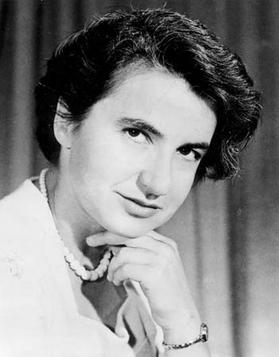
Rosalind Franklin

Six years after the award of the  Nobel Prize, something happened which changed the discovery of DNA from a scientific event to a scandal of great interest in the popular news. James Watson, one of the recipients of the award, wrote a book called The Double Helix. Unlike many books about science, Watson’s book was written in a lively style and included gossipy comments about some of the scientists whose work had contributed to the long search for the secret of DNA, including the woman who played a leading role in the field, Rosalind Franklin. Watson’s book became a best seller and set off a controversy which continues to this day.

After reading Watson’s account, many scientists and general readers began arguing about whether Watson had given enough credit to other scientists who contributed to the study of DNA, especially Rosalind Franklin. Some of her illustrations of the structure of DNA had been used without her permission or knowledge. Was her role in the project unfairly ignored? The arguments have recently been summed up in Howard Markell’s book, The Secret of Life: Rosalind Franklin, James Watson, Francis Crick, and the Discovery of DNA’s Double Helix (Norton 2021).

By the time Watson’s book became popular, the feminist movement has started and many readers pointed out the ways in which women were pushed out of the scientific mainstream and not given credit for their work. Their prime example was the fact that Rosalind Franklin, whose illustrations of the structure of DNA were studied by Watson and Crick was not given an award. In fact, her contributions to the field were downplayed and Watson referred to her by the belittling name of “Rosy”—a nickname that Franklin hated.

Markel’s book, The Secret of Life, describes the everyday life of the scientists involved in the project. A reader learns about some of the subtle and not-so-subtle ways in which women were pushed out of the mainstream life of the scientists. Traditions have a strong hold in British universities, and some of these traditions make life difficult for women. One example is the separate dining rooms for women. The food may have been the same, but only the male students had a chance to mingle with famous visitors and guests who, at this time, were invariably men.

Small details make a difference. Many of the men frequently met after hours in local pubs, locations in which many women did not feel at home. Some of the male scientists had wives who cooked dinners for them and their colleagues, but few women would have been able to match this kind of hospitality.

In 1962, when the Nobel Prize was awarded, observers were surprised at the variety of different specialists who participated in the search for the secret of DNA. Now Markel’s book shows us that it was not only differences in scientific training that made a difference in how the secrets were uncovered. The life experiences of the scientists involved also affected their work. Science is not a world in itself, it is part of the ever-changing society in which we live and the case of the discovery of the secrets of DNA offers an excellent chance for us to see how attitudes and ideas affect change and develop over time.

Although it is now more than fifty years since Watson and Crick received the Nobel Prize, the story is not over. Only a few months ago, the Guardian published the story of a story that presented a different point of view toward the behavior of Franklin and the other participants in the story. We still have much to learn about the way science works and how it affects our world.  

Another Memorial Day for America

Another Memorial Day has come. Many Americans will spend the weekend travelling, shopping, and celebrating the holiday with family and friends. But nothing much has changed since last year. Peace has not come to America or to the rest of the world. Mass killings have not ended. The sentiments I posted last year still seem appropriate for 2023.

In May of 1865, a month after Abraham Lincoln had been shot and killed by an assassin, Walt Whitman wrote these lines as a tribute to the slain president:

When lilacs last in the dooryard bloom’d,

And the great star early droop’d in the western sky in the night,

I mourn’d, and yet shall mourn with ever-returning spring.

Ever-returning spring, trinity sure to me you bring,

Lilac blooming perennial and drooping star in the west,

And thought of him I love.

During the years since then, in late May when lilacs are blooming in much of the country, Americans have paused to honor the young people who have died in war. Memorial Day has been one of the most important holidays of the year especially for parents who lost children during those wars.

This year we have even more tragic deaths to mourn. Nineteen children were killed—not on a battlefield, but in their classrooms in Texas by a teenager with two assault weapons. A teenager killing children. It is hard to believe that such a thing could happen in a civilized country. But it did. And it has left grieving parents and grandparents who will never forget their loss. Every year when spring arrives across the country, people will grieve again for the senseless waste of innocent lives.

Christina Rosetti put that grieving into words for us:

Talk what you please of future spring
And sun-warm’d sweet to-morrow:—
Stripp’d bare of hope and everything,
No more to laugh, no more to sing,
I sit alone with sorrow.

The only way to end this endless cycle of loss and grieving is to take action. Those of us who have read and listened to the news of the mass shootings must remind our political leaders that we the people have the right to defend our children and our children’s children. We must protect them from the endless cycle of tragedies. Other countries have shown us the way. We can insist that Congress outlaw the sale of lethal weapons to young people. We can make spring a time to celebrate growth and rebirth instead of a time of mourning. We just need the courage and the wisdom to act.

Witch of Wall Street or Modern Woman? Hetty Green

In 1834, in the prosperous town of New Bedford, Massachusetts. Edward Robinson waited impatiently for the birth of his second child. Finally, on November 22nd the birth came. But Edward had nothing to celebrate. He was so disappointed that he refused to see his wife or his new baby. Her sin? She was a girl. Henry needed an heir and to him that meant a son.

Hetty Green’s first introduction to the world was seen as a tragedy instead of a joy and she soon came to realize what a disappointment she was. Her mother was not well, and was unable to have another child, so her father’s wish for a son was never fulfilled. When Hetty was two years old, she was shipped off to her grandfather to live with his family. Her parents did not want to see the constant reminder of their failure. Somehow, Hetty was able to build a satisfying life for herself. She was bright and soon learned that she could be useful to her grandfather by reading the market reports to him. She realized that her value to her family lay in how much she could help build up the family fortune.

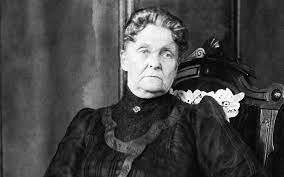
Hetty Green

After Hetty’s grandfather died, Hetty returned to live with her family. When her mother died, her aunt took over as the person responsible for guiding Hetty into a normal social life. But Hetty was not like other young women of her time. Instead of being fascinated by clothes,  jewelry and parties, Hetty preferred to learn more about banks and bonds. Instead of spending hours being fitted for new clothes and attending parties, Hetty preferred to wear cheap, unfashionable clothes and to talk with men about whaling ships and railroads.

In despair of marrying Hetty off, her aunt sent her to New York to live with friends for a year, but despite all their efforts, Hetty resisted joining society. She left New York early and returned to New Bedford without having spent all of the money given to her for the year. Instead, she had bought bonds to increase the money. Her father was pleased to see what a good businessperson she was, but she still had no husband.

During the Civil War, New Bedford’s industry had changed. The discovery of oil and the development of commercial oil wells had ruined the market for whale oil. Hetty’s father moved his business to New York and Hetty spent her time partly in that city and partly with her aunt in New Bedford. In New York she met a prosperous young businessman, Edward Green, of Vermont. He and Hetty married in 1867, with the blessing of her father, but Hetty and her family insisted that the family fortune should be left to her alone when the older generation died.

Hetty was a brilliant businesswoman and continued investing money and reaping profits. Everyone agreed that she was a clever investor, but the men in her life, like most men at the time, clung to the belief that women should not control money. When her father and her aunt died in quick succession, they both left their money to Hetty, but they left it in trust funds, so that she was not able to make decisions about its use. This lack of trust in her abilities made Hetty furious and she sued to get control of her trust funds. There is still disagreement about whether or not Hetty forged her aunt’s signature on a document changing her will, but Hetty lost the suit and was not allowed to manage the money left to her.

During the prosperous decades of the post-Civil War years, High Society flourished in New York. Socialites like Mrs. Astor ruled society, sponsoring receptions, teas, and dances which dominated high society. Many of the men who were making the money to support this society did not participate in it. They let their wives and children dominate the social events while they stayed at home, moved to country estates, or in other ways found the time to carry out the business that enabled their families to live this lavish lifestyle. On this subject, Hetty joined the men.

Instead of spending her time socializing and managing the large households where parties were held, Hetty joined the men in escaping to quiet solitude and concentrated on business. Instead of buying a mansion, she lived in boarding houses where other people worried about preparing meals and keeping house. For this, journalists punished Hetty severely. She was a woman so she should have wanted to be part of high society. Reporters enjoyed tracking her down to the quiet boarding houses where she lived and publishing the addresses. Some reporters called her “The Witch of Wall Street” and she received constant solicitations from people who wanted money or jobs. But Hetty went her own way.

Hetty’s private life mystified the media, but she seems to have been satisfied with it. During her business career, while Hetty made millions of dollars, she also managed to live a fairly normal family life. She and her husband had two children. While they shared a fairly close personal life, they did not share their business affairs. Hettie was by far the better judge of how to make money, while her husband often made bad investments and lost much of his. Eventually they lived separate lives, but they never divorced and Hetty remained very close to her children. As she grew older, her son became her closest business confidante and handled many of her business affairs. When she died, she was buried beside her husband in his family plot in Vermont.

Hetty Green was the subject of much curiosity and wonder throughout her life. Perhaps the greatest mystery, one which her contemporaries never solved, was the question of how she could have handled her business career just as if she were a man. Reporters and gossips alike found it almost unbelievable that she did not crave fashionable clothes or jewelry and did not attempt to spend her time making calls upon the leading society women of her time. 

Some of these questions are addressed in a recent biography by Janet Wallach, The Richest Woman in America: Hetty Green in the Gilded Age. (2012 Random House). Wallach gives a balanced account of Hettie’s life, one which makes her seem far more human than she seemed in many of the gossipy stories about her that appeared during her lifetime. Hetty Green may have been an eccentric in her time, but today she seems far more like a 21st century woman than like her contemporaries during the Gilded Age.   

Putting the Zing into Romance—Elinor Glyn

The name Elinor Glyn still sounds familiar to many media fans, but most people have forgotten what she did. Her name has become a cliché in quotes such as the anonymous “Would you like to sin with Elinor Glyn on a tiger skin? Or would you prefer to err with her on some other fur?”

But who was the real Elinor Glyn and why are so many of her books still available on Amazon—although not in most public libraries? Who was this woman who invented the “It” girl and started the new genre of romance books as well as helping to make some of the most popular movies of the jazz age?

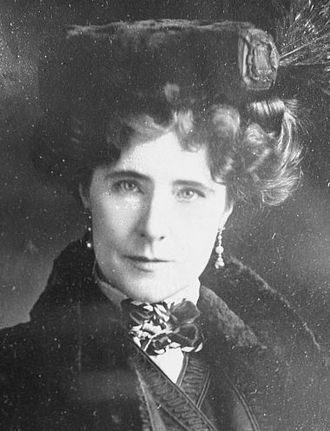
Elinor Glyn

Glyn was born in Jersey, one of the Channel Islands, in 1864 into an aristocratic family. Her father died while she was an infant, and Elinor’s mother moved back to her family home in Canada with the baby. After living for eight years in Canada, they returned to Jersey where Elinor spent most of her childhood. She had almost no formal schooling. Her education came mainly from her grandmother and governesses, although she spent one year at a boarding school in France. She spoke both English and French fluently and read avidly in both languages. Her family assumed that her role in life would be to marry an aristocrat and live a secure life flitting between England, France, and the rest of Europe. 

Luckily Elinor grew up into a strikingly beautiful young woman with pale skin and bright red hair. She also had a lively wit that made her popular with both men and women. Her early adult years were spent socializing, going to parties, and becoming familiar with many important people in European society. In 1892, when she was 27 years old, she married Clayton Louis Glyn and it seemed as though a prosperous future was assured.

Unfortunately, the marriage was not a happy one. Elinor longed for romance and intimacy, but Clayton’s interests were mainly in hunting, fishing, and traditional country life. She tried in vain to bring romance into their marriage, even buying a leopard skin rug, but he rejected her fantasies. Their relationship became worse when their money dwindled away. His wealth was constantly threatened by his spendthrift habits and his obsessive gambling. Instead of living a life of ease, Elinor found herself struggling to keep the household running and paying for nurses and servants to take care of the two daughters she and Clayton soon had. To raise money quickly, Elinor turned to writing. Unlike most aspiring writers, she found almost immediate success.

Glyn found an audience by putting into words the romantic dreams of girls and women in England and America. She wrote quickly and was soon turning out a new book every year. One of her first major successes was Three Weeks, a book that was published in 1907 and is still being read more than a hundred years later. Her writing supported the family while her husband’s drinking destroyed his health and led to his early death in 1915 soon after the beginning of World War I.

Elinor’s writing became an even more important to her and her family after the death of her husband. She became a war correspondent and wrote dispatches from France. Her social ties gave her entry into a wide circle of important men, including Lord Curzon, the former Viceroy of India, who was part of the Prime Minister’s War Cabinet. Glyn was one of only two women who attended the Paris Peace Treaty meeting after the war.

As her children grew up, and the war ended, Glyn turned all of her energy toward writing and socializing. She had a long and satisfying affair with Curzon, but that ended when he decided to find a young bride who could give him a son. He never had a son, but his relationship with Glyn ended.

After the war, England and the rest of Europe still suffered from economic depression and the loss of many of their fighting men. Cities needed to be rebuilt and farms cultivated. Meanwhile, America was thriving. In 1920, Glyn was invited to visit Hollywood with a view toward writing for the new movie industry then in its infancy.

Early films were considered to be entertainment for the masses and not a legitimate art form by most critics, but Elinor Glyn was the perfect link between upper class socialites and lower-class pleasure seekers. She found her place in Hollywood where she was able to teach young actors how to project an image of elegant romance, how to walk and dance like an aristocrat, and how to dress like a lady. Among her friends were Mary Pickford (the “It” girl), Gloria Swanson, and William Randolph Hearst. She entertained at her tea gatherings, which were welcomed by many people as a change from the usual highly alcoholic Hollywood parties.

In addition to her social skills, Glyn was a hard-working writer who was able to turn out scripts (called continuities) that shaped the actions of early silent movies. From 1920 until 1927, silent films reigned supreme in Hollywood and were popular across the country. Unfortunately for historians, copies of these early silent movies have disappeared, so it is impossible to evaluate their quality. With the advent of talkies at the end of the decade, Glyn’s popularity dwindled. With the help of her daughters and son-in-law, she tried to establish her own company to produce and distribute films  but was gradually pushed out of the business.   

In 1929, Glyn returned to England. As her dreams of producing movies failed, she gradually turned back to writing books and articles. She died in 1943, in the middle of World War II. The story of her eventful life has been told recently by Hilary A. Hallett in Inventing the It Girl: How Elinor Glyn Created the Modern Romance and Conquered Early Hollywood (2022). Hallett not only tells the story of Elinor Glyn’s life and achievements, she also paints a fascinating picture of the growth of the modern film industry, one of the remarkable success stories of the twentieth century.

“Helpless” Woman Helps Pirate—Sarah Kidd

During Colonial days in America, women were considered so weak that they needed the support of a husband or father to accomplish anything. Girls were seldom taught to read or write because those were skills they would never need. But Sarah Kidd demonstrated that a determined woman could handle property, raise a family, and support her husband’s cause even though she didn’t learn to sign her name until she was a middle-aged woman.

Sarah was born in England in about 1645. Like most girls of her time, she married young and soon had a daughter to care for. She and her husband emigrated to America with their young daughter hoping to find more work and greater prosperity. America offered opportunity, but it was also filled with dangers, especially from illness. Sarah’s husband soon died, leaving her with a child to raise and no chance of employment.

Like most young widows, Sarah married again. Her life seemed to be following a familiar path, but there was little certainty in colonial life. Her second husband, Samuel Cox, was a merchant and Sarah soon learned a lot about taking care of property and managing shops. She became a wealthy woman. Unfortunately, Cox was considerably older than she was and he died, leaving her again a widow.

Her third marriage was short, but during it she found the man who would define her life—Captain William Kidd. He was clearly the love of her life and they were partners in business and in life. At the time they met, Kidd was a respected and successful ship’s captain and a privateer.

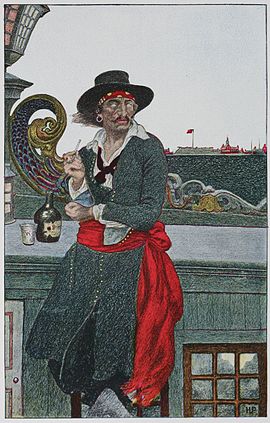
Captain Kidd

Today we think of privateers as criminals, but things were different back in Sarah’s time. The American colonies were struggling to remain free from what they viewed as unfair rules imposed by England. New York, for example, was pushed to become a part of New England instead of maintaining its status as a separate colony.

Sarah and Kidd were a prosperous and popular couple during the first years of their marriage. They owned property, gave parties, and were friends of many of the most important citizens of New York.

One of their friends was the Earl of Bellomont, who was governor of a large area from Massachusetts to New York. He commissioned Kidd to hunt down pirates and enemy French ships in the Indian Ocean. Kidd’s trip was a long one, but he hoped to return in a year and be with Sarah, who was pregnant with another child at the time he left.

Time dragged on and everything seemed to go wrong on the trip. Men who had signed on hoping to enrich themselves were bitterly disappointed as the months went by. Several of them rebelled and Kidd punished them harshly. At least one man died after his punishment. Kidd declared it was an accident, but some of the sailors began calling Kidd a murderer.

Sarah struggled to take care of her children in New York where Kidd had left her. Finally, she got a message telling her to go to Boston to meet her husband. She hurried to meet him, but he was no longer a free man. Political feelings had changed in England. Privateers were no longer needed and the government was attempting to get rid of pirates. Kidd found himself condemned by the people who had hired him. His friend Bellomont turned against him and refused to defend him. He spent two years imprisoned in Boston and was finally sent to London where he was kept in prison for another three years before finally being hanged in 1701.

 After Kidd died, Sarah was left a widow again. Not only had she lost her husband, but she had also lost her social position and credibility. Within a few months after his death, ballads about the “notorious Captain Kidd” were circulating in both London and New York. Sarah and her children lost a husband and father as well as their reputations. They also lost Kidd’s property, which was confiscated by the state. For two years they lived in seclusion in New York.

Fortunately, Sarah still had a father and a brother. When the brother died, she received his property and was able to move to a more suitable house than the one she had been living in. She married one last time, changed her name to Rouseby and lived respectably until her death in 1744.  Somehow, out of all the troubles of her life, she managed to demonstrate that she was far from helpless. She worked her way out of poverty and raised her children to become prosperous citizens of the new country. You can learn more about her life by reading a recent book written by Daphne Palmer Geanacopoulos, The Pirate’s Wife: The Remarkable True Story of Sarah Kidd (2022)

Sarah Kidd did not leave many written records of her life and questions remain, but she demonstrated that she was a strong, clever head of the family. Despite being a mere woman, she built a satisfying life for her children and descendants.

Saving Ancient Temples and Facing Modern War

The civilization of ancient Egypt has fascinated Europeans for centuries. When Napoleon’s army invaded Egypt during the early 1800s, they brought many Egyptian artifacts  to France and placed in the Louvre Museum in Paris.  It is no wonder that a young girl being raised in Paris a hundred years later became fascinated with Egypt and decided to devote her life to the study of Egyptology. But no one would have predicted that Christiane Desroches would become a world-famous Egyptologist and the savior of some of the most important tombs ever built in Egypt.

Christiane Desroches was born in Paris on November 17, 1913, the daughter of a prosperous lawyer who encouraged his children to read and to study. She was lucky to have teachers who recognized her abilities and helped her to find her path. The discovery of the tomb of Tutankhamun in 1922 caused a great stir in France and like many other young people, Christiane decided to become an Egyptologist. Unlike most other students of her time, Christiane never lost her enthusiasm. Encouraged by her teachers, Christiane was able to get a job working in the Egyptian department of the Louvre classifying and cataloging Egyptian artifacts.

During the 1930s, she became the first woman to lead an expedition to Egypt to study antiquities. Her trip there was not easy. Men had dominated Egyptology ever since the study began. Many of the scholars who were part of the expedition belittled Christiane’s contributions because they did not believe a woman could handle the hard physical labor of digging up artifacts, but Christiane proved her worth. She worked well with the Egyptian field workers and became friendly with many of the Egyptian families in the camp. And her patient field work led her to discover important items that were taken to the Louvre and added to their collection.

Then came Hitler’s rise to power, which led to World War II. As the German army moved closer and closer to Paris and threatened to capture the city. Christiane realized that the precious Egyptian artifacts she had studied might be captured and taken to German museums or even destroyed. She and other museum employees mounted a campaign to move the treasures to unoccupied areas in France where they would be safe. They carefully packed up the artifacts they treasured and secretly moved them through the German lines to safety in the unoccupied areas of southern France. Despite being caught and questioned by Gestapo agents, Christiane managed to maintain her secrets and save many of the most important artworks owned by the Louvre.

Among the people she met during the war was Andre Noblecourt, who she married in 1942. Their marriage was never a traditional one, although it was long and happy. Christiana did not give up her maiden name but linked her married name to that of her husband, an unusual choice in France at that time. After the war her husband worked for the Louvre and eventually became a security adviser for the national museums of France. When the war ended, Christiane went back to her position as curator of Egyptian antiquities at the Louvre. She wrote several popular books about Egyptology and taught at the Louvre school.

During the 1950s, when Gamal Abdel Nasser became president of Egypt, many European countries worried that his efforts to make the lives of Egyptian people better would result in the loss of many of the monuments of ancient Egyptian civilization. Christiane Desroches- Noblecourt played an important role in persuading UNESCO to contribute money to preserve the monuments. The work became especially urgent after Nasser’s decision to build a second Aswan dam in 1954.

Christiane Desroches-Noblecourt

Christiane Desroches-Noblecourt was tireless in visiting government leaders throughout Europe and persuading them to support the efforts of the Egyptologists. She even spoke personally to De Gaulle, who was reluctant to contribute French money to the effort at a time when France was still rebuilding from the devastation of World War II. Christiane also found an ally in Jacqueline Kennedy, who was keenly interested in French culture. Jacqueline in turn encouraged her husband President John Kennedy to find American support for the efforts.

The work of saving Egypt’s monuments continued for many years. Huge monuments were lifted out of the desert sands and moved to higher ground. Some of the artifacts found in Egypt were sent to countries that had contributed to the restoration efforts. (You can read the full story at International Campaign )   

Christiane Desroches-Noblecourt did not rest on her laurels after these achievements. She lived a long and active life even after she had to give up her active field work. She continued teaching and writing until almost the end of her life. She died at the age of 97 in 2011. A vivid account of the work of Desroches-Noblecourt can be found in a recent book, Olson, Lynne (2023). Empress of the Nile: The Daredevil Archaeologist Who Saved Egypt’s Ancient Temples from Destruction.

Sinner or Savior? Madame Restell

Mary Trow–Madame Restell

During the 1800s, New York City was an expanding city with a growing population of immigrants and newcomers from rural states. Among the immigrants in 1832 was a young English girl named Mary Stow Sommers and her husband with their infant daughter. Unfortunately, the husband died soon after their arrival in the city, and Mary had to find work to support her daughter. That was no easy task, and Mary struggled to find work she could manage from home while she took care of her daughter. Her brother, who had also moved to America, worked in a pharmacy and Mary soon realized there was a business opportunity in developing skill as a midwife.

At that time, many of women’s healthcare needs were taken care of by women rather than by doctors, all of whom were men. Midwives assisted women in giving birth. They also helped when pregnant women had a miscarriage or a stillbirth. Many of them provided medications made from natural products to ease the difficulties of pregnancy and childbirth.

Mary was a quick learner and soon realized that taking care of women’s health needs was a business opportunity. As she learned more about drugs and natural products that were used to help a woman become pregnant as well as to prevent miscarriages and stillbirths and to ease the pains of giving birth, she built up an efficient organization. She changed her name to Madame Restell and claimed to have learned her medical skills in France. She also married her second husband, Charles Lohman, a printer and a freethinker, who helped her in reaching out to a wide audience.

Many pregnant women wanted abortions because there were no effective contraceptives at that time. Abortions were not illegal if they occurred during early pregnancy, before ‘quickening’ or the time when the fetus began to move in the womb. Within a few years, Mary had established herself as a reliable midwife and as a woman who could help with difficult births, miscarriages, and also provide abortions.

Restell was a good businesswoman as well as a good medical practitioner. She placed ads in the newspapers to let people know that about the services she offered. Not only did she provide medication and treatments, she also helped women who came to her for other needs. Women who wanted to have a baby and give it up for adoption, could stay with her for weeks before the birth knowing that they would have the safest care available. Her clients included wealthy women as well as prostitutes and young unmarried girls. The age of consent was very low, sometimes as low as 10 or 12 years of age, so many young girls fell prey to employers or relatives who were unwilling to take any responsibility for providing care for the girls if they became pregnant.

Madame Restell not only became successful, she also became famous and very wealthy. She built a large mansion directly across the street from the Catholic Archbishop of New York. He could rail against her and her activities from the pulpit, but he could not prevent her from carrying on her business in his own neighborhood.

When Restell travelled around the city, she rode in an elegant carriage drawn by large, handsome horses and driven by coachmen in expensive livery. Madame Restell became a celebrity, and a very wealthy one. Other women followed her example and tried to build up practices similar to hers, but none became as famous as Restell.

As the years went by, doctors noticed that this large section of healthcare was handled by untrained women rather than male doctors, and some of them determined to take over the field. Doctors, despite having more education than female midwives, did not always offer better service. The germ theory was unknown, so doctors did not consider it necessary to wash their hands before attending a birth. Babies delivered by doctors died more often than babies delivered by midwives during these early years. Nonetheless doctors continued to push to take over the entire field of medical services.

For forty years Madame Restell managed her successful business and offered her services to many women, but finally one activist brought an end to her career. That man was Anthony Comstock, who campaigned for “virtue” by trying to eliminate obscenity, contraception, abortion, and several other activities he considered to be sinful. He fought bitterly against Madame Restell and her services. In 1878, he managed to trick her by showing up at her house and asking for contraceptives for his wife. Restell gave him some of her products, but he returned the next day with several policemen and had her arrested.  

At this time, Madame Restell was suffering from a series of troubles. More and more people began to support Comstock’s campaign against obscenity, more doctors were offering services that competed with hers, and her private life was disrupted by the sudden death of her husband a short time before her arrest.

Comstock fought bitterly to bring Restell to court before a judge who was hostile to her. He fought to have her denied bail and it was clear that he wanted to defeat her and drive her out of business. But she was a strong and determined woman. On the morning of the day she was scheduled to appear in court, her body was found in the bathtub of her home. She had evaded a final reckoning by slitting her throat. Comstock had finally managed to defeat the most famous abortionist of nineteenth century America.

The full story of Madame Restell is told in a recent book, Madame Restell: The Life, Death and Resurrection of Old New York’s Most Fabulous, Fearless, and Infamous Abortionist by JenniferWright (2022), There you will find an account not only of Restell’s life, but also much of the background about how women’s right to control their fertility and their bodies became a battleground. Today’s news will tell you that this struggle is far from over.

See How She Falls—Fannie Hurst and Her Disappearing Books

Just about half a century ago, in February 1968, the New York Times printed a front-page obituary of one of the most popular writers of the twentieth century—Fannie Hurst. Today her name means almost nothing to an average American reader. Her books have disappeared from most public libraries and bookstores, although films based them are easy to find in film study classes and on YouTube. Who was this woman who loomed so large for half a century and then fell so far?

Fannie Hurst was born on October 18, 1889, in Hamilton, Ohio. Her only sibling, a sister, died soon after Fannie’s birth. Her parents were an immigrant couple from Germany. Fannie grew up in St. Louis, attended public schools there and graduated from Washington University at the age of 24. During her last year in college, she wrote the book and lyrics for a production of a comic opera. After her graduation, she began submitting stories to magazines, but had a difficult time getting them accepted. Her parents wanted her to stay in St. Louis and find a suitable husband, but Fannie was determined to build a career. Finally, after two years, she persuaded her parents to allow her to move to New York City and find out whether she could succeed as a writer.

Fannie fit easily into life in New York. She wandered around the city to visit different neighborhoods and took jobs as a salesgirl and as a waitress in a Childs restaurant to study city life. She also visited night court sessions to learn more about criminal activity and punishment in the city. But always, she wrote. In 1912, she sold a story to the Saturday Evening Post and after that her sales to magazines increased.  The Post asked her to write exclusively for them and she soon became a well-known author. In 1921, her first novel, Star Dust, the Story of an American Girl appeared. It was not long before her career took off. Within a few years she was one of the best paid writers in the country.

Fanny was an energetic and diligent worker who was never at a loss for devising new twists for her stories. She was also a good businesswoman who had no qualms about demanding high paying contracts with magazine editors so that she could plan on writing a number of stories for publication as a series. In New York, she quickly made new friends with whom she shared social life as well as market information. Perhaps equally important in her success, she was a healthy, disciplined worker who fulfilled her obligations and never developed the bad habits that prevented many other writers from fulfilling their promises. She did not drink alcohol nor get involved in passionate love affairs.  Despite family obligations—her parents demanded many visits and frequent letters—she did not let depression or annoyance interfere with her writing schedule. Editors could count on her.

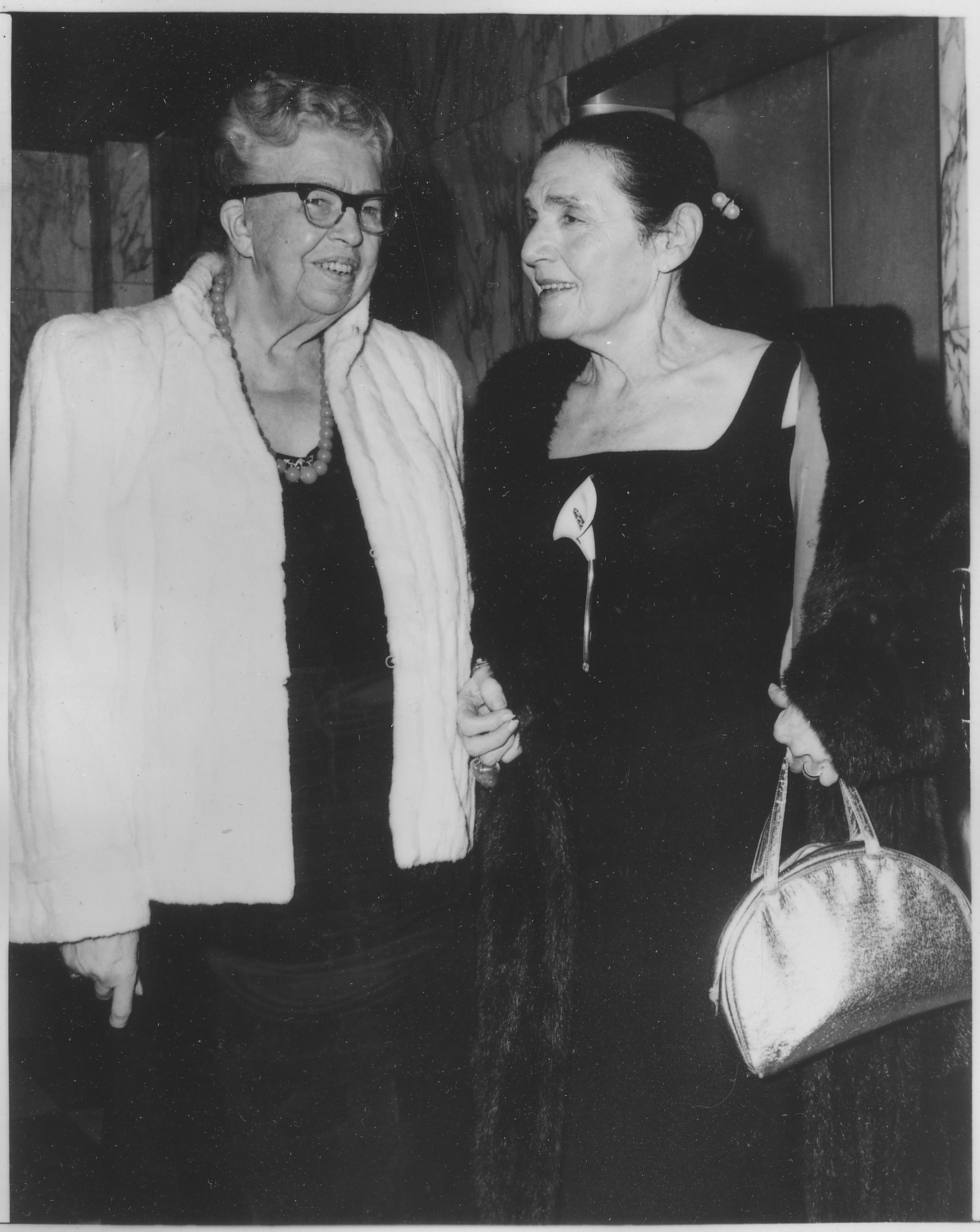
Fannie Hurst with Eleanor Roosevelt

The public too could count on her to come up with plots that offered endless variations on the familiar themes of family life and love affairs. Her audience was primarily women, who struggled with the endless issues of maintaining satisfactory lives in a fast-changing world. No doubt she introduced many American women to neighborhoods they had never seen and the kinds of people they had never met. She didn’t spare words in describing the settings for her stories and novels. The first sentence of her novel Humoresque uses 53 words to set the stage for the neighborhood where her characters live:

On either side of the Bowery, which cuts through like a drain to catch its sewage, Every Man’s Land, a reeking march of humanity and humidity, steams with the excrement of seventeen languages, flung in patois from tenement windows, fire escapes, curbs, stoops, and cellars whose walls are terrible and spongy with fungi.

Few of her readers would have ever seen such an inner-city neighborhood, but Fannie spread it out before them so readers in small town Idaho could visualize the lives of immigrant New Yorkers and sympathize with their troubles. Some critics and reviewers complained about the wordy details Fannie provides, but readers loved them and her books sold widely.

As Fannie’s work became more popular, her social life expanded. She became more interested in women’s rights and other causes and was an early member of the Lucy Stone League, a group dedicated to allowing married women to keep their own name rather than adopting their husband’s name. Her own marriage demonstrated her determination not to become labelled as “wife of…”.

In New York, Fannie met and fell in love with a Russian émigré, the musician, Jacques S. Danielson, but when she took him to meet her parents in St. Louis, they objected strenuously to the marriage. They looked forward to having a daughter conventionally married to an American from the Jewish community in which they lived rather than a foreigner. Instead of openly defying her parents, Fannie and Jacques had a quiet wedding in New Jersey and stayed in their separate apartments in New York. For five years they told no one about the marriage and carried on their usual social lives. When a reporter found a record of the marriage and wrote a story about it, the news caused a sensation. Nonetheless, Fannie and Jacques continued their separate social lives although they eventually moved in together. Their marriage lasted until Jacques’s death in 1952. Fannie mourned him for the rest of her life.

By the late 1920s, Fannie was a well-known public figure and one of the most popular and well-paid writers in the country. When the movie industry started during the early 1920s, it was natural for producers to turn to her stories for material to be filmed and made available in the new format. The movies made it possible for Fannie’s readers to see the settings in which her stories took place without reading Fannie’s lengthy prose and so it opened up a new audience. Her fame and popularity with both viewers and readers continued throughout the development of the movies. She was fortunate in her timing because her stories could be filmed more than once as movie technology changed from silent films to talkies and eventually to technicolor films.

During the 1930s, Fannie’s high energy life continued and it was not restricted to writing and publishing. She became more involved in social issues, especially as her friendship with Eleanor Roosevelt grew. She was invited to the White House for lunches and events and she supported the first lady in her campaigns to establish racial equality and to increase support for women’s causes.

During her long and busy life, Fannie maintained the discipline that kept her writing and publishing short stories and novels. She became a host on several radio and TV stations, although her popularity in these media never reached the heights of fame that her writing did. Gradually, during the postwar years, Fannie’s earning power diminished. Nonetheless, she remained prosperous and led  an active life until, after a short illness, she died of cancer on February 23, 1968.

A recent biography by Brooke Kroeger,  Fannie: The Talent for Success of Writer Frances Hurst (2022) tells the full story of Fannie Hurst, an unforgettable woman whose achievements should not be forgotten even by people who no longer read her books. She left an indelible mark on the culture of twentieth century America.