Thanksgiving Thoughts 2014

Every year brings new challenges and new opportunities, although our poor planet doesn’t have much to be thankful for what with continuing drought and endless war. Still, I am thankful for NaNoWriMo—National Novel Writing Month—which
National Novel Writing Month--November
National Novel Writing Month–November

has given me the push I needed to write a first draft of the third book in my Charlotte Edgerton mystery series. I am still racing to meet the 50,000 word goal by the end of this month, so I am going to reprint the thoughts I first posted on my blog last year. Lydia Maria Child, although almost forgotten is one of the Americans we should all be thankful for.

Over the river, and through the wood,

to Grandfather’s house away!

We would not stop for doll or top,

for ’tis Thanksgiving Day.

Fifty or a hundred years ago almost every child in America would know that song because it was sung in classrooms all over the country. No matter that many American children lived in cities and had no experience of sleighs or woods or even Grandfather’s house, which might have been across the ocean instead of through the woods. Today the song would mean even less to children who may never have seen a real horse much less a spinning top—dolls we have with us still, although not like the ones our grandmothers had.

And so the song drifts off into history, but it is the only legacy left by a remarkable woman who would probably spin in her grave if she thought that of all the books she wrote, lectures she gave, and magazines she published, only this trifling set of verses is left. What has happened, she might wonder, to the explosive stories she wrote about intermarriage, abolition, and the rights of American Indians. Those were the works that led the Boston Athenaeum to revoke her free borrowing privileges. Lydia Maria Child was a firebrand despite the decorous cap and long, sedate dresses she wears in her portraits.

Born in 1802 in Massachusetts, she was a member of the first post-revolution generation. Her father Convers Francis was a prosperous baker and her older brother, also named Convers Francis, became a Unitarian minister and a professor at the Harvard Divinity School. It was her brother who encouraged her to try writing a novel and she completed Hobomok, with an American Indian as its hero. It was a popular success and started her on a lifetime writing career.

When she met the Harvard educated lawyer David Childs she was introduced to the abolitionist cause. They married and pursued lifelong careers as reformers and radicals. Unfortunately David was constantly in debt, made innumerable bad choices in business investments, and even spent time in prison for debt. Lydia (usually called Maria, which she preferred) had to be the stable breadwinner. She did this by starting a children’s magazine and by publishing books directed at housewives. Her hugely popular Frugal Housewife addressed the problems of middle-class women who struggled to maintain a house and feed a family.

But Maria Child was not content to linger over the problems of making soap and choosing fresh eggs, she was determined to help in the struggle to free slaves and women, two groups which she saw as being exploited by men who treated them as property. The book which angered many New Englanders was her An Appeal in Favor of That Class of Americans
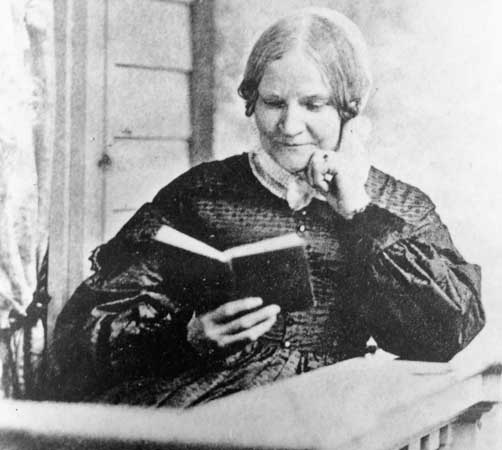
Lydia Maria Child
Lydia Maria Child

Called Africans. In it she advocated the abolition of slavery but rejected the notion of sending freed slaves back to Africa. Instead, she wanted to integrate them into American society and make them the equal of white citizens. She accused Northerners of being just as racist as Southerners, which infuriated many old friends and leading citizens of Massachusetts. She believed in education and in intermarriage. She wrote:

An unjust law exists in this Commonwealth, by which marriages between persons of different color is pronounced illegal. I am aware of the ridicule to which I may subject myself by alluding to this; but I have lived too long, and observed too much, to be disturbed by the world’s mockery. In the first place, the government ought not to be invested with power to control the affections, any more than the consciences of citizens. A man has at least as good a right to choose his wife, as he has to choose his religion.  

Her sentiments shocked even many of the abolitionists who wanted to abolish slavery, but hesitated over the question of total equality. Maria Child spent most of her life facing controversy. She believed that men and women should work together in the Anti-Slavery Society and precipitated a long-lasting feud in that group. For all her long life she argued for freedom and equality. On this Thanksgiving Day we ought to give thanks to her, not for producing a sweet little verse, but for persisting in the endless struggle to make Americans live up to their highest aspirations.

As far as I know, there is no easily accessible biography of Lydia Maria Child. The one that I read is a detailed scholarly biography by Carolyn Karcher, The First Woman in the Republic: A Cultural Biography of Lydia Maria Child (Duke University Press 1994). I highly recommend it, but not too many people will commit to 800 pages. Perhaps someday Professor Karcher will produce a shorter, more popular introduction to a woman who deserves more attention than she has received in our history books.

“Scars upon my heart” Women and War

Poppies at War MemorialIt seems that America will celebrate Veteran’s Day this year by sending more troops to Iraq, thus continuing the endless cycle of war and regret. Every year we celebrate the service given by our veterans but we have never reached the point where we stop creating veterans who have to serve yet again.  Back in the long-ago twentieth century, it seemed that every man was a veteran—fathers, uncles, cousins—there was a brotherhood of veterans (some women too, but very few in those faraway days). Each of them celebrated their own war, which at last was going to end all wars. But they never did.

Now there is a small band of men and women who are sent back again and again to fight the same war—two, three or even more tours of service on the bleak sands of Iraq. Only a small percentage of the population suffer the losses of war; only a few families welcome back veterans who are suffering in body and mind. Have we forgotten how terrible it is to live with the scars of war for years and decades?

The quotation “Scars on my heart” is from a poem written by Vera Brittain for her brother in 1916. Ironically the poem was written four days before her brother was killed in action on June 15, 1918, almost a century ago

Your battle-wounds are scars upon my heart,

Received when in that grand and tragic ‘show’

You played your part

Two years ago.

Widows of the Civil War

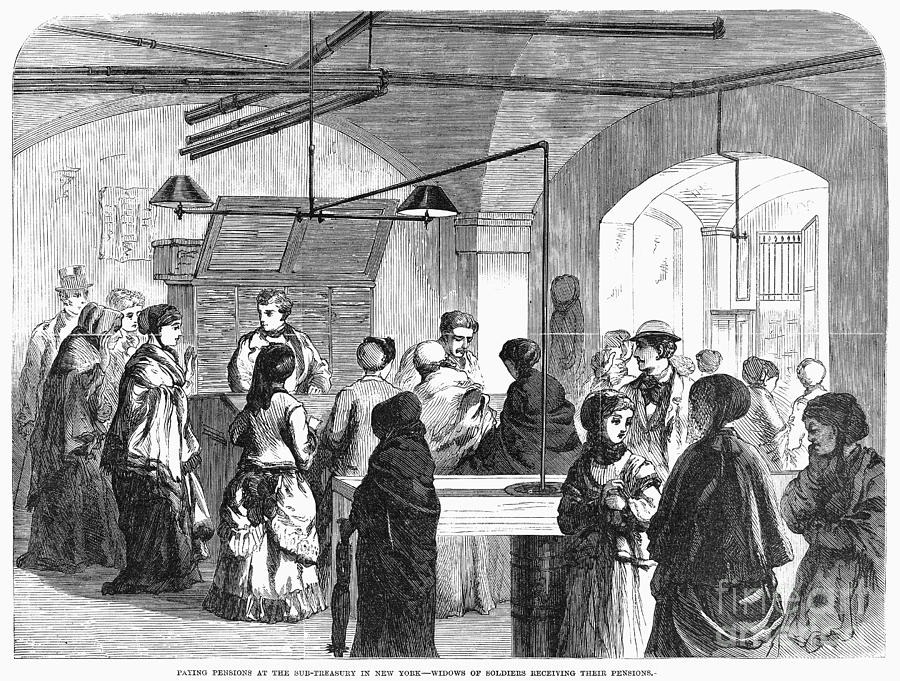
Women’s role in wars has often been to suffer as war widows or bereaved mothers. After the American Civil War, women lined up to receive the pensions their husbands had won for them by being killed in battle. After every war the scars are left not only on the bodies of the men who fought, but on the minds and hearts of the women who live with their suffering or with their deaths. And yet it seems we cannot stop.

Every year we create more veterans, not only Americans, but the people around the world who fight against us. Thousands of women in Iraq and Afghanistan have been widowed and bereaved by the loss of sons and brothers. Their scars will never heal.

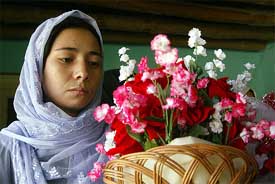
Afghan war widow
Afghan war widow

War solves nothing, as Eleanor Roosevelt once wrote. And yet on Election Day we heedlessly vote for people who have told us they want to send more troops overseas. They want America to be strong, which often means being ready to fight at any time. Creating more veterans, more hatred, and more suffering will never build a better world. It’s about time we demanded that our leaders think more and fight less. They can make peace work if they stop listening to bullies and start paying attention to what most Americans really want for themselves and their families.

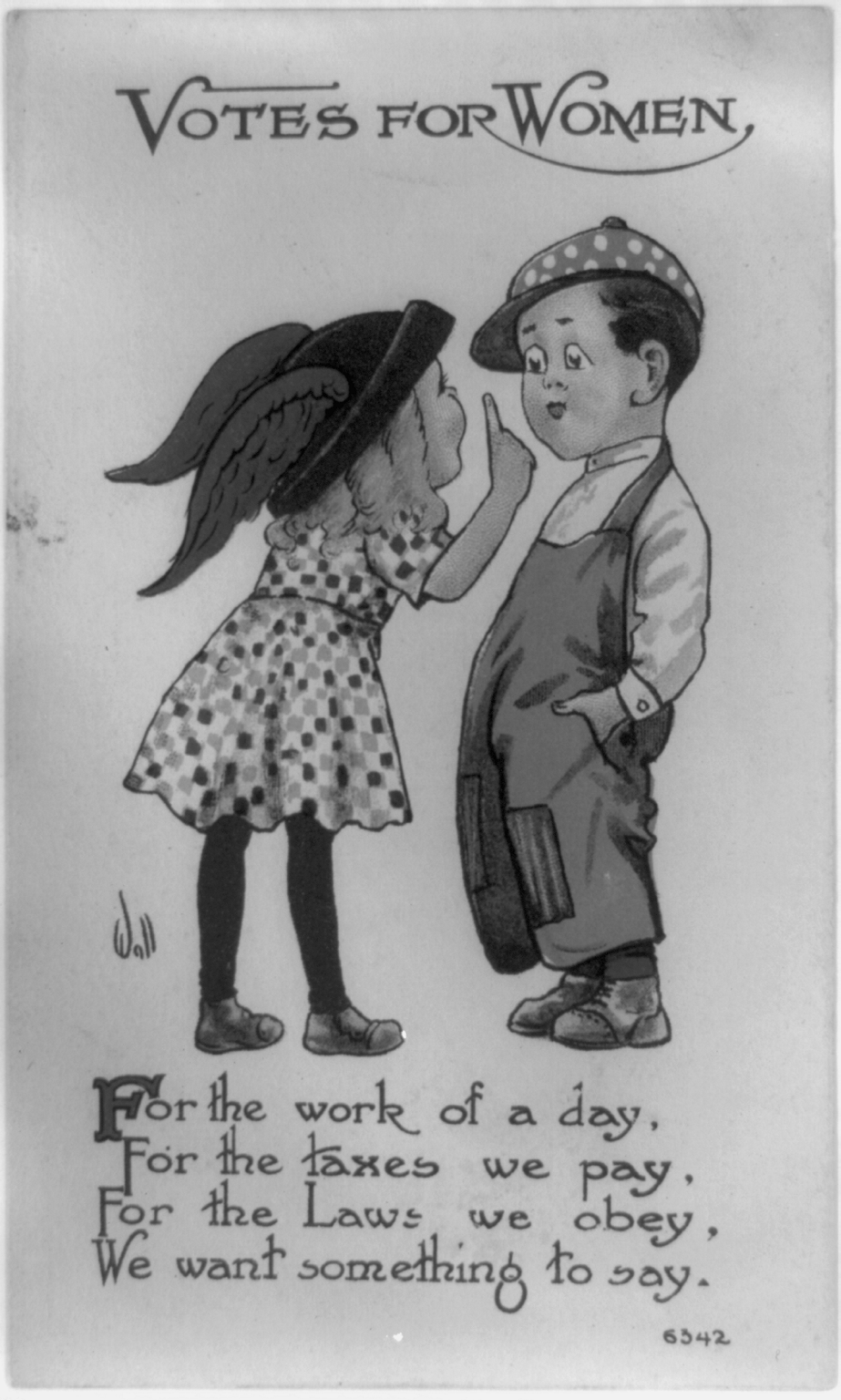
Still struggling to encourage women’s voting

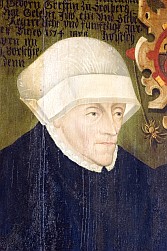
Although the Abbess of Quedinburg, shown in this picture lived in medieval times, she had the right to sit and vote at national assemblies in Medieval Germany. Centuries later most European women were still not allowed that basic right. Anna II, Abbess of QuedinburgMeanwhile, in North America, Marie Guyart, a French nun wrote in 1645 that women of the Iroquois tribe could serve as chieftains and vote in councils. Why was it that women in countries that today we would call “the developed countries” had to struggle so long to get the vote?

Many of the reasons for opposing suffrage for women were more about money and property than about individual rights. During much of the 19th century married women could not own property, so they would not be eligible to vote in many countries. There were some suggestions that spinsters and windows who did have property might vote, but that would anger all the men who were not allowed to cast a ballot. Even in 2014, male voters are considered more reliable defenders of property rights while women have a deplorable tendency to vote for social programs. Fox news commentators in recent weeks have been quoted as saying that women shouldn’t be allowed to vote—a feeling that is surely held by many enthusiastic Republicans. We usually talk about votes for women as a purely individual, social benefit, but feelings about it are just as often motivated by economic interests as social ones.

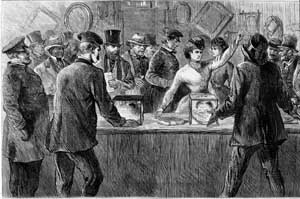
For almost 200 years American women, along with women from many other countries, have been fighting for the right to vote. Susan B. Anthony wanted to vote in 1872 and was tried and found guilty of breaking the law. Here are some of her responses to the judge at her trial;

Susan B. Anthony speaking about votes

As a matter of outward form the defendant was asked if she had anything to say why the sentence of the court should not be pronounced upon her.

“Yes, your honor,” replied Miss Anthony, “I have many things to say. My every right, constitutional, civil, political and judicial has been tramped upon. I have not only had no jury of my peers, but I have had no jury at all.”

Court—”Sit down Miss Anthony. I cannot allow you to argue the question.”

Miss Anthony—”I shall not sit down. I will not lose my only chance to speak.”

Court—”You have been tried, Miss Anthony, by the forms of law, and my decision has been rendered by law.”

 Miss Anthony—”Yes, but laws made by men, under a government of men, interpreted by men and for the benefit of men. The only chance women have for justice in this country is to violate the law, as I have done, and as I shall continue to do,” and she struck her hand heavily on the table in emphasis of what she said. “Does your honor suppose that we obeyed the infamous fugitive slave law which forbade to give a cup of cold water to a slave fleeing from his master? I tell you we did not obey it; we fed him and clothed him, and sent him on his way to Canada. So shall we trample all unjust laws under foot. I do not ask the clemency of the court. I came into it to get justice, having failed in this, I demand the full rigors of the law.”

Court—”The sentence of the court is $100 fine and the costs of the prosecution.”

Miss Anthony—”I have no money to pay with, but am $10,000 in debt.”

Court—”You are not ordered to stand committed till it is paid.”

Matilda Joslyn Gage to Editor, 20 June 1873, Kansas Leavenworth Times, 3 July 1873, SBA scrapbook 6, Rare Books, Library of Congress

Anthony’s arguments may impress us in 2014, but they did not help to change the law. It was more than forty years later that women in the United States were given the right to vote.

You might think that with all the effort that went into gaining the right to vote, women would flock to the polls but that hasn’t always happened. Voter turnout is still a major issue in the United States, where fewer citizens vote than in many other countries. According to the Center for American Women and Politics, in 2012, during an important presidential election, only 63.7% of eligible women and 59.8% of eligible men reported that they had voted. What can we expect in a non-presidential year like 2014?

The Abbess of Quedinburg and the Iroquois chieftains of earlier centuries would look on in wonder if they knew how carelessly we treat voting.

As for poor Susan B. Anthony, she must be weeping for the failures of her example to inspire us today.

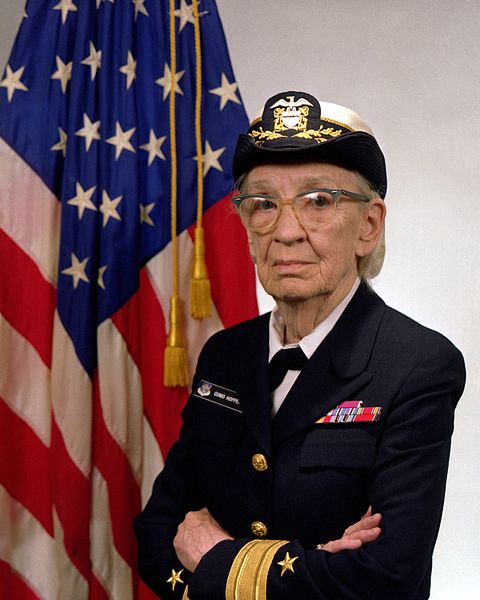
Grace Hopper—the Woman Who Bugged the Tech World

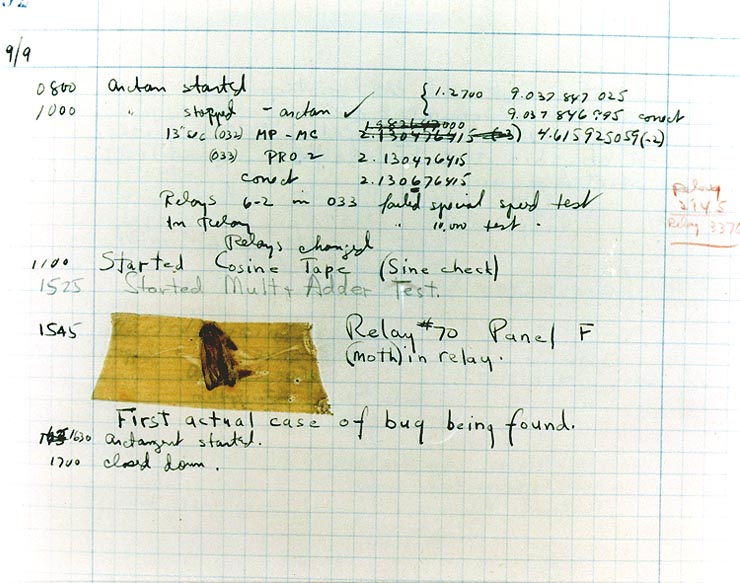
October is not only the month of Halloween and Oktoberfest it is also the month when the tech world holds its annual Grace Hopper Celebration, an event worth celebrating. You may not have heard of the Grace Hopper Celebration, you may not even have heard of Grace Hopper, but her legacy probably affects the way you work every day. Perhaps it should be called the Day of the Bug because one of Grace Hopper’s best known achievements was to introduce the word “bug” as the  name for a

The world's first computer bug
The world’s first computer bug

glitch in computer software. The picture at the right shows the original bug which was foolish enough to wander into one of the early massive computers developed during the 1940s. The bug died, the computer glitch was fixed, but the term lives on.

When Grace Hopper was born in 1906 in New York City, probably no one was thinking about computers. The word “computer”, if it was used at all, meant a person who did a lot of arithmetic. Grace Hopper, or Grace Murray as she was then, was a good student and she liked arithmetic. At Vassar she majored in Mathematics and graduated Phi Beta Kappa. She earned an MA and eventually a PhD in mathematics at Yale, even though math was considered a man’s field and she had very little encouragement. Eventually she became a professor at Vassar (significantly, a women’s college) and married a professor from New York University.

Everything changed for most Americans when the country entered World War II in 1941. Women, as well as men, were encouraged to join in the war effort and Grace Hopper joined the Naval Reserve. She worked on the development of early

Rear Admiral Grace Hopper

computers at Harvard and later moved on to private companies which entered the field during the postwar years. But she always maintained her status with the Navy and eventually became a Rear Admiral. During the last decade of her life, before her death at the age of 83, she served as a public relations spokesperson for the Navy and the tech industry.

The early computer machines developed were meant to make arithmetic easier, faster, and more accurate. Most of the early computer scientists concentrated on the hardware to make computers work faster and to make them less cumbersome. In the early days a computer was about the size of a room, and the room had to be air conditioned to keep the machine from overheating.

Grace Hopper recognized that software was as important as hardware and that programmers were as essential as engineers in computer development. She realized that computers could be widely used in business if they were made more user-friendly and could be programmed in a language more understandable to human beings. She developed the first compiler program and worked on COBOL, which used language closer to English than to machine language. COBOL was hugely popular and was the basis for much of the growth of computer use in business as well as education and government institutions.

Despite Grace Hopper’s importance in early computer work, her legacy did not lead to an influx of women into the tech industry. During the Grace Hopper Celebration of 2014, many people commented on the shortage of women in the largest tech companies. Google, Apple, Facebook all of the best-known companies, suffer from a lack of women on their staff. This is odd when we consider that women are heavy users of computers especially for online shopping, gaming, and social media. Now that computers are fully integrated into all facets of our lives including art, music, and social life it’s hard to see why more women don’t enter the field.

Perhaps we could be more inspired to go into work with computers if we learned more about leaders like Grace Hopper. There is a good biography of her by Kurt W. Beyer called Grace Hopper and the Invention of the Information Age (2012) that you may be able to find in your local library. A new book by Walter Isaacson, The Innovators, covers many of the early leaders including Hopper. I haven’t seen that one yet, but it’s likely to become a best seller like his biography of Steve Jobs and may be a great introduction to Grace Hopper’s world.

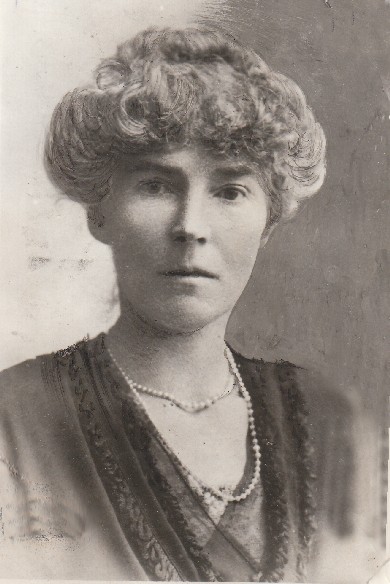
Gertrude Bell–Explorer and Architect of Nations

As news of the Middle East dominates so much of the news media, many of us turn away tired of hearing about the quarrels gertrude-bellthat never seem to be settled. How did we ever get so involved in places so far away from home? And why should we care about the deserts of Arabia?  Gertrude Bell has a lot to answer for.

You may wonder who Gertrude Bell is, but you probably know Lawrence of Arabia from the blockbuster movie with Peter O’Toole who imprinted his image firmly in Hollywood. Well, Gertrude Bell is about to get the same treatment. Werner Herzog is filming a movie about her called Queen of the Desert that will be released in 2015. Like T.E. Lawrence, Gertrude Bell was an explorer who was fascinated by the landscapes and people of Arabia or Mesopotamia as it was called. But Gertrude Bell spoke better Arabic than Lawrence and drew far better maps, so she is more responsible than he for the shaping of Iraq and some other countries of the region.

Gertrude Bell was born into a wealthy family in County Durham, England, in 1868. Her mother died when she was very young, but her father soon remarried and her stepmother, Florence Bell, was a strong influence on the girl. She even decided, eventually, that Gertrude was too restless and intelligent to be decorously educated at home as other girls were. She was sent to school and even attended a women’s college in Oxford where she was the first woman ever to receive a first in history. She was not, however, awarded a degree for that because women might study and excel in learning, but it was feared that an actual degree was a step too far.

Gertrude’s father supported her desire to travel and her interest in archeology and supplied a generous allowance that made it possible for her to travel the world. She fell in love with the Middle East and spent much of her life there, learning languages, studying ruins, and getting to know the rulers and their wives.

petra-monastery-ml-3In 1911, when Winston Churchill was First Lord of the Admiralty, the British Navy replaced coal fired ships with oil powered ones. Suddenly England became dependent on oil from the Middle East and the exotic countries where it was produced. Access to the oil was controlled by the Ottoman Empire which encompassed most of Mesopotamia and the Turks were allies of the Germans.

British intelligence was very interested in what was going on there and because Gertrude was recognized as an expert, she was summoned to Cairo to help map the area. Given the rank of Major—the first woman officer in the history of British intelligence—she caused consternation among other officers who couldn’t figure out how to treat her. But she managed and she played a vital role in establishing the governments that ruled the Middle East for decades after the war.

Iraq was the country that was closest to her heart. While she was there she oversaw the establishment of the great National Museum to house antiquities of the country. She also started the library which became the National Library of Iraq.

There have been many questions raised about the role Bell played in establishing borders for countries that no Westerner truly understood, but she foresaw many of the difficulties that would arise. Perhaps before any of us make judgments about Bell’ work we should read the biography written by Georgina Howell, Gertrude Bell: Queen of the Desert, Shaper of Nations. And of course, don’t miss the movie when it comes out next year.

What do you mean I can’t vote?

Everyone wants to have a voice.

Nelson Mandela, who brought democracy to South Africa 1994, thought everyone over the age of 14 should be allowed to vote. Young people had fought against apartheid with him and he believed they should be able to vote in their new country. He didn’t win that argument and the voting age was set at 18 as it is in the majority of democracies around the world.

But are young people in the United States losing that right? A group of students in North Carolina claim that young people are losing their right to vote because of new voter ID laws passed in several Republican-dominated state legislatures.

According to a New York Times report, under the North Carolina law passed last year, the period for early voting was shortened and same-day registration was eliminated. Beginning in 2016, voters will need to show photo identification, and student ID cards, including those issued by state universities, will not be acceptable. In most instances, neither will an out-of-state driver’s license. In Texas, voters must show a photo ID. A state handgun license qualifies, but a state university identification card does not. Other states have suggested even more restrictive laws.

The history of voting in the United States has been a history of letting more and more citizens vote. The men who wrote the constitution thought voters should be successful men who had experience as farmers or businessmen. Voters should be at least 21 years old and own property. Servants and slaves could not vote and neither could women. During the first few years of the new country, only about half of all white men were allowed to vote in some states.

No one is sure why 21 was chosen as the time when a man became an adult. During the middle ages in England, a young man could become a knight at the age of 21, because he had gained his full strength and could wear heavy armor. Gradually that age was accepted as an appropriate time for taking on adult responsibilities, including voting.

Slowly and painfully the right to vote was extended to men who did not own property, to former slaves and even to women. Each extension was gained after a long, hard battle. For more than a hundred years it looked as though democracy was winning and more and more people were given voting rights. In 1971, the voting age was lowered to 18, allowing voting to young people across the country.

The history of the twentieth century was a history of broadening people’s rights to vote, but the twenty-first century has reversed the trend. Instead of taking advantage of an infrastructure that makes it easier for people to vote—voting machines that count votes automatically, mail delivery that is safe and secure, ballots that are accessible to people with disabilities—some jurisdictions are intent on decreasing voting rather than expanding it.

How much does this have to do with the increasing inequality in our society?  Making voting difficult is one way to stifle

Voters at the polls--Miami 2012
Voters at the polls–Miami 2012

democracy. Lines like the ones that have appeared in recent elections in states such as Florida and Ohio discourage voting, so do unreasonable voter ID laws. Voting is a right, not a privilege to be doled out only to people who can be counted on tovote to support the privileges of those who hold power. Every citizen who cares about the future of America should support the right of all citizens to vote no matter which candidates or parties they are supporting. That’s what democracy is all about.

You Can’t Fool Me—Celebrating Labor Day

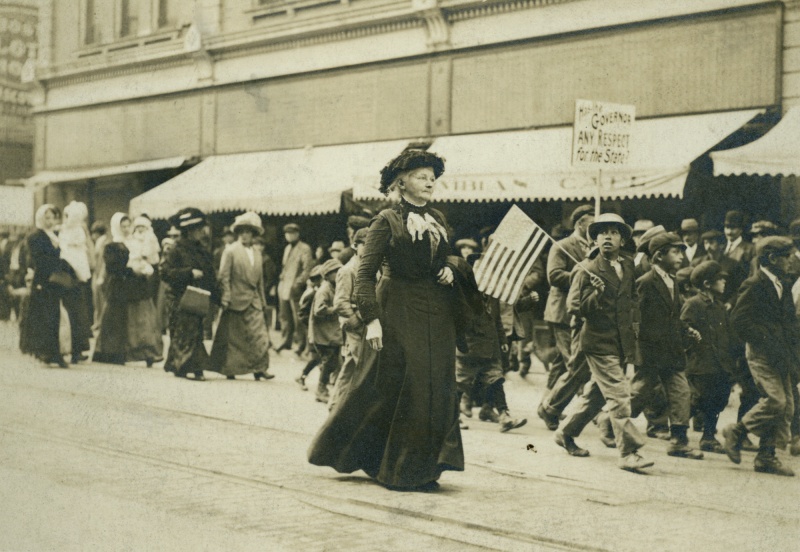
President Obama is celebrating this Labor Day by making a speech calling for a higher federal minimum wage for workers. There are plenty of voices proclaiming that a higher minimum wage will kill jobs, although there is no evidence that these laws do. The

Mother Jones leading a union march  in Colorado
Mother Jones leading a union march in Colorado
history of minimum wage laws is a checkered one. In 1938 President Franklin Roosevelt said in one of his radio “Fireside chats” “Do not let any calamity-howling executive with an income of $1,000 a day, …tell you…that a wage of $11 a week is going to have a disastrous effect on all American industry”. A wage of $11 a week seems laughable now, but the same voices have expressed the same sentiment year after year whenever the minimum wage levels have been raised.

Today is Labor Day and it is a time to honor the unions that have helped bring better wages and better conditions to workers across America. Remember the old Woody Guthrie song:

Oh, you can’t scare me, I’m sticking to the union,
I’m sticking to the union, I’m sticking to the union.
Oh, you can’t scare me, I’m sticking to the union,
I’m sticking to the union ’til the day I die.

There are plenty of reasons today to stick to your union, that is, if you are lucky enough to have one. As we celebrate another Labor Day, I can’t resist reprinting a blog that I first wrote two years ago.

Why are so many Americans anti-labor these days? Probably because they forget what life was like in a pre-union world. At least one day a year, on Labor Day, we ought to try to remember those days and honor the people who changed the rules. Clothing workers are a good example of why unions were needed. It was an industry dominated by women, most of them immigrant women. Some of them worked in small factories, others took the work home. Jacob Riis had described the conditions during the 1890s. In How the Other Half Lives he wrote: “From every door multitudes of tired men and women pour forth for half-hour’s rest in the open air before sleep closes the eyes weary with incessant working.” Factories were not much better than working at home. There were no limitation on working hours, safety rules were nonexistent, workers were hired and laid off erratically as demand rose and fell. There was no health insurance and no unemployment benefits. If your family couldn’t help you out, you were just out of luck.

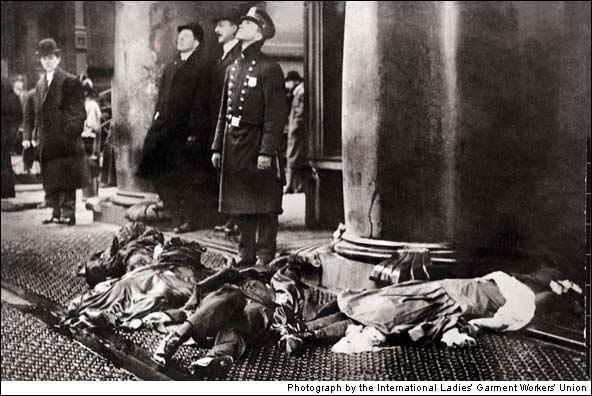
The Triangle Shirt Waist Factory fire in 1911 finally awakened many people to the dangers of unregulated factory work. Pictures like this documented the horror of young women trapped into an unsafe factory. The doors to the fire escapes had been locked to keep workers

Picture of bodies from the Triangle factory fire.
Triangle Factory Fire 1911 (ILGWU photo)
from stealing fabric or sneaking outside for a break. Gradually most of the public woke up to the fact that regulations were needed to keep employers from exploiting workers. The International Ladies Garment Workers Union (ILGWU) grew and through negotiation and strikes finally forged agreements that made many people’s lives better.

Women like Rose Pesotta traveled across the country to organize clothing workers. She went to Los Angeles where the clothing industry workers were mostly Mexican immigrants. Rose was told that Mexican women would never join a union, but she disagreed. She started broadcasting on the local Spanish-language radio station and found a willing audience. As she wrote in her memoir Bread upon the Waters, “Gradually the Mexicans in the dress factories came to our union headquarters, asking questions timidly but eagerly. Some employers, learning of signed membership cards, scoffed: “They won’t stick.” Others were plainly worried. Women not yet in our ranks came with the disquieting news that their boss had threatened to report them to the immigration authorities and have them “sent back” if they joined our union. We promised that our attorneys would fight any such underhanded move.” Gradually the workers were won over, they agreed to strike and eventually the ILGWU was able to ensure them better working conditions through the union.

The ILGWU revolutionized the lives of millions of women across the country, and even though it gradually lost members and strength as the century went on, it remains a shining example of what Americans can do when they work together. The same can be said of other unions which made America a country recognized across the world as a land of promise. The conditions brought about by union workers made the late twentieth century a prosperous time for almost all working families. Today on Labor Day let’s pay tribute to the people who fought to give us unions. They are not always perfect, and sometimes their demands can’t be met, but they have been a blessing for the country. Let’s work with them and not try to wipe them out.

Earthquakes and other disasters

The San Francisco Bay area was hit by a strong earthquake this morning, well, halfway through the night at 3:20 AM while most of us were in bed. I woke up wondering what was happening and found myself lying in a bed that seemed to glide gently back and forth as if a giant mother was trying to soothe a child by rocking its baby carriage. The movement seemed to last for several minutes, but it surely was less than one minute. Then everything stopped. There was no sound inside or out, no dishes falling off shelves, no books shaken out of bookcases, and no one in the street raising an alarm. I turned over and eventually drifted off to sleep.

We were lucky this time, but no one knows when the “big one” might hit the area and destroy lives as well as property.Later, of course, the news came about greater damage in the city of Napa as well as injuries, although most of them not very serious. It seems as though the only upside to a natural disaster is that it reminds us that the “disasters” we often spend our time complaining about are pretty trivial.

All week I’ve been feeling sorry for myself because

San Francisco City Hall after 1906 earthquake
my computer broke down. Not only did I have to wait to get repairs and new parts, I also had days of worry about whether I had lost any of my precious files. Yes, I make backups, but I always worry that I could have forgotten some, or that my backups would be corrupted.Yesterday I finally did get my computer back and all the files had been copied on a new hard drive. Life is back to normal and I can get back to work on my book—the second volume of the Charlotte Edgerton mystery series. If only all problems had such good resolutions.

The earthquake was a reminder of how many real disasters—ones affecting hundreds of other people and not just me—are lurking on the borders of our lives. Nature’s indifference to human beings, the constant stream of droughts, earthquakes, floods and tornadoes is a never ending source of disaster. Add to that the human disasters of wars and violence and it’s easy to see what a dangerous world we live in. The only hope is to try to keep our own troubles in perspective, focus on our work, and help other people when disasters hit them. We can all summon courage to face the future and its disasters if we keep in

Abraham Lincoln and his young son
mind what Abraham Lincoln said: The best thing about the future is that it comes one day at a time. And anyone can cope with just one day.

No one wins at war

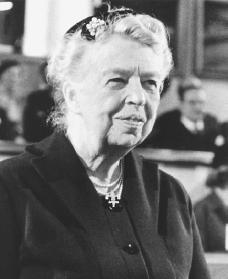
Eleanor Roosevelt once wrote, “I cannot believe that war is the best solution. No one won the last war, and no one will win the next war”. The world has had a chance to see the truth of that statement over and over again during the last half century, most recently in the Middle East. Israelis and Palestinians have been struggling and fighting ever since the creation of Israel and no one has won.Eleanor_Roosevelt Many people have lost—lost their lives, their families, their freedoms—but there are no winners. There are no winners in Syria or Central Africa. Wars keep exploding and then sputtering out in temporary truces and ceasefires, but no one ever wins.

The same is true in all the wars against abstractions that America keeps declaring—the War on Cancer, the War on Drugs, the War on Poverty—some have produced some limited good, but not one has ever been won. None will ever be won.

There is something wrong in the way we call for war every time we see something we don’t like. The only wars won these days are the fantasy wars on TV and movie screens where unreal villains are vanquished by unbelievable supernatural heroes. And only children believe in those.

The truth is, as the Friends’ Committee on National Legislation keeps telling us War Is Not the Answer.

It is not war that solves the world’s problems; it is hard work. That means the hard work of negotiating even with people we don’t approve of; the hard work of rejecting the schemes of arms manufacturers and refusing to send weapons to combatants; the hard work of education so young people will learn the value of compromise and conciliation; the hard work of listening to all the members of the UN no matter how unwelcome their comments.

War tries to exclude people—to push aside and overcome anyone and anything we don’t like, but life is lived by including as many people and opinions as we can, by hammering out agreements and compromises to keep the world moving ahead. How many of us remember the poem by Edwin Markham, a mostly forgotten poet, who wrote a verse favored by many anthologists and teachers?

He drew a circle that shut me out–
Heretic, a rebel, a thing to flout.
But Love and I had the wit to win:
We drew a circle that took him in!

Eleanor Roosevelt knew that peace had to be won by drawing people in; the Friends Committee on National Legislation knows it too. How long will it be before our political leaders learn that simple truth?

Immigrants and their Gifts–Zoia Horn and Others

As a change from all the news stories we’ve been watching about the immigrant crisis on the border between Mexico and the U.S.,

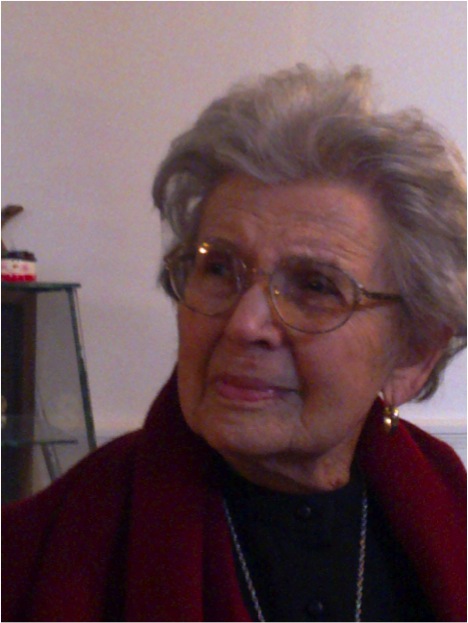
photo of Zoia Horn
Zoia Horn
perhaps it’s time to celebrate some of our immigrants. Not all of them entered the country willingly or even legally, but many of them have enriched our society.

This week some newspapers carried the story of the death of Zoia Horn who died at the age of 96 in Oakland, California. In the 1970s her actions started a movement that has revitalized the library profession. During the hectic anti-Vietnam War period, she refused to testify or give out information about the library borrowing records concerning an alleged plot by antiwar activists, including Daniel Berrigan. She was surprised and shocked to discover that the FBI had been tapping her phone to try to find out whether she knew about the plot. For her refusal to testify, Zoia Horn was imprisoned for a short time, but more importantly she made people aware of the danger of government intrusion into the privacy of communications between individuals.

Although the American Library Association did not support Zoia Horn’s refusal at first, the organization later honored her for her work in supporting intellectual freedom. Libraries have been in the forefront of institutions that defend the privacy of their clients and refuse to make borrowing records available to government agencies. Today we worry about large tech companies that are under pressure to share information with various governments. Libraries have shown the way in which institutions can protect citizens against unwarranted intrusion. They have led the way by erasing records of past library use as soon as they are no longer needed and by refusing to be bullied into removing useful materials that may be offensive to some members of the community. The stereotype of the mousey little librarian has been disproved over and over again by the steadfastness of library support of intellectual freedom over the years.

For the last thirty years Zoia Horn worked in the cause of intellectual freedom. She has been honored by the California Library Association which named its intellectual freedom medal after her. You can find the autobiography of Zoia Horn in the Open Library of the Internet Archive. It makes Autobiography of Zoia Hornlively reading for anyone interested in the history of the twentieth century. Horn tells the story of how she and her family left Russia and emigrated to Canada when she was eight years old. Their final destination was the United States and they found a friend willing to smuggle them across the border. Their entrance into the country was not quite according to immigration laws, but their lives enriched America. We should keep that in mind when we consider how immigrants at our borders should be treated as they try to find their path into this country. Many of them would surely become valuable citizens and make our lives better just as Zoia Horn did.