Madam President–Is the third time the charm?

I think I was in fourth grade the first time I heard a teacher say, “Women can do so many things now. Someday soon we’ll have a woman president.” Well, that was more than half a century ago and we are still waiting. During the heady years after World War II, many people assumed that women who had performed so well as workers and military during the war would move on to become more active in public life. Move stars like Katherine Hepburn and Rosaline Russell gave girls role models for energetic, capable women, but the country preferred to idealize women who played up to men and accepted their roles as subordinates in the hierarchy of home, family and work.
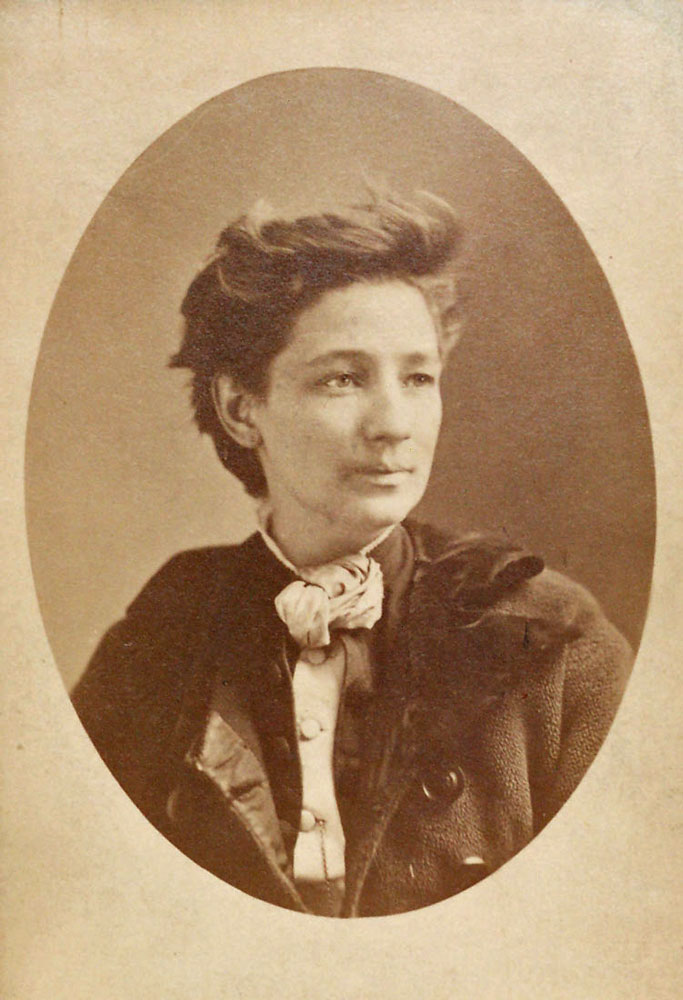
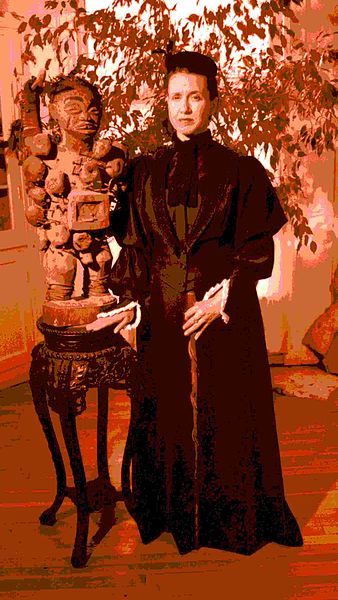
Portrait of Victoria Wookhull
Victoria Woodhull

Only three women have come even close to being seen as serious contenders to become president of the United States. The first was Victoria Woodhull, who ran a spirited but spectacularly unsuccessful campaign in 1872. After all, women weren’t even allowed to vote at that time, much less run the country. I wrote a few posts about Woodhull on this blog during the 2012 presidential race.

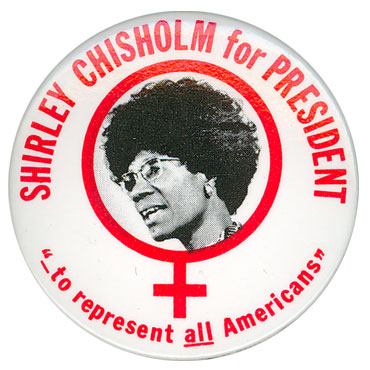
A hundred years after Victoria Woodhull’s attempt, Congresswoman Shirley Chisholm began her campaign to get the nomination of the Democratic Party. In 1972, she was well-known as the first Black woman to be elected to Congress. That had happened in 1968 and Chisholm had made her mark by refusing to be quiet and follow the dictates of politicians in her party. She fought to serve her constituents by supporting bills to provide federal funds for child care facilities, and she opposed the Vietnam War saying “Unless we start to fight and defeat the enemies in our own country, poverty and cacism, and make our talk of equality and opportunity ring true, we are exposed in the eyes of the world as hypocrites when we talk about making people free.”  (Unbossed and Unbought, p. 97)

Chisholm’s 1972 campaign for the presidency was never taken seriously by political leaders. She spent very little money on the campaign and was not able to hire strong staff for her efforts. The country was not ready for an African American president and especially not for one who was a woman. Throughout her career, Chisholm noted that being a woman had put more obstacles in her path than being black. Despite her failure to gain Shirley Chisholmsupport for her nomination, (Senator George McGovern became the Democratic candidate.) Chisholm continued to be an active member of Congress until 1982 when she retired. After her retirement from politics,  she taught for several years at Mount Holyoke College. Her experience continues to inspire liberal politicians and especially women and African Americans who are still struggling to be fully represented in government. And her book Unbossed and Unbought, which she published in 1970,  remains a valuable document about a politician who fought for her constituents and was never swayed by money or political power during those halcyon days before the invention of  PACS or the ravages of corporate funding for campaigns.
And now in 2015, we have the announcement that Hillary Clinton will make another attempt to win the Democratic nomination for president. The details of the campaign and the words of her opponents will be far

Hillary Clinton
Hillary Clinton

different than the ones that greeted her predecessors, but the theme remains the same for many of them: women are excellent accessories to a successful candidate, but not to be trusted with the tough job of running the country. Will 2016 be the year that proves those opponents wrong? Will Americans finally decide that a woman president is just what we need to deal with the multitude of problems in the country and the world? One thing that my fourth-grade teacher might say is that it will take a woman to clean up the mess that male leaders have given us.
Women on the Money

The campaign to put a new face on the twenty dollar bill—replacing Andrew Jackson with a woman is growing fast. Gail Collins wrote a column about it in the N.Y. Times  not long ago and she gives us the link to the official campaign site www.womenon20s.org The argument is that dead white men have monopolized U.S. currency ever since the country

Is this the face for the new $20 bill?

began issuing money and it’s time for a change. We see the familiar faces of George Washington, Abraham Lincoln, Ulysses S. Grant, and Andrew Jackson on the bills we use every day. Not a woman in sight!

In this, as in so many other ways, the United States is more conservative than many other countries. Britain, of course, has Elizabeth II on the currency as do many of the countries from the Commonwealth. But they don’t stop with the monarch. Australia has put Nelly Melba, the opera singer, on its currency, Canada honors the first woman judge, Emily Murphy, and of course Argentina has Eva Peron. Denmark has placed the author, Karen Blixen on its currency. Surely it is time that America follows their lead and portrays a woman.

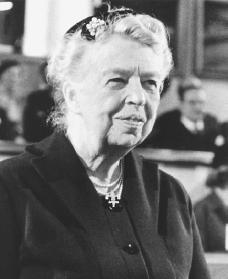
The Women on 20s campaign has a list of candidates to replace Andrew Jackson and they are good ones. There are lots of familiar faces—Eleanor Roosevelt, Susan B. Anthony, Rosa Parks and others. One of my favorites would be Frances Perkins, the first Secretary of Labor under President Franklin Roosevelt. I’ve written about her on this blog before. She was the person most responsible for setting up the Social Security program that has changed the lives of so many older Americans.

Shirley ChisholmAnother favorite of mine is Shirley Chisholm, the first African American woman elected to Congress and in 1972 became the first African American woman to become a candidate for a major party nomination for President. Throughout her Congressional career, Chisholm worked to improve the lives of people living in the inner city and struggling with poverty and poor job prospects. She pushed through a bill guaranteeing a minimum wage for household workers and supported increases in education and health care.

Both Frances Perkins and Shirley Chisholm worked through the political system, just as the men who are now on our currency have done. Perhaps we should change the scope of the search and look at candidates from entirely different fields. If I had a completely free choice, I think I’d pick a poet—someone who was a little less serious about being in the company of the sober, serious men who inhabit the other currency. How about Emily Dickinson with her confession—

Emily Dickinson
Emily Dickinson

I’m nobody! Who are you?
Are you nobody, too?
Then there’s a pair of us -don’t tell!
They’d banish us, you know.

If a poet can be nobody, then surely the twenty-dollar bill can be even less important. That’s something that might make us feel better as we see them flying out of our wallets every day. But of course perhaps all of our currency is flying away. As the Apple Watch comes on the scene, none of us may need currency any more. Emily and Andrew as well as George, Abraham, and Ulysses and the bills they represent may be merely historical footnotes as our technological world moves on.

Celebrating Pi Day and Women Mathematicians

By this time almost everyone who follows the news, whether in print, on a website, or Facebook or Twitter must have heard Happy_Pi_Daythe news that Saturday, March 14 is Pi Day. Scientific American explains the concept and gives us the history of it. As they write:

If there was ever a year to commemorate Pi Day in a big way, this is it. The date of this Saturday—3/14/15—gives us not just the first three digits (as in most years) but the first five digits of pi, the famous irrational number 3.14159265359… that expresses the ratio of a circle’s circumference to its diameter.

Unfortunately this only works in the U.S. because, Europe, Canada and most other countries write the date putting the day before the month—14/3/15. If only April had 31 days, they could wait for 31/4/15 but alas that will never come.

Aside from eating pie to commemorate the date and taking our children to the local science museum, what else what else can we do to celebrate the importance of math in our lives? Well, we might think about how few girls study math and how few of the world’s famous mathematicians were women. Considering how difficult it has been until very recently for girls to be encouraged to study math, we shouldn’t be too surprised. Women have always had to fight for their education and in many parts of the world they still do.

Take for example, Mary Somerville, born Mary Fairfax in 1780 to a wealthy and prominent family in Scotland. Like most girls, she was given little education at home, although one of her uncles recognized her abilities while she was young. It was only when Mary surprised her brother’s tutor by answering his question when her brother was stumped, that she was allowed to receive some limited tutoring herself. With the help of the tutor she was able to teach herself mathematics. Unfortunately, at the age of 24 she married a distant cousin who was convinced that women had no talent for intellectual work. It wasn’t until after his early death that she was free to pursue her own interests. Fortunately, for her second husband she chose a man, William Somerville, also a cousin of hers, who encouraged her interests and introduced her to intellectual circles in Edinburgh and later in London.

Finally Mary was able to study, learn about several branches of science, as well as raising a family. Her husband, a physician, was elected a Fellow of the Royal Society. Of course in those days women were ineligible for membership, but

Mary Somerville
Mary Somerville

she was able to use her husband’s access to learn about the society’s scientific activities. She gained fame through writing popular books about science including The Connexion of the Physical Sciences and Physical Geography, both of which were went through numerous editions.

Throughout her long life—she published her last book at the age of 88 and died in 1872 at the age of 91—Mary Somerville kept up her interest in science and writing. She never, however, did original research nor was she encouraged to do so. It was not expected of women. In an obituary for the Royal Astronomical Society, R.A. Proctor wrote “We shall never know certainly…what science lost through the all but utter neglect of the unusual powers of Mary Fairfax’s mind.”    

Pie to celebrate Pi Day
On this Pi Day when we celebrate the importance of mathematics, and by extension all of science, it is important to remember that girls are still not studying math and science as often as boys are. It’s time for all of us, parents, teachers, society in general, to recognize that it’s not acceptable to expect women to merely bake the celebratory pies, we need to encourage them to study the importance of pi too.

Travelling the world but seeing very little

How difficult it seems to be for Europeans and Americans to visit Africa without being unwanted outsiders. And how easy it is to see why that Africans would feel that way. During the nineteenth century, Europeans visited Africa as explorers and were astonished by what they saw. Mary Kingsley, an intrepid Englishwoman, was one of the first women who traveled extensively in Africa. She started out in the 1890s and wrote popular books about what she observed in a

Mary Kingsley in Africa

continent that few Europeans had ever visited. Most of the people she had known in England assumed it was strange, uncivilized and riddled with irrational traditions and superstition. Kingsley recognized better than many explorers and missionaries that African culture, which seemed so strange to Europeans,  had developed because it worked for the local people. She understood, for example, why many Africans clung to polygamy.  She pointed out that polygamy made sense because “it is totally impossible for one woman to do the whole work of a house — look after the children, prepare and cook the food, prepare the rubber, carry the same to the markets, fetch the daily supply of water from the stream, cultivate the plantation, &c, &c.” (Travels in West Africa, 211).

Kingsley was sympathetic, but she always viewed Africans from the outside, more as a curiosity to be observed than as people to be known. We can excuse her for being so provincial in her point of view, but surely in the more than a century since her books were published, we have learned better. Unfortunately many modern travellers act very much as Kingsley did. A modern tourist descending from a cruise ship or a tour bus will often stare at African women pounding grain while carrying a baby tied to their body with a cloth sling. Most tourists snap picture after picture to post on their Facebook page. But watching tourists snap pictures of people working and going about their ordinary lives is a chilling experience. Should people ever be reduced to objects of curiosity? Haven’t we moved beyond that in the many years we have been traveling around the globe and intermingling with other cultures?

European colonists moved to Africa in large numbers during the 19th century, especially the more temperate areas of Southern Africa such as Rhodesia and South Africa. There grew acclimated to the climate and learned to love the continent. Surely the barriers between the races should have broken down over all that time. Yet recently reading a book written more than 100 years after Kingsley’s Travels in West Africa, I was struck by how little some things had changed in relations between the races.  Alexandra Fuller’s memoir,  Don’t Let’s Go to the Dogs Tonight: An African Childhood,  is a fascinating account of growing up in a white family in Rhodesia as it achieved freedom and became Zimbabwe during the turbulent years of the late 20th century. I was surprised when I came upon this passage:

And this is how I am almost fourteen years old before I am formally invited into the home of a black African to share food. This is not the same as coming uninvited into Africans’ homes, which I have done many times. As a much younger child, I would often eat with my exasperated nannies at the compound (permanently hungry and always demanding), and I had sometimes gone into the labourers’ huts with my mother if she was attending someone too sick to come to the house for treatment. (pp. 235-236)

Surely after having spent almost all of her life among black Africans, it is surprising to realize the distance between this girl

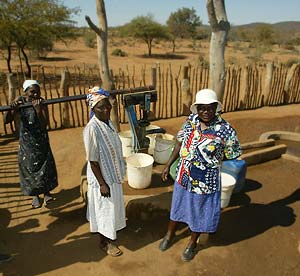
Zimbabwean women with a new well.

and the people who lived around her. Naturally a child takes on the attitudes and habits of her parents and mirrors the ways in which they interact with others, but it is sad to see how vast the gulf between black and white Africans even those who have lived as neighbors for years and sometimes generations. Western colonists in all countries seem to have lived in their own small, narrow world side-by-side with, but never truly integrated into the lives around them. And the saddest part of all is that we are still doing it.

Western diplomats, tourists, aid workers and troops travel around the world living sometimes for years in the midst of societies they seldom understand or value. Life in a gated and fortified community can seem much like life in an American suburb, completely remote from the “locals” who we are trying to influence.  Americans are famous for not bothering to learn the language of the countries in which they spend time, even long periods of time. Sarah Chayes in her recent book Thieves of State tells us how a lack of knowledge and an unwillingness to listen to local citizens in Afghanistan has led to mistakes and problems that might have been avoided.

How long will it take for us to learn that a global world requires listening and interacting, not just traveling and imposing our ideas wherever we go?

Recapturing the past one book at a time

Books and roseI’ve spent a surprising amount of time this month looking at old books, first at the California Antiquarian Book Fair  where I saw an amazing number of valuable and beautiful old books. It’s fascinating to see early editions of books by the likes of Charles Dickens and Willa Cather, all of them far too expensive to buy of course. Old children’s books from 30, 40 or even 50 years ago were featured by some of the dealers. I guess a lot of book collectors enjoy rereading the books of their childhood. And as I discovered later in the week, I am one of them.

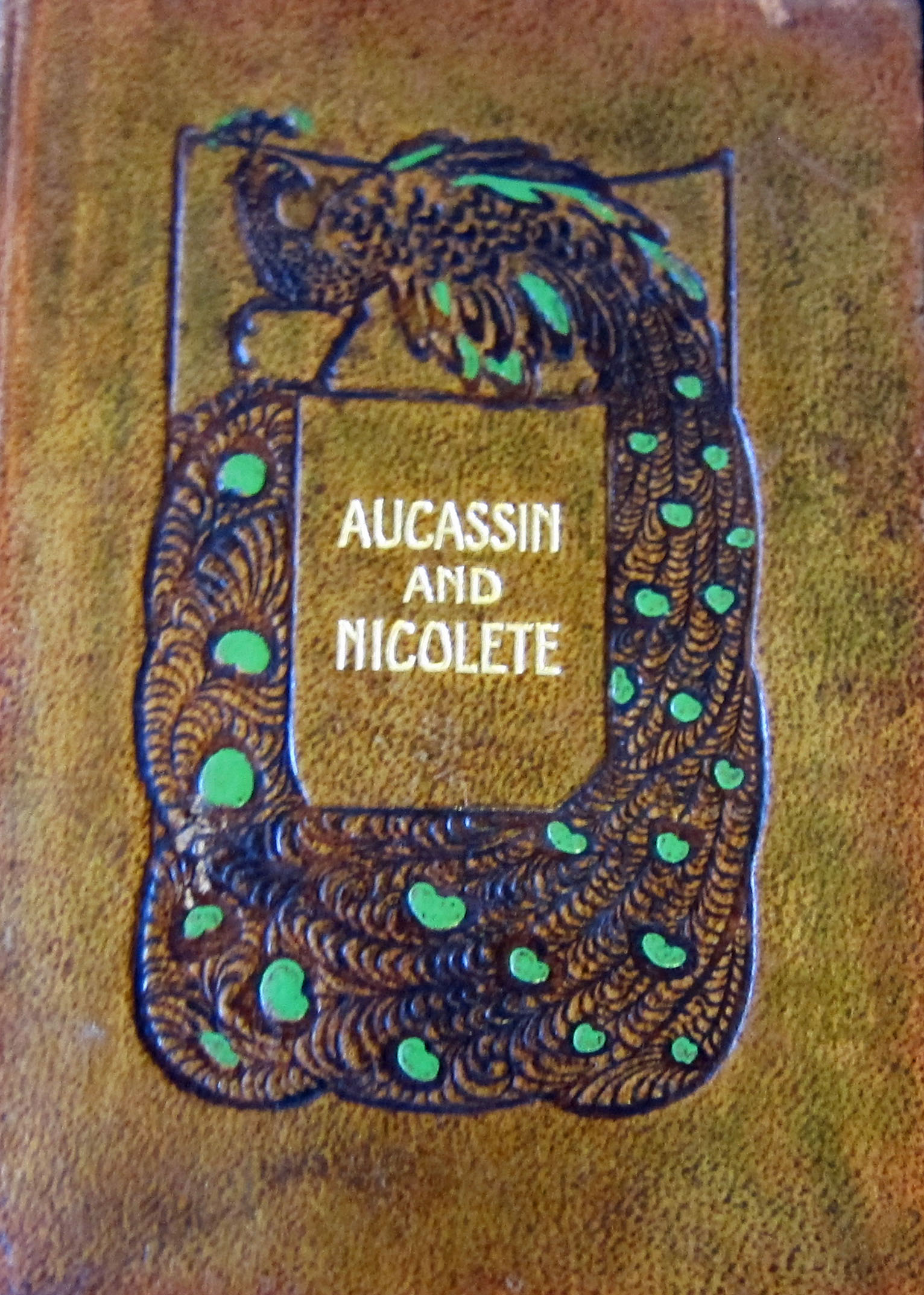
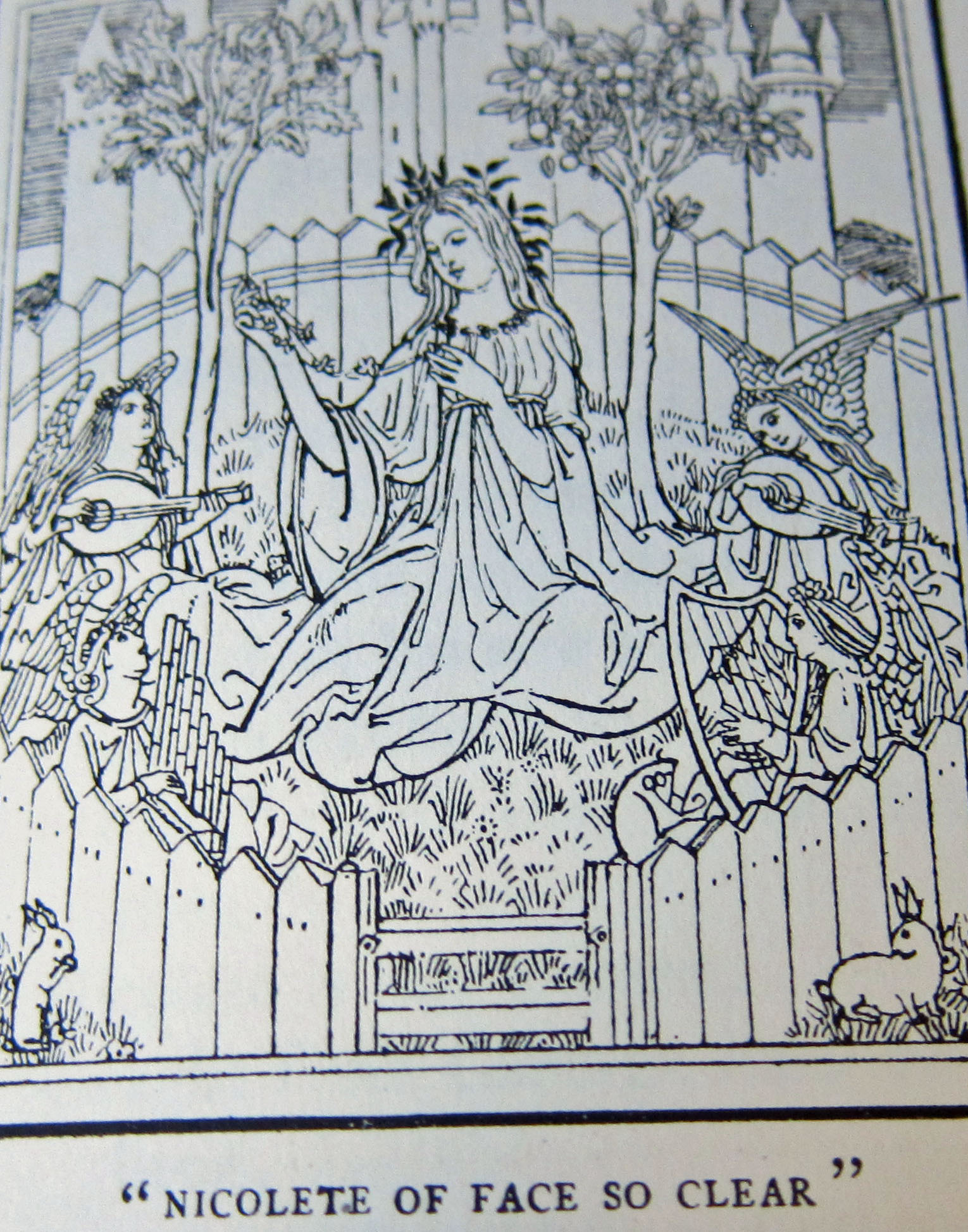
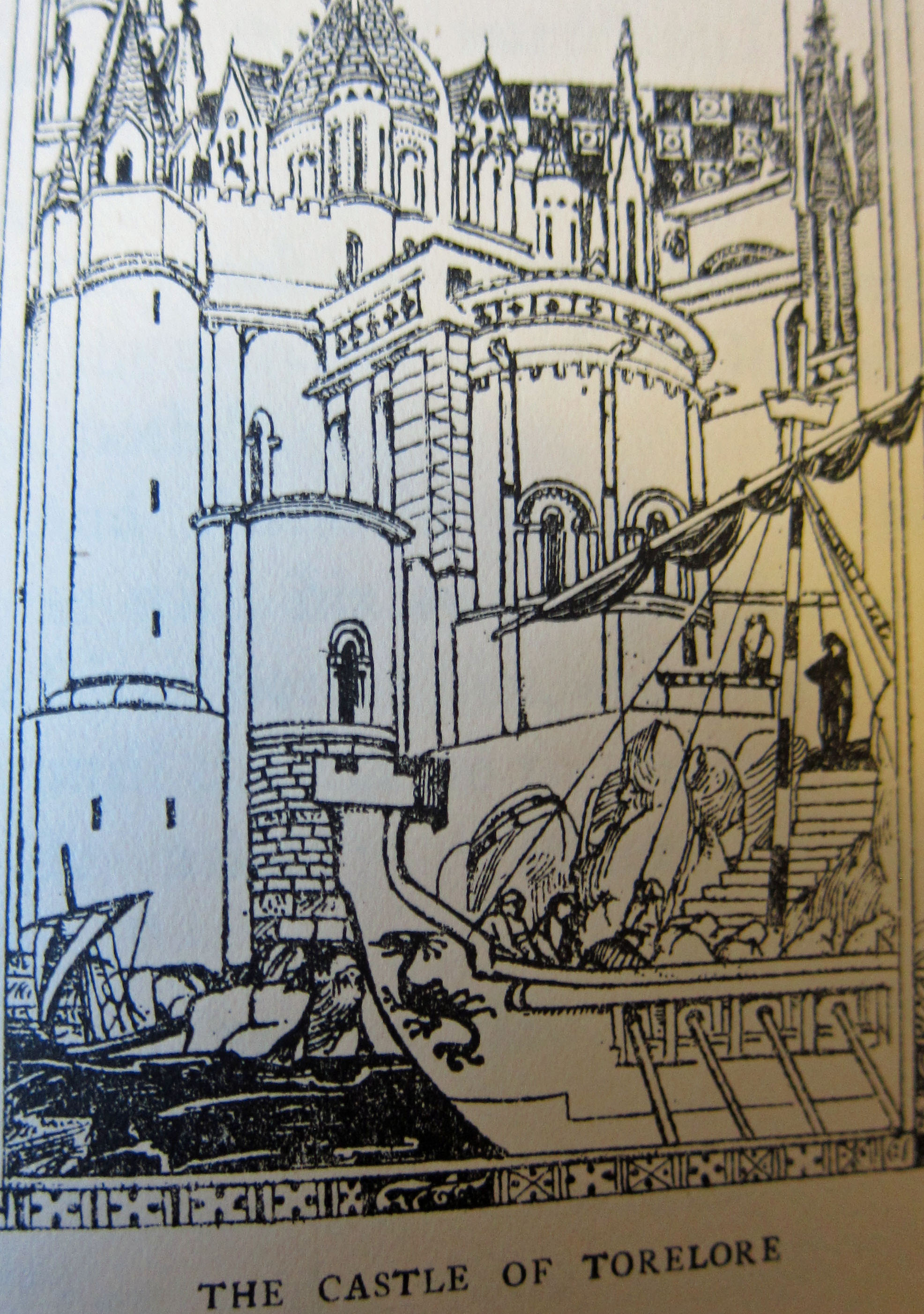
A few days after going to the Book Fair I went to an estate sale in a neighborhood not far from where I live. The owner had been an antiquarian book dealer and the house was jammed not only with the usual stuff of estate sales—costume jewelry, china dishes, and small pieces of furniture—but with shelf after shelf of old books. Many of them were leather bound, small Aucassin _edited-2books from the 19th century or cloth bound books from the early 20th century. Wandering along those shelves, pulling out the books was a great pleasure, but it took a while until I came to my greatest prize. I found a small book that I remembered from my childhood—the tale of Aucassin and Nicolete.

It was one of my favorite books from the branch of the public library in Queens that I visited so often. I remember exactly the place where it stood on the shelf, near the fireplace where the librarian used to conduct her story hours. I was surprised to find the romantic tale again and surprised to recognize the black-and-white line drawings in the book. Luckily for me, the book only cost seven dollars, so I was happy to bring it home where I could pore over those pictures the way I used to do when I was a twelve-year-old in love with romantic stories. The lines of poetry that close the story still sound charming:

Aucissn_Nicolete_edited-2Aucassin is blithe and gay,

Nicolete as glad as May.

And they lived for many a day,

And our story goes its way.

                        What more to say?

The books that twelve-year-olds—these days they are called tweens—read Aucassin-castletoday are far larger and more elaborate than the books I remember from the library.  I guess television and online entertainment have drenched our world in so much color and action that quiet black-and-white drawings and stately, old-fashioned stories no longer hold a reader’s attention. Graphic novels have won a place in children’s libraries; refugees and death have become a focus of attention and action often jumps far more quickly than it used to. The world is big and children should be introduced to many aspects of it. I just hope that they will spend enough time with their books that they will remember them and when they are older will be able to turn back to their favorites and enjoy them just as I do mine.

Artists and Sisters in a New World

It always surprises me to find how much novels change over the years—change, that is, in my reaction to them and my feelings about them. When I reread a book that I read in college, it often seems like an entirely new book. And the same is

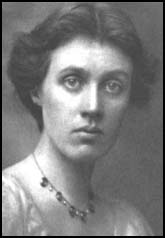
Vanessa Bell
Vanessa Bell

true of writers that I knew and loved when I was young. As you grow older you sometimes see them in a new light. Virginia Woolf was a writer much admired by the English majors that I knew in college, at least all the female ones. She wrote sensitively about the innermost feelings of women and their relationships with friends, families and lovers in a way that was different from the male novelists whose books we read in other courses. Virginia Woolf had a sister, a painter named Vanessa, but I never learned much about her. Now I am finding out about Vanessa.

This week I finished Priya Parmar’s fascinating historical novel Vanessa and Her Sister, based on the lives of Vanessa Bell, Virginia Woolf and their family and friends who formed the famous Bloomsbury group in early 20th century England. The two women at the center of the group were the daughters of Sir Leslie Stephen and his wife Julia. They grew up in comfortable circumstances and were close to their brothers Adrian and Thoby. After their parents died, it was the boys who brought university friends into the circle of young people who now formed the household. Neither Vanessa nor Virginia, of course, went to university as very few women did in those days. It was the men who went out into the world and learned about art, history, and the ideas circulating in the greater world outside of their sheltered London neighborhood. The Stephens girls were

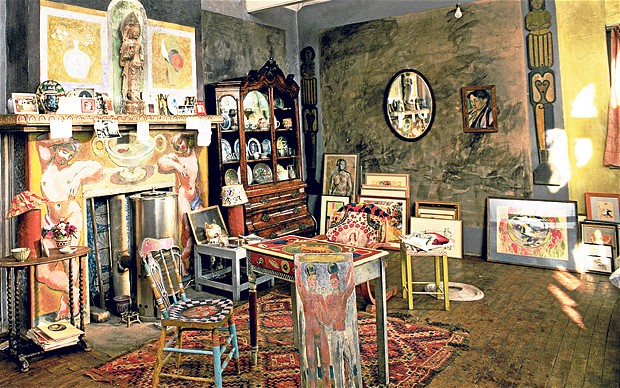
Studio of Vanessa Bell

beautiful, charming, and witty and more than that they had a comfortable home and plenty of free time to entertain and discuss ideas about the changing times in which they all lived. In the early years before World War I, Vanessa painted, Virginia wrote and no one worried about having to get a job or do the housework.

Priya Parmar has captured the feeling of the time and has given a voice to Vanessa Bell so that both she and her sister become three-dimensional characters. We can see how the two women interacted with one another and the strains which both of them felt growing up as artists in a world dominated by men. Virginia’s emotional fragility took a toll on the whole family, especially Vanessa, but her books become even more impressive in view of the restricted world in which she lived. Vanessa’s strength in developing her painting and becoming an artist while at the same time managing most of the logistics of holding the family, and later her marriage, together is remarkable.

Reading Vanessa and Her Sister will broaden your world if you care about books and writing and you can have the extra treat of reading Prya Parmar’s blog post about the research that went into writing it. You won’t soon forget Parmar’s novel and you may go back to reading Virginia Woolf’s books too. It’s the kind of reading that should make for a good year ahead.

The Fall and Rise of a Poet–Elizabeth Barrett Browning

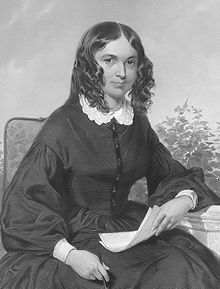
portrait of Elizabeth Barrett Browning
Elizabeth Barrett Browning

Perhaps it is the long curls falling over her cheeks that makes Elizabeth Barrett Browning look like a stereotypical wan, Victorian poet. Although her love sonnets, especially “How do I love thee…” still live on in many readers’ imaginations and are sometimes quoted in wedding toasts, they have become too saccharine for many of us. Poets’ reputations veer up and down almost as quickly as those of basketball coaches or rap artists.

When she died in 1861, Elizabeth Barrett Browning was so popular and admired that when William Wordsworth died, she had been considered as a logical successor as England’s poet laureate. Her book-length poem Aurora Leigh went through twenty editions between its publication in 1857 and 1900. With the new century the wind shifted and there were no more editions of the poem until 1978. Virginia Woolf, who never forgot Barrett Browning, wrote in 1932 that “Nobody reads her, nobody discusses her, nobody troubles to put her in her place.”

Now we are in another century and Elizabeth Barrett Browning is being looked at in a new light—not as a poet of love and harmony, but as a disruptive radical. She spoke out on many social issues including child labor.

The Cry of the Children

Do ye hear the children weeping, O my brothers,

      Ere the sorrow comes with years ?

They are leaning their young heads against their mothers, —

      And that cannot stop their tears.

The young lambs are bleating in the meadows ;

   The young birds are chirping in the nest ;

The young fawns are playing with the shadows ;

   The young flowers are blowing toward the west—

But the young, young children, O my brothers,

      They are weeping bitterly !

They are weeping in the playtime of the others,

      In the country of the free.


Slavery was another favorite subject of Barrett Browning and her feelings about this were no doubt influenced by her family’s history as slave-owners in Jamaica. Elizabeth was aware, as was the rest of the family, that they had cousins and other relatives who were of mixed African and English blood. Some of the mixed-race children born to slaves on the Jamaican plantation that was home to Elizabeth’s grandfather, were acknowledged, others were not.  Elizabeth and her siblings, who were dark skinned, probably had some African blood. Some critics speculate that a desire not to have more mixed-race grandchildren was the reason for Elizabeth’s father’s refusal to let his children marry. Although it’s hard to figure out why a man who did not want grandchildren would produce twelve children of his own.

The fluttering Victorian poet that many of us picture when we see some versions of the poetry of Elizabeth Barrett Browning is not the real EBB. She was a woman immersed in the social issues and politics of her own age. After she married Robert

Cover of "Sonnets from the Portugese"
Cover of recent paperback edition

Browning and moved to Italy, she became a staunch defendant of the Italian war for independence from Austria, just as her friend Margaret Fuller was. When she wrote her longest poem Aurora Leigh, she wrote about a woman’s struggle to maintain her independence from the man she loved and the marriage he proposed:

If I married him

I should not dare to call my soul my own

Which so he had bought and paid for: every thought

And every heart-beat down there in the bill.


Her concerns were the same ones that women struggle with today. It’s time to free her from the tyranny of being seen just as a poet of love. A good place to start is with the book Dared and Done: the Marriage of Elizabeth Barrett and Robert Browning by Julia Markus. It’s not a complete biography of her life, but a very readable account of her surprisingly happy marriage with another great poet. Together they faced many of the same issues that dual-career families face in the 21st century. It gives us a new picture of what those Victorians were really like.

2015–Hopes and fears as another year arrives

Does anyone still remember the Y2K bug that threatened to end the world as we knew it on New Year’s Day 2000? The problem was caused by the way early computer programs were written, allowing only two figures to indicate the year section of the date.  The first two numbers of the year were assumed to be ‘19’ so that 4/5/00 stood for April 5, 1900. When the year 2000 came around the date would be written 4/5/00 again, this time standing for April 5, 2000. This could be very confusing when comparing dates of events that happened over long stretches of time. A baby born in 2000 could have a her date of birth registered as 4/5/00 and thus appear to be 100 years old on the day she was born.

Prediction published in 1999

As the media coverage heightened, more and more bizarre suggestions were made about how bad the chaos would be. According to a New York Times report on the event (May 27, 2013),

Frightened citizens stocked up on bottled water and extra guns, according to news reports. The Rev. Jerry Falwell prophesied the electronic equivalent of fire and brimstone: “I believe that Y2K may be God’s instrument to shake this nation, humble this nation, awaken this nation and from this nation start revival that spreads the face of the earth before the Rapture of the Church.”

President Clinton appointed a Y2K czar to oversee activities designed to head off the problems. People with a tendency to worry, worried even more. A few people headed off on extravagant vacations on the assumption they would not need money after the world ended.

When January 1, 2000, actually rolled around however, nothing much happened. Corporations and public agencies had hired computer experts to reprogram computers; no major system failures occurred and the new century rolled on. The one tiny reminder of the great even that remains is that now when we enter dates into most computer-generated forms, we use four figures for the year—2014 or 2025—rather than the two figures we used back in the twentieth century.

The passing of what appeared to be major catastrophes is a good thing to look back on as another new year rolls around. For many of us the year ahead holds more fears than hopes—wars continue to bedevil us, climate change rolls relentlessly on, people have not yet shown the generosity necessary to overcome poverty in the world, but perhaps there is still hope for the new year and the years to come.

At the beginning of the twentieth century, when the year 1900 was on the horizon, Thomas Hardy wrote a poem of limited hope. It doesn’t suggest a divine intervention to bring happiness or wealth, but just acknowledges that hope exists and perhaps we can find it when we look at the world around us. Hardy found it in the song of a bird.

The Darkling Thrush

by Thomas Hardy         

I leant upon a coppice gate

When Frost was spectre-grey,

And Winter’s dregs made desolate

The weakening eye of day.

The tangled bine-stems scored the sky

Like strings of broken lyres,

And all mankind that haunted nigh

Had sought their household fires.


The land’s sharp features seemed to be

The Century’s corpse outleant,

His crypt the cloudy canopy,

The wind his death-lament.

The ancient pulse of germ and birth

Was shrunken hard and dry,

And every spirit upon earth

Seemed fervourless as I.


At once a voice arose among

The bleak twigs overhead

In a full-hearted evensong

Of joy illimited;

An aged thrush, frail, gaunt, and small,

In blast-beruffled plume,

Had chosen thus to fling his soul

Upon the growing gloom.


So little cause for carolings

Of such ecstatic sound

Was written on terrestrial things

Afar or nigh around,

That I could think there trembled through

His happy good-night air

Some blessed Hope, whereof he knew

And I was unaware.

Working Women–marrying daughters

Watching a PBS presentation of the 1984 movie Amadeus a few days ago I was struck by the way Mozart’s future mother-in-law was presented. The woman was played for broad comedy as she interrupted a court musical event to push her

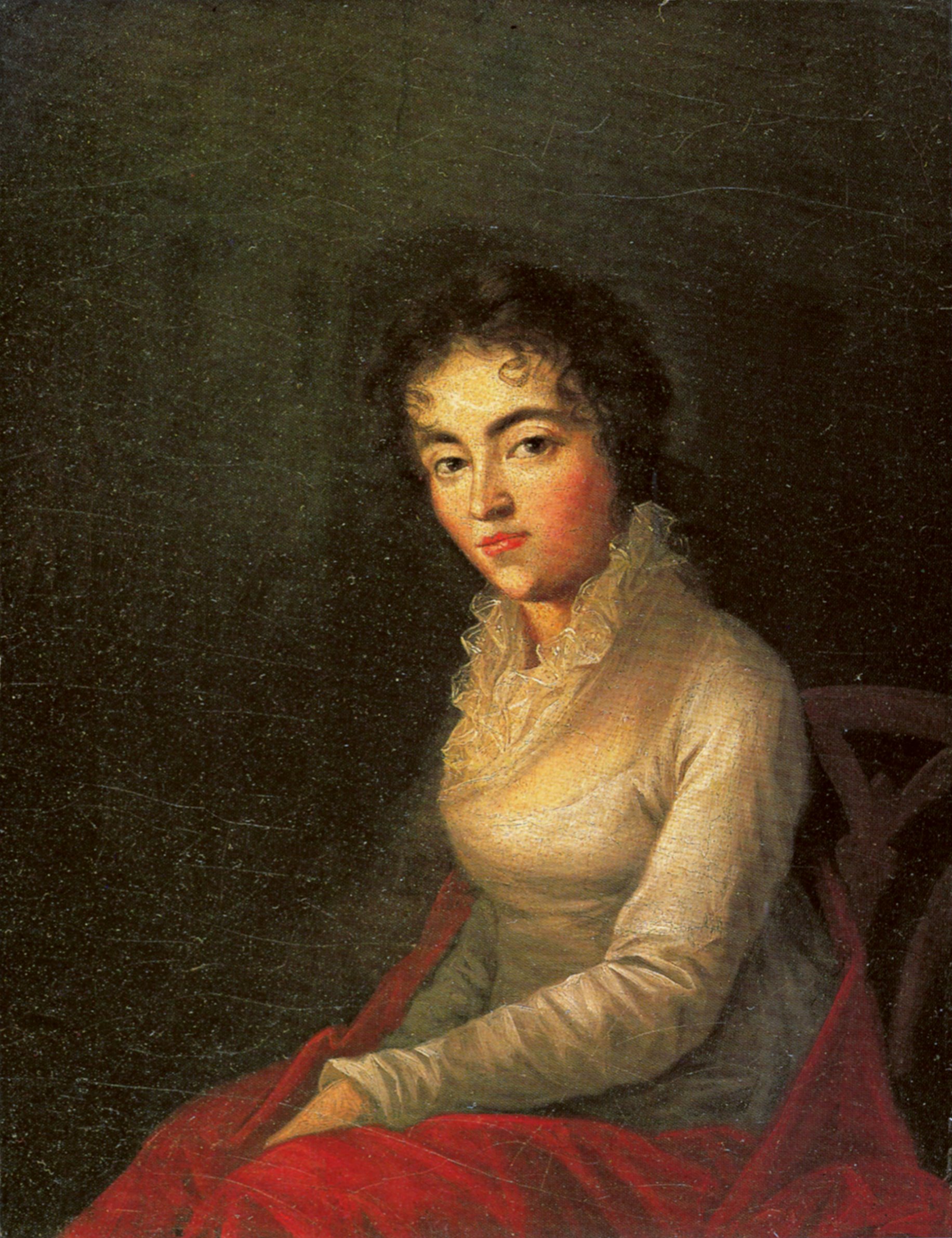
Costanze Mozart in 1782

daughter, Constanza, forward as Mozart’s fiancée. Mothers intent on getting their daughters safely married to the best available husband have been a staple of comedy for centuries. Think of Jane Austen’s scorn for Mrs. Bennet of Pride and Prejudice as she fussed over her daughters’ prospects with any gentleman in sight. But for mothers in these circumstances, marrying off their daughters was their primary professional obligation. We may think they were frivolous, but with opportunities so limited for women, a good marriage was the best gift a mother could give her daughters; marriage was almost always the only fortune that would keep them from the shame and poverty of spinsterhood. Perhaps we should have more respect for these hard-working women as they went about fulfilling their obligations.

If we look back a few centuries earlier, the importance of mothers in ensuring the future of their daughters was recognized and respected, at least among members of the aristocracy. One of my favorite heroines of the past is Mary of Guise, mother of Mary Queen of Scots. She worked hard not only to find a suitable marriage for her daughter but to make sure that she inherited the throne of Scotland and was safe from English imperialism. Yet while Mary Queen of Scots lives on in movies, plays, and novels, despite her spectacular failures in love and life, the elder Mary, her mother, is only a footnote to history. But it was Mary of Guise who had the brains and political skills to give her daughter a chance at keeping the Scottish throne.

Europe during the sixteenth century was not neatly divided into separate countries ruled by their own sovereigns.  England and France struggled for control over Scotland and Mary of Guise was born into the powerful French family of Guise. Left a widow at 21 after the death of her first husband, March had a choice between marrying Henry VIII of England or James II of Scotland. She chose James, perhaps because he had no history of beheading his wives, or possibly because she wanted

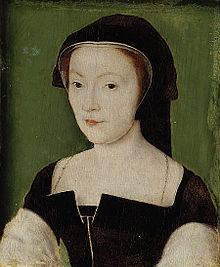
Mary of Guise
Mary of Guise

to preserve the French-Scottish alliance that kept Scotland Catholic. At any rate, that marriage resulted in the birth of a healthy daughter, Mary, who became Queen of Scotland when she was six days old. Her father, James II, died unexpected and left Mary of Guise a widow for the second time at the age of 27. From then on Mary’s life was spent on an effort to strengthen the ties between France and Scotland and preserve the kingdom for her daughter. She was a shrewd politician am maneuvered her way through the tangle of Scottish lords and French aristocrats who felt they had the right to decide the fate of the country.

Perhaps if she had lived longer, Mary of Guise could have done more to strengthen the Scottish-French ties she supported, but like many people of her century she died young—at the age of 45 in 1560—and her daughter, Mary Queen of Scots, in the end was put to death by the English Queen Elizabeth I. Scotland became a Protestant country and has closer ties with England than with France to this day. You can read more about this story in Mary of Guise a lively biography by Rosalind K. Marshall written as part of the “Scots’ Lives” series. It is not often found in American libraries, but it is worth searching for.

It’s not easy to view Constanza’s mother or Mrs. Bennet as inheritors of the same quest that Mary of Guise embraced, but in fact they were following her example. The easy laughs of modern audiences at the attempts of mothers to launch their daughters into matrimony ring hollow when we think about what serious work such efforts really represent.

Maybe our grandmothers were smarter than we are!

For the last two weeks most of us Americans have been deluged not only with images of food—turkeys, pies, sweet potatoes—but also with images of clothes. As Black Friday, which has stretched out into more than a week, merges into Cyber Monday, our local newspapers swell with advertising sections and our email becomes clogged with ads from national brands. Not only are we supposed to eat far more than our bodies want, but also to deck ourselves out in clothes that make our lives more difficult instead of more enjoyable.

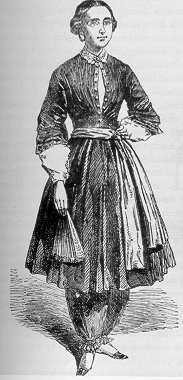
Amelia Bloomer
Amelia Bloomer

Perhaps we should make a national hero of Amelia Bloomer, the 19th century feminist who tried valiantly to make clothes serve women instead of making women slaves to clothes. Although clothing reform was not her major interest—she also campaigned for women’s right to vote and to petition the government, as well as for temperance—she recognized that the heavy, uncomfortable dresses women wore restricted their activities and the work they could do. When she saw a costume made up of loose trousers covered be a knee-length skirt, she adopted the idea and advocated it in her newspaper The Lily. It soon became known as the Bloomer costume. Women discovered that it freed them from the necessity of restricting their activities. With their new freedom they could walk along the filthy streets of big cities or the mud and dust of country roads without carrying along bugs and trash clinging to their skirts. They could even ride the new-fangled bicycles and moved faster and more easily than they ever had before.

Many women wore the style and enjoyed their new freedom. Getting rid of tightly-laced corsets and long, dragging skirts was a blessing, but men just didn’t understand. We have to suspect that men liked having women restricted in their movements and controlled in their activities. Newspapers continued to make fun of women in pants and some suggested that once a woman was allowed to wear pants she would soon rule her husband. It took many years and the Great War to bring real dress reform to European and American women.

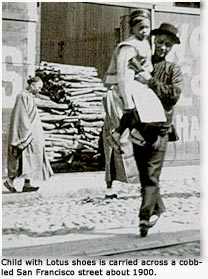
Chinese girl in San Francisco 1911

But have we really come so far? Surely when we see women striding confidently into public meetings and offices wearing pants suits and walking as comfortably as men do, the progress is obvious. But when you look at the ads for skin tight dresses that make every movement uncomfortable, and high-heeled shoes that have crippling effects on a woman’s ability to do anything active, we can only wonder.

Fashionable shoes 2014

The fashion industry appears intent on sending women back to the bad old days when they had to rely on men to transport them wherever they wanted to go. Some of the shoes on sale remind me of the shoes that Chinese women with bound feet used to wear. Does anyone want to go back to the lotus shoes that disfigured Chinese women’s feet for so many years? Chinese women have moved beyond that, why do fashion tyrants want to drag us back into that world?