Fairy Tales with a Difference

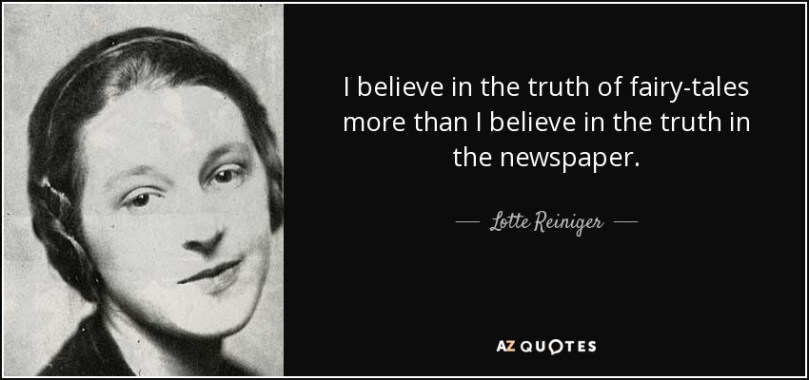
When I clicked on the Google search site a few days ago, I was surprised to find that Google was honoring the 117th birthday of Lotte Reiniger. Who was she? One of the early animation artists who made films out of fairy tales. Her pioneering work in the 1920s was an important part of the movement that led to the torrent of animated fairy tale films from the Disney studios and others.

Now that we are drowning in highly colored, loud, fast-paced versions of fairy tales on screens everywhere, it’s worthwhile to look back and think about how children encounter Grimms fairy talesfairy tales. For most American children—at least the ones who are lucky enough to have a parent or caregiver who reads to them—their first experience of a fairy tale is an unamplified voice telling the tale while showing still pictures in a book. Often the story is read over and over again.
Fairy tales are usually told in a bare, straightforward style. “There was once a poor widow who lived in a lonely cottage. In front of the cottage was a garden wherein stood two rose trees, one of which bore white and the other red roses.” That’s the beginning of Snow White and Rose Red and the story continues in the same bare, clean style.

Lotte Reiniger’s adaptations of fairy tales  started with a silhouette animated Cinderella in 1922. You can see the short film on YouTube https://www.youtube.com/watch?v=Kku75vGDD_0 and watch how Reiniger brings the viewer into the story—showing how

Cinderella-Lotte-Reiniger-
Scene from Reinigers “Cinderella”

the black paper is cut into figures who act out the story. The process is almost like that of a child who wants to draw pictures to illustrate the story she has just heard.

Of course Lotte Reiniger was not a child; she was a skillful artist who conceived the idea of telling a story through the traditional art of the silhouette. But unlike the silhouettes that were popular during the 18th and 19th century as portraits or as illustrations in books, Lotte Reiniger wanted to make her silhouettes move and so she invented a new form of animation.

Lotte Reiniger was born in Berlin in 1899. As a child she was attracted to art and to the movies, the new art form that was developing in Europe during the early years of the 20th century. As a young woman she worked in the movie industry and specialized in making silhouette title cards for the silent movies of the era. Then she moved on to making her own movies.

After marrying Carl Koch, a fellow artists who became her collaborator, she produced several more films in Germany. The couple left Germany when the Nazi party was rising to power, but were unable to get permanent visas to live in any other country, so for several years they lived in France, Italy and other European countries. But always they continued to work on their films. After the war, they moved to England where Lotte Reiniger made a number of silhouette films based on Grimm’s fairy tales and shown on the BBC.

Lotte Reiniger had a long and fruitful career. Her work influenced early animation films and deserves to be recognized as an important precursor to the work of later animation studios. But more than that, her films are still beautiful works of art that can be appreciated by children and adults today. Quite a few of them are available on YouTube.

Wouldn’t it be nice if today’s children could see some different ways in which fairy tales can be changed from words into pictures? Cinderella need not be the blonde glamour girl shown in American pop culture. The story doesn’t need to be puffed out with extra characters or elaborate songs. The magic is in the simple story itself. Fortunately, there are many talented artists who have given us different versions of the images our imaginations paint when we listen to the story. Thanks to Google for reminding us of the work and vision of Lotte Reiniger.Lotte Reiniger quote
Celebrating Art and Gardens

San Francisco has not had a lot to celebrate this month: our police chief resigned in response to several shocking cases of citizens being killed by police officers, our beaches continue to be threatened by climate change, and our long drought was not ended by El Nino rains as many of us had hoped. But there is one event that locals and tourists alike Living_wall01are celebrating and that is the reopening of the newly renovated San Francisco Museum of Modern Art (SFMOMA). It is a joy to visit the large, airy galleries and to see the paintings, sculptures, and photographs on exhibit. People are flocking there by the busload from California and beyond.

One of the most striking areas on view is the “living wall” of green plants that extends along an open balcony on the third floor. An amazing variety of green plants stretches up along the wall, the color scheme broken by small Living_wall03outbursts of colorful flowers that can be spotted by sharp-eyed visitors. Yesterday when I visited the museum, there were so many pictures being taken of people standing in front of the wall that I could almost see the flight of photos escaping from smart phones and winging their way across the country. (Fortunately no selfie sticks are allowed.)

The juxtaposition of stark modern sculptures against the intricate green foliage of the plants is irresistible. Here is an amazing video of how the wall was designed and constructed.  Like so many beautiful things in this Living_wall02world, the apparent naturalness of the plants was carefully planned. Each plant is nurtured by a complex watering system designed by skilled engineers to keep the plants flourishing and conserve the precious water.
I have always associated gardens with quiet, pastel landscapes but the brilliant colors of  modern sculpture and the glimpses of skyscrapers in the streets beyond add to the refreshing natural landscape of the wall. It is as though the museum is paying tribute to the generations of gardeners who have kept the love of plants alive in even the most urban setting as well as to the innovators who have built startling new forms for viewers to contemplate.

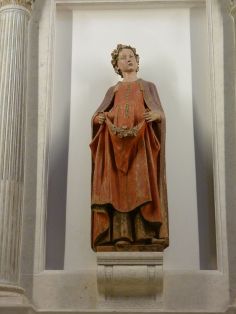
The patron saint of gardens and flowers is St. Dorothy, an early Christian martyr who lived during the 4th century. Although she has been dropped from the canon of saints because

dellaRobbia_Dorothea_(2)
St. Dorothy, fresco by della Robbia

of the scarcity of evidence about her life, she is still remembered in some places where trees are blessed on her feast day, February 6. It is nice to think that a tradition as old as gardening, which has existed in almost every society for thousands of years, is still being honored in this most modern of buildings and that it can co-exist so happily with art that is being created in the 21st century.

Is it history or is it fiction?

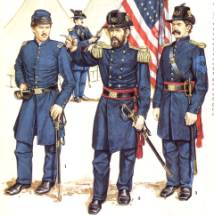
History isn’t easy. It’s always fun to jump on mistakes that pop up in books, tv shows or movies. Many movie fans have pointed out a scene in the 1989 movie Glory in which a Civil War era soldier is seen wearing a wristwatch. It is only a brief glimpse in the movie, and

civil war soldier
Civil War soldiers (image by Philip Katcher)

it slipped by the filmmakers, but now that the shot is posted on the Internet, we can all laugh at the mistake.

Anachronisms appear often in famous books and plays. One of the best known is the clock that chimes in Shakespeare’s Julius Caesar. That makes a good joke for a classroom, but it doesn’t detract from the experience of theater goers. But sometimes anachronisms in historical fiction annoy readers and detract from the reading experience. Reading groups and discussion boards jump on mistakes such as having a soldier in the American Revolution smoking a cigarette, or a housewife in colonial New England serving orange juice for breakfast.

I recently came across a fascinating book called Medieval Underpants and Other Blunders by Susanne Alleyn, which is designed to help authors avoid the kinds of anachronisms that are so easy to fall into. The chapter on underpants—medieval and otherwise—is

Helen Jewett
Ladies of the evening 1840s

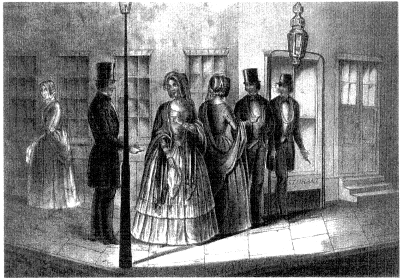
fascinating. Like so many aspects of history, we seldom think about the nitty-gritty details of how people in earlier times handled the everyday tasks of personal hygiene in the days before toilets and running water. If you were wearing a hoopskirt, how would you manage to use a chamber pot? There’s something to think about.

In my own writing I haven’t had to worry about the underpants problem, but I’ve spent lots of time researching other details. Although the leading characters are fictional, I like to stick to the truth about what was going on in the world at the time—to present an honest picture of events that might have happened.

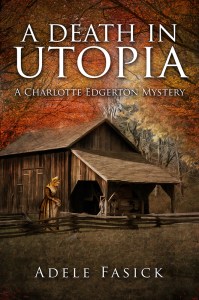
All of the books in the Charlotte Edgerton mystery series are set in the 1840s, but

A Death in Utopia Final (Small)

Charlotte moves from Massachusetts to New York City and then to London in the first three books. I have found myself searching for details about what the people living in an idealistic vegetarian community in 1842 would serve for a Sunday supper. It turns out they were very fond of Boston brown bread and milk, which is what appears in A Death in Utopia.

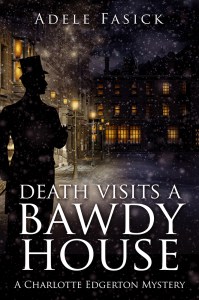
And then when I came to write Death Visits a Bawdy House, which takes place in New York Death Visits a Bawdy House (Small)City, I spent some time looking for a suitable place for the burial of a murder victim because the well-known cemetery at Trinity Church was already overcrowded. It’s doubtful that my readers would have known that, but I like to make the details in all of these stories as authentic as possible. It’s fun and I have learned so much about the 1840s, one of the most turbulent decades of the 19th century.

Railroads were just being developed at this time, so I’ve learned more than I ever dreamed of about the railway system in England after Charlotte and her new husband, Daniel, move to London. For my newest book, Death in Victoria’s City, which will come out this summer, I had to find out whether a working man could make a trip from London to Bristol and return in one day. Sure enough, a Google search led me to the history of British railways and I learned that the government had decreed that all railways had to offer third-class tickets at cheap rates for working people. For the first time in the 1840s, ordinary people could visit friends and family even if they lived some distance away.

I highly recommend Susanne Alleyn’s book, but of course that is only the beginning. Whether you are writing historical fiction or reading it, you will find that Google search and Wikipedia can be your best friends. Not only do they help you find details about life in other times, but they can lead you to the people and places that have shaped the world we live in today. Wikipedia may have some mistakes, almost all reference sources do, and Google may sometimes lead you to unreliable sites, but these two places can give you information to get you started. Your local library can help you find more in-depth accounts and background.  The more you find, the more your curiosity grows and the harder it is to stop. There is always another story just over the horizon.


All kinds of books

Few art forms have quite as split a personality as book publishing does. In the spring, the season of literary awards and prizes, we can read the lists searching for books that have
book prizesbeen read by most readers and find almost nothing. The prize-winners often languish in libraries and are assigned in classrooms, but remain unread by the majority of American readers. Instead it is genre fiction that reaches the mass of readers and enriches the authors who are lucky enough to reach huge popularity.
Today’s New York Times published an article about the phenomenon of  a fantasy writer, Cassandra Clare, whose book tours, as the article points out, are more like those of a rock star than of a writer. She writes books that touch the lives of far more people than those of the authors whose books are reviewed in the newspapers book review section.

This is nothing new. The phenomenon of the author who has wild success with a so-called sensational book while a literary figure languishes in obscurity has been going on for centuries. Here are the opening lines of a book by a well-known 19th century American writer that I doubt you will recognize:

To and fro, like a wild creature in its cage, paced that handsome woman, with bent head, locked hands, and restless steps. Some mental storm, swift and sudden as a tempest of the tropics, had swept over her and left its marks behind. As if in anger at the beauty now proved powerless, all ornaments had been flung away, yet still it shone undimmed, and filled her with a passionate regret.

Louisa_Alcott23
Louisa May Alcott


Does that sound like the staid author, Louisa May Alcott, whose books have been read by so many young readers over the years? Alcott did not stick to the sensational mystery stories she started out with but switched to writing family stories aimed at young girls. She found great success with these and was able to support her whole family for many years, but there is some evidence that she would have liked to write a different kind of book for adults. Unfortunately she was never free enough from economic and social pressures to do that.

Many women, over the years, have turned to genre fiction rather than aiming for high literary quality.  Today’s romance fiction is dominated by women writers, and women readers too. It is one of the most successful areas of publishing yet it is almost never seriously discussed as literature.

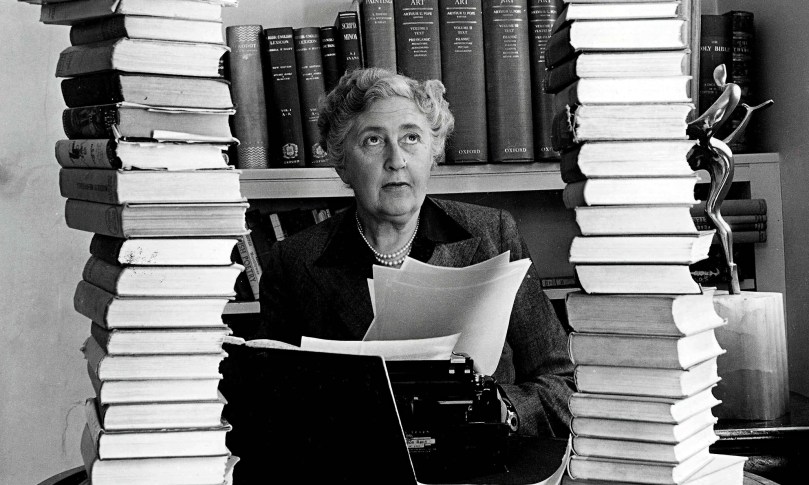
Mystery stories are another highly successful form of fiction. Did you know that Agatha Agatha Christie, surrounded by some of her 80-plus crime novels.Christie, according to UNESCO,  is the world’s most translated author? It is interesting to consider that while many prize-winning books remain unknown outside of the English-speaking world,  Christie’s books have presented a version of English life to audiences around the globe.
Although the mystery genre is not as closely associated with women as the romance genre is, according to the organization Sisters in Crime, almost 70 percent of mystery readers are female. And if you look at the lists of mystery books published, you will find that about half of all mystery story writers are women. Of course with all the sub-genres of mystery story from hard-boiled detective to the cozy kitchen mysteries, some are associated far more with women than others are.

What does all this mean? Just perhaps that those of us who think of ourselves as avid readers ought perhaps to try different genres once in a while. We might find that the ones we have avoided all our lives may be just what we are ready for now.

the_female_detectiveAnd I’d like to offer a cheer for the British Library which has begun publishing a series of historical mystery stories that add to our knowledge about the history and background of mystery stories. Perhaps eventually they will do the same for other genre fiction.
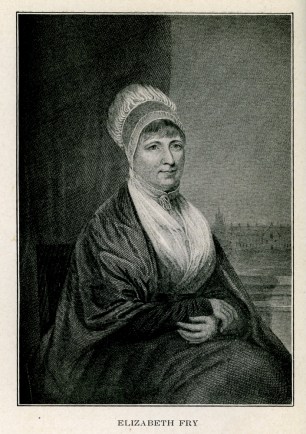
Elizabeth Fry and the Prisoners

One of the saddest sentences in the obituaries for Merle Haggard that appeared after his death this week was “He spent his 21st birthday in solitary confinement”. Somehow Haggard turned his life around and eventually became a successful country music star Elizabeth Fryinstead of spending much of his life in prison,. Not many prisoners are as lucky. We now know that spending time in solitary leads to mental and psychological consequences that often last for a lifetime. But deciding what kind of punishment is appropriate for men and women who have committed crimes is a problem that has not yet been solved.
Public shaming, such as having people wear a red letter to let all their neighbors know about their crime was a favorite punishment during the eighteenth century. Anyone who has read Hawthorne’s The Scarlet Letter will remember Hester Prynne and the red letter “A” for Adulteress that she was sentenced to wear. As society became more urban, public shaming was less effective—people didn’t care so much what their neighbors thought of them.

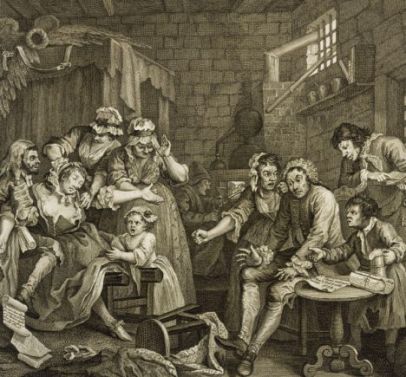
Countries then turned to harsher punishments. In England the death penalty was given for crimes such as stealing even small items. But this did not deter crime either and sometimes encouraged people to commit larger crimes. If you could be hanged for a theft,

NEWGATE PRISON 1735
Prisoners in Newgate prison. Date: 1735 Source: Painted and engraved by William Hogarth 

you might as well kill any potential witnesses. Samuel Johnson wrote during the 1750s,  “If only murder were punished with death, very few robbers would stain their hands in blood; but when by the last act of cruelty no new danger is incurred and greater security may be obtained, upon what principle shall we bid them forbear?”

By the beginning of the 19th century, many people were calling for a change in the prison system, but few people had ideas about how this could be done. Most improvements in prison life have been the result of  the persistent work of individuals, many of them Quakers, who insisted that even people who break laws should be given a chance to reform instead of merely being punished. One of the earliest pioneers in this work was Elizabeth Fry.

Born into a prosperous Quaker family in England in 1780, Elizabeth Gurney would have been expected to be satisfied with life as a wife and mother. After she married another Quaker, Joseph Fry, she settled down to bear and raise eleven children. Many women would have felt this was quite enough work to keep her busy, but Elizabeth wanted to contribute more and wrote in her journal, I fear that my life is slipping away to little purpose.”

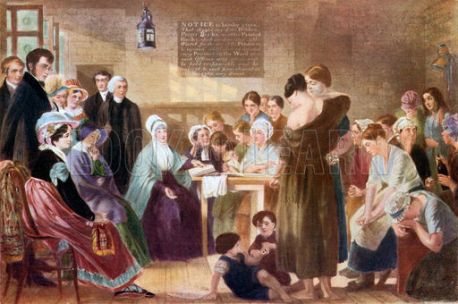
A visit to the notorious Newgate Prison convinced her that prisoners, especially the female prisoners, who often had their babies and small children with them, could be taught useful skills. She persuaded prison authorities to have female guards for the women prisoners and she founded the Association for the Improvement of Female Prisoners in Newgate which ran a school in the prison and taught useful skills such as needlework.

At first many people opposed her work. The Home Secretary complained that she was removing “the dread of punishment in the criminal classes”. Eventually, however, she

Elizabeth Fry visiting Newgate Prison
Elizabeth Fry reading to prisoners


found support among important people including the Prime Minister,  Robert Peel. Elizabeth Fry testified before a Parliamentary Committee, which influenced the Goals Act of 1823 which specified that women prisoners should be governed by women and that jailers should be paid a salary so they would not need to take money from prisoners.

Not all of Elizabeth Fry’s proposals have been accepted. She was a strong advocate for the abolition of capital punishment and she argued against keeping prisoners in solitary confinement, or as it was then called, the “Separate System”. Prison systems in Europe and America have never returned, however, to the cruel conditions that prevailed before her work started.

As a final tribute, since 2001 Elizabeth Fry’s picture has appeared on the British five-pound note, so probably far more people recognize her face than know what she did to earn the honor.

Constance Markievicz and the Easter Rising

On April 26, 2016, in Dublin, Sabina Higgins, wife of Michel Higgins, the President of Ireland, laid a wreath at the grave of Countess Constance Markievicz, who is buried at Constance-Markievicz-quoteGlasnevin Cemetery along with many other veterans of the 1916 Easter rebellion. This tribute was one of the first steps in the national celebration Ireland is holding to commemorate the Easter uprising that happened 100 years ago.
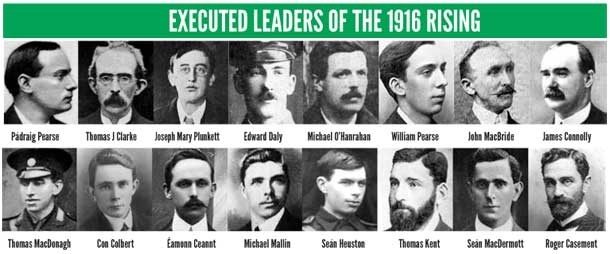
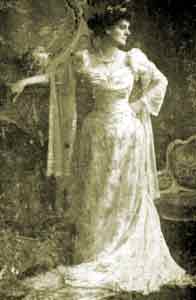
Markievicz is not an Irish name and you may find it hard to understand how a woman born into a wealthy Protestant family, raised in luxury,  and married to a Polish Count is now lying in a grave close to the burial sites of many of the revolutionaries who fought for Ireland’s freedom from Britain. Constance Markievicz’s transformation from a famous beauty to a hard-fighting, hard-working social activist is one of the romantic stories that has become part of the legend of Irish history.

Like many of the other fighters in the Irish rebellion, Constance first became involved with the cause of Irish independence through the arts. She joined Sinn Fein and became enthusiastically anti-British, refusing to stand up in public places when the National Anthem was played, for example. And she embarrassed some of her family members by declining to drink the king’s toast at the end of formal dinners. To further Irish culture she supported the famous Abbey Theater and worked with Maud Gonne to see that the works of Irish playwrights were presented there. Her husband Casimir Markievicz was a portrait painter and interested in writing for the theater, but after a few years of working together, the couple gradually grew apart. In 1914, after fourteen years of marriage, Casimir returned to Poland and never again lived in Ireland although he and Constance continued to be friends.

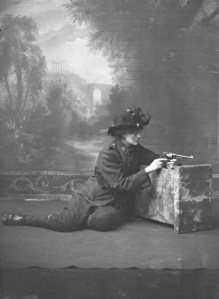
When World War I broke out, some nationalists in Ireland saw the Germans as natural allies to help the fight for Irish freedom. Constance was among many others who tried to buy arms and supplies from Germany to help the Irish cause. Unlike many of the other women working for Irish freedom, Constance knew how to shoot and was comfortable using a gun. She started a national scout organization to teach teenaged boys and girls how to shoot. When the Easter uprising started, she was ready to join the military and served as second in command to Michael Mallin, a captain of the Irish Citizen Army.

The Easter rising was a brief war, but the consequences for Ireland and for the men and women who fought in the rebellion were dramatic. When, after a week of fighting, the rebels surrendered, the British decided that all of the leaders should be made examples to demonstrate the fate awaiting rebels. Almost all of the men were summarily executed, but Constance Markievicz’s sentence was changed to life imprisonment on the grounds that she was a woman.Easter_rising

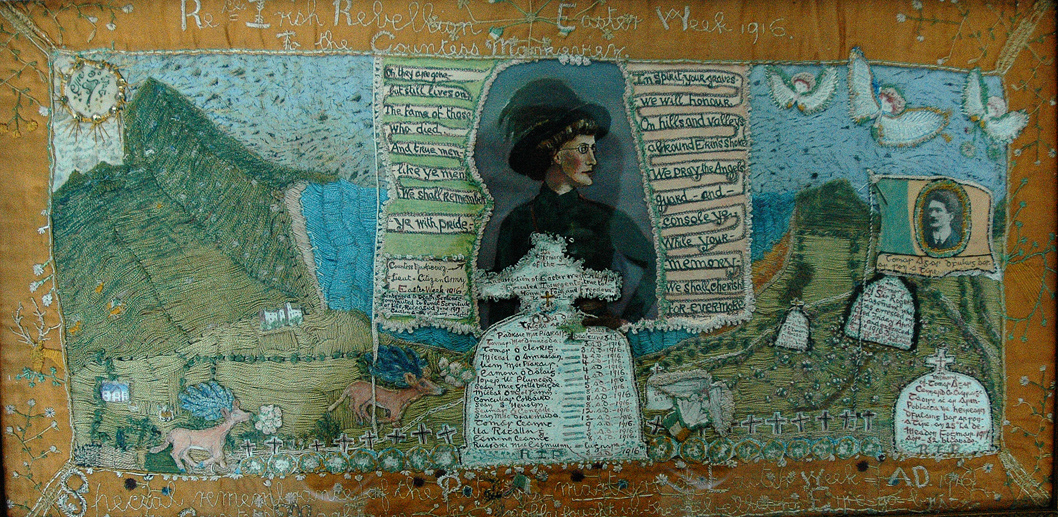
Constance was sent to prison, first in Ireland and later in England. There she scrubbed floors and sewed prisoners’ nightclothes. One of her few solaces was embroidery. She used to draw colored threads from the rags she used for cleaning and kept white pieces of material from the nightclothes to embroider on. Oddly enough, this echoed the activity of Mary Queen of Scots centuries before who passed her time in prison by embroidering elaborate scenes. Perhaps both of these women understood the idea of art therapy many years before psychologists recognized its value.

When Constance Markievicz was released from prison in 1917, she continued her work for Ireland. The Easter uprising marked the beginning of Ireland’s successful journey to independence and Constance was an honored leader. She was the first woman ever elected to the British House of Commons, although in a protest against accepting the British parliamentary rule, she did not take her seat. Later, when Ireland had its own Parliament, she became the second female government minister in Europe.

Although she died at the early age of 59, she continued her active life until the end. By the time she died she had given away all of her early wealth and died, as wished, among the poor of Dublin, in a public ward of the hospital. Her life story is well told in Anne Marreco’s biography The Rebel Countess: The Life and Times of Constance Markievicz. It is a life well worth remembering.

Constance Markievicz–an Elegant Revolutionary

2016 is the 100th anniversary of Ireland’s Easter Rebellion, which erupted in Dublin early in World War I and was quickly put down by the British. Nonetheless, it was the rebellion that finally set Ireland on the path toward independence. The leaders of the rebellion were an unusual group of revolutionaries—most were not soldiers or politicians, but artists,

Countess_markievicz2
Countess Markievicz


playwrights and poets. And one of them was a woman, Constance Markievicz, who grew up in the Downton Abbey atmosphere of her family’s estate, Lissadell, but spent most of her adult life as a freedom fighter. Her journey was the opposite of Tom Branson’s in Downton Abbey. He made his first appearance as a fighter for Irish freedom, but ended the series as an automobile salesman—I can’t help but wonder what Lady Sybil would have thought of that. Tom Branson, however, is fictional.  Constance Markievicz was a real woman and her life was far more exciting than the life of any character in Downton Abbey.

Born to an aristocratic life at her family’s estate, Constance Gore-Booth and her sister Eva grew up as admired society leaders. They were both considered great beauties and William Butler Yeats later described them in a poem as “Two girls in silk kimonos, both/Beautiful, one a gazelle…” They went to parties and balls, but instead marrying into the aristocracy, they followed very different paths. Eva became a champion of women’s rights and a suffragette, while Constance determined to be an artist and studied art in Paris, but later turned to politics and the struggle for Irish freedom.

Easter-Rising-embroidery-cloth
Embroidery piece at Lissadell

Constance married Count Casimir Dunin-Markievicz, which is why she had a Polish name despite being associated far more with Ireland than with Poland. In fact, she only visited Poland once for a few months shortly after her marriage. Casimir Markievicz was also an artist who became a well-known portrait painter, but never shared her passion for politics or Irish rebellion. For most of their marriage they lived quite separate lives, although they remained friendly.

How then did a woman with this kind of background become a fighter in the middle of the EasCountess_Markieviczter uprising?  A woman condemned to execution by the British army who said at her trial that “I did what I thought was right and I stand by it.” ? And finally the first woman elected to the British House of Commons?

This is a story too long to tell in one post, so I will continue it in my next post.


Celebrating Elegant Orchids

What a wonderful way to spend a summer-like day in San Francisco—looking at hundreds of orchids in bloom! IMG_0251_edited-1There are few flowers that have the complicated appeal of tropical orchids. Some of us can remember the times, years ago, when girls going to their high school proms wore a wrist corsage of a purple orchid as the finishing touch to their dresses. But those days are gone and orchids today are of more interest to gardeners than to the average teenager.

IMG_0240_edited-1The theme of the 2016 Pacific Orchid show is “The Legacy of Orchids” celebrating the dramatic effect orchids have had on society. During the 1800s, dozens of daring orchid hunters scoured the jungles of South America and Southeast Asia to find exotic orchids for Europeans and Americans to grow at home. The orchids sold for hundreds or thousands of dollars and the hunts were cut-throat battles. Some orchid hunters destroyed or burned thousands of plants in the jungles so their rivals could not find the treasures they had discovered. Scarcity kept up the price for European orchid collectors.

IMG_0265_edited-1

Charles Darwin wrote about orchids and used their variations to demonstrate the evolution of species over time. One particular species, Angraecum sesquipedale, from Madagascar is called “Darwin’s Orchid” because Darwin announced, after studying the plant, that a specific moth must exist with an unprecedented 13 inch long proboscis in order to pollinate it. Twenty-one years after Darwin’s death other botanists found the moth, Xanthopan morganii praedicta,  which has exactly the kind of proboscis Darwin had predicted.

Scientists are still studying orchids and learning more about the more than 27,000 species that exist. For the rest of us the most important thing we can do is to support the U.S. Endangered Species Act and international treaties which protect rare orchids. With deforestation continuing in many countries, there is continual pressure on many orchid species and fears that some of them may disappear.

IMG_0272_edited-1

This is the season for orchid shows across the country, so take advantage of the spring to view some of the loveliest flowers that can be found anywhere in the world.


A Valentine for Good Friends

Yesterday was a tumultuous day for politically-minded Americans. First came the shocking announcement of the sudden death of Supreme Court Justice Antonin Scalia. And then within a few hours of that news, we were confronted with another debate among Republican candidates for the presidency. The debate participants paid a short tribute to Justice Scalia, but soon moved on to rancorous disagreement. For many viewers the level of insults and name-calling made the debate unwatchable after the first hour or so. Surely this is not the way a democracy should elect its leaders. There must be a better model for giving opinions and navigating different ideas. Perhaps we can get some clues from the Supreme Court.

Justice Scalia has been one of the most important and well-known members of the

Antonin_Scalia_Portrait
Antonin Scalia

Supreme Court, a man who was well-known not only to the legal profession, but also to the general public. Unlike many earlier justices, Scalia was not afraid to make his opinions known both inside and outside of the Court. He was an active and energetic participant in the Court activities and in his private life right up until the day before he died in his sleep while on a hunting trip in Texas. His bereaved family must still be struggling to accept the fact of his loss, and the our usual news commentators and reporters have been scrambling to write appropriate statements about his life and achievements.

Justice Scalia was an outspoken supporter of the concept of originalism—the belief that the United States Constitution meant what the men who signed it thought it meant at the time. He claimed that neither he nor other judges should interpret the Constitution so that it meets modern questions and needs. The Constitution he told a Southern Methodist University crowd in 2013 is “not a living document. It’s dead, dead, dead.”

Many observers have suggested that Scalia might claim to honor the beliefs of the authors of the Constitution but that in fact many of his opinions changed  accepted interpretations of the Constitution in a very activist way. The most notorious example was his support of changing the interpretation of the Second Amendment’s statement on the right to bear arms to enlarge its scope to include individual citizens as well as militias, which had been the standard interpretations for a hundred years.

Justice Scalia was genial and well-liked. He enjoyed the controversies he inspired.  As he once pointed out to an interviewer from the New York Times, “I love to argue. I’ve always loved to argue. And I love to point out the weaknesses of the opposing arguments. It may well be that I’m something of a shin kicker. It may well be that I’m something of a contrarian.”

Meanwhile, at the other end of the ideological spectrum on the Court is Justice Ruth Bader Ginsburg, who has been a strong voice for examining the ways in which the Constitution can meet the challenges of modern times. Before she was appointed to the Supreme Court, she proved herself a brilliant lawyer and a staunch advocate of the rights of women and of all citizens to equal treatment before the law. Unlike Justice Scalia, she does not believe that the Constitution is an unchanging text set in stone, but rather a document written by

Ruth_Bader_Ginsberg1
Justice Ruth Bader Ginsburg

humane leaders setting forth the basic principles of democratic government. As the world and society changes, Justice Ginsburg believes that interpretations of the Constitution should not be bound by the 18th century meaning of words but rather by the deepest values of our ever-changing population. Perhaps it is almost inevitable that women would tend to take this view because it is difficult to believe that the Founding Fathers gave much thought to the rights of women of their time, much less to the challenges that women face in the 21st century.

Antonin Scalia and Ruth Bader Ginsburg—two very different people with opposing ideas and yet they were never known to call each other names or to question the motives of their opponents. In fact, over the years, they became friends, visiting one another’s homes and families as well as attending operas together. Both of them had close, happy family lives and seemed able to enjoy social events even while they disagreed on many issues in their shared work life. Wouldn’t it be wonderful if more of our public servants and politicians could handle their differences as well as they did?

So on this Valentine’s Day, let’s offer a Valentine wish to two colleagues who liked one another and who worked together for many years in a spirit of friendship that I am sure St. Valentine himself would approve. And let their lives be examples for all of us today—candidates, voters, and all Americans.  Valentines-Day-630x472

Who told us about climate change?

Just a few miles from where I live in San Francisco, the effects of climate change are obvious to everyone. This winter’s record El Nino has brought rain storms that have eroded beach communities along the Pacific. This photo from the San Francisco Chronicle Pacifica_2016shows how some of the homes in the city of Pacifica are teetering on the edge of a cliff over the ocean. Scientists are predicting that climate change will bring stronger and harsher El Nino storms in years to come because of the warming oceans caused in large part by human activity. Anyone who reads newspapers or watches news on TV know that this is true, yet somehow many of the Republican candidates who want to lead the country cannot seem to accept the facts.

Climate change is an undeniable fact, yet we still get candidates saying things like this: “If you look to the satellite data in the last 18 years there has been zero recorded warming. Now the global warming alarmists, that’s a problem for their theories. Their computer models show massive warming the satellite says it ain’t happening. We’ve discovered that NOAA, the federal government agencies are cooking the books,” Ted Cruz is quoted as saying that in 2015. Why do some politicians find it so difficult to accept scientific facts?

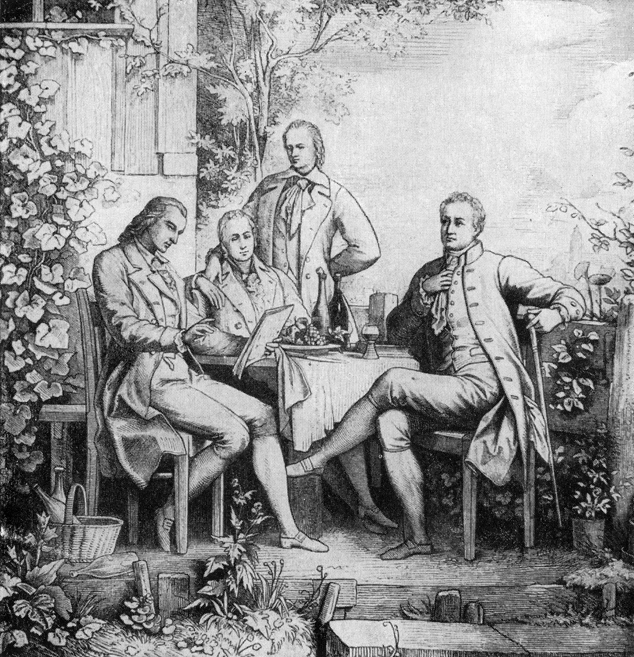
It’s not as though the idea of climate change hasn’t been discussed for years. The medieval idea that the world is unchanging and that human beings have no influence on it was challenged more than 200 years ago by Alexander von Humboldt, one of the

Humboldt and Goethe
Alexander von Humboldt with Goethe and other friends.

greatest scientists the world has ever known, although much of his work has been forgotten.

Born in 1769, Humboldt traveled to South America in 1800 to explore nature and culture in the Spanish colonies there. When he saw the changes that Europeans has brought to the country by cutting down forests and cultivating lands, he developed his theories of how men affect climate. “When forests are destroyed, as they are everywhere in America by the European planters, …the springs are dried up or become less abundant.”  He noted how this allowed the soil to be washed away during heavy rains, causing erosion and a loss of fertile soil

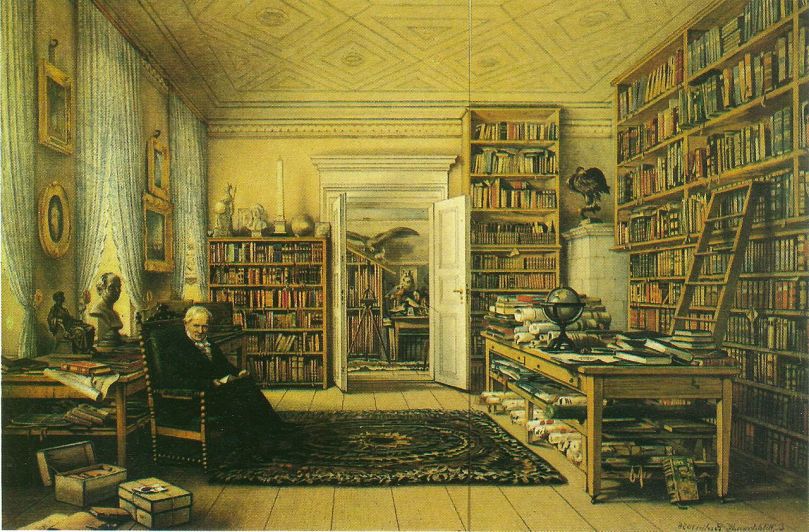
Knowledge is a slow-growing plant, but Humboldt was one of those people who planted ideas that have blossomed during the centuries since he started his explorations. One of the other ideas that he developed in South America was a hatred of slavery, because he saw the cruelty of the European practice of enslaving native peoples. Slowly many of his Humboldt in his libraryideas have been accepted by mainstream thinkers. Slavery has disappeared in much of the modern world.  Let’s hope that more of the climate change deniers will continue to think about the questions and ideas that he raised.

We are lucky this year to have a new biography of Alexander von Humboldt available. Andrea Wulf, has explored Humboldt’s life and ideas in The Invention of Nature: Alexander von Humboldt’s New World. I highly recommend it to anyone interested in seeing how scientific ideas have developed over the years and learning more about the people who have given us our modern view of the world.