Orchids and Mysteries

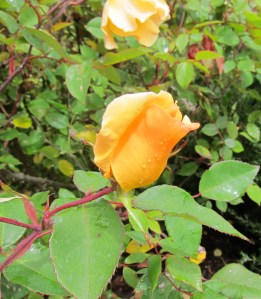
IMG_0265_edited-1On a day when the news is filled with stories about a hate crime in Kansas, an assassination by nerve gas in Malaysia, and the exclusion of our most reliable news sources from a presidential briefing, it is a relief to turn to the wonders of the natural world. Along with scores of other people I visited the Pacific Orchid Exhibition in San Francisco and was refreshed by the silent, wondrous beauty of flowers.

Orchids, of course, are more than flowers. They are symbols of luxury, wealth and ambition. Perhaps because Westerners had to search so hard for them during the 19th century when they were first discovered, they have been associated with kings, queens, rich men and beautiful women. Queen Victoria had her own personal orchid hunter who scoured jungles throughout the world to find plants for the royal conservatory.

no_more_orchids_filmposterWealth and orchids often went together in early films such as Carole Lombard’s hit No More Orchids in 1932. The perfect film title to link orchids and wealth was a 1927 silent film called Orchids and Ermine, which featured young attractive girls trying to find themselves rich husbands. The movie version of a sensational World War II book (said to be the most-read book among British troops during the war) No Orchids for Miss Blandish again offered orchids as a symbol of wealth and privilege.

Novels that feature orchids usually qualify as escapist fiction and the Nero Wolfe series of books by Rex Stout certainly fits that category. I depend on the Kindle downloads from the San Francisco Public Library for much of my reading and this weekend I was lucky enough to find the Nero Wolfe story Black Orchids. It’s delightful to travel back in imagination to the 1940s and visit an orchid show in New York where Nero Wolfe and his sidekick, Archiimg_0466_edited-1e Goodwin, go to an orchid show not unlike the one I visited. The flowers there were still as beautiful, the growers as dedicated, and the visitors just as enchanted as the ones I saw. The only thing not on display at the California show was a mysterious murder. Nero Wolfe’s love of orchids lives on and so do Stout’s books about him. They are well worth revisiting.

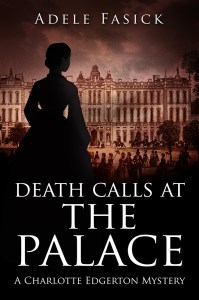
One of the things I like best about reading mysteries, and about writing them, is the intriguing subjects I learn about. In my recently published Charlotte Edgerton mystery, Death Calls at the Palace, Charlotte and her husband discover the excitement and anger of people involved in the Chartist movement in England during the early 19th century, just as I learned about them in researching the book. Deep divisions between the rich and poor, the demand for jobs that have disappeared, and the angry demonstrations that grow out of injustice echo some of the themes we see in our world today. And so do the strong convictions expressed in this “Chartist Anthem”.
death-calls-at-the-palace-small The time shall come when wrong shall end,

When peasant to peer no more shall bend;

When the lordly Few shall lose their sway,

And the Man no more their frown obey.

Toil, brother, toil till the work is done,

Till the struggle is o’er and the Charter won.
Seeing Danger Wherever He Looks

Who would have thought that airports with their tedious lines and endless corridors could become so exciting? This week a new presidential order denying entry to people from several Middle Eastern countries caused consternation as immigration officers denied entry to some people with valid visas or green cards as well as all refugees. Fortunately for the country, several states protested and the courts have resisted the move and put a temporary halt on the order.

immigration-cartoon
Thomas Nast cartoon-Wikimedia

Prejudice against newcomers isn’t a new sentiment in the United States. Neither is prejudice against a particular religion that is seen as a threat to the country. From Colonial times on, many Americans have suspected that Roman Catholics with their “foreign” religion were a threat to the country.

The Irish immigrants who poured into the country from the 1840s on, were often the targets of discrimination by the press and clergy. Lyman Beecher, for instance, wrote that “The Catholic system is adverse to liberty, and the clergy to a great extent are dependent on foreigners opposed to the principles of our government, for patronage and support.”

One of the few writers who believed that the despised immigrants brought value to the country was Margaret Fuller. She praised the Irish immigrants for their generosity and family feeling and told her readers that they would be of great value to America. Fuller margaret-fuller-1valued the contributions of other immigrants of the time too, including the Germans and Italians who could offer much to the country. My admiration for Margaret Fuller was what led me to write a biography of this brave woman.

Over the years, Americans learned that Catholics did not pose a threat to American values. They became a part of mainstream American life. But fearful people continue to fear. Today we are hearing echoes of Lyman Beecher as politicians talk about the threat of Muslims and of  Islamic thought. As of 2014, seven states had passed laws or ballot measures that banned Sharia law from influencing the courts. These states include Alabama, North Carolina, Arizona, Kansas, South Dakota and Tennessee. Currently the Montana legislature is arguing about the need for such a law.

President Trump appears to view the world as a threatening place and to fear that people professing a religion different from what he is used to must be dangerous. As any historian could tell him, people who are not descended from the handful of English settlers, have fdr-fearmade this country great. Fear of anyone different from ourselves leads to stagnation, not greatness. Perhaps the president should listen to a brave woman like Marie Curie who said it well: Nothing in life is to be feared, it is only to be understood. Now is the time to understand more, so that we may fear less.
And if President Trump wants to gain wisdom from the presidents who preceded him, he might pay attention to the words of one of our greatest leaders, Franklin Delano Roosevelt who famously announced that The only thing we have to fear is fear itself.

Rachel Carson’s Tangled Web

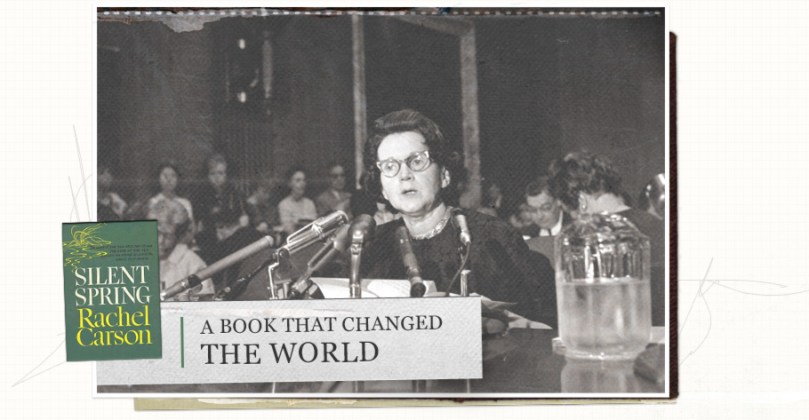
In the midst of the deluge of news coming out of the White House this past week, many environmentalists have paid tribute to Rachel Carson, whose 1962 book Silent Spring has silent-springbeen hailed by many as the impetus that started America’s environmental movement. Carson’s book called attention to the impact of the insecticide DDT on the deaths of birds, fish, and other animals up the food chain. The book called for an end to the indiscriminate spraying of DDT on crops, in houses, and on children and other people who spent time outdoors.
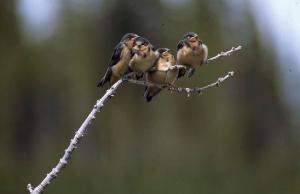
After the book was published, it was predictably attacked by the chemical industry, especially Dupont  Chemical Company which produced DDT. One Dupont scientist, Robert White-Stevens, was particularly vehement: According to White-Stevens, “If man were to follow the teachings of Miss Carson, we would return to the Dark Ages, and the insects and diseases and vermin would once again inherit the earth.” Rachel Carson was called to testify before Congress on the validity of her findings, which she defended strongly despite being critically ill at the time. She died of cancer in 1964, less than two years after the publication of her most famous book.

Silent Spring was widely publicized, appearing as a series of articles in the New Yorker as well as being the subject of a CBS documentary. The public soon embraced the idea of the rachel-carson-illusdanger of pesticides and other technological advances in science. The use of DDT on crops was banned in the United States and in 1970 the Environmental Protection Agency was set up to monitor the effect of various scientific advances on the lives of Americans.

Controversy continues, however. When Google paid tribute to Rachel Carson on the 50th anniversary of her death, Breitbart News asked the question: “Will Google be paying tribute to any of the other mass killers of the 20th century? Hitler? Stalin? Mao? Pol Pot? Probably not. But then, none of the others have had the benefit of having their images burnished by a thousand and one starry-eyed greenies.” 

The idea of Rachel Carson as a mass murderer comes from the fact that deaths from malaria, which had been decreasing with the use of DDT to kill malarial mosquitoes, began to climb. But the increase seems to have been due more to the fact that mosquitoes evolved so that DDT no longer killed them. And critics of Carson fail to recognize that she never suggested that all pesticides be abolished. Environmental issues are complex and simple solutions seldom solve them.

The truth is that science is difficult. Discovering the truth about the natural world takes time and requires the cooperation of many scientists. And trying to use the facts of science to make the world better usually has mixed results. Rachel Carson was right—pesticides do disrupt the natural order and kill birds as well as insects. And other scientists are also right in saying that malaria is a terrible disease and that killing the mosquitoes that carry the disease saves human lives. We need to find a balance between the two. Gradually scientists are finding new pesticides which are again bringing down the rates of malaria around the world.

The struggle over science continues. Climate change is one of the most hotly contested scientific issues today, especially because President Trump has said that he does not believe in the concept of climate change caused by human activities . His nominee for the head of the EPA is a man who has scoffed at the need for the U.S. and the world to make any effort to climate-changeaddress climate change. On January 24, 2017, according to the New York Times, “President Donald Trump’s administration has instructed the Environmental Protection Agency to remove the climate change page from its website, two agency employees told Reuters, the latest move by the newly minted leadership to erase ex-President Barack Obama’s climate change initiatives.”
As citizens we need to recognize the complexities of science and accept that changes are necessary even though they may be uncomfortable. Old jobs and old ways of life may disappear, but new ones will be found. We must protest when government officials forbid scientists to study how the world works and to make projections about what will happen in the future.

This blog is called Teacups and Tyrants. Most of my posts have focused on the quieter teacup parts of life, but recently the country has seen the growth of tyrants. From now on I expect to focus more on the harsher side of life and the threats that tyrants pose for our future.

Women of the White House

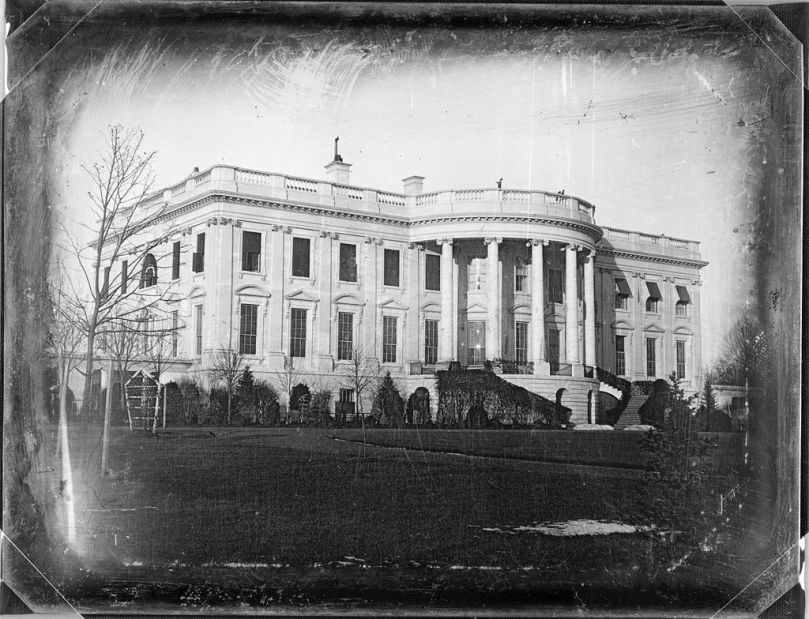
With the presidential inauguration scheduled for Friday of this week, there has been much speculation about what the new first family in the White House will be like.

white_house_1846
First known photo of White House 1846
melania-trump
Melania Trump

Melania Trump will step into the role of first lady, although she has said that she will not move into the White House until at least the end of her young son’s school term. She will remain living at Trump Tower in New York City.

People have become so accustomed to having a First Lady in the White House that speculation immediately started about who would fill that role until Mrs. Trump moves to Washington. Ivanka Trump is the name that comes to mind as the most likely White House hostess during the times when Melania Trump is not in residence. It wouldn’t be the first time someone other than the president’s wife filled that job—daughters, nieces and daughters-in-law have served in previous administrations.

The role of First Lady has not always been as important as it is now. In the early days of the Republic, serving as hostess as the President’s dinners was not a time-consuming task. It wasn’t until the middle of the 19th century that people even adopted the title First Lady or paid much attention to the woman besides the president. Harriet Lane changed all that.

When James Buchanan, our only bachelor president, was inaugurated in 1857, his orphaned niece Harriet Lane became his official hostess. At 26, she was one of the youngest first ladies and her youth and good looks attracted attention. When she altered her Inaugural Ball gown by lowering the neckline two-and-a-half inches, she became a

harriet-lane
Harriet Lane

fashion leader. Her clothes and her congeniality made her the Jackie Kennedy of the 19th century and the first really modern First Ladies. Like Mrs. Kennedy, she wanted to make the White House a cultural center. She invited artists and musicians to entertain there and also advocated for the rights of Native Americans on reservations.

During the bitterly divided years preceding the Civil War, entertaining in the White House required a genius for arranging dinners so that sworn enemies would not have to sit together or encounter each other in small groups. Harriet Lane must have had that genius because she kept the White House running smoothly up until the time that her uncle left office. By that time seven states had seceded from the Union and the election of Abraham Lincoln precipitated the Civil War. After leaving the White House, Harriet Lane went on to marry, to have two children who died young, and then to establish a home for invalid children at Johns Hopkins University and to become an art collector and benefactor to the Smithsonian Institution.

From the stately Martha Washington, who was often called “Lady Washington”, to the youthful Harriet Lane who brought glamour to the position, the activist Eleanor Roosevelt who acted as her husband’s eyes and ears around the country, the quiet Bess Truman who disliked White House duties, America has had a wide variety of first ladies. Whether wives, nieces, or daughters they have shaped a role which has become more important over the years. Many people will be watching as a new family will be moving into the White House and shaping the activities of this presidency.

Another New Year 2017

This year has been a disappointment for so many people and a disaster for some. Almost all the notes written on holiday cards from friends include some reference to being shocked and depressed by the election results last month. We are all wondering what the spring and summer will bring.

At a time like this it is a relief to take refuge in some of the books I have loved since childhood. I remember a poem by Oliver Herford that I read many years ago:

I heard a bird sing

In the dark of December

A magical thing

And sweet to remember.

“We are nearer to Spring

Than we were in September,”

I heard a bird sing

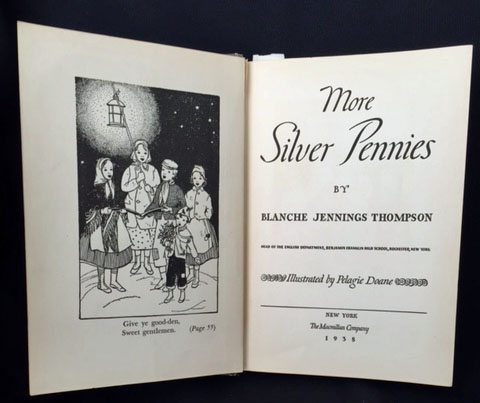
In the dark of December.silverpennies_img_0583

That poem was in a book called More Silver Pennies that my mother bought in a second-hand bookstore. It has echoed in my head every January for years.

When I was growing up, my friends and I had access to many poems that we read and reread. As a preteen I remember finding a book of Dorothy Parker’s poems at the home of one of my Girl Scout leaders. My best friend and I used to giggle over Parker’s verses when the scout meetings seemed long. We especially liked this one:

Razors pain you;

Rivers are damp;

Acids stain you;

And drugs cause cramp.

Guns aren’t lawful;

Nooses give;

Gas smells awful;

You might as well live.

That struck us as the most sophisticated and witty language we had ever heard. Parker gave us a glimpse of the glittering world of Manhattan just across the river from the quiet streets of Queens. We both decided that someday we would live in that world.

I know that school children today are encouraged to write their own poetry and express their feelings, but I hope they are also reading other people’s poetry.  Poems, especially the old-fashioned kind that have rhythm and rhyme, linger in the mind and can be a lifelong pleasure.

Another favorite poet of my childhood was, of course, Emily Dickinson. Her works were everywhere—in schools and libraries . Teachers read them to us and we recited them back in class during Friday afternoon poetry sessions.  Some of them are still with me.

“Hope” is the thing with feathers –

That perches in the soul –

And sings the tune without the words – Piano_flower_edited-1

And never stops – at all –

And sweetest – in the Gale – is heard –

And sore must be the storm –

That could abash the little Bird

That kept so many warm –

I’ve heard it in the chillest land –

And on the strangest Sea –

Yet – never – in Extremity,

It asked a crumb – of me.

At the end of this long and trying year, I am grateful I grew up with poetry. I hope children today are doing the same.  Hope remains. Let’s all keep it in our hearts during the year ahead.

happy-new-year-2017

Christmas today and yesterday

Not every American celebrates Christmas, but if you have been spending any time at shopping malls or downtown city centers in the past few weeks, you might assume that everyone did. Department stores and public transit are jammed with people buying either christmas-stockingsfor themselves or others. Whether Christian, Jewish, or Muslim, the stores welcome everyone who celebrates the holiday season by spending money. Recently I saw a news item designed to help people prepare for the holiday season:
It’s never too early to start shopping for Christmas gifts! Undoubtedly, Christmas can be one of the most celebrated yet equally stressful times of the year. First of all, consumers scramble their brains for great Christmas gift ideas followed by some frenzied Christmas shopping. 

But it wasn’t always this way. In colonial times, celebrating Christmas was made a crime in some areas. Massachusetts passed a law against the keeping of Christmas and fined anyone who chose to acknowledge a holiday that was popular in Catholic countries. It

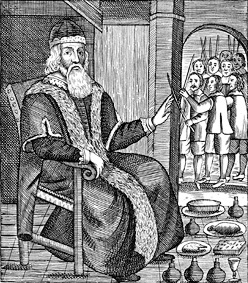
fatherchristmastrial-1686
Trial of Father Christmas 1685

wasn’t until the mid-nineteenth century when German and Irish immigrants flocked into the country that Christmas trees were introduced and Christmas gradually became the most popular holiday in the country.

It wasn’t long after Christmas started to be celebrated on this side of the ocean that people began to complain about how stressful it all was. In 1874 Fanny Kemble wrote:

Christmas is a season of such infinite labor, as well as expense in the shopping and present-making line, that almost every woman I know is good for nothing in purse and person for a month afterwards, done up physically, and broken down financially.

And so it goes. After two hundred years of Christmas celebrations, Americans still haven’t decided whether the holiday is a wonderful way to celebrate with friends and family or a fraud imposed by greedy marketers to encourage needless spending and anxiety. If the christmas-treeaverage American didn’t enjoy the holiday, they wouldn’t be crowding all the shopping malls and buying endless supplies of turkey and chocolates.

Perhaps we should stop worrying about how other people waste their time and money during the holiday season and just sit back and do whatever we want to do with our own family and friends. At least the lights of Christmas, Hanukah, and Kwanza brighten up the chilly midwinter season and strengthen us to face the beginning of a turbulent new year.
I’m wishing the whole world Christmas—

The children, the beasts, and the birds;

I’m wishing the whole world Christmas—

And I’d like to have magical words

To wish just the shining wish I would wish

In the Christmas words I would say,

For I’m wishing the whole world Christmas,

And joy on Christmas Day.

–Annette Wynne

Look at who is running the country

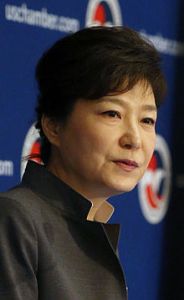
During the past week, newspapers and other news sources have carried stories about two world leaders who share a characteristic rare among the powerful players on the

taiwan-president

international scene—they are both women and both are Asian. Women have not had an easy time reaching the heights of power in Asian countries, but they have moved faster

than American women. The stories about President Tsai Ing-wen  of Taiwan (above) and President Park Geun-hye of South Korea (below) have made me think about the fact that the United States is lagging behind many other countries in having a power structure that includes both men and women. What is it that makes us so backward?

Thinking about this inspired me to go back to a book I read a few years ago— Jung Chung’s biography Empress Dowager Cixi: The Concubine Who Launched Modern China (Knopf 2013). I wrote a blog post about it at the time, but recent events both here and

park_geun-hye_8724400493

around the world makes the book even more relevant today.

Cixi was born in 1835, during a period when China was isolated from most other countries. A few Europeans and Americans had visited China, but there was little trade between China and the West and even less understanding. Chinese leaders considered the Westerners to be barbarians and most Westerners scorned the Chinese as ignorant and backward. Cixi was destined to revolutionize the relations between China and the rest of the world.

Girls and women at that time were not expected to play any role in public life. They existed to provide sons and heirs to their husbands. Cixi went to the royal court as one of many

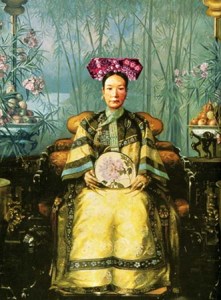
Painting of the Dowager Empress Cixi
Dowager Empress Cixi

concubines for the emperor, but she had the great good luck to bear a healthy son. This changed her life. The emperor was sickly and because Cixi could read and write, she could help him handle his government duties. Doing this taught her a lot about government and how it worked. When the emperor died young, Cixi’s five-year-old son became emperor.

Cixi was intelligent and politically astute. Her husband had appointed eight regents to govern the country while his son was a child, but Cixi knew she could do the job better. She allied herself with her husband’s childless wife and the two of them became guardians of Cixi’s son, the child emperor, and effectively ruled the country. Because women could not be acknowledged as rulers, Cixi sat behind the royal throne, concealed by a screen, to listen to official reports and make decisions about what should be done.

During the late 1800s, Europe and America because more aware of the valuable resources China had to offer to the world. Europeans and Americans, as well as the Japanese, competed to get access to natural resources and to the China trade. The struggle led to the Opium Wars and to many other battles. Cixi and some of her supporters recognized that in order to keep the country independent they had to accept some Western ways. Education was reformed so that young students learned more than just the classics of Chinese literature; representatives were sent to Europe and America and foreign diplomats were finally welcomed into the Chinese court.

Cixi was by no means a perfect person; she could be cruel and impose harsh punishments and death upon her enemies, but she set the course of China toward modernization. By the time she died in 1908, China was ready to enter the twentieth century and take its place on the world stage. Now, more than a hundred years later, reading about the Dowager Empress Cixi gives us an idea of what a strong and powerful woman she was. Her determination and strength can help us to understand where China is today—a world leader. And reading about how the Dowager Empress was maligned and underestimated by many of the leaders in her own country and internationally may make us ponder whether Americans are also underestimating the women leaders in our country. I strongly recommend reading Jung Chung’s book Empress Dowager Cixi: The Concubine Who Launched Modern China (Knopf 2013).

Thanksgiving 2016

Today is a gray, gloomy day in northern California and even though we need the rain, it is hard to welcome the damp and chill. Last year at this time, there was plenty of trouble in the world, but the mood was hopeful. This year, it appears to many of us, that the country has […]

Another Election and the Loss of Another Chance

Many women today feel as though they have been slapped in the face again. After years of struggle, hard work, and service, another woman has failed to win the presidency. Despite being clearly the best candidate in a field of four, Hillary Clinton hillary_clintonwas once more sent back to spend more years working for the public good but not enjoying the glory of our highest office. Instead, a minority of voters (although a majority of the electoral college) chose a candidate who bluffed his way to the top with insults and braggadocio like a high school bully. This has been a sad election for the forces of hope and of rationality.
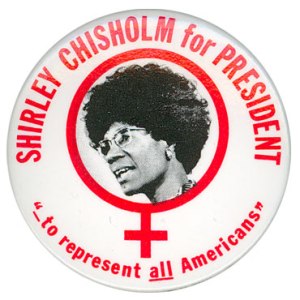
The history of women’s fight to gain the presidency reminds me of a line from a poem by the Irish-American freedom fighter, Shaemas O’Sheel, They went forth to battle, but they always fell. But we should remember that the Irish finally got their freedom and a woman will eventually be elected president, although the struggle has been long and difficult. We had hoped it was over, but it continues.

Only three women have come even close to being seen as serious contenders to become president of the United States. The first was Victoria Woodhull, who ran a spirited but spectacularly unsuccessful campaign in 1872. After all, women weren’t even allowed to vote at that time, much less run the country. I wrote a few posts about Woodhull on this blog during the 2012 presidential race.

A hundred years after Victoria Woodhull’s attempt, Congresswoman Shirley Chisholm began her campaign to get the nomination of the Democratic Party. In 1972, she was well-known as the first Black woman to be elected to Congress. That had happened in 1968 and Chisholm had made her mark by refusing to be quiet and follow the dictates of politicians in her party. She fought to serve her constituents by supporting bills to provide federal Shirley Chisholmfunds for child care facilities, and she opposed the Vietnam War saying “Unless we start to fight and defeat the enemies in our own country, poverty and racism, and make our talk of equality and opportunity ring true, we are exposed in the eyes of the world as hypocrites when we talk about making people free.”  (Unbossed and Unbought, p. 97)

Chisholm’s 1972 campaign for the presidency was never taken seriously by political leaders. She spent very little money on the campaign and was not able to hire strong staff for her efforts. The country was not ready for an African American president and especially not for one who was a woman. Throughout her career, Chisholm noted that being a woman had put more obstacles in her path than being black. Despite her failure to gain support for her nomination, (Senator George McGovern became the Democratic candidate.) Chisholm continued to be an active member of Congress until 1982 when she retired. After her retirement from politics,  she taught for several years at Mount Holyoke College. Her experience continues to inspire liberal politicians and especially women and African Americans who are still struggling to be fully represented in government. And her book Unbossed and Unbought, which she published in 1970,  remains a valuable document about a politician who fought for her constituents and was never swayed by money or political power during those halcyon days before the invention of  PACS or the ravages of corporate funding for campaigns.

And now in 2016, it seems the theme remains the same for Hillary Clinton as it did for her predecessors: women are excellent accessories to a successful candidate, but not to be trusted with the tough job of running the country. Americans decided to take a chance on someone who wants to shut the country off from the world and huddle in a sinking swamp of resentment and anger. Do young people really want a chance to return to dirty, dangerous coal mining and mind-numbing assembly lines? To watch smokestacks billow black, sooty smoke that makes our children ill while our coastal areas are being flooded by warming ocean waters? Does anyone remember how miserable the 1950s were for most Americans—for minorities and women who struggled to survive in a world where all the good jobs were reserved for white men? Is this what we really want?

So, the struggle continues. All battles to build a better society take a long, long time. I’ll quote a verse written by the Chartists, a group who appear in my recent Charlotte Edgerton mystery stories Death Calls at the Palace. They bring us a hope of a better future. Someday that glass ceiling will shatter. The battle continues!

The time shall come when earth shall be

A garden of joy from sea to sea,

When the slaughterous sword is drawn no more

And Goodness exults from shore to shore.

Death Calls at the Palace–a new Charlotte Edgerton Mystery

death-calls-at-the-palace-smallAs she mourns the death of her infant son, Charlotte Edgerton finds the gray skies and gritty poverty of an unfamiliar city almost more painful than she can bear. London in 1846 is far from the gracious society Charlotte and her husband Daniel had imagined. Dark skinned strangers from Britain’s far-flung empire are demanding justice, but the young Queen Victoria and her court seem unwilling to listen. Even worse, Charlotte’s naive brother Tom is being drawn into a radical political group that Charlotte fears will lead him to violence and perhaps death. Meanwhile the city is growing more and more crowded with impoverished immigrants from famine-stricken Ireland. When one of her young Irish friends—a kitchen maid—dies in a tragic fire, Charlotte believes it was no accident. But uncaring policemen scoff at her suspicions and refuse to investigate. Charlotte discovers that she must search for the villain on her own.

In volume 3 of the Charlotte Edgerton Mysteries series, Charlotte and Daniel have left the boisterous streets of New York and moved to London where Daniel takes up a new job on a weekly newspaper. After their adventures in New York City (which you can read about in volume 2 of the series, Death Visits a Bawdy House) they find themselves in a city even more dangerous than the one they left behind.

During these past months while I was finishing this book the U.S. presidential campaign was in full swing. I couldn’t help thinking about how today’s campaign echoed what was happening in London more than a century ago. Some things never change—when famine and war devastate a country, people move on to more prosperous places. But often they find little welcome there. Wealthy men struggle to hold on to their traditional privileges, while working people fear their jobs and way of life will disappear. But all is not doom and gloom even in London. Charlotte Edgerton and her family find new friends and new hope as they struggle for greater justice and freedom in an old country.

To celebrate the publication of this third volume in the Charlotte Edgerton Mysteries series, I will send a free copy of the book to the first three people who write a comment on this blog post. I hope you enjoy the story!