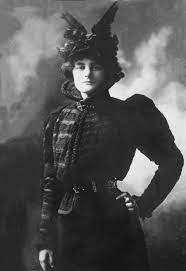
Who Are These People? Willa Cather Wanted to Know Them

We live in a world full of problems—as if climate change and the difficulties it brings weren’t enough to worry about, people continue to manufacture problems of their own. Listening to the speeches of some of our politicians, it would seem that one of the biggest ones for the U.S. is integrating strangers into our country. Donald Trump often rails that “immigrants are poisoning our country” and some of his followers echo those words.

But over the years many of our greatest writers have recognized that almost all Americans can trace their family history to other countries. Immigration is what has built the society that we know today. Willa Cather, one of our most important authors, wrote many of her books about people who had left their homes and chosen to settle in America. Cather herself moved from one part of the country to another and was interested in how the moving and resettling affected her and her neighbors.

Willa Cather was born in Virginia in 1873 although as she grew older, she sometimes did not acknowledge her correct age and claimed to be a year or two younger than she was. She moved with her family to Nebraska when she was nine years old. The family first settled in a rural area where their neighbors were mostly immigrants from Northern Europe, but they soon moved to the city of Red Cloud, Nebraska.

Cather thrived in school where she learned quickly and enjoyed her classes. She quickly discovered that writing was what she did best. While she was still a student, several of her articles were published in local papers. After attending the University of Nebraska, she moved to Pittsburgh to work as a journalist and teacher, but as her writing success grew, she realized that New York City was the place to be. She moved there in 1906 and for the rest of her life that city was her home base.

One of Cather’s greatest strengths was her ability to see life from different points of view.  A.S. Byatt, the British novelist who died earlier this year, once wrote that Cather “reinvented the novel with every book she wrote”. Cather’s best-known novel, the one that often appears on high school reading lists today, is My Antonia, whose title character is part of a family that came to America from Bohemia. These immigrants from Northern Europe were similar to the people Cather knew when she was growing up in Red Cloud. The characters and the hardships they endured give a vivid picture of life among some of the immigrants who settled the northern plains where Cather’s family lived.

Unlike some regional writers who continue to focus on a particular group throughout their careers, Cather had a much wider vision. She was a traveler as well as a writer, and when she travelled, she immersed herself in the lives of the people she met and the history of the places she visited. After visiting the Southwest In 1927, she wrote Death Comes for the Archbishop a novel exploring the life of a priest who settled in New Mexico.

In a somewhat less known work, Cather wrote Shadows on the Rock about the French people who had settled in Quebec. Although Cather did not write directly about immigration as an issue, the people in her books were examples of groups who had moved to America and built new lives there. Some of her books may seem old-fashioned now, but they give vivid accounts of the various people who integrated their cultures into American life. At this time, when we are seeing a new wave of immigrants entering the country, looking back at some of Cather’s work gives a reassuring picture of how different people from many parts of the world have become part of western life.

Many good biographies of Willa Cather have been published. One of the most recent is Chasing Bright Medusa: A Biography of Willa Cather by Benjamin Taylor (2023 Random House).
Nurse, Comforter, and Businesswoman—Mary Seacole

Today we are accustomed to wars that enter our living rooms and pervade our lives. We can turn on the TV or gaze at our phones to see scenes of destruction and fighting around the world. A century ago, the Crimean War of the 1850s was the first war that had a day-to-day impact not only on those who participated but also on the society that supported them. For the first time journalists could send rapid dispatches to the people back home who wondered what was going on. And for the first time, scientific advances that had been made in peacetime could be applied on the battlefields of war. It was also one of the first wars in which women leaders played an important role as nurses and organizers in the care of the men who did the fighting. One of those leaders was Mary Seacole.

Mary Seacole was born in Jamaica in 1805 in the prosperous and attractive city of Kingston, the base of British operations in the West Indies. British troops stationed in Jamaica controlled the island while most Jamaicans of African descent were slaves. But there was a great deal of mingling and intermarriage. Mary’s mother was apparently of mixed-blood and was free, as were many children whose fathers were white. Mary herself writes in her autobiography “I am a Creole and have good Scotch blood coursing in my veins. My father was a soldier, of an old Scotch family.”

Over the years, the Jamaicans had learned how to cope with some of the difficulties of living in a tropical climate. Many of the women became nurses or “doctoresses”. They had skills that the military doctors had never mastered in Europe and were able to offer remedies that were unknown and highly valued.

Mary Seacole was a healer and a traveler. She grew up in Jamaica where she was trained by her mother, and she also spent time in Panama where she learned how to treat people suffering from cholera as well as other dangerous diseases that became epidemics there. But Mary Seacole was a traveler as well as a healer. After learning and practicing her medical skills in Jamaica and Panama, she decided to go to England, the “mother country” of the Caribbean. She was not the only person from the British colonies to decide to do this and, so there was a large presence of people from the colonies in London. After working in with Army men for years, Mary knew many of the officers who were glad to welcome another person from the colonies.

When the Crimean War started in 1853, pitting Russia against most of the other European countries, Mary Seacole wanted to get involved. She heard that Florence Nightingale was trying to set up a corps of nurses, she thought she could help. She wanted to set up an inn where she could offer food and drinks to support herself and also offer healing for those who needed it.

Unfortunately, when Seacole tried to offer her help to Florence Nightingale, she was rebuffed. Nightingale, who came from an aristocratic family and had never needed money, was appalled by the idea of serving alcohol to soldiers and also the idea of making money. Nightingale never accepted Seacole as a healer worthy of working with her nurses.

We’ll never know how much of Nightingale’s attitude was due to a knowledge of Seacole’s history of medical care. Perhaps she was influenced by her feeling that a native Jamaican woman without any formal medical training could not possibly be as effective as her carefully trained white nurses. What we do know is that Nightingale won the battle and her name went down in history as the greatest nurse of the 19th century.

After being rejected by Nightingale, Mary Seacole still had to earn a living so that she could provide medical care. She continued to operate an inn where she offered drinks and food to officers as well as medical care to soldiers. Her medical facility soon became well known and popular with soldiers of all ranks.

After the Crimean War ended, Seacole returned to London, but she found it difficult to make a living there. Eventually she returned to Jamaica where she was treated as a hero by many of the soldiers she had known over the years. She wrote an autobiography, The Wonderful Adventures of Mrs. Seacole in Many Lands”.  Unfortunately, she left out many facts about her life.

A new biography of Mary Seacole has now been published which offers more detailed information about her life. Helen Rappaport’s In Search of Mary Seacole: The Making of a Black Cultural Icon and Humanitarian. (Pegasus 2022) gives more details about Mary’s life and family. Finally this heroic woman seems to be getting the honors that she deserves.

The Mystery of the Neverending Stories—Nancy Drew

A mention of Nancy Drew brings a smile of recognition from many women who grew up in America during the twentieth century and well into the twenty-first. The adventures of Nancy and her two companions, Bess and George, have been reprinted and made available to generations of preteen girls. Why do they linger on in so many women’s memories generation after generation?

Nancy Drew was not a character who was formed spontaneously in the mind of some gifted writer. She was a character developed deliberately by a man whose major talent was interpreting sales trends rather than in artful writing. Edward Stratemeyer started his career writing for magazines, which were a popular format and popular with children during the early 1900s. Stratmeyer took advantage of their popularity by turning many magazine stories into short books that could be sold very cheaply.

To produce as many books as he could for his readers, Stratemeyer devised a system. He would write an outline of a book and send it to one of a group of writers. The individual writer would fill out the story, elaborating Stratemeyer’s ideas. When the manuscript was returned, Stratemeyer would give it a final edit and find a publisher for the book. The author would sign away all rights so that his name would never appear on the cover and all of the royalties would go to the Stratemeyer syndicate. The system worked well and Stratemeyer became a wealthy man. Unfortunately, he died young, leaving his wife and two daughters to carry on without him.

Stratemeyer’s older daughter, Harriet Adams, took over managing the Nancy Drew series as well as other books. She prepared outlines for the stories and hired writers to produce the final product. Over the years, she formed a strong working relationship with the writer Mildred Wirt Benson, who wrote many of the Drew books. Although the two women worked together amicably on many of their projects, a deep rivalry developed over which of them had the major responsibility and should get the major credit for writing the series. They both had long lives and well into their 80s were still determined to get credit. They never agreed on a proper sharing arrangement.

The story of Harriet Adams and Mildred Wirt Benson is told in Melanie Rehak’s book–Nancy Drew Girl Sleuth and the Women Who Created Her (Harcourt Brace 2005). Rehak details the fascinating stories of many of the changes which had to be made over the years.

The first Nancy Drew story appeared in 1930 when Nancy was shown as a 16-year-old girl who drove around the countryside in her roadster and managed the household for her widowed father, Carson Drew. It wasn’t long before the legal driving was raised and Nancy became 18 years old. Other events in the real world affected the way Nancy appears in the books too. Although the books continued to appear during the Second World War, the authors tried hard to downplay the war and make life on the home front seem normal.

By the time Nancy books were appearing in the late 1950s, there were many changes that had to be made, so a major rewriting was in order. The authors removed references to racial differences, although they never fully integrated minority groups into the books. The books were also shortened and the language simplified over the years. One of the biggest changes was that Nancy began to be allowed to show some interest in Ned Nickerson, her faithful boyfriend, but it soon became clear that readers did not want Nancy to seriously contemplate marriage.

Over the years, series books for boys have lost most of their audience, but Nancy still carries on. There have been attempts to tell her story in other formats. She has appeared in 6 films, 3 television series, and 33 video games, but none of these have reached the level of popularity that her books have.

Perhaps Nancy Drew books will survive to reach their 100th year in 2030. Will there still be readers interested in the mysteries? And what will Nancy look like then?

Ada Lovelace Revisited

Few people seem to be aware that we celebrated Ada Lovelace Day on Tuesday October 10, 2023. This week was filled with news, most of it bad news, about war, invasions, and Congressional squabbling. Somehow Ada got lost, and yet many thoughtful people acknowledged that the major scientific development of 2023 has been the establishment of AI or Artificial Intelligence. And Ada Lovelace’s life and work did much to make AI possible. She deserves some attention, even during this busy month.

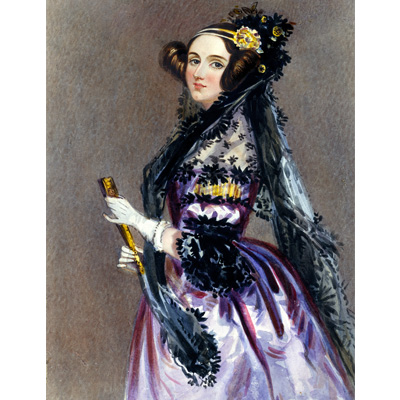
Ada Lovelace

 Who was Ada Lovelace and why is she celebrated? You can still get a few arguments about whether she deserves the distinction, but she certainly had an unusual life. She was born in England in 1815 and was the legitimate daughter of the famous poet, Lord Byron, quite a feat in itself because Byron fathered all of his other children with women who were not his wife. Still, being born legitimate is not an achievement for the baby, who has no choice in the matter. Ada Lovelace (born Augusta Ada Byron) had to be an unusual woman to earn a reputation of her own and gain lasting fame. And she was.

Despite having an irregular upbringing with a mother so focused on hatred for her husband, Byron, that she had little time for her daughter, Ada Lovelace had a good education. Her mother encouraged tutors to teach Ada mathematics as a way to ward off the tendency toward madness that she believed affected Lord Byron and his family. Ada took to numbers and became a competent mathematician as well as mastering several languages. 

Ada Lovelace moved in high social circles. She became Baroness King when she married William King. The couple had three children, but Ada still had time to continue her friendships with both men and women, including the mathematician Charles Babbage.

Charles Babbage was the inventor of the Analytical Engine, a first attempt at a computer, which enabled him and Ada to develop an algorithm that allowed the analytical engine to compute Bernoulli numbers. It was this which led to Ada being considered the first computer programmer.

Ada became an avid gambler and tried to find mathematical models to help herself and her friends find a formula to increase their winnings. That, unfortunately, did not work and Ada went deeply into debt. Despite her weaknesses and failures, Ada still deserves some attention as one of the early leaders in science, so let’s offer three cheers for Ada and celebrate her special day as we learn mor about how AI will affect our lives this year and in years to come.

An International Star—Anna May Wong

During the early 1900s many Chinese Americans lived in California, but their existence was scarcely noticed or mentioned in the mainstream press. Because they were of a recognizably different race, many white Californians paid little attention to their Chinese American neighbors. When the movie industry started during these early years of the 20th century, the Chinese Americans became more visible, but they still seemed “foreign”. Few white people thought of them as “real Californians”.

Anna May Wong was born in 1905 in Los Angeles. Her father was a Chinese laundryman whose family had lived in America for three generations. Anna May went to an unsegregated school, but she did not like it. Boys pulled her pigtails and teased her for being “different”. She soon moved to a Christian religious school that enrolled only Chinese American students. While she was still in school, she became fascinated by movies and started hanging around studios where early films were made.

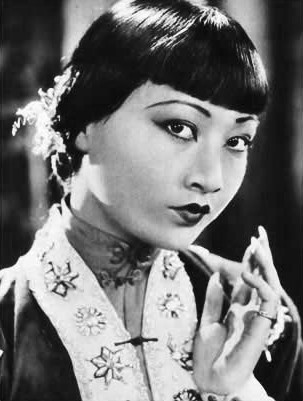
Anna May Wang

Despite being somewhat isolated in the dominant world of movies, Wong soon built a strong reputation for herself. She was a tall, slim woman who stood out among the shorter, less striking Asian actresses. She had a keen fashion sense and was photographed and admired as one of the leading stars of the Hollywood scene, especially after she appeared with Douglas Fairbanks in “The Thief of Bagdad” in 1924. When Grauman’s Chinese Theater opened in 1927, Anna May was featured as the leading lady among female Asian stars.  

As the 1920s continued, rules about miscegenation became more stringent in many states and it became difficult for Asian actors to get roles in Hollywood. Following the route of many other actors, Anna May went to Europe in 1927. There she proved again to be a versatile actor. She starred in a successful play in London and then moved to Germany where she learned the language and appeared in a film with Marlene Dietrich.

Despite her success, Wong continued to lose leading roles to non-Asian actors. Her biggest disappointment was to lose the starring role in “The Good Earth” to a white actress who was made up to look Asian.

During World War II, Wong worked for the Chinese cause and after the war she finally visited China for the first time and met several of her relatives. After she returned to the U.S., she hoped to produce movies herself, but she died unexpectedly of a heart attack in 1961 at the age of 56.

Wong’s life has been celebrated by featuring her picture on a new American coin. More importantly, we now have a recent biography of her life, by Yunte Huang. Daughter of the Dragon: Anna May Wong’s Rendezvous with American History (Liverwright 2023). The more you learn about Anna May Wong, the more fascinating she becomes.      

Thinking about Schools and Reading

Now that schools are back in session, school boards across the country are worrying about what children should be reading and what they should not read. Somehow, we have lost track of the most important goal–children’s ability to read.

Today I am going to repeat a blog I wrote about Maria Montessori, a woman who influenced early education throughout much the world. She taught us that children should be READING–happily and effectively.

Born in 1870 in Chiaravalle, Italy, Montessori entered a technical school as a teenager, intending to become an engineer. After graduating from that program, she decided that she would prefer to be a physician and entered medical school in Rome. Both of these careers were unlikely choices for a woman in Italy at that time, but Montessori never seemed to consider the more usual female path of giving up her career to become a wife and mother.

Medical school was difficult for her because she was a woman and was therefore not allowed to view a naked body in the same room as male students. She had to do her studies in the laboratory by herself after other students had left. During medical school, Montessori specialized in the treatment of children with physical and mental disabilities that made it difficult for them to benefit from conventional education. After she completed her degree, she continued to work with these children and to study treatments available.

Maria Montessori’s only child, a son, was born two years after she graduated from medical school. If she and her partner had married, she would have had to resign from her professional work, so the two of them agreed to remain unmarried but to be faithful to each other. Unfortunately, her partner was pressured into marriage by his family, so Montessori was left with the full responsibility of raising their son. She was forced to allow the child to be raised by other people and was not in contact with him until he became an adolescent. In later life he worked with her in setting up her schools and promoting her educational ideas.

As Montessori studied children and how they learned, she came to realize that methods devised to teach children with mental disabilities would be beneficial to all children. She devised teaching materials and set up learning environments so that children could work on their own and learn from one another. Montessori also continued lecturing and writing and her work became well-known in Europe and beyond. Many of her suggestions are couched as “rules” for adults working with children:

Never help a child with a task at which he feels he can succeed.

The greatest sign of success for a teacher… is to be able to say, ‘The children are now working as if I did not exist.

Although not many children across the world attend Montessori schools, the ideas and practices that Maria Montessori pioneered have affected education for many of us.

Being able to read–effectively and easily is our most important goal. Let’s stop qibbling about words and phrases and concentrate on the importance of joy in reading.

Labor Day During Turbulent Times–2023

Another long weekend has arrived and people across America are getting ready to celebrate the end of summer and the beginning of school and of “normal” working life. The business world expects us to celebrate by shopping. Ads fill our media streams—on TV, websites, social media—and everything else we see. Sales are everywhere and spending money is the name of the game.

But Labor Day brings us much more than a chance to shop. It reminds us of how our lives depend on the workers who provide us with products, clothes, and entertainment. This year we have another strike—the writers and actors who fill our screens–to remind us that behind our products and our entertainment are the people who do the work to provide them.

This is an important strike, because it may set a precedent for dealing with the scary new achievement we’ve heard so much about—Artificial Intelligence or AI. This new tech triumph may change the patterns of work and leisure for many people. How will it affect the way our world works? How will workers be paid? Who will get the benefits brought to us by AI? The strike in Hollywood may set new patterns for thousands of workers across the country. And changing patterns takes a lot of work.

This week I am going to reprint part of a blog that I first posted ten years ago, in 2013 to commemorate the founding of the U.S. Department of Labor in 1913. The history of how workers ensured that they received a fair payment for the work they do is one that was difficult and dangerous. Will the development of AI eventually mean that we need to set a different pattern for another new power?

A hundred years ago, having a holiday to honor working people seemed dramatic and important. For the first time, many people felt united as workers. People felt united as workers, as employees struggling to decent working conditions. One of the triumphs of the labor movement was the establishment of the Department of Labor.

Why was it such a big deal? Well, despite the lack of enthusiasm in the Washington establishment, union leaders across the country hoped that having a voice for labor in the cabinet would make a difference. And believe it or not it has. For one thing it changed the composition of the cabinet to include the non-wealthy. Dwight D. Eisenhower’s cabinet in the 1950s was called “Nine millionaires and a plumber” Can you guess which department the plumber headed?

Here is a partial list of changes that the Department of Labor have introduced over the years.
• Supported the Workman’s Compensation Act to get benefits for injured workers
• Started the women’s bureau in 1920
• Started collecting unemployment statistics—previously had only collected employment statistics and not worried about the unemployed
• Limited working hours for children
• Pushed to get Social Security benefits for workers

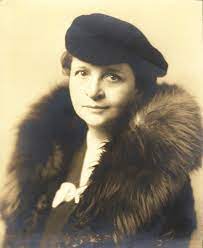
Franes Perkins

It is interesting to think about the women who were leaders in the early labor movement. Frances Perkins, the longest serving Secretary of Labor is largely responsible for shepherding Social Security and other New Deal programs through Congress. Her method of being a leader in a man’s world of politics was to downplay her femininity and her sexuality. She was famous for wearing drab, old-fashioned clothes and at social gatherings was not seen as a threat to the wives of her colleagues. Perhaps at that time in Washington her nonthreatening appearance was an important part of her being able to outmaneuver those husbands in politics.

An even earlier labor leader, Mary Harris or “Mother Jones” took the same approach. She claimed to be older than she really was and she too wore old-fashioned black dresses. She gloried in being called “Mother”. Surely there was no better way for her to protect herself from unwanted sexual advances or harassment. She was able to win many labor battles by enabling male workers to take the lead and fight the bosses to achieve some famous labor victories. There isn’t time here to go into the wonderful story of how Mother Jones won so many victories for “her boys”. They are well told in Elliott J. Gorn’s biography Mother Jones; the Most Dangerous Woman in America. But let’s raise a toast and remember an early verse written in her honor in the United Mine Workers Journal:

We love her for her constant voice.
Raised ever ‘gainst wrongs and ills,
For healing the bodies, bruised and torn,
In the factories, mines and mills…

The early labor leaders who worked with the Department of Labor brought Americans many changes that made life better for all working people. As we celebrate Labor Day 2023, let’s give a cheer for the early pioneers who showed the way for us to meet the challenges of the new developments that are likely to affect our working lives once again.

The Mystery Woman Who Built a Treasure—Belle da Costa Greene

America has often been called a melting pot and it is certainly true that American has brought together people from very different national and racial groups. Some Americans move easily between various cultures, understanding and appreciating the differences and similarities of several. Belle da Costa Greene was one of these people.  Belle was born in 1879 into a prosperous mixed-race family in Washington, D.C. Her mother was a music teacher and her father was the first Black graduate of Harvard University. During the years after the passage of the Fourteenth Amendment, he worked for the government and for several groups devoted to insuring racial equality in the United States.

Belle received a good education and attended classes at Amherst College and Columbia University. She became very interested in history and loved the old manuscripts and books she discovered in the university libraries. Eventually she became a librarian, working first at Columbia University and later at Princeton where she met the nephew of J.P. Morgan, one of the richest men in America.

Belle impressed the people she met at Princeton, not only because she was devoted to her work with books and manuscripts, but also because she was a slim, attractive young woman who could hold her own in any conversation. She dressed well and had a lively wit. Once when someone complimented her on an outfit she was wearing, she remarked, “Just because I am a librarian doesn’t mean I have to dress like one.”  With her looks and charm she soon found a congenial group of friends at Princeton and in the library community.

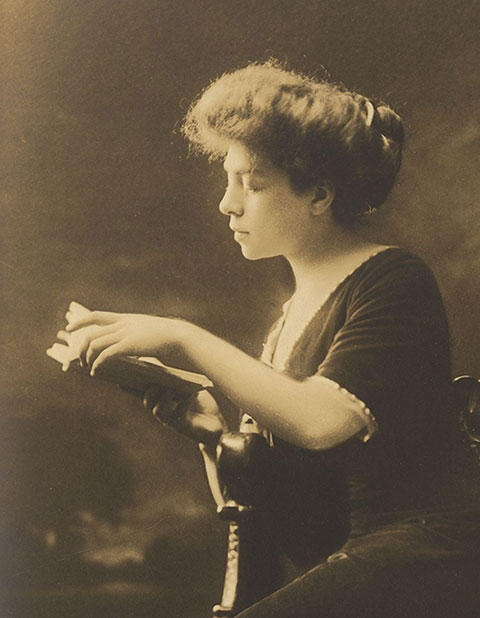
Belle da Costa Greene

When J.P. Morgan, the multimillionaire who owned one of the most impressive libraries in New York needed an assistant, his nephew, who had met Belle at Princeton, was glad to recommend her as the ideal person to work with him. Belle rented an apartment in New York where her mother and unmarried sisters could live close to her. The job at the Morgan Library turned out to be ideal for Belle and she remained at the library for 43 years—the rest of her working life. 

During the years toward the end of the nineteenth century, when Belle was starting her professional career, segregation of the races increased dramatically especially in the Southern states. Belle and her family were very light-skinned and people who met them often did not know their racial background. Belle’s way of coping with this confusion was to be very quiet about her background. Sometimes she referred to a Portuguese ancestor, but the information she gave was vague. Even many of her closest associates and friends were uncertain about her family and background.

Working at the Morgan Library made it possible for Belle to meet and become friendly with many of the most important art historians and collectors of the times. She became especially close to Bernard Berenson, the most prominent art and literary historian at the time. Although she was discreet about their relationship, they carried on an affair and a friendship that lasted for most of their lives. Berenson was married, but his wife, for the most part, accepted Belle and was aware of how much she meant to Berenson.

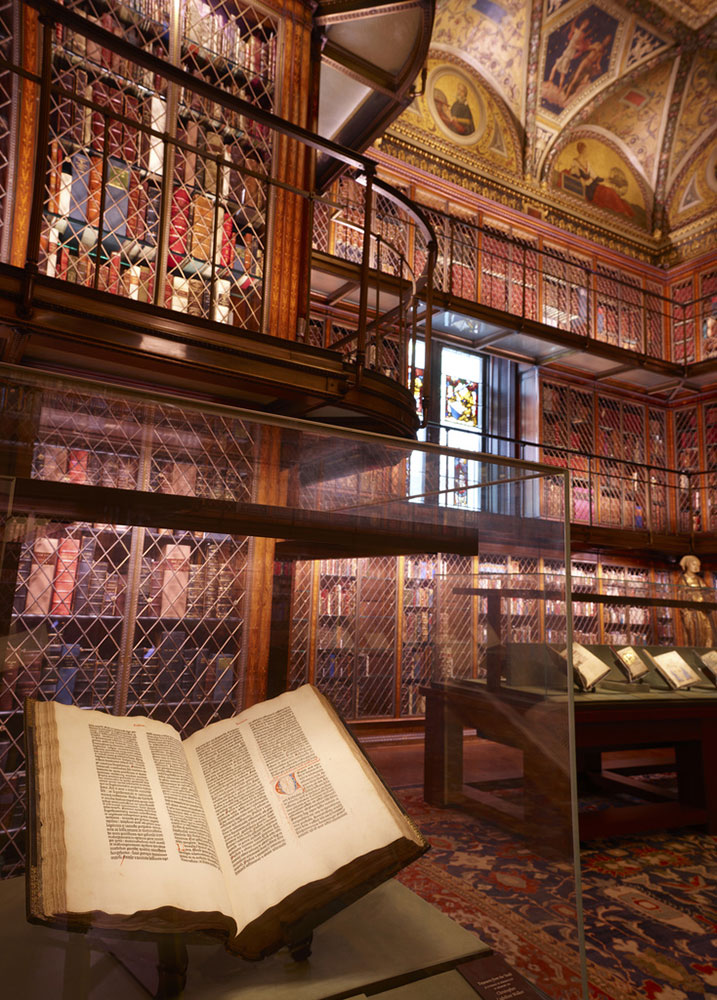
Gutenberg Bible on display in Mr. Morgan’s Library, The East Room of The Morgan Library & Museum, Photography by Graham S. Haber, 2017.

During the course of Belle’s tenure at the Morgan Library, she helped to transform the collection from a personal collection into a public institution. She became the first director of the museum in 1926 when it became a public institution. Today it is one of the most important museums in New York City and in the country. Its collections offer scholars and the public a chance to know some of the most important books and manuscripts that record the history of Western Civilization.

The importance of Belle da Casta Greene has not been widely known but a detailed biography by Heidi Ardizzone offers a chance for people to learn more about this fascinating, though still mysterious, woman.  The biography, An Illuminated Life: Belle da Costa Green’s Journey from Prejudice to Privilege (Norton 2021), is available in many libraries.   

A Free Spirit in a Treacherous World—Caroline Lamb

The early 1800s in England was a time of prosperity for many of England’s aristocratic families, but it was also a time when fortunes could change quickly and harsh punishments were given to people who did not follow society’s rules. Men were expected to serve the king and to expand their family’s fortunes. Women were pawns, whose role was to make good marriages and maintain their family’s position, although they were offered remarkable freedom in their behavior after marriage. 

Caroline Lamb was born into this society in 1785. Her family was aristocratic. Her father was the future Earl of Bessborough and her mother’s family, the Spencers, were equally aristocratic and even wealthier. Caroline lived all her life in a society where men could find favor by flattering the King and his cronies, while the women were often judged on the number and status of the lovers they chose. In fact, one cynic, Lord Egremont, wrote, “There was hardly a young married lady of fashion who did not think it a stain upon her reputation, if she was not known as having cuckolded her husband.”

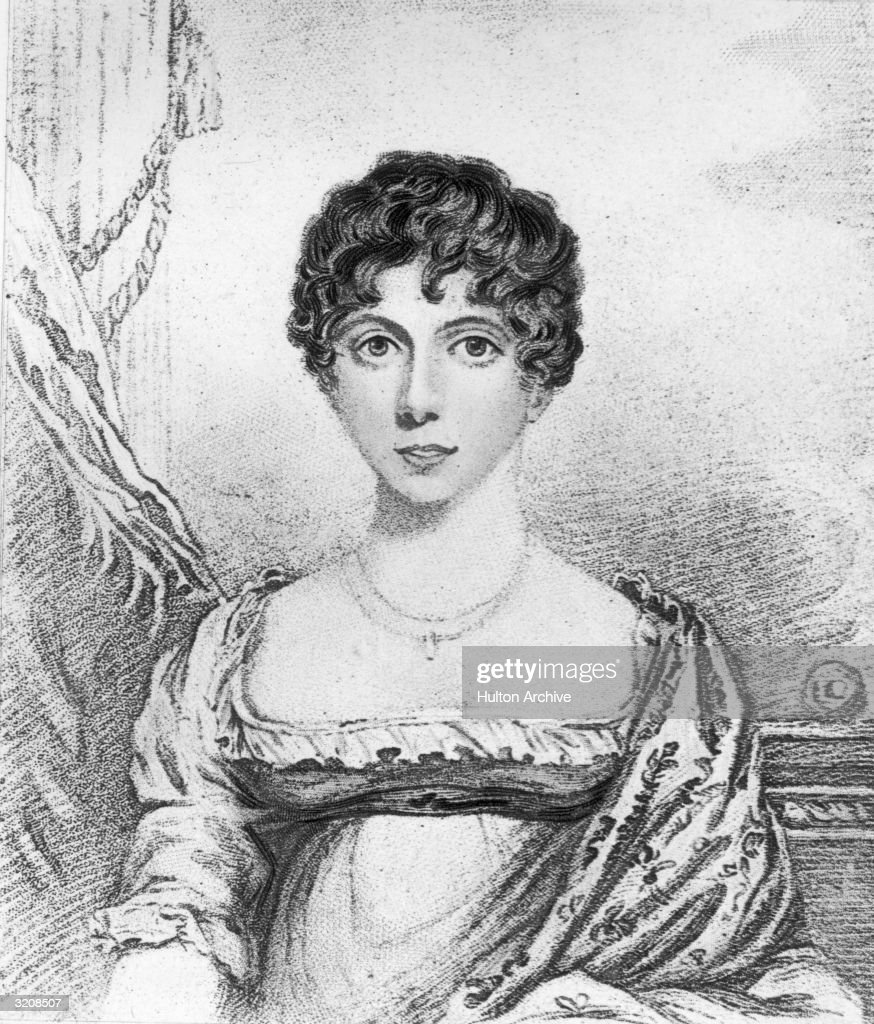
Lady Caroline Lamb

From early childhood, Carolyn was an attractive and lively child. She had very little formal schooling but gained a good education at home mainly from governesses and the attention of her grandmother, who provided encouragement and a large library. Caroline was a very bright girl who learned to read when she was four years old and honed her skills by writing letters to her cousins and friends.

Although she was almost ignored by her parents, Caroline enjoyed a busy social life at parties and dances. Her lively wit gained her wide attention and her slim, petite figure attracted suitors. At the age of 19, she married William Lamb, a man who moved in the same social circles as she did. The marriage seems to have been a real love match. It was discouraged by William’s parents, but the two young people were determined to marry.  Caroline never got along well with her mother-in-law, who believed that her son should have a more docile wife. Despite family pressure, the young couple seemed congenial and were happy for the first few years of their marriage. Caroline quickly became pregnant, although her first child was stillborn. Another pregnancy resulted in a baby, who died within a few weeks. It was not until her third baby was born that Carolyn had a healthy child who survived infancy.

The new baby, a large, healthy child, was named Agustus. Unfortunately, within a year or two it became apparent that he had serious developmental problems. Caroline spent much of her time taking care of Augustus, even breast feeding him, although most wealthy women hired wet nurses. Nonetheless, Augustus developed slowly in speech and was clumsy in physical actions.

Caroline spent much of her time with Augustus but did not neglect her social life. In 1812, she wrote a letter of appreciation to a young poet—Lord Byron—an act that determined much of the rest of her life. Byron called upon her and the two began a tumultuous affair that lasted for about six months. It has been said that she coined the well-known description of Byron as “mad, bad, and dangerous to know”. But the affair cooled after a few months and William Lamb decided to take Caroline abroad for a trip through Ireland in order to get away from the watchful eyes of society. Byron and Caroline continued to write to one another during the months-long trip, but by the time Lambs returned to London, Caroline learned that Byron was no longer interested in continuing the affair.

Caroline’s passionate nature and indiscreet behavior did not allow her to acknowledge the end of the affair with Byron. She continued to contact him and even call upon him, and she met him often at various social events. At one party, when Byron insulted her, she smashed a wine glass on the table and attempted to slash her wrists. Her actions made her notorious enough that she stood out even in the permissive social atmosphere of the time. Several friends broke with her and stopped inviting her to parties. Relations between Caroline and William Lamb became strained, although William continued to refuse to divorce her as his parents urged him to do.

During the years following the end of Caroline’s affair with Byron, her life became more erratic, but she never lost her vitality and intellectual interests. She continued to write both poetry and prose. Her most famous novel, Glenarvon, was widely popular and was praised by writers such as Goethe. William Lamb’s family continued to press him to divorce Caroline, but he refused to leave her. Finally the couple agreed to a formal separation, but they continued to be in touch with each other as Caroline’s health deteriorated. When William heard how sick she was, he travelled home from the continent to be with her when she died in 1828.

For many years Caroline Lamb has been remembered only for the scandalous tales of her relationship with Byron, but now at last she has received the biography she deserves. Antonia Fraser, who has chronicled the lives of so many historical figures, recently published Lady Caroline Lamb: A Free Spirit (Pegasus Books 2023). It is a pleasure to read more about Caroline Lamb and to recognize that she was an interesting person and not just a flighty fan of a famous poet. 

Flawed but not Forgotten–Maud Gonne

Why, what could she have done, being what she is?

Was there another Troy for her to burn?

William Butler Yeats

Maud Gonne was born in England into a wealthy family. Her mother died while she was a child. Maud and her sister were sent to a boarding school in France and grew up speaking both French and English fluently.  Her father, Thomas Gonne, who served as an officer in the British Army, spent time in many countries around the world. In 1882, when Maud was in her early teens, he was sent to serve in Dublin. At that time, he brought his two daughters to live with him. It was during those years that Maud got to know Dublin and observed the poverty of many of its people. These were difficult times in Ireland and Maud became a strong opponent of the British landlords who evicted tenants from their homes when crops failed and the farmers were unable to pay their rent. 

After the death of their father in 1886, Maud and her sister were sent to live with an uncle in London but were not happy there. Maud, who had grown into a beautiful young woman, decided to train to be an actress. Unfortunately, her career was cut short when she developed TB and was advised to move to a spa in France. In 1887, she came of age and inherited her share of her mother’s fortune. For the rest of her life, she was wealthy and had no need to earn money. She divided her time between France, England and Ireland and maintained a lively social life in each of those countries.

Maud Gonne

In Paris, Maud met Lucien Miklevoye and began her first serious love affair. Miklevoye was married, and a divorce was almost impossible to obtain in France, but the two of them remained devoted to each other for several years and eventually had two children, although the eldest died very young. As was usual in wealthy families, the children were raised mainly by a devoted governess. When Maud spent time in Ireland, she never acknowledged the children but referred to her daughter as her niece. Yeats, who was a close friend for many years, knew almost nothing of Maud’s Parisian life or about her children. He fell in love with Maud and repeatedly asked her to marry him, but she turned him down without apparently telling him about her relationship with Miklevoye or about her children. It was several years before he learned about Maud’s private life.

The 1890s were difficult years in Ireland, and Maud spent much of her time in Dublin working with other activists to oppose British rules. She supported the Boers during their war to drive the British out of South Africa and started a women’s association. She is credited with starting the Sinn Fein (“ourselves alone”) organization, which became a powerful anti-British association.

Gonne’s private life remained turbulent. She met John McBride, a hero of the Boer War, and married him. They had one son, but the marriage was not a happy one. In 1905, she sued for divorce in France (divorce was illegal in Ireland), but she lost her case and the divorce was denied. McBride later became a hero of the Irish republican movement and was executed by the British in 1916.

As the years went by, Maud became more and more anti-British and was accused of supporting the Germans. In 1918 she was jailed for six months after being accused of supporting a pro-German plot. During the years between the two World Wars, Gonne’s strongly anti-British feelings led her to support the anti-Semitic actions of German fascists. She never spoke out against the prison camps or the deaths of many Jews during Hitler’s rule. She did much good during her lifetime, but also sometimes supported cruelty and caused pain.   

A recent biography The Fascination of What’s Difficult: A Life of Maud Gonne by Kim Bendheim (OR 2021) tells the story of Maud Gonne’s life and achievements. The author gives a clear and detailed account of Gonne’s life, but mysteries remain. Maud’s own writings, including her letters and memoirs, are not always accurate and sometimes raise more questions than they answer. Perhaps we will never be able to understand all the complexities of Maude Gonne, but we can be grateful that her life inspired some of the best poetry written by one of the greatest poets of her time, William Butler Yeats. Perhaps he was thinking of her when he wrote these lines:

How many loved your moments of glad grace,

And loved your beauty with love false or true,

But one man loved the pilgrim soul in you,

And loved the sorrows of your changing face.