In recent weeks I often feel as though I am drowning in news from all sources—breathless voices from radio, TV and newspapers both print and online insist on telling me the latest tweet or thoughtless comment about what is going on. In self-defense I’ve resolved not to pay attention to any news that pops up after the PBS Newshour ends in the evening . Everything else can wait for morning.
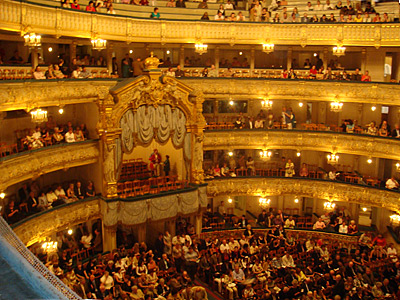
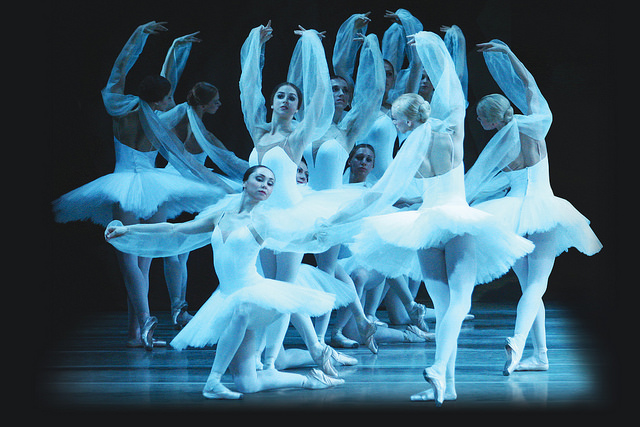
This resolution leaves me more time to watch some of the riches I can stream on my TV, watching performances that I never had a chance to see in person. My favorites are ballets, pure art without the intervention of words or arguments. It is a tremendous relief to switch on Amazon Prime and watch dances that were performed at the Mariinsky theater and other famous locations. It is another world right in my own living room.
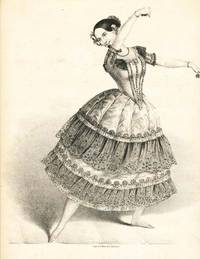
All of this reminds me of how long it took for ballet to make its way to America and what it meant when it finally arrived. And one of my favorite American heroes, Margaret Fuller, played a part in welcoming the European art. There is a well-known story that when Margaret and her friend Ralph Waldo Emerson went to see Fanny Elssler, one of the first ballerinas to tour the country, Emerson turned to Margaret and said: “This is not dancing, it is poetry ; ” to which she replied, ” No, Waldo, it is religion!”
Those comments make a good story, but unfortunately they are most likely untrue. Charles Capper, Fuller’s most respected biographer, tell us that Fuller and Emerson did not attend a ballet performance together, so the story must be regarded as just casual gossip. What it does reveal, however, is that the leading American writers and intellectuals were fascinated when they had a chance to view ballet. And who was the woman who introduced this art? Fanny Elssler, an Austrian dancer who came to America in 1840 and traveled across the country giving performances for a year and a half.
Fanny had been born into a musical family in Austria. Her father was a copyist and valet to Hayden and two of her brothers were musicians. Her sister Therese was also trained as a dancer and the two young girls frequently performed together. Therese grew to a height considered to be abnormal in those days—5 feet, 6 inches—so she could dance male parts when accompanying Fanny.
As frequently happened, the attractive young dancers attracted powerful older men as supporters and lovers. Fanny eventually had two children, a boy and a girl, who were boarded with friendly families until they were old enough to join their mother. I have to wonder sometimes what staid Americans like Emerson and his circle would have thought if they had known one of their admired artists had unacknowledged children. And I sometimes wonder what female artists would have done in that long-ago time before the Me-too movement had started if they had had the freedom to reject the attentions of wealthy patrons who assumed all female dancers would welcome their attentions.
But that did not happen. The dancers kept on dancing until they retired, as Fanny Elssler did in 1845, leaving behind a number of American and European fans who continued to support ballet as well as the other arts. During the late 19th century Americans, who had learned of many of these arts through performers who visited from Europe, developed their own artists and the inspiration began to flow in a two-way direction between this country and the rest of the world. Now, thanks to technology, we can watch performances from all over the world whenever we need a break from the endless chatter of today’s life. I highly recommend it.



 campaigns, now is the time to declare our independence and find a different path. And because this is the beginning of November, thousands of people across the country and around the world have decided to spend a month on creating something they have always dreamed about. NaNoWriMo is the name of a group dedicated to helping to encourage creativity through writing. The odd name stands for National Novel Writing Month.
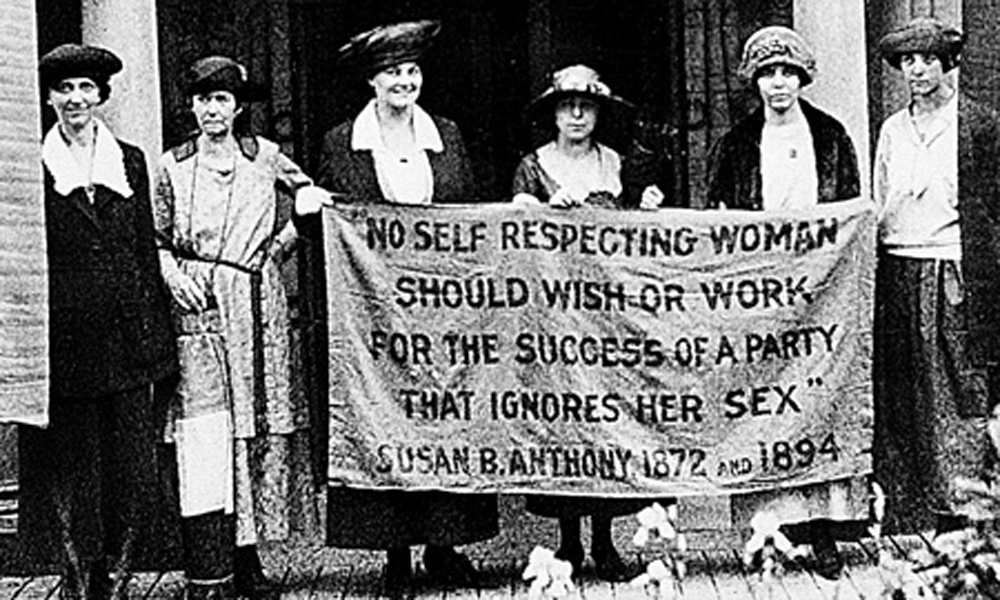 Blood pressure must have soared these past few weeks all across America as fury reigned in Washington over the nomination of Brett Kavanaugh to the Supreme Court. The struggle pitted not only Republicans against Democrats, but often men against women. People couldn’t even agree on what the argument was about. Was the basic question whether or not Kavanaugh had committed a sexual assault 36 years ago? Or was it about whether his overwrought, hysterical claim that “leftists” had conspired against him revealed a glaringly unjudicial temperament?
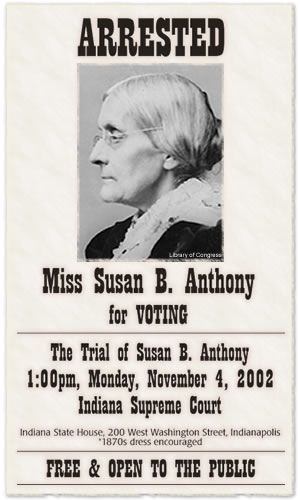 claiming that they had the constitutional right to do so. Local authorities did not agree and arrested the women. The judge at Anthony’s trial did not allow the jurors to discuss the case, but directed them to find Anthony guilty. He fined her $100, which she refused to pay, hoping to move the case to the Supreme Court, but the judge successfully blocked that path by refusing to send her to jail. Nonetheless, the trial generated a lot of publicity and advanced the prospect of women’s suffrage.

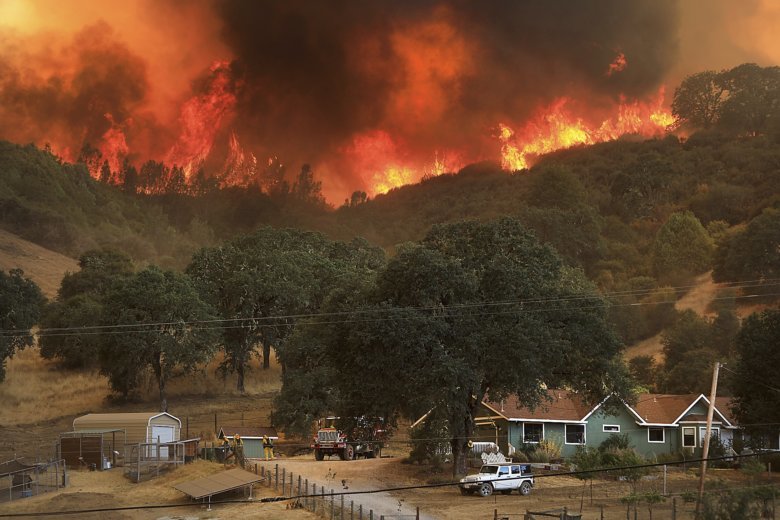
 brought on by human activities, many of our leaders have lost their way. Instead of working to mitigate the dangers of greenhouse gases, we are encouraging corporations to spew more noxious fumes in the air and make the world less safe for children as well as the rest of us. Instead of working with other countries to improve the world, our leaders want to tear up treaties in the hope of immediate profits for a few wealthy corporations. Instead of encouraging scientists to study our changing world, many leaders are cutting funding for education and restricting scientific research. What has happened?
 Teacups and Tyrants-Adele Fasick looks at people, books, and history