Showing Us How to Experience Museums—Isabella Stewart Gardner 

This summer has been a worrisome one for many people. The major events of the world have caused pain and worry to those of us who were paying attention to the news. Attacks and wars in Ukraine and Gaza continue despite the efforts of many world leaders to find peace. 

This blog has always looked back at events in the past rather than what is going on day-by-day. Things may seem to change, but thinking about the past helps us to put today’s changes into perspetive. I like to look back at the small events that have chaged our lives in ways we often don’t recognize.. Have you ever thought about how museums have changed over the years? We owe some of those changes to a woman you may never have heard of–Isabella Stewart Gardener.  

Isabella Stewart Gardiner was born in New York city in 1840. Her family was prosperous but did not belong to the social elite families who dominated social life in the city. Like many other wealthy Americans of her generation, her path to high society led through Europe. Her mother took Isabella and her sister to Paris for their education. In France the girls could learn French, study music, and meet a suitable husband.

And meeting a suitable man was just what Isabella did. His name was Jack Gardener ad he was a member of a wealthy Boston family. Their marriage was rather quickly arranged, but it was destined to be a long and happy one. Isabella’s son was born six months after her marriage, which set some of her family friends to gossiping, but his parents doted on him. Unfortunately, he did not live more than a few months. One of the great regrets of Isabella’s life was that she never had another child. 

Without children of her own, Isabella focused much of her attention on her nephews and helped raise them, but she still had energy (and money) left over. She and her husband became two of the most active art collectors of the late nineteenth century. They travelled often to Europe and bought works by many of the well-known artists of the past several centuries including Vermeer, Botticeili, Titian and Rembrant. Like other Americans, they brought the works home and exhibited them in their Boston home.

But Isabella’s losses were not over. Her husband died suddely in 1898. Isabella was overwhelmed. with grief after his death. She turned more and more to art as a comfort. She consulted with art collectors in Europe and America. Her fruends included the greatest critics of her time, especially Bernard Berenson who searched many of the great collections in Europe and urged Isabella to choose the best pieces available.

Isabella’s greatest innovation in her museum was to group together pictures, letters, clothing and other objects associated with the paintings. Sne planned the museum as an experience and not just a coillection of pictures. In later years, many other museums have followed the same plan.

The story of this fascinating museum is well told in the book “Chasing Beauty: the Life of Isabella Stanley Gardner” by Natalie Dykstra (2024). You might enjoy reading it before your next trip to an art museum. And you should say “thanks” to Isabella for helping you to enjoy the visit.

i

Libraries Make History—Emma Goldman and J. Edgar Hoover

When the American Library Association meets in San Diego this month, approximately 25,000 people are expected to attend. Libraries are quiet institutions, often taken for granted, but they have played a large role in public life over the years and have influenced many people including politicians and policemen. Two of these people were the anarchist speaker and activist Emma Goldman, and the founder of the F.B.I. (Federal Bureau of Investigation), J. Edgar Hoover.

Emma Goldman was born in Lithuania on June 27, 1869. When she became a teenager, she moved to Rochester, N.Y. A few years later, she moved to New York City and lived on the Lower East Side of Manhattan—an area largely populated by Jewish immigrants. There she met Alexander Berkman and other radicals.

Goodman and Berkman wanted to act rather than just talk about anarchism. They decided to kill Henry Clay Frick, an industrialist who opposed unions, fought against the Homestead strike, and was responsible for the Johnstown Flood. Their plot failed and Berkman was sent to prison for 22 years. Goldman was not indicted and she vowed to carry on his work.

Goodman continued to lecture and write about anarchism. In 1893 she was sent to Blackwell Island for two years because she gave a speech urging people to steal groceries. In prison she learned much about anarchism and history by reading books she found in the prison library.

Over the years, Goldman continued lecturing and writing. Her arch-enemy, J. Edgar Hoover, watched her progress carefully. He too gathered ideas from the library work he had done before he joined the Justice Department. When he set up the Federal Bureau of Investigation, he used the principles of indexing and cataloging developed by librarians to make the bureau the most effective crime-fighting unit that America–or any other country–had ever had.

During the Palmer Raids of 1917, both Goldman and Berkman were interviewed by J. Edgar Hoover for deportation. Because of the speeches she gave and the books she had written, there was plenty of documentation about Goldman’s support of the Soviet Union. Both she and Berkman were deported to Russia, along with 248 other Americans.

After a few years in the Soviet Union, both she and Berkman became disillusioned with the Soviet system. Eventually, they both left the country. Goldman returned to the United States where she continued her career of writing and speaking about anarchism and good government. And she wrote an important book about the Russian government “My Disillusionment with Russia”.

In 1940, Goldman suffered a stroke while giving a lecture in Toronto. She died there on May 14, 1940. Her family eventually brought her body to Chicago where she was buried. Alexander Berkman died in Paris in 1936. J. Edgar Hoover remained director of the FBI until his death in 1972.

A recent book, “The Infernal Machine: A True Story of Dynamite, Terror, and the Rise of the Modern Detective” by Steven Johnson (NY Crown 2024) tells the story of some of the radicals and detectives who changed American history during the early twentieth century. You can find the book at many public libraries.

Mother Knows Best—Jennie Churchill and Her Son 

Mother’s Day is a good day to celebrate a woman who lived a full, exciting life but always had time to care for and help her famous son—Winston Churchill.  

Jennie Churchill was born Jeanette Jerome in Brooklyn, New York on January 6, 1854 into a prosperous New York family.  Her father was not outstandingly wealthy, but he and his wife had deep roots in New York society.  

Jennie’s father, however, made a number of reckless investments during the prosperous years following the end of America’s Civil War. He was also a devotee of the opera and embarrassed his wife by having affairs with several entertainers. Finally, when Jennie was 13, her mother decided to take all of her daughters abroad and raise them in Europe where they would be able to get good educations and meet aristocratic men. Her plan worked out well. 

Jennie and her sisters became fluent in French and were well-trained and talented musicians. They lived in Paris for several years before the revolution of 1870 forced them to resettle in London. One of the first eligible men that Jennie met there was Sir Randolph Churchill, whose family was close to the top of the social ladder. His ancestors had been part of British nobility for hundreds of years.  

Jennie and Randolph married rather quickly—timing that raised questions for many years about whether or not Jennie was pregnant when she got married. The question never seemed to bother Jennie, however, and certainly caused no trouble for Winston who was born eight months after the wedding. 

As was traditional in aristocratic families at the time, Winston was raised mostly by servants and was sent to boarding school at a young age. Being away at school was difficult for Winston and he wrote frequently to his mother begging for a visit or a letter. She seldom replied. Nonetheless, the relationship between the two was strong and lasting.  In later years Winston wrote that he and his mother were “on even terms more like brother and sister than like mother and son”.

Although Jennie was not a wealthy woman, and she had a bad habit of reckless spending that led to debts, her many friends and relationships were helpful in furthering Winston’s political career. She was active in many good causes. During World War I, she was Chair of the hospital committee for American Women’s War Relief Find which set up two hospitals in France to serve men wounded in the war. 

Jennie Jerome was not the only devoted mother who strongly influenced herson’s political career. A fascinating book published last year tells the story ofJennie Jerome and another successful political mother. It is “Passionate Mothers,Powerful Sons: The Lives of Jennie Jerome Churchill and Sara Delano Roosevelt” byCharlotte Gray (NY S&S 2023). Anyone interested in how politics at the highest level can work will find much to think about in this book.

Happy Birthday to Ella Fitzgerald 

More than a hundred years ago—on April 25, 1917–one of America’s greatest jazz musicians was born in Newport News, Virginia. She didn’t linger long in the South, but moved with her mother to Yonkers, N.Y., a suburb of New York City. Although she travelled widely throughout her life, her home base was New York and especially Harlem. 

After her mother remarried and had more children, Ella lived a life of freedom on the streets, especially after her mother died as the result of an auto accident when Ella was fifteen. The famous Amateur Nights at the Appollo Theater in Harlem became a magnet for Ella and she developed an ambition to become a dancer.  

When Ella finally got a chance to compete in the Amateur nights, an accident of scheduling led to her appearance immediately following an excellent dance presentation. Thinking fast, Ella decided to sing instead of dance for her try-out. 

Her performance was a hit with the audience, so in 1934, at the age of 17, she found herself at the start of a long, successful career. 

Building a career as a jazz singer was not easy, especially during the difficult years of the great depression, but Ella was determined and she learned quickly. She was a very private person, but her talent was recognized by many of the greatest jazz performers of her time and she soon found mentors to help her develop her skills and to present herself to audiences. Her energy seemed endless and her life was devoted to music. She was willing to travel and to appear in many venues and she gradually became known not only in America but in Europe. 

Racial prejudice sometimes made life difficult for Ella, but she was able to overcome most of the slights that she encountered. One of her worst experiences occurred during a tour to Australia in 1954. Her baggage and that of her group were removed from their airplane in Hawaii where they were stranded for two days. Ella let none of this hardship deter her. She went on and completed the tour and was a hit.  

The most recent and detailed biography of Fitzgerald is Becoming Ella Fitzgerald: The Jazz Singer Who Transformed American Song by Judith Tick (Norton 2024). Tick tells the fascinating story of how Ella continued her career during the long, difficult postwar years as she developed diabetes and endured several amputations and years of illness. She never gave up singing and appeared as often as she could until she died in 1996. 

Perhaps the best way we could honor Ella today would be by listening to one of her performances. Many are available on disk and videos for today’s audiences.  

Lady Gregory–A Woman Who Loved Language

The season of book prizes has arrived again. Every spring there seem to be more announcements of prizes for novels and nonfiction books that have been published during the preceeding year. The process of choosing the winners has become familiar. First judges release a “longlist” of books deemed worthy of being candidates; then a few weeks or months later a “short list” is published; the final award is usually announced at a ceremony when the the author of the winning book is announced. The Booker Awards set this pattern and it has been followed by a series of other organizations dedicated to publicizing books deemed the best in some specific category—translated books, children’s books, or those from specific areas—each of them has its own contest.  

Not only do the prizes increase book sales, they can also affect the life and culture of a country and even encourage the use of a minority language that might otherwise fade away. Irish Gaelic is an example of a language which  seemed to be dying away, but has been revived in many parts of the country. And now Ireland has its own book prize that honors books written in either English or Gaelic. 

St. Patrick’s Day seems an appropriate time to honor a woman who played a large part in supporting the development o literature in both languages that have affected the history and culture of Ireland—Lady Augusta Gregory.    

Augusta Perasen, who later became Lady Gregory, wasn born into an Anglo Irish family on March 15, 1852. At that time, Ireland was slowly recovering from the Irish Potato Famine that had ravished the country starting in 1848. Thousands of peasants were thrown off the land they had cultivated, but never owned, when potatoes, their major source of food and income, was struck by a mysterious ailment. Many landlords evicted tenants from their homes when they  could no longer pay their rents, leaving them to seek new work in England, America, and Australia.  

Augusta’s family was prosperous and did not suffer from the famine but they were sympathetic toward the Irish tenants and were interested in their language and culture. They supported land reform and education. Augusta was especially influenced by an Irish nurse who told her many stories and instilled in the child a respect for Irish culture and language. 

At the age of 19, Augusta married a man thirty years her senior and became Lady Gregory. She lived the life of a prosperous aristocrat, travelled to many parts of the world with her husband, and began to write and publish poetry and travel journals. She and her husband had one son. As their son grew up, Augusta began writing stories and memoirs. The family maintained a home in London and met many writers and artists as they travelled back and forth between England and Ireland.  

After the death of her husband in 1892, Augusta moved back to the family estate in Galway, spending less and less time in London. She began to identify more with the Ireland and its culture than with England.  She travelled back and forth between Dublin and Galway and gradually became an important figure in Irish literary circles. William Butler Yeats became a good friend and encouraged her interest in Irish literature. 

In 1899, Lady Gregory helped found the Irish Literary Theater where some of the most important plays of the Irish Renaissance were produced. Her own plays were produced too, but they have faded with time and are no longer as popular as they once were. Lady Gregory is remembered mostly for the great influence she had in encouraging Irish poets, playwrights, and novelists. Her importance is demonstrated every year when the winners of the An Post Irish Book Awards and other book prizes are announced.  

Celebrate prize books by reading! Libraries and bookstores are ready and waiting. 

Best sellers that never appear on the best seller lists

February is the shortest month on our calendar and this year it somehow slipped away from me entirely. Computer problems caused me to lose several files and some pesky health problems slowed me down. But now March has come. The days are getting longer and I hope my blog will get back on schedule.  

One of the best-kept secrets of most best seller lists is that sometimes the real bestsellers never appear on the lists. While critics choose the bestselling books of the week or the year, readers may be spending their time reading books written centuries ago. The New York Times has a careful set of criteria for its bestseller lists. The details of their criteria are not public, but the Times does not include all the books that appear in a given year. They do not include books published by religious publishers even though these attract large audiences. The Bible, for example, is a perennial best seller that never makes best seller lists. 

Ann Radcliffe

Ann Radcliffe was born on July 9, 1764 in London. She moved to Bath with her family a few years later. She might have attended school in Bath, although there are no records of this. She certainly grew up to be a reader. In 1787, she married William Radcliffe. Her husband was a newspaperman who encouraged his wife to read and to write. The couple had no children and Ann devoted most of her time to those activities and to travelling. Her first book was a series of travel letters.

Radcliffe’s first novel, The Castles of Athlin and Dubnayne was published anonymously in 1789. The following year she wrote another book, A Sicilian Romance. Each book increased her audience and by the time she wrote her third, she began to publish under her own name. 

For her most famous book, The Mysteries of Udolpho, Radcliffe received 500 pounds, while the average author in England at that time received only 10 pounds for a novel. She was soon earning far more than her husband did for his newspaper work, but the difference did not seem to interfere with their relationship. They remained a devoted couple.  

Even though Radcliffe was a successful writer, she did not publish a great many books. While her books continued to be read and discussed by readers and other authors, she herself stopped writing quite early in her career. Her audience, however did not stop reading. 

Radcliffe was the most popular writer in England during the early nineteenth century. She was admired by both Jane Austen and Sir Walter Scott. And her influence did not end at England’s shore. Even the great Russian novelist, Dostoyevsky, read and admired her books. 

You might want to try reading a few of Ann Radcliffe’s books too. They are easily available online and in libraries and bookstores. Although they are not on our best seller lists these days, they are a refreshing reminder that we can still enjoy books written long before we became readers. Not all books lose their charm as time goes by. Why not try one of them and find out what Jane Austen read before she started writing books of her own?  

Wild, Wicked and Wonderful—Josephine Baker 

Josephine Baker’s name is known to many Americans and Europeans, but her life and achievements remain rather confusing. She was a woman who acted as she chose and seldom explained herself. Even. the location of her body is somewhat of a mystery. In November 2021, her coffin was reburied at the Panthéon in Paris, an honor that few women have ever received. Her body, however, remains buried in Monaco where her friend Princess Grace built a mausoleum for her. Much of Baker’s life remains a mystery even to her biographers 

Josephine Baker was born June 3, 1906 in St. Louis, Missouri. She was raised by her mother in a very poor, disorganized family. No one has been able to definitively establish who her father was.   

Josephine Baker

At that time, St. Louis was a very segregated city and many residents were descended from people who had been enslaved for several generations. Josephine’s mother was poor and Josephine began to work while she was still very young. While she was growing up, Josephine worked and lived with several white families for whom she did cleaning. She was often mistreated and sometimes abused. As a child, she saw evidence of the results of the race riots of 1917 during which the homes of many Black families were destroyed. Later she wrote that she had prayed, “Oh God, why couldn’t you have made us all one color?”  

Josephine’s schooling was erratic. For one thing, she frequently changed her residence as she moved from one employer to another, so she missed many classes. She became part of a street entertainment group which moved around the city giving performances wherever they could. When she was 13, she discovered she was pregnant and married her first husband; however, her pregnancy ended in a miscarriage and a hysterectomy. Her husband was chronically unemployed, and he soon disappeared from Josephine’s life.  

As Josephine’s skill as a performer grew, she had more opportunities to perform with vaudeville groups in Midwestern cities and eventually in New York City. The biggest change in her life came in 1925, when she went to Paris with a group of performers. Entertainment was not segregated in France, and the group soon became popular with audiences of both races. It was billed as “La Revue Negre” and Josephine became one of the stars of the show. When Josephine became a star, however, she broke her contract and joined a more prestigious group.   

Josephine quickly adapted to France. She learned to speak French fluently and could hold her own with French speakers, although she remained unable to read or write well in either English or French. Her lack of education never seemed to hold her back.  

The first time she returned to America after the trip to Paris was in 1927. There she discovered that the old rules of segregation were still observed. Even though she had been a star in Europe, she was refused accommodation at many hotels in New York City and had to find lodging in Harlem. She soon returned to France and spent most of the war years there. 

Back in France she married again and became a French citizen and a strong supporter of General de Gaulle. She lived in Morocco for a while and carried messages back and forth for the Free French who supported de Gaulle. No one thought to suspect an entertainer of being a spy.    

After the war, Josephine returned to the United States several times. A Josephine Baker Day was held for her in Harlem on May 20, 1950. She also visited South America and Japan but her life continued to be centered in Europe.  

No matter where Josephine Baker travelled or what she did, Josephine was busy and active. One of the major projects of her later life was to adopt orphans from many countries and raise them together. Her goal was to further the cause of international friendship. Many of the children thrived, but their lives were never calm while they lived with Josephine. She continued all her life to spend money recklessly and to evade paying her bills. Whenever she needed more money, she would arrange to go on a tour. 

Josephine Baker’s busy life finally ended on April 12, 1975 while she was just beginning another European tour. For those of us who never saw Josephine Baker perform, there are several videos about her available online as well as several biographies. One of the most detailed biographies was written by one of the children she had adopted toward the end of her life–Josephine Baker: the Hungry Heart by Jean-Claude Baker and Chris Chase (1993 Random House). It is an excellent introduction to a fascinating woman. 

A Woman Who Kept Dance Alive During Changing Times—Bronislava Nijinska

Dance performances happen in the present time and then fade away. Musical scores have been written and published for centuries, as have the texts of dramas, but dance has been an elusive art. Before the development of modern photography, there was no way to preserve what dance performances looked like. And some of the people who have contributed most to the art of dance have been almost forgotten, including the younger sister of the great Vaslav Nijinski, Bronislava Nijinska.

Bronislava Nijinska was born in Minsk, Belarus, on January 8, 1891. Raising a family while traveling to so many different locations was difficult and eventually Nijinska’s father left the family. Her mother struggled to raise Nijinska and her brothers, but the children gew up spending much of their time on their own.

Bronislava Nijinska

Eventually each of the children entered the Imperial Theatrical School in Moscow, where they excelled in dancing. Vaslav Nijinsky, quickly became a star and was recognized as a genius when he first started performing. His younger sister was also an excellent performer, but she is remembered more for her work as a choreographer than as a dancer.

Nijinska probably would have followed the pattern that her parents had set, becoming an itinerant dancer in Russia after she graduated from school, but the world changed dramatically after the Russian Revolution and World War I. Nijinska spent much of her life moving from one city to another not only in Europe, but later in South America and the United States. During her long life, Europe was transformed and the world suffered through two world wars, but her allegiance was to her art and not to an individual country.

At first, after graduation from school, Nijinska joined Diaghilev’s ballet troupe which became the Ballet Russes de Monte Carlo. During the 1920s, many Russians fled the Soviet Union and moved to Western Europe. Vaslav Nijinsky and Diaghilev were leading figures in the group, but Nijinsky became ill and was hospitalized with schizophrenia in 1929, the same year that Diaghilev died. This happened during the period that Western Europeans were becoming aware of the power of ballet and interest in the art was spreading especially to Paris and London. 

Nijinska struggled for the rest of her life to set up a dance troupe that would continue the work these men had pioneered. Her devotion to the art of dance was legendary, but her fame never reached that of her brother or the men who controlled the major dance groups of the period. Nonetheless she was able to articulate some of the major beliefs of modern ballet. “Movement is the principal element in dance” she wrote, explaining why she emphasized the way dancers used their bodies rather than the achievement of graceful tableaus.  

Nijinska has never achieved the fame she deserves, but her latest biography will enable readers to discover why she accomplished so much. Lynn Garafola’s. La Nijinska: Choreographer of the Modern. (Oxford 2022) gives a rich, full picture of the life and work of Bronislava Nijinska. It is available now in many libraries and bookstores

Escaping the Year End Blues

2023 is ending in a blur of bad news. Wars are raging in Israel and Gaza, while the Ukrainian struggle with Russia shows no sign of ending. As we enter the new year, perhaps we should turn to books that show us worlds very different than the one we live in today.

 Here are five books I’ve read this year that took me to different places and other times. I’ve written about most of them in my blog posts. These are not necessarily the best books of the year, but they offer a wide range of viewpoints. All of them are recent books that can be found in many libraries and bookstores in several formats. And any one of them will start you on a new journey to a world free from the troubles of today.

Brave the Wild River: The Untold Story of Two Women Who Mapped the Botany of the Grand Canyonby Melisa Sevigny (2023) After being told by several experienced rivermen that women would not be safe trying to navigate the Colorado River, these two botanists made the trip and proved them wrong.

Daughter of the Dragon: Anna May Wong’s Rendezvous with American Historyby Yunte Huang (2023). A Chinese-American woman from Los Angeles became a sensation in silent films and a star in both Europe and America.

Empress of the Nile: The Daredevil Archeologist Who Saved Egypt’s Ancient Temples from Destructionby Lynne Olson (2022) When the building of the Aswan Dam threatened to destroy Egypt’s treasures, one stubborn woman fought to save them for future generations.

Agatha Christie: An Elusive Woman by Lucy Worsley (2022) Who is the writer who outsells Shakespeare year after year? Agatha Christie, of course. Her life story helps us to understand how she attracts so many readers.

The Benevolent Society of Ill-Mannered Ladies by Allison Goodman (2023) Life during Regency England was difficult for women, but this lively mystery story introduces twin sisters who triumph over cruel husbands and brothers.

HAPPY HOLIDAYS TO ALL!

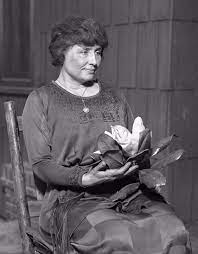
Seeing the world with different eyes—Helen Keller

Many people throughout the world recognize the name of Helen Keller. Her story is an inspiring one. A movie about her life won two Academy Awards in 1962 and her biography has been a bestseller for several generations. Many people know that Helen Keller overcame the handicaps of being both blind and deaf, but few readers are aware of what a long and influential life she led.

Helen Keller was born in Tuscumbia, Alabama on June 27, 1880. When she was 19 months old, she lost both hearing and sight after falling ill with a disease that has never been identified. Her family was prosperous—her father was a newspaper editor who had served in the Confederate Army during the Civil War. Her mother came from an old slaveholding family and was eager to see Helen get an education. When she read in Charles Dickens’ book American Notes about the Perkins Institute for the Blind, she got in touch with them. It was through that school that Helen and her family met Anne Sullivan, a recent graduate of the Institute, who became Helen’s teacher and companion for the rest of her life.

Helen was a diligent and successful student. After learning how to communicate through sign language, she attended several private schools. Although her voice remained somewhat difficult to understand, Helen learned to spell out words by pressing her fingers on Anne’s hand. Anne would respond in the same way. Eventually Helen went to Radcliffe College and became the first deafblind person to earn a college degree. Her success was noted by a number of influential people including Mark Twain who became a friend and supporter.

Helen Keller

After graduating from college, Helen embarked on a lifelong career of giving lectures and writing. She and Anne would appear on stage together so that Helen could spell out her response to questions and Anne would relay them to the audience.

During the years leading up to World War I, Helen was active in opposing America’s entry into the war. She admired the Soviet Union because she believed that socialism could eliminate poverty. Her political commitment to socialism went up and down over the years, but she apparently never completely lost faith in that philosophy.

Helen joined the American Foundation for the Blind during the 1920s and worked to support the goals of that organization for decades. She tried to help the blind community and others whose abilities differed from the majority. She did not believe that blindness or deafness should force people into a life of retirement or solitude. And she was not shy about publicizing her ideas. Her engagement with socialism led to investigations by both the FBI and Senator McCarthy’s Internal Security Committee during the bitter anti-communist post World War II years.

Several biographies of Helen Keller have been written over the years, but a new one by Max Wallace called After the Miracle: The Political Crusades of Helen Keller (Grand Central 2003) offers many surprises even to those who have read some of the earlier books.